When Sorrows Like Sea-Billows Roll..


November 10th marks the 50th anniversary of the wreck of the Edmund Fitzgerald, an iron freighter that sank in Lake Superior. The gale-force winds tossed the ship (carrying over 26,000 tons of iron) in waves of over 35 feet. All 29 sailors aboard the ship were lost. The event has been memorialized in song and stories, and in at least one museum display at Whitefish Point Michigan, near where the wreck occurred. The bell tolled 29 times, once for every life lost in the storm. Fifty years later, families are still haunted by the tragedy– a continuing reminder of the fragility of life, and the power and destructive force of winds and waves.

Some days, the hits just keep coming– an unexpected expense, a misunderstanding at work, a fender-bender during the commute, a plumbing nightmare, a migraine, the phone call with bad news.  Each new pain rolls over us, throwing us off balance, and trying to drag us under like a storm-tossed ship.

pexels-photo-355288.jpeg

“Even so, it is well with my soul.”  The story of this favorite hymn has been told many times, but it bears repeating. ( It Is Will With My Soul. wikipedia.org )  The author of these words had lost everything– his only son had died; shortly afterward, he lost almost all his money and property in the Great Chicago Fire of 1871.  A friend, knowing of his troubles invited him to bring his family to England for an evangelistic campaign.  Mr. Spafford (the above-mentioned author of the hymn) had to stay behind and sent his wife and four daughters ahead.  Their ship, the Ville du Havre, was struck by another vessel and sank.  All four of the daughters were drowned, and only his wife survived to send him news of the tragedy.  As he made the heartbreaking voyage to rejoin his wife, he passed the place where his daughters had most likely gone down.  At that moment, Mr. Spafford felt a welling of peace and hope beyond human understanding, which led him to pen the words that have given comfort to so many in the years since:

When peace, like a river, attendeth my way,
When sorrows like sea billows roll;
Whatever my lot, thou hast taught me to say,
It is well, it is well with my soul.

Nothing can prepare us for the sorrows that sweep over us at unexpected moments.  Nothing can stop them, and though we know they will come, no one knows how high they will rise, or when they will crest and break around us.  No one except the one who set the boundaries of the sea, the one who has walked on its waters, and the one who can calm the storm.

pexels-photo-127160.jpeg

God doesn’t remove the sorrows or tragedies from our life or prevent them from washing around and over us.  But for those who trust in him, there is a promise that we will not be consumed. We may be in a storm-tossed boat in the middle of a raging sea, but at our faintest cry, Jesus will walk on choppy waves to be by our side and bring comfort.  He will teach us to be in awe of him as he commands the winds and waves to obey him.  He will teach us to trust him in the good times and the bad.  He will teach us to say, “It is well with my soul!”

35 Who can separate us from the love of Christ?
Can affliction or anguish or persecution
or famine or nakedness or danger or sword?
36 As it is written:
Because of You
we are being put to death all day long;
we are counted as sheep to be slaughtered.[a]
37 No, in all these things we are more than victorious
through Him who loved us.
38 For I am persuaded that not even death or life,
angels or rulers,
things present or things to come, hostile powers,
39 height or depth, or any other created thing
will have the power to separate us
from the love of God that is in Christ Jesus our Lord!
Romans 8:35-39 (HCSB)

“Seeing” Answered Prayer

God always hears our prayers. He always has an answer. But it isn’t always the answer we expect. Sometimes, God answers, “No,” or “Not yet.” Sometimes, He answers in ways that seem confusing and mysterious, and even ironic.

I remember as a young teen praying for a woman in the community who had lymphoma. In treating her condition, the doctors, trying a new experimental treatment, did permanent damage to certain muscles, leading to a progressively debilitating condition. She died a slow and painful death, unrelated to her original condition. Where was God? How could He listen to our prayers and give such a cold, cruel answer?

But God sees a bigger picture than we do. This precious woman had incredible faith and grit. She had spent years working diligently to help others and teach God’s Word. She continued her work, even in the midst of her health struggles almost to the end of her life. What might have caused some people to turn their backs on God made her more dependent on His Grace. She faced her pain and weakness with grit, strength, and hope in God’s eternal healing. God’s answer wasn’t to rescue her from the suffering, but to be present in it with her. And her example lives on to this day.

Some people would read about this and be dismissive. What a cop-out! What a delusion! But there is much more to her story than her own condition or even her response. One of the men in our church really struggled with God’s seeming indifference. He wrestled with his own faith for many months while watching her get weaker and weaker. But through his struggle, he grew in his conviction that God was present in every situation. He was inspired to do short-term mission work, partly as a result of this growth. Knowing that God would be with him, he threw himself into loving people from a different culture–different climate, different language, different work ethic– and helped build churches and other facilities for those in need. Many people were helped, inspired, and encouraged because of his dependence on God– a dependence enhanced by facing his own questions and doubts.

Family members and community members, watching her struggles, were inspired to pick up where she left off– working and teaching and reaching out to others with zeal and joy–following her marvelous example. Today, some of her family members are leaders in their churches, raising the next generations of witnesses to God’s mercy and power. Doctors, having failed in her treatment, learned from it– a difficult lesson for all, but a lesson, nonetheless. Her joyful attitude (before and during her struggles) inspired me to direct the Vacation Bible School program at our church for a few years, and to teach Sunday School when I moved to a new location. And those are just a few of the ways I have “seen” God’s answers to our prayers. God did not give our friend the physical healing we wanted. But her struggles– and her response of faith and perseverance–inspired a ripple effect far beyond her own pain and disappointment. And she has received the ultimate healing! Her pain, intense and unjust as it was, was only temporary. Her life, her legacy, her joy– they all live on!
How often do we look at a situation and think we know what is “best?” How often do we feel that God’s answers are “wrong?” Wrong timing, wrong outcome, full of hardship or pain– how can this be God’s “perfect” will for us? There was nothing about this woman’s situation that was comfortable; no reason to see a good outcome for her or her immediate family. She died. She experienced pain, with no earthly justice. Her suffering was undeserved and unmitigated. She refused to sue the hospital or the doctors– she wanted them to be able to continue to learn from her experience so they could help others NOT to suffer in the future. But her life was shortened and made grueling in the process, and she received no payout, no financial compensation, no symbolic reparation for her sacrifice. We received no “miraculous” answer to our prayers. It seemed at the time that the more we prayed for healing, the worse her condition became. We continued to pray anyway, knowing that God DID hear us, and God’s ways were not our ways– they are always better. Even when His ways seem like silence.

This all happened several decades ago, and many of the “answers” from our urgent prayers are still hidden from our eyes. Many of our questions remain unanswered. But God’s will is still active, even in these tragic circumstances. Someday in Heaven, it may be revealed to us exactly how God used this woman’s life and struggles to bring about blessings to hundreds of other people– causing them to grow strong through her weakness, drawing them to His healing and wisdom in a world of pain and confusion.

I have lost many friends to cancer. I pray for each one, and the outcomes are never exactly the same. Some go into remission, only to have the cancer return three or four years later. Others get amazing healing– surgeons are astonished and perplexed by the rapid or miraculous disappearance of cancer cells. Some go into fast decline and die almost immediately after their diagnoses. And each situation impacts people in different ways, showing God’s power and presence for those who are willing to look for them. Prayer isn’t a magic formula for immediate and total healing. Prayer is lifting up a situation that is beyond our control or understanding and trusting that God has a perfect plan beyond what we can see or understand. Cancer cannot take God by surprise. Death cannot outwit or overpower God. We live in a world where Evil can overwhelm us; our bodies can betray us; our future can be lost in the fog of uncertainty and suffering. But God is present– not only IN our suffering, but ABOVE and BEYOND our suffering.

We don’t pray for our friends and loved ones to suffer. We want them to be healed, to be free of pain and grief; to be at ease and blessed with abundance. This is normal; it is good. God wants to bless us. It doesn’t bring Him joy to watch us suffer. But He also wants us to see the blessing of His presence, His wisdom, and His power. Sometimes, we can’t see that as we look around. Sometimes, we need to look up! Even from a hospital bed (see John, chapter 9). Even from the flames of suffering (see Daniel, chapter 3). Or from the belly of a whale (see Jonah, chapter 2). And we will find that God is there.

Words Are Not Enough

When tragedy happens, words are not enough to bring justice, resolution, and immediate peace to the situation. “I’m so sorry,” or “I’m here for you,” or “I’m praying for you…” In themselves, the words have no power to change circumstances. Words cannot bring back a lost loved one or undo a fire or earthquake or violent attack.

Yet, when we say that we are sorry, or that we are “here,” or that we are praying, we are offering more than just the words we speak. We are offering to share someone’s grief; to help in practical ways that can ease even some of the suffering; to call attention to God’s presence in every situation, no matter how dire.

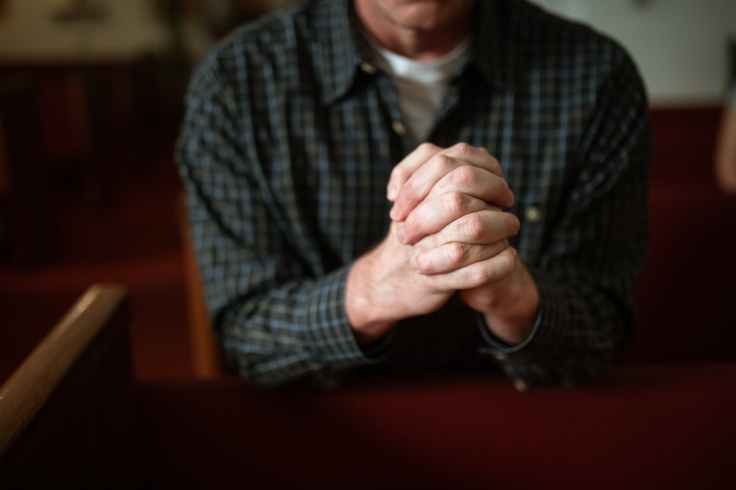
Prayers are more than just the words we speak. In Romans 8:26, the Apostle Paul says, “We do not know what we ought to pray for, but the Spirit himself intercedes for us through wordless groans.” Prayer often involves our entire being– body, soul, mind, and spirit–as we bow our heads or lift our hands, sweat, groan, go through a range of emotions from grief to praise, and try to express our heart cry in muddled words.

But prayer is not about US. It is not about our words or our emotions or even our desires. Prayer is about staying connected to God. In ourselves, we will always be insufficient. We may be able to take actions that will help others (or ourselves) achieve some measure of relief or understanding when things go terribly wrong. But we cannot bring complete justice; we cannot reverse what has already happened; we cannot guarantee outcomes. In prayer, we give outcomes and justice to the Only One who can bring true healing, justice, and peace out of our tragedies. We give up on the idea that our own thoughts and actions can overcome all the things that are beyond our control. And we lift up our questions, our fears, and our deepest hurts, with whatever measure of Faith we have, to the one we trust to make all things right. And we relinquish the idea that God MUST give us what we desire in the moment to believe that He gives us what is best according to His eternal plan.

Prayer isn’t simple. It isn’t a “cop-out.” It is a sacrifice. God may never answer our desire for an explanation, or for revenge in this life, or for a re-instatement of all that we think we deserve. But prayer connects us to the Sovereign Heart of God. Prayer doesn’t change our circumstances. It changes the way we respond to them. It changes the way we see ourselves and our own limited power. It changes the way we see others– even those who would harm (or have harmed) us.

Words are not enough– but Prayer taps into the all-sufficiency of God. That is more than enough. And the more we pursue and practice Prayer, the more we will understand its power and sufficiency.

In This World You Will Have Trouble…

When will the violence end?  How long, O Lord, must we wait for justice?  Why did you allow this to happen?

And it has happened again.  A school-related shooting, this time in Minneapolis, Minnesota.  News feeds were filled with information, speculation, analysis, and commentary for days after the incident.  A week later, the fury seems to have moved on, and the fate of the two murdered children, their families, and the other wounded victims of the shooter’s rampage are dwarfed by the cries of those with a political agenda.  Some are raising concerns over gun control; others want to look at the effect of puberty blockers and other treatments used for those in the trans community. Everyone looking for a quick explanation and a quick solution, so that this “never happens again.”

Senseless violence, natural disasters, sudden tragic circumstances, still have the power to shock us, overwhelm us, shake our confidence, our composure, our beliefs.  Most of us want to believe that we live in a predictable world, a safe and orderly world, a world that has been tamed, and groomed, and civilized.  And we don’t want those beliefs shattered with the truth– life is unpredictable, filled with tragedy, evil, and danger, and it will end in death.  I’m not saying this as a cynic or a pessimist– life is also wonderful, filled with love, laughter, achievement, delight, and eternally precious.  But why are we so deeply disturbed to face the truth about our troubled world?

I believe it is due, in part, to the recognition that this is a fallen world.  It was not made for evil and tragedy and death, but every tragedy reminds us that the whole earth groans for restoration to what it was always meant to be.  The echo of Eden, and the hope of Heaven live in us, and the reality of our lost state cannot be denied when tragedy strikes.  The pleasant facade of the triumph of reason and humanity cracks, and we are forced to see that evil resides next door, down the street, across town, perhaps even in our own hearts and minds.

I love the movie “The Princess Bride” (ask any of my friends–I can quote whole scenes!), but when I first saw it in the theater, there was one line that struck me like a punch in the stomach.  The Dread Pirate Roberts (a.k.a. Westley) kidnaps/rescues Buttercup from her original captors, and after she tells him of the pain and desolation of losing her true love, he doesn’t comfort her by revealing that he is, indeed, her own sweet love, still alive and well.  Instead, he says, “Life is pain, highness.  Anyone who tells you differently is selling something.”   Wha-what?!   What kind of lover, when confronted by that kind of tragic outpouring, says something so callous?  To quote another line from the movie, “Why don’t you give me a nice paper cut and pour lemon juice on it?”  But Westley is not heartless.  The line is memorable, both because it is jarring in its context, and because we recognize that it holds a truth.  Anyone who tells you that this life will be free of pain and suffering IS selling something.  In the movie, Humperdink is “selling” the idea that he is going to make Buttercup a princess and marry her, and they will live happily ever after; all the while planning to kill her.  In today’s world, there are people trying to sell us ideas– that they “have it all figured out”; that truth and justice and morality  and even a person’s worth and value are all relative; that God doesn’t exist or that he doesn’t care; that evil is a figment of our imagination, or that human institutions can create a perfect society and “save” the planet from other human activities and institutions.

Jesus tells us in John 16:33 that in this world, we will have trials, trouble, tribulation, and/or suffering (depending on which version you read).  Not because God doesn’t care; not because he is incapable of stopping tragedies, but because we (humankind) have turned away from God, and the consequence of our rebellion is tragedy and death.  He doesn’t tell us this because he is callous or insensitive or cynical.  In fact, in the next phrase, he tells us to take heart, and to be of good cheer, for he has overcome the world.  HE has overcome the world, and in doing so, he has given us hope, and peace, and strength– not to avoid or deny tragedy, but to overcome it, and to triumph over it.

How does this relate to the pursuit of prayer?  Prayer is not a magic panacea in times of trouble– it isn’t a chocolate-coated miracle pill.  Prayer (and sharing thoughts and prayers with those who are suffering) doesn’t make the suffering disappear– it doesn’t lessen the horror or the evil of an event, and it doesn’t guarantee that future hate, violence, injustice, or tragedy will disappear or even diminish.   But prayer reminds us that evil will not always triumph; that it need not overwhelm us, paralyze us, or defeat us.  I believe it can bring us from being “mostly dead” in despair, fruitless rage, divisive finger-pointing and fault-finding, “inconceivable” arguments, vengeful fantasies, and conceited self-indulgence, back to abundant life in Christ, and renewed courage to do what is kind and loving, even in the face of evil.  Prayer should also restore our focus on what is good, and noble, and true, so that we can be equipped to fight for what is right, instead of just ranting against what is wrong.

Finally, brothers and sisters, whatever is true, whatever is noble, whatever is right, whatever is pure, whatever is lovely, whatever is admirable—if anything is excellent or praiseworthy—think about such things.– Philippians 4:8

I pray, in the wake of this newest tragedy, that God would show me where I am wrong in my thoughts and actions toward Him and toward others; that he would surround those who are suffering pain and loss, giving them comfort, strength and renewed purpose in the days ahead; that he would lead us to have the tough conversations, and take the right steps to bring renewal, restoration, hope, and healing to our communities and our land; and finally, that we would listen to, and acknowledge the truth, and take heart as we focus on the One who has overcome the world.

Where is God When…?

A priest, a Baptist minister and a rabbit go to a pub for lunch. The hostess meets them at the door with a message. “Today, we are helping a local blood bank. Your lunch is free if you donate a pint of blood.” All three agree to donate blood in exchange for a free lunch. The hostess asks each one in turn for his blood type. The priest says, “I believe my blood type is A negative. The minister says, “It’s been a long time, but I seem to remember that I am AB positive.” Finally, she turns to the rabbit. “I was supposed to be a Rabbi, so I must be a Type O!”

I love puns, and like many puns, the humor in this one comes from a grammatical or spelling error. Something in the story is almost, but not quite, as it should be. It is a good thing to be able to laugh at small mistakes. But what happens when things are terribly wrong? It’s not funny at all. It’s devastating, confusing, and frightening. We want answers. We want the situation “fixed.” We want to find out what went wrong, why it went wrong, and who is responsible.

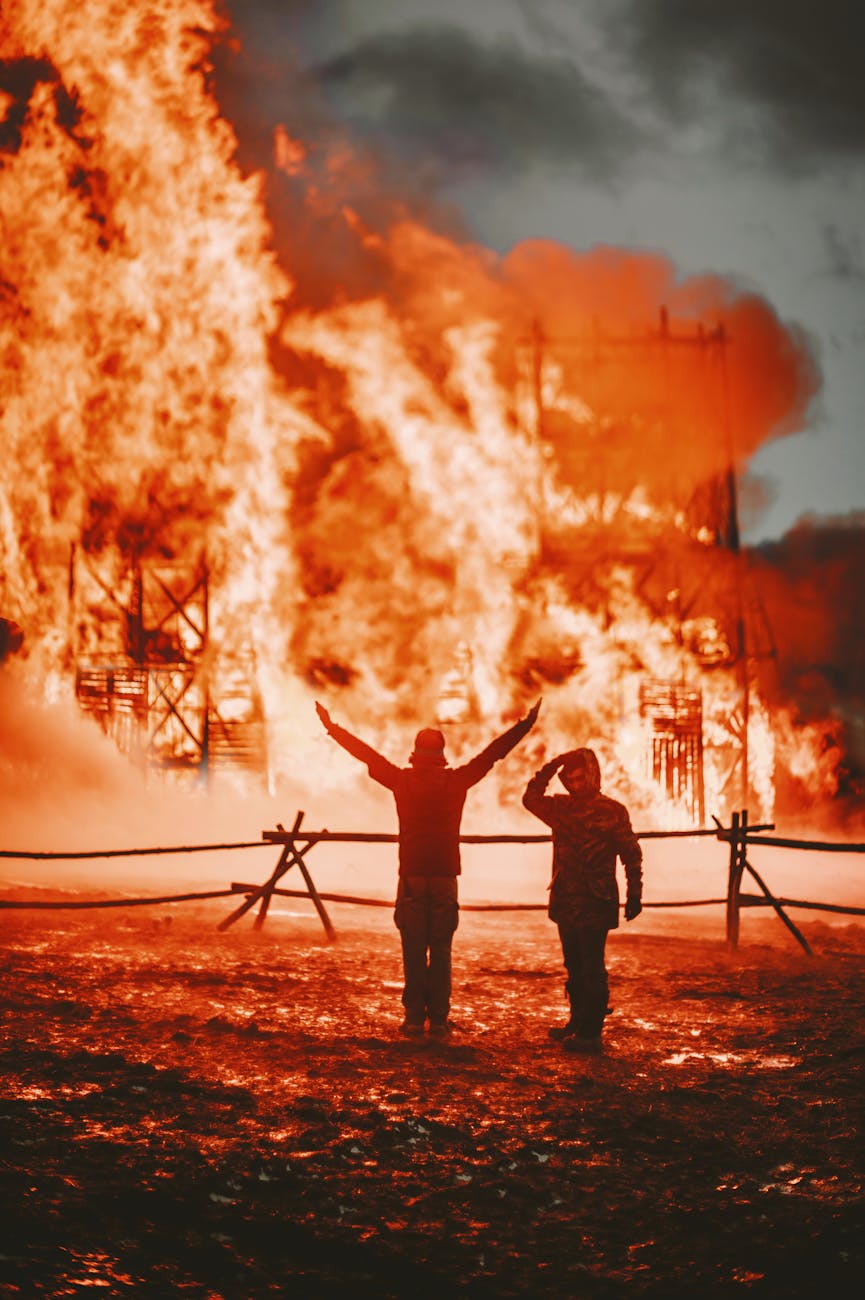
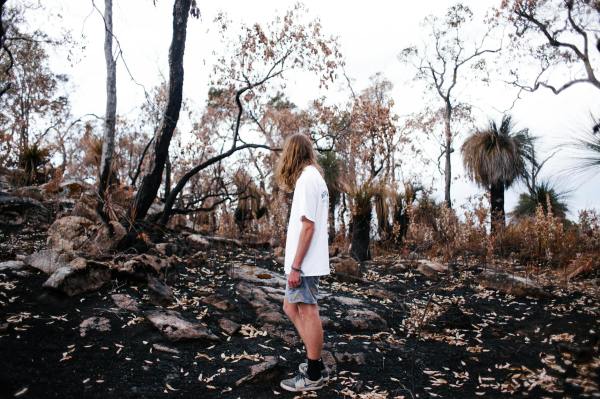
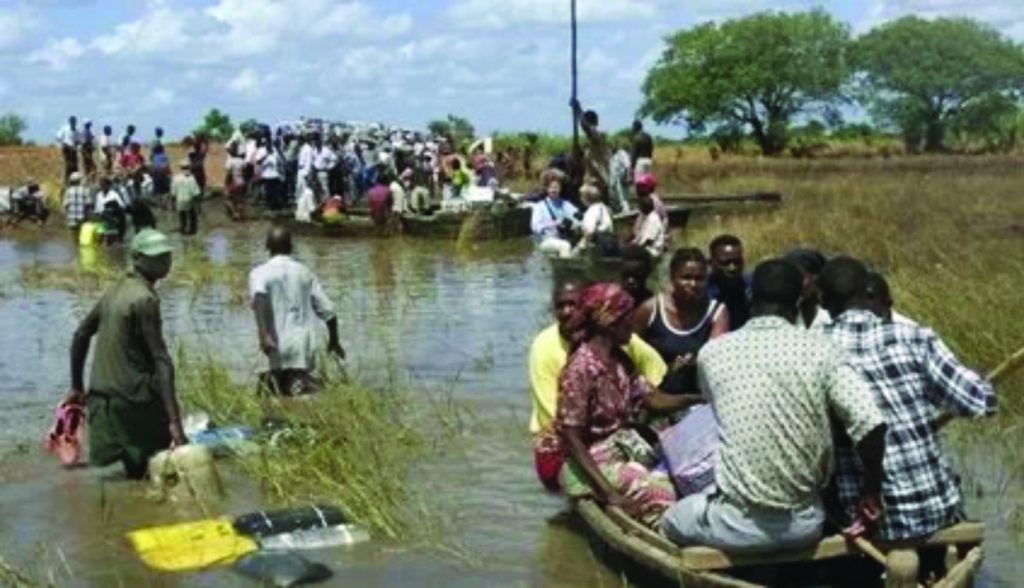
California is burning as I write this. Thousands of acres destroyed; hundreds of homes and businesses reduced to ashes; thousands of people left homeless. Where is God in these fires? When an innocent child is abducted, raped, mutilated and left for dead, where is God? Where is God amid the unrest in Mozambique, where typhoons and political unrest have caused so much havoc? Where was God when the hurricane and storm surge displaced tens of thousands of people in North Carolina, Tennessee, and Georgia less than six months ago? Where is God in the war-torn regions of the world, where innocent families are being terrorized by bombing raids and invading armies? Where was God when millions were dying of COVID just a few short years ago?

I’d love to say that I have an answer. One that is comfortable, unassailable, logical and easy to understand. But I don’t. The “glib” answer is that God is on His Throne, omnipotent and all-wise. And He is. He is not to “blame” for personal tragedies or for sweeping disasters. Sometimes, God intervenes in miraculous ways to “save” us from certain death, “accidents,” or even attacks. But often, He chooses not to do so. And I have no explanation, no all-encompassing, deeply soothing answer for those who are left suffering.

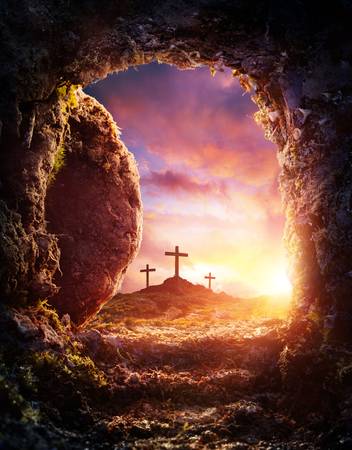
What I do know is this: God is a redeeming God. He is a God who can and often will turn tragedy into triumph. And even if, in such cases, the triumph is often bitter-sweet. This is a God who created mankind, knowing we would reject His goodness and go our own way. This is a God who took a single faithful man (Abraham) and made him the father of many nations– some of whom are still at war to this very day. This is a God who did not spare His Only Begotten Son, but allowed Him to go through a sham trial, be falsely convicted, and die a painful, publicly humiliating death. And then, Christ arose!

What does that mean for someone whose son or daughter is still dead after five (or 25) years of grieving? For someone who lives every day with the trauma of having been raped or abused as a child. It does not give immediate comfort. It does not take away the sting of injustice, pain, and questioning. But it is the promise of redemption– that just as Christ rose victorious, He will cause the pain and grief of the past to disappear in the Joy and Wonder of Eternity with Him. He WILL bring ultimate and complete justice, and it will be perfectly overwhelmed with mercy, grace, and freedom from the past.

It may seem slow and painful, but it WILL happen. Those who have suffered; they will laugh again. Those who are drowning in the senselessness of their own sorrow will experience healing and have answers to their questions. Those areas of the world where suffering is so great in the present– they will recover. Trees and gardens will grow again. Houses will be rebuilt. And yes, there will still be disasters and devastation in our lifetime, and in the years to come– UNTIL THAT DAY. That day when Christ returns to make all things new. Whatever hurts and griefs we carry now, they will be overtaken by joy and healing. No more fires, no more floods, no more war, no more disease, no more “mistakes.”

I don’t know why God allows us to suffer now. I’ve heard some philosophers try to explain, and they have many “good” reasons:

Suffering often leads to growth and necessary change.
Suffering produces resilience and develops character.
Suffering teaches us that there are consequences to our selfish and sinful actions.
Suffering often brings people closer together and brings out the best in us as we offer help and hope and encouragement.
Suffering teaches us to be compassionate toward others in their suffering and grief.
Suffering contrasts with joy, helping us to appreciate what is truly good in our lives.

These are not bad answers. But they are not complete. They are not “enough.” And I think that’s part of God’s plan. God doesn’t want us to live life on autopilot. He doesn’t give us “easy” answers– just like He doesn’t give us a life without any purpose or challenge. He doesn’t want us to focus on having all the answers. He wants us to learn from each other, depend on one another, and ultimately to trust that He knows best. It’s not an easy lesson to learn. But if we stay in pursuit of Prayer, and closeness to God, it’s a lesson well worth struggling through.

And sometimes, we can learn to laugh at life’s “typos” and other little mistakes as we travel this life.

Prayers of Protection

My husband and I just returned from a week-long vacation. We had a very nice time, just getting away for awhile, relaxing, doing some fishing, and enjoying nature. We like to travel, and we like to take the “back roads” and scenic routes. Even so, we pray for God’s protection as we travel.

Praying for “travel mercies” or safety as we travel is not a magical formula. We were not expecting that God would somehow grant us a problem-free trip. Prayer doesn’t change the possibility that we could be involved in an accident, or our car might break down, or we might be subject to bad weather or natural disaster (on that note, we are praying for those impacted by Hurricane Helene– both residents and travelers). Rather, praying for safety in our travels is an acknowledgement that God knows what the future holds, and we do not. God is able to protect us from harm in a miraculous way, if He so chooses. But He is also able to bring us THROUGH tough times and even disasters. Prayer reminds us that we are not the sole authors of our own circumstances.

Nor does prayer negate our obligation to practice safety–we obey the traffic laws, check to make sure the car is in good condition, we wear seatbelts, and pay attention to driving conditions. Prayer simply reminds us that we are not the sole authors of our circumstances. We expect certain outcomes, but God knows both the expected and the unexpected outcomes; we proclaim our trust in Him, no matter what.

So what happened on our vacation? Was it all smooth sailing (or driving in our case)? Not quite. Yet I believe that God answered our prayers and showed His faithfulness. We took our Jeep and drove almost 500 miles away from home without any major incident. We did have to “pump up” one of our tires, and we experienced some rough driving when we went “off road” due to a wrong turn we took. (We ended up on a designated trail for off-road vehicles, thinking it was a short-cut to a rocky beach!) And, just as we were entering our home town at the end of our trip, we witnessed (but were not involved) in a bad crash involving a vehicle fleeing from the police.

I believe that God was with us–not just because we had a good trip with minimal troubles, but because He has promised to never leave us! I know faithful Christians who have died in terrible car accidents. Two years before I was born, my mother and grandmother almost died in an auto accident. God was still with them! Someone once asked me to think about all the “close calls” and even unknown dangers that none of us can see–We have no idea how many times over we “should” have died or “might” have faced grave dangers. In fact, on another vacation a few years ago, we were within 30 miles of home when we hit a deer. No one was hurt, but it could have been a disaster. The accident that injured my mother was along a route that she drove every day. In fact, most accidents happen within 25 miles of home. How easy to pray for protection for a long trip into the unknown and forget to pray when we are traveling to church on Sunday or to the movies on Friday night! Yet God may have protected us from death a hundred times over in our lives without our knowledge. It is only when we see the frightening possibilities that we acknowledge the miracles of His protection in our lives.

It can be difficult to see the hand of God when a miracle doesn’t happen. When “good” people die or suffer extreme pain as the result of a freak accident. We want life to “make sense.” We want our plans to, well, go as planned. And it can be too easy to claim credit when things DO work out just the way we expected. God did not let bad things happen to other people because He didn’t love them. And He didn’t let David and I have a great vacation because He somehow loves us MORE than others, or because we are somehow “better” or “more deserving” of a good vacation.

God answers prayers of protection– not because He has to, and not always in the way we expect Him to–God’s ways are NOT our ways. But we can trust Him, and continue to pray for protection and mercy as we travel through each new day. He IS Faithful. He WILL not leave us to face the unknown alone.

Why, O Lord?

We are a curious race, humans–we ask a lot of questions of ourselves, each other, and even of God. How did He make the universe? When will Jesus return? Who can we trust in this world? Where is Heaven? What must we do to be saved? But the majority of our questions are “Why” questions. Why did Jesus come? Why did He have to die? Why did God make snakes and mosquitoes and platypuses? Why are men and women so different? Why am I… (short/tall, fat/thin, clumsy, “odd,” misunderstood, etc.)? Why are You so mysterious? Why do bad things happen to “good” people?

I was thinking about this last question this week. I don’t have any definitive answer to that– no one I know has any better answer. God has not given us a definitive answer, either. We are to trust that His ways are wise and best and perfect, but faith and trust require–well, Faith and Trust! We know God has done good things in the past. We know He has redeemed what seemed like hopeless situations. We know His promises, and we have seen some of them fulfilled. Still, such a question can often leave us blindsided and tongue-tied.

There are many learned thinkers, philosophers, and apologists who have written whole books on this subject, but I want to just pose a couple of ideas to help us, not ANSWER the question, but understand the question a little better.

First, the question, “Why do bad things happen to good people?” is really two questions: “Why do ‘bad’ things happen?” AND “Why do they happen to ‘good’ people?” So let’s look at the questions separately.

“Why do ‘bad’ things happen?” What do we mean when we say “bad things?” There are many circumstances, events, diagnoses, and occurrences that may be called “bad.” Death is “bad.” Indigestion is “bad.” Stubbing one’s toe is “bad.” Being diagnosed with Alzheimer’s Disease is “bad.” Divorce is “bad.” Slavery and abuse are “bad.” House fires, job losses, being mugged, being stranded without heat in a blizzard, an outbreak of acne, being laughed at– all these are “bad.” But they are all different. Many “bad” things are the direct result of sin–we suffer the consequences of our own sin; we are the victims of the sins of others. The consequences of addiction can be horrific, but we often lack compassion for those who are suffering, because “they brought it upon themselves.” But what about the innocent victim of rape or child sex trafficking? Such acts leave victims traumatized and broken. Both are “bad,” but we are angered and frustrated even more when “bad” consequences also seem unjust and unfair. And what about natural disasters? Are they the result of sin, as well? The Bible suggests that they are. When God placed Adam and Eve in the Garden of Eden, they lived naked, carefree, and unafraid. Only after their sin did God place a curse on the land– Adam would now have to cultivate the land in order to get food. There would be enmity between the woman and the serpent. Eve (and all women after her) would have pains in childbirth. (see https://www.biblegateway.com/passage/?search=genesis+3%3A+14-20&version=NIV) There is no mention of hurricanes, blizzards, or earthquakes prior to the Fall of mankind, though it is speculation on my part, to say that there were none.

God has promised to make all things new. There will be a time when the consequences of Sin will be eradicated. We will not even remember the suffering we endured in life, in light of the blessings of eternity. So, though God doesn’t answer our question of why “bad” things happen, He does give us the assurance that such “bad” things do not determine our destiny, nor do they happen without His knowledge or outside of His will! We cannot understand God’s purposes in allowing us to suffer, though sometimes we may see a hint of good even in the midst of tragedy.

And God is loving and gracious in the face of our confusion and pain. We CAN ask God “Why?!” “Why me?” “Why this?” “Why now?” “Why them?” Why, O Lord!?” Many of the Psalms speak to this very question. But in the middle of his anguish, the psalmist often finds comfort and renewed strength to face the struggle, when he turns to God. Asking why is not always a sign of weak or failed Faith. Instead, it is acknowledging before God that we ache. We grieve. And we NEED HIM!”

And what about the second part of the question: “Why do (bad things) happen to ‘good’ people?” What makes a person “good?” Jesus was “Good,” And yet He questioned the rich young ruler, “Why do you call me good? No one is Good– except God alone.” (see https://www.biblegateway.com/passage/?search=Luke+18%3A18-27&version=MSG) We tend to think of the people we know and like as “good.” And we have a natural expectation that their lives should be “good” also– free of pain or struggle. But that is not realistic in this world. The actor, Michael J. Fox has been suffering for years with Parkinson’s Disease. This seems unfair and cruel. How could God let him suffer like this? But there are many thousands of people suffering from Parkinson’s Disease. Some of them are homeless addicts; some are in prison for rape or embezzlement. Is their suffering any less than that of Mr. Fox? Is it somehow less tragic or unjust?

The sad and shocking truth is that none of us “deserves” a pain-free, struggle-free life. Bad things DO happen. And they happen to people we like, and people we hate; people we judge to be “good” and people we judge to be “bad.” God does not “play favorites.” Yes, God can, and often does intervene on someone’s behalf through prayer, or for His own bigger purposes. But He does not “dish out” suffering to those He dislikes out of spite or revenge. Nor does He cause His faithful to float through life without ever tasting bitterness and grief. Jesus made many promises, but one of them was this: “in this world you will have trouble; but be of good cheer, I have overcome the world.” (John 16:33) He didn’t promise that you might have a little spot of trouble, or that you might look around and see others in trouble– He promised that we would have trouble. Not because we are “bad” or “good” but because that’s the way this world is.

I find it odd that atheists often pose this question as a way of trying to “prove” that God doesn’t exist. They pose the question as an accusation. “If there is a kind and loving God, why do bad things happen to good people?” But if they believe that there ISN’T a kind and loving God, how do THEY explain why bad things happen to good people? How do they define “good” people and “bad” things? Without a Good God, where is the expectation of good things happening to good people? Without God, there are no objectively “good” things or “bad” things happening– only random events without divine cause or purpose. You can’t blame a non-existent God for things He either caused or didn’t prevent. Such questions are meant to plant doubt in the mind of a believer, but they fail to answer the greater question– Why do Good things happen to undeserving people? Why do we sometimes find joy and peace and strength in the midst of our suffering? Why do human beings continue to Hope?

Finally– the ultimate example of God letting something “bad” happen to someone “good” can be seen in the central image of our Faith– the crucifixion of Jesus Christ. Jesus was sentenced unjustly to a torturous death and public humiliation. He was separated from God the Father, and carried the punishment for OUR sins so that WE could be reconciled to God. Even though the purpose of Christ’s suffering has been revealed to us, it doesn’t negate the agony and trauma He faced. And even HE cried out from the Cross– “My God, My God, WHY have YOU forsaken ME?!” (Matthew 27:46)

God does not answer the question of why “bad” things happen in this world. But in the crucifixion, Jesus proves to us that He shares and understands our suffering; that He has the power to overcome and redeem our traumas; and that He will hear our sincere cries of “WHY?!” He will hear when we turn toward Him, instead of turning our back on Him. He will hear our broken heart. He will heal our broken heart.

WHY?– Because He loves us!

Just 10 Percent

Bible teacher and author Chuck Swindoll is credited with saying, “I am convinced that life is 10 percent what happens to me and 90 percent of how I react to it. And so it is with you. We are in charge of our attitudes.” When I was younger, I liked this quote, but I quibbled with the numbers. Surely, we are in control of our reactions and attitudes. And our circumstances don’t determine our lives completely. But just 10%?! What about those whose circumstances are overwhelmingly tragic?

I thought of some of my father’s experiences, and it seemed as though what happened to him in four short years should have had a greater impact on his life. During the four short years that my father was in high school (1945-1948), his family experienced at least three tragedies. Dad grew up on a farm. His dad was a dairy farmer, as was his grandfather. Dad grew up expecting that he would, along with his father and brothers, spend the rest of his life as a farmer. But then, everything changed. First, Dad’s oldest brother was drafted into the Army at the very end of World War 2. Though my uncle was not in combat, he was badly wounded in Germany, as his unit was sent in to find unexploded bombs and land mines, and ordered to clear out rubble. Dad had lost one cousin in the war, and several others had come home wounded or changed, but my uncle’s situation was post-war, and unexpected. It meant more work for my grandfather and the two younger sons, even as they were still in school. It meant uncertainty, as they waited for word from thousands of miles away over several months.

Uncle Jack recovered and returned to the farm. But then, on Christmas Eve, there was a house fire. While the family escaped without major injuries, the house was a total loss. Furniture, clothes, pictures, heirlooms, farm records and financial papers– all gone. Dad moved in with his aunt and uncle to continue his education. But two weeks before graduation, his father died suddenly from complications from emergency gall bladder surgery. My father’s world had been turned upside-down in just a few short years and at a critical juncture in his life.

Photo by Pixabay on Pexels.com

However, as I’ve matured and thought about it over the years, those events, among other tragedies and triumphs in Dad’s life, really DID only amount to a small percentage of his life. Even numerically/chronologically, those four years were less than ten percent of Dad’s time on earth. Dad couldn’t control the events of those years. He couldn’t have predicted them, and he couldn’t erase them or go back and undo them. But he chose how to respond and react to those events. He learned from them.

Circumstances in our lives, whether tragic or terrific, present us with choices. Will we turn to God, or away from Him? Will we become better, or bitter? Will we seek to assign blame, or seek solutions? My dad and his brothers were not able to continue the dairy farm their father had built up. Without the records and registration papers for the various cows, without their father’s experience and acumen, without money to upgrade their facilities and equipment, they had to sell most of what their father had built up. Uncle Jack kept the farm land, but he took a second job. Dad was drafted and sent to Korea for his own post-war odyssey, and came home to work at the local feed mill, and later in a factory job. He passed away several years ago, partly as a result of complications from gall bladder surgeries.

My dad’s life was impacted and shaped in part by tragic circumstances. But Pastor Swindoll is right– at least 90 percent of my dad’s LIFE was shaped by his attitude and character. My father was a man of faith and integrity. He cherished his family and his role as a father– partly because of the loss of his own dad; but also because of the lasting legacy his father had passed on. He spoke often of his wonderful memories growing up on the farm. He lost out on his dream of being a farmer. But he also made wonderful memories with the life he chose to pursue off the farm– picnics and vacations, family reunions, family devotions, watching baseball (live or on TV), sharing laughter and tears, and making sure we knew we were loved and protected. He ministered to people in the community, mowing lawns for widows, or visiting shut-ins. He taught us to love music, baseball, and animals. He taught us the value of prayer, reading the Bible, and living a life of faith. Dad could have been bitter. He could have chosen to wallow in self-pity or anger. He could have become obsessed with rebuilding the life he “lost” to circumstances. He could have decided that God had “robbed” him of the future he had expected to have. But he chose to believe that God had a plan for his life; one that was bigger than his boyhood dreams and bigger than his expectations. Dad didn’t rise to great wealth and power. In the world’s view, his life was not a great success. He never became rich or famous; he wasn’t powerful or important in politics or business. But the memories he treasured and the relationships he developed were far more than 10% of his life!

As I get older, and look back on the circumstances of my own past, I am encouraged and challenged to think that they represent only a small fraction of my life. I can’t control many of my circumstances– health setbacks, financial struggles, accidents and tragedies. But I can control my attitude and my response. I wanted to marry young and have children and raise a family. But that never happened. I married late, I was barren, and my step-children were already grown. I wanted to live in a big farmhouse; instead I live in a small apartment. But I would not go back and undo the circumstances that have shaped my life. I have marvelous step-children and grandchildren. I have had opportunities that were only possible because I was single for so long and because I was childless. I have a better appreciation for the family I have– including nieces and nephews and cousins– than I might have had if I had been wrapped up in my own smaller family. Dad taught me to trust God’s plans for my tomorrows. That’s what he did. And I choose to do the same– after all, God controls 100% of my future!

Surprise!

Have you ever been the “victim” of a surprise party?  Maybe you sensed that something was “up”, but you were still shocked and elated to see old friends or family all wanting to wish you well on (or near) your birthday, anniversary, wedding, retirement, or even “just because”.  Even if you “catch on” or if someone “spoils” the surprise, it can be a wonderful celebration.  (Or, on occasion, a disaster.)

pexels-photo-764340.jpeg

Have you ever been on the planning side of a surprise party?  Several years ago, we threw a surprise birthday/retirement party for my father.  It required several months of planning.  We invited cousins from out of town, co-workers, neighbors, and old friends.  We gathered old pictures and mementos to display, ordered cake and balloons, and tried to keep the excitement under wraps, lest my father guess our intentions.  All the details fell together, except we couldn’t figure out how to get him to the party without guessing.  Dad was a genius at “sussing out” secrets and surprises, and also at setting them up.  We wanted to turn the tables and give him the best surprise of his life.

Then, less than a week before the party, my aunt (my mom’s sister) died in a car accident.  The funeral was arranged for the same day as Dad’s celebration.  We suddenly had to wrestle with a decision– to cancel or to forge ahead.  With so many coming from out of town, we decided to stick with the original plan.  It would be difficult– my aunt’s funeral was scheduled earlier in the day, and there would be about an hour to drive from one event to the other.  Dad was certainly surprised–already dressed in his best suit, he drove from a funeral in one town to a party in his honor 20 miles away.  From flowers and tears to laughter and cake…it was a day unlike any other.  The first several minutes were surreal and jarring.  But it was also cathartic.  As difficult as the day was, we honored both my father and my aunt.  Being surrounded by family and friends, some of whom joined us for both events, became a healing and encouraging experience.
It was not the surprise we expected–certainly not the surprise we had planned.

chocolate cupcake with white and red toppings

Several years later, (in fact, after my father had passed away) we planned another surprise party– this time for my mother.  Mom had, of course, been part of the planning (as well as the trauma) of the first event.  As with the first party, we invited family from out of town, ordered cake and balloons, gathered photos and memorabilia, and wondered how to get her to the event without suspicion.  All went as planned, and we had a wonderful time.  Mom was delightfully surprised, and even more so for having been through the experience of the prior party.

What does any of this have to do with prayer?
Well…we prayed for both parties.  We prayed that all would go well, that Dad and Mom in their turn would be surprised, that guests would arrive safely, and that the parties would both please and honor the recipient. God answered both prayers. His ways are not our ways– but He is eternally good. He gave us strength for each day in its turn, in the midst of surprises– pleasant, painful, and both together!

But, far more, the two parties offer an illustration of God’s grace in the area of knowledge and foreknowledge.  “If I had only known…” is a common phrase, and one that we could readily apply to the Dad’s party.  But if we had known the end from the beginning, would we have changed our plans?  When we say that we want to know the future, we’re generally asking to know a specific outcome of a specific event– without considering the greater consequences and impact of that outcome.  When we pray, we generally pray for a specific outcome, again without knowing the full consequences.  What seems like a disastrous outcome to us may be God’s way of preparing us for an unexpected blessing.  God doesn’t send bad gifts– disasters come (and God allows them in His sovereignty)–but He doesn’t send disaster and pain to mock us or ruin our lives.  Instead, in the midst of tragedy, He gives us unexpected strength, comfort, and sometimes, even joy.

pexels-photo-145378.jpeg

If we had known that Dad’s party would be shadowed; that my aunt would die so suddenly, we might have given in to despair and bitterness.  And though the party brought unexpected comfort, it did nothing to erase the overall grief of my aunt’s passing.  But we learned so many things that day.  We were reminded that our time with Dad was precious– that life itself is precious– in a solemn and powerful way.  We were able to receive comfort from unexpected sources.  We would not have shared our tragedy in such a public way with those who did not even know my aunt.  But circumstances forced us to do so, and in the process, we were able to continue to honor her in the celebration.

If we had known all that would happen at Dad’s party, and not seen it through, we might never have risked planning a party for Mom.  If we knew in advance all the joys and tragedies we would face, we would never learn how to trust God for the next step in life.  Even more, we would live in constant dread of looming tragedies and negate all the joy of discovery and wonder.  We might not be driven to take risks if we already knew their outcome, and we might not learn from our mistakes if we already knew their consequences…and because our lives are so short, we might only see the short-term consequences, and never see the ultimate outcome.

abstract art astronomy background

God is above and beyond time– He is the creator of all things, including time.  He has decreed for us a beginning and an end to life on earth, and He has decreed that we should life our lives with a certain amount of suspense– of not knowing what the future holds.  It holds both triumph and tragedy– trial and temptation.  Life is filled with surprises– catastrophes, ecstatic joy, and “a-ha” moments–as well as peacefully uneventful moments to reflect and enjoy.

As we pray today, we can be thankful that God’s knowledge is perfect, and that His power is sufficient to hold us in the midst of shock, lift us in the midst of tragedy, and surprise us with joy along the way.  And we can ask Him to grant us the wisdom to trust Him fully when we don’t see the end from the beginning– or from the middle–of the storm.

Praying for Time

When I was a late teen, and into my early twenties, I loved English pop music, including the duo, Wham! Their music was bubbly, upbeat (mostly), and easy to sing along to. I listened along, sang along, watched their videos, and danced along. When the duo broke up, I was eager to follow the rise of singer/songwriter George Michael, whose first two solo albums I bought and listened to, as well. But the tone of his solo music was different. There were danceable, singable tunes, but they were darker and more cynical. And many of the songs were less about enjoying life and more about social commentary, confusion, and even despair. The songs were well-crafted, but they were haunting, rather than enjoyable or uplifting. They spoke of sadness, depression, and world-weariness.

One of the songs that has haunted me for years was from his second album, “Listen Without Prejudice.” In it, he talks about greed, poverty, apathy, and a loss of innocence. It’s called “Praying for Time,” but the tone of the song suggests that time has all but run out.

And yet…

One of the ideas that still shines through the words of the song is that prayer–specifically praying for time–may be the only hope that we can still cling to. And in a time of darkness and hopelessness, prayer can reach beyond “wounded skies” to a God whose Grace extends even to His children who have “slipped out the back door.”

There is something about the idea of time as a gift from God that stays in the soul, long after most hope is gone. I think it is why we are so driven by the concept of time and time “running out” as we hustle through our busy lives. I think it is why we spend time avoiding “down time” and “alone time” and the quiet time we should take to reflect, meditate, and yes, even time to pray. And I think, too, that it is why we recognize that wasted time is a sin– that there is a purpose in our time on Earth that transcends having “fun” or living for our own selfish aims. George Michael often used “spiritual” words and phrases for his songs– often with a cynical twist, pointing out some of the hypocrisy he saw around him (and occasionally, within himself).

These are the days of the open hand
They will not be the last
Look around now
These are the days of the beggars and the choosers

This is the year of the hungry man
Whose place is in the past
Hand in hand with ignorance
And legitimate excuses

The rich declare themselves poor
And most of us are not sure
If we have too much
But we’ll take our chances
‘Cause God’s stopped keeping score

I guess somewhere along the way
He must have let us all out to play
Turned his back and all God’s children
Crept out the back door

And it’s hard to love, there’s so much to hate
Hanging on to hope
When there is no hope to speak of
And the wounded skies above say it’s much, much too late
Well, maybe we should all be praying for time

These are the days of the empty hand
Oh, you hold on to what you can
And charity is a coat you wear twice a year

This is the year of the guilty man
Your television takes a stand
And you find that what was over there is over here

So you scream from behind your door
Say, “What’s mine is mine and not yours”
I may have too much but I’ll take my chances
‘Cause God’s stopped keeping score

And you cling to the things they sold you
Did you cover your eyes when they told you
That he can’t come back
‘Cause he has no children to come back for

It’s hard to love, there’s so much to hate
Hanging on to hope when there is no hope to speak of
And the wounded skies above say it’s much too late
So maybe we should all be praying for time

“Praying for Time” George Michael, Listen Without Prejudice, 1990 (lyrics taken from Lyrics.com)

In an interview, George Michael analyzes his own lyrics:

While he mentions “He” and “God,” it is clearly humanity he blames for the apathy and selfishness, greed and scandal, the “empty hand” and “wounded skies” mentioned in the song. And his repetition of “all God’s Children” and its counterpart, “no children to come back for,” is aimed at US– people who “slipped out the back door,” moving away from God and embracing our own wickedness. WE have entered this time of hopelessness and despair. WE have crafted it in our own ignorance, and then in our own pride and stubbornness. But we can still pray for time– time to repent, time to return, time to reach out to others with compassion and hope. What the song just barely misses is that prayer can open so much more than just time. Prayer can bring renewal, justice, redemption, and eternal hope! God hasn’t stopped “keeping score,” by any means. But He is holding back the wrath and judgment we all deserve, giving us time to seek Him! Most of all, we can pray, not with desperation, but with confidence– even in times of confusion and distress, because we have an Advocate, Jesus Christ, who hears all our prayers– desperate, confused, ashamed, angry, hopeful, offered with no more than a mustard seed’s faith.

George Michael, like all of us, lived in a fallen world. He was looking at the world, and seeing injustice, greed, apathy, corruption, violence, and the ravages of Sin. His own life was plagued with sorrow, tragedy, pain, injustice, drug addiction, betrayal, and the effects of Sin– both his own and others’. I don’t know if he ever found peace and hope in this life. I hope so. His gifted life ended early and tragically. But his song lives on with a warning, and a hint of promise, too.

We SHOULD all be praying for time– time to change. Time to repent, and seek God’s wisdom. Time to reach out to a darkened world with more than despair and dark analysis. To reach out with the Hope of Christ, who brings Redemption, Justice, and MERCY! We should be praying for time to meditate on the Goodness of God, as well as time to see the needs of others. We should be praying for wisdom to share our resources, and to multiply the good we can do– things that only God’s power can really accomplish. We should be praying for connection– restored relationships, and renewed fellowship with the Father. We should be praying for time to pray! Not just a desperate kind of prayer that this song suggests, but a lifelong pursuit of prayer that connects us to the Source of Hope, Joy, Peace, Power, and Love.

This year, while I don’t often listen to George Michael’s music anymore, I will be “praying for time.” And I will be investing more time in prayer! I hope you will join me in the time God has gifted us with this year!

For more analysis of the song and its relation to prayer see the following:

Blog at WordPress.com.

Up ↑