Leaning– “Eutychus and Hot Dogs” Revisited

*Note: This is a revision of an older post– you can visit the original here: https://wordpress.com/post/pursuingprayer.blog/2156

I was reminded today of an old hymn; one that I heard as a child and did not understand at all. Have you ever heard a new song, and completely mis-heard the lyrics? As a young child, I often heard hymns sung that were familiar to the adults but “new” to me. This was one of them. I paid little attention to the first verse, but the chorus!?! I was convinced the congregation was singing, “Wienies (the word my grandparents sometimes used for hot dogs)! Wienies! Wienies on the everlasting arms…” It sounded like a righteous chorus of hot dog vendors at a baseball game. What could hot dogs possibly have to do with living for Christ? I giggled and snorted, and my grandmother, who was standing next to me, quietly leaned over and asked what I found so funny. When I explained it to her, she too began to giggle a little, and we shared a (quieter) giggle and smiles throughout the rest of the hymn. (Sacrilegious, I know, but it seemed very funny to a five-year-old.) Later, my grandmother lovingly explained the hymn–turning a “silly” song into a wonderful testament of God’s tender, loving care that touches me to this day.

There is another old hymn, known as “The Solid Rock” or “On Christ the Solid Rock I Stand. ” One of the lines of the hymn states, “I dare not trust the sweetest frame, but wholly lean on Jesus’ Name.” Jesus IS the solid rock, the everlasting arms, and the “frame” on which we can both stand and rest secure. He is also our anchor in any storm (see “My Anchor Holds” https://wordpress.com/post/pursuingprayer.blog/5828)

There is a curious story in the Bible about the Apostle Paul and a young man named Eutychus. https://www.gotquestions.org/Eutychus-in-the-Bible.html. The story is found in Acts 20:7-12 https://biblia.com/bible/esv/acts/20/7-12, and involves a young man listening to the Apostle Paul. As Paul talks on into the night, the young man, sitting in the third story window, falls asleep, falls out of the window, and plummets to his death. Luke, who authored the the gospel which bears his name and the book of Acts, was a doctor, and an eyewitness of this event. He clearly states that Eutychus died from his fall. But Paul runs outside and immediately brings Eutychus back to life, returning inside to finish his talk and eat with the crowd– who are amazed and relieved to find their friend alive and well. The Bible doesn’t say what they had to eat– certainly NOT hot dogs– nor does Luke spend time giving details of the aftermath of such a miracle. Paul simply picks up the limp form in his arms, lets everyone know that the young man is alive, and they all return upstairs and pick up where they left off: “breaking bread” and talking!

Luke’s story doesn’t say whether or not Eutychus was alone in the third story window, or leaning against a wide window frame or perched precariously before he fell into “a deep sleep.” I have always imagined him perched comfortably leaning against the side of a wide and open window frame, one leg drawn up and the other dangling as he listened to Paul speak. As the night wore on, he may have slouched a bit, or even turned to lean his whole back against the frame, pulling both legs up onto the wide ledge. I imagine there were others sitting close by. There may even have been others leaning against the window frames! But as they were engrossed in Paul’s message, and whatever questions were being asked and answered, Eutychus drifted into sleep and lost his balance. My mental picture may be completely wrong, but I don’t think of him hugging a narrow space and sitting tense or afraid and clinging to the window frame before sleep claimed him. I imagine that he felt safe and secure in his position, never expecting to fall to his death; never expecting to become famous for falling asleep during one of Paul’s sermons!

I don’t recommend to anyone that they trust themselves to a window frame, a third story balcony, a too-comfortable seat at the theater, or to hot dogs eaten in bleacher seats at the baseball game. God doesn’t call us to get comfortable! Even if we are listening, and trying to follow Jesus, we may still fall– literally, like Eutychus, or figuratively. We may misunderstand, or get confused or weary and lose our focus. We may put ourselves at risk by leaning on the wrong frame. I believe that the story of Eutychus has several lessons for us.

  • First, we should be on guard. Eutychus wasn’t doing anything especially risky or unusual at the time of his death. It would have been common for people to sit where they could see and hear a speaker– not unlike sitting in bleachers at a baseball game!–and most houses were constructed so that windows were open. We often do things that seem natural and even good, but we, too, can “fall asleep” in complacency, routine, tradition, and other things that can lead to a “fall.”
  • Second, we should be slow to condemn. Again, Eutychus wasn’t doing anything that “deserved” death. There was nothing overtly sinful about his situation, nor does the Biblical account suggest any reason to judge Eutychus: this was an accident that might have happened to anyone. There is something cold and un-Christlike that sometimes arises in modern Christian culture. Many of us are quick to see any misfortune as “proof” of something lacking in others. Lacking in Faith; lacking in commitment or obedience; lacking in knowledge; lacking in God’s favor. Such an attitude shows a lack of compassion and a lack of humility! Eutychus is one of US! His death would have been a tragedy– his resurrection was a source of joy. We don’t know WHY Eutychus fell– but we know that God intended for him to be saved. And isn’t that where our focus should always be?
  • Lastly, the story of Eutychus reminds us of Paul’s marvelous words to the Roman believers:

35 Who shall separate us from the love of Christ? Shall tribulation, or distress, or persecution, or famine, or nakedness, or danger, or sword? 36 As it is written, “For your sake we are being killed all the day long; we are regarded as sheep to be slaughtered.” 37 No, in all these things we are more than conquerors through him who loved us. 38 For I am sure that neither death nor life, nor angels nor rulers, nor things present nor things to come, nor powers, 39 nor height nor depth, nor anything else in all creation, will be able to separate us from the love of God in Christ Jesus our Lord.

Romans 8:35-39 ESV

God could have kept Eutychus from falling from that third story window, but I believe He meant for that story to come down through the ages. It is not just a miracle, and a testament to the power of God and given to the Apostle Paul. It is a great reminder that even when we are trying to listen and follow God, we can still end up trusting in the wrong things and “falling asleep”. But no matter how far we fall, or how broken or “dead” we may seem to be, God sees us, cares for us, and wants to give us new life! Nothing– not even death– can separate us from God’s loving care or His ability to give us restoration and renewed life! We can rest “safe and secure from all alarms” when we remain in (or return to) the reassuring, everlasting arms of our Savior.

Some days, I feel like Eutychus– lying broken and useless three stories below where I began. Other times, I feel like a confused hot dog vendor, calling out to God for “Wienies”, when I really need Wisdom and Grace. Still other times, I feel like one of the crowd– wondering why Eutychus fell, instead of wondering at God’s miraculous ways. But God is faithful to bring me back time after time, wrapping me in his amazing “Everlasting Arms”:

Looking Back

Photo by cottonbro studio on Pexels.com

Another year is nearing an end, and it is common to look back and take stock of what the year has brought to, taken from, or challenged us with…

It can also be a time of regret– things not done, opportunities not taken, mistakes not corrected, hopes and dreams unrealized.

I keep two journals– a daily planner, filled with goals I hope to accomplish and plans I hope to fulfill; and my prayer journal, filled with requests, praises, answers to prayer, and names of people and places I wish to lift up in prayer. I spent some time the other day remembering and reflecting on this past year.

Photo by Guy Kawasaki on Pexels.com

As I stop to pray over the next/last few days of 2022, I want to remember two things in particular: God knew everything that would happen this year. And God was “there” for everything that happened; not just aware of what was going on, but as close as our own breath–loving, caring, and providing strength and comfort in every moment. He shared our tears and our laughter, and sent us mercies in the form of friends, neighbors, and even strangers– “angels unaware.”

God knew that on January fifth, my mother would fall and break her leg, starting her on a sixth month odyssey of hospitalization, rehabilitation, assisted living, and finally, moving into a new living arrangement near my sister’s house. He knew that my mother-in-law would fall the very next day, breaking her leg and requiring a similar journey through hospitalization, and two nursing homes, before finally being able to return to her home before Christmas.

Photo by Andrea Piacquadio on Pexels.com

God knew that I would be diagnosed with diabetes, and that David would face a challenging wound in his leg this year. Our lives and routines have been altered in ways we could never have predicted.

God knew that our extended family would face divorce, death, illness, job changes, and more. He knew that members of our church family would face cancer, heart disease, and death; just as many others would experience healing, weddings, and new birth.God knew what would happen worldwide– the death of a Queen, the changing of world leaders, war, famine, earthquakes and blizzards and hurricanes.

And God was there for every moment, joyous or terrifying; heart-breaking and uplifting moments, personal triumphs and worldwide tragedies. Miracles and losses, devastating news from the doctor, and joyous answers to prayer.

Looking back can be painful. Dwelling in the past–even on good memories, can be unproductive. But looking back to see how God has provided in our need, given us strength for life’s challenges, and brought unexpected opportunities gives us cause to sing praises and cause to hope for the coming year.

Photo by cottonbro on Pexels.com

Thank you God! Thank you for bringing us through another year– hopefully wiser and closer to You. Thank you for the opportunities you’ve given, and those you will bring into our lives in the year to come. Prepare us to be patient, hopeful, strong, and kind in the time to come. And help us to share this hope and strength, kindness and endurance to those around us, by pointing them to You. Amen!

Be Ready!

5-9 So don’t lose a minute in building on what you’ve been given, complementing your basic faith with good character, spiritual understanding, alert discipline, passionate patience, reverent wonder, warm friendliness, and generous love, each dimension fitting into and developing the others. With these qualities active and growing in your lives, no grass will grow under your feet, no day will pass without its reward as you mature in your experience of our Master Jesus. Without these qualities you can’t see what’s right before you, oblivious that your old sinful life has been wiped off the books.

2 Peter 1:5-9 (The Message–emphasis added)
Photo by Syed Qaarif Andrabi on Pexels.com

Do you plan for emergencies? Most people have some basic idea or plan for expected circumstances; a first-aid kit for home accidents; a small store of food or water; perhaps a generator in case of a power outage… But how many of us have a plan for the unexpected? Not just a vague idea of “what if…” but a plan. Some people have a stock of toilet paper and bottled water for their house or apartment, but no plan for what to do if they need to evacuate or relocate due to a flood or hurricane, or if they lose electricity for more than three days due to a storm, or if their building should catch fire.

Photo by Roger Brown on Pexels.com

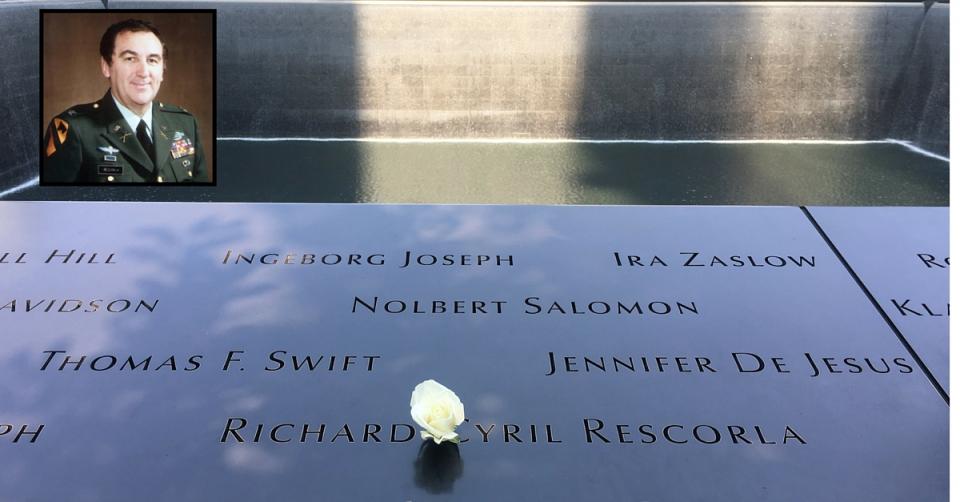
On September 11, 2001, when airplanes flew into the Twin Towers in New York City, several thousand people had to be quickly evacuated from the burning buildings. There were some plans in place; most had been misplaced or forgotten. And the chaos and confusion led to mixed messages– “stay put and wait for help…”,” don’t use the elevators…”,”get out as quickly as possible…”,” the stairways are unsafe…” But the vice president for corporate security at Dean Witter/Morgan Stanley, Richard Cyril Rescorla, was prepared for the worst. He had been planning and rehearsing for years after the failed attacks in 1993. He quickly implemented his detailed plans, ushering hundreds out of offices and into the stairwells, where they descended to safety in spite of the smoke and panic. He went back several times, checking to see who else needed help and guidance. Regardless of where they worked or who they were, Rescorla came with calm reassurance and authority, sending them into the path of rescue workers who could then offer greater assistance. Rescorla himself never made it safety– as he kept going up to get others out, he became trapped and perished when the towers fell. However, his years of planning, and his dedicated efforts on that fateful day saved the lives of hundreds, if not thousands of people. (See more here: https://www.911memorial.org/connect/blog/recognizing-war-hero-who-led-wtc-survivors-safety-911 )

We may not be called on to face another disastrous day like 9/11, but we are called to be alert and ready as we follow Christ. Those who followed Christ during His earthly ministry were called disciples. The name comes from the same root as discipline. They literally “walked” with Christ. They went where He went; they ate what He ate; they slept where He slept; they did whatever He asked them to do. If we seek to follow Christ, we must be ready to live lives of alert discipline. This comes after we take our first steps of Faith, and build on our character and understanding of God’s will. Our actions should not just be spontaneously “good” in the short-term, but patterned on the need to be prepared for the kind of challenges and trials we should expect to face. Just as Jesus was prepared for those who came to challenge Him with trick questions and false accusations, we need to be prepared to be challenged, rejected, and subjected to persecution. And we need to be prepared to respond, not with haughty complacency, outraged panic, or defensive tantrums, but with calm confidence and compassion.

The Apostle Peter, earlier in his letters, urges believers to be ready to give an answer (or a reason) for the hope that they have in Christ. (1 Peter 3:15) And this should not be a knee-jerk reaction to being challenged, or a snide commentary on doctrinal matters. We should be ready to be witnesses for the Majesty, Power, Grace, and Love of God as it has been experienced in our life and the lives of those around us. God never asked us to be His defense lawyers. He asks us to be faithful witnesses–not just of the facts about Him, but about our relationship WITH Him.

Photo by Andrea Piacquadio on Pexels.com

We also need to be prepared to be relocated or evacuated from lives of comfort, complacency, and expectation, in order to GO into the world and spread the Gospel. We will not all be called to be “missionaries” in the traditional understanding of the word, but we ARE all called to be on mission– to be ready to share our hope, our resources, our time, and our love– with others, near and far.

Photo by Porapak Apichodilok on Pexels.com

Today, I pray that God would continue to teach me as I live in obedience…that I would be alert and ready to speak, to walk, and to serve where and when and how HE sends. May I be ready to usher many others to safety as I share and live out the Gospel of Christ!

“Thoughts and Prayers”…Revisited

One of the reasons I began a blog about prayer over eighteen months ago was in reaction to a scathing op-ed article about prayer written in the wake of a mass shooting. Well, here we are again. Two highly publicized (and several “smaller”) mass shootings occurred over the last week in the U.S., and the outrage and anguish is overwhelming and completely understandable. The senseless violence and subsequent loss of life stops us in our tracks. Why? Why would anyone do this? How? How could this happen? In the wake of such evil, millions of people rush to distance themselves from such evil; many of them resort to angry protests and calls for action. Many point their fingers at this leader, that group of people, that philosophy, that industry–any entity (other than oneself) that can be held responsible and made to “pay.” Many offer earnest condolences for the families of the victims– often with the phrase “thoughts and prayers.”

Photo by Kat Jayne on Pexels.com

But what good are any of these responses? Nothing we say or do can turn back time and undo the events of the past week. No amount of protesting, legislating, avenging, or moralizing will guarantee that everyone lives in peace and safety as long as evil lurks in human hearts– whether by vigilante gun violence, war, terror attacks, economic and political unrest, rioting, looting, domestic violence, brutality, assault, murder, or suicide. “Banning” guns (or “assault weapons”, “military-style” weapons, etc.) sounds like a sensible action to take, but it is not practical in the face of evil people who will not follow the law, and corrupt governments who will not enforce the law, or worse, who use their power to oppress their own citizens.

Finding, and even punishing a scapegoat may make us feel morally superior and bring a false sense of closure, but it will not break the cycle of anger, hatred, injustice, or lack of respect that is at the root of violence.

But there is something equally repugnant about hearing the phrase “thoughts and prayers”, no matter how earnestly it may be expressed, in the wake of inhuman tragedy. The “thoughts and prayers” of strangers have no warmth, no solidity, no promise, and no strength. They are wisps and vapors of selfish and graceless bystanders, who want to ward off the evil that has befallen someone else. They are nothing more than a pseudo-spiritual appeasement offered to the nameless, faceless fates.

Photo by Pixabay on Pexels.com

And the greater tragedy is that such empty phrases, expressed as reactions to great evil, cheapen the very real power that should be found in the pursuits of thinking/meditating and praying.

Prayer is not a knee-jerk reaction to bad news. It is not a gesture meant to signal to others that you are beyond the touch of whatever forces have just hurt someone else, or that by your thirty second of piety you can alter the consequences of a catastrophe or change the course of the future.

Where were the “thoughts and prayers” of others two weeks ago? Where will they be tomorrow or next week? What quality of “thoughts and prayers” go out to the families of victims whose names we have not even bothered to learn? Such superficial public expressions, sent with seven teary-eyed and five or six high five/praying hands emojis, mean very little to anyone except the sender. They change nothing from the past, and offer nothing going forward.

Photo by Pixabay on Pexels.com

I am as guilty of this kind of meaningless virtue-signaling as anyone. I want to feel as though I can, by such empathetic expressions, encourage and strengthen those who have been touched by horror, tragedy, survivor’s guilt, trauma, grief, etc. But I can’t. Nor can my anger, frantic attempts to “fix the world”, or brilliant analyses of all the root causes of violence prevent the next bombing, drive-by shooting, hijacking, arson, political uprising, or disappointing election result. I cannot change the hearts or minds of those with whom I disagree. I cannot “make” a better world.

But that is why I write this blog. It is through a lifestyle of prayer– real prayer, difficult and sometimes agonizing prayer, joyful and grateful prayer, pleading and gut-wrenching prayer, consistent and obedient prayer–that I engage with the only One who CAN bring hope, justice, change, renewal, and salvation to this world. And it is through a lifestyle pursuit of prayer–daily seeking God’s face, asking for His wisdom, accepting His mercy when I fail, reflecting on His character, acting in obedience–that He can change me. That power, that hope, and that renewal is available to ANYONE who will ask. It sustains us when tragedy strikes, and it empowers us to offer far more than empty “thoughts and prayers”– it causes us to pray, not just after a tragedy, but unceasingly– not just for our own comfort and safety going forward, but for the well-being of our enemies, not just for those who look like us or think like us, but for those who scream at us and tell us to stop already with the “thoughts and prayers!” That power causes us to seek peace where there is hatred, justice where we find corruption, and humility when we are surrounded by narcissism.

Photo by Pixabay on Pexels.com

And if we are not doing those things– if we are not tapping into that power– we should be taking a closer look at those “thoughts and prayers” we are hiding behind.

The prophet Jeremiah lived in violent times. His city was besieged by the Babylonians, and his king was a prisoner in his own palace. God had sent messages of judgment and punishment for the entire nation. Jeremiah prayed diligently, and spoke out against the injustice, pride, and idolatry all around him. In response, he was arrested, beaten, thrown into a pit, and abandoned. God even told him to stop praying for his countrymen, because they were unwilling to accept the truth about their condition, or prepare for the punishment to come. But in the middle of the violence and bad news, God offered hope and promises of restoration, justice, renewal, and peace. He also gave this warning to Jeremiah, that he should stand firm– he should, by his example of consistent obedience and hope– influence others, NOT let himself be influenced by the anger and arrogance of those around him.

Lord, I need to stop offering cheap thoughts and empty prayers that do nothing to honor You and little to help others. Give me the strength and grace to stop reacting to tragedy by reflecting the anger and self-righteousness around me. YOU are my hope, and the best hope I can offer to anyone else. Help me to serve others in truth and love, not judge them, dismiss them, or honor them above You. Help me to seek and stand for justice that is consistent with Your character and Your word, even if I stand alone.

I Heard the Bells on Christmas Day


I heard the bells on Christmas day
Their old familiar carols play;
In music sweet the tones repeat,
“There’s peace on earth, good will to men.”
I thought how, as the day had come,
The belfries of all Christendom
Had rolled along th’ unbroken song
Of peace on earth, good will to men.
And in despair I bowed my head:
“There is no peace on earth,” I said,
“For hate is strong, and mocks the song
Of peace on earth, good will to men.”
Then pealed the bells more loud and deep:
“God is not dead, nor does He sleep,
For Christ is here; His Spirit near
Brings peace on earth, good will to men.”
*When men repent and turn from sin
The Prince of Peace then enters in,
And grace imparts within their hearts
His peace on earth, good will to men.
O souls amid earth’s busy strife,
The Word of God is light and life;
Oh, hear His voice, make Him your choice,
Hail peace on earth, good will to men.
Then happy, singing on your way,
Your world will change from night to day;
Your heart will feel the message real,
Of peace on earth, good will to men.

Words by Henry Wadsworth Longfellow, with alterations and *additional text by Harlan D. Sorrell.

Some Christmas Carols are the joyous outpouring of Christmas cheer, filled with the laughter of wonder of the season.  Others are forged in pain and doubt that has been turned to the light of hope and renewal.  Such is the story behind this hymn. http://suvcw.org/mollus/art005.ht

Photo by Pixabay on Pexels.com

The famous American poet, H. W. Longfellow had lost his wife in a tragic fire just three years before he nearly lost his son in the horrors of the Civil War.  When his son was severely wounded in battle, Longfellow went to the military hospital, and, when he could, he transported his son home, knowing the journey would be painful and the outcome might not be a happy one.  (His son lived, but never recovered fully– see the article above.)
As he sat with his wounded son over the Christmas season, he could hear the bustle and chatter, and the bells ringing from the church steeples, announcing the good news of Christmas.  As his pain and bitterness churned, he wrote about it, and about how his heart was turned from bitterness to hope. (See the original poem here:   https://www.hymnsandcarolsofchristmas.com/Poetry/christmas_bells.htm

Photo of C. A. Longfellow

Christmas is a time of warmth and good cheer for many–the ringing of bells, the singing of merry tunes, the tinsel and glitter of decorations–but for others, it is a time of deep soul-searching.  “My life is a mess.  I have suffered greatly.  There is no Peace On Earth!”  Yet, the hope and promise of Christmas rings out greater than the darkness and the blast of gunfire, the angry outcries and the weeping of those in grief.

How can this be?

Christmas reminds us that our circumstances, though very real and very painful, are confined to this time and space.  They are temporary– not in the sense that we will forget our pain or loss– but that we can still experience hope and joy  and healing in their midst.  “The Wrong shall fail”–there will still be evil in the world, injustice, hunger, abuse, sickness–wrong will still exist, but it does not have the power to define us, to enslave us and take away our ability to do good.  “The Right, prevail”–God’s promise of Messiah (among several hundred other prophetic promises!) has been fulfilled.  God is Faithful.  God’s word endures.  God’s Justice Will Be Done, and there will be “Peace on Earth, Good Will to Men.”

Photo by Magda Ehlers on Pexels.com

Christmas also reminds us that it is just in those very small things– the tolling of bells, being able to hug your child,  to share memories of loved ones who are no longer here, being grateful for small gifts, giving a word of encouragement–that hope and joy are spread like ripples of water and echoes of sound.  Christ’s birth was humble, but it was heralded with the hosts of angels from the highest heavens. 

Photo by Oleg Magni on Pexels.com

My prayer today is that we would listen for the true message of Christmas, and that we would echo and repeat the message– even if it seems that we are being drowned out by sirens and protests, or silenced by those who are hurting and cannot hear the sweetness in the music of the season.

Blinded By the Light

A few months ago, I went to the theater to see the movie “Paul, the Apostle of Christ.”  It was an excellent movie, not the least because I found so much of it relevant to what is happening in the world today.  The movie was centered around Paul’s time in prison in Rome; the upheaval and persecution facing the early church, and the looming certainty that Paul would be martyred and his words and leadership sorely missed.  The church in Rome was facing division– some were militantly opposed to the corruption in Rome under Nero, and wanted to form a rebellion.  Others wanted to flee Rome in hope of supporting outlying churches, starting new churches, or just finding a safer haven.  Still others were losing hope and wanted to give up or hide.

photo of dried lava
Photo by Phil Kallahar on Pexels.com

The movie also covered (in a series of flashbacks) scenes of Paul’s earlier life.  I don’t want to spoil the movie for anyone who hasn’t seen it, but this part of Paul’s life is covered in the Bible, so I will stick to the facts presented there, rather than the drama from the screen…

Saul of Tarsus was both a Jew and a Roman citizen by birth.  He had studied God’s word intensely his whole life, and became a Pharisee.  He had studied under some of the greatest scholars of his age–in today’s world, he would have been one of the greatest legal minds of our time– a superstar in the arena of law, philosophy, and logic.  Of all the people in Jerusalem and throughout the Jewish world, Paul KNEW right from wrong.  He KNEW the words of God, the laws of God, the traditions of God’s people.  The result of all that knowledge was an obsession with wiping out those people (Jews, especially, but also Gentiles) who followed Jesus of Nazareth and “The Way.”  Saul was a man filled with righteous anger, and a zeal to have everyone conform to what was “right.”   He was a man of power and influence– a man to be feared and respected.  In his letters, we can still see some of that intensity and the way he has of arguing both sides to their logical ends.  But something happened to Saul..something that changed his entire future, including his name.

Paul, the Apostle of Christ, was still a Jew and a Roman citizen.  He was the same man who had studied vigorously and knew the laws of Moses and God’s words through the centuries written by prophets and historians and psalmists.  But the Paul we see in scripture, while still bearing the intensity of his youth, is a man of gratitude and peace.  Here is a man who works steadily with his hands for honest but meager wages compared to what he might have made as a Pharisee.  He is a man who boldly faces down even Peter and James in Jerusalem, but who nevertheless takes orders from a council made up of former fishermen and tradesmen.  Paul undergoes flogging, arrests, prison, cold, hardship, physical pain, poverty, and disgrace with the kind of stoic acceptance, and even joy, that makes him a great hero of the early church.  Never once does he return to the anger that drove him to persecute others who did not agree with him.  Instead, he is willing to be the victim of persecution at the hands of those he used to serve.

abstract beach bright clouds
Photo by Pixabay on Pexels.com

I was scrolling through Facebook the other night, and I chanced upon posts from two women I know.  Both are about the same age, both mothers of five children, and both are practicing Christians.  The first woman was posting about two recent difficulties faced by her family, and how God had been faithful and gracious in spite of a huge loss and a tense situation that could have turned into another tragedy.  She spoke of God’s answers to prayer, and how their family was reminded of God’s goodness as people came alongside at just the right moment, and the loss was not as great as it might have been.  I was inspired and encouraged by the way she saw God’s love, and gave credit to all who had helped them.

The second woman spoke in vicious tones about how she would not associate with certain Christians who hold political and social views she sees as hateful.  She cursed fellow followers of Christ for being “anti-Jesus,” and condemned several of her early teachers and pastors.  I read her remarks with great sadness, because I remember her as a younger woman, eagerly memorizing scripture and being a loving and encouraging example to others.  I also read her remarks with pain, because I think she includes me in the “hateful” group based solely on the type of church I attend.

women typing on the notebook
Photo by Kaboompics .com on Pexels.com

It is not my place to say that one woman is a “better” Christian than the other– on another day, their FB posts might cause me to think very differently.  And God sees more than just what we post on FB or say in passing conversation–He knows our every thought and motive.  So I want to be careful–these women, though similar in some superficial ways, lead very different lives and have very different experiences of following God.  But I saw in their posts two ways of “seeing” Christ.

When Saul of Tarsus, in his anger and zeal, traveled toward Damascus intending to kill people he may have never met, he was already a crusader for Jehovah– ready to mete out justice against anyone who didn’t meet his standards.  He KNEW all about God.  He knew what it took to be righteous.

But when he actually encountered Christ– he was knocked off his horse, blinded and overwhelmed by a vision.  And when Christ spoke to him, “Saul, Saul, why do you persecute me?” (Acts 9:4), Saul didn’t recognize the voice of the very God he so proudly served.  Saul remained blinded for three days, but his vision was never the same again.

As Paul, he became a man of prayer– his letters are filled with prayers for the well-being and spiritual growth of those he misses and longs to see.  They overflow with doxologies and prayers of worship for the Savior he loves and serves with gladness.  He can’t stop talking about God’s goodness– to him, to Israel throughout the centuries, and to the Gentiles who now have access to the throne of Grace.  He still has harsh things to say to some of the followers who “don’t get it.”   To those who want to compromise with sin or go back to legalism.  But he pleads with them; he doesn’t throw stones.

abstract black and white blur book
Photo by Pixabay on Pexels.com

It can be very frustrating in today’s world and in our society to see Christians who have very different ideas about worship styles, ways of interacting with others, even ways of living out the words of Christ.  Sometimes, it seems that fellow Christians are blind to the needs of the poor, or the sins of their friends, or the hypocrisy in their lifestyle.  I think scripture gives us a clear directive:

Why do you see the speck that is in your brother’s eye, but do not notice the log that is in your own eye? Or how can you say to your brother, ‘Let me take the speck out of your eye,’ when there is the log in your own eye? Hypocrite! First get rid of the log in your own eye; then you will see well enough to deal with the speck in your friend’s eye.

Matthew 7:3-5 (English Standard Version)

We should not rush to condemnation, name-calling, and finger-pointing.  Instead, we should do a “vision” test and see if we are looking and acting in love or in self-righteous hypocrisy.

board deck dock floor
Photo by Pixabay on Pexels.com

God doesn’t want us to be blinded by the light of our own knowledge and self-righteousness.  Instead, He wants us to walk in the light of His Word–His Word made flesh!  May we live in the light of Paul’s example of prayer, loving correction, and running the good race.

sunset hands love woman
Photo by Stokpic on Pexels.com

Surprise!

The world is full of surprises– some good, some bad.  Open your mailbox on any given day, or walk down the street…you are bound to see something unexpected.  You may get a bill you forgot about, or run into an old friend.  There are surprises in the weather patterns, in traffic patterns, in relationships, in jobs, all around our houses and neighborhoods, in world events.  Some are shocking, some delightful, and any of them can change our days or even our lives.

We like pleasant surprises; we fear the unpleasant ones.  But most of us don’t pray for them.  We pray for miracles–healing and rescue and transformation–pleasant outcomes that we hope for or imagine.  We pray for ease and comfort, or wisdom and strength to face the bad times.  But we don’t ask God to surprise us.

Why don’t I ask God to awe me?  Dazzle me?  Surprise me?  Sometimes I fear that he might surprise me with what my past actions deserve.  More often, I simply want to stay in the comfort and simplicity of what I already know.  I don’t want to be delighted; I just want to be entertained.

pexels-photo-96405.jpeg

One thing I know, but I need to be reminded:  God does not give bad surprises.  He does not send ANYTHING into my life that can’t be used for my good and his glory.  The world will send tragedy and I will have to face the consequences of Sin– mine and others’.  I may be unfairly treated at work; I may be struck by a drunk driver and paralyzed.  I may face difficult losses, and inexplicable circumstances.  And the mistake is to see these as “surprises” from God.  God never promised a pain-free, problem-free life in this world, but he surprises us with the kind of gifts that overcome and even confound our tragic circumstances– the power to forgive, to be joyful, to have peace, and share love.

John 16:33 English Standard Version (ESV)

33 I have said these things to you, that in me you may have peace. In the world you will have tribulation. But take heart; I have overcome the world.”

Matthew 7:9-11 New International Version (NIV)

“Which of you, if your son asks for bread, will give him a stone? 10 Or if he asks for a fish, will give him a snake? 11 If you, then, though you are evil, know how to give good gifts to your children, how much more will your Father in heaven give good gifts to those who ask him!

The road ahead is full of surprises–that’s a great reason to pray.  God loves to surprise us with good things– that’s another great reason to pray for them!

gift-jeans-fashion-pack-157879.jpeg


Prayers in the Pendulum

I’m late in posting an entry today– it’s been a day of swinging in the pendulum.  Not in a personal sense, but in praying for friends and family.

We all have “pendulum” days (or weeks, or even hours)– times where we are carried, pushed, swung, or banged about by life’s circumstances.  Moments where time stands still– sometimes in astonishing joy, and sometimes in soul–stomping grief.  Then comes the rush of being pulled by forces beyond our control– up, and down, across, and through the arc.  I’ve been hearing from friends all day, sharing those moments, and asking for prayer.  In the space of an hour, I’ve prayed for those who have just lost loved ones– a mother, a sister, a son– and those who are celebrating– an engagement, a birthday, a new home.  I’ve prayed for those whose lives are in the balance– in ICUs and in the womb.  Cancer, anniversaries, new puppies, pneumonia, a new job, a vacation, a car accident…

When we pray for others, we share those joys and heartaches– together, we swing through the arc of tragedy and triumph, even if we don’t all feel the full impact.  We become like the balls on the pendulum swing; absorbing and sharing laughter and tears not fully our own. But by doing so, we provide both energy and equilibrium.  Shared joys are multiplied; shared pain becomes bearable.  Prayer breaks through the isolation or the intensity of the moment, and keeps us grounded, or keeps us from shattering.   It reminds us that even in these defining and refining moments, life is not static.  And the momentum pulses through us in our connectedness.

Yet prayer goes one step further– it brings triumph and tragedy to the God who is above, beyond, around, and amidst the circumstances, the chaos, and the emotional highs and lows.  Our voices, raised together in laughter or grief, exasperation or anticipation, ascend to the one who came and lived and laughed and cried among us– to Jesus, whose arms are fully extended to embrace us wherever we are on the pendulum.

pexels-photo-227390.jpeg

Blog at WordPress.com.

Up ↑