God Doesn’t Make Mistakes

Our current culture is obsessed with “fixing” things– including ourselves. Makeovers, plastic surgery, Botox injections, even gender reassignment. We seem to be convinced that God, who knit us together in our mother’s womb, got it “wrong.” I’m not opposed to someone wanting to look or feel more attractive, and there are many surgeries and makeover techniques that can actually improve our physical health. Not all such actions come from a rebellion against God’s design, but in many cases, people are trying to remake themselves in their own “fantasy” image– women having plastic surgery to make themselves look more like a Barbie doll, or like their online avatar; some people even risking their lives just to look like something they’re not.

The smug Christian may answer such behavior with, “God made you that way, and God doesn’t make mistakes!” But such an answer is dismissive of some very real concerns. In fact, it may lead people who experience dysphoria and chronic health crises to conclude that God either doesn’t care about them, or that He simply doesn’t exist.

What about my family member who was born with a rare condition? She experienced strokes in utero– she was stricken in the womb–and she had to have urgent brain surgery at six months. She is bound to a bed or wheelchair for life. Yet God created her. Did He make a mistake? What about the person who was born a biological boy, but an accident in his infancy crushed his “boy parts” and the doctors did emergency surgery and reassigned his gender? Was God sleeping on the job? If He knows all that will happen to us, why not just create that person to be a girl from the beginning? What about children born with a cleft palate? Or those born without hands? How can a loving God sit back and let such things happen? And how can a Christian say, “God doesn’t make mistakes.”

I don’t have a mic-drop, definitive, uncontestable answer for such questions. I don’t know why God chooses to allow certain people to suffer physically, mentally, or emotionally, through no fault of their own. I don’t understand why some people develop ALS or dementia, either. What I do know is that God’s original creation was perfect. And when Sin entered the world, it wasn’t just that people sinned– the whole world was infected. It’s not just that people are born with defects– all of nature suffers. There are diseases that cause deformity in animals, diseases that attacks certain species of trees or plants. We have earthquakes and volcano eruptions, sink holes, and hurricanes. And some people carry genetic diseases that impact their life from conception to death. Others will face mental health issues– some of which won’t show up for many years.

But God doesn’t MAKE such things happen. How do I know this? Jesus Himself addressed this issue during His ministry. In the gospel of John, chapter 9, Jesus and His disciples come across a man born blind. The disciples assume that the “cause” of this man’s affliction is a particular sin– either his own or his parents’. They assume that bad things happen to people because God is punishing them for something they’ve done. But Jesus dismisses that reasoning. “This happened so the power of God could be seen in him” (John 9:3 NLT). LIFE is God’s gift– not necessarily perfect health or a problem-free existence. In fact, later in John’s gospel, Jesus says, “In this world you WILL HAVE TROUBLE. But take heart! I have overcome the world.” (John 16:33 NIV–emphasis added)

God doesn’t make mistakes– He offers redemption. There are some things in this world that we have the power to “fix”– we can forgive those who wrong us. We can work to bring justice and peace to those around us. We can build and re-build relationships. But there are many things that only God can “fix.” God has the power to heal bodies, minds, and hearts. He has the power to give us the strength necessary to endure trials and afflictions and grief. And He can give us a peace that passes all understanding when we trust Him in the middle of life’s struggles.

That doesn’t mean that we will always understand or enjoy what life brings our way. We DO live in a fallen and disease-ridden world. But this is NOT the ultimate fate for those who trust God.

It is when we refuse to trust God and His design that we lose out on the strength, peace, and joy of walking (or even lying in bed) by His side! It is when we try to “fix” things in our own power that we miss out on seeing the mighty power of God working for our ultimate GOOD. God allows for mistakes– but His joy and His plan are to make all things NEW!

ACT-ing On Prayer

Pursuing a lifestyle of prayer means more than just coming to God with a list of requests and a couple of scattered “Thank You’s” every now and again. Prayer is a discipline– that means being a disciple of prayer! How can I learn to pray for effectively? Commune with God in a richer and more satisfying way? There are many tools and methods that can help with this. One of them is called the ACTS method.

ACTS is an acronym for Adoration, Confession, Thanksgiving, Supplication. And praying in this order can radically transform the way we enter into prayer and the way we respond to God’s answers. On a busy day, I often start prayer with my supplications– my requests, my needs, my hopes and desires. I may be approaching God, but my thoughts and heart are all about “what’s in this relationship for me!” “I want healing for ______, and protection for my family, and a resolution to this problem at work, and…”

But the ACTS method flips this order–it starts with Adoration. It begins by coming to God and acknowledging who HE IS. Worship will outweigh worry. Adoration accentuates God’s Ability and His Authority over whatever is on our mind. It also leads naturally into

Confession. Not the kind that masks false humility– “Woe is me, I’m so unworthy. I am a worm, and I don’t deserve to be happy or free or victorious in Christ.” Rather, confession comes as we recognize who we are in relation to God. We are not worthy of God’s blessings in our own righteousness, but IN CHRIST, we are able to come boldly before God in dependence and joyful acceptance of HIS righteousness. And we can’t accept it if we are still hanging on to old habits and sinful ways of thinking. We must agree with God, let go of whatever is holding us back, and gladly prepare to move forward!

Now we are in Thanksgiving mode. We are reminded of God’s mercy, and His faithful care of us. He has been faithful to answer prayers in the past, and to be with us, even in times of trouble and seeming silence. He IS there. He DOES listen. His mercies are new every morning! (Lamentations 2:22-23)

NOW, we are ready to present our Supplications. In fact, we are ready to follow the direction of the Apostle Paul, when he told the Philippian believers: “Do not be anxious about anything, but in every situation, by prayer and petition, with thanksgiving, present your requests to God.  And the peace of God, which transcends all understanding, will guard your hearts and your minds in Christ Jesus.” Philippians 4:6-7 (NIV).

There are many times when we pray in desperation or in a hurry about a specific need, when this approach can be modified. But for deep prayers during a quiet time, or in a small group, the ACTS method can really boost our connection with the Holy Spirit. We begin by thinking we are praying about “something,” and are amazed to re-discover that prayer is really about “someone!”

I have found that such prayers also cause me to more readily ACT in the matters I bring up for request. I’m not just turning them over to God because I am helpless and He is my last resort. Even when I “know” that is not the case, when I focus on the problem and not the Provider and Protector, I forget that He can give me the power to “do all things” (see Philippians 4:13) in Christ’s strength and for His Glory!

Be Still and Know…

Psalm 46
For the director of music. Of the Sons of Korah. According to alamoth. A song.
God is our refuge and strength,
    an ever-present help in trouble.
Therefore we will not fear, though the earth give way
    and the mountains fall into the heart of the sea,
though its waters roar and foam
    and the mountains quake with their surging.
There is a river whose streams make glad the city of God,
    the holy place where the Most High dwells.
God is within her, she will not fall;
    God will help her at break of day.
Nations are in uproar, kingdoms fall;
    he lifts his voice, the earth melts.
The Lord Almighty is with us;
    the God of Jacob is our fortress.
Come and see what the Lord has done,
    the desolations he has brought on the earth.
He makes wars cease
    to the ends of the earth.
He breaks the bow and shatters the spear;
    he burns the shields with fire.
10 He says, “Be still, and know that I am God;
    I will be exalted among the nations,
    I will be exalted in the earth.”
11 The Lord Almighty is with us;
    the God of Jacob is our fortress.

When I am tempted to fret or worry, I like to read through Psalm 46. I love the way the psalmists use hyperbole to shrink fear and maximize faith– God is an “ever-present help”, we will not fear, “though the earth give way, and the mountains fall into the heart of the sea”, “He lifts his voice, the earth melts!” And I love that the phrase is repeated– “The Lord Almighty is with us; the God of Jacob is our fortress.”

There is so much to unpack in just 11 verses of psalm! But I want to stick to two that always stand out to me.

First, the phrase, “the God of Jacob.” God is the God of Abraham, Isaac, and Jacob. He is the God of Moses, the God of Israel, the God of David…His titles are many. But in this case, He is the God of Jacob. NOT the God of Israel– even though God changed His name. No, He is the God of Jacob– the “heel grabber,” the son who stole his brother’s blessing and tricked his brother out of his birthright– the same Jacob who fled his homeland and worked for twenty years for his duplicitous uncle Laban. This is not the God of the victorious, but the God of those who have had to learn the hard way. He is the God of the one who has acted unjustly, and the God of one who has been treated unjustly. He is the God of the one who wrestles and demands a blessing, the God of the second son, the disappointed husband, and the grieving father. THAT is the God who is with US when we are in trouble and feeling overwhelmed by our own past mistakes, or our own inadequacies, or our unfair circumstances.

Secondly, the phrase “be still and know that I am God.” This same God who wrestled with Jacob, who blessed him in dramatic fashion, was the God who was with him through all the long and lonely night watches as a shepherd. Jacob, with his two wives, their two servants, and all thirteen or more of his children (12 sons and at least one daughter, Dinah)–spent a lot of his time surrounded by noises, nagging, responsibilities, and discord. Yet he took time to ‘be still.” And, though it took many years, and often came “the hard way,” Jacob did learn to “know” his God. He learned to trust that God would protect him, guide him, and bless him– and the generations that would follow him!

I am so grateful for this Psalm to remind me of God’s everlasting presence, His power to save and protect, and His sufficiency for every circumstance in my life. I’m so glad that the “God of Jacob” is the same God who sees me, loves me, and rescues me. I’m humbled to know that I don’t have to be clever enough or brave enough, or “righteous” enough to earn God’s help. I’m glad that the Lord Almighty is always with me. (see Hebrews 13:5) However, I still struggle to “be still and know…” I want to know by doing; by studying and making things happen. But to know God– to really know Him– I have to be still, to wait in silence and anticipation, to trust in what I cannot see and cannot do in my own power. I have to know Him as the Almighty, Omnipotent, Sovereign God that He is, rather than a God of my own imagination or the God I hear about or read about from someone else.

What a mighty God! The God of Jacob is MY fortress! And in stillness, meditation, and trust, I can KNOW Him!

The Sweetest Frame…

I have several friends who are really great at photography– some have made it their profession. One of the hallmarks of a great photograph is “framing.” I’m not talking about choosing a frame for a printed photograph, but choosing natural elements that draw the eye to a focal point. It include perspective, focus, lighting, and even composition– which elements make it into the picture, and which ones are excluded. After all, photos, by their very nature, only show part of the whole reality. Even a panoramic picture cannot show everything at once, and the photographer chooses where s/he wants to place the focus and framing.

We have a tendency to “frame” our lives in a similar way. We focus on only part of the whole reality of life. We choose to “frame” our present situations, our past memories, and our future hopes– even when they are out of focus! We can do this in both positive and negative ways. At one point in my life, I felt I had found “the perfect job” as a youth services librarian at a local public library. It was pleasant work that made use of my skills, talents, and interests. It included a mixture of social interaction and self-directed projects. I loved the job, my co-workers, our patrons, the work environment–it was a pleasure and an honor to work there.

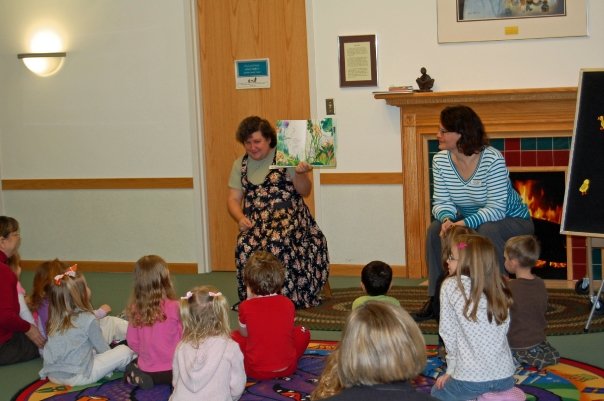
Library Story Time

But I was viewing my job (and myself in that job) through a frame. There was more happening in the wider picture of my life and development. After more than a dozen years there, things had changed. I still loved the work, and while some co-workers retired or moved, and the staff changed a bit, the work environment was still mostly peaceful and friendly. I still found the job challenging and rewarding, and I had gotten to know people in the community over the years who truly felt like family. But, as my role changed, so did some of the relationships. As new leadership came, so did new directions and new priorities. And I had become “comfortable”– and somewhat complacent as well.

In time, it became clear that my “perfect” job was not only not perfect, but becoming a source of frustration, stress, and unhappiness. And there were other things happening that demanded my focus. I was preparing to become a wife and move to a new community. My mother’s health was deteriorating, demanding more of my time and energy. My future husband wanted to open a shop– someone would have to work there, and we couldn’t afford to hire anyone, even part-time. That meant working a second job at the shop while trying to maintain my efforts at the library.

As the “frame” of my life shifted, I felt confused, even angry, with God. Why would He allow something so good to turn sour? Why did I feel like I was losing myself? Didn’t He want me to be happy and fulfilled? Didn’t He want me to use my talents to help others?

Now, after a few years’ perspective, I can see some of the “rest” of the picture. I had begun to see myself through the lens of my job, and I was depending on that vision, rather than focusing on what God was doing in, around, and through my life. There was nothing “wrong” with my job, per se, but God needed me to be willing to let go and move in new directions. Now I am preparing for another change, as we have decided to close our shop, and I will look for the next step– a new job, new opportunities, new challenges.

My nation just went through a contentious election. Many people are upset at the outcome, while others are relieved. But just as it happened with my job, I need to be careful NOT to depend on politics and governments to be “saviors.” No political party or platform or policy can “fix” sin and brokenness. The “system” isn’t the root of the problem. As individuals, we need to submit ourselves to the authority of those in government, but only AFTER we submit to the authority of God. HE is the King of Kings, the Lord of Lords, and His power exceeds that of Presidents, Cabinets, Congresses. Our nation must prepare for new challenges, as well as new opportunities.

I write all this, knowing that there are people going through much more traumatic “shifts” in their lives– the changing of a government administration, with its unknown power and potential can be worrying; the loss of a job, and a change of career is a disappointment. But it is not the same as the loss of a spouse or child, the sudden loss of a home to fire, or an unexpected diagnosis of cancer or other health issue. But the principle is not so different. God’s ways are eternal. Sometimes, we see the uncertainty and trauma in front of us, or surrounding us, and it becomes a frame for all of our thinking and emotions. But the “picture” is much bigger than just our immediate situation. God calls us to trust Him in all circumstances, knowing that His love for us is not just for this life, but for all eternity. Whatever we (or our loved ones) go through here is but a snapshot– one of millions that God will put together in a Glorious and Perfect collage.

Moreover, God gives us the privilege of listening to us when we call out to Him. We need not be afraid to ask, “Why this?” or “Why now?” or even “Why me?” But when we ask, we need to be willing to shift our focus, and remember where our Hope is Built– On Christ the Solid Rock. Even the sweetest “frame”– our career, our relationships, our identity, our politics, our happiness in this life– cannot compare with His faithfulness and eternal Sovereignty.

Comfort or Courage?

My husband and I recently sat in the comfort of our apartment, and watched the movie trilogy of The Lord of the Rings. I’ve read the books several times, and enjoyed the movie several times, as well. The story is a classic tale of good v. evil, where it looks almost impossible for good to triumph. But, through the courageous acts of a few unlikely heroes (with the help of many others), evil is destroyed at last, and peace–eventually– returns to Middle Earth. It is one of my favorite stories, but it is not always “comfortable.”

The books and movies can be almost torture to watch, sometimes. There are battles, and betrayals, tragedies, and frustrations galore. From the midges that attack the party near the beginning of their journey, to the Ring Wraiths who relentlessly haunt Frodo as he carries the ring of power to its final end; from the unnatural armies of the Uruk-Hai, created by the betrayer Saruman, to the betrayal of Boromir from within their own fellowship; from the fall of Gandalf in the mines of Moria to the madness of Denethor in Gondor–there are plenty of times that the reader/viewer is tempted to turn away from such agony and despair. How could there be a “happy” ending? How could Frodo and Sam possibly survive long enough to finish the task, let alone return from it?

And yet, Sam himself provides an answer:

Yes, that’s so,’ said Sam. ‘And we shouldn’t be here at all, if we’d known more about it before we started. But I suppose it’s often that way. The brave things in the old tales and songs, Mr. Frodo: adventures, as I used to call them. I used to think that they were things the wonderful folk of the stories went out and looked for, because they wanted them, because they were exciting and life was a bit dull, a kind of a sport, as you might say. But that’s not the way of it with the tales that really mattered, or the ones that stay in the mind. Folk seem to have been just landed in them, usually – their paths were laid that way, as you put it. But I expect they had lots of chances, like us, of turning back, only they didn’t. And if they had, we shouldn’t know, because they’d have been forgotten. We hear about those as just went on – and not all to a good end, mind you; at least not to what folk inside a story and not outside it call a good end. You know, coming home, and finding things all right, though not quite the same – like old Mr Bilbo. But those aren’t always the best tales to hear, though they may be the best tales to get landed in! I wonder what sort of a tale we’ve fallen into?’ ‘I wonder,’ said Frodo. ‘But I don’t know. And that’s the way of a real tale. Take any one that you’re fond of. You may know, or guess, what kind of a tale it is, happy-ending or sad-ending, but the people in it don’t know. And you don’t want them to.’
https://thetolkien.forum/wiki/Sams-Speech

Movie version:

Often, when I am facing “an adventure,” I am praying for God to take away the circumstances; to change the world around me, so I can be comfortable. I love to read stories, but I don’t want to live through what it might take to make a great one! And yet, God calls us to “be strong and courageous” (Joshua 1:9). Jesus calls us to be courageous as well, “In the world you have tribulation, but take courage; I have overcome the world” (John 16:33b). And Paul reminds his protege, Timothy, that “God has not given us a spirit of timidity, but of power and love and discipline.” (2 Timothy 1:7)

Source: https://bible.knowing-jesus.com/topics/Courage

In the movie version of Lord of the Rings, the four courageous hobbits return to the Shire after all the fighting to find things almost exactly as they had left them– hobbits comfortably going about their business, oblivious to the grand and terrible adventures of their neighbors and the rest of the world. Hobbits, we are told early on, do not concern themselves with the “adventures” of the wider world. They like comfort. And the Shire, in some ways, represents a haven from the evils of the world of men and orcs and other creatures. In the books, however, evil spills over into the Shire, and the hobbits must face battles even when they expect to return to comfort.

Comfort is a wonderful feeling– ease and peace, no reason to worry or fret. Everything is familiar and good, expected, and desired. But comfort doesn’t build character. Courage does. Frodo and Sam, Merry and Pippin, all return to the Shire changed by their adventures. They are no longer “comfortable” living in ignorance of the wider world, no longer afraid of what might happen if they step beyond the borders of the Shire.

The same is true for us as Christ followers. Jesus commands us to Go into all the world. He does not promise comfort, in fact, He promises that we WILL have trouble. But He also promises that we will not face danger alone; and that we will see victory– His final victory. We DO know the end of the story! We do not know what tomorrow may bring, but we DO know that it won’t end in futility. Even our disasters will be redeemed! Even if tomorrow brings tragedy, grief, pain, or torture, we know it is not the way our story ends. But we must face tomorrow with courage. We must continue on THROUGH the story, even when it looks like we can’t go on. Courage, not comfort, will lead us to the victory.

Today, I pray that God will forgive me for the times I have asked for comfort and not for courage. For the times I have stayed in the Shire, instead of going forth to face the battles beyond. For the times I have been too afraid, or just too lazy, to obey His call to GO and be a light in this dark world.

When Prayer is Not Enough…

“Stop praying and DO something!”

“I’m sick of thoughts and prayers…it’s time for action.”

“Prayer doesn’t work!”

Photo by Markus Spiske on Pexels.com

What happens when your prayers don’t seem to make any difference? People around you complain that you are passive, even apathetic about critical needs. “People are dying!” “People are suffering, and you want to stop and pray?!”

YES! Buy why do I continue to advocate for prayer in the face of overwhelming injustice and evil? Shouldn’t I be talking about action? Shouldn’t I be posting plans to end injustice or poverty or war? Shouldn’t I be willing to say that sometimes, prayer just isn’t enough?

Well, firstly, I believe that Prayer is far more powerful than most people know. Prayer IS enough, because GOD IS ENOUGH! I can’t stop gun violence, or human trafficking, or an epidemic. I can’t– not with all the resources in the world; not with all the action I can muster; not with any effort or plan or army of willing human helpers. And neither can anyone else. I can march in protest, I can write and call and badger legislators to change laws or enforce the laws we already have. Such actions might make me feel better– they might even have some immediate effect. But they won’t “fix” the continuing and underlying problem of Sin. Only God can do that, and He WILL do it. He may choose to work through human agency to right some wrongs or change the immediate future, but our world is broken, and God’s ultimate plan is bigger than just a convenient patch for Sin’s consequences.

Photo by Pavel Danilyuk on Pexels.com

However, I will concede that sometimes prayer, by itself, is not nearly “enough.” Prayer must be paired with Faith. I know many people who say that prayer “doesn’t work,” not because they didn’t pray, or weren’t sincere in their desire or their wish for God to act on their behalf, but because they believe in their desire– their wish or their plan– more than they believe in God’s goodness or His ability to bring good out of whatever struggle we are facing.

This is not a simple concept– that God is eternally good even in the midst of evil and horror– it can be painful beyond words. God may choose to allow the sin of drunk driving to take the life of an innocent person in our family, or leave us permanently paralyzed. Or He may allow war to strip us of all that we own– our home and our freedom. How can we possibly view such circumstances as “good?” Why does God allow for violence and injustice? Why does He allow it to continue– seemingly unabated and unchecked? How can God call Himself “Good” while letting evil touch our lives and the lives of millions innocent people? Praying — and continuing to pray– in such circumstances seems like a mockery of our pain and grief. It seems like God is deaf to our cries– indifferent, or even watching smugly from a distance. Why pray to such a God?

But IS this what God is really like? And why do we believe the worst about Him, rather than trust that His wisdom and Love are actually greater than what we can comprehend or experience in the present? Why do we blame God for the evil we see in others? Why do we ignore our own actions or inaction that often contribute to our situation? Why do we believe that God “owes” us a life without sorrow and pain– even as we see others suffering the consequences of sin– sometimes because of our failures? Why do we insist that God always act in accordance with OUR desires, when we often will not act in accordance with His? Why do we “test” God with prayers in our times of trouble, when we will not trouble Him with our prayers in times of peace and plenty? If anyone should have led a life without sorrow or pain, it should have been Jesus. Jesus prayed all the time– He even taught others how to pray (Matthew 6:9-15). He was completely obedient to His Father. Yet God’s own Son faced heartbreak, betrayal, and a painful, unjust death on the Cross. He wept over the death of a close friend– a death He Himself could have prevented (and later reversed)! (John 11) He was in such deep distress in the Garden of Gethsemane that He sweat blood! (Luke 22:44) God’s plan is not for us to live a life free of trouble, but a life of victory OVER despair and doubt!

Seeking “more” than prayer is often seeking “more” than God–as if we can do better on our own. As though we can out-love, out-give, out-do, and over-power the God of creation;the God of the Cross, and the God of the Resurrection and the Life. Deriding prayer is deriding the God to whom we pray– we minimize His power and His compassion while inflating our own. If God doesn’t exist, one might argue that it doesn’t matter– but then, why waste time deriding what doesn’t exist?! Prayer matters because God DOES exist, and because God matters Trusting God means being willing to wait and accept His will; even if we don’t get the answer we want. God’s ways are not our ways, but that doesn’t mean they are inferior or ineffective. God will not “undo” our circumstances, but He will help us through our circumstances. He won’t take away our grief. But He will shape it into something with purpose– if we let Him.

Finally, there are times when prayer must be paired with action. It IS enough to pray for God to act. But when God prompts US to act, and we do not, our prayers are empty words. Faith may lead us to wait, but it won’t lead us to sit idly by when we have the opportunity to help. Faith may lead me to keep taking the next step– even when I can’t see the way forward. Faith may lead me to let go of a dream I thought would be “enough.” It may lead me into the valley of the shadow of death– in my own life, or on behalf of someone else. I can’t take away someone’s grief at the loss of a child– but I can share in it. I can listen and offer friendship, rather than a quick platitude and a few empty words. I can continue to be there when others fade away. I can’t undo the horrors of war– but I can help care for refugees, and I can work to build peace in my neighborhood, even as I pray. I can take the next step in making someone else’s burden just a little lighter, and making the world a little brighter wherever God gives me the chance. And prayer is one way I can focus on the source of strength, wisdom, and compassion to allow me to do my part better.

Photo by Liza Summer on Pexels.com

The next time you hear someone saying that prayer is “not enough,” remember that no human effort will ever be “enough” to do what only God can do! But prayer taps into the power and grace that is “sufficient” for all our greatest needs.

Life is Pain…

“I have told you all this so that you may have peace in me. Here on earth you will have many trials and sorrows. But take heart, because I have overcome the world.” John 16:33

https://www.biblegateway.com/passage/?search=John+16%3A33&version=NLT

One of my favorite movies is “The Princess Bride.” The title character begins the story as a young, beautiful, wealthy, and spoiled young woman. She falls in love with the young farm boy who works for her father. The young man leaves to make his fortune, but word comes that he has been captured and killed by pirates. In utter despair, the young woman allows herself to become engaged to a spoiled and wicked prince. She has allowed her grief to consume her, and she cares nothing for the prince, his wealth or power, or even her own future. Before she can be married to the prince, she is kidnapped by villains, and “rescued” by a mysterious pirate. Instead of being grateful, she curses the pirate, telling him that he could never understand her great loss and pain. His answer, harsh, glib, but to the point, is to say that “life is pain, Princess. Anyone who tells you differently is selling something.”

There are certain truths in life that we would avoid if we could– death, pain, sorrow, grief, suffering, and Sin–we don’t want to hear the harsh reality of our situation. We don’t want to suffer or hurt at all; much less to discover that our suffering is commonplace or universal. Everyone will taste death; everyone will face pain and grief and suffering in this life. Everyone will suffer as a result of Sin– our individual actions have consequences, as do the cumulative actions of our culture, our ancestors, and the entire human race. Life isn’t always good, or fair, or just, or comfortable. This is a harsh truth, but it IS the truth. We will face injustice– no matter who we are. We will face suffering, illness, and death. We will face loss–loss of a loved one, loss of a job, loss of a marriage, loss of health, loss of freedom or autonomy. We will not always win. We will not always get what we want. We will not always get justice in this life.

There are four common techniques we tend to use to avoid facing harsh truths– denial or avoidance, anger, bargaining, and depression or despair. Many people know these terms from the Kubler-Ross studies on patients with terminal illnesses and the five “stages” she identified as they came to terms with their impending death. https://psychcentral.com/lib/the-5-stages-of-loss-and-grief/ The fifth “stage” was acceptance. The five stages have been applied commonly to other forms of grieving and loss, including the loss of a loved one or the break-up of a marriage. While most of us go through some or all of these stages when we face suffering, we don’t all go through them the same way or even in the same order.

Many of us live in avoidance and denial– rushing headlong into meaningless pleasure, self-medicating with alcohol or drugs, staying busy with the pursuit of wealth or power, moving from place to place or relationship to relationship. Others wrap themselves in anger– blaming everyone else for their pain, seeking revenge, driving away those who want to help. Anger may feel productive, but it limits our scope of vision and keeps us focused on the pain inside. Still others try to bargain. Some seek to avoid aging, diminished health, or death by trying every new diet or fitness routine. Others try to avoid guilt, pain, or disappointment by trying to be righteous enough to earn a supernatural blessing or “good karma.” Still many others wallow in depression and despair, lost in the swamp and mist, sinking into a pit of their own feelings. Like those who live in denial, they avoid the difficult choices that would lead to life, instead letting life wash over them and draining them of energy and joy.

These reactions are normal and human. Harsh truths hurt– they shock us, overwhelm us, shatter our trust, even shake our faith. But they ARE true. We cannot change our circumstances by running away, raging at everyone around us, or giving up. We cannot go back in time and “undo” the tragic circumstances of our lives. And our reactions have their own consequences. They cannot negate the past or change the present. They can only impact the future.

Photo by Chinmay Singh on Pexels.com

But there is another truth: God has not left us without resources, even for the harshest realities we face. Even when we are in despair, or angry, or in denial, God can give us peace and strength to go on. God isn’t “selling something” to make the pain go away or make our life “trouble-proof.”  Jesus never offered a comfortable life to His followers. In fact, He promised that our lives would be filled with trouble and pain and sorrow!  Christians who claim that they never face fear, or failure, fury or frustration, loss and sorrow– they are “selling” a false gospel.  The Good News isn’t about avoiding pain or sorrow. It is about OVERCOMING them! Jesus faced and conquered death on a cross! He could have avoided it– He could have been angry at those who betrayed Him–He could have stayed buried in despair and failure.  But He arose! We don’t worship someone who has never wept, or faced betrayal or loss. Jesus is the Way, the Truth, and the Life (John 14:6)– if anyone knows the harsh truth, it is the one who IS Truth!  And this Truth hurts– He hurts to see us grieving; He hurts when we reject Him to go our own way; He hurts even as He allows us to hurt. And He offers us His Grace to survive and thrive– not an escape, but a victory!

Photo by Pixabay on Pexels.com

Faith, prayer, worship, promises– these are not God’s way of helping us escape the reality of harsh truths.  They are His tools for helping us to overcome and be victorious in the face of trials and setbacks, grief and pain, even death!  A life of faith isn’t a life of denying the harsh realities of life, nor is it a prescription for avoiding life’s hurts. Even the faithful will someday have to taste death. Even those who pray and praise will often do so in tears of anguish and even momentary doubt. But they will reach the peace of acceptance as they wrestle with the seasons of pain, knowing that God promises healing and joy and justice– in His perfect will and timing! As Princess Buttercup discovers in “The Princess Bride”– “Death cannot stop true love!” And it cannot stop the Truth that IS Love!

“Life is pain…” In THIS fallen and broken world. But we can take heart–Jesus has overcome this world. He has won victory over sin and death, pain and loss. And He gives abundant life. Life that transcends disease, disappointment, and even death.

The Lifter of My Head…

Listen to the Brooklyn Tabernacle Choir

I’ve been reading in the Psalms lately, and one that has really spoken to me this week has been Psalm 3

Psalm 3 English Standard Version (ESV)

Save Me, O My God

A Psalm of David, when he fled from Absalom his son.

Lord, how many are my foes!
    Many are rising against me;
many are saying of my soul,
    “There is no salvation for him in God.” Selah[a]

But you, O Lord, are a shield about me,
    my glory, and the lifter of my head.
I cried aloud to the Lord,
    and he answered me from his holy hill. Selah

I lay down and slept;
    I woke again, for the Lord sustained me.
I will not be afraid of many thousands of people
    who have set themselves against me all around.

Arise, O Lord!
    Save me, O my God!
For you strike all my enemies on the cheek;
    you break the teeth of the wicked.

Salvation belongs to the Lord;
    your blessing be on your people! Selah

Footnotes:
  1. Psalm 3:2 The meaning of the Hebrew word Selah, used frequently in the Psalms, is uncertain. It may be a musical or liturgical direction

Everyone has foes– no matter how hard we try to get along with everyone or do right by everyone.  And if those foes are people who should be or used to be close to you, it hurts deeper and more profoundly.  King David’s own son tried to take the throne and have him murdered.  David, who had slain Goliath, feigned madness to escape from his own father-in-law’s murderous plots, and united a kingdom, still fled in terror from his arrogant and foolish son.  Even when God rescued him from this foe, David wept and mourned for his rebellious son– to the point of discouraging the very men who had come to his aid!

But, as David did so well and so often, in the midst of his trouble, he turned first to the Lord who ruled his heart.  I love the names he gives God in this Psalm—You (Thou), O Lord are a Shield about me, My Glory, and the Lifter of My Head (v. 3– emphasis mine).

David’s God is powerful, majestic, awesome– but He is not distant or unfeeling.  Thou (used in the King James and other older English translations) is a term unfamiliar to many modern speakers of English, but it is the familiar form of the second person singular.  Many other languages still use this form.  It connotes an intimate relationship, such as a family member or beloved friend.  David knew his God better than he knew his own son.  He loved God whole-heartedly, devotedly, and without reservation.

Lord recognizes God’s position of authority and omnipotence.  As close as David was to God, he never lost the awe and wonder of God’s holiness, His majesty, His power, and His wisdom.  God raised David from shepherd boy to king.  David wasn’t perfect in his obedience, but he was quick repent of his failures, and quick to give God the credit for his successes.

stock-photo-knight-with-sword-and-shield-762608242.jpg

A Shield— God fights alongside David, protecting him, not patronizing him or removing him from the struggle.  God doesn’t remove us from our battles; but neither does He leave us alone and unprotected, waiting on the sidelines for us to be slaughtered.*  Yesterday, I felt clobbered by circumstances.  I felt crushed and battered emotionally, and I wanted a couch, far from the noise of battle.  But God knows that no one wins a battle from the couch; no one grows stronger, learns to persevere, builds character, or gains compassion from a couch.  God didn’t take me out of the battle, but He was (and continues to be) a shield, protecting me from the real arrows of the enemy– despair, rage, isolation, arrogance, self-destruction–I still feel the force of the blows, and sometimes, I get wounded, but I’m still in the fight, and He’s there with me.  *(One caveat– God is a shield to those who trust in Him.  He does not promise that we won’t be hurt, won’t fail sometimes, or won’t face death because of our faith.  However, He promises a comforter and counselor–the Holy Spirit.  There are many who lead so-called “charmed” lives– lives untouched by trials or spiritual battles…Don’t be fooled into thinking that this is the same thing as being “shielded”– shields are meant for battle– charms are meant to bring luck)

clouds idyllic lake majestic
Photo by Pixabay on Pexels.com

My Glory— I get chills trying to wrap myself around that thought.  That God, the almighty, the all-glorious light of a million galaxies worth of stars, would notice me– let alone that He would number the hairs on my head, provide for my needs, heed my call for help, and fight alongside me–would create me in His image, so that I am an exact reflection of even the teeniest part of His Glory…that He invites me to know Him in all His Glory after all my failures, and broken promises, and shortcomings, and bad moods, and thoughtless words and actions, my bad hair days and dandruff days and runny nose days, and other inglorious ugliness that I cannot hide… But the best of all, I think is the last…

new born baby greyscale image
Photo by Pixabay on Pexels.com

The Lifter of My Head–What a picture of God’s compassion!  Think of picking up a newborn baby; how carefully we lift up and support that tiny head– how longingly we cup and shield that fragile face.  That’s our God!  Imagine on the battlefield, a soldier, wounded, parched, having his head lifted gently by a comrade who comes to tend to his wounds and share a drink of water.  Or the prodigal son, who cannot meet his father’s eyes, but finds his chin gently tilted to meet undeserved but merciful smile of his loving Dad.  God lifts our head so that we can see beyond the battle; beyond the pain; beyond the grief, and gaze at the Glory only He can share.

adult backpack beanie beard
Photo by Spencer Selover on Pexels.com

If you don’t know this God–He is only a prayer away.  If you feel distant from God– call out and ask Him to lift up your head.  If you are struggling (as I have been lately), let this be a reminder to seek God by all His glorious names— He will reveal Himself to you for who He is as you call out to Him.

His Eye is on the Sparrow

We had an unexpected visitor to our store the other day…a sparrow somehow managed to get inside our store over the weekend, after we closed on Saturday. We assume it found its way in through a small vent, in an attempt to get out of the heavy rain, and couldn’t find its way back out. We don’t know how long it was trapped inside, but by the time my husband found him, its leg was caught, and it was unable to fly away. It was scared, dehydrated, and weak. My husband gently and carefully extracted its leg, and I got a small dish of water. The sparrow was listless, and its breathing was shallow. We feared the worst. Putting small drops of water on his fingertips and holding it up to the bird’s beak, David finally got it to drink some water. After several attempts, the bird started perking up, and finally flapped its wings and flew off!

Photo by Zeynep Tuu011fu00e7e on Pexels.com

I was reminded of Jesus’s words in Matthew 10: 29-31–Are not two sparrows sold for a cent? And yet not one of them will fall to the ground apart from your Father. But the very hairs of your head are all numbered. So do not fear; you are more valuable than many sparrows.

Source: https://bible.knowing-jesus.com/topics/Sparrows

Sometimes, we pray for guidance, or protection, or safety when we know we will be facing certain trials or long journeys. And we should acknowledge known dangers and our continual dependence on God. But how many times does God guide and protect us without our awareness!? How many times do we, like this little sparrow, find ourselves in an unfamiliar or dangerous situation and wonder whether anyone even knows where we are? We struggle, only to find ourselves caught– helpless and without much hope. God’s eyes are always on us– wherever we are, whatever our circumstances. His love is unchanging and sure. And sometimes, He sends help in the most unlikely ways and times. Sometimes, He chooses to work through US to help the most unlikely candidates– even a sparrow!

Photo by Pixabay on Pexels.com

God gave us the opportunity to save this little sparrow– and He gives us opportunities throughout each day to help those around us– to encourage, give, protect, defend, support, and even “save” them as the arms, hands, feet, and voice of God in the world. Similarly, He sends others to cheer us, to warn us, to come alongside us, and to “save” us when it seems like all hope is lost.

Photo by Anna Shvets on Pexels.com

Lord, for today, I pray that you will open my eyes to the “sparrow” moments– whether I am the one offering help, or the one who needs to accept it. May I see my worth, not in my circumstances, but in my relationship to you. May I see others as precious and worthy of care, respect, and love. Thank you for sending a little sparrow to remind me how much you love us all.

Blog at WordPress.com.

Up ↑