Anywhere! Anywhere! Fear I cannot know; Anywhere with Jesus I can safely go!
I was reading in the Psalms the other day, and I fell on one of my favorites, Psalm 139:
O Lord, you have searched me and known me! 2 You know when I sit down and when I rise up; you discern my thoughts from afar. 3 You search out my path and my lying down and are acquainted with all my ways. 4 Even before a word is on my tongue, behold, O Lord, you know it altogether. 5 You hem me in, behind and before, and lay your hand upon me. 6 Such knowledge is too wonderful for me; it is high; I cannot attain it.
7 Where shall I go from your Spirit? Or where shall I flee from your presence? 8 If I ascend to heaven, you are there! If I make my bed in Sheol, you are there! 9 If I take the wings of the morning and dwell in the uttermost parts of the sea, 10 even there your hand shall lead me, and your right hand shall hold me. 11 If I say, “Surely the darkness shall cover me, and the light about me be night,” 12 even the darkness is not dark to you; the night is bright as the day, for darkness is as light with you.
Psalm 139: 1-12 (ESV)
This portion of the Psalm speaks of God’s Omnipresence. But often, when I read it, I read it from a negative viewpoint. It speaks of hiding from the Lord…it is impossible to escape the Lord’s presence and His omnipotence. I cannot hide my thoughts or deeds or feelings from God’s all-seeing, all-knowing presence. And this is a good thing in the end. But what about when I am not trying to escape from God, but some other threat– guilt, pain, heartbreak, or even death?
God’s omnipresence is also a metaphysical reality in a very positive sense. I cannot stray outside of God’s presence. He will not remove it from me; He will not hide from me. He will never send me into ANY situation where He is NOT already there, and where He will NOT be with me.
I know this. But I needed a reminder today. God will be with me on my best days, and on my worst. He will be with me in sickness or depression, or celebration and strength. He will be with me whether I am “alone” or surrounded by strangers. He will be with me in the darkness where I can’t see anything, as well as in the blinding bright lights of an operating room, or the eerie haze of a foggy morning.
Wherever I am, God is figuratively holding my hand; He is hemming me in all around. I am protected and supported by His Almighty Right Hand. When I am tempted to doubt– He is there! When I am distracted by the din of other voices– He is there! When I have turned my back on Him– He is STILL there; waiting for me to turn back!
I don’t know where I will have to go today. It may be to the grocery store; it may be halfway across the world…I may be called to do unexpected things, to go in an unexpected direction, to turn a frightening corner or face an unknown foe. But I can go anywhere with confidence– not in MY wisdom or abilities or strength– God is WITH me. God goes BEFORE me and BEHIND me. God is OVER me and UNDER me, and all AROUND me.
Recently, there was a news story about a submarine with passengers who were going to visit the wreck of the Titanic. Tragically, the submarine failed and their lives were lost. Just like the passengers over 100 years earlier, they were far from any human help. But God was there. I don’t know if any of the passengers were believers, but if they were, they could face their last earthly hours in confidence and peace that passes human understanding– God was there. Even though their bodies were not saved from this tragedy, their spirits were never out of God’s reach; their hearts were never lost to God’s loving gaze.
May we rest in that assurance today. There is no place on Earth– or in or over or under the Earth!– where God does not watch over us. The going may not be pleasant. It may be dangerous or even deadly. But we– our soul; our spirit– can go anywhere without fear. We can face the transition from life to death with calm assurance. We can face the empty threats of Death and the Grave without flinching. We can face our fears, and defeat them, when we trust that God’s presence in constant and completely sufficient.
My husband and I just returned from a week-long vacation. We had a very nice time, just getting away for awhile, relaxing, doing some fishing, and enjoying nature. We like to travel, and we like to take the “back roads” and scenic routes. Even so, we pray for God’s protection as we travel.
Praying for “travel mercies” or safety as we travel is not a magical formula. We were not expecting that God would somehow grant us a problem-free trip. Prayer doesn’t change the possibility that we could be involved in an accident, or our car might break down, or we might be subject to bad weather or natural disaster (on that note, we are praying for those impacted by Hurricane Helene– both residents and travelers). Rather, praying for safety in our travels is an acknowledgement that God knows what the future holds, and we do not. God is able to protect us from harm in a miraculous way, if He so chooses. But He is also able to bring us THROUGH tough times and even disasters. Prayer reminds us that we are not the sole authors of our own circumstances.
Nor does prayer negate our obligation to practice safety–we obey the traffic laws, check to make sure the car is in good condition, we wear seatbelts, and pay attention to driving conditions. Prayer simply reminds us that we are not the sole authors of our circumstances. We expect certain outcomes, but God knows both the expected and the unexpected outcomes; we proclaim our trust in Him, no matter what.
So what happened on our vacation? Was it all smooth sailing (or driving in our case)? Not quite. Yet I believe that God answered our prayers and showed His faithfulness. We took our Jeep and drove almost 500 miles away from home without any major incident. We did have to “pump up” one of our tires, and we experienced some rough driving when we went “off road” due to a wrong turn we took. (We ended up on a designated trail for off-road vehicles, thinking it was a short-cut to a rocky beach!) And, just as we were entering our home town at the end of our trip, we witnessed (but were not involved) in a bad crash involving a vehicle fleeing from the police.
I believe that God was with us–not just because we had a good trip with minimal troubles, but because He has promised to never leave us! I know faithful Christians who have died in terrible car accidents. Two years before I was born, my mother and grandmother almost died in an auto accident. God was still with them! Someone once asked me to think about all the “close calls” and even unknown dangers that none of us can see–We have no idea how many times over we “should” have died or “might” have faced grave dangers. In fact, on another vacation a few years ago, we were within 30 miles of home when we hit a deer. No one was hurt, but it could have been a disaster. The accident that injured my mother was along a route that she drove every day. In fact, most accidents happen within 25 miles of home. How easy to pray for protection for a long trip into the unknown and forget to pray when we are traveling to church on Sunday or to the movies on Friday night! Yet God may have protected us from death a hundred times over in our lives without our knowledge. It is only when we see the frightening possibilities that we acknowledge the miracles of His protection in our lives.
It can be difficult to see the hand of God when a miracle doesn’t happen. When “good” people die or suffer extreme pain as the result of a freak accident. We want life to “make sense.” We want our plans to, well, go as planned. And it can be too easy to claim credit when things DO work out just the way we expected. God did not let bad things happen to other people because He didn’t love them. And He didn’t let David and I have a great vacation because He somehow loves us MORE than others, or because we are somehow “better” or “more deserving” of a good vacation.
God answers prayers of protection– not because He has to, and not always in the way we expect Him to–God’s ways are NOT our ways. But we can trust Him, and continue to pray for protection and mercy as we travel through each new day. He IS Faithful. He WILL not leave us to face the unknown alone.
(This post is an updated version of one that first appeared three years ago, during the COVID pandemic. I have updated a few of the references to reflect the change. There is still a lot of darkness and confusion in the world, but some of the sources have changed a bit.)
The past few days have been a dark place for me. I don’t mean that something horrible has happened, or that my life has been upended. But things seem dim and indistinct. Some things I took for granted turn out to be less than sure. Events have been chaotic and tinged with evil and sadness. The present economy seems far from certain, and rumors swirl around the upcoming elections. Many places around the world are at war, and there is violence, unrest, crime, and uncertainty nearly everywhere. Even traditionally “safe” institutions like the family and the Church are under constant attack. It is difficult to know who or what to trust– everything seems shadowed and indistinct.
I read a novel a while ago, set in the early days of World War II in London. Because of the threat of air raids from Germany, the people were required to “black out” their windows at night, and drive with no headlights. People who had driven or walked around the streets of London with confidence just weeks before were being injured or even killed because they could no longer trust the once familiar streets. Craters and rubble from bombing raids, or hastily built ditches and barricades; hidden dangers filled neighborhoods. And people could not count on streetlights, headlights, or lights in windows to guide them safely home. At the same time, thousands of people, fearing that the Germans would use deadly gas, were carrying around gas masks (just in case!), and leaving them on buses or at pubs or train stations, because they were unused to the extra responsibility. Suddenly, the gas mask they were depending on was lost, and all the extra preparation turned out to be useless, anyway.
It reminds me how often I would see people just a couple of years ago, getting ready to enter a store, only to return to their car for their required mask. Many people wore them “the wrong way:” others wore them for months longer than necessary. Still others wore the same mask for several days but failed to wash their hands. Some people stayed in their homes for weeks, even when they could have spent some time getting fresh air at a park or one their porch or stoop. Others took great risks going to stores where other customers were sick. And many workers had no choice but to report to work, knowing they would be exposed to COVID. Many people refused to get the vaccines once they became available, while others were demanding that everyone had to get the vaccine or be charged with a crime. No one was sure if they were “safe”– even with masks, vaccines, and other protocols. It was a very dark time.
Hard times and difficult situations can cause us to shift our focus and have to learn new routines–even new vocabulary! At certain times, life almost seems “normal.” At others, we seem to be tossed by every new wave that comes along. It can be easy to lose one’s way in the fog and darkness of chaos and changing times.
The Psalmist and King, David, had words of wisdom for times like these: “Thy word is a lamp unto my feet, and a light unto my path.” (Psalm 119: 105 KJV)
Even when things seem dark and it feels like I’ve lost my way, God is right beside me. If I have no other “light” to see by, God’s word will be enough to guide me on. When I pray– even in the dark–God sees me clearly, and knows the way ahead.
The fool says in his heart, “There is no God.” They are corrupt, they do abominable deeds; there is none who does good.
Psalm 14:1 (ESV)
Only fools say in their hearts, “There is no God.” They are corrupt, and their actions are evil; not one of them does good!
Psalm 53:1 (NLT)
One thing that seems to surprise many intellectuals is the discovery that other intellectuals are Christians! There is a certain class of thinkers who believe that only ignorant people “need” to believe in God. Many of them posit that the concept of “god” is outdated and primitive, steeped in superstition, and unnecessary for anyone. Others claim that any belief in a supreme deity, a Sovereign God who has authority over all humankind, and all of nature, is actually dangerous
If God could be discovered by intellect alone, this might be disturbing for those of us who are not certified “geniuses.” If mere knowledge about God could save us, we could trust intellectuals to be our “saviors” and spiritual guides. But just because someone is intelligent and learned doesn’t mean that they have attained wisdom. Wisdom is a gift of God, and it begins with acknowledging a simple fact– God exists. This does not come automatically with knowledge about God–such knowledge can be dismissed, twisted, and even lost. If God exists– not just as a concept or a long-lost myth–certain other truths must be acknowledged. Chief among these is the truth that I am NOT God.
Fools come in all shapes, sizes, colors, and intellects. There are people of limited intellectual capacity who are very wise. There are intelligent people who live as fools. Foolishness comes when we deny God– whether we deny His very existence, or His authority over our lives– and live as though we are the supreme authority in our own lives.
“The Fool says in his HEART, ‘There is no God.'” Foolishness doesn’t begin in the brain. It begins in the heart. The more I believe that I KNOW better than others–including God–the less I will listen to instruction, advice, and wisdom. The more I will do what I want– and justify it, even if others get hurt. The Apostle Paul–no intellectual slouch himself– warns us in 1 Corinthians 8:1 that “Knowledge puffs up..” Not all intellectuals are snobs, but it is easy to become hardened to others if they believe they know more or better than everyone they meet. And Paul’s warning is to believers! Just because we believe that God exists, we can be foolishly puffed up by our very knowledge of scripture, and ignore God’s sovereign call to love our neighbors! We can be foolish “Christians” who acknowledge that Christ exists, but deny His Lordship in our lives.
There are many intelligent Atheists. Some of them lead moral lives, and do many things that we might see as “good.” They give to charities, advocate for healthful living, a clean environment, and world peace. So why does the Bible use such strong language to denounce them as fools, who are corrupt and even abominable? Doesn’t God see their good works? Doesn’t God give them “credit” for doing the “right” things (sometimes more than their Christian neighbors!)?
God sees us from a different perspective– He looks on the heart. The heart of someone who denies God is the heart of someone in rebellion. It may be a quiet rebellion; it may be vocal and even violent. But once a person denies the very one who created her/him, their heart is corrupted and opposed to giving God His proper place. Even “good” deeds done in defiance of the God of all goodness will become twisted by the selfishness and pride of the doers. The smartest among us may have many great ideas for achieving world peace, but they do not have the power to control all of humanity, nor the authority to force others to accept their “brilliant” ideas. In the end, they will either face disillusionment and despair, or they will become tyrannical in their efforts to “fix” the world’s problems according to their own plans.
God asks us, first and foremost, to trust Him. Second, we are to obey Him. Third, we are to live with, and love, others– to share the love and wisdom He gives! Fools may know about God, but they stop short of trusting Him, obeying Him, and learning to serve others. They deny His wisdom; they deny His Grace, and their need for it. They deny themselves the joy of relationship with the God of Love. There is nothing wrong with learning and intelligence– they, too, are gifts from God–but when we depend on them ahead of leaning on God’s wisdom, we become fools.
Father, I don’t want to be a fool. Help me to acknowledge You in everything I say and do. Help me to recognize Your wisdom, and cling to it. And help me to appreciate the wisdom of Your Word in guiding my intellect and learning.
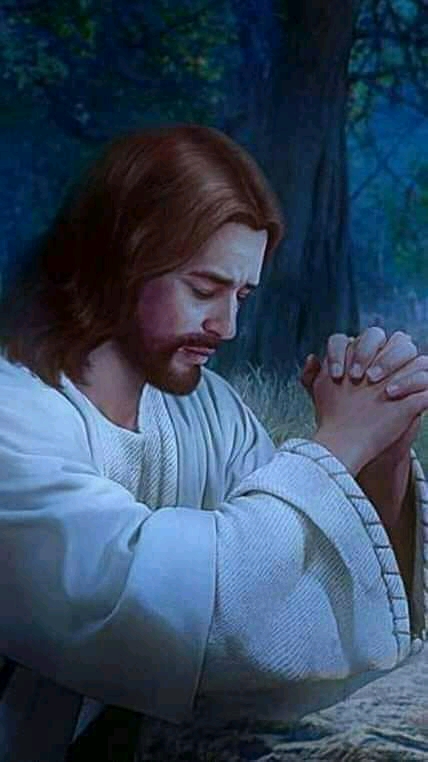
I write often about praying for others. I sometime write about others praying. But I don’t often write about Jesus praying– except during His ministry on Earth. But Jesus continues to pray–without ceasing– for us in Heaven. (See Hebrews 7:25 and Romans 8:24). The Bible tells us that Christ is seated at the right hand of the Father and making intercession for us. Not only is He praying; He is praying FOR US.
Jesus didn’t just die to keep us out of Heaven and then move on and leave us to struggle on our own. Nor did He send the Holy Spirit to live with us so that He could sit down and do nothing. Jesus is still passionately advocating on your behalf– every minute!
And that is a great comfort in a world where we sometimes feel abandoned and friendless. Even if the whole world is lined up to do me great harm, Jesus is on my side. If you have trusted Him with your life, He is faithful to advocate for you– for your growth as a Christian; for your protection from the schemes of the Enemy; for abundant and productive LIFE for you, both now and through Eternity.
If you have not trusted Jesus as your LORD and Savior, He is still advocating– for another opportunity, for more time, for circumstances (good or bad) to help you seek (and FIND!) Him. For those who have not heard the Gospel, He is pleading with the Father (and sending the Spirit to urge believers) to open their eyes, ears, and hearts to God’s will and trust Him.
Jesus advocates on our behalf because of His great Love and Compassion. We don’t deserve to have someone else plead our case before the Righteous Throne of God. And we are not qualified to plead our own case– we are guilty in the sight of a perfectly Holy God.
“But God shows His love for us in that while we were still sinners, Christ died for us. Since, therefore, we have now been justified by his blood, much more shall we be saved by him from the wrath of God. For if while we were enemies we were reconciled to God by the death of his Son, much more, now that we are reconciled, shall we be saved by his life. More than that, we also rejoice in God through our Lord Jesus Christ, through whom we have now received reconciliation.” Hebrews 5:8-11 ESV
You will never, NEVER pray alone! And who better to have as a prayer partner than the very Son of God Himself! He is our Savior, our Champion, and our Advocate!
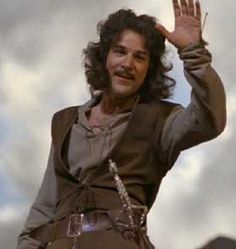
One of my favorite characters from “The Princess Bride” is Inigo Montoya. He has a few redeeming qualities– he is a loyal friend; he is intensely (obsessively) loyal to his father’s memory; he is basically honest; and he has a soft spot for lost causes, including a tender-hearted giant and a (mostly) dead pirate/rival/would-be hero.
But Inigo has many failings, as well. He is a drunkard, he lacks the skills to plan great achievements, and he has an over-developed sense of revenge that gets him in a lot of trouble. Also, he hates waiting. And he has done a lot of it– he’s waited over 20 years to track down his father’s killer and challenge him to a duel (the above-mentioned revenge).
When he first meets Westley (the above-mentioned pirate/rival/would-be hero), Westley is climbing a treacherous cliff. Inigo waits at the top as Westley struggles up the rocky crag, trying not to fall to his death. Inigo, ever concerned, calls down to ask how it’s going. He wants to know if Westley can “a-speed things up.” He REALLY hates waiting. Later, as he seeks to rescue Westley, he is told that he must wait at least 15 minutes for the magic potion to work and for Westley to regain consciousness. Inigo is delighted when Westley can talk and move his head a little, but he cannot wait for Westley to regain the use of his arms or legs before “storming the castle!”
Not many of us enjoy waiting. Some of us are better at it than others. And it is a character quality that God asks us to develop. Several times in the Bible, God asks us to “wait” or “wait on the LORD.”
When we pray, it is tempting to expect or even demand an immediate, clear answer. If we don’t get it, we fall into two temptations. The first is to despair and/or lose faith. If God doesn’t “show up” right away, we are tempted to believe that He just isn’t listening or doesn’t care about our situation. As time goes by, we may become bitter, angry, sullen, and depressed. We stop calling out to God; we turn away and seek answers (or escape) elsewhere.
The second temptation, the one I believe Inigo falls into, is to stop depending on God and carry the burden of our pain, our grief, or our situation all by ourselves. Inigo’s father was killed when he was eleven years old–his entire adult life has been wasted on a quest to avenge his father’s death. He hasn’t developed a life of his own– he has no career (he does odd jobs for crooks like Vizzini), no family, no plans for a sustained future– only his anger and bitterness over a twenty-year-old tragedy. And only when, in desperation, Inigo pauses for a moment and prays, does he find any real help in achieving his goals. In fact, at the end of the story, when Inigo finally achieves his revenge on Count Rugen, he is left with a dilemma. He admits to Westley that he has no idea what to do with the rest of his life! He has allowed the past to consume both his present and his future.
Another story that illustrates this temptation is the story of King Saul. In 1 Samuel 13, Saul has begun to attack the enemies surrounding Israel. He and his troops are hiding in caves and waiting for the prophet Samuel to offer a sacrifice and seek God’s counsel. The enemy is camped nearby with thousands of troops and chariots, and Saul’s men are beginning to panic and desert him. When Samuel doesn’t come at the appointed time, Saul disobeys God’s law by offering the sacrifices himself, even though he is not of the priestly line. Instead of standing firm, and encouraging his men, Saul gives in to the general panic and takes matters into his own hands. He takes a visible action — offering the sacrifice– without taking the right attitude of seeking God’s counsel.
Waiting can be difficult– especially when we are faced with fear, anxiety, danger, and lack of plan or purpose. But learning to wait for God’s ways and timing will teach us how to grow in Faith and confidence. Today, instead of asking God to “a-speed things up,” may we thank Him for all the times He has been faithful in the past, and trust that He will “arrive” at just the right time!
(SPOILER ALERT)– this post is about The Lord of the Rings and contains many references to plot devices. If you have not read the books or seen the movies, you will be confused and the narrative will be spoiled..
It’s no secret that I am a big fan of the Lord of the Rings by J.R.R.Tolkein. I’ve read through the trilogy several times, and I love to watch the movie version, as well. Even though it is a fantasy story, many of the situations and lessons are “true.” We may not face orcs or dragons or undead ring-wraiths, but we do face difficult challenges, such as war, grief, confusion, and oppression. We WILL face difficulties in life; we need to face them with resolve, courage, wisdom, and action. We may not have to destroy the Ring of Power, but we may have to battle addictions, habits, and relationships that threaten to destroy us.
One of the elements of the Lord of the Rings that captured my imagination from the very first readings was the “fall” of the wizards, Gandalf and Saruman. Saruman, who is introduced as one of the council of “good” wizards, and a mentor/friend of Gandalf, seems like someone who will be able to help the Fellowship in their quest to destroy the Ring of Power. But Saruman has “fallen” under the thrall of the evil Sauron. Using one of the “seeing stones,” Saruman has seen into the Dark Lord’s plans, and has decided that his own wisdom and power are enough to equal those of Sauron. His “fall” is one of self-delusion and arrogance. And his fall is described in terms of color. Where once he was called Saruman the White (the color of light when all the colors come together), Saruman becomes a prism, reflecting all the colors, but broken up, diffused, and no longer giving a true light.
Gandalf’s “fall” in the chasm as he battles the demonic Balrog is both dramatic and unexpected. Coming on the heels of Saruman’s betrayal, it sends shockwaves through all of Middle Earth. It left me devastated. After all, Gandalf is wise, good, and powerful. Having read The Hobbit, it was comforting to have a familiar guiding force to lead this new “adventure.” It is his knowledge and encouragement that has provided leadership and stability for the Fellowship of the Ring. His sudden and tragic absence leaves a gaping hole and many questions. His is a literal “fall.” He falls into blackness– fire and shadow and utter silence.
It strikes me that the wizards of The Lord of the Rings are not unlike the gods and heroes we make for ourselves. We imagine God (and often human heroes, including pastors and other religious figures) as being benign old men, walking among us, offering just enough wisdom, power, and “magic” to entertain, enlighten, and encourage us. We listen for good advice (whether or not we actually take it!), and we take comfort in the fact that they seem to know all that is going to happen. Of course, the wizards in the books are not REALLY gods–they know many things, but they cannot see all ends; they have great power, but they cannot defeat Sauron on their own (nor successfully challenge him, as Saruman learns); they are not always where they say they will be when they said they would be there.
“You’re late, Gandalf!” “A wizards is never late, Frodo Baggins. Nor is he early. He arrives precisely when he means to.” (From the Fellowship of the Ring)
Not only is Gandalf “late” for Bilbo’s special party (according to Frodo), but he completely misses his meeting with Frodo and the other hobbits in Bree, due to circumstances beyond his control. And, when the company seems to need him most, he falls into the great chasm and they must flee to the Elves at Imladris. Galadriel offers some encouragement, but it is tinged with dire warnings. Saruman’s “fall” highlights his shortcomings– he can only “see” victory through compromise, deception, and the machinery of war. Everything about him becomes twisted and sullied. In the books, he ends up being a two-bit tyrant, defeated in his attempt to take over the Shire. In the movies, he “falls” from his tower of Orthanc and sinks into the stinking pools festering around his ruined ambitions.
What about our visions and expectations of God? Sometimes, it seems as though He is “late” or “absent” in the midst of our difficulties. We want Him to come in and save the day– tell us exactly what to do next, or make an obstacle disappear, or bring a host of warriors to fight our battles. Other times, it seems as though our vision of God is seen through a prism…if God is really good, how could He let _______ happen? If God is really just, why is there still so much injustice around us? And what about others who follow a different “God.” Which one is real? Which one is “Right?” How can we know? In fact, those who follow Christ are following a God who faced betrayal and death– and He seemed to be defeated. And sometimes, it seems as though He has left us to the mercy of the evil that surrounds us.
God sometimes seems to be “fallen into shadow.” He seems to be absent. Or at least distant and silent. Just as in The Lord of the Rings, we can be left like the Fellowship– shocked, dismayed, left feeling lost and hopeless. Where is God in those moments?
But when I re-read the books, or when I sit down to binge-watch the movies –again– I find myself seeing things from a different perspective. Gandalf and Saruman both “fall” before even the middle of the story. Saruman’s betrayal seems not just tragic, but nearly insurmountable. Gandalf’s absence leads (indirectly) to the breaking up of the Fellowship into smaller, leaderless factions. But here’s what I see clearly in reflection– the Shadows that seem to swirl around the wizards are just that. They are shadows. There is darkness in the Land of Mordor. But Frodo and the rest of the Fellowship carry their own light. (Frodo, in fact, carries a literal light in his gift from Galadriel). They stay true to one another and true to their quest. As Sam points out at Osgiliath, they have had many chances of turning back and giving up, but they hold on to the hope that Good will win over Darkness, and Truth will defeat oppression and deceit, and yes, even the Ring of Power. Gandalf’s absence, while shocking and discouraging, is not permanent, nor is it devastating. It only seems so in the shadow of uncertainty and the chaos of war and suffering. The other members of the Fellowship actually develop their character, their strengths, and their gifts when Gandalf isn’t there to make things easier. He has already given them the wisdom they need– even if they don’t realize it. Gimli and Legolas become a team as their unlikely friendship develops. Merry and Pippin mature into warriors and diplomats. Aragorn becomes the King he was always destined to be. Frodo and Sam–unaware of Gandalf’s victory until the very end, still face all their dangers, including betrayal by Gollum, and save all of Middle Earth!
And so it is with our difficulties. We are looking around for help, wondering how we will continue if God is in the shadows; if God remains silent. We want to see His hand moving the chess pieces, or hear His voice calling out our next step. When we don’t hear it, we can make bad choices– we can give up hope, compromise with the enemy, or trust in our own power to see us through–or we can stay true to His Word and keep running the good race (see 2 Timothy 4:7-8) God does not abandon us– unlike the wizards, He is omniscient and omnipresent– but sometimes He stays in the shadows, knowing that it is for our development and maturity. I don’t have certainty about my choices and my actions, but I have the Bible and I have the Holy Spirit.. I have prayer. And I have the people God sends into my life to give advice and encouragement. I may not know if I can trust even the advice of religious leaders, but I can compare their advice with what I read in God’s Word and what I see in their actions. When I read the Bible, I read about promises God made to the nation of Israel– promises He kept. I read in Ezekiel, and Daniel, and again in Matthew and Revelation about His promises for the end of the ages.
It may look dark for the characters in The Lord of the Rings as they battle their way through Middle Earth. But I DO know how the story ends! I know that Gandalf does not stay in the shadows– he comes back more powerful than ever! And Saruman’s army of orcs is defeated; Saruman’s poisonous plot to usurp the mind and will of King Theoden is discovered and the king restored to health. And the Fellowship (excepting Boromir) is reunited after Frodo and Sam are successful in destroying the Ring. And I may not know the next step in my own story, but I know how my story will end! God may seem to be AWOL or “in the shadows” during my current circumstances– in my grieving, struggling, and pain. I may not see justice and peace in my near future– I may not see them in my lifetime– but I can KNOW that God is never late. He is never too early. He will arrive precisely when He means to. No shadow will be able to hide Him; no darkness will be able to comprehend Him. He will come in the blazing light of His Glory– and He will come to make all things new!
I spend a lot of time on this blog “talking”– writing about how to talk to God, why I talk to God, when or where to talk to God, etc.. But today, I want to focus on listening.
Prayer shouldn’t just be about talking. After all, prayer is a conversation. It just makes sense that we need to practice both the speaking and listening elements of communication. And yet, we rarely get a direct spoken “answer” to any of our prayers. So how do we listen for God’s response? How do we know when God is “speaking” to us? Or are we merely fooling ourselves with wishful thinking?
I think there are several key ways that we can listen for God’s response, and several ways that we can learn to recognize God’s “voice.”
First, we should spend some time actually being quiet! Find some time each day or several times a week to meditate. It doesn’t have to be a long time, and it doesn’t have to be formalized or systematic. But make time for quiet reflection. It is in moments like this that God often grabs our attention– away from the competing noise of our surroundings, distractions, other voices, and even our own racing thoughts.
Spend time in God’s Word! God has already spoken wisdom, warning, encouragement, and hope in the Scriptures. God’s Word is active and relevant–if we are open to reading, understanding, and absorbing it. I can’t count the number of times I’ve read a familiar passage of scripture and suddenly realized its connection to my current circumstances or gained new wisdom from it.
Another way is to listen to solid and trustworthy advice. God often chooses to speak through others– others who have shared life experiences, or wisdom gained from many years of living. Listen without interrupting or pre-judging. Listen to those whose lives reflect the peace and joy of life with Christ.
Seek truth! Seek it in God’s word, seek it from your critics and detractors as well as your friends and encouragers. You may realize that you have been listening to lies– either convenient half-truths that lull you into complacency, or negative lies that have bound you in fear and inactivity. God’s voice will convict, reassure, and confirm, but it will always be TRUE. God will never contradict what is in His Word, and He will not flatter you or “flatten” you when He speaks.
Listen for confirmation. Just because you hear what sounds “good” doesn’t mean it is from God. Just because you hear what sounds difficult, doesn’t mean that God won’t be with you. But if we only listen for what we want to hear, or if we stop listening to what seems difficult, we may miss out or even drown out what God is really saying.
Be consistent in obedience. Often, we are listening for wisdom when we face large decisions or unexpected circumstances. But wisdom comes easier when we not only listen for it but follow it in our habits, routines, and everyday practices. I may not know what God is “saying” about taking a new job, moving to a new area, or facing a major life change. But I DO know what God says about integrity, worship, loving my neighbor, etc.. Jesus taught His disciples to FOLLOW Him. We can learn a lot, and even hear the voice of God, and still miss the point!
Don’t give up praying. Don’t stop speaking to God. Pour out your heart and soul to Him. But don’t stop listening for His still, small voice! Let’s listen, learn, and live out our Faith today!
We lost a family member a couple of weeks ago. We were shocked and heartbroken to hear of his loss. To know that we will never get to hear his laughter or watch his eyes crinkle up over a good joke; never hear him enthuse over history or a great movie; never enjoy the fellowship of being in the same room together again. He never got to retire from his job; never got to walk his daughters down the aisle; never got to enjoy the house he and my sister-in-law planned to build.
BUT
Chris had a wonderful life in many ways. He and his wife have three amazing adult children. He got to enjoy plenty of days loving nature and enjoying a good sunset over Lake Michigan. He harvested many morels each spring. He made music. He helped hundreds of people in hundreds of little ways. He was blessed.
We went to Chris’s funeral last weekend. We helped celebrate his life– his accomplishments and achievements, his vivid personality, his sense of humor– and we celebrated his Faith. Yes, there were tears at the funeral. We will miss Chris in the years to come. But we share his faith and his great hope. We will miss him temporarily. We will grieve for a few years. And then, we will experience a joy that will make us forget the grief! Not only will we see Chris again– to laugh together and share stories and songs– we will be in the presence of our source of Life, and Hope, Joy and Peace! We will be surrounded by the great cloud of witnesses as we live eternally with the One who loves us best!
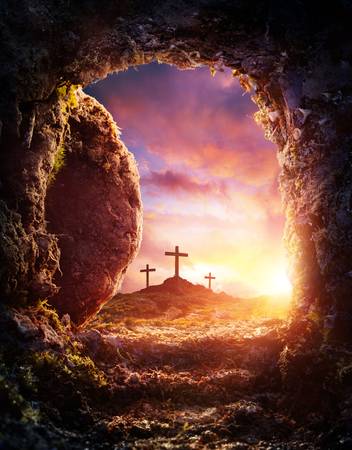
Many years ago, another man died. There was grief, stunned disbelief, and terror. The family, friends, and followers of Jesus Christ mourned. They hid. Their world was dark with despair and anguish. All these years later, we look at paintings and sculptures of Jesus suffering on the cross. But, while we shudder at the horror of all He suffered, we do not look on such pictures with fear or despair. The Cross is not a symbol of Death’s ultimate victory, but rather its ultimate defeat. Jesus didn’t stay dead. His body was buried, but He did not stay there. We celebrate, not the horrors of the Cross, but the limits of its power to steal our joy.
This is where grief meets hope. It is where the past is overwhelmed by the promise of Eternity. Christians grieve– of course we do. We love life, and we grieve to see it end. We love being with friends and family– we feel an emptiness and an ache when someone we love is “missing.” But we do NOT grieve without hope. We acknowledge the brief sting of loss. But Death loses its sting in the light of Christ’s victory. There is no lasting victory in the grave. Our time is short; we are powerless to stop death from taking us; from taking our loved ones. But Eternity beckons! Even our time on earth gives us daily reminders– the sun rises each morning; spring comes after each winter; children grow into parents, and we get to love another generation.
Even when life is hard; when grief looms large and hope seems dim– hope does not disappoint! Because Christ LIVES!
Chris was buried earlier this week– his body was buried– but he LIVES. He is healed and freed of all the pains and frustrations of this earthly life, and because of Christ’s gift of Grace and Redemption, Chris is living all that he once hoped for. Because of Christ’s great gift, many of us will someday join him in singing God’s praises, in laughter, delight, and endless joy!
Yesterday, I voted in a primary election. In a few months, I will vote in a general election for President. I live in a nation of choices. I can choose to vote for any of the listed candidates, or I can write in a name. I can choose not to vote at all. I can choose how to spend my money– I can invest, purchase, pay my bills (or not), gamble it away, or give the money to charity. I choose what to do with my time– I can sleep all day, go to work on time or arrive late, I can spend all my time on-line, or I can binge-watch movies or TV shows. I can keep a consistent schedule, or I can take each day’s time as it comes. I can choose where to go– I can stay indoors in my apartment, I can walk all over town, or I can get in my car and drive to another city. I can choose my attitude and outlook; I can choose my political and social stands, and I can choose my beliefs. Others may apply pressure and coercion, but they can’t take away my right to choose.,. For better or for worse!
However, my choices have consequences. If I choose to act against the law of the land, it is very likely that I will be caught and punished. I may be fined, or jailed. I may face a trial. In many countries, I may be executed for doing things that would be allowed in my home country. If I choose not to pay my bills or not to go to work, I may face economic hardship as a result– late fees, loss of a job, and a difficult time finding future employment. If I choose to eat only junk food, or no food at all, I will experience health issues. The choices I made today in the voting booth, and the choices I will make in November will have consequences– most of which I cannot predict with any accuracy. I think I know what will happen– and others may predict dire consequences if I don’t vote “their” way– and my one small vote may not seem consequential, but it counts! Even my small actions have a ripple effect on the rest of my life, and the way in which I conduct it. I will either “show up” or I will “stand back.” I will either accept responsibility in the small things and large, or I will try to blame others. I will practice self-control and discipline, or I will drift through life at the whim of emotions, influences, peer pressure, and deceptions.
When it comes to prayer, I also have choices. There are times when I feel “compelled” to pray– circumstances beyond my understanding or control will cause me to want to cry out for divine help. Hearing about others’ needs make me want to ask God to work in their circumstances. Sometimes, I feel waves of gratitude and worship that cause me to sing and praise God for His character, His faithfulness, and the blessings He has poured out in my life. But I am not required to pray. I choose to pray. Sometimes, my choice to pray is simple, natural, and automatic. At other times, it is a sacrifice to pray. Prayer is more than just “an option” in my life. It really is a pursuit. I choose to keep a prayer journal. I choose to focus on prayer every day– both in practice and in testimony (as in this blog entry).
So today, I will join with others this morning in corporate prayer. I will pray alone at home. I will pray throughout the day for my community, and for individuals as they come to mind or show up in my prayer journal. And some of the prayers will come naturally; others will require me to dig deep, to confess my own failures, and admit my need for God’s Grace, His Wisdom, and His Strength.
And the consequences? Well, I can’t predict how my prayers may impact my own life or the lives of others. I don’t know how God will choose to answer my prayers. I don’t pray because God always does what I want– I trust Him to do what is BEST; and I have learned that His timing and His ways ARE the best!–but I pray because I know it is the best and first action I should take in any situation. I’m not perfect in prayer. I don’t always pray first. I don’t always listen for God’s answer when I DO pray. And I also know the consequences of NOT praying– worry, confusion, anger, restlessness, disappointment, and more. Oh, I may not experience all of these things instantly. But eventually, my choices and their consequences lead to frustration when they are not coupled with prayer, trust, and obedience.
I hope you are praying, trusting, and following God today. I hope that is your choice every day. God will not force you to come to Him. But He is ALWAYS right there when you do! Your choice to pray may not change the world instantly, but it WILL have consequences!
When I voted yesterday, I got a sticker, proclaiming to everyone that I had made the choice to vote. What might happen if Christians (myself included) were bold enough to proclaim our choice to pray every day and in all circumstances!?































 Pursuing Prayer