What If?

As I am writing this, people in my country are voting or preparing to vote in a Presidential election.  Many of them are voting in fear, confusion, or anger, and asking, “What if my candidate/cause/political party doesn’t ‘win’ today?”  “What if I voted for the ‘wrong’ policies or people?”  “What does the future hold?”

These are not uncommon or unrealistic questions, but they are questions that can waste our time and sap our energy in hypothetical posturing.  The writer of Ecclesiastes says:

alone beach calm dawn

Ecclesiastes 11:1-6 King James Version (KJV)

11 Cast thy bread upon the waters: for thou shalt find it after many days. Give a portion to seven, and also to eight; for thou knowest not what evil shall be upon the earth. If the clouds be full of rain, they empty themselves upon the earth: and if the tree fall toward the south, or toward the north, in the place where the tree falleth, there it shall be. He that observeth the wind shall not sow; and he that regardeth the clouds shall not reap. As thou knowest not what is the way of the spirit, nor how the bones do grow in the womb of her that is with child: even so thou knowest not the works of God who maketh all. In the morning sow thy seed, and in the evening withhold not thine hand: for thou knowest not whether shall prosper, either this or that, or whether they both shall be alike good. 

woman wearing grey long sleeved top photography

It is not wrong to wonder about the future, but we cannot be sure that our actions will always produce the results we long for– especially when we have little control over other people’s actions and consequences.  The first two verses of this passage warn us not to “put all of our eggs in one basket”.  As free citizens in a democratic republic, we shouldn’t put our trust in any one political party, platform, or politician.  Nor should we live in a social or political “echo chamber”, listening only to the views and ideas with which we feel most comfortable, or least challenged.  However, we should look at the long-term consequences of proposals and the reasons behind them before we promote change just for the sake of it.

The third verse reminds us that some changes and events are beyond our knowledge or control.  It’s not that our vote “doesn’t make a difference” or that we’re on “the wrong side of history”– it may mean that history has taken a detour surrounding a certain issue.  It may mean that God is allowing for something we have not imagined (as He did in the days of Habakkuk). Get some great “Insight” into the Book of Habakkuk here.

aerial photo of buildings and roads

But there is more wisdom to come in verses 4-6.  Waiting for certainty of outcome, or being distracted by our circumstances or every “wind of change” can lead us to miss the very real opportunities for present action.  God has given us everything we need (see 2 Peter 1:3-5) for godly living and godly decision-making.  That doesn’t mean that our decisions will always reflect popular “wisdom”; it doesn’t even mean that our decisions will be the same as all other fellow believers and followers of Christ.  It DOES mean that we can make our decisions without fear.  God knows us– He understands your heart and mind better than anyone; He knows why people who agree on spiritual matters may not agree on politics.  But more than that, God KNOWS the future!  He knows all the things that we merely guess at.  So we should act in the present with the best information we have, and leave the rest to the God who knows best.

girl wearing blue denim dress shirt

Modern politics relies heavily on conjecture– polls, predictions, pledges, projections, plans, and campaign promises.  But God is still sovereign over all nations, governments, and peoples.  Instead of asking, “What if..” we should be asking of God, “What now?!”   And we need to be ready to listen and obey!  Let’s pray today for the wisdom to listen more, act with confidence, and trust our future to the one who has already seen it!

Onward!

Today is Memorial Day in the U.S.– a day when we honor those who have fallen in battle and given their lives for our country. It is also a day on which we often decorate the gravestones of ancestors and relatives who have passed on. There may seem to be little connection between soldiers of war and civilian great-grannies or uncles, but Memorial Day can stretch to both– especially to Christians. Here’s how I see it:

  • Soldiers who gave their lives never lived to see the fruits of their sacrifice. They died, never knowing if their sacrifice was in vain. Our ancestors, similarly, poured their efforts into rearing children and living lives of integrity, little knowing how their efforts would be carried on by the next generation. There is a risk in battle– whether a war-time conflict, or just daily survival–a risk that all our hard work and all the perils we face will end in failure. We memorialize those whose efforts did NOT fail. We honor those whose sacrifices made a difference in our lives and in the lives of others. They lived (and died) for a purpose– and we honor that purpose, as well as the individual lives.
  • All of us are fighting a battle– a spiritual battle– in which our very lives are on the line. Some of us will lose our lives, literally, through imprisonment, persecution, torture, or disastrous choices we make to surrender to the enemy. Others will lose our lives figuratively, giving up our time and our own dreams to a greater cause. We honor those who went before us in this fight. We honor the good examples and the fallen heroes.
  • Soldiers go where they are sent. They often die and are buried far from their homes, on the battlefield. They may or may not have graves with the rest of their families. Many in our family were immigrants and pioneers, moving far from “home” to start a new life. Some of them moved as the result of war coming to their ancestral home and pushing them to relocate.

Memorials– whether gravestones, statues, monuments, or stories passed down to the next generation– serve as reminders of our priorities– freedom, family, and Faith. God’s people throughout the years have raised memorials to commemorate God’s faithfulness, as well as the high cost of fighting against Sin and its effects.

Dr. Martin Luther King, Jr. Memorial

I pray that on this Memorial Day, we will take time to remember, and give thanks for those who have fought the “good fight” in the name of freedom, and in the name of Faith. But more than that, I pray that we will be inspired to carry on the fight– knowing the risks and weighing the costs–to preserve those things that are most important. Let’s pause to remember– and then let’s move Onward!

We the People

Yesterday and today mark two important milestones in North America. September 16 is Mexican Independence Day, and September 17 is Constitution Day in the United States. On these days, people in our two countries celebrate some of the great things that can be accomplished by “we the people.” The founders of our nations were not perfect, but they fought and worked and came together to make “a more perfect union,” and a brighter future for their citizens.

All around the world, governments are instituted to protect the rights and lives of people– to protect them from danger, to allow them to interact in peace and safety, and to provide for “the general welfare” of all. But governments– even the best–are run by fallible people.

Photo by Hugo Entrepreneur on Pexels.com

The Bible tells a long and complex story of the ancient nation of Israel. Tracing its origins to a single patriarch (Abraham), the family grew to be a powerful nation, ruled first by priests and judges, and then by a series of kings. The nation split into two distinct countries, before being scattered and sent into exile. The story of the nation is chronicled (literally) in the books of 1 and 2 Samuel, 1 and 2 Kings, and 1 and 2 Chronicles. In the books of the prophets, the same message comes from God again and again–Israel and Judah have both fallen into the same idolatry and corruption that doomed the nations they had conquered in former times. Instead of seeking justice for all the people, and providing order and protection, the leaders had become drunkards, liars, thieves, and murderers. They betrayed their allies, made foolish treaties, oppressed the poor and helpless, and celebrated their own cleverness. “We the People” had devolved into “us versus them.” Worship of God had been replaced by worship of a pantheon of foreign gods–worship that involved ritual prostitution and human sacrifice. Family members and fellow citizens were sold into slavery, robbed and beaten, used and abused, and slaughtered–without remorse or fear of retribution. God’s warnings were followed by His justice and punishment, and the demise of both nations, as well as punishment for their neighbors.

Photo by u0404u0432u0433u0435u043du0456u0439 u0421u0438u043cu043eu043du0435u043du043au043e on Pexels.com

Israel’s story, while very detailed, isn’t unique in history. Instead, it is a case study of what can happen when the people abandon unity and the rule of law for division and corruption. It is what happens when “who we are” becomes more important than “whose” we are; when “we” are more important than anyone else–even God. Israel and Judah continued to be religious right up to the point where they were dragged off to exile. They brought offerings and sacrifices, sang songs, prayed, and memorized scripture. Their leaders assured them that God would protect them and continue to let them prosper as their enemies marched up to the gates of Jerusalem. They had not abandoned the worship of God– they had just added idolatry to it. They worshipped their own prosperity, they worshipped gods and goddesses of the harvest, of war, of wealth, and wisdom. They still thought God was great– but not necessarily Sovereign.

Who or what are we worshipping today? What “new” and additional principles have we added to our own Constitution? To the laws of the land? To our way of being good citizens in our respective countries? To the eternal Word of God? When we hear the phrase, “We the People,” does it bring to mind people who look and live differently than us? Does it bring thoughts of justice and unity? Does it humble us?

Photo by Life Matters on Pexels.com

King David, the second, and one of the greatest of Israel’s kings wrote: “Know that the Lord, He is God; It is He who has made us, and not we ourselves; We are His people and the sheep of His pasture.” (Psalm 100:3 NKJV) “We the People,” by ourselves, will scatter and fall into destruction, like sheep without a shepherd.

I Pledge Allegiance..

The U.S. is getting ready for a national general election. We’ll be voting for officials, from local commissioners all the way to the office of President. There are campaign ads and political conventions– banners, slogans, hats, t-shirts, and lots of American Flags. And, while many of the normal rallies and “whistle-stop” campaigns have been cancelled due to Covid-19, the conventions have been marked by people reciting the Pledge of Allegiance to our Flag and all it stands for.

Photo by Element5 Digital on Pexels.com

“I pledge allegiance to the Flag of the United States of America, and to the Republic for which it stands, one Nation under God, indivisible, with liberty and justice for all.”

Much has been made recently about just two words of this pledge–“under God”– which were added more than 65 years ago. Interestingly, between 1892 and 1942, there were at least two versions of the pledge being used. One version stated: “I pledge allegiance to my flag, and the republic for which it stands. I pledge my head and my heart to God and my country. One country, one language and one flag.” Another version (which was altered and officially recognized by Congress in 1942), originally read: “I pledge allegiance to my Flag and the Republic for which it stands, one nation, indivisible, with liberty and justice for all.” https://en.wikipedia.org/wiki/Pledge_of_Allegiance.

Photo by Brett Sayles on Pexels.com

There are Americans who are using the Pledge of Allegiance, the U.S. Flag, even the words, “under God,” to cause division, chaos, and ill-will to flourish in the weeks leading up to the election. Some are trying to redefine what it means to be an American; what the Flag stands for. People on “both sides” are trying to rewrite our history–denying that it contains both good and bad; triumph and tragedy, promises kept and promises broken.

Photo by Pixabay on Pexels.com

As an American, I seek to live and act in such a way as to honor this nation and those who live here. Part of pledging allegiance to the flag (for me at least) is a promise to uphold those principles upon which this nation was founded: the conviction that all people are created equal (not just here, but around the world); that they are endowed by God with the right to live, to think and act according to the free will God gave them, and to pursue those dreams and activities that will bring hope, goodness, prosperity, and general “happiness” to themselves and to others. That does not mean that all people will use their free will wisely, or that they will all achieve equal outcomes and equal success regardless of their skills, resources, or efforts, however. Governments are instituted to protect the opportunities and rights of all, not to ensure that everyone gets the same life, the same will, and the same definition of “happiness.”

Photo by Sharefaith on Pexels.com

I also pledge to defend and protect and preserve this land–figuratively and literally. It is my duty to care for the trees and rivers, lakes and meadows, wildlife and even the air. It is my duty to encourage my neighbors, to vote on local ordinances, and cast my ballot for local, state, and federal offices. It is also my duty to speak out, to write, to act in the cause of justice. Finally, it is my duty to obey the laws that govern this country–not because I voted for them, or because they are convenient, or because I see an immediate benefit from them, but because they are justly enacted laws. If I don’t like a law, I pledge to see if it can be amended or repealed. I may use civil means to protest injustice– sit-ins, peaceful marches, legal suits, petitions, etc.. But my allegiance to this nation and its people means that I pledge not to put others in danger, or to deprive them of their lives or livelihoods in my pursuit of change. I will, however, defend myself and others from anyone who would try to take away these sacred rights.

I love my country. I love the world God created and the unique and diverse people He designed to fill it. But ultimately, my highest allegiance is not to America. It isn’t to my neighbors, or my family, or to the planet. My heart, mind, soul, and spirit belong to God. My allegiance to Him comes before any other. If my nation turns away from God; if it denounces all that is sacred, and demands that I do the same, I can no longer pledge my allegiance to its flag. If I am asked to destroy innocent lives, or deny God’s existence, or forced to speak lies in the name of patriotism, I must follow my first allegiance.

Photo by cottonbro on Pexels.com

In times like these, it can be very easy to get “wrapped up” in the Flag, and the patriotic speeches, and the political rhetoric. Candidates paint themselves in the best colors, and attempt to make their opponents look evil, uncaring, and incompetent. But I have not pledged my allegiance to any candidate. I will choose to vote for the individuals I believe are best suited to bring about changes or preserve policies that honor both God and our founding principles. And I will pray for all elected leaders, whether I voted for them or not. But my hope, and trust, and allegiance, is to God above all, And all else, even the United States of America, is “Under God.”

Just a Minute…

I stumbled upon a site that promotes a concerted minute of prayer for our nation.  In the light of upcoming mid-term elections, recent violent outbreaks in some of our cities, and other urgent issues, there are movements afoot to unite American Christians in our prayer efforts.

silhouette of people beside usa flag
Photo by Brett Sayles on Pexels.com

National Minute of Prayer Home

The National Minute of Prayer is based on an effort carried out in England during World War II.  I want to be careful in promoting this idea– I DO NOT believe that God is swayed solely by people praying to Him in large numbers or at certain times– God sees our hearts and knows our minds.  He wants hearts that are sincere, humble, and attuned to His will, and He will act, not on our desires, but on His own knowledge of what is truly best for our individual lives, for our nation(s), and for our world.

Still, I think this is a good idea, even though I don’t necessarily agree with all the ideas and aspects of the blog.  I don’t believe there is anything magical or super spiritual about any given minute or hour of the day, so if the chosen hour of 9 p.m. (ET/8 p.m.CT, etc.) doesn’t work for you, or you can’t commit to a single minute during the day, just commit to pray for a solid minute at least once each day.  I think the value of a project like this is in the commitment and the community–even as individuals search for a closet or a quiet corner to seek God’s face, the knowledge that others are doing the same adds to our commitment and our courage.

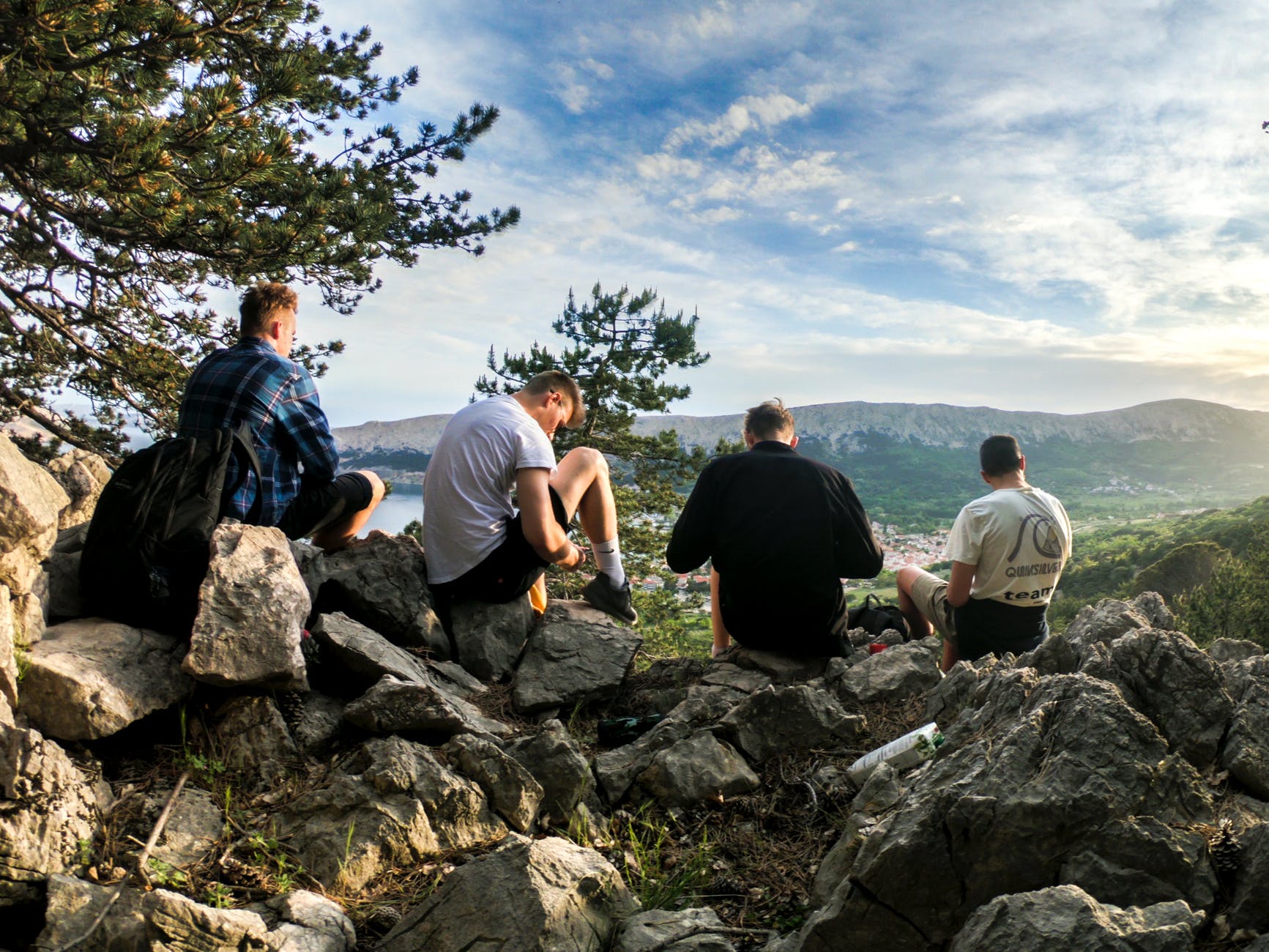
four men seated on rocks facing mountain
Photo by Jan Krnc on Pexels.com

There are dozens of websites, blogs, and videos with similar programs and suggestions.  Find one and consider following or joining!

And this doesn’t just apply to a particular nation facing a particular time of crisis.  Christians living in Australia, Bolivia, Cambodia, Djibouti, Estonia, Fiji, Greenland, Haiti… you get the idea– can set aside one minute every day to pray for their nation and its leaders.

beige analog gauge
Photo by Ylanite Koppens on Pexels.com

Think what it would mean to the heart of God to hear His children praying in unison for healing and justice to be done around the world in our home nations!  Think what would happen if we set aside just one more minute to pray for the Church universal!

prayermotherdaughter

Blog at WordPress.com.

Up ↑