We were reviewing last week’s VBS at our church–sharing stories, “crunching” numbers, evaluating the various elements that made up each day… One of the phrases that came out of our various talks and meetings was that Bible School week had been “bathed in prayer.” What does that actually mean?
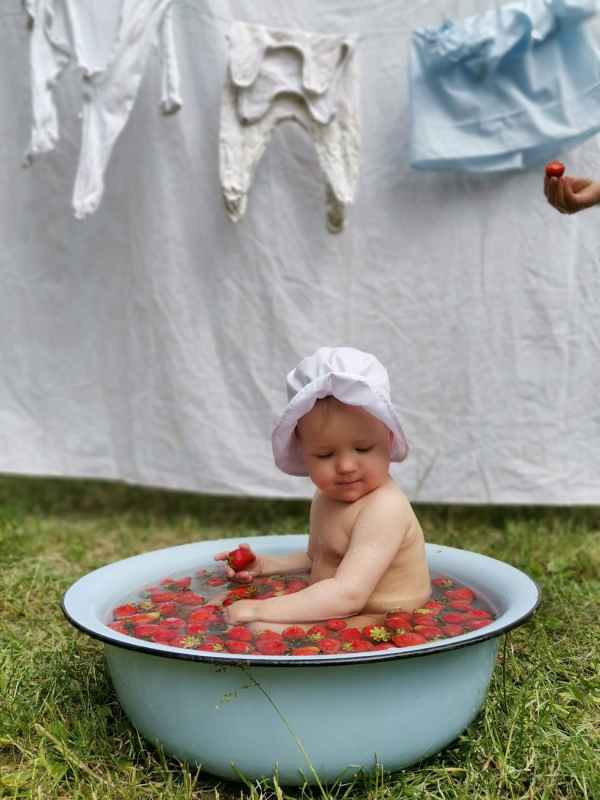
For me, it represents how prayer surrounded us– much like bath water.
It covered every part of our efforts– we prayed for the children who were registered– and those who came unexpectedly as guests. We prayed for the families of the children–those from our church, those from neighboring churches, and those who are unchurched. We prayed for all the volunteers– teens, adults, those who where there each day of VBS, and those who helped before and after with decorations, building, providing supplies and funding, advertising, etc. We prayed for each team– teaching, drama, singing, videography, sound and lights, registration, group leaders, science and crafts, snacks, sports and games, record-keeping, security, and more! We prayed weeks before VBS, and we are still praying that the seeds planted last week will grow and produce a harvest!
It flowed freely. We had organized prayer meetings, and spontaneous outbursts of prayer. We prayed in the “opportune moment” and in the planned schedule. Prayer was a consistent part of each day, but came in random bursts, as well. It came from staff, from volunteers, from children and retirees. Everyone can’t work at VBS– but everyone can pray!
It “cleansed” our efforts. It is easy to get side-tracked with the chaos and fol-de-rol of an event like Bible School. It is easy to lose focus and let stress, frustration, and even bitterness worm their way into our efforts. On the very first day, our registration and check-in system crashed– and this could have been a disaster. But we had prayed before; we prayed during our confusion, and we praised God that, system or no, HE knew who was there, where they should go, and how we should respond to THEM. We are in the middle of a construction project in our children’s wing– we had to plan around fewer classrooms available, and less indoor space. On the hottest week of the summer (so far) we had to hope that the weather would cooperate for our games. God provided cloud cover on at least two of the mornings, and overnight showers– we did not have to deal with heavy rains or the worst heat of the day on any of our days! And (at least partly) because we had prayed in advance, we were grateful instead of stressful about our circumstances, marveling at God’s provision.
Praying brings peace– like the clean and relaxed feeling you have after a good soak in the bath! And I hope that peace was reflected in the way we welcomed each child each day– in the way we listened, and in the way we spoke; in the way we encouraged, and in the way we taught; in the way we interacted with the children, and with the other volunteers.
We tend to “bathe” our “big concerns” in prayer. But what about our “little things?” What if we spent as much time praying about our next doctor appointment? Our next church service? Our next family outing?
We NEED prayer! Our efforts, without prayer, humility, and submission to the Spirit of the Lord, will be fruitless. With prayer, our lives, efforts, and plans will be clean, and bring Glory to God!
Just a thought– but if we bathed more things in prayer, we might just receive more “showers of blessing!”
I spent last week helping out at Vacation Bible School. But most of the kids didn’t see me “working.” I was behind a curtain, helping with the puppet show. My puppet was a little boy named “JJ.” He was a hand puppet. Hand puppets are pretty simple to operate– you stick your hand inside the puppet, and move its mouth as you talk. There are also “hands” you can operate with your fingers to make the puppet clap or wave, etc. During the course of the week, “JJ” also had one “costume change”– he wore a simple plastic bag poncho, but he put it on backwards. “JJ” was the comic relief of the puppetry team! But his purpose was to expand on the Biblical principles we were teaching throughout the week. “JJ” learned about sin and its effects– often by example– and about God’s forgiveness. And he helped the younger kids review their daily Bible verse.
I have worked with puppets off and on over the years, especially during my time as a youth services librarian. Puppets help tell stories in an entertaining and engaging way. But puppets are merely tools. The same stories can be told using flannel cut-outs, or videos, or illustrated comic books. In fact, everything that “JJ” did was scripted. If he nodded, it was because the script said to nod. If he sang, the song was in the script. And when the puppet show was done for the day, “JJ” rode around in a canvas bag, lifeless and unused.
We use puppets at VBS to teach about Christian principles– but pursuing a Christian life is NOT about being a puppet. Many people reject Christ, because they believe that God is asking them to become puppets. They learn about concepts like the indwelling of the Holy Spirit, and it sounds to them as though God will “possess” them, and take away their free will and their ability to live life on “their” terms. But that is not what Jesus taught. Jesus was perfect in Righteousness– yet he clearly CHOSE to follow His Father’s instructions, and he did it using His own unique personality and style. Jesus did not parrot the words of God when He taught. He told stories– parables– that brought God’s laws and commands to life, and helped people understand them better. Jesus was no puppet. And He doesn’t ask us to be puppets, either. Instead, we are witnesses– telling our own stories, living our own lives–SHOWing others how Christ lives THROUGH us. God doesn’t want “tools” or mindless puppets. He wants a relationship with us that gives our unique experiences an eternal and sacred purpose.
Yes, in Christ, we become a “new creation.” (see 2 Corinthians 5:17) We see the world through a different lens; our minds are renewed (see Romans 12:2); we follow Christ’s example and walk in obedience to God. But we do so out of our desire to be closer to God– our desire to pursue the relationship that only God can offer us. The Holy Spirit indwells us; He doesn’t coerce us or take over our mind– rather, He helps us continue in our newness and progress toward greater Godliness!
It was fun to spend a week using “JJ” to help teach the daily lessons. But we had dozens of amazing volunteers who also made VBS memorable, fun, and, hopefully a life-changing week for the kids who came. There were the actors who did a daily skit; the singers who taught the kids vibrant songs and dance moves; the Bible teachers who explained deep issues with wonderful skill; the volunteers who taught science lessons and crafts that tied in with our daily themes; the food staff, who created treats that told a story; the sports team that provided games (and plenty of water on hot days!) and the group leaders, greeters, and security staff that ensured that the kids were welcomed, introduced to others, and kept safe. Each of us lived out the message of the Gospel– God’s love for each of His children!– in our unique ways.
One of the ways we served last week was in prayer. We prayed together as a team. We prayed in our small groups and areas, and we prayed with the kids. And each person’s prayer was unique. Some people get nervous about praying aloud in a group– others are eloquent speakers. But each person’s prayer shows their heart for God and others. In our puppet skit, JJ talked about wanting to pray with his “granny” after the skit. But the puppets never prayed. And I think that is appropriate. Prayer is not about a “script.” Prayer is not about someone else putting words in your mouth. Prayer doesn’t come from a hand or a finger moving us to speak. Prayer comes from the heart. And I hope the kids (and adults) last week were moved more by our prayers than by our puppets!
“Life is so unnerving for a servant who’s not serving– He’s not whole without a soul to wait upon…” (Be Our Guest from Disney’s Beauty and the Beast)
Philippians 2:3-8King James Version (KJV)
3 Let nothing be done through strife or vainglory; but in lowliness of mind let each esteem other better than themselves. 4 Look not every man on his own things, but every man also on the things of others. 5 Let this mind be in you, which was also in Christ Jesus: 6 Who, being in the form of God, thought it not robbery to be equal with God: 7 But made himself of no reputation, and took upon him the form of a servant, and was made in the likeness of men: 8 And being found in fashion as a man, he humbled himself, and became obedient unto death, even the death of the cross.
1 Peter 2:13-19Revised Standard Version (RSV)
13 Be subject for the Lord’s sake to every human institution,[a] whether it be to the emperor as supreme, 14 or to governors as sent by him to punish those who do wrong and to praise those who do right. 15 For it is God’s will that by doing right you should put to silence the ignorance of foolish men. 16 Live as free men, yet without using your freedom as a pretext for evil; but live as servants of God. 17 Honor all men. Love the brotherhood. Fear God. Honor the emperor.
The English word serve has at least seven different definitions, according to Merriam-Webster dictionary see here, and that’s just the intransitive verb form! The concept of service and serving is often misunderstood and denigrated. Our culture (especially American culture) in general has a low opinion of servants. Value is placed on independence– neither needing service nor being required to give it to others. But service is much broader then “servitude”, and good service requires that we place our value on interdependence, rather than independence.
Thanksgiving will be here in a matter of weeks, and we may think of “service” in terms of richly laid tables, fancy linens, home-cooked specialties, traditional recipes, even time spent clearing up the dishes. We want to think of service as something noble, or even honorable. We want our service to be noticed and appreciated!
I would like to “serve” like Serena Williams–slamming my passion at the speed of a bullet train and earning trophies. (And this is not meant to be disrespectful– I am a great admirer of Serena’s talent and drive, and I think there is much to learn from her perseverance and excellence.) But tennis, while fun to watch and good for exercise, does not teach good “service”. No one “serves” in tennis in order to benefit their opponent.
At other times, I want to “serve” like a CEO or a leader– guiding a company, a city, or a nation to greater success, world power, and huge profits. I might even help hundreds of people by creating more jobs and increasing their wealth, or making neighborhoods safer. It might be difficult, and stressful; it might even be cut-throat and dangerous. And I might work long hours to enjoy the benefits– a large salary, my name on plaques, a great retirement package, prestige, power, fame… And I might enjoy the excitement and competition. I might be a leader and a change-maker who benefits millions of people while helping myself and my company or my neighborhood. But in the end, this is not the kind of service that has everlasting consequences, or “soul” benefits. When I die, my power and influence may stretch for another generation, but my soul may be untouched by the actual plights of those around me, and I might gain the “whole world” only to lose what is most important– a soul in touch with God!
I enjoy serving customers at work– helping them find something they want or need, or answering questions. But that’s my job. I get a certain gratification, and a paycheck, that help motivate such service. And, my customers come to me. I don’t have to go out of my store, or even my “comfort zone” to help those who cannot pay for my products or services, or sacrifice my “days off” to help someone at their convenience, and not at mine.
I honor those who have served in the military; those who work in service industries, or provide emergency services. Many have served selflessly and given their lives, willingly, in combat or rescue missions. For every story of someone who has abused their office, or fled in the face of personal danger, there are many more stories of courage, compassion, and sacrifice. Such service should also “serve” as an example to all of us. But even military service, as noble as it is, can be done out of duty or pride, not out of love and compassion.
I don’t normally recommend Disney as a source of moral instruction, but just in the short two lines of lyrics above there is a great example of a servant’s heart. A good servant isn’t reluctantly or resentfully dragged into service. (Oh, there are days or circumstances that are trying and tiring, but that’s the exception, not the norm.) S/he is eager to serve, and even restless when unable to be of service. A good servant is also personal. Their service is not given by rote, but with attention to the individual “soul” they are serving. It’s hyperbole, of course, but the verve and giddiness found in the singing and dancing dishes of a Disney movie should be reflective of the kind of service we provide at work, at home, and at church– “Be our Guest!”
Good service requires a lot, but I think there are three indispensable ingredients–obedience, humility, and love.
As followers of Jesus, we should look to His example. Paul reminds us that Jesus did not seek fame or attention or demand respect or recognition during His time on Earth. Instead, He gave up all the glory of Heaven to become a man– and not just a man, but a helpless baby born in obscurity and growing up without entitlements and comforts; the child of a working-class family in a small town under foreign occupation. He lived as a homeless itinerant teacher, and died as a common criminal under shameful circumstances– naked and bloody, displayed in public, to be mocked and used as a warning for others. But Jesus wasn’t a doormat–he was humble, he was meek–he CHOSE to submit to the pain and humiliation and even the injustice of a rigged trial and a death sentence by mob rule. He had opportunities to grab the glory, to turn the tide, to escape his unfair fate, and/or to become a great political or military leader. He didn’t take those opportunities– instead, he was obedient to the Father. He showed love and compassion even to those who mocked him, betrayed him, and murdered him.
It’s frightening to serve with that kind of abandon. It’s not humanly possible to let go of one’s life with joy for the sake of those who have taken it from you. My human desire is to grab hold of life and get as much out of it as I can. Even when my intention is not to hurt anyone else, it is not in my nature to put someone else’s needs and comforts ahead of my own. But it needs to become part of my nature.
God wants me to learn to serve from the pure joy of service– pouring myself out with abandon to help others succeed– rejoicing with them when they reach their goals; grieving with them in their loss. And, like Jesus, God wants me to do it, not in my own limited strength and wisdom, but in obedience to His will– not becoming a dupe or a doormat to anyone who wants to step on me, but discerning what is best for others and cheerfully doing what I can to bring it about. Giving faithful, humble, obedient and loving service shows my love for others, and my love for God. It’s a joyful reflection Christ– who He is and all that He has done.
That’s a tall order, and it requires that I take time to ask God and trusted friends– How’s my Serve?




















 Pursuing Prayer