It is Advent season. We celebrate in four weeks an event that was anticipated for four hundred years! For four centuries, the people of Israel waited for the coming Messiah without ever hearing a word from God. Oh, there were prophecies– some stretching back centuries– that promised he would arrive. But when?!
Imagine praying earnestly for an event that would not happen for another three or four hundred years? Imagine praying into silence for an entire lifetime for an event that even your great-grandchildren would never witness?
We live in a fast world. Fast food, high-speed internet, overnight delivery of packages, instant communication, bullet trains– we have lost the skill of waiting. Yet Advent celebrates the waiting, the anticipation of a birth so amazing and so consequential, that we look back over 2,000 years in wonder!
The birth of Emmanuel was worth the wait. “God With Us” came into the world “at just the right time.” (Galatians 4:4). He was not a moment too early or too late to fulfill all the prophecies and bring Salvation to mankind. Those who prayed faithfully over the centuries may not have lived to see the fulfillment, but they put their hope and trust in the prophets and in the God they served.
We are in another Advent season– we await the return of Christ! We have no way of knowing the exact hour or day (or year or even century) of His return. But with the same wonder and hope of those faithful men and women of old, we should pray for His coming again! We should share the glorious story of His first coming. We should celebrate and worship the Faithfulness of God. He keeps all His promises “at just the right time.”
And as we wait, we must not give up hope or lose our passion for the Mission that Christ left with us. “Go, and make disciples of all nations” (Matthew 28:19-20). As wonderful as Christ’s birth was, it pales in comparison to His triumphant return to judge and rule the earth. May we look back in wonder and forward in joy as we celebrate this season.
Have you ever carried a burden that just got heavier each minute? Some pressing need, or a load of guilt and shame, or an unresolved issue that has been hanging over you for years with no relief. Sometimes, prayer is very heavy. It is a sacrifice, and a burden to keep praying for an unsaved loved one, or to fully confess the shame you have carried for years. Your needs (or the needs of loved ones) can push down on your spirit and make it difficult to even want to pray. Pain, grief, or persecution can cause you to shrivel up inside and even though you want to pray, you just can’t seem to find the words.
But oh! The relief of carrying our burdens to the throne of Grace! God may not give us immediate relief from the burdens of pain and suffering, but He will come alongside and shoulder a God-sized portion of our load. He has promised this. Jesus Himself said, “Come to me, all you who are weary and burdened, and I will give you rest. Take my yoke upon you and learn from me, for I am gentle and humble in heart, and you will find rest for your souls. For my yoke is easy and my burden is light.” (Matthew 11:28-30 NIV)
Not only will God come alongside us as a result of prayer, His Spirit will help us in our weakness and inability to express our deepest emotions. “Likewise the Spirit helps us in our weakness. For we do not know what to pray for as we ought, but the Spirit himself intercedes for us with groanings too deep for words.And he who searches hearts knows what is the mind of the Spirit, because the Spirit intercedes for the saints according to the will of God.” (Romans 8: 26-7 ESV)
I have found this to be true through experience. And I have also found great relief when I can share my burdens with other Christians and know that they are praying for me and for my loved ones. One of the greatest burdens we can bear is that of isolation and hopelessness. Finding a trusted group of fellow believers can ease the pain of bearing such burdens alone. Often, Christian friends can offer limited practical help for immediate needs or provide counseling and wisdom in our next steps. Two words of warning– no group of friends, even Christian friends, can substitute for God. Friendship should not substitute for prayer and Godly wisdom. And true friends will always point you to God rather than trying to fix everything in their own power and time frame. A true friend will not only share the “weight” of your burden, but also the “wait” for God’s answer! Secondly, “sharing” is not the same as rehearsing the same guilty secrets over and over for attention, shock value, or entertainment. It is not gossiping about the same horrible boss or nosy neighbor you can’t seem to forgive or lamenting over all the things you might have done differently as a parent (or spouse or co-worker) last week.
Prayer is deep. It is heavy. And it is powerful. But it can also be freeing, removing the burden of worry, shame, guilt, and isolation. We may enter prayer with groaning and exit with praise! God inhabits our prayers! He is with us in the groaning and in the struggle. He sends us friends and “angels unaware.” And He remains with us in victorious celebration. He provides comfort, strength, and peace as we lay our burdens down. He provides companionship, help, and hope as He shares the weight of whatever we bring to Him.
Don’t “wait” to share your burdens. Let God do the heavy lifting!
As a young girl, I prayed about being married. Most of my prayers were pretty shallow– more about the wedding than the marriage. I dreamed of dresses and decorations, flowers and a shadowy “prince charming” type of groom, whisking me off into the sunset and living happily, dreamily ever after.
The years went by…MANY years! I prayed and dreamed through my twenties; I prayed and hoped through my thirties; and I prayed with less hope and more desperation in my early forties! But my prayers changed as I saw marriages around me. I saw many marriages that were solid, even through tough times. And I saw many “fairy tale” marriages crumble. I saw a lot of heartbreak, anger, and tears, as people who had once vowed to love one another “’til death us do part” fought over furniture and who got the kids over minor holiday weekends. I heard from frustrated wives who felt like they had made a huge mistake, marrying the “man of their dreams.” Some of them compounded the mistake by looking around for a replacement “Mr. Right.”
Instead of praying about a wedding, I began praying about marriage. Instead of praying for “Mr. Right,” I started praying that God would help me become “Mrs. Right.” And I prayed that God would show me what I should do for others during the time that I was single, as well as what I could do for him in a marriage relationship.
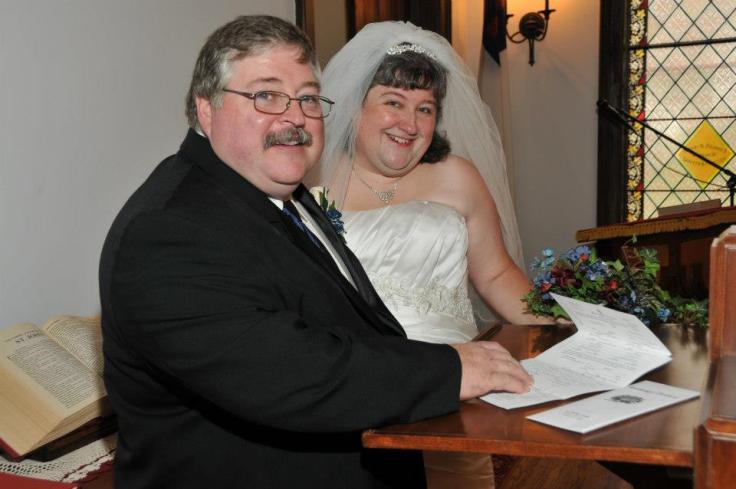
Thirteen years ago, I married my husband, David. He isn’t “Prince Charming,” though he can be charming and noble at times. He is, as I am, a flawed human being. David was married before, and he carries the hurt of betrayal and loss of trust from the past. I carry the hurt of being rejected and passed over for so many years. Marriage doesn’t make the past disappear. Marriage is not a “cure” for such hurts.
But marriage is more. God instituted marriage from the beginning for a man and woman to come together in a mysteriously intimate relationship that models what God’s love is like. (See Genesis 2:24; Matthew 19:5; Ephesians 5:31 and others.) David and I don’t exist to “complete” each other. We don’t cease to be our own individual selves. And yet, we are not the same as we were before our marriage. We are more than the sum of our parts– we are ourselves, yet we are one– the Fairs. He is David Fair, and I am Lila Fair, but WE are THE Fairs. And spiritually, we are also one WITH Christ– as individuals and as a couple. We walk forward as One. We make decisions together. We share hopes and dreams, as well as struggles and disappointments. We fight sometimes– not against each other, but against differences or misunderstandings that could weaken US as a couple and weaken our relationship with Christ.
I don’t pray any less often or less fervently now that I am married, but I pray daily about my marriage. I thank God that He was with me through all the “single” years. I thank God that He continues to work in our marriage– that David and I know more about love and faith, hope and fulfillment than we did 13 years ago! I pray that David and I will grow together for many years to come. I pray that we will impact our family as we live out what a Godly marriage is supposed to be. I pray that our marriage will inspire young men and women who are looking (as I once was) to see what a solid marriage involves– that the way we talk to each other, and behave, and work, and live will give hope to future couples, and glory to God.
Marriage and prayer go hand in hand. Prayer cannot guarantee that marriage will be easy–or even than it will survive. Marriage takes two people praying and walking in the same direction! But marriage–and life– without prayer will never be all that God intends it to be.
Yes, I know I’m early– April begins tomorrow, and the first of April is known as “April Fool’s Day.” It’s a day for pulling practical jokes and trying to “fool” people with fake news stories (actually, that can happen any day of the year, but it’s usually more obvious on April first). And when people tomorrow sit on a whoopee cushion, or bite into a frosted bagel, thinking it’s a donut, or they pass on a “breaking” news story about alien invasions, they will be laughed at and labeled “fools.”
But the Bible has a different outlook. We laugh at people who are deluded by headlines and gags; God warns us not to be deluded by our own thoughts and feelings.
The fool says in his heart, ‘There is no God.’ They are corrupt, their deeds are vile; there is no one who does good. The Lord looks down from heaven on all mankind to see if there are any who understand, any who seek God. All have turned away, all have become corrupt; there is no one who does good, not even one. Do all these evildoers know nothing?” Psalm 14:1-4 (NIV)
This doesn’t mean that corrupt people are corrupt merely because they are stupid, ignorant, or gullible, or that those who claim “there is no God” just don’t know any better. In fact, many atheists and agnostics know more about Biblical scholarship that most people who claim to be Christians! And many who claim to be Christians behave as though they don’t believe in or have any reverence for God!
What it IS saying is that even intelligent and well-read people can “fool” themselves into believing that God is irrelevant to the way they live their lives. Because they have not seen God act in dramatic fashion to bring justice– either punishment for their own corruption, or punishment for someone else’s injustice against them, they have concluded that God does not see, does not care, does not answer, or does not exist. They may be intelligent; they may even have a personal moral code of a sort. They may even base their “personal” morality on principles from the Bible. But they deny that God has any power or authority over their life. And this is just as true in the lives of people who carry the name of Christ as it is among atheists!
So why does the Psalmist call such people “fools?” Because God DOES see, He DOES bring Justice, He DOES answer– in His way and His timing. And when we forget that, or refuse to come to terms with that, we begin thinking that WE are in God’s place– that WE have the power and authority to do whatever we think is right or just and we can ignore God’s word, His warnings, and His sovereignty–or whatever parts of those we find inconvenient.
And many “fools” live their lives believing they are smarter, cleverer, and wiser than those who revere God. After all, their life circumstances are not so different from those who practice reverence and obedience– often they are wealthier, healthier, and more successful than their neighbors! What is the “reward” of being humble, obedient, and following a lot of “outdated and irrelevant” Biblical principles? In fact, on the face of it, it looks as though Christ followers are the real “fools!” We cannot “prove” God’s power in our lives if we are acting in our own power or measuring our life only through our current circumstances.
The Apostle Paul addresses this in 1 Corinthians, where many new believers were doubting the truth of the Resurrection. This is a central teaching of the Christian church, and yet it is a difficult reality to explain and teach to those who do not believe in life after death. A person who adopts a set of moral principles– even those taught by Jesus Christ– but doesn’t believe in the Resurrection of Christ can’t truly be called a “Christ-follower” or a “Christian.” But without the Resurrection, there is no life-changing power in a mere set of man-made rules, or the teachings of a dead folk hero.
We have preached that Christ has been raised from the dead. So how can some of you say that no one rises from the dead? If no one rises from the dead, then not even Christ has been raised. And if Christ has not been raised, what we preach doesn’t mean anything. Your faith doesn’t mean anything either. More than that, we would be lying about God. We are witnesses that God raised Christ from the dead. But he did not raise him if the dead are not raised. If the dead are not raised, then Christ has not been raised either. And if Christ has not been raised, your faith doesn’t mean anything. Your sins have not been forgiven. Those who have died believing in Christ are also lost.Do we have hope in Christ only for this life? Then people should pity us more than anyone else.But Christ really has been raised from the dead. He is the first of all those who will rise from the dead. 1 Corinthians 15: 12-20
How does this relate to the pursuit of Prayer? If we pray to someone who “might” exist or who “may” hear us when we call, if we pray to someone who “probably” has the power to heal the sick or break the power of addiction, we really aren’t praying– we are foolishly practicing wishful thinking–we are gambling with our faith. AND, if we are praying, but then acting as though God won’t answer, we will not wait for His wisdom or wait to see His power at work in our lives. Instead, we will act on our own convictions, with our own limited understanding of the consequences (intended AND unintended) of our actions.
We can pray with confidence because God is Real; He really is Good; and because Christ really did rise from the dead in Power and Glory. Otherwise, we are praying in the mushy desire that God will rubber-stamp our requests, or that our daily circumstances are greater than God’s eternal promises. Let’s not fall into “foolish” thinking tomorrow– especially as it applies to the power of Prayer!
Psalm 46 For the director of music. Of the Sons of Korah. According to alamoth. A song. 1 God is our refuge and strength, an ever-present help in trouble. 2 Therefore we will not fear, though the earth give way and the mountains fall into the heart of the sea, 3 though its waters roar and foam and the mountains quake with their surging. 4 There is a river whose streams make glad the city of God, the holy place where the Most High dwells. 5 God is within her, she will not fall; God will help her at break of day. 6 Nations are in uproar, kingdoms fall; he lifts his voice, the earth melts. 7 The Lord Almighty is with us; the God of Jacob is our fortress. 8 Come and see what the Lord has done, the desolations he has brought on the earth. 9 He makes wars cease to the ends of the earth. He breaks the bow and shatters the spear; he burns the shields with fire. 10 He says, “Be still, and know that I am God; I will be exalted among the nations, I will be exalted in the earth.” 11 The Lord Almighty is with us; the God of Jacob is our fortress.
When I am tempted to fret or worry, I like to read through Psalm 46. I love the way the psalmists use hyperbole to shrink fear and maximize faith– God is an “ever-present help”, we will not fear, “though the earth give way, and the mountains fall into the heart of the sea”, “He lifts his voice, the earth melts!” And I love that the phrase is repeated– “The Lord Almighty is with us; the God of Jacob is our fortress.”
There is so much to unpack in just 11 verses of psalm! But I want to stick to two that always stand out to me.
First, the phrase, “the God of Jacob.” God is the God of Abraham, Isaac, and Jacob. He is the God of Moses, the God of Israel, the God of David…His titles are many. But in this case, He is the God of Jacob. NOT the God of Israel– even though God changed His name. No, He is the God of Jacob– the “heel grabber,” the son who stole his brother’s blessing and tricked his brother out of his birthright– the same Jacob who fled his homeland and worked for twenty years for his duplicitous uncle Laban. This is not the God of the victorious, but the God of those who have had to learn the hard way. He is the God of the one who has acted unjustly, and the God of one who has been treated unjustly. He is the God of the one who wrestles and demands a blessing, the God of the second son, the disappointed husband, and the grieving father. THAT is the God who is with US when we are in trouble and feeling overwhelmed by our own past mistakes, or our own inadequacies, or our unfair circumstances.
Secondly, the phrase “be still and know that I am God.” This same God who wrestled with Jacob, who blessed him in dramatic fashion, was the God who was with him through all the long and lonely night watches as a shepherd. Jacob, with his two wives, their two servants, and all thirteen or more of his children (12 sons and at least one daughter, Dinah)–spent a lot of his time surrounded by noises, nagging, responsibilities, and discord. Yet he took time to ‘be still.” And, though it took many years, and often came “the hard way,” Jacob did learn to “know” his God. He learned to trust that God would protect him, guide him, and bless him– and the generations that would follow him!
I am so grateful for this Psalm to remind me of God’s everlasting presence, His power to save and protect, and His sufficiency for every circumstance in my life. I’m so glad that the “God of Jacob” is the same God who sees me, loves me, and rescues me. I’m humbled to know that I don’t have to be clever enough or brave enough, or “righteous” enough to earn God’s help. I’m glad that the Lord Almighty is always with me. (see Hebrews 13:5) However, I still struggle to “be still and know…” I want to know by doing; by studying and making things happen. But to know God– to really know Him– I have to be still, to wait in silence and anticipation, to trust in what I cannot see and cannot do in my own power. I have to know Him as the Almighty, Omnipotent, Sovereign God that He is, rather than a God of my own imagination or the God I hear about or read about from someone else.
What a mighty God! The God of Jacob is MY fortress! And in stillness, meditation, and trust, I can KNOW Him!
I hate waiting. Most people do. I hate waiting rooms at the doctor’s office or the waiting area at the garage or the DMV. They try to make it a bit more pleasant with music, or a TV, or magazines lying around to keep you occupied. But usually, I spend the whole time thinking of “useful” things I could be doing if I wasn’t sitting around waiting. Recently, I published my first book, and I had to wait for freshly printed copies to be sent to my door. Every day, I waited for the delivery van to pull up– and every day, I missed it. Finally, I had to pick them up at the post office. Those few days seemed to take forever.
But I have learned over the years that waiting is necessary, and even good sometimes.
I was thinking about my first “real” teaching job–not student teaching or getting called in as a substitute, but a permanent position. I applied for a teaching job in my hometown. They needed an English teacher for middle and high school– perfect! I felt the interview went well, and I was a “known quantity”– many of the staff knew me from my time as a student just a few years before. Nevertheless, I waited and waited and finally got bad news. The job had gone to another applicant with more teaching experience. I was disappointed. I had prayed so hard, and it seemed like the perfect “fit.” I knew I should trust that God knew about my situation, and had everything in hand, but I just felt the outcome wasn’t “right.” What would I do now? I looked for other teaching positions, but could find nothing. I ended up doing substitute teaching. It was sporadic and unpredictable. I wasn’t really teaching as much as babysitting– especially in classes like elementary music!
Still, I learned a lot about classroom discipline; something I hadn’t really experienced much of before. My student teaching had been done with master teachers who were amazing examples of quiet but stern management. Even when they “turned their class over” to me in the final weeks, the students knew that their other teachers would back me up in a classroom situation.
Not so with substitute teaching! Not only was I “on my own” in the classroom, I frequently traveled to schools where I knew no one on staff and no one knew me. I had no idea what kind of discipline was practiced by either the teacher or the administration at some of the schools. Most were ok, and staff were friendly and supportive. Most of the students were typically a bit naughty, but not out of reason. But not all! There was one class of over thirty-five fourth- and fifth-graders whose teacher had left no lesson plans, and another day at a high school where the entire staff was intimidated by the football team– most of whom were in the same third hour class. The lesson plan called for them to do research in the library– the librarian hid– and I was trying to stop them from literally throwing the pumpkins that were meant to be decorations at each other!
All this to say that after several months, I got a phone call. It was my old school, wanting to know if I would be interested in finishing out the school year in the position I had applied for the previous fall. It turns out the teacher they had hired had serious health issues and had missed over 60 days! They had been trying to fill in with substitutes, but wanted someone who could bring stability and order to the classes for the last marking periods of the year.
My first week in the new position was a nightmare. Every class had fallen behind. The succession of substitutes had given up. The classes lacked discipline and focus. In fact, the other regular teacher had written off all the students as irredeemable hooligans, and she was glad to give up the position. My first day, one of the high school students attempted to sneak out of the window at the back of the classroom, while another classmate tried to sneak out the door! And I found out that my last hour class was to be held in the middle school band room– it was a computer class! I had to commute from the high school to the middle school, which took up part of my preparation period, so I had little time for planning or grading paperwork.
In spite of all the challenges, that first “trial by fire” proved that I really was a “fit” for the position after all. I spent another seven years teaching in my hometown. Eventually, my schedule was changed and I no longer had to commute. I loved my students (most of them), and I am still in touch with some of them to this day! Even the ones from that first disastrous partial year.
God did not answer those first eager prayers that I should get the teaching position right away. And even when I finally “got” it, it was filled with challenges and obstacles. But in the waiting, God was there. Even in the difficult substitute assignments, and the adjustments, and the questions about why I didn’t get the job when I first interviewed.
God may not tell us audibly why He wants us to wait. He won’t tell us how long we must wait. And He generally doesn’t put us in a “waiting room”, filled with soothing music or distracting TV ads or old magazines. But we can trust that God has good reasons for us to wait– whether it’s for a job, or a spouse, a chronic illness, loss of income, or change in circumstances. What He asks is that we trust Him, and that we continue walking a praying in faith. Because I will be worth the wait.
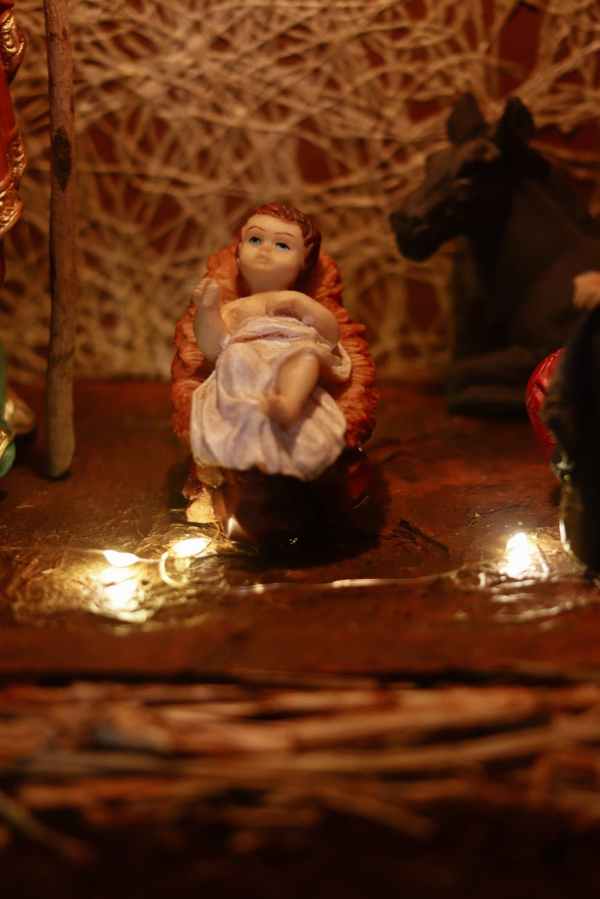
We are preparing for Advent season. We celebrate the coming of our Savior, and His humble birth in Bethlehem over 2000 years ago. We count down the days with advent calendars, candles, and other traditions. And it can be difficult to wait for Christmas Eve and Christmas Day to come.
But imagine those people who lived BEFORE the Advent…those who held the promise, but had not seen it fulfilled. Imagine waiting an entire lifetime without ever hearing the Good News– He is Here! The Messiah has come!
There are promises and hints and prophecies throughout the Bible in what we call the “Old Testament.” And the New Testament is filled with the story of Jesus’ life, death, resurrection, and rule, as well as the outcome of His mission to bring Salvation and Hope to a darkened world. But in between the two testaments there stretches a period of nearly 400 years when God was silent.
I get frustrated when I have to wait 45 minutes at the doctor’s office! Imagine listening to stories from grandparents and elders about promises made a thousand years before, knowing that there was no word, no glimmer of fulfillment for over a dozen generations or more!
And yet, we celebrate the glory of the fulfillment. And on the strength of that glory, and Jesus’ teachings, we are waiting for His triumphant return. A return that hasn’t come in nearly 2000 years.
The difference for us is that we live in the aftermath of the Advent. He HAS already come. He HAS Risen! He has assured us of His return– with His own mouth, in His own words. How long will we have to wait? Will He return within our lifetime? Christians have been asking this question for almost 100 generations now, but we ask with wonder and hope.
The mystery of Advent has become the mystery of the Revelation. We don’t just celebrate the promise given to Abraham or Moses– we celebrate the ongoing promise of Eternity– past and present and future.
I’m reminded of the classic tale by Charles DIckens– A Christmas Carol– where Ebenezer Scrooge is visited by three spirits. He is transported to his own past, sees the present through a different lens, and gets a terrifying glimpse into the future he can expect if he does not repent of his ways. So much of the tale is dark and foreboding, but the ending is rapturous– almost literally. Scrooge’s life has been a narrow life, filled with bitterness, greed, and fear. He spends much of his Christmas Eve adventure wondering about time– how long has Marley been dead? Why appear to Scrooge now? How long before the next spirit will appear? How long will Tiny Tim live? How long has he been haunted– has he missed Christmas Day? Does he still have time to change?
How Long? Ebenezer Scrooge never gets a clear answer about his own future– how long does he have to live? How long will Tiny Tim survive? At first, he is not even sure he HAS survived the night. But he DOES get a clear picture of the glory of hope; the value of time; the joy of promises made and kept; and the true riches of redemption.
We have just under four weeks before we celebrate Christmas Day. In this season of Advent, may we use our time to reflect and rejoice in the promise that was fulfilled so long ago, and in the promise that awaits us for all eternity!
As I am writing this, people in my country are voting or preparing to vote in a Presidential election. Many of them are voting in fear, confusion, or anger, and asking, “What if my candidate/cause/political party doesn’t ‘win’ today?” “What if I voted for the ‘wrong’ policies or people?” “What does the future hold?”
These are not uncommon or unrealistic questions, but they are questions that can waste our time and sap our energy in hypothetical posturing. The writer of Ecclesiastes says:
Ecclesiastes 11:1-6King James Version (KJV)
11 Cast thy bread upon the waters: for thou shalt find it after many days. 2 Give a portion to seven, and also to eight; for thou knowest not what evil shall be upon the earth. 3 If the clouds be full of rain, they empty themselves upon the earth: and if the tree fall toward the south, or toward the north, in the place where the tree falleth, there it shall be. 4 He that observeth the wind shall not sow; and he that regardeth the clouds shall not reap. 5 As thou knowest not what is the way of the spirit, nor how the bones do grow in the womb of her that is with child: even so thou knowest not the works of God who maketh all. 6 In the morning sow thy seed, and in the evening withhold not thine hand: for thou knowest not whether shall prosper, either this or that, or whether they both shall be alike good.
It is not wrong to wonder about the future, but we cannot be sure that our actions will always produce the results we long for– especially when we have little control over other people’s actions and consequences. The first two verses of this passage warn us not to “put all of our eggs in one basket”. As free citizens in a democratic republic, we shouldn’t put our trust in any one political party, platform, or politician. Nor should we live in a social or political “echo chamber”, listening only to the views and ideas with which we feel most comfortable, or least challenged. However, we should look at the long-term consequences of proposals and the reasons behind them before we promote change just for the sake of it.
The third verse reminds us that some changes and events are beyond our knowledge or control. It’s not that our vote “doesn’t make a difference” or that we’re on “the wrong side of history”– it may mean that history has taken a detour surrounding a certain issue. It may mean that God is allowing for something we have not imagined (as He did in the days of Habakkuk). Get some great “Insight” into the Book of Habakkuk here.
But there is more wisdom to come in verses 4-6. Waiting for certainty of outcome, or being distracted by our circumstances or every “wind of change” can lead us to miss the very real opportunities for present action. God has given us everything we need (see 2 Peter 1:3-5) for godly living and godly decision-making. That doesn’t mean that our decisions will always reflect popular “wisdom”; it doesn’t even mean that our decisions will be the same as all other fellow believers and followers of Christ. It DOES mean that we can make our decisions without fear. God knows us– He understands your heart and mind better than anyone; He knows why people who agree on spiritual matters may not agree on politics. But more than that, God KNOWS the future! He knows all the things that we merely guess at. So we should act in the present with the best information we have, and leave the rest to the God who knows best.
Modern politics relies heavily on conjecture– polls, predictions, pledges, projections, plans, and campaign promises. But God is still sovereign over all nations, governments, and peoples. Instead of asking, “What if..” we should be asking of God, “What now?!” And we need to be ready to listen and obey! Let’s pray today for the wisdom to listen more, act with confidence, and trust our future to the one who has already seen it!
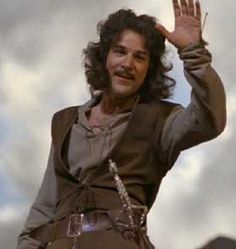
One of my favorite characters from “The Princess Bride” is Inigo Montoya. He has a few redeeming qualities– he is a loyal friend; he is intensely (obsessively) loyal to his father’s memory; he is basically honest; and he has a soft spot for lost causes, including a tender-hearted giant and a (mostly) dead pirate/rival/would-be hero.
But Inigo has many failings, as well. He is a drunkard, he lacks the skills to plan great achievements, and he has an over-developed sense of revenge that gets him in a lot of trouble. Also, he hates waiting. And he has done a lot of it– he’s waited over 20 years to track down his father’s killer and challenge him to a duel (the above-mentioned revenge).
When he first meets Westley (the above-mentioned pirate/rival/would-be hero), Westley is climbing a treacherous cliff. Inigo waits at the top as Westley struggles up the rocky crag, trying not to fall to his death. Inigo, ever concerned, calls down to ask how it’s going. He wants to know if Westley can “a-speed things up.” He REALLY hates waiting. Later, as he seeks to rescue Westley, he is told that he must wait at least 15 minutes for the magic potion to work and for Westley to regain consciousness. Inigo is delighted when Westley can talk and move his head a little, but he cannot wait for Westley to regain the use of his arms or legs before “storming the castle!”
Not many of us enjoy waiting. Some of us are better at it than others. And it is a character quality that God asks us to develop. Several times in the Bible, God asks us to “wait” or “wait on the LORD.”
When we pray, it is tempting to expect or even demand an immediate, clear answer. If we don’t get it, we fall into two temptations. The first is to despair and/or lose faith. If God doesn’t “show up” right away, we are tempted to believe that He just isn’t listening or doesn’t care about our situation. As time goes by, we may become bitter, angry, sullen, and depressed. We stop calling out to God; we turn away and seek answers (or escape) elsewhere.
The second temptation, the one I believe Inigo falls into, is to stop depending on God and carry the burden of our pain, our grief, or our situation all by ourselves. Inigo’s father was killed when he was eleven years old–his entire adult life has been wasted on a quest to avenge his father’s death. He hasn’t developed a life of his own– he has no career (he does odd jobs for crooks like Vizzini), no family, no plans for a sustained future– only his anger and bitterness over a twenty-year-old tragedy. And only when, in desperation, Inigo pauses for a moment and prays, does he find any real help in achieving his goals. In fact, at the end of the story, when Inigo finally achieves his revenge on Count Rugen, he is left with a dilemma. He admits to Westley that he has no idea what to do with the rest of his life! He has allowed the past to consume both his present and his future.
Another story that illustrates this temptation is the story of King Saul. In 1 Samuel 13, Saul has begun to attack the enemies surrounding Israel. He and his troops are hiding in caves and waiting for the prophet Samuel to offer a sacrifice and seek God’s counsel. The enemy is camped nearby with thousands of troops and chariots, and Saul’s men are beginning to panic and desert him. When Samuel doesn’t come at the appointed time, Saul disobeys God’s law by offering the sacrifices himself, even though he is not of the priestly line. Instead of standing firm, and encouraging his men, Saul gives in to the general panic and takes matters into his own hands. He takes a visible action — offering the sacrifice– without taking the right attitude of seeking God’s counsel.
Waiting can be difficult– especially when we are faced with fear, anxiety, danger, and lack of plan or purpose. But learning to wait for God’s ways and timing will teach us how to grow in Faith and confidence. Today, instead of asking God to “a-speed things up,” may we thank Him for all the times He has been faithful in the past, and trust that He will “arrive” at just the right time!
There is a saying: “I don’t care what you know, until I know that you care.” I went to the bank yesterday, and there was a line. There were only two tellers available (other bank workers were dealing with larger issues in their offices, so there was no back-up, either). Both drive-thru windows had lines, as well. This is a small bank, but a recent closure of a nearby branch means that it is now busier than before, with the same amount of staffing.
The woman ahead of me in line was impatient and angry. She kept repeating the obvious– “They need more tellers! There aren’t enough tellers!” She was rude and demanding, and when she finally got to the front, and a teller (harassed and overworked) patiently and politely asked how she could help, the customer repeated, “You need more tellers here!” The teller explained that corporate policy allows only so many workers per shift, and they were all busy. It was the first of the month– one of their busiest days for cashing checks and dealing with monthly payments. The customer, somewhat abashed, apologized for her rudeness.
The customer “knew” that she would have been served faster if there were more tellers at the front. She knew how SHE would like to have the bank policy play out in her favor. But she didn’t really know the whole story. Her snap judgment wasn’t based on complete knowledge, but on emotion and assumption.
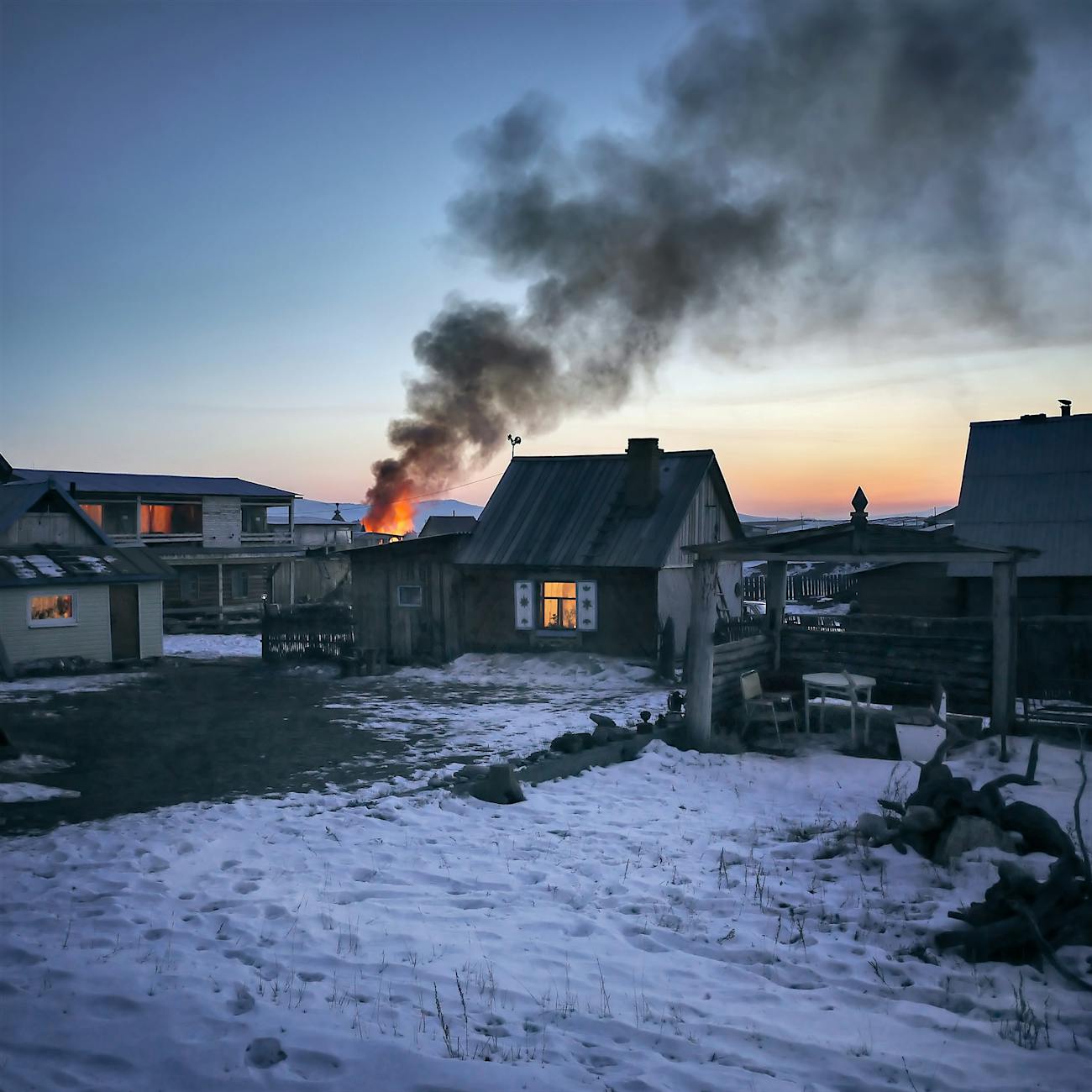
Earlier this week, I was praying about a woman I know slightly. I had heard that she was in a bad housing situation. Her house needed major repairs, and she could not afford them. I prayed that God would act, providing her with “better living conditions.” I assumed that God might provide for her to get a new roof or water heater, or pay down some of her bills. The next day, I heard that her house burned down!
What should I make of God’s response to my prayer? Did He not hear me? Doesn’t God care? Is He laughing at this woman’s misfortune? Is He laughing at my feeble and vague prayer request? Someone reading just the details I have provided (my prayer, and the incident of the fire) might decide they “know” that God is malicious or that He simply doesn’t exist or answer prayer. But are they correct in that conclusion?
NO! God cares. He cares deeply. I was moved out of concern to pray for a woman I barely know. Many others have been praying for her for several weeks, as well as offering her counsel and help in trying to find alternative housing or financial assistance. I don’t know the true extent of her needs– not just housing, but her spiritual, emotional, and other physical needs. God does! We tend to put our hope and trust in our circumstances– even desperate ones– and our ability to control, manipulate, or just survive them. This house had been a burden for a long time, yet the woman steadfastly endured high bills, bad roofing, and poor conditions.
God IS answering my prayer– and the prayers of many others– as help is pouring in for this woman. She was uninjured in the fire, and she has a temporary place to stay. Furthermore, she has people helping her plan ahead for permanent housing, financial needs she will have in the next few weeks and months, and making sure she does not have to face this tragedy alone.
Sometimes, God’s blessings are wrapped in sorrows. Sometimes, we must endure waiting, hardship, and even loss in order to experience growth and peace. Sometimes, we have to deal with impatient customers, long lines, or personal tragedy. God KNOWS. He doesn’t just know our present circumstances and pain. He knows the final outcome, and all that He wants to accomplish THROUGH our present circumstances. And God CARES. He cared about the angry customer in front of me at the bank. He cared about the overworked teller waiting on us. He cared about the woman who lost her house. He cares about each one– no matter what circumstances may suggest. He does not leave us alone in our trials– even when it may feel like He has abandoned us. There are people somewhere in the world praying for you right now. They don’t know what will happen to you today or tomorrow, but they know that God is sovereign. And the Holy Spirit prompts them to pray, even when they don’t know, for God to bless you, protect you, and watch over you.
Two things I have taken away from my experiences the other day: First– God is ALWAYS Trustworthy! I said a quick prayer for the harassed teller and her customer as I waited in line (it’s not like I didn’t have any time to pray!) And sure enough, as she waited on the woman and then on me, the lines at the drive thru windows melted away. She was able to take time to explain her situation to the customer ahead of me, and she was able to take her time waiting on us both. She kept her temper in check and managed to smile through the transactions! And her calm response helped the customer realize her rudeness and apologize. I don’t think that was just coincidence. And I don’t think it was coincidence that several people have been praying for weeks about the other woman’s housing situation. The fire wasn’t an answer to our prayers– our prayers were preparing for an answer to the fire!
The second reminder– Pray without ceasing (1Thessalonians 5:17). While my experience at the bank called for immediate prayer and found an immediate response, my other prayers have been going on for weeks and months. Nothing seemed to be happening. Yet God was preparing for an event I had no way of foreseeing. We want quick answers to prayer. We want easy answers to our prayers. But God’s ways are not our ways. His ways are mysterious to us, but they are for the best, not just the most convenient.
When we pray, God doesn’t care what we KNOW (or think we know). And He doesn’t always give us the knowledge we’re looking for. But He KNOWS! And He CARES! He honors the prayers we lift up because we know Him, and because we care about others.


































 Pursuing Prayer