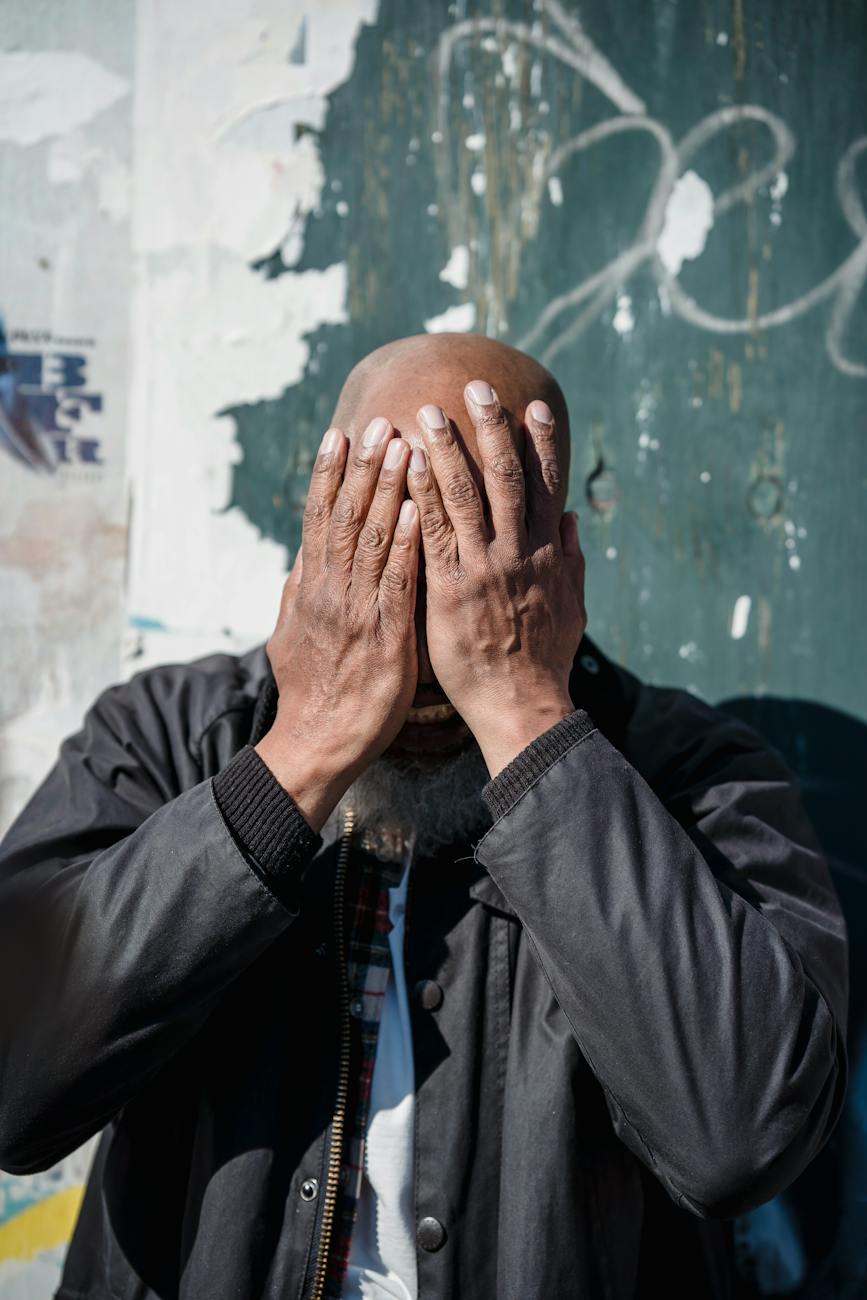
Jephthah or Jabez?

There are many great examples of prayer throughout the Bible, but there are two that are often used out of context and applied wrongly.  One is found in the book of the Judges; the other in the Chronicles.

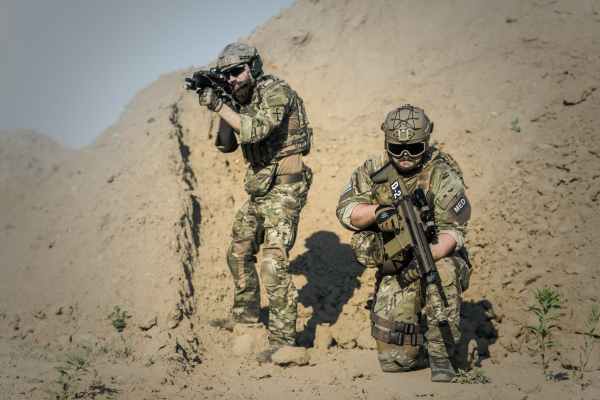
Jephthah was a mighty warrior– the son of a mighty warrior and a prostitute.  He had several half-brothers, but they wanted nothing to do with him.  He was an outcast for much of his life, but when things got tough, the people of the region changed their tune and begged him to be their leader and help deliver them from the oppressive Ammonites.   Before going into battle, Jephthah prayed, and made a tragic vow.  In fact, his vow has become a model of what NOT to do in approaching God.

pexels-photo-415380.jpeg
Judges 11:30-31 New American Standard Bible (NASB)
30 Jephthah made a vow to the Lord and said, “If You will indeed give the sons of Ammon into my hand, 31 then it shall be that whatever comes out of the doors of my house to meet me when I return in peace from the sons of Ammon, it shall be the Lord’s, and I will offer it up as a burnt offering.”

Upon returning from his success in battle, who should come out of the door of his house, but his only daughter, singing and dancing in celebration of her father’s victory!  Having made such a rash vow, Jephthah now has to fulfill it, and sacrifices his only child on the altar.

Many people read this passage of scripture and are shocked– how could God be so cruel?  Why didn’t he stop Jephthah from making such a rash vow?  How could he hold Jephthah to such a vow?  Doesn’t this prove that God is either clueless or deliberately cruel?  Either God knew that the tragedy would happen, and failed to prevent it, or he had no idea  of the outcome.

But I think this is a misreading of events and a misrepresentation of God.  Just before Jephthah makes his vow, the text states that “the Spirit of the Lord came upon Jephthah.  He crossed Gilead and Manasseh, passed through Mizpah of Gilead, and from there he advanced upon the Ammonites.”  People make note of the first part of verse 29, that the Spirit of the Lord came upon Jephthah prior to his making the rash vow.  But we should note that God’s Spirit did not require Jephthah to make ANY vow.   Jephthah’s vow was rash and ill-considered– these are not attributes of God or of His Spirit.  And God’s Spirit came upon Jephthah before he crossed his own native territory– territory he had fled early in life.  In crossing back through lands that now welcomed him after making him feel unwanted and ashamed, Jephthah gets cocky.  His vow is not about saving his nation from harm and oppression, or about bringing God glory.  It is about himself.  He mentions himself five times; his enemies, God, and his sacrifice, each twice; Israel never. 

Jephthah had an incredible opportunity, not only to save his nation, but to redeem his reputation and become a leader of might and integrity.  Instead, he is remembered for his rash vow.  I believe that God could have stopped Jephthah from making such a vow; and God could have kept his daughter from coming out of the house that day of her father’s return.  But I don’t believe it was cruelty that prevented him from acting.  I believe God is both omnipotent and good.  Jephthah learned the hard way that his rash self-promotion had disastrous consequences.  His daughter, who was innocent, could have berated her father, or cursed God– instead, she honored them both in a way that reflected her culture and teaching.  We are given a shocking reminder not to play games with our unknown future.  God does not keep us from our own folly, nor from its consequences, when we fail to seek His wisdom above our own pride.

In contrast, we see another prayer in 1 Chronicles:

1 Chronicles 4:9-10 New American Standard Bible (NASB)
Jabez was more honorable than his brothers, and his mother named him Jabez saying, “Because I bore him with pain.” 10 Now Jabez called on the God of Israel, saying, “Oh that You would bless me indeed and enlarge my border, and that Your hand might be with me, and that You would keep me from harm that it may not pain me!” And God granted him what he requested.

Once again, this prayer is sometimes taken out of context and misused to suggest that God is like a genie in a bottle, and that a pain-free life and expanded riches are ours just for the asking.  If we pray the prayer of Jabez, and we don’t see an immediate change in our circumstances, we sometimes question God’s goodness and His provision– doesn’t He care about our needs?  Doesn’t he hear our prayer?

Jabez, unlike Jephthah above, is described as honorable.  His prayer is more balanced and conscious of God’s sovereignty.  Jabez mentions himself five times, just like Jephthah; but he mentions God three times in supplication– asking God to be with him, help him, and bless him, rather than vowing what he can do for God if God grants him victory.    Notice also the context of the preceding verse.  His prayer is partly asking God to remove the sting and curse of his name, which meant “pain.”  He is not asking for enormous wealth or power, so much as asking for God’s presence and blessing.  There is a subtle, but important difference here.  Jephthah is playing at making a deal with God– If you grant me a victory, I will make it up to you by offering whatever comes out of my house.  Jephthah is asking for God’s help, but he is also vowing to give God “whatever comes out of the doors of MY house” (emphasis added). If a rat had come scurrying out, would Jabez have offered that? If it was a chicken or a lizard, or a lame sheep? And “whatever” came out of Jephthah’s house already belonged to God, and came from the hand of God, didn’t it?
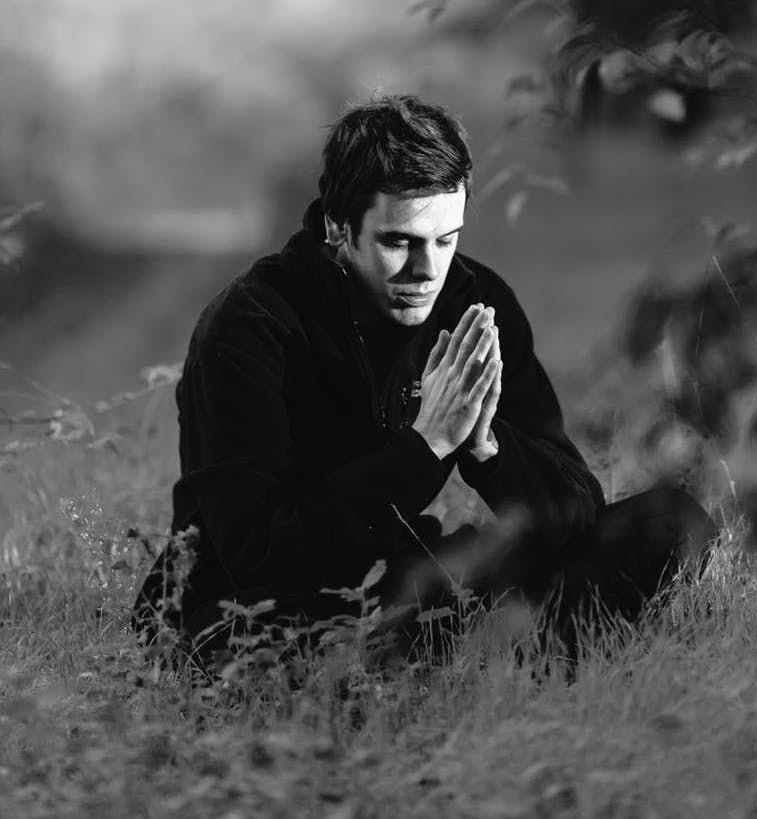
pexels-photo-156151.jpeg

Jabez comes with nothing and asks God to be his portion and protection.  He makes no bargain with God contingent on God’s answer.  There is nothing in this prayer that assumes God’s riches will be his or that God owes him anything; only the faith that God is able to bless him, and that God, in his goodness can keep him from harm.

Jephthah, or Jabez?  Two examples…two very different outcomes.  May we have the wisdom not to confuse the two, or lose the lessons they teach.

So Close…

I’ve been reading in the book of Numbers this week. Numbers is not the most exciting book of the Bible. Many of the chapters are about the census, or about further rules and regulations concerning sacrificial offerings, etc.. But the chapters from 11-15 detail a series of rebellions– grumblings against Moses and efforts to return to Egypt. These rebellions happen after over two years after God had led the people out of Egypt. For two years, they have been protected, fed, sustained, and instructed by God himself. His spirit has appeared as a pillar of cloud by day and a pillar of fire by night throughout their journey. They have had manna and quail to eat, water from the rock to drink, and they have seen the vast army of Egypt drowned in a matter of minutes, while they were led through the sea on dry land! 

And now, they are so close to the “finish line.” They are on the very doorstep of the land of Canaan; the land God had promised to GIVE them. All that is left is for Moses to send out some scouts to bring back a report about the land– its cities and farmland, its people and its produce. Those two years must have seemed like a lifetime, but now it would be coming to an end. God would provide a homeland; a place to build houses, raise crops, rear their children, and settle into lives of peace and prosperity.

So what happened? The scouts brought back a factual report. The land had fortified cities, and lush farmland. It was already planted with plenty of fruit trees and vineyards. And there were ancient people groups with mighty warriors. Israel had just taken a census. They also had mighty warriors, and a lot of them! Moreover, they had God’s promise that the land would be GIVEN to them as their inheritance.

They were so close! Victory, rest, and prosperity were so close they should have been able to taste them. Instead, their warriors moaned and wailed like infants. The same people who had vowed to follow the Lord at Mount Sinai, now planned to walk away from His promised prize. They decided to turn around and go back to slavery in Egypt–the same Egypt that God had decimated two years earlier by sending plagues and destroying its army.

Two years of camping and living “on the road,” lost in two hours of grumbling and fear-mongering. And the punishment? Forty years of needless wandering–time to realize what had been thrown away in petty worrying and imagining the worst. Time to regret their reaction and their failure to trust God. Time for God to show them, once again, His ability to keep them safe and sound in the desert places.

And the learning curve would be a steep one. Almost immediately, a group decided that they would “prove” to God that they were ready to conquer Canaan– on their own. But it didn’t work. Then a group decided that Moses was to blame for their misfortune. But they were “swallowed up.” In the forty extra years of wandering, group after group would challenge Moses (and God) and be destroyed from within.  Moses, who had already lived forty years in the wilderness tending sheep, would have to repeat the task, shepherding the entire nation of Israel for forty long and difficult years. And even he would fall victim to his own frustrations, calling water from another rock, but doing it “his” way. Even Moses would fall in the wilderness, never getting to enter the promised land.

How many times have you noticed that the closer we get to a goal, the more likely we are to fall short. We sabotage our own efforts, or we rebel against good instruction. Sometimes we just give up a few yards short of the finish. We are just over half-way through the month of February. What goals or resolutions did you make for this year? How many of them have you stuck with?

Here are three things I take away from the lessons of Numbers 11-15:

  • Look Beyond. Don’t take your eyes off the prize! The scouts’ report was not all bad. Yes, the cities were walled and the warriors were big and fierce. But the walls of Jericho were eventually brought down without a single battering ram, siege ramp, or arrow! Don’t ignore the trials ahead, but don’t let them blind you to the blessings beyond them!
  • Look ahead, not behind. Don’t waste time living in past comforts or running from past mistakes. God has something better than whatever we’re going through now. But God isn’t waiting on the other side. He is beside us, around us, WITH us right now. He is patient with us. It may take us two years (or forty-two!) to reach a goal, but if we learn to follow God, we will never be forsaken.
  • Look UP! God’s spirit didn’t appear on the ground around the Israelite camp. He appeared as a pillar. God called Moses UP on Mount Sinai. We need to stop looking back at our past, or around, comparing ourselves to others, and look at God’s promises. In relation to our goals and dreams, we need to LIFT them up in prayer! Daily!

We are so close! Let’s keep going in the right direction towards God’s promises.

A Whole “Lot” of Trouble

I’ve been following the story of Lot– a Biblical character in the book of Genesis, and the nephew of Abram/Abraham. I left off in Genesis 13, where Abram and Lot had to separate their flocks and herds. Abram offered Lot the opportunity to choose the best of the land– and Lot jumped at his opportunity. He chose the well-watered valley along the Jordan river, near the thriving cities of Sodom and Gomorrah, and moved his tents just outside of Sodom.

Photo by Pavel Bondarenko on Pexels.com

But the author of Genesis (likely Moses, writing generations later) adds a single sentence that foreshadows events to come: “ But the people of this area were extremely wicked and constantly sinned against the Lord.” (Genesis 13:13 NLT via http://www.biblegateway.com). It doesn’t take very long for this small detail to add up to a “lot” of trouble. The fertile Jordan valley may look like a paradise, but there are perils and pitfalls all around. In Genesis 14, we hear of a great war– five regional kings against four– with Sodom and Gomorrah caught in the middle. (https://www.biblegateway.com/passage/?search=Genesis+14%3A1-16&version=NLT) The armies and kings of Sodom and Gomorrah flee the battlefield, and straight into a series of tar pits. The opposing armies loot the cities, taking all the food and supplies. They also kidnap Lot and take all his possessions, because he was “living in Sodom.”

Photo by Arvind shakya on Pexels.com

Notice two important details here– Lot is no longer pitching his tents outside the city; he has moved into Sodom. When we make the choice to live “on the outskirts” of evil, thinking we will remain separate and untouched, we are asking for trouble. Lot cannot live in paradise and avoid the evil and war all around him. And he isn’t prepared for the consequences. The war is happening all around him, yet he has made no plan to escape or to fortify his home or property.

Photo by Suliman Sallehi on Pexels.com

Secondly, Lot wasn’t among the army or fighting with the kings– on either side! Lot stood for nothing; fought for nothing; defended nothing. Lot placed all of his hope and faith in blind chance– thinking somehow he would be spared the violence and war happening all around. He seems to have had no concern about his neighbors or their fate. He seems indifferent to their losses, and uncaring of their needs. One might argue that if the neighbors were so wicked, Lot had no obligation to help them, but his level of apathy and inactivity suggest that Lot was both self-centered and inept.

Photo by Pixabay on Pexels.com

One of Lot’s men manages to escape and bring word of this disaster to Abram, who mobilizes his men, makes a daring night raid on the army of the five kings, rescues Lot and restores all of the stolen property and other kidnapped people. The king/priest of the city of Salem (meaning peace) blesses Abram. The rescued King of Sodom offers Abram all the captured loot in exchange for the people, but Abram refuses. Unlike his nephew, who is enticed by lands and goods and wealth, Abram seeks only peace and goodwill.

This might have been the end of Lot’s troubles; he might have learned a valuable lesson. But he didn’t.

Will we?

Five Smooth Stones

God’s ways are not our ways. God often turns our expectations on their heads– choosing Abraham and Sarah to become parents at an advanced age; choosing Moses, reluctant, disgraced, and hot-tempered, to shepherd close to a million refugees across the wilderness; choosing David, young and poorly armed to defeat the mighty giant, Goliath; choosing to send His Messiah as an infant, the son of a teenage girl stranded miles from home in a cattle shed…

Not only that, but God chooses to include cryptic and seemingly random details in many of the stories we read in the Bible. When Abraham and Sarah received news that they would become parents, Sarah laughed. Such a small detail, but God called attention to it, even giving the name Isaac (Laughter) to this promised son. When God called Moses, He didn’t just include the details of the burning bush and the miraculous signs, He chose to include Moses’s excuses and objections, and a curious command to Moses to remove his shoes.

Photo by Pixabay on Pexels.com

Recently, I found a short discussion about the “five smooth stones” David used to defeat Goliath. https://www.biblegateway.com/passage/?search=1+Samuel+17%3A26-50&version=MSG Some teachers spend time talking about the number of stones– why five? Did David doubt God’s power and provision? Can we attach significance or apply principles to each stone? But someone commented (I’m sorry, I lost the reference, or I would attach a link) on the fact that the stones were smooth–I’d never really noticed that detail before. David chose five smooth stones from the brook, not five heavy rocks, not sharp-edged stones of flint, not round balls made of iron– five smooth stones. The smooth stones in the brook may seem like a strange choice to us if we are not used to using a sling, but to David, such stones meant greater accuracy and speed. Five such stones would have been about a handful– easy to carry, load, and fire in rapid succession, if necessary.

I would like to suggest that there are some principles here that apply to both prayer and Christian living, especially involving how we can pray for and interact with the “giants” and “enemies” in our lives:

  • First, understand the reality of the “Giant”—Goliath was huge; bigger than any single warrior in Israel. But he wasn’t bigger than God. Goliath was also hampered by his heavy armor, his size, and his arrogance. David was offered armor and weapons similar to Goliath’s, but David’s greatest weapon was his understanding that Goliath was no match for the God of Angel Armies! We often make the mistake of magnifying our enemies. We see their size, their shining armor, and heavy weaponry. We forget that God is the maker of smooth stones!
Photo by Pixabay on Pexels.com
  • Second, actions really do speak louder than words. Goliath inspired fear; he taunted the army of Israel. Yet he never landed a blow against David. Goliath scoffed, bullied, and talked a good game, but David paired his words with action. Goliath demanded that David (or any other warrior) “Come down to me..” He had a javelin and a spear, but he never used either one. I find it interesting that many “enemies” of the Church behave the same way. They want to challenge the followers of Christ in debates; they publish books and articles filled with arrogant words, accusations, and complex arguments. It is tempting to respond in kind– to get into a war of words; to match their arrogance with our self-righteous assertions. What if we fought their words with action, instead of spending so much of our time answering and defending ourselves against empty arguments and accusations. We will not “win” any culture wars; we will not “win” the hearts and minds of the next generation; we will not “defend” morality by using bigger, better, or more persuasive words, or by having better armor and sharper weapons than our enemies. We need smooth stones from the brook–small acts of kindness and humility and grace that defy all the logic and brute force of those who trust in their own understanding.
Photo by Pixabay on Pexels.com
  • Third, accuracy is better than power. Goliath had one spear–and it was impressive–” His spear shaft was like a weaver’s rod, and its iron point weighed six hundred shekels.” (verse 7). Still, Goliath had a javelin, a sword, and several pounds of armor. David had no armor, one shepherd’s staff, and his sling and five smooth stones. But he only used one stone! It was accurate and true; it was sufficient, and it won the battle! Sin likes to flaunt it’s power–shiny armor, impressive weapons.. But if we are “true”–if we hold fast to the truth and follow the words and example of Jesus Christ–if we are faithful in our everyday walk with Christ, it is sufficient.
    There is an amazing climax in the movie, Star Wars (episode 4, A New Hope), where the young Luke Skywalker is sent with a group of fighters on a seemingly impossible task– destroy the “indestructible” Death Star! There is only one weakness–one small target. Luke’s small fighter plane is old and outdated; he and his fellow soldiers are under attack, and the pressure is on. But Luke’s accurate shot leads to victory. It is a modern retelling of the story of David and Goliath (with several space-age gadgets and extra plot twists).
    How many of our interactions with others get “sidetracked” by anger, envy, bitterness, and pride, to the point that we no longer reflect Christ accurately? How often do we consistently pray to stay “true” to God’s word, rather than praying for more powerful opportunities or platforms?
Photo by Arthur Brognoli on Pexels.com
  • Fourth, know your strengths and weaknesses (and those of your enemy). David knew that his strength was, first and foremost, in God. And David’s passion for God’s honor gave him focus and commitment beyond all that was found among the skilled soldiers of either side. He knew that fancy weapons and armor could not improve his skill with the sling, and that his skill had been tested in battle before.
    But David also knew better than to aim the stone at Goliaths’s breastplate, shield, or greaves. Goliath’s weakness was in his head! His first weakness was in thinking that his power was enough to defy the God of Israel’s army. But he also left his head unprotected from attack. Some scholars have even suggested that Goliath may have had very poor eyesight– that he was a fierce warrior in hand-to-hand combat, but literally could not see the stone coming at his forehead. Perhaps all his blustering and taunting was, in part, to distract from his very real vulnerability.
    I am reminded that this is also true of many of the “giants” we face. Their weakness is in their head and in their vision–they trust in their own understanding and in human arguments, or in their “vision” of who God is, or “isn’t”, or “should be”. They rely on what they can comprehend and control. They wave their swords and rattle their shields; they have gleaming armor and they “talk a good game”. They have locked away their hearts and bodies, often hiding painful scars and deep hurts.
    Goliath was a giant–but he wasn’t a god. He was once a little boy (or maybe never a “little” boy, but a young boy..). David was a young man (probably in his mid-to-late teens), who was a simple shepherd.
    How do we see ourselves? How do we see others around us? Do we know our weaknesses? Do we see the vulnerability in those who would threaten us?
Photo by Sharefaith on Pexels.com
  • Last, God’s “weapons” are not like those of the world. Five smooth stones do not look like weapons. In fact, five smooth stones from the brook may have looked charming and harmless and even comforting in David’s hand. Four of those stones may have gone back into the brook, to be polished some more by the current, or carried out to the sea.
    Christ’s followers have armor and weapons, but they are spiritual in nature. We are to put on the “whole armor of God” (https://www.biblegateway.com/passage/?search=Ephesians+6%3A11-18&version=ESV, including the “sword of the Spirit”, which is the word of God. Truth, Righteousness, Peace, Good News, Faith, Salvation– This is how we prepare for battle! And we are to pray at all times! Imagine dropping the weapons of sarcasm and self-righteous posturing, and picking up a smooth stone of grace!
    God calls us to use unconventional “weapons”– not to kill or destroy those around us, but to demolish lies, tear down walls of hatred, and defend the helpless. Has God placed you in a situation where you need to pick up “five smooth stones” today?

Blog at WordPress.com.

Up ↑