
It’s been nearly 45 years since I first heard this phrase, but it has resonated with me ever since. Samuel Taylor Coleridge wrote of it over 200 years ago, speaking of how readers interact with literature, especially when it contains fantastical or supernatural elements. Our high school English teacher and drama coach, Mrs. Barr spoke of it not only in the context of literature but in the context of the theater. In fact, in all art, the artist depends on at least some willing suspension of disbelief on the part of his/her audience.
In visual art, we must believe that a few strategic blobs of color, or carefully shaped pieces of marble or wood have captured something timeless and true about a single moment in time– that movement and emotion and life can be held immortal on a canvas or a statue or a tapestry. We must suspend our disbelief that paint, or wood, marble or stone exists only as itself– in the artist’s capable hands, mere matter transcends its ordinary form to touch our very soul. In music, we can hear, in the well-played notes of an instrument, the sounds of birds, the falling rain, the crashing of thunder, the marching of armies, or the buzzing of bees. Music doesn’t just touch our ears, it can touch our souls. Shakespeare also alluded to this in a comical way: “Is it not strange that sheep’s guts should hale souls out of men’s bodies” (Much Ado About Nothing– Act II, Scene 3) We can listen to a symphony without being moved, but in the willing suspension of disbelief, we can be transformed and inspired by notes on a page and breath being blown into wood or brass or fingers or bows being drawn over “sheep’s guts”.

In literature or in the movies, we must suspend our disbelief that mythical creatures, aliens, monsters, and talking animals live among us as a normal occurrence– for the duration of the story…Dragons must be vanquished, Fairy Godmothers must be allowed to help poor Cinderella to the ball, and The Raven must repeat his ominous line, “Nevermore.” Frodo must hide from orcs and Nazgul in order to reach the Fires of Doom and destroy the One Ring. Charlotte must spin her wordy webs and Papa Bear must exclaim, “someone has been sitting in my chair.” As children, we shed our disbelief readily and enter into the story, falling in love (or having nightmares about) imaginary characters. As adults we become cynical, and lose some of our ability to enter into imagination and other-wordly realms.
I was recently reminded of this concept of the willing suspension of disbelief in two different contexts– loss of Faith, and the deception of the internet– including “fact checking” and AI. Very different experiences, but I think they both tie in.
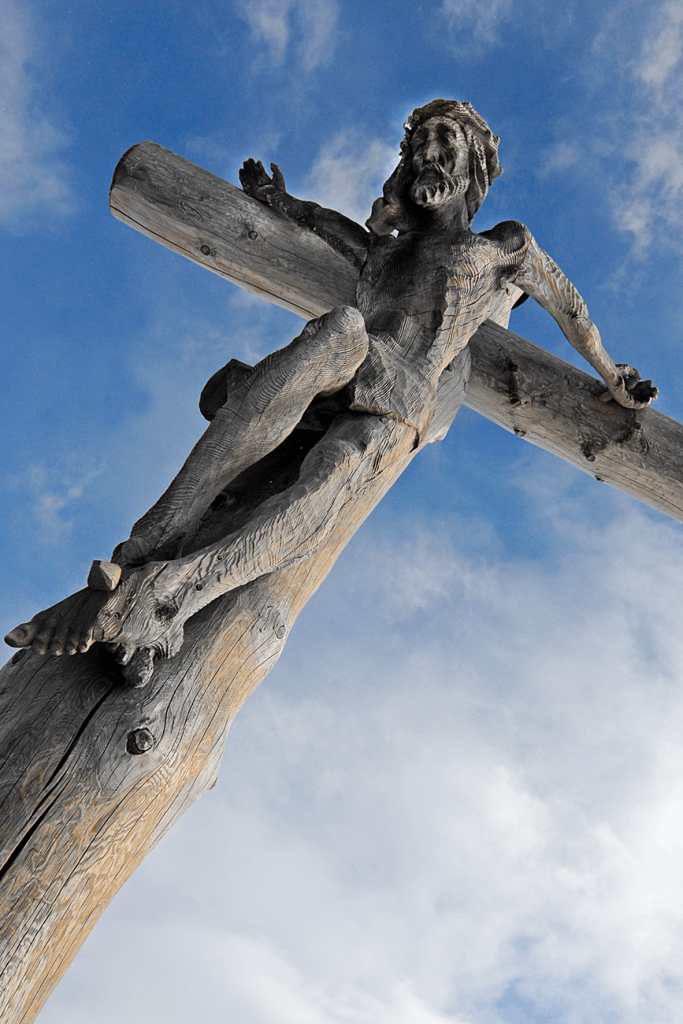
First, in the loss of Faith. I know so many people, family, friends, even strangers, who write passionately about their loss of Faith. Oh, they don’t call it that. They have other terms, other catchphrases– they talk about their “Deconversion” or their “Awakening”. They are too smart, too savvy, too enlightened to give credence to Faith in Jesus, or in any “god” or divine being. After all, they cannot see “Him” or “it”; they cannot prove His existence (they can’t prove His non-existence either, but that’s another story). Believing in God, they claim, is the same as believing in fairy tales.

And yet…Keats once posited, “Beauty is truth, truth beauty– That is all ye know on earth, and all ye need to know” (Ode on a Grecian Urn). Earlier in his poem, he also says, “Heard melodies are sweet, but those unheard are sweeter; therefore, ye soft pipes, play on; not to the sensual ear, but, more endear’d, pipe to the spirit ditties of no tone…” There is an acknowledgement that we do not just exist in a physical plane, but in a world of metaphysical marvels– memory, hope, and yes, even “fairy tales”.
Of course, we know that there is no Cinderella– no “happily ever after” in this world. Life is not a fairy tale story. But our lives ARE stories– we have a beginning and an end. We want to find a purpose, a reason for being who we are, where we are, and even when we are. We search for our “true” identities. We dream dreams and harbor hopes. We battle evil forces– the demanding boss, the annoying neighbors, blizzards and tornadoes, cancer…And we believe very strongly in concepts of justice and injustice, fairness and unfairness, goodness and evil–metaphysical concepts. We long to be understood, accepted, “seen,” and loved (ever after!). And we must suspend our disbelief in the face of evil to search for the good. We must suspend our disbelief in our own worth to make choices that preserve our health and develop our latent talents. Indeed, we must believe and cherish what we do NOT see or have never experienced, or we will be crushed by our (often temporary) realities. When cynicism and disbelief BECOME our belief system, we become the living dead. Oh, we can continue doing “good” things without believing in God; we can espouse a code of “good living”, we can take care of our bodies and emotions within a framework of humanism and self-esteem. But we will not experience the fullness of Truth, or Beauty, or majesty, that lives in Faith.

Loss of Faith represents, what I would call an “unwillingness” to suspend disbelief, or a tendency to cling to only that which can be experienced on a physical plane. But there is another danger– that of an “unwilling” suspension of disbelief–believing things that are deceptive, because they are presented as “truth.” This includes such things as “fake news” on the internet, “fact checkers” who tilt the truth and “throw shade” on inconvenient or uncomfortable truths, and AI-generated stories meant to “create” truth where none exists.

I would like to say that I am immune to such things; that my knowledge and dependence on truth cannot be subjected to manipulation. But that is not always true. I see a touching story on Facebook about a young person who is missing– please spread the word– only to find out that the post is several months out of date. I see a meme that accuses one political big-shot or a celebrity or even a corporation or business of being corrupt, unfair, evil, etc., and I am outraged– until I realize that the original post was generated by a person or group that is completely unknown to me. I don’t know their true experience, or their motivation in spreading this information (or false information). It MAY be true, it MAY be completely false, but it is most likely somewhere in between– not nearly as bad as portrayed, or as every bit as bad as other politicians, celebrities, or companies who aren’t mentioned in the meme or article.
Outrage— especially outrage that is deliberately and manipulatively generated– is the suspension of not just disbelief, but of discernment. We immediately judge. We immediately feel our blood pressure rise, our cheeks flame, and our breathing accelerate. We become passionately angry, but we also become instantly indignant and self-righteous. I would never… I cannot tolerate… But what have we done on a smaller scale? Are we SO innocent? Do we have the authority to judge based on a single article or photo?

But it is not just outrage that can be deliberately and manipulatively generated. AI and bad actors on the internet and other media sources can also manipulate our hopes, our disappointments, and our beliefs in what has happened and what is happening around us. Stories appear online that sound authentic, narrated by well-modulated voices (many of which seem familiar), telling us that this event took place and changed someone’s life, or that this celebrity has finally “spilled the dirt” about beloved co-stars who died a couple of decades ago. Others purport to give “wise words” from aging actors or writers or recently dead corporate gurus. We suspend our disbelief, or our suspicions, because we trust the voice or the photoshopped picture. We choose to believe the worst of people we already dislike. We choose to believe only the best of people we like. If a stranger came up to me on the street with a story like this, I would be suspicious. Who are they? Why are they telling me this? Why should I trust them? But we suspend our disbelief if we see it in print with what looks like credible photos and when narrated by what we assume to be a credible voice. If we bother to look at the source, even that seems credible– I may not have heard of this news service, but it has the word “news” in its heading…
We put our Faith in things seen– even if they are false, while we hold truth and beauty to be suspicious, because we have lost the ability to hope and trust in something beyond our own wisdom and personal perceptions.
We need dreamers and artists and writers who see truth and beauty in the universal and metaphysical realities of faith and hope and majesty. And we need people with the discernment to disbelieve what strangers claim to “show” and “tell” us with their clever manipulations.
Both Faith and “the willing suspension of disbelief” depend on the Will. We have to make choices in what we are willing to believe and how far we are willing to search for the truth– both in what we can see, and in what we cannot.





 Pursuing Prayer