Out of the Static

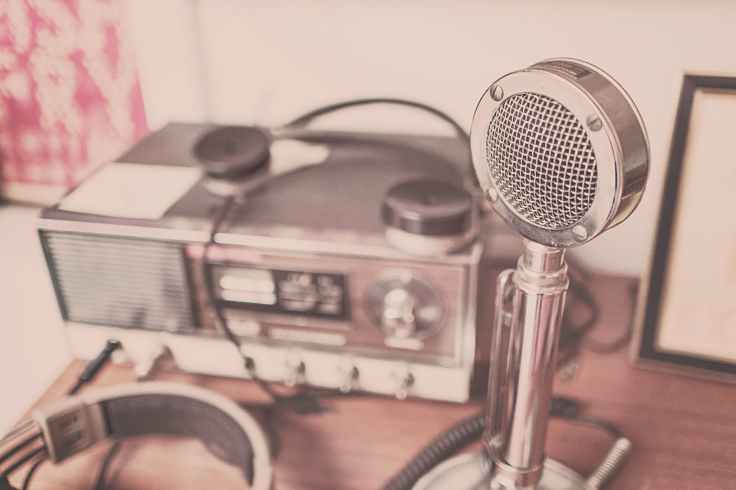
This weekend, my husband, our middle grandson, and I all participated in “Field Day.” This is a 24-hour simulation and contest for amateur radio (Ham radio) operators (like David and I) to test our skills and practice our hobby. Thousands of “Hams” across the United States and Canada spend this time trying to make as many radio contacts as possible. But the object is to try to do it under “field” conditions– many groups or clubs literally set up tents in fields during this time (weather permitting!) and use solar or battery power only. There are also ways to earn “bonus” points by setting up in a public area and teaching or training young people (like our grandson) or inviting other non-licensed people to transmit under supervision. The overall goal is to have fun and share the importance of amateur radio. At the same time, we’re testing both our equipment and our skill under situations that mimic an emergency, like an extended power outage or a natural disaster, when effective and organized radio communication may help save lives.

We aren’t trying to “win” the competition, but we do try to do our best– rising to the challenge. It was a lot of fun this year to see our grandson get excited about making contact with people from Canada, and many areas of the U.S. in states he has never visited in “real life!” In previous years, we have joined up with a local club, or invited friends or neighbors to contest with us. Each year, there is the triumph or making a “difficult” contact– someone from across the continent, or someone from a remote area. And every year there is the frustration of “the ones that got away”– listening in and finding the right frequency, but being unable to both receive AND send the message necessary for a valid contact

Every year during Field Day, I am reminded of how tenuous radio communication can be. Radios are the original “wireless” communication– the forerunners of our modern cell phones. Operators must “tune” their radios to pick up on the sound waves floating through the air. There are billions of sound waves, all floating around the atmosphere. We cannot hear them with our “naked” ears– and a good thing, too! We would never be able to distinguish all the noises that pass around and above us every moment. In fact, when radios pick up on just a single frequency at a time, much of what we hear is buzzing “static.” Most modern radios and cell phones use special equipment, such as filters and “repeaters” to find specific sound waves, translate them, amplify them “above” the static, and allow us to hear messages clearly. Field Day forces us to operate without a lot of these “helpers.” Voices and Morse Code transmissions must be carefully “brought out” of the surrounding static in order to receive even simple messages. And even if I can hear someone else’s message, they must be able to hear my response, or it isn’t a true “contact.”

Field Day also reminds me of prayer– and gives me reason to rejoice! Just imagine the overwhelming volume of prayer on a typical day! With over 8 billion people on the earth, even if only a tenth of them pray on any given day, that’s still millions of prayers all rising up and floating around the universe. And God hears them all! He doesn’t just hear the “noise” of prayer– He hears our hearts! He feels our pain– and our praise! In fact, the Bible even says of our praise, that God “inhabits” the Praises of His People (Israel– see Psalm 22:3) God rides the wavelengths of our worship! And He surrounds the soundwaves of our grieving. God doesn’t have to strain to hear us, or to understand the emotion behind our prayers. Praying is not like sending a message into radio airspace. We never have to wonder if God will be able to hear us through the static! We never have to know the frustration of screaming out into the universe and being lost in the noise.

But listening through the static on Field Day also challenges me…Am I “tuning in” to God’s messages to me? Do I surround myself with extra “static” as I go through my day? Or do I spin my dial, trying to find other voices; other messages to fill the space of my life? If God inhabits praise– Am I offering Him any dwelling space? Or have I filled it up with empty praises and pursuits? And, as God’s witness and ambassador, how well am I listening to those around me? Am I busy adding my “noise” to conversations when I should be “tuning in” to someone else’s need?

Today looks like a great day for a Prayer-themed “Field Day.” Time to test my communication with God– both sending Him praise and petition, and listening for His answer above all else! And it’s a great day for spreading the great news of God’s desire to listen to us– no matter what static we live in!
Hi-Fi or Wi-Fi?

(Please note:  This is an updated post from a few years ago.  Please enjoy.)

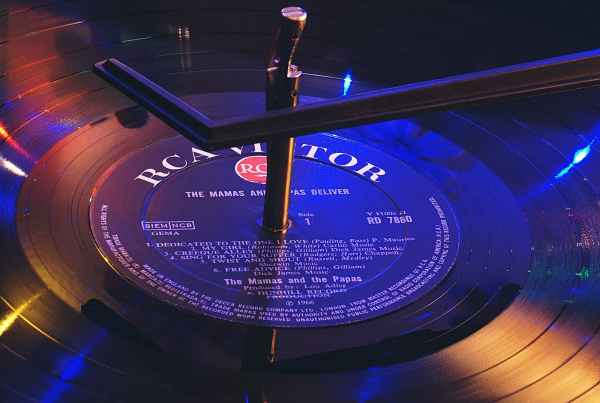
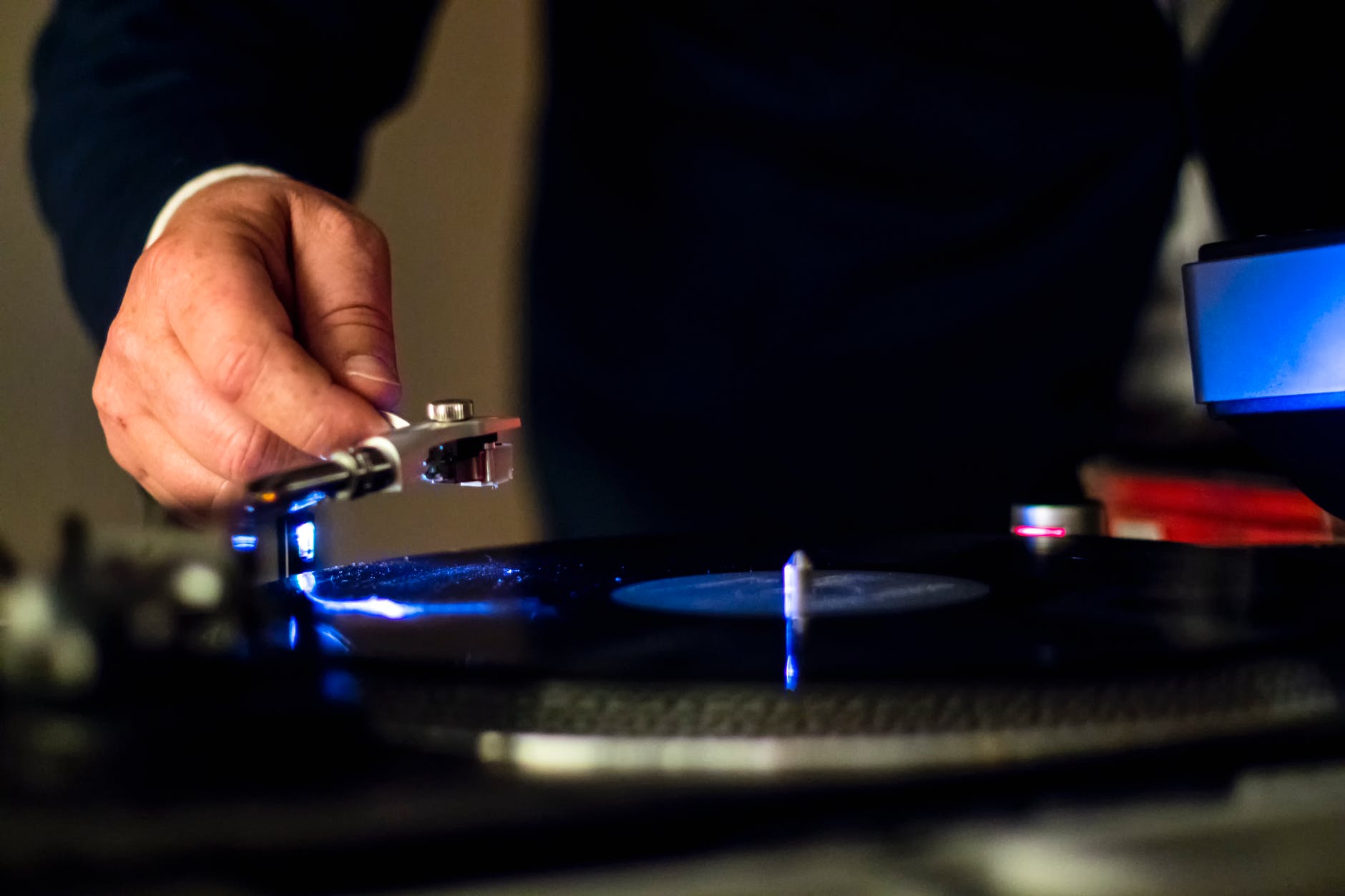
I know by writing this, I’m dating myself a bit, but when I was younger (MUCH younger!) we used to listen to a Hi-Fi stereo system.  It was a piece of furniture, made of wood, complete with legs and fabric-covered speakers, and it had an enormous hinged cover that had to be locked into the “open” position or it would slam shut as your head and upper body was “inside” trying to adjust the settings!  It had a turn-table for records, an AM/FM radio, and even storage for albums and other gear.  It stood proudly, if awkwardly, in the living room or family room, off to the side of the other large piece of entertainment furniture, the giant television set, complete with rabbit-ear antenna.  Hi-Fi stood for “High Fidelity”, reassuring us that the sounds issuing from this box were as close as we could get to “being there” for concerts, broadcasts, and other recordings.  Our model was “old school”– there was no remote control, no way to record in any other medium (no tape deck or USB port), no “pause” or “mute” function– all the knobs and buttons and “arms” had to be operated by hand.

person holding vinyl player in shallow focus photography
Photo by Ivan Boban on Pexels.com

Today, we have “Wi-Fi”– a word that looks and sounds very much like the earlier “Hi-Fi.”  Many people think that Wi-Fi probably stands for “Wireless Fidelity.”  I looked it up– the “Wi-” does stand for wireless, meaning that information is transferred via radio waves, eliminating the need for a wire or cable connection.  But the “Fi” part does NOT stand for fidelity (or anything else, exactly).  It is simply a brand name for a particular wireless protocol See more about the definition of Wi-Fi here.   Still, wireless communications, including cell phone service and internet, has radically changed our world, making it possible to connect with virtually anyone, anywhere, any time.  It is a marvelous innovation with potential for great good.  In our world and culture of global communications, we rely on Wi-Fi or wireless connections every day.  We use them for information, entertainment, business, and social networking.  I rely on it for this blog.

person using black android smartphone
Photo by rawpixel.com on Pexels.com

When it comes to prayer, it’s important to recognize the important difference between Hi-Fi  and Wi-Fi .  Both are important, but they are not the same.

Photo by Tima Miroshnichenko on Pexels.com

High Fidelity Prayer (as I see it) is consistent, daily prayer.  Faithfully coming before God and seeking His face.  Some may use a rote prayer for grace, or bedtime prayers, matins, or other standardized prayers.  Others may set aside a daily time to pray–15 minutes in the morning, or an hour after breakfast, or even 10 minutes before bedtime.  Some people set an alarm to pray at a certain time each day.  Many even make a habit to pray with a group once or twice a week.  To some, this type of prayer may seem passe, outmoded, old fashioned–after all, if God already knows our every thought, why does it matter if we pray every day or meet with the same group?  It matters because fidelity matters– faithfulness, even in the “small” things, matters to God.

Photo by Tima Miroshnichenko on Pexels.com

High Fidelity Prayer may seem awkwardly placed in the middle of our “living room”–forcing us to take time; to make and keep a commitment; to face questions or ridicule–it may seem clunky and wooden at first, even scratchy and hard to tune.  And it depends on being “plugged in” to our power source! Hi-Fi prayer is meditative, deliberate, and worship-focused. We should be careful, however, of making Hi-Fi prayer a relic. Many Hi-Fi stereos from “my day” are now collecting dust, or being used to hold plants or books! Hi-Fi prayer must be practiced– even in an age of Wi-Fi lifestyles– if it is to do us any good.

Wi-Fi Prayer is not the opposite of Hi-Fi Prayer.  It is not “wrong”, or illegitimate.  In fact, it is great to know that we can talk to God anywhere, any time, for any reason.  Wi-Fi Prayer (again, as I see it) is spontaneous prayer that is poured out to God “in the moment”.  It can happen as you are driving or walking down the street (just don’t close your eyes!)  It can happen alone or with a group.  It can happen in response to something you overhear on a bus or a train, or read in an e-mail, or hear on the news.  It is not a substitute for Hi-Fi Prayer, but it is certainly a healthy addition to it.

photo of a woman using her smartphone
Photo by bruce mars on Pexels.com

But Wi-Fi Prayer, just like Wi-Fi communication, can be taken for granted.  Wi-Fi prayers can become “small” and “hand-held”– things we bring before God because it seems like the thing to do.  We tend to put little thought, and even less grammar, into our wireless messages; we sometimes put little thought, and even less doctrine, into our Wi-Fi prayers, relying on common phrases that sound religious, but lose meaning.  “Jesus just be with _____________ during this time”, “put a hedge of protection around ________________”, “I’m just claiming your promises, Lord.”  There is nothing “wrong” with any of these statements, but what do we really mean?  Isn’t Jesus always with us?  Why is protection always a “hedge”?  Which promises are you claiming?  Again, there is nothing wrong with any of these phrases, and we know that the Holy Spirit can understand even our deepest utterances and wordless groaning.  But just like auto-correct can mess up the simplest message, so our auto-pilot praying can mimic real communication with our Lord and Creator.  There are entire comedy routines built around this kind of praying– but it creates an uncomfortably convicting kind of laughter.  We should not be shamed out of Wi-Fi prayer, but we should also be careful not to let our prayer lives become a joke.  Thankfully, God listens to our hearts and not just our words!

Hi-Fi or Wi-Fi, prayer is a sure connection to a faithful God.

Photo by Kevin Malik on Pexels.com

On a final note, whether we have to turn down the knob or hit mute, there is another important “sound” principle of prayer– LISTEN!  There have been some voices mocking this element of prayer, claiming that those who claim to “hear” from God are hallucinating or just plain crazy.  God rarely ever speaks aloud and directly to an individual–even Jesus, while He claimed that He only did what His Father “told” Him to do– never claimed to hear the audible voice of God telling Him what to do or where to go next.  There are only a few recorded instances of anyone else “hearing” the voice of God directly throughout history.  But there are countless instances of people discerning the “voice” of God, and the leading of the Holy Spirit throughout the ages.  How?  Often through changes in circumstances, other trusted voices, new insights into scripture, or the “still small voice” of their own conscience giving confirmation.  One caveat about “listening” for the voice of God– it will NEVER lead you to contradict God’s own word or act in contradiction to His character.

We have a Hi-Fi, Wi-Fi kind of God–let’s keep in tune, log in, and listen!

Blog at WordPress.com.

Up ↑