No Particular Place to Go..

Back in 1964, singer Chuck Berry released a song called “No Particular Place to Go.” It was a catchy tune about a couple driving along on a date and having trouble with a new feature in the car– the safety belt– which ends up ruining their plans for a romantic stroll.

This may seem to have nothing whatsoever to do with prayer or Christian living, but stick with me…

Photo by Anna Shvets on Pexels.com

The writer of Proverbs includes a unique chapter https://www.biblegateway.com/passage/?search=Proverbs+9&version=NIV in which Wisdom and Folly–both women–call out to passersby inviting them to visit. Both say the same thing: “Let all who are simple come to my house.” But Wisdom has built her house, prepared the food and wine, and even sent out servants to help. Folly lounges outside her door, offering “stolen” water and “food eaten in secret–though she has done nothing to prepare for visitors, and so has nothing real to offer.

Photo by KoolShooters on Pexels.com

Both women call out, both women extend an invitation–the people are not looking for them; they are just passing by. And most of them have “no particular place to go.” And isn’t that the way with us sometimes? We don’t intend to fall into foolish habits, or get caught up in addictions. Nor do we look for wisdom in our fellowship over a meal, or in spending time at someone’s house. We can be very intentional in our actions, but fall victim to our interactions.

Photo by Julia Larson on Pexels.com

Spending time with people of wisdom– people who will pray with us and for us–is so important. Preparing our hearts for fellowship with others, and for time spent with God is not something we should leave for chance. Just as we take time to “map out” our goals for work or health or finances, we should take care to map out our relationships.

Photo by Mary Taylor on Pexels.com

That doesn’t mean we avoid reaching out to others, and inviting them to enjoy fellowship, or that we must turn down all invitations from others. But we must be careful not to be drawn into folly. Jesus ate with sinners– but He didn’t carouse with them. He spent most of His time with those who wanted to share His love for the Father, and those who wanted to learn wisdom.

Folly never has a “particular place to go.” She wanders aimlessly. She doesn’t see the danger ahead, and she doesn’t look for a better road. Folly drives off recklessly without fastening her safety belt. Folly scrolls through lies and ads and half-truths on the internet. She gets pulled into relationships that are unhealthy and activities that are unproductive. And she wakes up dazed and confused and unfulfilled.

Photo by MART PRODUCTION on Pexels.com

Wisdom walks in the way of insight– well-marked paths that lead to a clear destination. Wisdom seeks traveling companions who share the same destination. Wisdom pursues the truth, in person and on-line. Wisdom drives defensively and wears a safety belt (and knows how to operate it!) Wisdom seeks shelter that is safe, where she can be well-fed and find rest. She wakes up refreshed and ready to continue the journey.
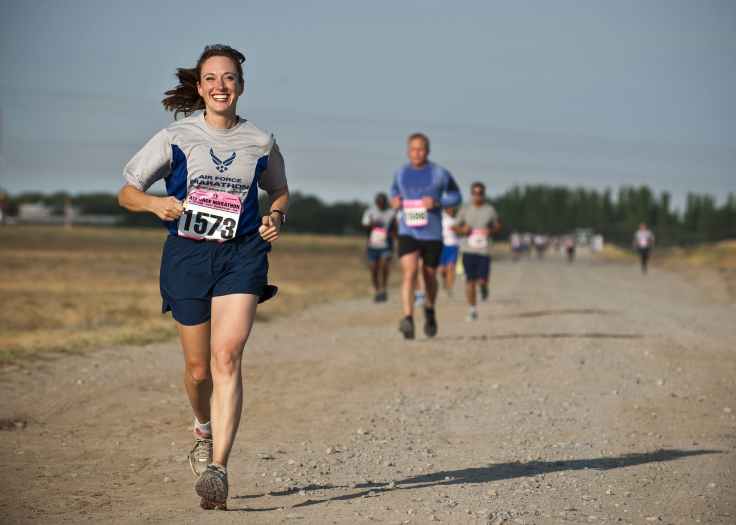
Photo by Pixabay on Pexels.com

The fear of the Lord is the beginning of wisdom,
    and knowledge of the Holy One is understanding.
 For through wisdom your days will be many,
    and years will be added to your life.
 If you are wise, your wisdom will reward you;
    if you are a mocker, you alone will suffer.

Proverbs 9:10-12 (NIV)

Praying From the Ash Heap

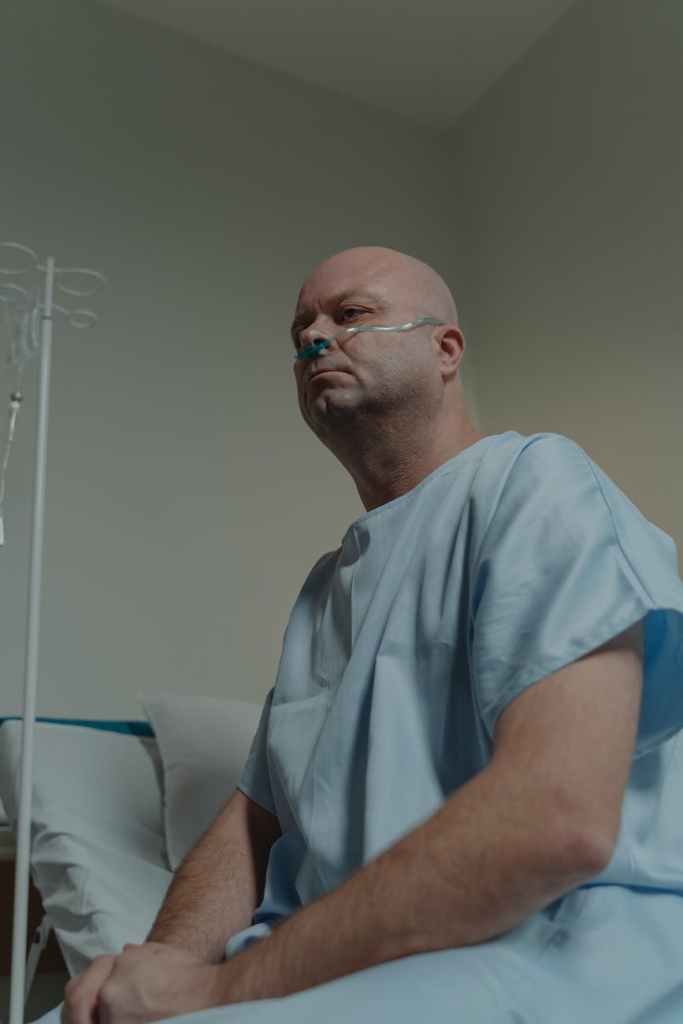
Last week about this time, I was miserable. Feverish, achy, somewhat nauseous, and doubting my own sanity. I had chosen, along with my husband, to get the COVID vaccine– even though we already had the disease earlier this year! We should have a built-up immunity, and medically, there is no compelling reason to get the vaccine and take the risk of suffering all the symptoms I suffered last week.

Photo by Pavel Danilyuk on Pexels.com

Fever and pain have a way of making people cranky, impatient, and rebellious. Especially when they come as a result of trying to do “the right thing.” I was reminded of the Biblical character of Job, who suffered intense pain and suffering through no fault of his own. While my suffering was nothing compared to his– or to many of those who have suffered worse from COVID than I did– it brought some of the same thoughts and complaints. “What did I do to deserve this?” “Why me?” “Don’t you care about my suffering?” “How much longer must I be in pain?” “Wouldn’t it be better if I could just escape this fever and achiness?”

Photo by Klaus Nielsen on Pexels.com

Most of us are not “good patients.” No one likes to suffer, even for a short while. And it can be easy to let our pain determine our prayer life. Our focus narrows to our own circumstances, and how we wish them to change. We tend to go to God with indignation–how could He let us suffer like this?! And yet, even in his indignation and self-centered moaning, Job never lost sight of God’s essential goodness and justice.

Photo by RODNAE Productions on Pexels.com

Job’s friends started out with a sincere desire to offer help and comfort. They heard of his sufferings, left their homes and traveled to visit and comfort their friend. When they arrived, they wept, tore their clothes, and sat, silent and supportive, for seven whole days! (Job 2:11-13) This is in contrast to Job’s embittered wife, who told him to “curse God, and die!” There is no other mention of her throughout all of Job’s suffering–which may have been one of the unheralded mercies of God!

Photo by Tima Miroshnichenko on Pexels.com

Job’s conversation with his friends may not sound much like prayer, but we see into Job’s heart and mind through these conversations. As his friends remind Job that God is Just, and that He punishes those who are wicked and rebellious, Job defends himself. But he also defends God–God IS Just; but He is also merciful and loving. What is happening to Job is not consistent with all that Job has experienced of God. In fact, it seems capricious and unfair. Job’s confusion and his questioning are not only coming from his pain and suffering, but from his surprise at God’s silence and seeming absence. Job’s friends see Job’s circumstances as confirmation of his sin. But though Job is confused by sudden change of circumstances, he is convinced that God will continue to be Just– that He will hear Job’s complaint, even if He has decided against Job for reasons Job may never understand. In fact, Job is still convinced of God’s goodness, declaring that “I know my redeemer lives…I myself will see him with my own eyes…how my heart yearns within me..” (Job 19:25-27), and that “the fear of the Lord–that is wisdom”(Job 28:28)

When we face the “ash heap” of despair, pain, grief, and doubt, whether we are isolated or surrounded by well-meaning friends, we have a choice in our response. We can praise God from the ashes, we can bring Him our doubts and questions. Or we can “curse God and die”– choosing to see only our circumstances and losing sight of who God is (and always has been).

The same God who brought David and I through our bout with COVID brought us through last week’s reaction to the vaccine. He is the same God who has comforted families who lost loved ones to this disease, and who has kept still others healthy throughout this crisis. I don’t know why or how we got sick back in February; I don’t know why I had such a bad reaction last week. I don’t know what the future holds, or what other pains and struggles we may face in the weeks and months ahead. The same God who finally appeared to Job–even though He never answered Job’s questions!–is the same God who holds the universe in His hand. He is the same God who never lost sight of Job. He is the same God who parted the Red Sea, healed lepers and kings, raised the dead, and promises everlasting life with Him.

Photo by Min An on Pexels.com

So I may not know what troubles I will face tomorrow, and I may not have the answers to all my questions. But, like Job, I know that my redeemer lives! I know that whatever happens, God will remain Faithful, Good, Just, and Holy. And one day, “I myself will see him with my own eyes…how my heart yearns within me”!

Risky Prayers

When I was a teenager, I read about Solomon and how he prayed for wisdom. God granted his request, and made Solomon the wisest ruler in Israel’s history. He also blessed Solomon with riches and fame, peace, and power. (see 1 Kings, chapter 3) I thought about what I should pray for in my own life– what attribute would I need as I became an adult, a wife, a parent, etc. I prayed for patience.

Photo by John Ray Ebora on Pexels.com

When I said that I wanted to pray for patience, several wise and respected adults cautioned me NOT to pray such a prayer! “You know what will happen…God won’t “give” you patience…He’ll bring all kinds of things into you life to “teach” you patience. You never pray for such things. It’s like asking for trouble. Be careful what you pray for.”

Photo by Paul Theodor Oja on Pexels.com

Looking back almost 40 years later, I would have to say that God answered my prayer. And, as I was warned, He allowed things to come into my life to try my patience and develop my patience. I remained unmarried until I was 46. I never had children of my own. Perhaps some people would wag their finger and say, “See, I told you so.” But I would not change my prayer or change my life’s circumstances. God’s answers were not what I expected, but His ways were better than my expectations. I wanted patience so that I could better handle life’s little ups and downs– so I could be the kind of wife and mother who was always composed; always at peace. Instead, I worked with teenagers and toddlers– many of whom knew very little peace at home. I wasn’t perfectly composed. Sometimes, I yelled at my class, or lost my temper with colleagues. Sometimes, I had to deal with crises–students who died in tragic accidents or by suicide; toddlers at story time whose parents were going through divorce or facing cancer. And all the while, I waited for the husband and family of my hopes and expectations.

Photo by Katerina Holmes on Pexels.com

I had prayed for patience– and I found it ONLY when I depended on God. All those years I was single and working with “other people’s” children, I learned to lean on God’s timing and wisdom. Even through the pain and tears, and wondering why God seemed silent and my dreams seemed to be out of reach, God was there, listening to my cries, giving me strength to keep going. And He is still doing the same for me now. My circumstances and expectations didn’t change who God was. But they helped shape who I was becoming, and who I am today.

During this time, I also watched peers who seemed to “have it all.” They had beautiful families, beautiful houses, handsome husbands, and fast-track jobs. But underneath, they were lonely and unfulfilled. Many of them ended up divorced, disillusioned, or burned-out. Some of them have turned (or returned) to God; others still struggle, trying to do everything their own way, and trying to juggle too much alone.

God doesn’t demand that we pray “risky” prayers. But when we choose to follow Him, we will have to take some risky steps. We may have to let go of our expectations; we may have to go through rejection and hardship. But what God has in store for us is worth the risk.

I’m not wealthy or famous. I wouldn’t recommend that everyone pray for patience, or wisdom, or some other virtue, thinking that God will make life easier or richer. (I think that’s what worried some of the people who “warned me off” praying this way.) But if you want to know God in a richer, deeper way, it will require a leap of faith.

Photo by ZaetaFlow Sec on Pexels.com

What “risky prayer” have you been putting off? Today is a perfect day to take that next step. I promise, you won’t regret it.

Praying the Perimeter

I love puzzles–jigsaw puzzles, crossword puzzles, Sudoku, logic puzzles, etc.

This may seem like a strange way to begin a blog on prayer, but stick with me…

Photo by Pixabay on Pexels.com

Puzzles can be fun, but they can also be very frustrating, especially if you approach them with no strategy. If you dump 1,000 pieces of a jigsaw puzzle on a table, and begin by trying to find any two pieces that fit, you may be able to eventually solve the puzzle, but it makes more sense to look for the “edge” and “corner” pieces first, and build a framework. Depending on the puzzle picture, you may also be able to work on colors or patterns that stand out– sky/clouds, a patch of red or blue, a dog in the foreground, etc.

Photo by Magda Ehlers on Pexels.com

The same is true of word and logic puzzles. There is usually a strategy when you approach each puzzle that can help make it easier and more rewarding. Words have patterns of letters– vowels and consonants; logic puzzles depend on deduction– narrowing down the possible by eliminating the impossible. Sudoku, and its cousin, Kakuro, involve simple math and numbers 1-9 in changing patterns. Start with the strategy, and you will find even the most challenging puzzles a little less challenging.

Photo by Dziana Hasanbekava on Pexels.com

Some puzzles seem impossible; and some are beyond my ability to solve, even with the best of strategies. That’s life. We don’t know all the answers, and we can’t always “see” the solution, or make all the pieces fit.

Sometimes, our lives seem like a challenging puzzle. Nothing seems to “fit” a pattern or make sense, and we end up lost and frustrated. Our most basic need is to trust God. But God does not leave us without a strategy. Prayer (along with reading God’s word and keeping in fellowship with other Christians) is part of an excellent strategy. Just like putting the “edge” pieces together in a jigsaw puzzle, praying “the perimeter” of our problems can put them in the proper frame.

What does that mean? Jesus gave us a perfect example in “The Lord’s Prayer.” When His disciples asked Him how they should pray, He started with the “frame.” “Our Father, who art in Heaven, hallowed be Thy Name.” God should be at the center of our life and trust, but He also needs to be the “edge” and framework of our life. There is no problem or worry that is outside of His control and awareness, no need that He cannot meet, and no problem that can take Him by surprise or leave Him frustrated and “stumped.”

Photo by Pixabay on Pexels.com

“Thy Kingdom come, Thy will be done in earth as it is in Heaven.” God already has the right strategy, and solution for our need. We can’t see it; we may not have a clue how to pay our bills, or deal with that devastating diagnosis, or make peace with our enemy–we may never find “the solution” on our own or in our short lifetime. But God sees the entire picture, and He has the power to make all the pieces “fit”– in His time and in His perfect will.

Photo by Levent Simsek on Pexels.com

“Give us this day, our daily bread, and forgive us our trespasses as we forgive those who trespass against us.” Sometimes our “puzzles” seem too big because we try to tackle everything at once, or we try to tackle things from the wrong end. God’s strategy is to rest in Him daily, letting tomorrow’s troubles wait for tomorrow, and letting go of yesterday’s struggles. That doesn’t mean that we don’t make plans or budgets, or that we don’t take responsibility for our health, or the mistakes we’ve made. But it means that we stop focusing on what we can’t control, and focus on the present. Instead of worrying, I can be thankful for what I have right now. Instead of focusing on what others think of me, or the threat they pose, I can concentrate on my own attitude and actions, making sure that I am practicing trust and obedience. Instead of getting angry when things don’t make sense, I can rest, knowing that God knows the end from the beginning.

Photo by Element5 Digital on Pexels.com

“And lead us not into temptation, but deliver us from evil.” God is our “Good Shepherd” (See Psalm 23 and John 10). He “leads us beside the still waters” and “makes us lie down in green pastures.” “He restores my soul.” (Psalm 23:3a) If we let God determine our “edges” and boundaries, we will still have to travel through troubled times and valleys “of the shadow of death.” But we need not fear evil, when we trust that God will deliver us. We need not fear the shadows and uncertainties within the boundaries of God’s will. And even when we have taken the wrong path, and “messed up” the puzzle we are in, God is in the business of redemption and restoration! He will deliver us– if we confess and seek His solution. He will wipe away the “wrong” answers and rearrange the pieces of our life, so that we can find wholeness.

Photo by Miguel u00c1. Padriu00f1u00e1n on Pexels.com

When we develop the pursuit of prayer– daily meeting with God, acknowledging who He is, and seeking His wisdom and grace– we will meet the challenges of life with the right strategy. We will still face the frustration of not knowing all the answers, or not seeing the whole picture. We will still have to deal with struggles, shadows, grief, and pain. But we will have a stronger “framework” and a God-given strategy to help.

Praying in Perspective

I love optical illusions and “trompe l’oeil” drawings and paintings– artwork that either forces the eye to see things as though they are three-dimensional, or fools the eye into seeing something completely different if you look at it from a different angle or perspective. A duck turns into a rabbit, or a hairy face turns into an ape, or a vase turns into two faces…it is not enough to take a quick glance– you are “drawn” into looking deeper, and studying the art from many angles.

What if we approached prayer this way? Sometimes, I pray from a very fixed perspective– my own desires or in my own wisdom– instead of giving my thoughts and worries entirely over to an all-knowing and all-wise God. What if God wants me to see the situation from a different perspective– HIS?!

Photo by Paul Basel on Pexels.com

Instead of instant healing from an injury, what if God wants me to work harder to maintain my overall health as I recover? Instead of mission work in East Asia, maybe God needs me to work in East L.A. (or vice versa). Instead of my child having the “perfect” job, what if God’s plan is for her to be challenged and unsettled for years before finding the most fulfilling career?

Photo by Pixabay on Pexels.com

Jesus gave us excellent examples of praying with the proper perspective. “Thy kingdom come. Thy will be done on earth as it is in heaven. Give us this day our daily bread. And forgive us our debts, as we forgive our debtors.” (Matthew 6:10-12) “..yet not my will, but Thine be done.” (Luke 22:42).

I tend to pray “two-dimensional” prayers. Lord, help me to pray with Your eternal perspective!

Chariots of Iron

I was reading from the book of Judges today, and a curious phrase jumped out at me. The entire book of Judges is filled with the failure of the people of Israel to fully claim their promised inheritance from God. Generation after generation passes, with a cycle of sin, enslavement, and deliverance as God raises up various judges and heroes, like Gideon, Deborah, or Samson.

Already in chapter one, there is a hint of the trouble to come. The book begins with several successful battles after the death of Joshua. The people of Israel consult the Lord, who fights with them in several key battles. But in verse 19, it says: “The Lord was with the men of Judah. They took possession of the hill country, but they were unable to drive the people from the plains, because they had iron chariots.”

Say what? The Lord was with the men of Judah– the LORD! They had taken possession of the hill country– rough terrain that would have been filled with natural barriers, rocky fortresses, and literal “uphill battles.” They had destroyed massive cities like Jericho less than a generation before. They had defeated armies far larger and better positioned. They had defeated giants! And now, suddenly, they are “unable” to drive the people from the plains– because the enemy had chariots of iron?

Photo by van4er ivan on Pexels.com

https://www.biblestudytools.com/commentaries/gills-exposition-of-the-bible/judges-1-19.html I think this commentary says it well. The chariots of iron became the excuse for the Israelites’ unwillingness to obey; to trust in God’s strength instead of their own. After all, it wasn’t that long before in their history when God had drowned the entire Egyptian army, including all its chariots, in the Red Sea.

I don’t think it was about the chariots of iron. I think it was about the plains. I think sometimes it can be more difficult to fight on “the plains.” When God sends us on an “impossible” mission, we must face our own fears and acknowledge our weaknesses– we KNOW we cannot do it in our own power. But when we face an enemy on “equal footing,” we are tempted to trust in our own resources– the toughness of our armor, the skill of our generals, the speed of our horses, and the superiority of our weapons. We hope and expect God to fight for us where we cannot hope to win alone, but we don’t ask for God’s help or protection in areas where we believe our own strength should be sufficient. Israel had a fine army– seasoned veterans of battle. If they HAD iron chariots of their own, victory might have been expected– with or without God’s divine intervention. But victory eluded them, because they didn’t finish the fight!

Photo by Sora Shimazaki on Pexels.com

We do the same thing today–we fail to march into battle because the enemy has “chariots of iron.” Maybe they have more social status, more political or economic power then we have. Perhaps we see that they have the means to make our lives painful “on the plains.” We see their arrogance, and their wealth and success, and we let ourselves be intimidated. We know that God has promised never to leave us or forsake us, but He has not given us chariots of iron to match those of the enemy. We don’t pray for the courage to face their chariots, or the wisdom to trust that the battle belongs to the Lord. Instead, we make excuses for not fighting the battle at all.

The rest of the book of Judges is filled with war, slavery, corruption, death, and evil. The very last verse sums it up: “In those days Israel had no king; everyone did as he saw fit.” (Judges 21:25)

Photo by Ian Panelo on Pexels.com

Lord, help me to be courageous, and humble. May I always trust in You above all–especially above chariots of iron, and weapons of mankind.

Holy Terror

It’s the end of October, and tomorrow will be Halloween. Stores and houses around the neighborhood are decorated with frightening figures of skeletons, witches, ghosts, and gravestones. Some of my friends love this time of year, and they look forward to binge-watching movies about zombies or vampires– anything scary, spooky, or terrifying.

Photo by Toni Cuenca on Pexels.com

I don’t like Halloween. I don’t like scary movies. But I believe in the value of fright. Life is filled with things–natural and supernatural– that fill us with real fear. And that is as it must be in a fallen world. Sin and death, evil and darkness, fires, earthquakes, violence and plague–they are real and should produce both fear and caution. The Bible is not silent or dismissive of such things. God’s laws warn against evil spirits, calling on the dead, consulting with witches, fortune telling, even giving in to anger, envy, and hatred. God’s laws also provide for hygienic practices to ward off disease and plague.

Photo by Mike on Pexels.com

And yet, the Bible also gives hundreds of warnings against giving in to fear and letting it control our lives. We are to be cautious and wise where fear is concerned. Over all, we are to remember that God is bigger and more powerful than our fears. God can calm storms, put out fires, even conquer disease and death! There is no power, no force, no terror, that can overwhelm God, or touch those under His protection.

Photo by Pixabay on Pexels.com

Terror holds no power in God’s presence. Therefore, if we know God, we can experience no true terror. But where there is no God, terror will reign. It’s like the saying: “No God; No Peace–Know God; Know Peace”. Terror comes with darkness, with chaos, with lawlessness and loneliness.

Photo by Skitterphoto on Pexels.com

There is only one other kind of terror– a Holy Terror. We can be terrified by the awesome Holiness of God. It is altogether more powerful and alien than anything we can even imagine. Even for those who know God, there is the knowledge that God is GOD, and we are not worthy to look on His face or enter into His presence on our own. Normally, when we think of terror, we think of things that are very unholy–evil things; supernatural forces of darkness. Yet Holiness can also inspire terror because it causes us to see our own unworthiness; our own sin and failure. I am reminded of the “face-melt” scene from Raiders of the Lost Ark– Nazis, who have been fearlessly and relentlessly pursuing the Ark of the Covenant, believing that it holds supernatural powers they can use to gain power over life and death, are suddenly and horrifically destroyed when they gaze inside–as they come in contact with the very Glory of God, their terror is absolute, and they are destroyed by its presence.

Photo by samer daboul on Pexels.com

This season, may we celebrate that God, in His awesome and mighty power, constantly reminds us that we can “Know” Him without fear; instead of running, cowering, or melting, we can come to Him with confidence and joy! And in doing so, we can face any other terror, knowing that God is with us, and for us, and even filling us with His peace! We need not be filled with Holy Terror– instead, we can be filled with the Holy Spirit!

Photo by Pixabay on Pexels.com

Heroes of the Faith

When I was just a girl, many of my cousins and playmates were fans of comic-book heroes: Superman, Batman, Wonder Woman, X-Men, Spiderman, and many others. In fact, in second grade, we had a “superhero” club that met at recess and played out scenarios. Most of us got to be heroes; a few had to take turns being villains. We ran as fast as we could; we pretended to fly; we pretended to save the world!

Photo by CDC on Pexels.com

Each super hero has a special super power (or several super powers), and each one has a “fatal flaw”– some weakness that could keep him (or her) from easy victory over a villain. Superman can fly; but he cannot overcome the effects of Krypton. Batman has a seemingly endless array of cool gadgets, but they are not always enough to counter the cool gadgets of his foes. Spider-man can spin webs, but being a superhero doesn’t pay his bills. Wonder Woman has a lasso of truth and an invisible airplane, but she must struggle between promoting peace and fighting to stop violence and war.

Photo by Pixabay on Pexels.com

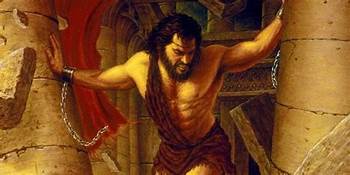
I was reminded recently that we often confuse Biblical characters with comic-book superheroes. Abraham had extraordinary faith. Moses had his staff. Samson had great strength. David wrote poetry and killed giants…and so on. And each “hero” of the faith seemed to have a “fatal flaw”– Abraham did not wait for God’s promise of Isaac. Moses had a temper. Samson was arrogant and forgot the source of his strength. David was tempted by lust, which led him to commit adultery and murder!

There is nothing wrong with honoring men and women of faith and courage and obedience. The entire eleventh chapter of Hebrews is devoted to “heroes” of the faith, and the faith of Godly heroes.

But we can turn heroes into idols, and that leads us to false thinking. We falsely believe that God only calls those who are already heroic and strong. We sometimes feel that God cannot use us unless we first show that we have some super power. We also carry a false guilt about our “fatal flaws,” feeling that we have somehow ruined God’s plans or let the enemy “win” whenever we stumble. Finally, we fail to see that our ordinary obedience–even our shaky and stumbling faith– IS heroic.

Photo by Pixabay on Pexels.com

Superheroes are not Biblical, and Biblical characters were never “super” heroes. Most of them spent their lives doing mostly ordinary things– farming, fishing, carpentry, tax collecting, herding sheep! There is only one “superhero” in the Bible– God himself–and He has no fatal flaw. Instead, He chooses flawed and ordinary people to obey Him as HE does extraordinary things through them.

Photo by Luis Quintero on Pexels.com

One consistent thing about the people we celebrate as “heroes” in the Bible– they all prayed! They all knew that real power (and wisdom and help) comes from God alone. Prayer and obedience are not guaranteed to make us famous or heroic. But God can use the simplest acts and the smallest measure of true faith to do great things in, and around, and through ordinary people just like us!

Mama Said There Would Be Days Like This..

Yesterday was a roller-coaster ride–pain, annoying interruptions, difficult encounters, successful ventures, bad moods, beautiful skies. And I almost forgot to write this post. It was just one of “those” days.

I am comforted by three things, though:

God’s love is never a roller-coaster. It is steady, eternal, and extravagant. Even on days when I can’t feel it or turn my back on it, God’s love surrounds me. No matter what the circumstances; no matter what I’ve done or what’s been done to me, God’s love never changes– it never falters, it never diminishes. He loves me just as much as he would on a perfect day; just as much as He has on my “better” days. God’s love is not based on what kind of day I might be having. It is based on WHO HE IS!

Photo by Francesco Paggiaro on Pexels.com

Jesus had days like this, too– he KNOWS what I’m going through. He knew pain, frustration, misunderstandings, betrayal, loneliness, grief, joy, struggle, success, and even “failure” (at least in the eyes of those around him). Some days, it feels like no one understands; that no one wants to listen. Jesus was a great listener during his time here; better than any of his friends or family. And when no one wanted to listen to Jesus, he simply found time to get away and talk with the Father. What a great example for us to follow. Better yet, Jesus is always on call to listen and advocate FOR us to the Father. And the Holy Spirit gets involved, too, helping us find words and expressions when we pray. God made us. He understands our weaknesses. He doesn’t condemn– He stands ready to help!

Photo by Matheus Bertelli on Pexels.com

God is Alpha and Omega. He is eternal, and He is God of the Past, Present, and Future. Today may be an awful day– or a wonderful day. Tomorrow is a mystery to us. Yesterday tends to haunt us. But God is present in all three times at once. Nothing takes Him by surprise or causes Him to wallow in worry or regret. And that should give us courage to live in the present (even if it seems chaotic or frustrating), knowing that God’s plans and timing are for our Good. Even if we “mess up” in the present, God has the power to redeem and renew our future– if we let Him.

Photo by Andrea Piacquadio on Pexels.com

My wise Mama told me there would be days like this–she knows from experience. And she also knows all the ways God is ever-present and ever-ready to give wisdom, courage, and comfort. Today, I want to pass along a little of that wisdom– just like she passed it on to me. I hope your day is not the kind of roller-coaster I had yesterday. But even if it is: God Loves you, He knows what you’re going through, and He is eternally present and powerful to give you all that you need to get through.

Photo by Jonas Ferlin on Pexels.com

Stop, Drop, and Pray!

Does it ever feel like you spend your days “putting out fires?” Taking care of little problems before they become bigger problems? Never getting a chance to rest or relax before the next crisis hits? Trying to put out a fire that keeps getting out of hand?

Photo by Produtora Midtrack on Pexels.com

Fires can become very dangerous very quickly. Experts advise that we shouldn’t try to stay and fight a fire for which we are not equipped–it puts you and others at far greater risk. There is a simple phrase that can help people survive and escape a house or building fire: Stop. Drop. And Roll. A similar phrase can be helpful in facing the spiritual and emotional “fires” we face: Stop. Drop. And Pray!

Photo by Jeremy Bishop on Pexels.com
  • Stop! Often when we face trials, our first reaction is to rush in and try to “save” things– ourselves, our loved ones, our possessions, our pride…the list goes on. This is a natural reaction, but not always the wisest course. In the initial panic, we are likely to make poor judgments, and miss warning signs. With the best of intentions, we can make situations worse: maybe we don’t have the skills, the equipment, the authority, or the knowledge to offer salvation or safety. That doesn’t mean that we must walk away from danger, or fail to offer help when we are able to do so. But it means that we must remember that Salvation and Wisdom come from God.
Photo by Vlad Bagacian on Pexels.com
  • Drop. Fire is an obvious danger, but smoke is a silent killer. We can see fire; we can feel the heat of it. But the smoke can immobilize us long before the flames reach us. Spiritually, we may be able to see obvious sins in others, but ignore the smoke of compromise and apathy in the air all around us. Smoke rises– just like pride, and arrogance, and denial. We need to be “on our knees” –lowly and humble– if we want to keep from getting choked and suffocated.
Photo by Tobias Rehbein on Pexels.com
  • Pray! Pray with a heart to listen for good advice and obey. Sometimes, we need to stay still and wait; sometimes we need to flee! Sometimes we need to get involved; sometimes we need to walk away. We don’t need to know the next seven or eight steps, however. We need to do the next right thing– even if it seems insignificant in the face of the threat. What we can see is not always where the danger is greatest, nor where the help is most available.
Photo by Emre Kuzu on Pexels.com
  • Finally– Don’t wait until you are in danger to practice these steps or prepare for what may lie ahead. There is a popular but unbiblical phrase: “God helps those who help themselves.” But this is NOT what God says! God says that He will help those who humble themselves (Luke 14:11; James 4:10); those who seek Him (Psalm24:6; Amos 5:4); and those who believe (Mark 9:23; John 20:29).

Blog at WordPress.com.

Up ↑