What Did Mary Know?

The song above asks, “Mary, did you know?” as it lists many things that Jesus did during his ministry on Earth. But just how much DID Mary know on that night in Bethlehem? From what we read in Luke 1, Mary knew only that this coming Child was sent by God to be the Messiah. But the angel didn’t spell out how that Messiah would be born or how Mary should be a mother to the King of Kings. The angel never promised Mary that Joseph would agree to marry her, or that her family would not disown her. The angel said nothing about a census; no warning that Mary would have to travel to Bethlehem, where there would be no room in any inn, and no safe, clean place to deliver God’s chosen one. Mary had no knowledge of the shepherds who would come from the cold and dirty fields to get a glimpse of her shivering infant. She had no idea that wise men from distant lands would present her with such impractical gifts as frankincense and myrrh, or that she would be forced to take her small son into Egyptian exile.
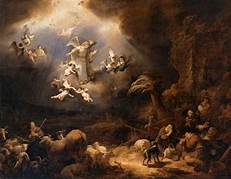
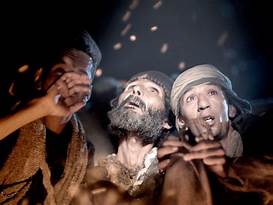
In fact, while the shepherds were visited by a heavenly host, glorifying and praising God; while the wise men were following an amazing star in the heavens, Mary was seemingly forgotten– giving birth in a cattle shed, tucked away in an unfamiliar, backwater town, without the comforts of her home and family (save Joseph, who was a first-time father himself!), without clean water or extra blankets, without the comforting voice of an angel reminding her that it would all turn out in the end.

I can only imagine how she might have felt. Was she frightened? Confused? She could have been angry or bitter, panicked or forlorn. She was not privy to the wonder of the angels or the star. She could have no idea of the miracles that her Son would do. And, while Simeon hinted at the piercing grief she would know at the crucifixion (see Luke 2:33-34), Mary could have no idea of the grueling death her Son would suffer.

Mary was so young. She knew so little. And yet, Luke tells us that she ” treasured up all these things and pondered them in her heart.” (Luke 2:19 NIV).

This Advent season, I want to take time to ponder; to meditate on the promises of God, on His timing, and His provision. Mary’s journey to Bethlehem was unplanned– by her. But God had planned it from the very beginning. He KNEW there would be no room in the inn. God KNEW all that would happen– the flight to Egypt, the years of Jesus’ ministry, the betrayal and suffering to come. And God KNEW Mary! He knew her questions, He knew her heart, He knew her fears, and her limitations.

It is comforting to know that God KNEW, and that He KNOWS all that is to come in my life. When it feels like I have been forgotten or relegated to a place where there is no room, no resources, no welcome– I can remember that God is there exactly as He was for Mary and Joseph on that night long ago. Just like Mary, I can treasure those incomprehensible moments when God sends a shepherd or a wise man into my path; someone whose presence, though unexpected or even inconvenient, reminds me that God’s plans are far bigger than what I can know or imagine.

One thing Mary DID know was that she could trust God absolutely. May we ponder this truth throughout the season and treasure His promises today.

Let No Tongue On Earth Be Silent..

“O ye heights of Heav’n, adore Him,
Angel hosts His praises sing.
Pow’rs, dominions, bow before Him,
And extol our God and King.
Let no tongue on earth be silent,
Ev’ry voice in concert ring,
Evermore and Evermore!”

“Silent night, Holy night…” Tradition has it that Christ was born on a cold and silent night. The Bible doesn’t exactly say when he was born. It does say that the angels appeared to shepherds who were keeping watch over their flocks by night; and that the wise men of the East followed a star to find the newborn King. But the Bible doesn’t talk about the night being unnaturally silent or cold– these are details we’ve added to the story that may or may not be accurate.

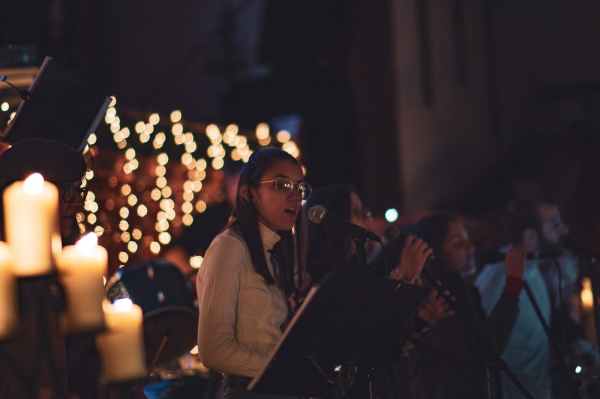
But one thing is certain– whatever silence may have settled over Bethlehem near the time of Christ’s arrival; whatever lull in the hustle and bustle of the busy city’s streets–there was no silence among those who heard the good news of His birth. From the singing hosts of Heaven’s angels, to the excited voices of the shepherds, the inquiring whispers among the wise men, and the nervous recitations of the prophecies among Herod’s advisors, Christ’s birth was met with a symphony of reaction.

And so it continues–as Christmas Eve and Christmas Day approach, hymns will be sung, rich with words like “Hallelujah,” “Joy, ” “Blessed,” “Adore,” “Savior,” “Lord,” “Wonder,” “Glory,” “In Excelsis Deo,” “Redeemer,” “King,” and “Emmanuel!” From every nation, and in every language, praise and worship will erupt from homes and churches. And this is in addition to prayer and worship that rises in an unbroken stream around the globe each day, every day.

Even during this time of Advent, when we spend some time in silent reflection, we await the music and joyful sounds of Christmas. And we have songs for this season, too. Songs and prayers as we think abou the glory to come.

It fills me with wonder to think that at any given moment, someone, somewhere, is praying and praising our Wonderful God. But millions of tongues are silent– even on Christmas–in response to God’s Everlasting Love and Grace. There are millions, even billions of tongues that will greet Christmas Day without wonder, without hope, without joy. Billions who will grumble about the weather, or the outcome of a sporting match, or their family relationships. Tongues that might be singing will be mumbling, boasting, yelling, or complaining this season.

Someday, “no tongue on earth” will be able to keep silent in response to the Messiah. “Every knee shall bow, in Heaven and on earth and under the earth, and every tongue confess that Jesus Christ is Lord, to the glory of God the Father.” (Philippians 2:10b-11 NIV)

Can you imagine a choir made up of every single human being–“every voice in concert”– declaring the worth and majesty of God’s Holy Lamb?! This babe born to be the Prince of Peace; this Only Begotten of the Father; our Emmanuel– He is worthy of such a concert! Let NO TONGUE on Earth be silent! Let us Extol Him! How Great Our Joy!!

Of Gingerbread, Christmas Trees, and Frankincense…

As the Christmas season approaches, people are decorating their homes– wreaths, Christmas Trees, lights, gingerbread houses, manger scenes, elves and reindeer, candles and more. And along with the sights and sounds and tastes, the air is redolent with the scents of the season.

Scents evoke memories and emotions deeper than any of our other senses. We can close our eyes or ears to unwanted stimuli, but it’s difficult not to breathe in the spicy air filled with cinnamon or cloves, or ignore the scent of pine or scented candles filling the room.

There was no gingerbread, or evergreen tree, or clove orange in the stable where Jesus was born so long ago– no candles or air fresheners to cover the other scents of animals and afterbirth. But when the wise men arrived to worship the infant King (which may have been a couple of weeks or even months later), they brought gifts, and two of the three were spices– Frankincense and Myrrh. They were precious spices, with medicinal and healing properties, and were also used in embalming– symbolic of Jesus’s future life and death. Oddly enough, their fragrances are reminiscent of citrus and pine, two scents we commonly associate with the Christmas season. https://www.history.com/news/a-wise-mans-cure-frankincense-and-myrrh

Photo by Jonathan Meyer on Pexels.com

God never wastes details. The Bible is full of them– lists of names, detailed instructions for the construction of the Tabernacle and Temple, references to various places, animals, trees, events– seemingly unimportant, sometimes even distracting–but all of them have a purpose. The gifts of the Wise Men (or Kings) were costly, prophetic, and worthy of a newborn king. But they were also physical gifts. The Bible never tells us how the gifts were eventually used– Did Joseph and Mary use the gold to help pay for their flight to Egypt? Did Mary save the frankincense and myrrh to use for Jesus’s burial? We don’t know. But the spices would have kept their scent for a long time, releasing their fragrance whenever the jars or containers were opened. And they reveal something about both the recipient and the givers.

God reveals Himself to us in many ways– and He appeals to all of our senses. Our worship of and fellowship with Him should do the same. We may not have access to frankincense or myrrh (though they have increased in popularity and are readily available from dealers in essential oils), but the Bible tells us that WE are a fragrance– our worship, our obedience, our sharing of the Gospel with others.

14 But thanks be to God, who in Christ always leads us in triumphal procession, and through us spreads the fragrance of the knowledge of him everywhere. 15 For we are the aroma of Christ to God among those who are being saved and among those who are perishing, 16 to one a fragrance from death to death, to the other a fragrance from life to life. Who is sufficient for these things?

2 Corinthians 2:14-16 (ESV) via http://www.biblegateway.com

Above all, our prayers are said to be incense– a pleasing aroma before the throne of heaven:

The Lamb Takes the Scroll (Revelation 5:1-10 CSB)

Then I saw in the right hand of the one seated on the throne a scroll with writing on both sides, sealed with seven seals. I also saw a mighty angel proclaiming with a loud voice, “Who is worthy to open the scroll and break its seals?” But no one in heaven or on earth or under the earth was able to open the scroll or even to look in it. I wept and wept because no one was found worthy to open the scroll or even to look in it. Then one of the elders said to me, “Do not weep. Look, the Lion from the tribe of Judah, the Root of David, has conquered so that he is able to open the scroll and its seven seals.”

Then I saw one like a slaughtered lamb standing in the midst of the throne and the four living creatures and among the elders. He had seven horns and seven eyes, which are the seven spirits of God sent into all the earth. He went and took the scroll out of the right hand of the one seated on the throne.

The Lamb Is Worthy

When he took the scroll, the four living creatures and the twenty-four elders fell down before the Lamb. Each one had a harp and golden bowls filled with incense, which are the prayers of the saints. And they sang a new song:

Photo by Josh Sorenson on Pexels.com

You are worthy to take the scroll
and to open its seals,
because you were slaughtered,
and you purchased people
for God by your blood
from every tribe and language
and people and nation.
10 You made them a kingdom
and priests to our God,
and they will reign on the earth.

Photo by Jeswin Thomas on Pexels.com

This season, as we revel in the scents of the season and remember the gifts given to the infant Emmanuel, let us present Him with the gift of fervent prayer and enthusiastic praise. He is Worthy!

Come To Bethlehem

“O come, all ye faithful, joyful and triumphant,
O come ye, O come ye to Bethlehem!”

“Come to Bethlehem and see
Him whose birth the angels sing;
come, adore on bended knee
Christ the Lord, the new-born King.”

“O little town of Bethlehem,
how still we see thee lie!
Above thy deep and dreamless sleep
the silent stars go by.
Yet in thy dark streets shineth
the everlasting light;
the hopes and fears of all the years
are met in thee tonight.”

“Come!” It echoes in our Christmas Carols; it echoes throughout Jesus’ ministry. It thrums and courses through the prophets and into the Revelations, “Amen, Come Lord Jesus!”(Revelation 22:20)

Christmas is all about coming– the coming of the Christ Child; the coming of the angels to shepherds; the coming of the shepherds to see the newborn King; the coming of the Wise Men. And we are bidden to “come” to Bethlehem and share in the joy and wonder of God coming to be our Emmanuel– God With Us.

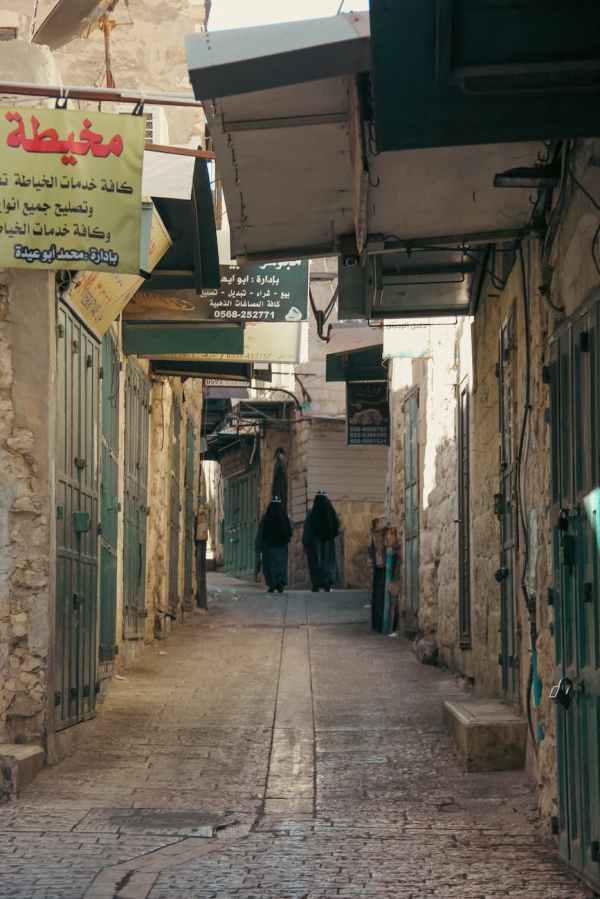
But the journey to Bethlehem is not as easy or a joyful as one might imagine. Bethlehem is crowded. It is dark and dreary. It is not “silent” as the hymns make out. It is noisy, dirty, and filled with people who “aren’t from around here.” There is no room here. There is no joyous welcome. There is not enough to eat, what with all the out-of-town travelers; shelves are bare, while garbage is piling up in the streets. Tempers are high, and patience is low.

“Come to Bethlehem.” At this moment, Bethlehem is caught in the chaos and struggle of war. Hospitals are in danger. People live in fear and violence. There is no peace and quiet– no silent streets or glorious angels in the sky– only the light and noise of rockets. We may not be able to physically travel to Bethlehem at the moment, but we can focus our prayers on the Middle East– to the hurting people in Israel and in Gaza– to earnestly pray for truth and peace there. We may not be able to travel back in time to Bethlehem, but we can travel across town to help our neighbors who need encouragement; we can step out of our safe and comfortable lives to share light in the dark regions of today’s world. And we can “Come” to prayer– to lift up those who are hurting, to ask for strength and courage to help, to own our own limitations and emptiness.

“Come to Bethlehem.” At this season, we are tempted to stay where it is cozy and familiar; or to travel somewhere warm and welcoming. We want the joy and peace of the Christmas Season to come to us! But we are bidden to come to Bethlehem, with its crowded streets and suspicious strangers; its unfamiliar alleys and rude Roman officials. We are bidden to come and share this message of peace where there IS no peace. We are asked to come where there is need and darkness and fear– to spread the Good News, not to sit on it.

“Come to Bethlehem.” Are we avoiding our own “Bethlehem?” Are there places we could visit to spread light; places we’re being called to, or places where we should go to “be counted,” but we refuse to come? Are there people we can encourage? Ways we can share hope and help– if we are willing to come away from our own comfort and (manufactured) joy?

Perhaps we long to hear the angels shouting “Glory to God in the Highest!” (Luke 2:14) But if we won’t “come” to Bethlehem, we may miss their song. We may miss seeing the message of Christmas if we insist that it comes to our pleasant palace, instead of seeking the Babe in the Manger of the Little Town of Bethlehem.

“Come to Bethlehem and See.” “Come, Let us Adore Him!” “Come!”

With the Poor, and Mean, and Lowly..

During this season, many of us spend time decorating–we add lights, candles, sparkling ornaments, and fragrant trees–we make our houses and yards festive and bright. And it is appropriate to do so, as we are preparing to celebrate the Light of the World, and the joy of Immanuel– God With Us.

But it is also good to remember that God did not enter a world cleaned up, decorated, adorned, and prepared for Him. Jesus was born in a stable. Angels celebrated; prophets dreamed; the faithful waited and watched; but the rest of the world was distracted by a census, crowded streets, rude and grumpy neighbors, taxes, cold nights and endless bad news. There was no Advent preparation for Jesus’ birth– no candles or Christmas carols, no glittering lights or shiny tinsel, no shopping sprees or holiday parties. In fact, Jesus arrived in a world that was much like what we see on the news– chaotic, messy, frustrated, angry, and sad.

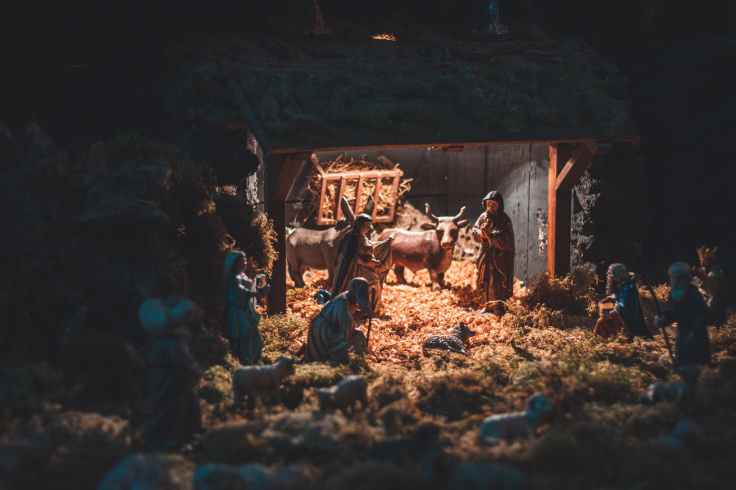
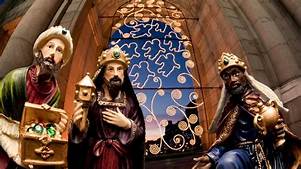
This season, some of us will put up elaborate mangers with beautiful figurines–robed Wise Men, earnest Shepherds, and the Holy Family; a few animals, and an angel or two– all clean and shiny and serene. In reality, it was likely crowded, noisy, dirty, smelly, and cold. The Shepherds and Wise Men were not there at the same time, and the angels were not present at the stable.

It seems obvious to say, but it’s important to remind ourselves that Jesus himself never celebrated Christmas. He never sang carols about His own birth; He never counted down the days on an Advent Calendar; He never decorated a Christmas Tree, or enjoyed a plate of Christmas cookies. Instead, He spent His life among the poor, the mean, and the lowly. He entered the lives of beggars and lepers and outcasts–and He brought light into their world. The Lord of all creation, who created galaxies of glittering stars, who commanded armies of angelic hosts–walked on dusty roads and had no home to decorate. He fed the hungry, healed the sick, and showed compassion to those who were possessed by demons.

This Advent season, as we decorate and prepare our homes for a warm and merry Christmas, may we remember to live among the poor, the mean, and the lowly. This year, it may seem difficult, but it is not impossible to share hope and joy with those who need it so desperately. May we prepare our hearts as well as our hearths to accept the Light of the World. And may we reflect it into the world around us– more than ever!

Holy God, you came in humility and compassion. You lived to serve, and you died to save. Show me how to love and serve in this season of darkness and fear, just as You did so long ago, that those living in darkness may experience more than just holiday tinsel and glitter. Amen.

Chasing Epiphany

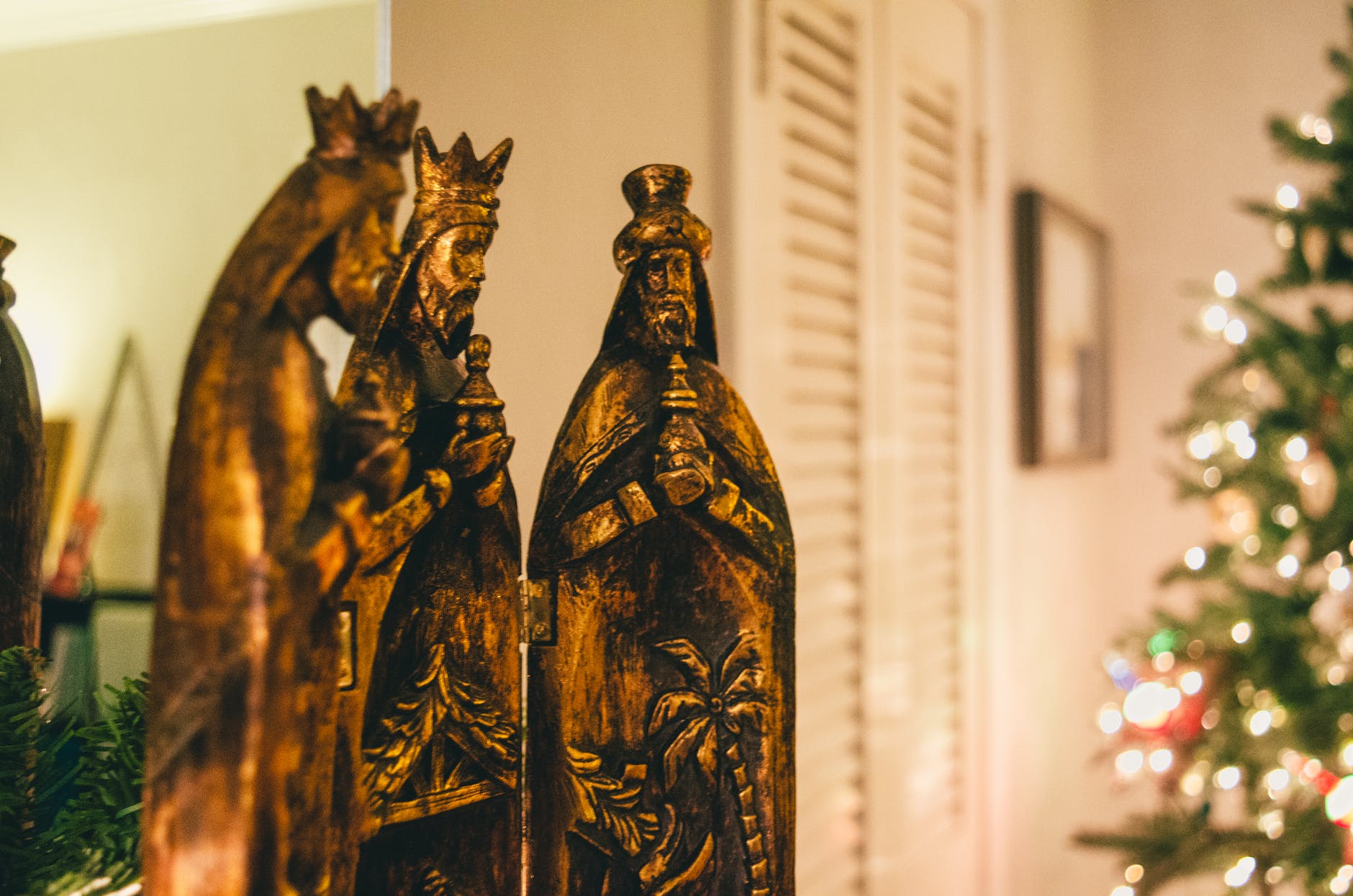
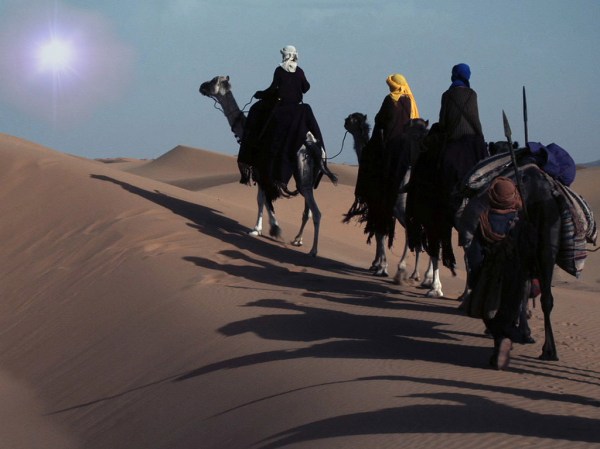
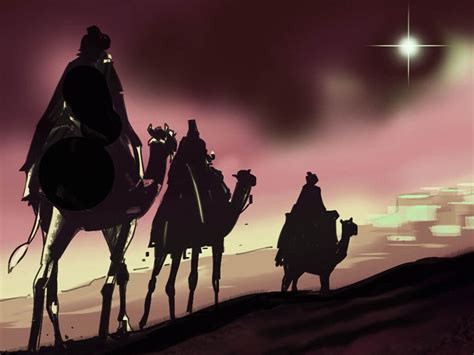
Today marks Epiphany– the day traditionally celebrating the arrival of the Magi to see the Baby Jesus. (Matthew 2:1-12) The Bible does not give us many details about the Wise Men. We don’t know if there were three or thirty. We don’t know if they all came from the same region, or if they came from many different nations and regions and met up along the journey. We only know that they had studied the skies; having seen a new and very bright star (or comet or conjunction of stars), they plotted its course across the sky and “followed” it to Israel– first to Jerusalem, and then to Bethlehem. They brought gifts fit for the king they expected to meet.

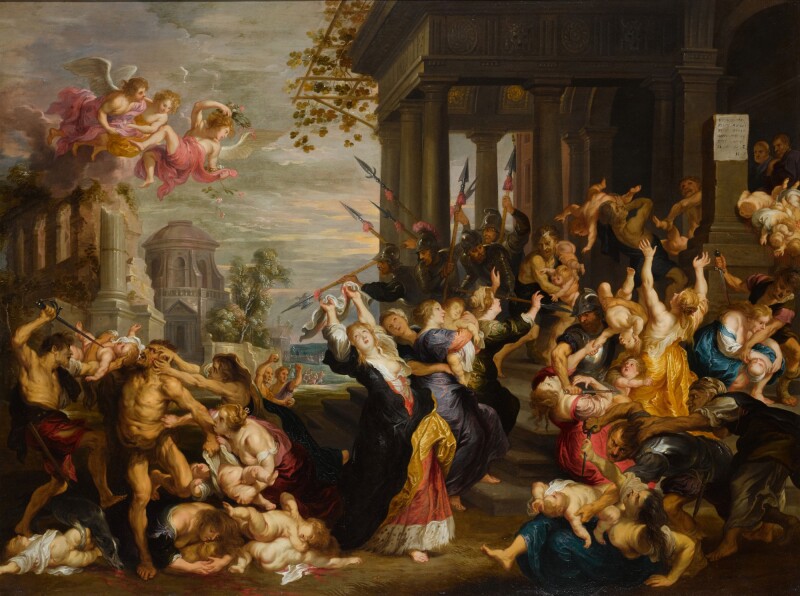
What a surprise it must have been for them to reach Jerusalem. After many days (weeks? months?) of travel, they arrived, only to be met with shock and confusion by the leaders and wise men of Israel. Hundreds of prophesies pointed to the birth of Messiah, yet the Jewish leaders were oblivious to His arrival, almost under their very noses! They were not ignorant of the prophesies– they “knew” that Messiah would be born in Bethlehem. Yet, they showed no interest in traveling with the other wise men to meet their own redeemer. Instead, they sent the foreigners to pay homage, while they plotted in Jerusalem to help Herod kill hundreds of innocent infants. These are the same priests, prophets, and wise men who had been studying, praying for, and waiting for the arrival of Messiah for hundreds of years. How could they have missed it?!

Photo by Andrea Piacquadio on Pexels.com

Epiphany is not just the name for this day of the Kings with their three gifts of Gold, Frankincense, and Myrrh– it is a word that tells of a sudden realization or understanding of the essence of a truth. But how often do we chase an epiphany–pray for answers, or memorize scripture–only to miss the point? How often are we focused on the pages of history, or our computer screens, only to miss the wondrous star in the sky? Are we, like the Jewish leaders of their age, missing the Epiphany?

God is ready to show us the miracle of His Mercy, the sufficiency of His Grace, and the depths of His great Love– are we chasing an Epiphany that is right under our noses? Let’s be ready to look up, to follow the star, and to be amazed!

Christmas Wish Lists

When I was a child, we used to write letters to “Santa” with a list of what we wanted to find under the Christmas Tree that year. Sometimes this was a school project– practice in letter-writing etiquette, etc.– and sometimes, it was done spontaneously after poring through the Sears “Wish Book” Christmas catalog, or after watching Saturday morning cartoons with their endless ads for toys, dolls, bikes, and sugary cereals.

As adults, we often do something similar, drafting a Christmas “wish list” in our prayers and Advent dreams. Our adult lists may be as shallow as those of childhood–a new dishwasher, or a shiny piece of jewelry; a new “toy” boat for Dad, etc. Sometimes, they sound more virtuous– world peace, a healthy economy, a cure for cancer…

Photo by Ivan Samkov on Pexels.com

It isn’t “wrong” to have wishes at any time of year. And we should hope for better things in the world around us. But we can get caught up in the idea of Christmas being all about wishes and desires at the expense of the real GIFT of Christmas– Christ Himself! In fact, we can become numb to the fact that Jesus wasn’t just “another” Christmas gift among our “wish list” items.

Photo by Irina Iriser on Pexels.com

The true light that gives light to everyone was coming into the world. 10 He was in the world, and though the world was made through him, the world did not recognize him. 11 He came to that which was his own, but his own did not receive him. 12 Yet to all who did receive him, to those who believed in his name, he gave the right to become children of God— 13 children born not of natural descent, nor of human decision or a husband’s will, but born of God.14 The Word became flesh and made his dwelling among us. We have seen his glory, the glory of the one and only Son, who came from the Father, full of grace and truth.

John 1: 9-14 (NIV)

Christ didn’t come that first Christmas in response to any person’s wish list. In fact, the Bible says that when Jesus came into the very world He created, He was rejected, ignored, even despised by those who should have recognized and welcomed Him. He didn’t come wrapped in shiny paper and waiting for us to enjoy Him. He came wrapped in rags, forced to go into exile under threat of death, and honored only by humble shepherds and strangers from foreign lands. No one sought Him out on their own. Even the shepherds and wise men were led by angels and a guiding star.

This year, instead of concentrating on wish lists and our desires (even noble ones!), let’s reflect on God’s wish list– that we would turn from sin and rebellion, and be reconciled to Him; that we would make His gift our greatest desire!

Photo by Pavel Danilyuk on Pexels.com

Joy(?) to The World

Photo by zeno ferenczi on Pexels.com

I don’t know about you, but I sometimes have problems with Advent Season. On the one hand, it’s a season of joy and wonder; a season of anticipation and expectation. But I find myself contemplating…and as the days get darker, earlier, and the snow falls, then melts, leaving everything brown and gray, I can’t seem to hang on to the joy. It slips through my fingers, leaving me thoughtful and even a little depressed.

I also find myself looking at the glitter and listening to the peppy music of the season and feeling as though all the “Merry” in Christmas is just a soap bubble, waiting to burst. I don’t watch much television, but it seems that every year the “holiday” specials and TV ads get more artificial and shallow. “Buy this!” “Turn up the Tunes!” “Wear THIS to the Holiday party!” “Eat this– Drink that!” “Get away from it all!” It’s more about escaping the ordinary, rather than celebrating the extraordinary gift of God’s Son. The more I try to get “into the Spirit” of the season, the more I seem to miss it…

Photo by Henlynn on Pexels.com

It is important to remember that this extraordinary Joy came INTO and THROUGH the ordinary. The angels didn’t announce to the shepherds that they could escape their duties and run off to a vacation cruise; Mary and Joseph didn’t celebrate their first Christmas surrounded by lights and mugs of hot cocoa. The wise men didn’t have a brand new GPS device to help them find their destination, or tasty cookies and fruit baskets to make the journey more “fun.” This “good news of great joy” was the birth of a child– an ordinary event–except that THIS birth was the fulfillment of God’s Promise and the Way, the Truth, and the Life!

Photo by Levent on Pexels.com

Many millions of people today will not have joyful circumstances to make the season “Merry and Bright.” But they can experience true Joy– the kind that comes from Knowing Jesus–and not just for a day or a season, but forever, in spite of difficulties, pain, and struggle. There IS joy in the journey, but it doesn’t always manifest as mirth and comfort.

Photo by Kampus Production on Pexels.com

This season, it is our privilege as Christians to offer a different level of Joy to the World–the Joy of forgiveness; the joy of belonging; the joy of eternal Hope and Peace. It may not be in laughter or singing. It may be in holding a hand at the side of a hospital bed. It may be in sharing tears with those who are suffering. It may be sharing a crust of bread with real thankfulness, instead of a feast with stress. Joy doesn’t have to be complicated. It doesn’t require wrapping paper sugar sprinkles. The best gifts we can give this season don’t have to be filled with merriment and laughter. They don’t have to be expensive or even filled with thoughtful intent. They should be the spontaneous response of love and compassion for those around us. Let’s give lots of hugs, smiles, and small tokens of respect and appreciation this year. After all, God’s great gift– the greatest of all– began as a tiny, wailing infant, hidden away in a spare stable, wrapped in rags. But “Behold!” It is still bringing great joy all over the world. (Luke 2:10)

Photo by Burkay Canatar on Pexels.com

Let’s not trade certain Joy for temporary mirth this season. Reflect on the Reason, and not just the Season!

Star of Wonder…


We three kings of Orient are;
Bearing gifts we traverse afar,
Field and fountain, moor and mountain,
Following yonder star.Refrain:
O star of wonder, star of night,
Star with royal beauty bright,
Westward leading, still proceeding,
Guide us to thy perfect light.
Born a King on Bethlehem’s plain
Gold I bring to crown Him again,
King forever, ceasing never,
Over us all to reign.
Frankincense to offer have I;
Incense owns a Deity nigh;
Prayer and praising, voices raising,
Worshiping God on high.
Myrrh is mine, its bitter perfume
Breathes a life of gathering gloom;
Sorr’wing, sighing, bleeding, dying,
Sealed in the stone cold tomb.
Glorious now behold Him arise;
King and God and sacrifice;
Alleluia, Alleluia,
Sounds through the earth and skies.

John H, Hopkins, Jr.
Photo by Jonathan Meyer on Pexels.com


The Visit of the Wise Men
Now after Jesus was born in Bethlehem of Judea in the days of Herod the king, wise men came from the east to Jerusalem, saying, “Where is He who was born King of the Jews? For we have seen His star in the east and have come to worship Him.”
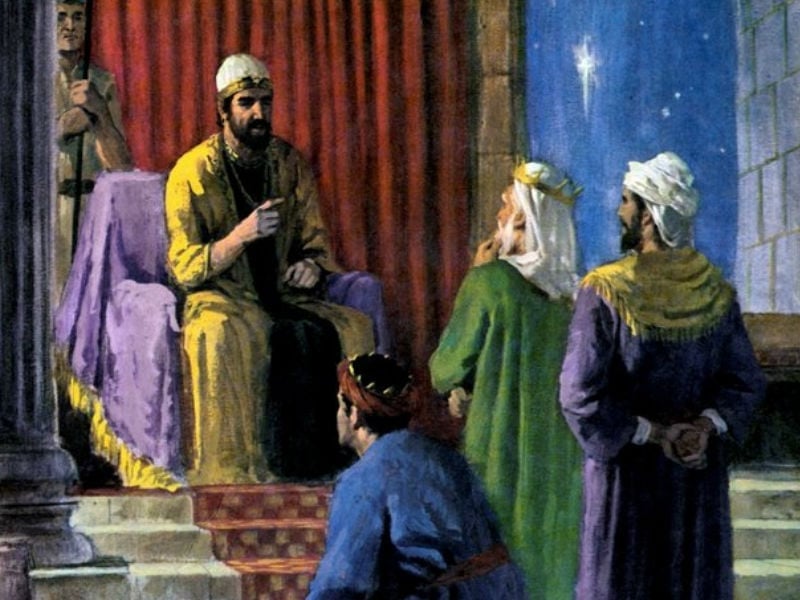
When Herod the king heard these things, he was troubled, and all Jerusalem with him. And when he had gathered all the chief priests and scribes of the people together, he inquired of them where Christ should be born. They told him, “In Bethlehem of Judea, for this is what the prophet wrote:
‘And you, Bethlehem, in the land of Judah,
    are no longer least among the princes of Judah;
for out of you shall come a Governor,
    who will shepherd My people Israel.’[a
Then Herod, when he had privately called the wise men, carefully inquired of them what time the star appeared. And he sent them to Bethlehem and said, “Go and search diligently for the young Child, and when you have found Him, bring me word again, so that I may come and worship Him also.”
When they heard the king, they departed. And the star which they saw in the east went before them until it came and stood over where the young Child was. 10 When they saw the star, they rejoiced with great excitement. 11 And when they came into the house, they saw the young Child with Mary, His mother, and fell down and worshipped Him. And when they had opened their treasures, they presented gifts to Him: gold, frankincense, and myrrh. 12 But being warned in a dream that they should not return to Herod, they returned to their own country by another route.

Matthew 2:1-12 (MEV)

Yesterday, I revisited the account of the shepherds; today, I’d like to take a closer look at the wise men from the East.  First, a bit of clarification:

  • They are (most likely) NOT three kings– at least not in the literal account given in Matthew.  (See more about the number and possible names  and places of origin of the wise men in various traditions here:  https://en.wikipedia.org/wiki/Biblical_Magi)
  • They did not arrive alongside the shepherds on the night of Christ’s birth.  Again, tradition says they may have arrived as early as twelve days after his birth, or up to two years later.  Matthew’s account is very vague.  It quotes the prophesy about Bethlehem, but does not say that this is where the wise men actually found the child (notice that Matthew does not call him and infant or babe).  Their arrival in Jerusalem to make inquiries suggests that some time had elapsed, and the travelers were expecting to find ready knowledge of the birth (or perhaps the child himself) in the capital city.
  • They came “from the East”– which leads me to ask: Why were there no wise men in Judea studying this star and its significance?  These wise men had traveled for weeks or months, bringing gifts. They were  ready to honor a king they knew only from a few prophecies and their study of the night sky. Matthew’s account tells of their arrival and their questions.  They came looking for “the king of the Jews”, suggesting that they were aware of some of the prophecies about Messiah, but they were unaware of Micah’s prophecy concerning his birth in Bethlehem.  Yet the scholars and wise men of Jerusalem were “disturbed” rather than elated or excited by these revelations.   God had not spoken through the prophets of Israel for over 400 years, but He had not forgotten His promises, nor had He abandoned His people.  They, however, had lost their desire to study the prophecies; they had lost much of their hope and faith.  Not everyone had fallen into complacency– the book of Luke points out two specific people who eagerly awaited the coming of Messiah (See Luke 2:21-40).
Photo by Marta Branco on Pexels.com

But it is not just the wise men that capture my attention…it is that miraculous “Star of Wonder.”

Scholars debate whether or not the “star of Bethlehem” was an actual star or another astronomical event.  See one good explanation here:   https://www.timesofisrael.com/can-astronomy-explain-the-biblical-star-of-bethlehem/

Photo by Snapwire on Pexels.com

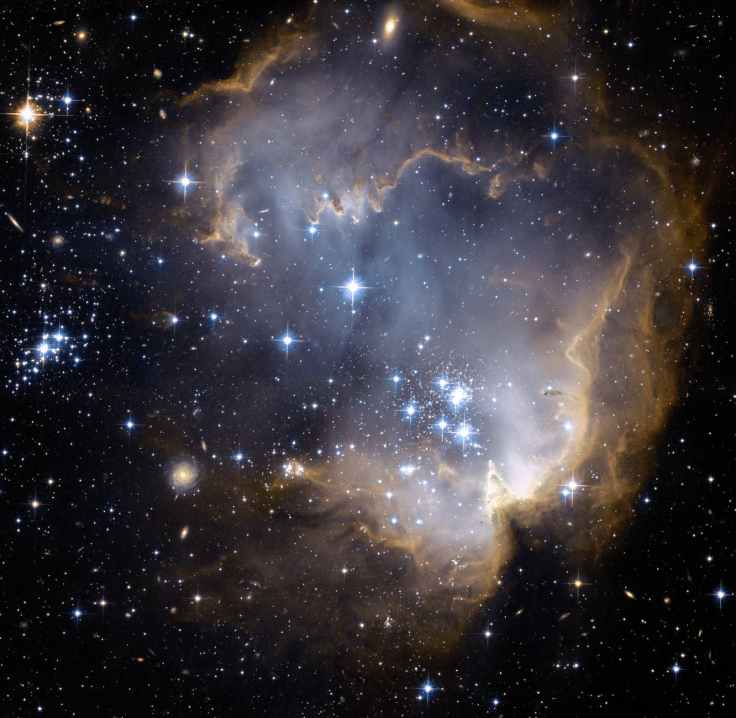
I am not an astronomer, but everything about this story brings a sense of awe… If this was an actual star (either a new star or a star exploding into a supernova of intense bright light), its light would be traveling several millions of miles, even light years to be visible on Earth.  The star would have to have been burning several years before the birth it announced, and its light would have to reach the Earth in coordination with the events taking place across the vast emptiness of space.  If the “star” was actually a configuration of planets or another astronomical event, the same impeccable timing needed to be activated across the span of eons– just waiting for this exact moment for all the planets and other cosmic elements to align.  It is yet another incredible example of God’s sovereignty and omniscience that all of time, space, history, politics, and celestial objects came together to fulfill multiple prophecies given over multiple centuries and studied by people the world over.

Photo by Lennart kcotsttiw on Pexels.com

What can we learn from all this?  I pray that we would be open to the wonder and awe of every aspect of the Advent and Nativity.  I pray that we would seek as intently as these wise men of the East– that we would not be “disturbed” and taken aback when God fulfills His promises and sends signs and portents.  And I pray that we would shine in such a way as to draw people to the wonder of the Savior, even those from distant lands who have never heard the gospel.

Blog at WordPress.com.

Up ↑