Pursuing Discipline

Prayer can take many forms and be many different things. I write about prayer as a pursuit– something done with purpose and with some kind of discipline. Prayer is not meant to be just another discipline in the life of a believer. “Pray without ceasing,” Paul says in 1 Thessalonians 5:17; but this is not meant as an exercise to pursue quantity of prayer over quality, or to spend every waking moment consumed with prayer to the exclusion of all else.

Photo by Karolina Grabowska on Pexels.com

However, we are called to be disciples– and that necessarily entails learning discipline. Any activity taken on without discipline can’t really be called a pursuit. It may be a hobby or an entertainment, but pursuit involves direction, dedication, and focus. And this includes our prayer life.

I want to be very careful in discussing this aspect of prayer, because I believe that there is a real danger of letting the discipline overshadow the purpose of prayer. HOW we pray is never more important than WHY we pray, or to WHOM we pray! But failing to make a plan for prayer can cheat us of the benefits of learning to pray deeply, consistently, and with greater focus.

Photo by Claire Morgan on Pexels.com

With this in mind, I want to spend some time each month talking about ways to “grow” a life of prayer. Today, I want to focus on journaling as a way to pursue prayer.

As with any discipline, the key is consistency. That’s why journaling can really help. Keeping a record every day of things to pray about, of reasons for praise, of people or issues to bring before the throne of Grace, can keep us focused. It can also help us chart God’s answers and His work in our lives and the lives of others. I keep four separate notebooks– one for each quarter of the year. But there are wonderful daily journals and notebooks that can work as well. Some come pre-printed with scripture or prayer prompts for each day. Some people use a pocket calendar or calendar app on their phone or computer. The method isn’t as important as having a planned approach.

Photo by Bich Tran on Pexels.com

I recommend having a daily focus that is consistent from week to week. For instance, on Sunday, I focus on The Church– missions, local church congregations, persecuted churches, evangelism effort, etc.. On Monday, I focus on Family and Friends. Tuesday, I pray for the Government– local, state, federal, and leaders of other nations. Wednesday is Community–community services, schools, businesses, neighbors, even roads and parks and utilities! Thursday is Global Day– things like war and drought, natural disasters and diseases. Friday, I focus on business and finances– my own, and others. Saturday is a day to pray about cultural issues, like abortion, marriage, gender issues, etc. That doesn’t mean that I don’t pray about family members on Thursday, or about a school shooting on Sunday. But it means that I pay special attention to those matters on particular days. Here are some reasons why:

  • God wants to hear from me about everything. But without a plan, I tend to pray about the same few things over and over. I pray about whatever is worrying me in the moment. And only that. God wants me to be aware of all that He is doing. He also wants to remind me that He is LORD of everything; big and small, immediate and long-term, far away or around the corner.
  • God wants me to be consistent and persistent in praying. But that doesn’t mean praying obsessively. Obsessive prayer can become nagging, doubt-ridden, desperate pleas. God listens to our prayers. And we can trust Him, even when we don’t get immediate answers or relief. We don’t stop praying, but we also don’t stop trusting Him for the next step in the journey. God is bigger than just one aspect of my life– no matter how urgent or overwhelming that aspect may seem today. My focus needs to be on God’s sovereignty, and not just my immediate circumstances.
  • God works in mysterious ways. I may not feel like praying for my Governor, or my neighbor, but it may be that my faithful prayer today is what God will use to make changes in some other aspect of my life. Praying for what I have on my list, rather than just what pops into my mind may actually remind me of something else, and help me see how God is working in an area I might have missed otherwise!
  • By practicing this discipline in prayer, I am learning discipline in other areas of my Christian walk.

I read an interesting article on-line the other day about the late Duke of Windsor. Born as the heir to the throne of Great Britain, he was trained from an early age. His father, the King, wanted him to learn discipline and honor, so as to be prepared to assume his role. But Edward despised his father’s training. He found his father to be harsh and critical, prim and joyless. And he rebelled. He took little interest in the affairs of state, preferring to focus on his own pleasure. As his father grew older and weaker, Edward was asked to take on more royal duties. He enjoyed making appearances at parties, but despised many of the other tasks– letter writing, or visiting factories or various parts of the Commonwealth. He refused to settle down and marry, until he met Wallis Simpson, who was twice-married, and separated from her second husband. She was also an American citizen.

Edward VIII wanted to defy the laws and traditions of his own nation in order to marry. When this proved to be contentious, he decided to abdicate his throne, marry Mrs. Simpson, and live abroad. Instead, his brother became the next king (George VI), guiding his nation and the commonwealth through the difficult days of the second world war.

For many years, the myth of a king who gave up his throne to be with “the woman I love” has prevailed. But there was more to Edward’s abdication than blighted love. Edward was not incapable of ruling, but he was unfit to rule it well. His lack of dedication to his duties and citizens became evident in the very first crisis. Those who were working with him during his short reign witnessed his lack of care or concern about paperwork, and his selfish insistence on doing what he wanted to do, and not what was expected of him or of benefit to his people. He was a man without discipline and without a clear moral compass https://www.dailymail.co.uk/news/article-417388/Prince-Charmless-A-damning-portrait-Edward-VIII.html.

Photo by nappy on Pexels.com

The Bible is filled with many examples of kings throughout the history of Israel and Judah who also failed to learn discipline or restraint. Their desire to reap the benefits of their position without learning to fulfill their responsibilities led to the moral, and eventually the physical and political collapse of their nations. They did not make a habit of seeking God, or of listening to His prophets. They sneered at good advice, and defied the laws of Moses and the rules God had given for the kings. Some of them worshiped other gods; some even sacrificed their own children to foreign gods or goddesses. They failed to keep the sacred holidays; they failed to read the Word of God; they failed to pray– except as a last resort!

We often perceive prayer as a personal practice– and it is. But how we choose to develop our prayer life may be tied to how we choose to develop the rest of our lives. We don’t need to be rigid and legalistic about it. But we do need to live– and pray– with purpose, if we wish to follow the example of Jesus and grow in our walk with Him. Not only does it impact our life and growth– it impacts our witness and our influence as well. Pursuing prayer in a disciplined way may have a far-reaching impact on our life and the lives of others– even in the generations to come. For more, see the page Why I Keep a Prayer Journal

Last Goodbyes

I missed posting here last Friday– we were busy planning my mom’s funeral. Mom died last week at the age of 89. We spent most of last week planning how to say our last goodbyes.

Goodbyes are never easy. And those that come with death are painful. We will miss our Mom, Grandma, Great-grandma, friend, cousin, neighbor, aunt, surrogate mom, and all the other roles she filled during her earthly life. We will miss her smile, her warm friendship, her faithfulness, her drive and passion, her energy, and her zest for life and adventure. I used to call or visit her every day. I will never again hear her voice in this life. I will never again hold her hand or share a laugh with her on this side of heaven.

But saying goodbye, for Christians, is NEVER permanent. I have said my very last goodbye to Mom, because someday, I will say “Hello!” to her again. And along with her, I will be welcomed into eternity by the One who created me and loves me even more than Mom did! No more painful partings; no more wondering when I will see her or speak to her again.

She is with so many loved ones to whom she had to say, “goodbye” over the years. And all of them are joyful and secure in the knowledge that there will be no more “goodbyes” in Heaven.

Mom was a prayer warrior, as I have said before. She prayed daily, multiple times a day, lifting up friends, relatives, and even strangers. And I will miss knowing that she is praying for me. But there is Someone Else who is praying for me daily– even constantly! Jesus sits at the right hand of the Father, making intercession for us every moment!
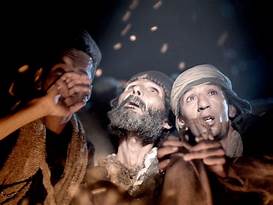
Photo by Daka on Pexels.com

His disciples were in anguish at the thought of having to say “goodbye.” But Jesus told them to be glad, because He would send a comforter, the Holy Spirit, to them after He went away. They said their last “goodbye” to their beloved Teacher, but He didn’t leave them alone to grieve. He left them with a mission to achieve. He also left them with a promise that He was coming back! And this time, He would bring them to their eternal home in Glory!

And Mom has done something similar. She left a legacy of caring and praying and sharing the Gospel. She left hundreds with hope and peace for their future. And now it’s important to carry the baton; to finish our leg of the race, and continue the mission that Jesus passed on to His disciples long ago; the legacy that was passed to Mom, and that she has passed on to us. Someday, all the “last goodbyes” will have been said; all the last bitter tears shed, and we will all celebrate the arrival of God’s Glory. The only thing left to bid “goodbye” will be Sin and Death, grief and mourning.

I thank God for “Last Goodbyes.” Because I know that Goodbye is never the end for those of us who know Christ. We will be sad for awhile, but our grief will be swallowed up in joy and victory!
Goodbye, Dear Mom– for now. You are safe and secure. Your prayers have been answered, and ours continue in hope and confidence. Amen!

Let Your Light Shine

I live in an area not too far from Lake Michigan. All along the shores of this Great Lake are lighthouses. Some are small; some are tall; some are old and some use the latest technology Some are red; some are white; some are striped. Most are designed to warn ships of rocks, but others warn of shoals and hidden sand bars, as well.

Big Sable Point Lighthouse, Ludington

We think of lighthouses shining their light in the darkness, but lighthouses also shine in the daytime, through cloudy days, foggy mornings, and stormy afternoons. Most lighthouses also have fog horns, to warn ships when even the light won’t penetrate a thick fog.

This past week, a faithful lady at our church reminded us of a favorite song from childhood– “This Little Light of Mine.” We are called to be like Jesus, the “light of the world.” But what does it mean to “let our light shine”? And what does it mean to “hide it under a bushel?” (See Matthew 5:14-16)

Fresnel lens at Ponce Inlet Lighthouse, Daytona Beach, FL. Invented by French physicist Augustin-Jean Fresnel, the lens is much thinner than a conventional lens, which allows for a large aperture and short focal length at a lower weight.

Lighthouses use special lenses, called Fresnel lenses, to magnify the effect of refracted and reflected light. The resulting beam of light is stronger and can be seen for miles. Our own “little light”– our weak and imperfect faith; our limited talents and resources; our clumsy attempts– would not be enough to “save” anyone. But God magnifies our efforts as we reflect HIS radiance; His Love and Mercy. And many will be saved as we allow God to shine through us.

St. Joseph Lighthouse at sunset

Lighthouses are consistent– they don’t “turn the light off” when the weather is perfect, waiting only until someone spots a ship in danger. They don’t “dim” the light, or add extra strobe lights for the holidays or special occasions. Each lighthouse sends a consistent signal–steady and sure. But each lighthouse is unique– both in its outward appearance, and in it’s light pattern. This helps sailors tell them apart, and provides further help in navigation. As Christians, our light should also be consistent and unique. God created us with unique talents and opportunities–and we can “shine” the light of Christ in such a consistent and unique way as to help others “navigate” the trials of life. I am so thankful for the many faithful and uniquely gifted Christians who have inspired and guided me throughout my journey–and I want to be that kind of light for others!

Lighthouses are solid. They are normally built close to the shore, but not on the sandy beaches– rather on a rocky outcropping or a solid concrete and steel-reinforced foundation. As Christians, we have a solid foundation in Christ. We need to “shine our light” from that foundation– living out the Gospel of Christ– His life, death, resurrection, and imminent return. Building a bonfire on the beach may produce light, but it won’t stand out in a storm. Building our lives on any other foundation or religious “fad” may produce outward “success,” but it will not withstand storms.

Finally, and this may sound ridiculously obvious, but Lighthouses shine with purpose. They don’t twinkle or glitter; they don’t scream from the shore– “Look at ME! Look at ME!” They don’t shoot off fireworks to captivate onlookers from the shore. But they shine. They send a consistent warning, and provide consistent security to those who need it– and those who are seeking it! “This little light” may not be a blazing comet on the horizon, but without its steady pattern, there is darkness, confusion, and danger for those at sea (on lake in our case!) “No one lights a lamp and puts it in a place where it will be hidden, or under a bowl. Instead they put it on its stand, so that those who come in may see the light.” (Luke 11:33 NIV) We are commanded to shine– to Love others, to reach out with light, and hope, and yes, even a warning. To hide that light is to deny our purpose. To shine only for our own glory is to miss our purpose.

Holland (Michigan) Lighthouse

Father, help me to be a light in the darkness today. Help me to shine with Your Love, Your Mercy, and Your Goodness. Help me to be consistent, and to shine in the strength of Your Righteousness and Grace. Help me to use the unique gifts and opportunities You provide to show Your Character and Love to others.

Fishers of Men

Earlier this week, my husband and I went fishing. As we were enjoying our time on the lake, and catching a few fish, I was reminded of the old song I learned in Sunday School:
“I will make you “fishers of men”…if you follow me.” Jesus said these words to His early followers, who were fishermen by trade (see Matthew 4:19). But what does it mean to be a “fisher of men?”

Photo by Public Domain Pictures on Pexels.com

The primary meaning is that we have a commission– found in Matthew 28:19: “Therefore, go and make disciples of all nations..” We are to go and “catch” men and women, taking them out of the sinful lifestyles we see around us, and bringing them into the Kingdom of God, much as fishermen take fish out of a lake or sea and bring them into the boat. But what practical implications can we take from the practice of fishing, that might help us as we carry out our spiritual commission?

  • First we much go where the “fish” are, and actively work to catch them. I can go to the lake, dip my toes in the water, even get into a boat and go sailing, and never catch a fish. The fish will not jump into my boat, or jump out of the water into a net. I must make an effort. I can follow Christ, and go to church every Sunday, participate in many spiritual activities, even pray every day, but if I never interact with lost and hurting people I am unlikely to become a “fisher of men.”
  • Next, we must recognize that we won’t “catch” all the fish! I know some Christians who become discouraged and depressed if they go out for one day of “evangelizing” and don’t make converts. They give up after one negative or unsuccessful encounter. “I’m not an evangelist.” “I can’t share the gospel– I just don’t have what it takes…” Imagine if fishermen responded that way– “I cast out three times, and never got a fish– I give up!” This is especially discouraging because our Great Commission is not to “convert” everyone; not just to go out and “catch” men and women with a hook or a net, but to make disciples. It is a process, but it comes with risks and no guaranteed “return” on our investment. Some “fish” are not ready to be caught. Some are meant for other fishermen. This should not lead us to be apathetic about lost neighbors or relatives, but it should remind us that we are God’s witnesses, not His SWAT team. Even Jesus didn’t “convert” everyone He met! But He did love them!
  • Third, and closely related, we must expect resistance. It is not natural for most people to respond immediately to the Good News of the Gospel. After all, it involves admitting our need for salvation, and submitting to the will of God. Fish that are taken from the water will die! And we must “die” to our selves and our selfish nature if we are to become Disciples of Christ.
  • Finally (and this is a bit of a stretch of the analogy, but bear with me…), we must have the right bait. This is not to say that the Gospel is inadequate or insufficient for the task. Rather, that we are not meant to hit people over the head with only our words– even when they come from Scripture! We do not create disciples by offering a bare hook. People are hungry– hungry for answers; hungry for hope; hungry for peace; and hungry for love. The Gospel lives in US– WE need to offer more than just the words of the Gospel–we need to LIVE the Gospel! To offer only condemnation or smug arrogance makes a mockery of the very Gospel we are supposed to share. Likewise, we do not create disciples by offering a shiny but “fake” gospel of easy answers and “cheap” grace without truth or repentance. It may hook a few desperate or gullible people for a moment, but once again, it is not our mission to merely “hook” people.
FISHERMAN#3/OK, 5/30/01, 3:52 PM, 8C, 8808×10935 (0+505), 150%, FISH, 1/10 s, R120.4, G94.7, B105.7

David and I enjoy fishing– we enjoy spending time in God’s beautiful nature; we enjoy the quiet and peace; and we enjoy the challenge of finding where the fish are “biting” on a particular morning. And I’m so glad that Jesus gave us such wonderful analogies and word-pictures to help us understand His love for us and His plan for spreading the Good News. Finally, I’m glad that I’ve been taken from the “lake” of sin and given new life by the great “Fisher of Men!” I pray that I can help others find and follow Christ, as well.

Be Reconciled

23 So if you are offering your gift at the altar and there remember that your brother has something against you, 24 leave your gift there before the altar and go. First be reconciled to your brother, and then come and offer your gift.

Matthew 5:23-24 (ESV)
Photo by RF._.studio on Pexels.com

Why do we find it so difficult to be reconciled? We crave God’s forgiveness, but we withhold our own toward our neighbors, or family members. We let anger and bitterness keep us apart. We let pride keep us from doing what we know is right in God’s eyes.

I speak from conviction. I have been estranged from a cousin of mine. Years have passed since we’ve spoken. We argued about something, and simply stopped talking. I tell myself that I have nothing for which to apologize–that’s just the way things ended. And my life is far less stressful since we’ve stopped talking. I do not “hate” my cousin, or feel bitter toward her. In fact, I tell myself that I only wish her the best– I just don’t want to be involved in her life, or have her involved in mine.

Photo by Josh Sorenson on Pexels.com

I know this is not what God wants. I know I should get in touch, and reassure her that “we’re okay”. Yet I am afraid to reach out and re-establish contact. Not because she poses any sort of physical threat, but she threatens my pride and my comfort. I find her difficult to talk to; difficult to understand. We have different ideas about boundaries and expectations–I find her “needy,” and she finds me “aloof.” I don’t think time will have made our relationship “easier.”

Photo by Liza Summer on Pexels.com

But God finds her precious in His sight– and worthy of my effort to reconcile our relationship. That doesn’t mean that I must allow her to manipulate me or abuse my emotions, or that I must demand that she be someone she is not to make me more comfortable. But it does mean that I may be embarrassed or inconvenienced at times. I need to be willing to listen, even when it is difficult, and so speak, even when it seems like I’ve said the same thing before. And it means that I must learn to set healthy boundaries and insist on them– not to shut her out as I have been doing, but to keep our relationship balanced and safe for both of us.

God puts a great premium on our willingness to be reconciled to one another. So much so, that Jesus told His listeners in the Sermon on the Mount, that if they were ready to bring an offering, and they remembered that someone had something against them, that they should leave their offering– unoffered– and go be reconciled first. Being at odds with others puts us at odds with their Creator and the One who loves them. Whenever possible, we should seek to reconcile. Broken relationships are sometimes a reflection of our relationship with Him. It hinders our prayer life, as well as our witness to the Power of God to redeem and reconcile the world around us.

Photo by Timur Weber on Pexels.com

God is aware that we are sinful people. And there are some relationships that are absolutely toxic. Reconciliation and forgiveness are NEVER about allowing another person to continue to abuse or manipulate you. Especially if this involves physical or sexual abuse. Forgiveness is not the same as accepting someone else’s manipulation or abuse. God, and only God, can redeem us and make us a new creation. Some relationships cannot be fully “reconciled” in this life. But “letting go” is not the same as “locking out” or “running away.” We must let others know that God can do what we cannot–He can restore broken relationships. He can make all things new.

Go! Tell! Witness! Believe!

15 When the angels went away from them into heaven, the shepherds said to one another, “Let us go over to Bethlehem and see this thing that has happened, which the Lord has made known to us.” 16 And they went with haste and found Mary and Joseph, and the baby lying in a manger. 17 And when they saw it, they made known the saying that had been told them concerning this child.

Luke 2:15-17 (ESV)

Go! Tell It on the Mountain! The ancient prophets foretold it. The Angels brought the news to the shepherds, who told it to their neighbors: Jesus, the Christ, is born! He is here among us! God in the flesh! What amazing and glorious news! This same Jesus told parables, shared prophecies, and spoke the Truth– and taught His disciples to do the same! Through the centuries, witnesses have spoken words of hope, healing, and salvation to the next generation, taking the Word as they spread throughout the world.

Photo by cottonbro on Pexels.com

In the beginning was the Word, and the Word was with God, and the Word was God…And the Word became flesh and dwelt among us, and we have seen his glory, glory as of the only Son from the Father, full of grace and truth.

 
John 1:1; 14
Photo by Pixabay on Pexels.com


“Good Christian, fear, for sinners here the silent Word is pleading..”

What Child is This?

Jesus, who spoke the universe into existence, came into His own creation in silence as a newborn baby. The angels announced His coming; the shepherds spoke of Him; the Wise Men came to honor Him. But His arrival was just the beginning. In His ministry, He would speak words that echo through the centuries– words of hope; words of warning; words of life and salvation. And He challenges us to speak as well– to share the Gospel; to be His witnesses to the uttermost parts of the earth (see Acts 1:8).

Our words matter. Our words have power– power to build up, and power to destroy. We have opportunities each day to speak Truth, Hope, Joy, Peace, Compassion, Love…or to stay silent. And we must be careful to speak the truth– even when it is inconvenient, unpopular, or risky. We must not compromise by speaking pleasant platitudes or ignoring danger. Truth is not always pleasant–Jesus’s words were not always welcomed; not always comforting. But they brought healing where it was most needed, and hope where there was darkness.

Photo by Ivan Samkov on Pexels.com

And more than words must go out into the world– Jesus didn’t sit in a comfortable corner of a bistro waiting for the hurting and hopeless to come to Him and hear His words. He climbed mountains and crossed lakes; He traveled from town to town; He shared meals and participated in the Synagogue services; He touched lepers and spoke to outcasts. Today, we have amazing opportunities to spread the Good News–technology and media; the ability to meet others in person (COVID permitting!) or via Zoom or Skype or even cell phone; and, in many places, the freedom to speak without fear.

Photo by Daria Shevtsova on Pexels.com

 For God so loved the world that he gave his one and only Son, that whoever believes in him shall not perish but have eternal life.

John 3:16 (NIV)
Photo by Min An on Pexels.com

The Word came down at Christmas. Let’s make sure the Word goes out this Christmas– the Savior has arrived! He is Christ, the Lord! Joy! Peace! Hope! Celebration! Go! Tell it on the mountaintops and in the valleys and across the seas!

How Will You Be Remembered?

Today would have been my paternal grandmother’s 118th birthday. I have many memories of my grandmother, and I wish more of them were pleasant.

I remember dreading time spent at Grandma’s house. She wasn’t a horrible woman, but she was not peaceful or kind or warm. Her house was small and dark, with cobwebs and dust bunnies in the corners and under furniture. There were very few toys, and most of them broken. Grandma always wanted my sister and I to be still and silent, and I always had the feeling that she dreaded our visits as much as we did. I had a cousin who loved it when we came over, because she was just a bit older and an only child. If the weather was nice, Grandma would send us all outside, and my cousin would dare us to climb trees, or jump over a pit or some other physical (usually dirty and dangerous, too) activity. When we came in, Grandma would frown and comment on how dirty and sweaty and noisy and un-ladylike we all were.

Photo by Anna Shvets on Pexels.com

Growing up, I didn’t think of Grandma as someone who had ever been young, and noisy, or happy and excitable, or awkward and easily hurt. She seemed to have been perpetually old and cranky and bitter. In hindsight, I can see how circumstances– being the middle child of seven living on a farm; starting her married life living in with a bossy sister-in-law and verbally abusive father-in-law; losing her husband when he was only 50–had been allowed to shape her character in negative ways.

Photo by Karolina Grabowska on Pexels.com

There are some pleasant memories, and I cherish them. Grandma was a good cook. She made wonderful chicken dinners, and a strange candy out of mashed potatoes and peanut butter. She always had cold tea on a hot day. I knew that she loved my dad, and that she could be proud of us, in her own way. I was sorry when she died. Sorry that I hadn’t made more of an effort to know her better. Sorry that she had chosen bitterness, and that I had chosen to stay distant from her.

I write all this, difficult as it is, to say that Grandma–both her good and bad qualities–lives on in my memory as someone I would not choose to be. I don’t want to grow old like her. I don’t want my family members to dread spending time with me while I live, and dig deep to remember something good about me when I’m gone, or justify my bitterness and negativity.

Photo by Nishant Aneja on Pexels.com

My grandmother claimed to be a woman of faith. And it is not my place to be her judge. But I saw very little evidence of faith in her daily life. I cannot remember ever hearing her pray. She did not attend church. She had a Bible, but I never saw her reading it. Her better qualities, and her walk with Christ were overshadowed by rancor, bitterness, anger, hurt, and pettiness. I do not want that to be my legacy. I want people to know, not just from my words, but in my actions and choices, that God’s love lives in me, brighter and stronger than memories of Grandma.

Photo by Andrea Piacquadio on Pexels.com

Shortly before her death, I ended up spending an afternoon with Grandma– just the two of us. She had moved into a small apartment in town, and somehow, it transpired that I had to be in town on Saturday morning for a school event, and no one could pick me up until that evening. We were forced to keep company. It began awkwardly, but as we talked, Grandma opened up about her childhood, her love of music, and more; she asked about my time at school and my love of history. It is the single most pleasant memory I have of her, and I wish there had been more afternoons like it; more afternoons to bond; more afternoons to cherish, rather than dread.

After her death, I learned a couple of things about my grandmother– things I wish I had known earlier. I found an old copy of her high school yearbook, which contained a story she had written. Grandma’s story was full of wonderful details and imaginative characters. She was a writer– and I never knew! I also found out that Grandma not only loved music, she was a singer– an alto, just like me. At some point in her life, she stopped writing, and she stopped singing. I hope that, even if I never saw it or heard it, that she never stopped praying. And I hope that when I’m gone, those who remember me will never have to wonder if I sang, or wrote, or prayed.

Photo by Edu Carvalho on Pexels.com

When We All Get To Heaven…

Last week, I attended the funeral of my mom’s cousin. It was a joyful funeral–not only was it a celebration of a life well-lived, and an acknowledgement of God’s grace, but it was a reunion of sorts. Not only were there cousins I hadn’t seen in awhile, but I met people I hadn’t known before, but we were connected through my cousin and through the legacy of a tiny country church and the faithful witness of those who have been blessed there.

Photo by Suzy Hazelwood on Pexels.com

Friends and family spoke of my cousin’s generosity, his quiet and steadfast character, his diligence, and his love for Jesus Christ. We sang together, prayed together, and remembered. And some of the stories shared involved a small country church, once pastored by my cousin’s in-laws, and the site of many confessions of faith, prayer meetings, weddings, funerals, evangelistic services, pot-luck fellowships, Bible Schools, Easter services, Christmas programs, and weekly worship services. It was the church where I was introduced to the gospel. It was the church where I met my husband. It still stands, attended by faithful friends. It has, over the years, sent missionaries to Zambia, Nicaragua, Guatemala, Mexico, and the Philippines. It has supported local rescue missions, and local families in need. It is a tiny country church; I can remember when it had hard wooden pews, no fans or air conditioning in the summer, a damp and leaky basement with the occasional toad or salamander on the stairs, and no indoor bathroom.

Bethel Church

After the funeral, Mom and I went to the fellowship meal at another local church. It was beautiful, with a small cafe, a large sanctuary, two sets of bathrooms, a fellowship hall, and all the modern conveniences– located in an old strip mall. A far cry from the church of my youth, but filled with caring and gracious people who were there to provide food and comfort for the family. I don’t know how many local or foreign missions are served by the congregation there, but I suspect it would look similar to the list above.

Photo by Josh Sorenson on Pexels.com

As we found a seat for the meal, we were joined by a woman I had never met. As we made introductions, we realized two things– we were distantly related, and we had both attended Bethel Church as young children (though separated by a couple of decades). We both had fond memories of that small country church, and the wonderful people there.

Photo by SHVETS production on Pexels.com

Over the next few days, I thought about all the amazing people I have known–family members like my cousin, and this distant cousin I was able to meet; the various families who came and went over the years at Bethel Church and other churches I have attended; missionaries and evangelists, pastors, teachers, and their families; the people I have met through mission trips and conferences–and how many more amazing people I have NEVER met, but whose lives are intertwined because we belong to God’s family.

Photo by Maria Orlova on Pexels.com

Someday, we will all be in the same place at the same time–HOME– with our Loving Father! When we all get to Heaven, what a day of rejoicing that will be! Until then, we are scattered by distance and circumstance. We worship in different ways, different languages, in different types of buildings, in small house churches, cathedrals, arenas, and strip malls. We have different outreach opportunities, different social challenges, different budgets, and different worship styles. But we are connected:

Photo by Binti Malu on Pexels.com

There is one body and one Spirit—just as you were called to the one hope that belongs to your call— one Lord, one faith, one baptism, one God and Father of all, who is over all and through all and in all.

Ephesians 4:4-6 ESV

Heaven will be incredibly diverse; and uniquely cohesive– brought together by a Love that transcends differences, disparity, and even death. And we will meet those whose lives paralleled ours, even if we never met on earth. We will meet those whose faithfulness brought about the little country church where I grew up, and those who planted churches in malls, and jungles, caves, hills, forests, and “underground.” All our amazingly diverse stories will be woven into one eternal “Hallelujah” as we praise the author of them all.

Funerals can be anguished events. But I was blessed last week to remember God’s incredible faithfulness. One of the verses quoted during the service was Psalm 116:15–“Precious in the sight of the Lord is the death of His saints.” Earlier in the same Psalm, the writer has this to say, “I love the Lord, because He has heard my voice and my supplications.  Because He has inclined His ear to me, therefore I will call upon Him as long as I live.” I have seen and experienced God’s faithfulness– through the lives of other saints, through the work of His church, and as He has personally “inclined His ear to me.” May I be faithful to all upon Him for as long as I live. As my cousin was blessed and blessed others, may we hold true to our “One faith” as we await that day when we all get to Heaven!

This Little Light of Mine…

Last Friday night, my husband and I watched fireworks in honor of Independence Day. They were spectacular– bright flashes of light, followed by loud, thunderous booms–red, green, blue, purple, orange, gold, and white. Some sizzled and screamed as they threw their light across the darkened backdrop of the night. Others were almost silent; just a “whizz” and a “poof.” Some were so bright, they lit up the whole sky, showing clouds and smoke trails.

Photo by Benjamin Lehman on Pexels.com

Fireworks are exciting and flashy. But I wouldn’t want to live in a world of continual fireworks. While their light is bright and exciting, it is not steady, and it is quickly swallowed up again by night’s darkness. We don’t even light fireworks during the day, because their light is not brighter or better than the sun.

Photo by Nathan Cowley on Pexels.com

Sometimes, I try to be a “Christian” fireworks display–I try to be flashy and impressive, or sizzle, scream, and boom. That’s not entirely a bad thing– after all, we are to let out light shine, so that people can see our good works and glorify our Father in Heaven (see Matthew 5:14-16). But we should be careful. Jesus never called us to be like fireworks; He spoke of our “light” being more like a lamp or a candle.

Photo by icon0.com on Pexels.com

Some thoughts to remember:

  • We are to let our light shine for a purpose greater than display. Our lives should be a reflection of the true Light of the World. Jesus was not flashy and bombastic. He was humble, gentle, and kind. People were not amazed and impressed by Jesus’ appearance. And He didn’t draw attention to many of His miracles– He often healed people “on the road” as He traveled between towns; some of His most spectacular miracles, like walking on water, were done in front of only His closest disciples. Jesus didn’t lead others by clever arguments and flashy displays– He led by example and service.
  • Lamps and candles are steady sources of light. Our lives should not be momentary flashes of brightness, followed by clouds of smoke and a return to darkness for those around us. A quiet life of integrity may not be flashy, but it can, over a lifetime, inspire others and leave a lasting legacy that shines far longer and brighter than any fireworks display.
  • Occasionally, God will put us in a place where our light can shine a little brighter or sizzle for a bit– for His Glory. We should not be afraid to sparkle. But we must not let ourselves “burn out.” And when we see others shine in this way, we should not be envious or try to quench the Spirit; however, we must continue to reflect God’s glory, rather than trying to bask in another person’s glow.
  • Far greater than any fireworks display is the promise of God’s glory, revealed in the fullness of time– an eternal display of pure light, with no darkness to follow!
  • Our “little light” is not insignificant– it is God’s purpose. It pleases Him to see us glow, not explode!
Photo by Paulo Mu00e1rcio Dos Santos on Pexels.com

Lord, help me to shine in ways that point others to You. Help me to reflect Your gentle, faithful, and righteous light, Your Love, and Your Grace as I travel through a dark world. Amen.

Show, Don’t Tell..

A fundamental piece of advice for writing fiction is “Show, don’t tell.” A good writer will use words to paint a picture or set a mood. Poets and songwriters are masters of this advice. Metaphors, analogies, figurative language, even alliteration– all create memorable images with very few words.

Photo by Akshar Dave on Pexels.com

Jesus (hardly surprising, as He is the Word of God) was a master storyteller, using parables that we still recognize and identify with today–mustard seeds and prodigal sons, good Samaritans and lilies of the field– Jesus didn’t “lecture” about forgiveness or holiness or love; He provided word pictures, even as He demonstrated each concept in His actions.

Photo by Cindy Gustafson on Pexels.com

When Jesus was getting ready to return to Heaven, He commanded His disciples to “Go and make disciples of all nations.. (Matthew 28:19 NIV) He also said to “Go into all the world and preach the gospel to every creature..(Mark 16:15 NKJV). And as I review Jesus’ methods and actions, I see that I need to make some changes.

Photo by Ketut Subiyanto on Pexels.com

I need to listen more and lecture less. I need to spend more time with those who are shunned by the “righteous,” but cherished by God. I need to spend less time defending myself and more time testifying about Jesus. And I need to spend less time “telling” and more time “showing” love, obedience, joy, mercy, peace, and hope.

Photo by ThisIsEngineering on Pexels.com

This doesn’t eliminate the need to talk and write and “tell” about God– but I want to learn more about doing it God’s way!

Blog at WordPress.com.

Up ↑