Who’s on First?

Baseball season is off to a great start! I love baseball, and I love word-play, so it’s probably no surprise that I really love the Abbot and Costello routine, “Who’s on First?” (watch here)

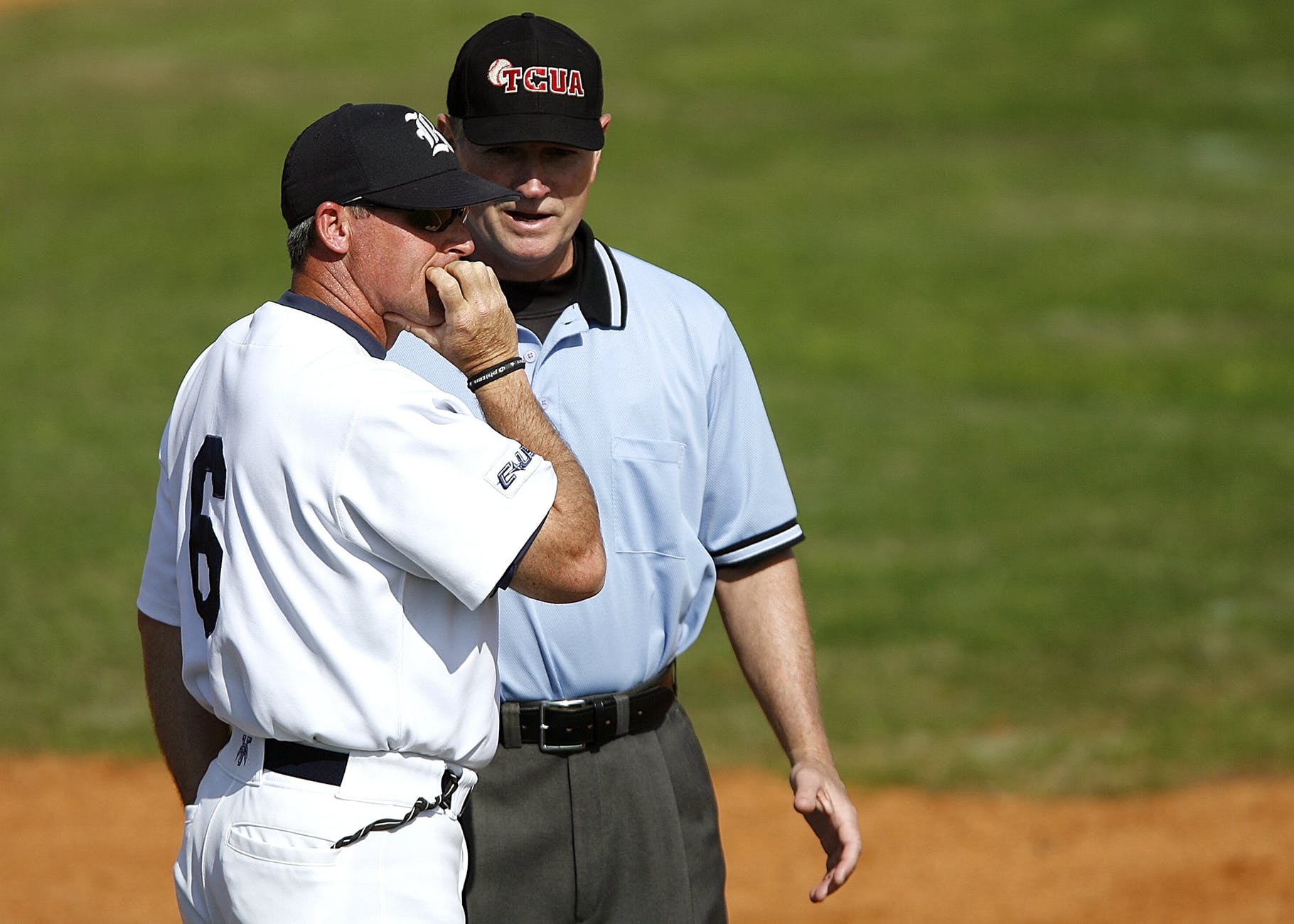
The idea behind the famous routine is that Abbot is trying to explain the positions on the baseball team, but the players’ names lead to all sorts of needless confusion.  You don’t really have to know a lot about baseball to be entertained by the comedy routine, but the more you do know, the funnier it gets.  Baseball depends on coordinated team effort– knowing who is playing where can make the difference between spectacular plays and disasters– both offensively and defensively.  But as much as I would love to talk about both baseball and comedy today, I really want to use baseball as a metaphor for prayer.

baseball-substitute-bench-hands-48151.jpeg


Prayer is very personal, especially confessional prayer, but often it is also communal and a coordinated team effort.  Every player (pray-er) wants to play our best, and we are gifted for certain positions on the “team.”  Some of us are great at pop-ups– catching people “in the moment” and praying with them, sharing their burdens and joys with concise sentence prayers.  Some are sluggers– prayer warriors who “knock it out of the park.”  Some are outfielders, patiently persistent in praying for the lost, and ready to chase down a line drive or jump up to make the save.  Some are basemen– praying to keep the enemy from gaining ground, or catchers, defending home base from all attempts to score.  Some are good at bunting–providing the necessary support and sacrifice so that someone else can advance.   And some are master pitchers–crafting prayers that strike out or even shut-out the enemy.  Our coach, our mascot, our general manager and MVP?  The Almighty, Triune God!   He knows our strengths, weaknesses, and how we can improve our performance and standing.  He also wants to help our team become closer and stronger.  After all, baseball is wonderful, but Christian living is even better– it has eternal consequences!

pexels-photo-260998.jpeg

When we ask, in relation to prayer, “Who’s on First,” we need to remember a few things:

  • Always listen to the coach!
  • Remember you are not alone.
  • PRAY to win!
  • Look out for and support your teammates.
  • Each inning is a new beginning– don’t live in the last inning.
  • Don’t let the current score determine your play.
  • Don’t let the other team’s players or their fans take you “off your game.”
  • (Spoiler alert)– We are the champions!

Let’s get suited up and ready to take the field for today’s game…after all, you or I may be on first!

Puzzling Prayers

Note: This is a re-post from seven years ago, but I thought it was worth revisiting…

Have you ever had one of those days where things just don’t seem to make sense?  It doesn’t have to be a “bad” day, necessarily–just a day when things don’t seem to “fit.”  I had one of those days yesterday.

I journal my prayer life– I have notebooks with names and places for each day of the year.  Yesterday, my notebook included the city where my daughter lives and the names of three people celebrating birthdays, among other needs.  One of the names was a complete mystery to me.  I couldn’t remember who this person was, or how I knew either her or her name…I was drawing a blank and didn’t know how I should pray for her.  Was she a former classmate? Was she a daughter or mother or sister of someone I knew better?  I ended up praying a very general prayer– for her health, her family, etc., but it bothered me.

newspaper-news-media-spectacles-53209.jpeg


Hours later, speaking with someone on the phone, another name came up, along with a prayer request– a man suffering with an illness who happened to have the same surname.  Coincidence?  Possibly, but the name stood out, and I prayed again– for both.  Now I was really curious.  I did some digging.  The first person WAS the sister of someone I knew, and their father is the one suffering from an illness.

God is amazing, and one way is how he gives us the opportunity for “a-ha!” moments like the one I had yesterday.  I have spoken to several Christians who are sometimes separated by several time zones from those they normally call on for help or advice.  In crisis moments, they have cried out to God.  Thousands of miles away, someone will be awakened from a sound sleep with a sudden urge to pray for their distant friend, or another will be stopped in their tracks and send up a random prayer as their mind wanders.  Often, this will be in the exact moment of the crisis, and God will intervene with a miraculous healing or rescue or provision.  Days later, the two parties will connect and be astonished at the timing.

What used to puzzle me about such prayers was this– if God already knows the need, and plans to act, why involve the second (or third) party?  Because stories like this, while impressive and inspiring for those who believe, rarely cause a skeptic to come to faith, and aren’t necessary for those who already believe.

I think God has many answers, and I know I don’t have all of them, but here are three things I believe God is doing through such puzzling circumstances and outcomes:

  • While it doesn’t turn a skeptic into a believer, it DOES give the skeptic something to explain away– one such instance might be ignored as coincidence, but five?  two hundred?  And we have a Biblical precedent in the book of Acts, chapter 12, when Peter is rescued from prison and shows up at the very house where believers are praying for his release!  Even they didn’t believe at first, and left Peter out in the cold!
  • It IS an inspiration and an encouragement as a follower of Christ to know that he not only hears our prayers, but he recruits others to think about us, bear our burdens, and share in our trials.
  • Last (on my short list; I’m sure God has many other wonderful answers I haven’t imagined yet), I believe that God’s purpose for us involves communion– eternally living, sharing, and loving together with Him and with each other.  It is one of the highest honors and greatest privileges to be involved in God’s work through prayer…it is something we all can do, anywhere, anytime, but it requires being humble and willing to stop what we’re doing, commit our moments and our hearts in prayer for others (sometimes without knowing why!), and trust God to do all that we cannot.

Prayer sometimes seems puzzling, but that’s because we don’t see all the answers– yet.  Someday, what a marvelous and miraculous picture will unfold– and we have the opportunity to fill in the gap; to be the answer to 34-down; to be the missing piece of the pine tree in the upper right corner– to answer the call and finish the puzzle!

pexels-photo.jpg

Piece of Mind v. Peace of Mind

We live in an angry world, filled with outrage, entitlement, bitterness, hurt, and arrogance. Everywhere we look, someone is giving someone else (sometimes everyone else) a “piece of their mind.” And those who do are often lauded and celebrated. Pundits, critics, “talking heads,” columnists, “expert” opinion-makers (recognized or self-appointed)– all make careers out of sharing their opinions, their theories, expertise, or knowledge. They may be clever, intelligent, even entertaining; they may be popular, intimidating, or impressive in their range of knowledge. I may agree with their opinions, and share their conclusions or beliefs. But I should be careful not to become “puffed up” with knowledge.

Knowledge puffs up but love builds up. The man who thinks he knows something does not yet know as he ought to know. But the man who loves God is known by God. 1 Corinthians 8:1-3

1 Corinthians 8:1-3

https://dailydevotionscripture.blogspot.com/2012/11/knowledge-puffs-up-love-builds-up.html#:~:text=Knowledge%20puffs%20up%20but%20love%20builds

It is very tempting– VERY tempting– to join in this practice of verbal tongue-lashing. To show off our superior knowledge or our righteous opinions. To win arguments and create “mic-drop” moments.

Meeting anger with anger, sarcasm with sarcasm, and pride with pride is natural. But it is not God’s way. God calls for us to have peace of mind– to have a mind that can see and hear the reality of our fallen world but respond in an unnaturally loving and gracious manner given to us by the Holy Spirit. We are to speak words of peace, to walk in humility, and to love our neighbors as ourselves.

Our words can be powerful– for good or evil. We can speak peace and goodwill, harmony, and love into a world that is drowning in hateful comparisons, disdain, selfishness, malicious gossip, idle chatter, and careless opinions. Words can uplift, encourage, heal, and strengthen. Words–even quiet words– can stem the tide of malice and bring light and hope.

And it is not just what we pass on to others with our words– we become what we speak! When we speak arrogance and self-righteousness, we become (and remain) self-righteous and arrogant. When we speak love and joy, peace and patience, trust and truth, we become more peaceful, joyful, patient and trustworthy.

Jesus– the Word of God– often used a quiet sentence to bring hope, reassurance, and blessing to people in need. Jesus felt anger– and He had every right to speak HIS opinion and HIS omniscience when He was tested and unfairly questioned. But He chose to be patient. His answers were not laced with malice and sarcasm, but they silenced His critics, and served as lessons for others who were listening. What a great example for us!

What might happen if we spent less time giving a “piece of our mind” and more time spreading “peace of mind” in our world?

Objects In the Mirror…

“Objects in the mirror are closer than they appear…” This notice is on the side rear-view mirror of my car. It serves to remind me that I cannot judge distances by what I see– that my mirror is meant to show a wide-range view, rather than one that is precise and in-scale.

Many things in life are similarly distorted. The actual objects in my rear-view mirror don’t appear distorted, but if I back up without considering the warning, I am likely to run into an object and “distort” my back bumper!

The Bible also warns us about distortion and mirrors. In James, chapter 1, the Apostle writes:

22 Do not merely listen to the word, and so deceive yourselves. Do what it says. 23 Anyone who listens to the word but does not do what it says is like someone who looks at his face in a mirror 24 and, after looking at himself, goes away and immediately forgets what he looks like. 25 But whoever looks intently into the perfect law that gives freedom, and continues in it—not forgetting what they have heard, but doing it—they will be blessed in what they do.
26 Those who consider themselves religious and yet do not keep a tight rein on their tongues deceive themselves, and their religion is worthless. 27 Religion that God our Father accepts as pure and faultless is this: to look after orphans and widows in their distress and to keep oneself from being polluted by the world.

James 1:22-27 (NIV)

We can easily read what the Bible says; we can easily hear the truth; we can even recite Scripture– and still be deceived and following a distorted version of God’s Word. As I write this, I can quote James, or another passage of Scripture, and walk away from the keyboard only to spread gossip, or snap at my husband, or in some other way distort what I know to be true about myself and about God.

The Apostle Paul also references mirrors in 1 Corinthians:

Love never fails. But where there are prophecies, they will cease; where there are tongues, they will be stilled; where there is knowledge, it will pass away. For we know in part and we prophesy in part, 10 but when completeness comes, what is in part disappears. 11 When I was a child, I talked like a child, I thought like a child, I reasoned like a child. When I became a man, I put the ways of childhood behind me. 12 For now we see only a reflection as in a mirror; then we shall see face to face. Now I know in part; then I shall know fully, even as I am fully known.

1 Corinthians 13: 8-12

Even though this chapter is famously known as the “Love” chapter, it also addresses our need to be alert, humble, and committed to acting on what we know to be true. We can speak of love, even perform acts of self-sacrifice, yet distort what it actually means to practice Love. If we glance at our lives in the distorted mirrors of pride or worldly comparison, we will lose our perspective and our proper focus– and end up damaging more than just a bumper!

This distortion can also infect our prayer life. We can pray on “auto-pilot”– looking at things in a distorted mirror, instead of focusing on God and putting things in their proper perspective. How many times have I prayed that God would help those in need, without ever considering how He might want me to DO something? Have I asked locally if there is a need I can help meet? Not just with money, but in time or service? Do I pray “globally” but ignore those right in my own back yard? Sadly, I must answer than I have been guilty of such distortion. Or how many times have I been in the one in need, praying for a miracle, while refusing the practical help that someone has offered? Have I prayed that God would “change” someone else’s attitude, without seeing that mine needs to change as well (or instead!)? Have I confessed a sin, without really repenting? There is temptation, waiting in my rear-view mirror– and much closer than it appears!–but I want absolution without discipline. I want help without humility. I want to love others– when it is convenient.

Thankfully, God WANTS us to see clearly. He gives us warnings about the mirrors we tend to use, and His Word helps us correct our focus.

God wants us to see things as they really are– both the horror of our sin and rebellion, and the wonder of His Grace. And sometimes, that means grappling with the distortions in the mirrors of our own making.

Exceedingly, Abundantly, Above…

“Now unto him that is able to do exceeding abundantly above all that we ask or think, according to the power that worketh in us,”

Ephesians 3:20 (KJV)

What do I expect as I pray? What is the outcome that I hope for? Most of the time, it looks like one of the following:

  • I expect to praise and worship God; I hope that He will hear my heart of gratitude and worship, and that He will be pleased with my words and actions
  • I expect Him to act on or through a particular circumstance, such as providing healing or guidance to someone in need
  • I expect to hear from Him, or to gain wisdom or guidance for myself
  • I expect that He will honor His promise to forgive my sins when I confess them
  • I expect to grow closer to God as I speak to Him and wait to hear from Him

But Paul reminds us in the book of Ephesians that God is able, through the power of Christ at work in us (emphasis added), to do much more than anything we can imagine or ask! What does that mean in my pursuit of prayer?

Well, it means more than I can explain in any blog entry, but let me attempt to imagine a few outcomes that go beyond my normal expectations:

  • Prayer is a matter of choice. It is also a matter of obedience and acknowledgement. No matter how short, or faltering, or disorganized it may be, each prayer proclaims that God is GOD–worthy of praise, able to save and forgive, supremely authoritative over my life and the lives of others, and ever present to listen to every voice that calls out to Him. And it proclaims this both to the physical world (if we’re praying aloud or with others) and to an unseen and metaphysical world inhabited by spiritual beings who also owe God their worship and obedience.
  • Prayer is a partnership. In some mysterious way, God allows us to participate in His ongoing work– whether it is bringing healing, joining the chorus of angels in songs of praise, praying for God’s hand to move in global and historical affairs, or developing our personal relationship with Him–God chooses to let us “have a voice” in what He does. God is still in charge. Our prayers will not cause Him to go against His own will. But as we pray, we grow to understand God’s heart. We begin to want what He wants, and to ask for His will because it is what we want most. As we see and hear about miracles, we can know that we are “part of the team.”
  • Prayer changes things–often in ways we cannot ever see or measure. Someone may pray for years to see a relative or neighbor come to Christ– seemingly without success. What they may NOT see is how their testimony, though spurned by the object of their prayers, has brought others to Christ over the years. And each one of THOSE people has the potential to witness to others– including the one who rejected the original efforts! A prayer for healing that seems to go unanswered may inspire someone to commit their life to researching a disease of find a cure so that thousands of others may be spared the suffering you prayed to alleviate. Praying for peace or justice may not have immediate effect. But we cannot know or imagine the cumulative effect of such prayers in bringing lasting peace or more perfect justice to our children or future generations.
  • Prayer changes people– especially us! If I am praying for someone, my thoughts and actions will follow. I will take a more active interest in those for whom I pray. I will (or should!) reach out with practical efforts and partner with others who share my concerns. I will give, share, encourage, work, and advocate– not just pray and move on unchanged.
  • Prayer has substance. We imagine prayer to be ethereal and mental or spiritual. But the Apostle John, writing in Revelation 8:3-4, describes the prayers of the believers (saints) as incense. Our prayers have a pleasing odor, and they rise like smoke into the presence of God. There is nothing empty or “fake” about prayers lifted to Almighty God. Our prayer is not just an exercise in wishful thinking or the power of group-think or “positive vibes.”

We serve an amazing, limitless, all-powerful, all-wise God! Our prayers may seem like just words–humble, inadequate, or even unintelligible– but in God’s hands, they are mighty tools, bringing Him glory in ways we can’t even begin to explain or imagine!

The Power of “Thank You”

It happened that as he made his way toward Jerusalem, he crossed over the border between Samaria and Galilee. As he entered a village, ten men, all lepers, met him. They kept their distance but raised their voices, calling out, “Jesus, Master, have mercy on us!” Taking a good look at them, he said, “Go, show yourselves to the priests.”They went, and while still on their way, became clean. One of them, when he realized that he was healed, turned around and came back, shouting his gratitude, glorifying God. He kneeled at Jesus’ feet, so grateful. He couldn’t thank him enough—and he was a Samaritan. Jesus said, “Were not ten healed? Where are the nine? Can none be found to come back and give glory to God except this outsider?” Then he said to him, “Get up. On your way. Your faith has healed and saved you.”

Luke 17:11-19 (The Message)

Have you ever been thanked for doing your job? I don’t mean praised or tipped or even promoted…have you ever had someone look you in the eye and thank you for a job you did? Not because they had to, or because it was expected–not because they were trying to flatter you– but because they were genuinely grateful? It is a powerful, humbling, and even startling experience. I can count in the fingers of both hands the number of times I have been genuinely and personally thanked for things I did in the course of various jobs. Such expressions have come from unexpected sources, and have made lasting impressions.

Photo by cottonbro on Pexels.com

Our culture has been one of polite gratitude– I grew up being reminded to thank salespeople, waitresses, bellhops, bank tellers, gas pump attendants (yes, I’m THAT old!), ushers, and anyone who held a door, or provided a small service. We’ve lost a lot of that– we EXPECT good service (some of us expect even more than that) and are more prone to complain if we don’t get it. And, in the age of self-service and entitlement culture, we are less likely to receive the kind of good service I remember as a child. The end result is a lot of complaining and resentment. But even “good manners” is not the same as genuine, heart-felt gratitude. Someone can say all the right words and still leave you feeling drained and even hurt. Someone can leave a huge tip after being beastly–you still remember the abuse. And someone can be grateful but leave you unsure if they even noticed your effort.

The Gospel of Luke tells a story that illustrates this well. Jesus, while traveling through the region between Galilee and Samaria, comes to a village with ten lepers. Keeping their distance, but wanting to catch Jesus’s attention, they shout out and ask for a miraculous and merciful healing. Jesus takes pity on them. He doesn’t shun them, but He doesn’t make a big fuss, either. He simply sends them on their way to show themselves to the local priest and be declared healed. It is after they leave that they realize they are indeed clean! Nine if the men continue on, grateful (we assume) and overjoyed. But one man makes the decision to turn around and thank Jesus face-to-face. He shouts and glorifies God and thanks Jesus repeatedly. And he was a Samaritan–an outsider; a rogue Jew–the type of person who wouldn’t be expected to show “good manners” to a Jewish teacher. Jesus points out to His disciples that there were ten men who were healed, and only one who came back to show his gratitude. He then speaks directly to the healed man, and assures him that his faith has both healed him and saved him.

This story does not go on to tell us whether or not the ten men offered the “appropriate” thank offerings that were set up in the Laws of Moses. It does not mention whether or not these men spoke of their healing or their gratitude among their friends and neighbors. We should not assume that the nine others were ungrateful in any way. Yet Jesus calls attention to the tenth man. Not because he was more important than the others, or felt more gratitude than the others, but because he took the effort to show it in person. It didn’t cost him any money or a lot of extra time, but it made an eternal impression that was recorded for us to learn from centuries later.

What a small thing, to say “thank you” for a helping hand, or friendly advice, or good service. It doesn’t require a costly demonstration, or empty flattery. Just a simple, direct, and heart-felt expression of gratitude. But what a powerful gesture. One so powerful, even Jesus was moved to stop and comment on it. Think how much good we could do if we took the extra moment to say, “thank you” to someone today? Think how much we have to be thankful for!

Photo by cottonbro on Pexels.com

Heavenly Father, THANK YOU for all that You do and have done; for all that You ARE! Thank you for those who do good, who show kindness, and who give their time and effort in service. May we be truly grateful, and quick to show our gratitude today. Amen.

The Weight of Words

Words have weight– I’m not talking about thousand-page novels or multi-syllable legalese terms– some words simply weigh heavier on the mind and heart than others.  Some everyday words spill out like dust motes carried on a light breeze.  They hang suspended in midair, without any set purpose or destination, and finally settle, forgotten, until someone sweeps them away.  Other words explode, sending shards and pellets at unwary targets.  Some words thunder like falling rocks in an avalanche of guilt or anger or hatred.  And some rare and precious words have the weight of a quilt or a hug, or an arm lifting you up when you are falling.

pexels-photo-531290.jpeg

One of the amazing things about prayer is that as we pour out our words before the Savior, the weight of our words is lifted off our hearts and minds and given to him to carry– the weight of the guilt, the weight of worry, the weight of grief, the weight of anger, the weight of hurt.  Not only does God take on the weight of our words (and our pain and guilt), but he makes sense of it all– maybe not instantly, or in the way we imagine– but he brings order and goodness out of our chaos and burden.


pexels-photo-312839.jpeg


And those everyday words swirling around like dust fall into the light, where they shine like gold dust in His presence.  When we bring everything to God, he transforms it; he transforms us.


pexels-photo-632722.jpeg

Our words have weight in prayer.  And our words to others have weight, as well.  Today, I want to weigh my words carefully.  Are my words burdening others, or helping them lift a load of care?  If I had to carry the weight of my words– my criticisms and clever put-downs, my accusations and angry tantrums, my bragging and comparisons– would I be dragging them behind me with joy and pride?  What if, instead, my words were filled with the weight of shared laughter, encouragement, hope, and compassion?  What if my words held the weight of truth and kindness and peace?pexels-photo-210012.jpeg

Would it change the weight of my prayers?pexels-photo-64113.jpeg

Why Being “Nice” Matters

(I am re-posting an article from a few years ago. This first appeared in August of 2018.)

I spent the day with my granddaughter today.  We went to the bakery, the bank, the grocery, and the library.  Some days we visit the post office or a local cafe.  We live downtown, so we walk everywhere, and say hello to people we meet along the way.  At each stop, we thank the people behind the counter or desk.  My granddaughter is learning manners– how to be polite in public.  Her parents do a wonderful job of this, and it’s very easy for me to bask in the proud glow of people remarking on how cute and polite and engaging she is.  (I may be a little biased, but they DO say such things…)

shoes

Years ago, when I worked at a library, there were always families who came in and practiced good manners– “Please” and “Thank You,” “Excuse me,” “I’m sorry,” and “May I?”  Often, the children were prompted, especially when they were young.  Sometimes, they didn’t understand why they were being told to say such things.  A couple of times, I had other parents roll their eyes and comment negatively on such practices.  “They don’t even understand what they’re saying.”  “I’ll bet they don’t say any of those things at home– what hypocrites.  They’re just trying to make people think they’re better than everybody else.”  “You shouldn’t force kids to say such things.  They’ll just resent you for it later.”

woman in black long sleeved shirt

There are actually parenting articles about forcing children to say “I’m sorry.”  They are well-intentioned, and some are helpful about explaining what the issues are (here’s a link to one of the articles) .  Other articles advise parents not to prompt children to say, “Thank You.” (Here’s another link.)  I don’t disagree with these authors.  In fact, I think they make a valid point about teaching our kids “shallow” manners and neglecting the deeper values of gratitude and empathy.  But I think children need both.

bullseye center illustration round

Manners (especially as they reflect deeper values) are important.  We live in a society where manners are becoming relics–laughable reminders of a quaint culture we have long outgrown.  There are pockets of the country (and the larger world) where politeness is almost an obsession.  It is not polite or helpful to be facetiously “nice” or sarcastically “nice”.  But what happens when we no longer dare to show gratitude or empathy without inviting ridicule and contempt?  What happens when saying “Please” and “Thank you” make you a target for mockery? When and how did this happen to our culture?

With all due respect to the recent spate of articles, I think something gets lost in the hyperbolic headlines and fascination with “feelings”–manners should originate, not with feelings, but with the acknowledgement of some basic truths:

  • I am not the center of the universe!
  • Other people– all other people–have value, worth, and dignity.
  • I need other people, and they need me–I am not an island.
  • There is a God who is kind, forgiving, loving, and wise.
adult back view bald crowd

I am polite to others, not because I feel “nice”, but because I recognize that God created all people; He loves us all equally, and I have a duty to treat others with dignity, respect, and kindness– even if I don’t “feel” it; even if they don’t respond in kind.  Do I always remember and acknowledge this, even as an adult?  Sadly, no.  But I practice politeness as a discipline and a reminder that this should be so.  I teach it for the same reason.  And the amazing thing is that it makes a huge difference.  Maybe not in the moment, with all my emotions running wild…but in the quiet aftermath of knowing that I said “Thank you” instead of the hurtful and sarcastic comment.  I said “I’m sorry” instead of holding on to my pride and bitterness.  And I may never know the difference it made to the harried waitress, or lonely shopper, or tired mechanic to hear two or three kind words– “Thank You” (You are noticed– you matter).  “I’m so sorry” (you have dignity–you are worthy of kindness) “Please” (you have value–your time, skill, or service is special)

I’m not a “nice” person– I am often hateful and stubborn and impatient.  But God has been abundantly gracious and merciful to me when I don’t deserve it.  Being polite is such a small thing in light of God’s eternal and boundless love toward us.

backlit clouds dawn dusk

Who Are We Feeding?

“An old Cherokee man told his grandson, ‘..My boy, there is a great battle between two wolves that live inside us all. One is evil–it is anger, jealousy, greed, lies, resentment, regret, and arrogance. The other is good– it is joy, love, peace, hope, kindness, humility, empathy, and truth.’ The boy thought for awhile, and then he asked, ‘ Grandfather, which wolf wins the great battle?’ The wise old man replied quietly, ‘The one you feed.'”

The Story of the Two Wolves– a Cherokee legend

 “Don’t store up treasures here on earth, where moths eat them and rust destroys them, and where thieves break in and steal. 20 Store your treasures in heaven, where moths and rust cannot destroy, and thieves do not break in and steal. 21 Wherever your treasure is, there the desires of your heart will also be. 22 “Your eye is like a lamp that provides light for your body. When your eye is healthy, your whole body is filled with light. 23 But when your eye is unhealthy, your whole body is filled with darkness. And if the light you think you have is actually darkness, how deep that darkness is! 24 “No one can serve two masters. For you will hate one and love the other; you will be devoted to one and despise the other. You cannot serve God and be enslaved to money. 25 “That is why I tell you not to worry about everyday life—whether you have enough food and drink, or enough clothes to wear. Isn’t life more than food, and your body more than clothing? 26 Look at the birds. They don’t plant or harvest or store food in barns, for your heavenly Father feeds them. And aren’t you far more valuable to him than they are? 27 Can all your worries add a single moment to your life?28 “And why worry about your clothing? Look at the lilies of the field and how they grow. They don’t work or make their clothing, 29 yet Solomon in all his glory was not dressed as beautifully as they are. 30 And if God cares so wonderfully for wildflowers that are here today and thrown into the fire tomorrow, he will certainly care for you. Why do you have so little faith? 31 “So don’t worry about these things, saying, ‘What will we eat? What will we drink? What will we wear?’ 32 These things dominate the thoughts of unbelievers, but your heavenly Father already knows all your needs. 33 Seek the Kingdom of God above all else, and live righteously, and he will give you everything you need.

Matthew 6:19-33 NLT

Just a short while ago, I published a blog entry called, “You Are Not What You Eat.” But sometimes, you DO become what you consume. I’m not talking literally about food, but figuratively you become what you read, and listen to, and spend time and money on– what you consume can end up consuming You!

“Watch your thoughts, they become your words; watch your words, they become your actions; watch your actions, they become your habits; watch your habits, they become your character; watch your character, it becomes your destiny.”

― Lao Tzu

Just like the two wolves in the Cherokee legend, there are two forces at work inside us. The Bible calls them “flesh” and “spirit.” The Apostle Paul also writes about this great battle:

15 For I do not understand my own actions. For I do not do what I want, but I do the very thing I hate. 16 Now if I do what I do not want, I agree with the law, that it is good. 17 So now it is no longer I who do it, but sin that dwells within me. 18 For I know that nothing good dwells in me, that is, in my flesh. For I have the desire to do what is right, but not the ability to carry it out. 19 For I do not do the good I want, but the evil I do not want is what I keep on doing. 20 Now if I do what I do not want, it is no longer I who do it, but sin that dwells within me.

Romans 7:15-20 ESV

We all start with “good intentions.” We want to be known as a “good person.” We want to have healthy relationships. We want the trust and respect of others. But Sin works in us against our own good intentions. We get hurt, so we lash out in anger. We see others achieving success or enjoying benefits we think we should have, and we become envious or resentful. We allow fear, greed, or bitterness to overpower us. We lie, or we isolate ourselves from others. We give up in despair, or reject the help and advice of those who want what’s best for us. We rely on our own resources and “will power” to achieve success, even to lose weight– but we always seem to fall short! We compare ourselves to others– sometimes ending in arrogance and apathy, sometimes ending in shame and humiliation.

But the battleground is not always so obvious as arrogance or despair, hurting others or being victimized. Who are we feeding in those moments of relaxation and ease? Are we scrolling through websites that waste our valuable time or encourage us to devalue others around us? Are we listening to music that encourages us to anger and pleasing ourselves at any expense? Are we reading books or watching movies that honor God? Are we spending money in ways that please Him? Are we spending our “down” time on our knees? Who are we feeding when times are tough? Are we spending time worrying or scurrying around trying to “make things happen” a certain way? Are we grateful, or fearful? Are we terrified or trusting? Our small choices in things that don’t seem to matter can start to change the way we think, and speak, act, and live.

There IS a great battle. But there are also tiny battles in the little moments of our day: opportunities to inch closer to God or to lose ground to the distractions and temptations of the world. And on our own, we will lose the battle, for the “flesh” will conspire to steal even the “good” food we think we are feeding ourselves. Thankfully, Christ came to feed the “good wolf.” In following Christ; in developing a relationship with Him, we allow His Spirit to nourish us. He is the “bread of life.” He is the “living water.” He alone provides the power to win the battle. Paul follows up in Romans by saying:

Likewise the Spirit helps us in our weakness. For we do not know what to pray for as we ought, but the Spirit himself intercedes for us with groanings too deep for words. 27 And he who searches hearts knows what is the mind of the Spirit, because the Spirit intercedes for the saints according to the will of God. 28 And we know that for those who love God all things work together for good, for those who are called according to his purpose. 29 For those whom he foreknew he also predestined to be conformed to the image of his Son, in order that he might be the firstborn among many brothers. 30 And those whom he predestined he also called, and those whom he called he also justified, and those whom he justified he also glorified.

Romans 8 26-30 ESV

So who are we feeding today? Or rather, who is feeding us? What are we consuming, and is it consuming us in turn? I hope we are feeding on God’s Word today, and walking with Him in each moment– whether in quiet reflection or in desperate need. May we be nourished and satisfied as we walk forward with Him!

No More Goodbyes

Today marks 25 years since I said “goodbye” to my father. My mother, sister, and I stood by his bedside at the hospital. The doctors had tried numerous times to re-start his heart. In the process, they had broken his sternum, and each new effort was causing additional pain and putting his lungs in danger of being punctured by bone fragments. His time was running out. We were allowed to come in and say our last words to him, before his worn-out heart finally stopped for good. I held his hand one last time, whispered that I loved him and that I would help take care of Mom. I kissed his forehead, and said a prayer. Mom and my sister did the same.

Earlier this year, I had to say goodbye to Mom as well. My sister and I were with her, and had read her mail aloud to her, as she had fallen into a coma. I was preparing to return home. I said, “goodbye;” I held her hand, kissed her cheek and turned to my sister. When I turned back around, Mom was gone–her oxygen machine was still running, but her heart had stopped beating, and she was peaceful and still. In that moment, I became an orphan.


Death is part of the curse of a fallen world. God is the source of all Life. In a fallen world, we are cut off from our life-source. Our mortal bodies must taste death. It is the consequence of Sin– our sin, and the sins of others. Disease, violence, aging, disasters, grieving, work, abuse– all conspire to drain the life out of our bodies. Life is a gift– we can’t “earn” it, and we can’t “hold on” to it indefinitely. Nor can we hold on to the lives of others–even those we love. Some day, I will lose my sister. Or she will lose me. Some day, I will lose, or be lost to my husband, my brother, my step-children, mother-in-law, grandchildren, cousins, friends, and neighbors.


And, just like leaves on the trees later this month, all of us will grow old, be changed, and fall into decay. Some will fall gently; others will be torn away by the winds of war, or crime, or cancer, or accidents. Some will fall early; others will cling to life until the last moment, but all will eventually die. More goodbyes. More grieving. More death.


But. God is the author of Life, not Death.


Death is not the end for those who have trusted their souls to God. Our bodies must still taste death. We must still say, “Goodbye” to those we love on earth. But our goodbyes are tempered with the promise that the One who conquered Death did so for US. Because Jesus was willing to die and able to rise again, we will also live again. And THIS life will be untainted and eternal. No more goodbyes. No more grieving and separation. No more fear of an unknown future that includes death. No more waiting. No more living without a father. Our Heavenly Father will never leave, never die, never suffer the ravages of age or disease, never fall. In fact, Jesus never said “Goodbye” to His disciples– it wasn’t in His vocabulary! He said that He would “Go to prepare a place…(John 14:2-3)”, and He charged His disciples to “Go into all the world…(Mark 16:15)” But He never said, “Goodbye!”

I had to say, “Goodbye,” to my wonderful parents. And I have the joy of knowing that our “goodbyes” are temporary. That I will see them again, even as I will see my Heavenly Father someday. So, while today holds in it the sadness of watching my Dad suffer in his last minutes of earthly life, it also holds the promise of reunion and restoration. My Dad will never again have to suffer; neither will my Mom. My future probably holds a few more “goodbyes.” But it also holds “Hello!” “Welcome Home!” and “I’m so happy to see you again!”

Photo by Polina Zimmerman on Pexels.com

I thank God for the lives of both my parents– for their testimonies of faith, for their good examples, and for the wisdom, laughter, and love they shared. And I thank God that their deaths were not the end of that love and joy. In fact, it will be even better to share someday what we could never have here on earth–eternal peace and freedom from grief and loss.

Twenty-five years seems like a long time, but it is a drop in the bucket of time, and nothing in light of eternity. That truth brings me great comfort as I face today. I hope you will be encouraged and comforted as well. Heaven is a place with no more “goodbyes.” And that radically changes the way I say “Goodbye” here on earth!

Blog at WordPress.com.

Up ↑