
John 1:4-5 American Standard Version (ASV)
via http://www.biblegateway.com
4 In him was life; and the life was the light of men. 5 And the light shineth in the darkness; and the darkness [a]apprehended it not.
Footnotes:John 1:5 Or, overcame.

I love words. But sometimes, it can be frustrating to find just the right word to express a complex idea. I’m sure the Apostle John felt the struggle as he began writing his Gospel account of the life of Christ. How can mere words describe the arrival of GOD– creator and ruler of the universe– into a darkened and sin-filled world, come to live among and serve the very lost souls He would die to save? John, of all the Gospel writers, uses the most visual metaphors to describe the Advent of Jesus (many of which he heard from the lips of Christ Himself)– He was the “Light of the World”, the “Bread of Life”, the “Living Water,” the “Way, the Truth, and the Life,” and the “Good Shepherd.”
But right away, the phrase John uses to talk about the “Light of the Life” causes modern English scholars confusion. John says that the light “shineth”, or “shines” in the darkness and the darkness “comprehended” (or apprehended, or understood, or overcame) it not. The phrase is simply too big for one word, or idea. The Greek word comes closer to expressing a dual idea, but even it can’t wrap up the totality of such an event.

Consider–This Jesus, one with God from the beginning, and the “Word” of creation, spoke light into existence. Where there was darkness, He exploded– light upon light– stars and galaxies of light! Even on the darkest night we will ever know, there are millions of lights spread out across the vastness of space, including our own sun, even unseen on the other side of the planet. Darkness can never “comprehend”, let alone “overcome” the existence of light in our world.
Moreover, when we see physical light piercing the darkness, we are aware of it, but we rarely comprehend, or understand it. Whether we are blinded by a flash of light, or compelled to seek out a single hint of light in a darkened tunnel, it is not obvious at first glance (and sometimes even after diligent study) the source or scope of the light. It may be a candle, or a set of glaring headlights, or the glint of reflected light in a mirror. It could be a distant star, a satellite, or a street light shrouded in fog.

But in a spiritual sense, it is even more true that “Light has come into the world” (John 3:19), and it “shines” in the darkness, and the darkness has not understood, or apprehended, or overcome it. Jesus came as an infant to His own chosen people, people who were longing for the advent of their Messiah. But few of them recognized Him. They didn’t understand– even Jesus’ closest friends didn’t “get it” at first. And some of them tried their best to “overcome” and “apprehend” the Gospel message– zealous religious leaders like Saul tried to stop the “light” of Jesus’ message and all those who trusted in it. Saul had to be “blinded” by a light on his way to Damascus, so that he could finally “see” Christ (Acts 9).
And the light is still shining in the darkness– as followers of Christ, we are to reflect God’s love and grace to those around us. Many of them will not comprehend; many will try to overcome or even destroy the message we bring. Our light may seem small and insignificant. It may seem like we are surrounded by the vast darkness of space, or shrouded in fog. But the light of Christ cannot be extinguished, or rationalized out of existence, or contained. All the words ever spoken, written, or thought throughout all the ages of mankind cannot compare to the power of God’s “Word”, who spoke worlds into being in an instant, and yet entered His own creation with a soft cry of an infant in the middle of a dark night so long ago.

This is the “little light of mine”, and of yours if you are a follower of Christ. It pierces through the darkness of despair, hatred, addiction, injustice, greed, oppression, malice, rebellion, war, grief, loss, disease, and sin.
This season, as we anticipate the Advent, let us remember the greatness of the tiniest of lights, and the triumph of that light over the vast darkness. It is easy to get distracted by the twinkling of a thousand artificial and commercial lights this season, or blinded by the soot and smog and clouds of gloom and pain that surrounds us. It’s so important that we keep shining; continue reflecting the true light that only comes from the “Light of the World”
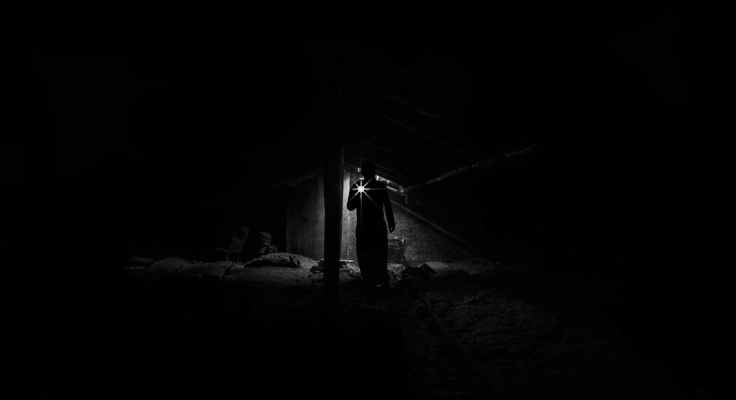
“This little Light of mine–I’m gonna let it shine!
This little Light of mine– I’m gonna let it shine,
Let it shine, Let it shine!”


