TGIF

Ahhh…Friday. End of the work week, beginning of the weekend. Payday, too, for some. For many people, their goal is just to get through Friday at work, and spend time doing whatever they want until they have to return to work on Monday. Of course, some people have to work weekends, and others don’t have a job at all. Some have other responsibilities on the weekends– caring for aging parents, or shuttling kids to ball games; volunteer projects, working on home improvement tasks, or mowing the lawn. But Friday has become such a special day in our culture that we even have a phrase, “Thank God it’s Friday” (TGIF for short). And we have special Fridays–Good Friday (the day of Christ’s crucifixion), and “Black” Friday (the huge shopping day after Thanksgiving). And several movies about Fridays– Freaky Friday, His Girl Friday, Friday Night Lights, and a string of Friday the 13th horror flicks. And most of the associations with Friday are positive, even festive. For some people, Friday is the high point of their week!

Photo by Hamann La on Pexels.com

But what about the other days of the week? Do we thank God for Tuesdays, or Saturdays, or Sundays? Shouldn’t we be grateful every day? God gave us seven days each week, and He even sanctioned one of those days each week for rest and reflection. When Jesus spoke of the concept of a “sabbath,” He made clear that a weekly day of rest was God’s gift to US (Mark 2:27 https://www.biblegateway.com/passage/?search=Mark+2%3A27-28&version=ESV) But every day is a gift– filled with God’s presence and promises, even when it may seem like an endless series of chores, mishaps, and personal failures.

Photo by Polina Zimmerman on Pexels.com

God gives us each day, and whether it is payday, Monday, a “bad-hair” day, or a holiday, every day is an opportunity to live, love, and learn. And every day, we have the privilege and the opportunity to spend time in prayer with our Loving Heavenly Father.

Photo by Andrea Piacquadio on Pexels.com

So, yes, Thank God that it’s Friday today. And use this day (and every day) to honor Him, obey Him, and walk in joy with Him. Tomorrow, Thank God it’s Saturday!


I Will Give You Rest..

I love revisiting the promises of God. But I have to be careful not to make God’s promises into something they are not.

In Matthew 11, Jesus gives a promise– “I will give you rest.” But sometimes, I read more (or less) into this promise than Jesus meant.

28 “Come to me, all you who are weary and burdened, and I will give you rest. 29 Take my yoke upon you and learn from me, for I am gentle and humble in heart, and you will find rest for your souls. 30 For my yoke is easy and my burden is light.”

Matthew 11:28-30 (NIV) via biblegateway.com

First, Jesus bids us come to Him. There are times I want rest, but I want it on my terms– I want ease, comfort, rest, and renewal in the middle of my own plans, activities, and even rebellion. When we pray, we need to come to Jesus, not demand that He come to us.

Photo by Artem Beliaikin on Pexels.com

Next, Jesus offers rest to those who are weary and burdened. Similarly, Jesus said He came to save those who were lost, NOT those who already saw themselves as justified. If I come to Jesus asking for perpetual rest– never willing to trust Him when He asks me to exert myself or carry a burden–I will never know complete rest or fulfillment in Him.

Photo by Garrett Morrow on Pexels.com

In the very next verse, Jesus offers a yoke– certainly not a symbol of rest for most of us!–and He offers to teach us to find rest. Rest is not a gift like grace or love, even though Jesus “gives” it to us. Rest is a reward. And Jesus makes it clear that He will be with us every step of the way as we work and rest in Him. A yoke has many bad connotations– slavery or bondage, burdens, toil, and hard labor in the hot sun–but it can also have a positive meaning. Oxen who are yoked together share the load– with the lead ox taking the brunt of the burden, and the yoke-fellow carrying a lesser share. Imagine one ox trying to pull the load alone! Yet that is what many of us are doing– trying to carry the weight of the world on our shoulders and pushing away the One who wants to share our load and lead us in the best and most restful paths.

We don’t do much work with teams of horses or oxen in my community. We have powerful machines that make quick work of heavy loads– our burdens have less to do with loads of grain or logs, and more to do with mental and emotional stress. But Jesus reminds us that He is “gentle and humble in heart”–that the rest He promises is rest for our souls.

Photo by nappy on Pexels.com

What a wonderful promise in these turbulent times! Will we take up this offer? Will we claim this promise of our Loving Father to share our burdens and bring us to a place of rest?

Your Labor Is Not In Vain…

Have you ever had one of those days…the kind where you wondered if anything you did was important, or acknowledged, or valued?

Photo by Ketut Subiyanto on Pexels.com

My father worked for almost 30 years in a factory. His job (for many of those years) was to stand at the same spot for hours a day. He would fit a large bag over an opening, pull a lever, and guide the bag as it filled with several pounds of anhydrous citric acid– a caustic powder that, in small amounts, is used in everything from cleaning products to soft drinks. When the bag was filled, he had to take it down and move it to another station, where the bag was sealed. Finally, he had to take the sealed bag and hoist it onto a conveyor. It was hot, heavy work. It was lonely, noisy, dusty, and monotonous. He worked a swing shift– sometimes twelve or sixteen hours at a time, often overnight. He often had to work on weekends and holidays. And my father was grateful.

Photo by ELEVATE on Pexels.com

When Dad had a day “off,” he could often be found visiting some of the older members of our community– helping them by mowing their lawns or helping with chores, or just visiting and listening to their worries, memories, and dreams. Dad knew the value of his work, and he knew that his work was not in vain. His work fed and clothed our family. It allowed us to give gifts to family, donate to charities, give to the church, and enjoy vacations and outings with friends. His work helped send my sister and I to college, and pay off the mortgage. But more importantly, my father’s unusual schedule allowed him to come to school programs in the middle of the day; it allowed him to go on day trips with my mother or my grandparents; it made him more aware of the value of time. Dad filled thousands of bags of citric acid– and he never knew where it ended up or how it was used, except in a very general way. But God knew. He saw every grain of acid in every bag. He knew where it would go and what good it could do. And he watched my father’s efforts every day.

1 Corinthians 15:57-58
English Standard Version (Via http://www.biblegateway.com)

57 But thanks be to God, who gives us the victory through our Lord Jesus Christ.

58 Therefore, my beloved brothers, be steadfast, immovable, always abounding in the work of the Lord, knowing that in the Lord your labor is not in vain.

Photo by August de Richelieu on Pexels.com

Today, we are celebrating “Labor Day” in my country– a day to celebrate the contributions of working men and women throughout the year. And many people will have time today to enjoy a trip to the beach or a cookout, or an extra-long camping weekend or late-summer vacation. But some will have to work today– clerks at the local store or gas station, police officers, nurses, factory workers, and others. Their labor today will ensure that others are kept healthy, safe, and supplied. We should not forget them.

Photo by CDC on Pexels.com

And we should not forget to take a moment to remember that our labor– whether glamorous, mundane, urgent, physically intense, or mentally stressful–is noticed and valued by our Father in Heaven. Whatever we do, if we are doing it for God’s glory, we will see fruit from our labors. Maybe not today or even in our lifetime. But our efforts– and our words and interactions– matter! Those prayers that we lift up in a quick moment; those simple gestures and hugs; that small favor or gift; each one is noted and celebrated by none other than the Ruler of all Creation.

Photo by Rahul Pandit on Pexels.com

Prayers for Harvest

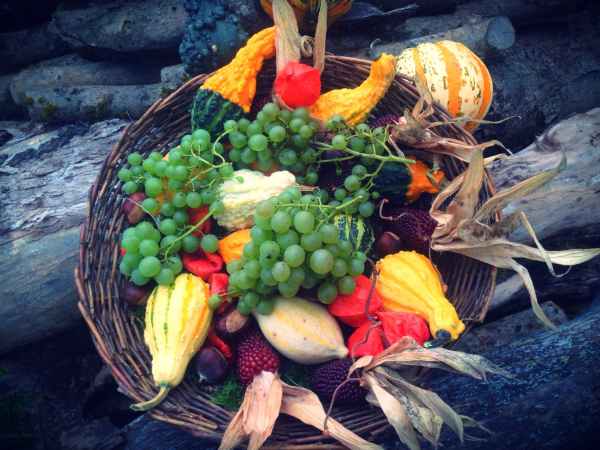
I love the autumn harvest season, and I believe it has many lessons for us about prayer:

  • There is a time and season for harvest. We cannot harvest at our convenience; neither should we expect God’s answers and our circumstances to arrange themselves around our wishes. Instead, as we pray, we should watch and wait, ready to do what is necessary in the meantime, and ready when the time is right for harvest. Too soon or too late, and we will miss the best of the crop, or lose it altogether. If we pray for a harvest, we must be willing to wait on God’s timing.
  • Harvest is a season among other seasons– not a single event. If I pick apples this fall, that is not the end of apples. There will be more apples to harvest next autumn, and the following year. Sometimes, we must wait through several seasons to see the harvest; seasons of rain, sun, even snow and cold dark days. We must be faithful to keep praying for the next harvest, and the next…
Photo by Phuc ( Xù ) Pham on Pexels.com
  • The harvest bears little resemblance to what we planted. If I plant an ugly bulb in the ground this fall, I may see a beautiful tulip next spring–unless I plant an onion bulb! If I plant some tiny black seeds in the spring, I may harvest a large orange carrot later in the summer. If I plant kernels of corn, I will get new kernels, but they will be on an ear on a tall stalk. If we are praying for a harvest, it may come in ways and shapes and circumstances that will surprise, or even mystify us. Often, we pray for what we imagine we could do– instead, we need to learn to ask for what only God can do!
  • We cannot control the harvest– we can plant the seeds, fertilize them, tend them, weed them, water them, prune them–but we cannot predict or guarantee the results. But if we do nothing, we will not see any harvest at all. Similarly, we do not control God’s answers to our prayers, but we will see no growth, no harvest, if we do not pray at all, or if we give up.
  • Harvest is gathering the crop (and the seeds for a new crop). We need to gather prayer requests, thanksgiving lists, areas of conviction, songs of praise; we need to present a bountiful harvest of prayer–an offering and a fragrant sacrifice to the giver of all good things!
Photo by Element5 Digital on Pexels.com

Blog at WordPress.com.

Up ↑