Be Not Afraid

Have you ever anticipated something so wonderful, that, when the time came, you were almost afraid of it? Afraid that the anticipation would exceed the wonder of the actual event? Afraid that the wonder would be eclipsed by some unforeseen tragedy? Afraid that your dreams were too big? That you could never deserve such happiness or blessing?

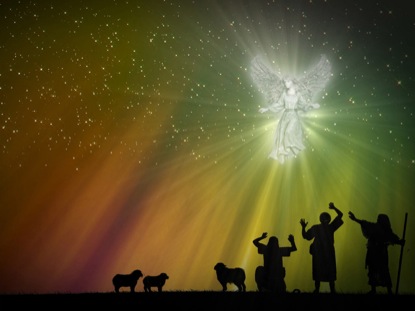
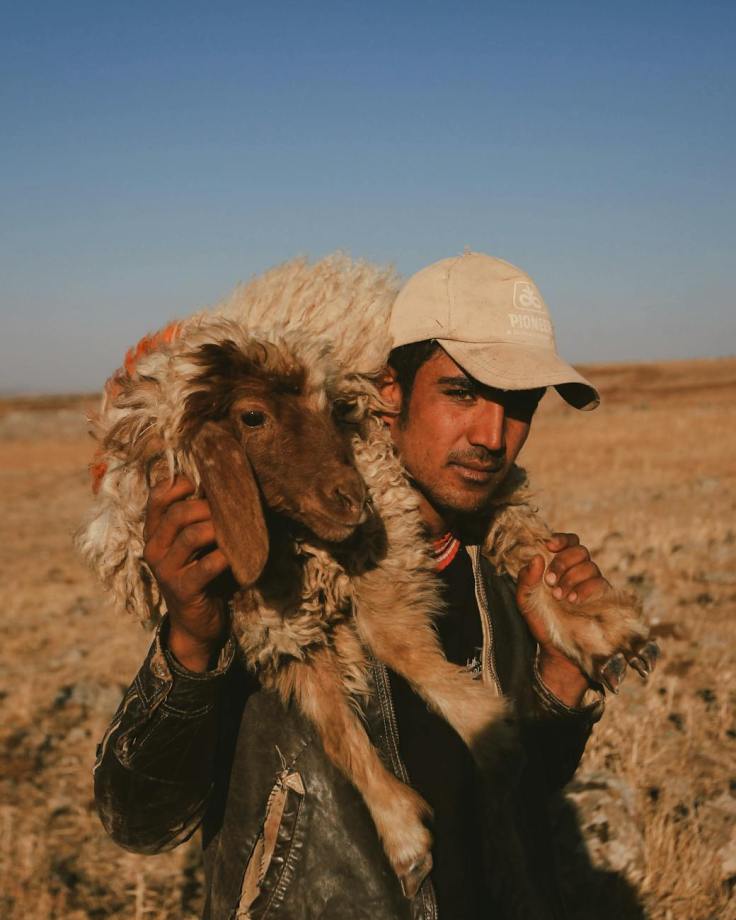
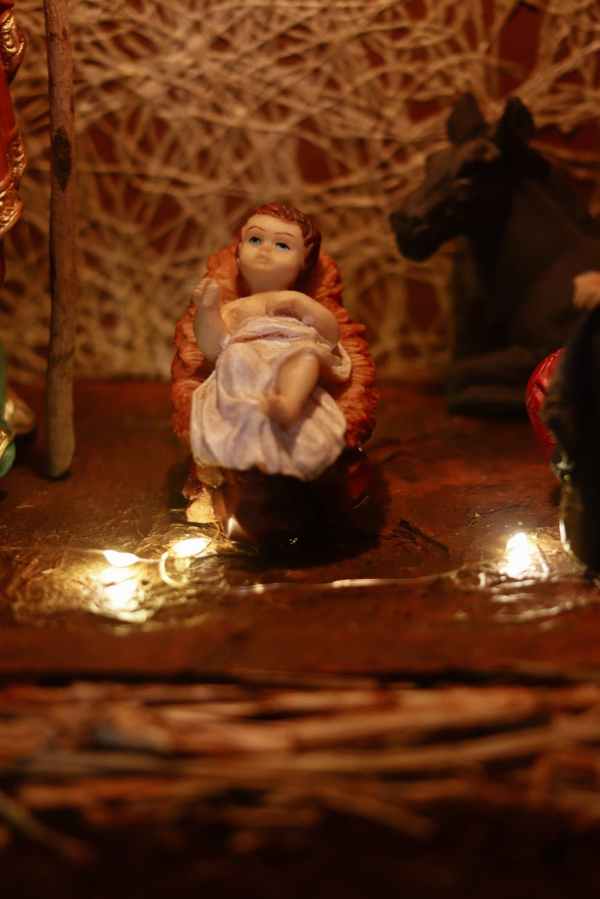
 That night there were shepherds staying in the fields nearby, guarding their flocks of sheep.  Suddenly, an angel of the Lord appeared among them, and the radiance of the Lord’s glory surrounded them. They were terrified– but the angel reassured them. “Don’t be afraid!” he said. “I bring you good news that will bring great joy to all people. The Savior—yes, the Messiah, the Lord—has been born today in Bethlehem, the city of David!  And you will recognize him by this sign: You will find a baby wrapped snugly in strips of cloth, lying in a manger.” Suddenly, the angel was joined by a vast host of others—the armies of heaven—praising God and saying
 “Glory to God in highest heaven,
    and peace on earth to those with whom God is pleased.”
When the angels had returned to heaven, the shepherds said to each other, “Let’s go to Bethlehem! Let’s see this thing that has happened, which the Lord has told us about.” 
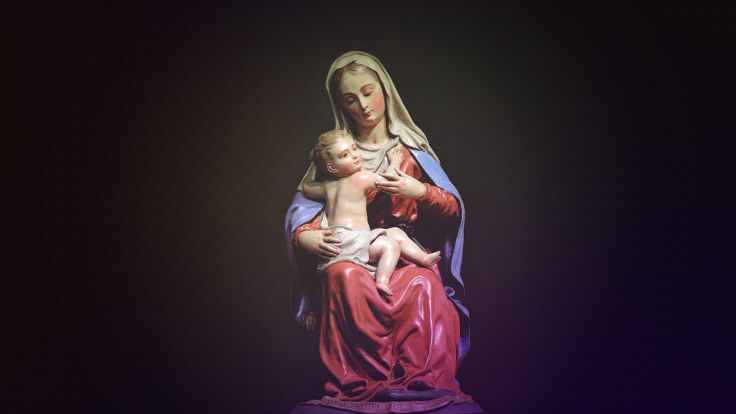
They hurried to the village and found Mary and Joseph. And there was the baby, lying in the manger. After seeing him, the shepherds told everyone what had happened and what the angel had said to them about this child. All who heard the shepherds’ story were astonished, but Mary kept all these things in her heart and thought about them often. The shepherds went back to their flocks, glorifying and praising God for all they had heard and seen. It was just as the angel had told them.” Luke 2:8-20 NLT (Emphasis added)
The shepherds on that first Christmas were terrified– their ordinary night had been shattered by the appearance of an angel of the LORD. And that was only the beginning! The angel announced the birth of Messiah– Christ, the LORD– in the nearby village of Bethlehem. And then an angelic host– a vast army– of angelic beings chose to worship in the skies that, just moments before, had been dark, still, and lonely.

“Fear not!” “Be not afraid!” Through the terror and overwhelming glorious radiance came a calm voice. “I bring good tidings of great joy!” “..shall be to ALL people…” “PEACE on earth!” “Christ is Born!”

The fulfillment of centuries of longing was finally here. The central hope of the entire nation of Israel had arrived. And the angel left no doubt that the shepherds were welcome, even commanded, to GO and see this miracle with their own eyes. The Biblical account says that they did go– but it also says they stopped to discuss it first. They talked it over and decided to face the mixture of thrilling joy and weak-kneed trembling. Could it really be?! The Messiah! Here and now! But…a babe? Wrapped, not in robes of glory, but in swaddling cloths? And…lying in a manger? Surrounded by sheep and donkeys? What if this was a cosmic hoax? What if there was a mistake? Would they be disappointed? Ashamed? Turned away because of their lowly status?

“Be Not Afraid!” The shepherds talked it over. How could they NOT go and see? What if the news was true?! And in going, they became the first ordinary witnesses of the most extraordinary birth in history! They came. They saw. They believed! And they worshipped.

And then, they shared their experience with others. They went back. They probably shared the news first with the sheep, rehearsing how they would spread the fantastic tale to those who still lay sleeping. But they may also have shouted it in the streets, waking up all the neighbors with the joyous news. The Bible doesn’t give us details. But it does tell us that they went back with joy and gladness. And conviction–“It was just as the angel had told them.” Nowhere in the Bible story did they show any more fear. They had no doubt. The wonder of Christ’s birth was everything they had been told to expect, and more!

This Christmas, we look back at the shepherds, and we try to recapture the wonder of that Holy Night, and the visit of the angels, and the discovery of a tiny Savior in a manger. And we will have the opportunity to celebrate, just as the shepherds did.

What will be our response to His coming? Will we spend this season glorifying a praising God? Will we “astonish” our neighbors as we tell about the Savior’s birth, and His subsequent death and resurrection? Will we heed the angel’s calming tones to “Be Not Afraid” as we encounter the Messiah? As we go “back to (our) flocks” and fields and daily life?

I pray that we will “consider well” this Christmas how “our good God” gave us His “beloved Son”– born in a humble manger, willing to die a humiliating death He did not deserve so that we could be free from the curse of Sin and Death. And may we pray for the courage and conviction to live out and speak out the Joy and Glory of His coming!

What Child is This?


What Child is this who, laid to rest
On Mary’s lap is sleeping?
Whom angels greet with anthems sweet,
While shepherds watch are keeping?
This, this is Christ the King,
Whom shepherds guard and angels sing;
Haste, haste, to bring Him laud,
The Babe, the Son of Mary.
Why lies He in such mean estate,
Where ox and ass are feeding?
Good Christians, fear, for sinners here
The silent Word is pleading.
Nails, spear shall pierce Him through,
The cross be borne for me, for you;
Hail, hail the Word made flesh,
The Babe, the Son of Mary.
So bring Him incense, gold, and myrrh,
Come peasant, king to own Him;
The King of kings salvation brings,
Let loving hearts enthrone Him.
Raise, raise a song on high,
The virgin sings her lullaby;
Joy, joy for Christ is born,
The Babe, the Son of Mary.

Words by William C. Dix

No other name in all history elicits such differing and intense responses.  Jesus, the son of Mary
Jesus, the Son of God
Jesus, the Son of Man
Jesus, the Son of David
Jesus, the Christ
Jesus, the Messiah

Who is this child– ruler of the universe,
Laid in a feeding stall,
In a simple stable,
In a small town,
In a captive land?
Son of a carpenter (illegitimate, by some accounts),
In the royal line of David (but so far removed as to be of no account).


Yet angel hosts sing “Gloria!”
Kings and philosophers travel from distant lands for just a glimpse,
Bringing priceless treasures and humbled hearts,
While the beleaguered puppet king of a conquered people 
Prepares to destroy him.

Will he rise to take his place in Herod’s palace?
Will he lead a revolt to free his people from Rome?
Will he bring together rival factions among the priesthood?
Will he …
Die in agony, betrayed and scorned?

This, this is Christ the King;
The Lamb of God.
Savior and Sacrifice.
“The Silent Word”, 
Pleading,
Healing,
Bleeding,
Ascending.
Even in his humble life and
Ignominious death
He rose to change the world–
Stopping time and dividing it into
All that came before and
All that has happened since.

This is Christ the King
Bruised for our sins,
Betrayed by our selfishness
Cheapened by our compromise and corruption.

Bring him incense, gold, and myrrh;
He is more than our tinsel, jingle bells, and platinum charge cards.
He is the King– He is the babe– the son of Mary.
He is the King who will return in all of His Glory!
He is the Christ!

O Come, O Come, Emmanuel!

It is Advent season. We celebrate in four weeks an event that was anticipated for four hundred years! For four centuries, the people of Israel waited for the coming Messiah without ever hearing a word from God. Oh, there were prophecies– some stretching back centuries– that promised he would arrive. But when?!

Imagine praying earnestly for an event that would not happen for another three or four hundred years? Imagine praying into silence for an entire lifetime for an event that even your great-grandchildren would never witness?

We live in a fast world. Fast food, high-speed internet, overnight delivery of packages, instant communication, bullet trains– we have lost the skill of waiting. Yet Advent celebrates the waiting, the anticipation of a birth so amazing and so consequential, that we look back over 2,000 years in wonder!

The birth of Emmanuel was worth the wait. “God With Us” came into the world “at just the right time.” (Galatians 4:4). He was not a moment too early or too late to fulfill all the prophecies and bring Salvation to mankind. Those who prayed faithfully over the centuries may not have lived to see the fulfillment, but they put their hope and trust in the prophets and in the God they served.

We are in another Advent season– we await the return of Christ! We have no way of knowing the exact hour or day (or year or even century) of His return. But with the same wonder and hope of those faithful men and women of old, we should pray for His coming again! We should share the glorious story of His first coming. We should celebrate and worship the Faithfulness of God. He keeps all His promises “at just the right time.”

And as we wait, we must not give up hope or lose our passion for the Mission that Christ left with us. “Go, and make disciples of all nations” (Matthew 28:19-20). As wonderful as Christ’s birth was, it pales in comparison to His triumphant return to judge and rule the earth. May we look back in wonder and forward in joy as we celebrate this season.

What Would Jesus Pray?

Several years ago, it became incredibly fashionable (literally) to wear t-shirts, necklaces, and especially bracelets with the four letters, WWJD– which stood for “What Would Jesus Do?”  This was supposed to serve as a reminder that the wearer was an ambassador of the Kingdom of God, and was supposed to be a follower of Jesus, and thus should act in accordance with what Jesus would do in any given situation.  Stuck in traffic–What would Jesus do?  Presumably, we would not lose his temper, honk and scream obscenities, or rudely try to cut or push others off the road.  Tempted by the scantily clad actors and actresses in a new R-rated movie– What would Jesus do?  Presumably, he would not attend R-rated movies filled with sexual situations in the first place, or, finding himself tempted, he would leave the movie.

I think the intention was good in the beginning– even scriptural in a sense.  The Children of Israel were commanded, in Deuteronomy 6: 8 to “tie them (God’s commandments, laws, and decrees) as symbols on your hands and bind them on your foreheads.  Write them on the door frames of your houses and on your gates.”  Throughout the Bible, the patriarchs, prophets, Jesus, and the apostles, often spoke of keeping God’s Word in our hearts and on our minds as we go through our daily routines.  This short reminder should help us do just that– redirect our thoughts to the One we are to follow.  As far as it achieved that goal, it was a good thing.

The problem is that it didn’t work that way for most people.  The jewelry or the t-shirt didn’t serve as a reminder to the wearer, but as a symbol to everyone else.  “Hey, look at me!  I’m wearing a fashionable accessory with a cryptic message that lets you know that my thoughts and actions represent Jesus here on earth!”  Ironically, Jesus would have been the last person to wear such an item– not only because he wouldn’t have to ask the question (BEING Jesus, and all), but because his focus was on others–Jesus didn’t wear his heart on his sleeve, or his wrist, and he didn’t call attention to his own righteousness.  Instead, he spoke to outcasts, and touched lepers.  He acted in accordance with God’s wishes, not because he had decided what he thought God would want him to do, but because he knew who God wanted him to become.

One of the worst casualties of the WWJD craze is that many people substituted their own wisdom for a study of God’s word– in other words, they imagined what Jesus would (or might) have done, instead of learning and following what he DID.  Of course, Jesus was never stuck in a traffic jam.  But he did face demands on his time, and stressful situations.  He was never tempted by movies or internet porn, but he was surrounded by a culture that had “religious”  “temple” prostitutes, along with sexual immorality not that different from what we see today.  The Bible doesn’t give us a picture of Jesus planning and executing a strategy for specific temptations– it DOES give us specific examples of people over a long period of time who failed or triumphed over temptations, big and small, and of people who turned to God for strength to overcome temptation and grace when they had fallen.  It also gives us a picture of Jesus living a life that was perfectly pleasing to God– including a life of prayer.

What would Jesus pray?  Look at John 17.  Look at Luke 11:1-4 or Luke 22: 39-48.  Look at Mark 14: 32-42.  There are many examples of Jesus’ prayers– prayers that pour out his heart to his Father– in faith, in pain, in grief, and in hope.  In fact, it would be appropriate to say in answer to the question, “What would Jesus do?”– Jesus would take it to God in Prayer! Look at the way He taught His disciples to pray:

“And when you pray, do not be like the hypocrites, for they love to pray standing in the synagogues and on the street corners to be seen by others. Truly I tell you, they have received their reward in full. But when you pray, go into your room, close the door and pray to your Father, who is unseen. Then your Father, who sees what is done in secret, will reward you. And when you pray, do not keep on babbling like pagans, for they think they will be heard because of their many words. Do not be like them, for your Father knows what you need before you ask him.
“This, then, is how you should pray:

“‘Our Father in heaven,
hallowed be your name,
your kingdom come,
your will be done,
    on earth as it is in heaven.
Give us today our daily bread.
And forgive us our debts,
    as we also have forgiven our debtors.
And lead us not into temptation,
    but deliver us from the evil one.
For if you forgive other people when they sin against you, your heavenly Father will also forgive you. But if you do not forgive others their sins, your Father will not forgive your sins. (Matthew 6:5-15 NIV)

Jesus did not ask the Father to give His disciples a blueprint of “Holy” activities or attitudes. He asked for fundamentals– that God’s Kingdom would come; that God would meet our daily needs; that God would forgive us as we forgive others; and that God would steer us away from temptations and evil. For everything else, Jesus directed His disciples to DO what He did, not ask what He would do. Reach out to those who are needy and hurting with love and practical help. Forgive. Tell the Truth. Worship God above all else, and go to Him in prayer.

Jesus didn’t come to earth and live his life to make us great, or successful, powerful or popular by the world’s standards.  He came to seek and to save those who were lost.  He asks us to do the same– not in our own strength or success, but in the overflow of the grace and power he has poured into us.  T-shirts and jewelry are nice, but Jesus used his life–his time, his love, his talents, his words and his actions in accordance with God’s will and God’s wise commands to bring people to himself.  Then he did what none of us could do– he fulfilled God’s law, becoming the perfect sacrifice for our sins, and conquering Sin and death.  What would Jesus do?  He DID IT!  It is FINISHED!  Our part is not to do what only God can do, but to what he has asked of us and trust him to do the rest.

bow down

This is also true in our pursuit of prayer.  I often get side-tracked in wondering if my prayers match up to what Jesus might have prayed in the same situation– and that shouldn’t be my immediate focus.  Prayer is, as I have to keep reminding myself, a pursuit.  It is a process and a journey, and an ongoing, deepening conversation with the one who loves me best.  And it is not a one-sided conversation– God answers my prayers, not just by meeting immediate needs or changing circumstances.  He speaks through his law, through the Psalms and prophets, through the Gospels and the Epistles, and through the godly wisdom of friends and counselors and ministers of his Grace.  And in doing so, he teaches me to pray.

May I stop worrying so much about the length or the style or the “worthiness” of my prayers.  May I instead listen, and learn, and continue the pursuit.

Coming Home

people taking group hug

It’s homecoming season–in small towns around the area, high school football stadiums are being turned into parade grounds as students decorate floats, dress up, rally, and prepare for a chilly Friday night game.  Hot cider, coffee, or cocoa, hot dogs, caramel apples, donuts; hats, scarves, and sweatshirts with team logos; scores of alumni in the stands to cheer on the home team and share memories of years gone by.  Young and old will cheer themselves hoarse hoping for a victory, and the band will play fight songs, as the cheerleaders jump and shout with all their might.  Fans will argue the calls of the refs, and discuss the plays and players.  Some eyes will be glued to the action on the field, while others will be looking around for familiar faces, and greeting old friends.

cheering squad on football field

Some people are more “into” sports than others, but there is a contagious excitement on Homecoming night for almost anyone.  People are stirred up; pulses are racing, hope and anticipation run high. It’s exciting. It’s cheerful. Unity, joy and energy pulsate from the stands.

What happens on Friday night should be what happens on Sunday mornings…

iphone conference keynote smartphone

Do we “come home” to church with an air of excitement and anticipation?  Do we expect victory?  Are we eagerly looking for faces in the crowd?  Discussing the “action on the field” of spiritual warfare?  Do we pray with the same enthusiasm as we use to cheer on a high school football team?  Do we even know the other members of our team?  Or have we stopped showing up for the game, expecting defeat and shame, or shrugging our shoulders– “After all, it’s just a game…” Right?

How many times have I gone to church grudgingly–tired, uninspired, out of a sense of duty, rather than with excitement and anticipation? What a difference when I see church as a battleground in God’s war over Sin and Death! When it is a privilege to worship the eternal Victory of Christ, it takes on an energy and excitement that makes me eager to greet other worshippers and fellow soldiers of the Cross. When I know that the Holy Spirit inhabits the praises of His People, I want to be part of that crowd.

agriculture architecture building church

Recently, a church in my home state was attacked. A man drove his vehicle into the church, fired several shots, and set the church on fire. It was horrific. But it was a futile act of defiance and hatred. Not because no one was hurt– several were hurt and some died. Not because it was unsuccessful– although the man had planned to be much more destructive. Not because it was an isolated incident: church attacks have been taking place for decades, and they are becoming more frequent around the world. It was futile because Christ has already won the ultimate and eternal victory over Evil.

Being a Christian is not “just a game.” It is a battlefield. And it can be dangerous and discouraging. But it is also vital and consequential– every day. Going to church should be much more exciting and important than going to a local sporting match. And no one “sits the bench” on a battlefield. We may be called to wait, or called to serve away from the battle lines, but we are all part of, not just a team, but a family.

Going to church is a weekly “homecoming” that should offer a glimpse of a much greater Homecoming– in Heaven!

Our Father

Dad.  Daddy.  Pops.  Papi.  Da.  Father.

During my youngest years, I called my father “Daddy.”  Daddy was someone to hold me when I was tired, or frightened, or just in need of a hug.  Daddy had all the answers; he could turn my tears into giggles, my pouts into apologies.  His stern word could melt away rebellion; his smile could fill my heart to bursting.

As I grew older, he became “Dad.”  Dad was wise.  Dad gave good advise– even when I didn’t always take it.  Dad listened and showed interest in what I said.  Dad challenged me to do better, think deeper, try harder, and work smarter.  Dad didn’t pick me up and carry me, but he was there beside me when I needed someone to lean on or lend a hand.  Dad was my coach and advocate.

grace1

As an adult, Dad sometimes became “Pa.”  Pa was someone who had “been there”.  He had experience, and wisdom.  He had patience and compassion.  But his days of coaching and propping me up were fewer; his days of sharing his own faults, his unfulfilled dreams, his regrets–commiserating rather than commanding– grew more and became more precious to me.  He was still my father, but he was also my friend– a fellow traveler on this road; one I knew well and loved dearly.  One I respected and trusted, even though he was not perfect.

I was blessed to have a father who was good and kind; a man of integrity and humor; a man who loved his family more than life, loved his neighbors, his community, music, nature, animals, and good food.  Most of all, he loved God.  Not with fire and brimstone fanaticism, but with humble astonishment that God would send his son to die for him.  He lived in the wonder of that truth– that “whosoever believeth (in him) should not perish, but have eternal life” included him.

I say all this, not just to honor my earthly father, or to thank my heavenly father for that relationship, but to point out how prayer is often a reflection of how we view fatherhood.  Some people have a difficult time praying and trusting God because they have never known an earthly father; or they’ve only known earthly fathers who were distant, unapproachable, or abusive.  If this is the case for you, may I encourage you to ask God to reveal himself in a fresh way, with a name and vision that is personal and distinct from the earthly father you have known.  Some people view God as “Daddy”–someone who fixes everything, holds us close, and keeps us safe.  And he is all those things.  But he is also “Dad” who wants to challenge us and coach us to grow and develop our character.  He is “Abba”, and “Senor”, “Lord,” and “Father” and “Papa”.  He is not “Pa” in the sense I knew my father, in that we are not his peers when we reach adulthood.  He has no faults to share, no regrets.  But he wants to share that precious intimacy that comes with time and familiarity–he wants us to develop trust and love as we get to know him better, however we call him.

superdad

There is one clear difference between God and any of our earthly parents– God is GOD– he is the creator and ruler of galaxies, and of microcosms,  omnipotent and omniscient, omnipresent and eternal, holy and sovereign.

And when I pray, I pray to him– almighty King of Kings– and my Father!

The Hand of God

We’ve been going through the book of Daniel. King Nebuchadnezzar played a prominent role in chapters one through four, but he suddenly disappears from the narrative, and a distant successor, Belshazzar, comes to prominence for the space of a single chapter. https://www.biblegateway.com/passage/?search=Daniel+5&version=ESV

The Book of Daniel is a series of stories, disjointed, and filled with signs and wonders. Many scholars and critics over the years have suggested that these stories cannot be true; that they are legends created centuries later and added as Jewish propaganda. The story of Belshazzar in chapter five was a perfect example, they claimed. There was no written evidence for the kingship of Belshazzar. The last king of Babylon was a man named Nabonidus, so how is it that this story assumes that Belshazzar was the king giving a feast on the very night Darius would invade and conquer the empire? Recent discoveries, however, show that Daniel is more accurate in detail than the ancient historians, who were writing about the “big picture.” (For more explanation, visit this site: https://creation.com/archaeology-belshazzar). Belshazzar would have been the ruler/crown prince/regent of Babylon on that night. Not only that, he would have been young, spoiled, and eager to establish his own authority and prominence. This fits with the actions and reactions of these two men–the fact that Belshazzar would casually raid the storehouses for golden goblets that had been untouched in the days of his more powerful predecessor; that he could only offer Daniel the position of “third highest ruler”; the fact that, while Daniel is not contemptuous, he shows less deference to this “king” than he did to Nebuchadnezzar. In fact, he refers more to the glories of Nebuchadnezzar and the judgments of God than he does to the current state of Babylon or ANY of its other rulers.

There is a huge time gap between the earlier chapters and this one. Nebuchadnezzar’s reign was long; his son and grandson reigned after him (though both their reigns were much shorter). Belshazzar’s father, Nabonidus, reigned for over 15 years before losing the empire. The young Daniel of chapters one and two is now likely to be in his 70s or 80s! He has served faithfully under at least five rulers, but he is still considered an “exile” (see verse 13 of chap. 5), a foreigner, and a captive. In Daniel’s life of faith, service, and prayer, he has seen the “hand of God” working in his life and in the lives of those around him. Daniel has learned to trust in God’s provision, to submit to God’s direction, and to wait expectantly for God’s wisdom.

Belshazzar is terrified of the “Hand of God” as it writes on the wall of his father’s royal palace. He is the son of privilege and mysticism–the Babylonians were known for using signs and wonders to plan campaigns, seek power and wealth, and predict success. Their gods were capricious and full of wrath. But Belshazzar had never been visited by the God of the Universe. He had never taken the time to “number his days”, or consider his ultimate destiny.

Compare the judgment of God against Belshazzar (Mene, Mene, Tekel, Peres–God has numbered the days of your reign and brought it to an end; you have been weighed in the scales and found wanting; your kingdom is divided and given to the Medes and Persians) with this psalm of Moses (Psalm 90) https://www.biblegateway.com/passage/?search=Psalm+90&version=NIV. Two take-away points:

  • Belshazzar’s days were numbered and he was found wanting. Daniel’s days were numbered, too. Daniel waited years, living as an exile and second-class citizen, serving kings and powers who ignored, or even scorned his God. Daniel’s life was prolonged, yet he continued to serve with no freedom or personal reward in sight. And his trials and oppression are not over yet! (There is a den of lions in Daniel’s future!) But God doesn’t look at our lives in terms of power, success, wealth, health, position, or another outward factor. God sees the small acts of service, the daily discipline of worship, the humble trust and dependence we place in Him. Daniel’s story has not been about accomplishment. Daniel never built anything; he never accumulated anything; he never preached mighty sermons or wrote beautiful songs of worship. And even though God used him to solve riddles, interpret dreams, and prophesy, Daniel had nothing to put on a scale. Yet he was not found wanting, as Belshazzar was.
  • Daniel was not afraid of the Hand of God because he had learned to number his own days (See Psalm 90: 12-17), and he was able to gain wisdom, satisfaction, peace, and hope in knowing that the Lord God would establish even the smallest works of Daniel’s hands and make him glad for as many days as he had been afflicted. May we pray for, praise, and pursue the Hand of God in our lives today.

Green Eggs and Prayer?

Have you ever read the Dr. Seuss classic, “Green Eggs and Ham”? In this early childhood reader, the narrator (nameless) is accosted by an enthusiastic character named Sam (Sam I Am), who wants him to try a dish called green eggs and ham. But the narrator refuses. Sam keeps offering, but the narrator continues to refuse, saying he does not like green eggs and ham, and will not try them under a variety of circumstances (in a box, with a fox, on a train, in the rain, etc..) offered by the optimistic Sam.

Finally, Sam’s persistence wears down the narrator’s resistance, and he agrees to try the dish. To his surprise, he LOVES them. In his newfound enthusiasm, he declares he WILL eat them in a box, with a fox, in a tree, in a boat, with a goat, on a train, in the rain, here or there…in fact, he WILL eat them anywhere! He ends by thanking Sam.

So what does a children’s book have to do with prayer?

Well, I believe that the pursuit of prayer as an integral part of living a Christ-like lifestyle is kind of like green eggs and ham. Most people who dismiss the power of prayer have never really pursued it. They have seen it, heard about it– maybe even gotten a whiff of it. They may have “sampled” prayer many years ago as a child or in a single moment of desperation. And the result was disappointment or confusion. Prayer didn’t solve all their problems in an instant. They didn’t get the miracle they hoped for. They didn’t get the bike for Christmas. Their neighbor’s leukemia wasn’t cured. Their situation at work got even worse. Their wife still left and filed for divorce. “Prayer” left a bad taste in their mouth. And they have heard others dismiss prayer and faith as obsolete, ignorant practices, designed for backward and unenlightened people. Like the slightly nauseating color of green eggs and ham, prayer has been deemed unappetizing and best avoided.

And now, when someone mentions a lifestyle of prayer– when someone talks about praying as a daily habit, or a natural part of their worship–the reaction is scorn and suspicion. Prayer doesn’t look powerful. It doesn’t look appetizing. How can something so simple and tame have any effect? Why is the world still suffering so much injustice and evil if there are people out there praying every day? And why do Christians (and others with a prayer tradition) cling to prayer as though it will solve life’s problems?

But prayer, like eggs, can have a bad reputation. For years, we were told that eggs were awful for you– high in protein, yes, but also high in cholesterol, and likely to contribute to diabetes and colon cancer. Recent studies contradict each other, but many now say that eggs are actually good for you. Similarly, during times of crises or disasters, prayer is often derided as inactive and ineffective, and we get mixed messages about people who offer to pray for victims and their families.

Recently, I was challenged about my pursuit of prayer. What good does my prayer do in the face of injustice and disease, death and suffering that people experience? Why do I pray to a God that allows bad things to happen? I have been challenged before, and my answer remains the same. I pray because I have known the peace that comes from trusting God’s wisdom, HIS timing, and His Love for each of us. I don’t have answers for all the “what-ifs” or the “whys.” But I continue to trust that God DOES! And daily prayer is not about “me,” or my questions or what I wish for. It’s about communing with the God who has been faithful all my life and continues to be faithful in every season. The God I love, and the God who knows the end from the beginning.

So what if more of us prayed daily– not just as a reaction to disasters– but pro-actively? What if we prayed, not in anger or bitterness, not transactionally, expecting a particular outcome, but with gratitude for who God is, what He has already done, and what He will choose to do in His loving sovereignty? What if we prayed with open minds and hearts, trusting that we are talking to a God who loves us and knows what is best, not just in the temporary, but in the eternal scope of our lives? We would still see evil in this fallen world, but what if our prayers DO make a difference– we just don’t see the whole scope of what God has provided, or the evil He has NOT allowed to touch us?

I speak as one who has pursued prayer for more than half a century. I’m not perfect. Sometimes, I get frustrated when my desires don’t align with God’s answers. But that’s not the fault of Prayer. Prayer DOES change things– maybe not instantly, and maybe not in the ways I imagine in the short term– but I have seen and experienced the power of prayer. I have felt it in my own life, and I have seen in in studying history and talking to people whose lives were radically transformed by their prayers and the prayers of others.

Philippians 4: 6 says: “Do not be anxious about anything, but in every situation, by prayer and petition, with thanksgiving, present your requests to God.” After this, Paul promises in verses 7 and 8 “And the peace of God, which surpasses all understanding, will guard your hearts and minds through Christ Jesus. Finally, brethren, whatever things are true, whatever things are noble, whatever things are just, whatever things are pure, whatever things are lovely, whatever things are of good report, if there is any virtue and if there is anything praiseworthy—meditate on these things.” (taken from the King James Bible online).

In every situation, we can pray. So, to paraphrase Sam I Am, I WILL pray here and there! I will pray most anywhere (except I won’t close my eyes if I am driving!) So to end:

“I’ll be praying in a boat,
I could be praying with a goat.
I may be praying in the rain.
Or in the dark. Or on a train.

And in a car (eyes open of course). And in a tree.
Because Prayer, it is so good, you see!


So I would still pray in a box.
And I would still pray with a fox.
I will pray inside my house.
And I will pray beside a mouse.

And I will write “Pursuing Prayer”
Because I serve a Lord who Cares!

What if we all had the same enthusiasm for prayer as Sam had about Green Eggs and Ham? What if we keep praying “without ceasing” (1 Thessalonians 5:17) and with confidence (1 John 5:14-15) each day?

“Try it! Try it!”

You’ll be so glad you did.

The “Fake” Good News

I keep hearing about, and seeing reports of “Fake” News.  Even the term “Fake” News is somewhat misleading–is it news?  Is it False News?  Is it “fake” because it never happened, or because it has been exaggerated or taken out of context?  Or because it doesn’t say what I want it to say?  How do I know what is “real” news anymore?

The biggest problem with “Fake” news is that it “feels” real, true, and important.  In reality, it may be none of those things.  Yet there if often a kernel of fact, or a dusting of truth that makes it hard to disprove or dispel.  And, if it had already been accepted as legitimate news by thousands, it’s even harder to stop it from being spread.

But the more insidious problem with “fake” news is the time wasted trying to sort truth from fiction, and plain fact from exaggeration and distortion.  If my friend sends me an article, or a video, or a photo, I may accept it as true on the strength of my friendship.  But what if they’re just passing it on from another source?  What if I see it from a recognized news source?  Do I dare question it?  And if so, where do I turn to verify it?  There are several fact-checking websites, but even they have biases that cause them to weigh facts differently in various situations.  Whatever assumptions we used to hold about “neutral” reporting have been proved wrong.  We are being conditioned to trust none of what we hear and less than half of what we see!

pexels-photo-256868.jpeg

What about the “Good” News that Christians carry into the world?  Is it like the “Fake” news we see on TV or read about on our tablets?  And if someone challenges our faith in God’s word, how can we prove that the Gospel is not “Fake”, and that our Faith is not just more hype with smoke and mirrors?  If we are pursuing prayer, shouldn’t we be confident that our prayers are not in vain and that our faith is sound?

The claim of “Fake” news makes an assumption that there is such a thing as “True” news.  Similarly, saying the Gospel is “Fake” assumes that there is an alternate truth.  But the real burden of proof is on those who want to push for the alternative.  The truths of the Bible have been time-tested, and shown to be real.  The challenges I hear most often are to the exceptions, not the rule.  I don’t hear anyone saying that “Thou shalt not steal” is a “fake” morality.  Instead, I hear that, “Christianity is fake because I know Christians who cheat and steal.”  I don’t hear people claim that “it is not morally wrong to kill.”  Instead I hear them justify exceptions.  “I’m not promoting abortion as a good thing.  I don’t think it’s right to kill another human being, but this is just a fetus, and anyway, I’m just protecting a woman’s right to her own body.”  “I don’t think it’s ethical to force someone to stay alive if they are in pain and they want to die.”  “You can’t go around just killing anybody, but I think it would be better for everyone else if ___________________ (insert the name of a group– Down’s Syndrome children, Jews, Sunnis, Hutu/Tutsi) didn’t exist.”  “I don’t believe the morals found in the Bible are wrong.  I just don’t think you need to believe the rest of it to “be moral.”

People point to single passages, single verses, even single words to “prove” that the Bible is racist, sexist,  intolerant, and promotes violence.  The Bible includes many examples of people NOT following God’s laws, and yes, the results are grisly.  And there are difficult passages when God calls for a wicked city to be destroyed completely.  Critics are not wrong to point out that the Bible is not about perfect people behaving perfectly.  And the same Loving God who frees the slaves from Egypt is the God who destroys Jericho, and Sodom and Gomorrah.  Taken out of context, these few examples may seem to cast doubt on the authority of God’s word.  Yet the same critics who pound away at the same few examples in the Bible discount hundreds of instances of  historical events that highlight human sacrifice, genocide, mass infanticide, slavery, torture, and all sorts of other evil that occurred without the Bible’s influence.  Moreover, I hear a lot about claims against “Christians” who fought in the Crusades or owned slaves–I hear a lot less about Christians who worked to end slavery and the slave trade, or Christians who founded universities, charitable institutions, or brought revivals that sparked decades of social progress throughout countries and continents.

pexels-photo-305530.jpeg mlkjr

I don’t hear many people claim that there was no such person as Abraham, or King David, or Solomon, or Nebuchadnezzar, or Pontius Pilate or Caesar Augustus.  But they want to deny the historical reality of Adam and Eve, Jesus of Nazareth, and the Apostle Paul, who are found in the same Bible.  Why?  Because if Adam and Eve are real, there must be a creation and a creator.  If Jesus really lived and said the things that are attributed to him, we must deal with the claim that he was Messiah.  If the Apostle Paul really lived and wrote his letters to the churches of Asia Minor, we must deal with his claim that he encountered the risen Christ and his life was dramatically and eternally changed.

However, there is a “Fake” gospel– Good news that doesn’t match the Biblical account–a “Fake” Christ that only said or did or “would do” what we want him to say or do; a Christ that isn’t holy or righteous, but just loves us because it’s the “zen” thing to do; a Christ who is without power to save or to sanctify; a Christ who is without mercy and loves only those who look the part or say the right things.  How do you spot a “Fake” Christ and a “Fake” Gospel?  Get to know the real ones of the Bible.  You’ll soon be able to spot an “imposter.”

“Fake” News will always fail the test of time and the challenges of real evidence.  Good News will transcend the test of time and the challenges of faulty evidence.

person-clinic-cross-religion-54333.jpeg

Christ Has Died, Christ Is Risen, Christ Will Come Again!  THAT’s the Good News!


God’s Mighty Right Hand

“Your right hand, O Lord, glorious in power, your right hand, O Lord, shatters the enemy.” – Exodus 15:6

“You give me your shield of victory, and your right hand sustains me; you stoop down to make me great.” – Psalm 18:35

“So do not fear, for I am with you; do not be dismayed, for I am your God. I will strengthen you and help you; I will uphold you with my righteous right hand.” – Isaiah 41:10

There are many verses in the Bible about the mighty right hand of God. God’s might and power, His authority and sovereignty are all represented by his “right hand.” It is His right hand that protects us, upholds us, and gives us victory over the Enemy. God’s right hand spread out the heavens, and rules over the stars.

Today, I was thinking about one of my favorite movies– The Princess Bride. In one scene, two mighty swordsmen are fighting a duel. They are fighting with all their might, but they are evenly matched, and neither one is winning. Then, with a flourish, the challenger moves the sword from his left hand (which he had been using) and confesses that he is really right-handed. To his surprise, his opponent does the same! Each man has been fighting with his “lesser” hand, giving his opponent a (supposed) advantage. The fight continues with a similar ferocity. The two opponents later become allies in finding and saving the Princess.

So what if God fought for us with His left hand? What if (and I suppose He is) God is ambidextrous? God could defeat the enemy blindfolded and with one arm tied behind His back! Yet God assures us that His protection and provision are never second-best. If we suffer the attacks of the enemy, it is NEVER because God just didn’t fight hard enough, or that He didn’t have the means to win that battle. He doesn’t send in a junior varsity team of Angels to fight on our behalf. He doesn’t call a “time out” in the middle of fighting to catch His breath or re-evaluate His strategy.

God’s “Mighty Right Hand” isn’t just a metaphor for super-human physical power. He isn’t a muscle-bound hero in a comic book or legend. His mighty right hand is not an eternal fist. God is the One who holds the entire universe in His Hand. It is open. He doesn’t hold us in a choking grip; He holds us in the same gentle hands that hold a newborn chick or a delicate snowflake. God’s mighty right hand is also our safe haven. God’s hand guides and directs, as well.

God IS powerful and sovereign. He could choose to use His mighty right hand to squash us, or pound us into dust. He could hold us in a suffocating grip. But God’s mighty right hand is always directed by His LOVE. His Love cradles us, defends us, lifts us up, encourages us, works alongside us, and welcomes us into His arms!

For more about God’s Mighty Right Hand, see https://explainingthebible.com/bible-verses-about-right-hand/

Blog at WordPress.com.

Up ↑