Persistent Prayer

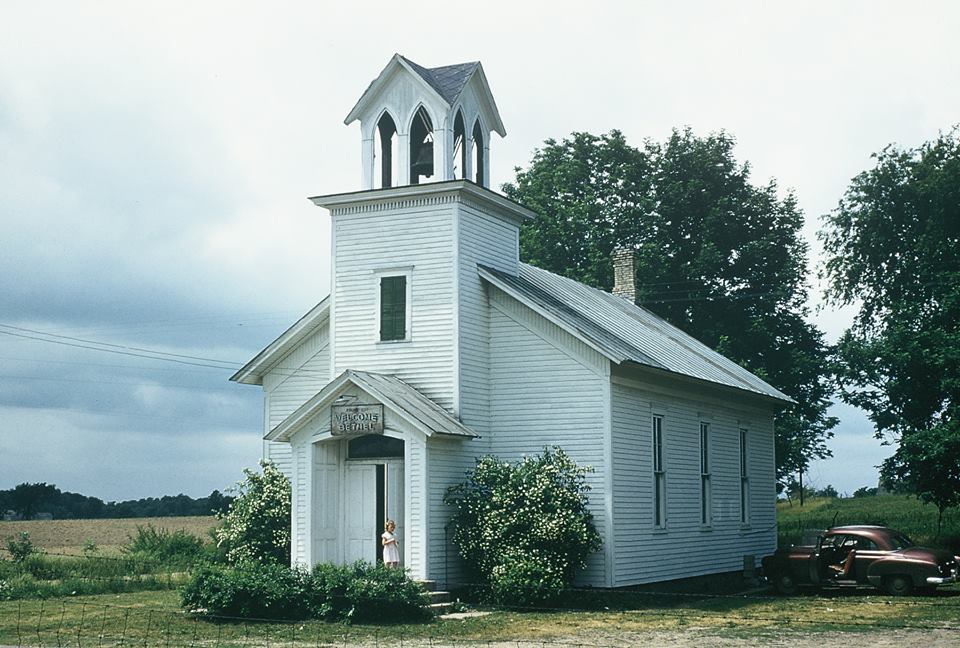
BethelchurchI grew up attending a tiny country church numbering only a few families.  Church was not just a place to visit for coffee and a sermon on Sunday morning.  There were no large screens, no light shows, no bands, no padded theater seats.  What we didn’t have in the way of amenities, we made up for with fellowship– pot lucks,  church-wide outings, bake sales to raise money for missionaries, and community-wide Christmas caroling every December.  We didn’t have a big budget or slick publications.  There was no website or gym; no trendy decor in the entryway, or sound system–we didn’t even have an indoor bathroom until I was about 6 years old!


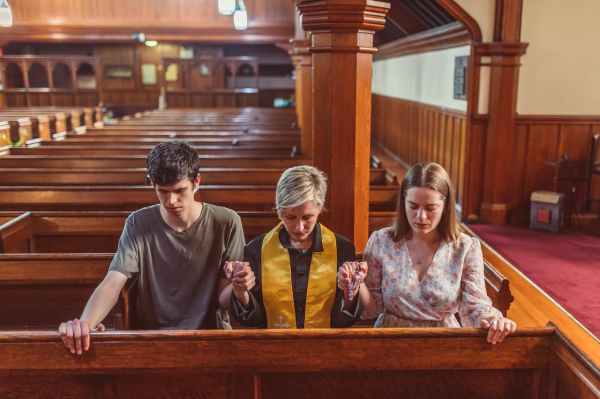
  But there was prayer– lots of it!  Prayer to open Sunday School; prayer to open the service; prayer at the end of Sunday service; and Wednesday Evening Prayer Meeting.  This was, for the children, an evening of games, singing, stories, and socializing with our friends, all in the church basement (painted cinder block walls, industrial fluorescent lights hanging down from beams to light up folding tables and metal folding chairs on the bare cement floor, which was sometimes home to spiders, toads and even the occasional salamander).  But upstairs, it was all business.  An hour of adults in the community coming together to pour their hearts out to God.

As I became a teen, I “graduated” to the upstairs–to a young teen it seemed an interminably long and slow process of sharing requests, sharing praises, and taking turns mumbling and rambling and regurgitating all that had come before, this time with eyes closed, and some of the old-timers on their knees instead sitting in the un-padded and creaky wooden pews.  Sometimes, there would be two or three hymns or a short devotional to round out the hour-long service.

I know there are churches that still have mid-week (usually Wednesday night) services, and some of them are devoted to corporate prayer  (my current church has one, in fact).  But most of these services have died out– due, I suspect, to the view I described above.  Very few of us are devoted to getting out one night every week to spend an hour kneeling on a hard floor “sharing” needs with others, only to repeat them to God.  But I think somewhere we missed the point, and the value, of these gatherings.  In going to Prayer Meeting, I got to hear the hearts of three generations of people across our community– farmers, construction workers, teachers, retired grandfathers, teens like me, pastors, recovering alcoholics, homemakers, business men and women–people with wildly different struggles, triumphs, and needs, and in different stages of their Christian walk.  I heard the exuberance of new converts, and the steady faith of aging saints; the struggles of the brokenhearted widower, and the needs of new parents.

Perhaps the most valuable lesson from Prayer Meeting was about persistent prayer.  Week after week we reported answered prayers, but other requests seemed to linger.  Some who desired healing never found it (in this life).  Some relationships were never restored.  Some faced the same struggles with anger, or job loss, or loneliness over a period of months.  Was our prayer ineffective, or our faith deficient?  Did God not hear?  Didn’t he care?

I believe God heard every word; every groan, every sigh.  I believe he ached with every burden we brought before his throne.  I believe he was (and is) in the midst of every gathering.  And I believe that prayer is often like those conversations we have with our oldest and dearest friends about those same persistent problems.  God has the power to deliver us without the struggle, without the wait.  We don’t know why he allows some struggles to play out over years while others end in timely triumph.  But I believe that for every situation that challenges our faith and endurance, he is there for every tear, every question, every ‘SMH’ moment, every stumbling step forward.  And when we come together to share the burden with our neighbors, family, friends in fervent prayer– God is present, not just as the Father on his throne, but as the Son who cried out on his knees in the Garden of Gethsemane, and the Spirit who interprets our groaning when words are not enough.

I say a lot of quick prayers; sometimes urgent, and often simplistic and even easy prayers.  I am slowly rediscovering the value of persistent  and corporate prayer.


What’s That Smell?!

Years ago, when I worked in a public library, one of my jobs was to help empty the book drop. Most libraries have a large receptacle outside the building where people can drop off their books after hours. We had a “drive up” drop box, and the large bins would get full– especially over a holiday weekend! It was important to empty them out and get the books checked back in– and to check for damage.

I was always amazed at the state of some of our returned books. We were located near several beaches along Lake Michigan, and many of our books would return with sand trapped in the plastic covering (and between the pages) of many books. Some books came back with torn or dog-eared pages. Some had been marked with pens, crayons, or markers. Some books came back with unusual “bookmarks,” including utility bills, photos, letters, and even credit cards and drivers’ licenses!

But the worst one I can remember happened on a Tuesday morning after Labor Day weekend. There was a plastic shopping bag, tightly knotted at the top, containing two books. And it smelled HORRIBLE. It smelled like swamp water and mildew and dead animal! Inside, the two books were not just mildewed– they had mold growing in them. The books were almost a month overdue, but they were damaged beyond all repair, and I needed to call the borrower to let them know we would be charging a book replacement fee.

The story came out– I talked to the mother. Her daughter had taken library books to Summer Camp, and they had gotten wet after a rainstorm. Not wanting her clothes or other items to get wet, the girl had placed the books in the plastic bag. Summer Camp ended, and she packed everything–including the still-damp books inside the shopping bag– and brought them home. Somehow, the bag with the books ended up under her daughter’s bed, where they stayed for three more weeks! In the meantime, the mother had received an overdue notice from the library and couldn’t find the books. Certain that they had been returned, she had called the library to complain about “our” mistake. Several staff members had combed the shelves, trying to find the missing books, but hadn’t seen them.

Summer was coming to an end, and the girl in question was cleaning her room, which had begun to smell. She found the bag with her two missing library books– the source of the smell. Totally embarrassed, the mother brought the bag to the library book drop and threw it in, so she wouldn’t have to face us in person. She apologized profusely over the phone, and happily agreed to pay the replacement fee the next time she came in.

What does all of this have to do with prayer and worship?

Well, it’s a long and winding story, but here is my thought process today: It’s getting ready to rain. We have a small leak, and a bucket that catches the rainwater in our hallway. Water that drips into the bucket and stands for a few days will get fetid. That got me thinking about living water. Living water is described throughout the Bible– and it is always moving– flowing, rolling, gushing, pouring, etc., which reminded me of a verse in the book of Amos–“But let justice roll on like a river, righteousness like a never-failing stream” Amos 5:24 (NIV). But as I was looking at this verse in context, I was arrested by the verses just above–Amos 5:21-25 “I hate, I despise your religious festivals; your assemblies are a stench to me. Even though you bring me burnt offerings and grain offerings, I will not accept them. Though you bring choice fellowship offerings, I will have no regard for them. Away with the noise of your songs! I will not listen to the music of your harps. But let justice roll on like a river, righteousness like a never-failing stream!” (emphasis added).

God isn’t just mildly offended when we neglect justice, obedience, compassion, and truth. He calls the empty festivals of the wayward Israelites a “stench”– a nose-twisting, swoon-inducing, stinking, reeking, sweltering offense that causes the eyes to water and the whole body to convulse with repugnance!

And what had caused the festivals and religious assemblies of the Israelites to become a stench? They were following the rules for burnt offerings. They were singing songs and fellowshipping together. But it was all about THEM. They were not elevating and worshipping God, but worshipping idols dedicated to the stars and the sun and the moon. And they would leave the assembly unmoved, unchanged, and continuing in their wicked ways. They oppressed the poor and innocent and ignored the very God they claimed to serve.

Suddenly, my memory of the stench of those books attached itself to the condition of complacent, and even false worship as it was described by Amos. Those moldy books had been thrown into a convenient bag and then forgotten. They were ignored, shoved under a bed and returned late, shamefully treated, and falsely claimed as returned. Just like God’s people had treated His word, His commands, and His promises.

Water– rain water, river water, spring water–if it is allowed or even forced to sit still, can lose its freshness and stop giving life. Justice, righteousness, mercy– are all supposed to roll like water– they are meant to be shared, pursued, and spread. When we withhold justice, hoard mercy, compromise on obedience, make worship about spectacle and feelings instead of honor and true praise, we stagnate. Our testimony begins to stink. Our lives spill over with selfishness, bitterness, and apathy. When our praise becomes automatic, OR it becomes more about the spectacle than the Spirit– it will also stagnate and smell “off.”

As the rains arrive, I want to remember that God sends Living Water, not just to fill my cup, but to spill over and bring life to others, and glory to Himself.

Nothing smells like the freshness after a spring rain! And THAT’S the aroma I want to give back to God in my prayer time, my worship, and in my life!

Bless the Lord, O My Soul


A Psalm of David.
103 Bless the Lord, O my soul;
And all that is within me, bless His holy name!
Bless the Lord, O my soul,
And forget not all His benefits:
Who forgives all your iniquities,
Who heals all your diseases,
Who redeems your life from destruction,
Who crowns you with lovingkindness and tender mercies,
Who satisfies your mouth with good things,
So that your youth is renewed like the eagle’s.
The Lord executes righteousness
And justice for all who are oppressed.
He made known His ways to Moses,
His acts to the children of Israel.
The Lord is merciful and gracious,
Slow to anger, and abounding in mercy.
He will not always strive with us,
Nor will He keep His anger forever.
10 He has not dealt with us according to our sins,
Nor punished us according to our iniquities.
11 For as the heavens are high above the earth,
So great is His mercy toward those who fear Him;
12 As far as the east is from the west,
So far has He removed our transgressions from us.
13 As a father pities his children,
So the Lord pities those who fear Him.
14 For He knows our frame;
He remembers that we are dust.
15 As for man, his days are like grass;
As a flower of the field, so he flourishes.
16 For the wind passes over it, and it is gone,
And its place remembers it no more.
17 But the mercy of the Lord is from everlasting to everlasting
On those who fear Him,
And His righteousness to children’s children,
18 To such as keep His covenant,
And to those who remember His commandments to do them.
19 The Lord has established His throne in heaven,
And His kingdom rules over all.
20 Bless the Lord, you His angels,
Who excel in strength, who do His word,
Heeding the voice of His word.
21 Bless the Lord, all you His hosts,
You ministers of His, who do His pleasure.
22 Bless the Lord, all His works,
In all places of His dominion.
Bless the Lord, O my soul!

Often in our churches, we focus on two factors of our relationship with Christ– worship and obedience.  Worship focuses on His majesty and worth.  Obedience focuses on His power and authority.  But when the Psalmist speaks here, he is actually focusing on another element.  Blessing isn’t so much about majesty or authority; it isn’t about obedience or worship.  It is about communion.  We bless and are blessed, not just by a word or deed, but by the speaker or doer–they bless us by what they say or do, but they ARE a blessing to us for who they are.

God is worthy of our worship and obedience, but he wants us to be a blessing– to come to him in Love and fellowship, and to be blessed by Who He Is as we meet with him.

Today, worship God.  Obey Him.  But let’s take time to bless Him and be blessed in return as we spend time with the Lover of Our Souls.

What Does Prayer Look Like?

What does prayer look like?
Do I bow my head,
Or lift my face toward heaven?
Should I fold my hands,
Or lift them up like an offering?
Do I kneel?
Should I fall prostrate on the ground?
Should I sit in my favorite easy chair?
Or stand in the corner of my closet?

What does prayer sound like?
Is it sung in joyful cadence?
Or murmured? Or chanted?
Or recited?
Is it poured out in an unknown tongue?
Does it sound like groaning?
Or humming? Or sobbing?
Or laughter?
Is it shouted on the street?
Or mouthed in reverent silence?

What does prayer feel like?
A weight lifted?
A breath of pure majesty?
A ray of cleansing light?
A mist of living water falling on dry ground?
Energy and motivation?
Peace?
Complete trust?
Being held?
Being overwhelmed?
Being lifted?

Prayer cannot be defined or comprehended–
Not because we cannot find ways to speak about it,
But because it involves a God who is beyond our
Comprehension.
Our closest friend
Is robed in impenetrable glory.
Our Loving Father
Is the King Above All Kings.
We cannot be too bold or too quiet.
We cannot surprise Him with our
Emotional outbursts, or
Our halting, awkward noises,
Or our sophisticated verbiage.

He IS.
And we are
Aware
Of His Presence!

AMEN!

Prayer In the Digital Age

Wilt thou love God, as He thee? then digest,
My soul, this wholesome meditation,
How God the Spirit, by angels waited on
In Heaven, doth make His Temple in thy breast.
The Father, having begot a Son most blest,
And still begetting (for he ne’er begun),
Hath deigned to choose thee, by adoption,
Coheir to His glory and sabbath’s endless rest;
As a robbed man which by search doth find
His stol’n stuff sold must lose or buy again,
The Son of glory came down, and was slain,
Us whom He had made, and Satan stol’n, to unbind.
‘Twas much that man was made like God before,
But that God should be made like man, much more.
John Donne, Holy Sonnets 1633, No. 11


In the Garden

1 I come to the garden alone,
While the dew is still on the roses;
And the voice I hear, falling on my ear,
The Son of God discloses.

Refrain:
And He walks with me, and He talks with me,
And He tells me I am His own,
And the joy we share as we tarry there,
None other has ever known.

2 He speaks, and the sound of His voice
Is so sweet the birds hush their singing;
And the melody that He gave to me
Within my heart is ringing. [Refrain]

3 I’d stay in the garden with Him
Tho’ the night around me be falling;
But He bids me go; thro’ the voice of woe,
His voice to me is calling. [Refrain]

Baptist Hymnal, 1991


Sanctus Real– Pray (You Tube)


Times have changed– God has not.

God does not have a Facebook or X account; he’s not in Pinterest or Snapchat.  He doesn’t post selfies or have a blog.  But he is the same God that Adam and Eve walked with in the Garden of Eden; the same God who spoke to Moses as a man speaks to his friend.  He is the same God who listened to the impassioned Psalms of King David, and the lamentations of Jeremiah.  He is the same God who has inspired awe and fear in the hearts of apostles, poets, philosophers, songwriters, and evangelists over the centuries.

When we come before God, it is tempting to see him through the lens of our own times– we want him to be one of our “peeps”, accessible, someone who will answer a text or voice mail, “like” our post or “follow” us as we babble about our hours and days and show pictures of what we had for dinner or what we looked like heading out to the concert. We want him to be about US, instead of us laying down our lives for HIM.

Media– especially social media, can help or hinder our prayer life.  We can access all kinds of helpful tools to focus our prayers, link up with prayer partners and groups, listen to inspiring music or peaceful slide shows for meditation…  But more often than not, media becomes a distraction or even a substitution for real, serious, personal communication with God.

God is not our virtual friend; he’s not our “Bruh” or “the man upstairs.”  He is the Sovereign Ruler of the Universe– every galaxy created at his command, every particle obedient to his whim.  And he has given us the privilege to come before him as his adopted and beloved children to lay our hearts before him and receive his wisdom, forgiveness, strength, and joy.  “Liking” your friends’ posts with Bible verses, sending a thumbs up or an emoji when someone puts up a picture of Jesus on their wall–if that’s the sum total of what you call worship, God has another name for it– Idolatry.

That may seem really harsh, but Idolatry is ANYTHING that we are worshiping in place of God himself.  There’s a reason we don’t have statues of God the Father in temples and churches, synagogues, and chapels around the world.  God warned us thousands of years ago about the dangers of creating substitutes.  Even things that are meant to remind us of him can become substitutes for worship.  That doesn’t mean that the crucifix necklace or the picture of Jesus knocking at the door are automatically evil– but when we stop reaching out to the real God, and focus on a false image, no matter how lovely or touching, we can fall into idolatry.  And the distractions of the digital age have been shown to create isolation and depression, and become impediments among our human relationships..  We don’t have meaningful meditation or intimate conversations online with people at the other end– what makes us think that wireless devices will bring us closer to God?

That doesn’t mean that we shouldn’t use technology to enhance our worship–just don’t make it an entertaining substitute for the real thing.  You wouldn’t (or at least I hope you don’t) text and catch up on Twitter while having a face-to-face and heart-to-heart talk with your spouse or child. Give God the honor, the time, and the respect he deserves.  You don’t have to live like a stone age hunter to get some alone time with God, but it is a great idea to set aside some time to unplug from media and the noise of this world, and plug into the wonder of meeting with God in the Garden.pexels-photo-130154.jpeg

Perpetual Prayer

I Thessalonians 5:16-17:  “Be joyful always; pray continually”(NIV)
“Rejoice evermore; pray without ceasing” (KJV)

Two verses; five simple words, but they are among the most misunderstood and misused phrases in the New Testament.  Critics of the faith use these verses to paint Christianity as a religion of unrealistic fanatics– “shiny-happy,” posturing adherents who do nothing but offer empty words to a deaf and apathetic deity from sunup to sundown.  Christians use them to bash or shame others.  Feeling depressed or worried?  “Tsk, tsk– we’re supposed to be joyful always!”  Struggling with circumstances or doubts?  “You’re not praying enough (or not praying the right way, or with the right motive, or not really praying at all).”  I’m not sure how saints like this actually live when they’re not busy judging others, but I think these verses are important enough for a closer look and more careful treatment.

Both convey the idea of constant engagement, but common sense tells us that they don’t mean 24/7/365…you cannot express joy or recite prayers in your sleep, and God isn’t asking Christians to go without sleep, or to give up all other normal activities.  Nor does he ask us to be false or insincere in either pursuit.  We are called to rejoice with those who rejoice, but also to weep (or mourn) with those who weep.  We are allowed to be mournful, to be remorseful, to be angry, even.  We are called to pray, but not to the exclusion of other activities– eating, talking, working– prayer is no excuse to stop engaging with other people, or to skip out on work that needs to be done.  There is a similar idea in the Boy Scout motto– “Always be prepared.”  This doesn’t mean staying awake every night, or waiting on edge throughout each day, always expecting an imminent crisis.  But it does mean that one should be vigilant, attentive to events and circumstances, and have an attitude of preparedness.  I would suggest that we do the same with prayer and joyfulness.

These reminders come at the end of a letter that the Apostle Paul wrote to the Thessalonians, who were mostly new converts–very eager to learn all about Christ and how to follow him.  They were hard-working (mostly), and generous, and conscientious.  But they were falling into two bad habits–worry, and comparison.  In this context, the reminders take on a different shade of meaning.  If we are prone to worry, it robs us of all joy.  It saps our strength, our enthusiasm, our purpose; it leaves us exhausted and unable to lift our faces, let alone lift up others around us. Similarly, if we are comparing our performance with others, we are wasting energy, losing our focus, and we become disillusioned and ineffective.

Always be joyful–joyful–not giddy or silly or amused, but filled with joy– ready to celebrate small victories, cherish small moments, laugh off small defeats and set-backs, and ready to grit your teeth against the suffering and the darkness, because you know how the story ends. We don’t need to be simplistic or naive to be optimistic and joyful– we just need to plug into the source of joy.  And that joy becomes our strength in the midst of trouble and our anchor in the midst of chaos.

Pray without ceasing–be perpetually prepared to turn worry into prayer, triumph into praise, pain into petition, doubt into dialogue, heartbreak into heart-cry, gladness into gratitude, and remorse into restoration.  Practice making time for prayer, but don’t limit your time with God to a penciled-in appointment with an agenda and a timer.

time

Don’t skim these short verses; don’t miss out on the blessings they bring.  The practice of “always” in this life is but a shadow of what we will experience of Joy and Communion with God throughout eternity.

Rejoice!  Enter His presence with gladness– come early, come often.  Sit and stay awhile!  Make yourself at home!  Now– arise, go forth, and conquer!

Praying through the Tears

My mother was fond of using quotes and pithy sayings–“Pretty is as pretty does”, “You’re never fully dressed without a smile”, “Don’t judge a person until you’ve walked a mile in their shoes.”  But one of the sayings that always bothered me was, “Laugh, and the world laughs with you; cry, and you cry alone.”

As a child and a young adult, I dreamed of a family— laughing with my husband and children around the dinner table; tucking in sweet-smelling, freshly bathed toddlers– I knew it wouldn’t always be dreamy like that, but I knew those precious moments would be worth the pains and frustrations that came with them.

Except they didn’t.  The years passed.  I worked hard, I dated occasionally, and I waited.  I loved my work as a teacher, and later as a youth services librarian.  Many of my friends married; my siblings married and had children.  I was surrounded most days with amazing, talented, infuriating, inspiring, adorable, mostly happy, and sometimes moody teens and children.  Other people’s children.  And I felt guilty, frustrated, and angry.  I wanted marriage.  I wanted my own children.  Well-meaning people kept setting me up on dates or suggesting pen pals, dating services, other churches to visit (“they have such a great program for singles…”), moving to a different town or bigger city.  Some even suggested that I wasn’t trying hard enough–I needed a make-over, a new wardrobe, a new strategy.  I needed to be more assertive with men, or less independent, or more feminine.  I needed to be less picky.  Other suggestions were even harsher–I wasn’t mature enough; God needed to “grow me up” before I would be ready for marriage.

In my mid-thirties, just as my “clock” was ticking louder and more insistent, I received an awful blow.  “Polycystic ovary syndrome” meant that I had certain symptoms (underactive thyroid, facial hair, a greater risk of ovarian cysts, ovarian cancer, and heart disease) and certain irregularities, mood swings, etc. associated with my monthly cycle.  But it also meant that my dream of having children was unlikely ever to be anything but a dream.  Even if I had married young; even if I married within a week and started hormone therapy or invitro, my chances of conceiving and carrying to full term were essentially nil.  I was stunned.   I was numb for several hours, and then I cried.

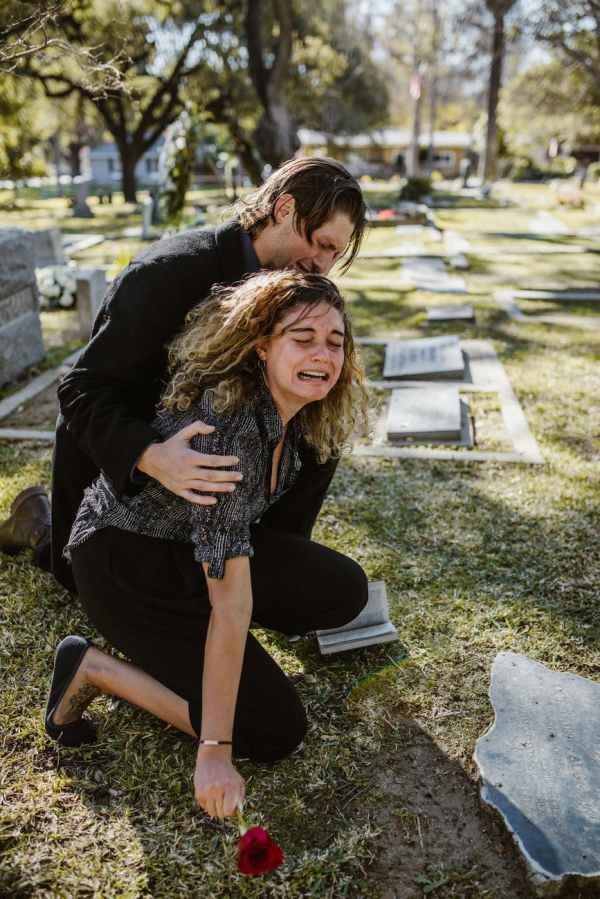
And I cried alone.  I wasn’t always crying; I read a lot, and watched a lot of TV and movies, sang along with my favorite CDs, danced around my living room like no one was watching (after all, no one was watching!), and, sometimes, I prayed.  But I cried a lot, too.  And I prayed through the tears.  My prayers were sometimes prayers of anger, or confusion, questioning God’s love, his timing, his purpose.  All those years of praying, asking God for a husband and children– had he been laughing at my pain?  He knew I couldn’t have children– why had he allowed me to hope for so many years?

But long before I knew that I was barren; long before I had fully formulated my dream of the family I would never have, God had a plan for my good.  For every tear I shed, he was right there with me– even when I couldn’t feel him there; even when I raged at him.   I had a dream– it was a good dream, but it was a dream.  And God’s plans are better than my dreams. ALWAYS.  His plans are for our good–but not always for our pleasure.

Sometimes I still cry at night for the children I never had.  But when I finish crying, I thank God.  Not because of those missing children, but because out of that pain has come compassion– for other women who cry similar tears.  Tears for children lost or never born; tears for children they chose to give up, or children who were taken.  I thank God because of the many experiences I ended up gaining as a single woman– opportunities to travel, to pursue interests and develop skills.  How many more opportunities might I have taken had I trusted God more than my dreams earlier and more fully?

And I thank God because of what he has given–nieces and nephews, grand-nieces and grand-nephews, former students and patrons who are still in touch and who still enrich my life.  Most of all, I thank God for the privilege of leaving my tears to join my husband (a man who pursued me even as I was ready to give up on my dream of being a wife–I became a bride at 46!), my step-children, and our grandchildren; as well as a new set of wonderful siblings, nieces, nephews, and great-nephews (we’re still waiting for great-nieces on that side of the family).

Even if I never had the “happy ending” of a husband and family, I would still be grateful to my very good Father.  And I will continue to pray through the tears when they come.

joyinthemorning


Peace on Earth?

I’ve been exploring some of the themes related to the Advent. But what happened afterwards? There is a curious and violent story related to the visit of the Wise Men– before they found Mary and Joseph and the Baby Jesus, they visited the palace of the ruling King of the Jews, Herod. Herod was intensely curious about the baby– when and where the prophets said Messiah should be born. But unlike the worshipful wise men, Herod wanted to destroy this heaven-sent King; one who could pose a threat to his own power and rule.

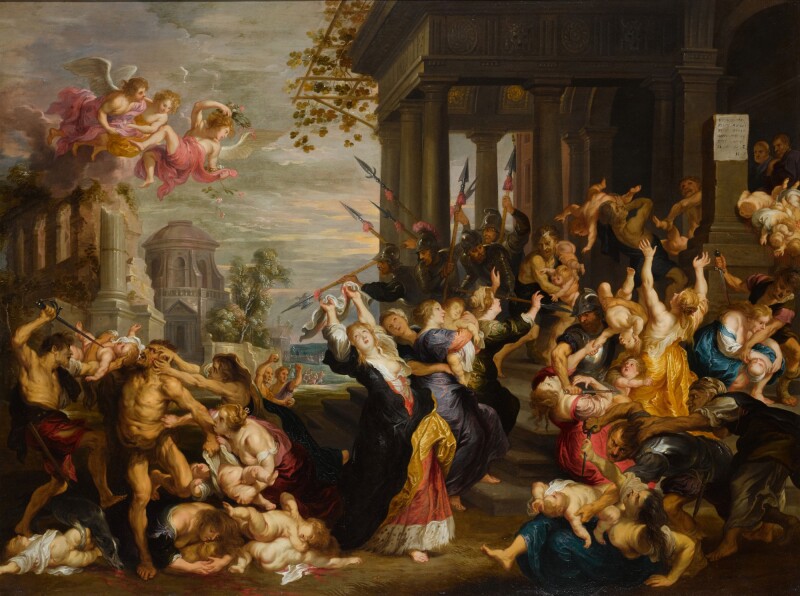
Jesus escaped Herod’s plot. Joseph had been warned in a dream, and had taken Mary and Jesus to Egypt for safety. The Wise Men, also warned in a dream, had failed to report back to Herod the information he wanted. In his anger and fear, Herod ordered the slaughter of all the baby boys in the region, up to two years old. This “Slaughter of the Innocents,” as the event is known, seems to come in direct repudiation of the message of the angels at Christ’s birth. There was no peace in Bethlehem as soldiers dragged innocent babies from their mothers’ arms and killed them. There was wailing and anguish, instead.

How could a loving and wise God allow this to happen? It was no unforeseen accident, either. This event had been predicted by the prophets hundreds of years before it happened, just the same as the prophecies about Jesus’ birth. God could have sent angels to protect Jesus from this slaughter; He could have confounded Herod’s plans and stopped the soldiers from reaching Bethlehem; He could have struck Herod dead before the plot could be carried out…so why did He let it all happen?

I don’t have any definitive answers. But I can share some opinions, based on what I’ve learned of God’s character. I don’t think God was in any way indifferent to the suffering and injustice of this tragedy. But I think there are a few lessons we can take from this strange and disturbing incident:

  • First, Jesus came to share a very human fate. Jesus was not spared the indignity of being born in a cattle shed and laid in a manger. His life was not supernaturally easy or safe or comfortable. It was God’s perfect will that Jesus was vulnerable to attack, and in need of protection– even when it meant fleeing His home.
  • At the same time, He WAS fully God, and as such, posed a danger to men like Herod. Jesus, even from birth, had an authority greater than any king or emperor who ever lived. But He did not come to earth to exercise that power over other people. Instead, He came to serve and to pour out His life for others. It was not His mission to overthrow the existing government, or to challenge rulers like Herod. It was His mission to fulfill the Law, set an example of obedience, preach the Gospel, and offer Himself as atonement for Sin.
  • Herod had the earthly power to do good or evil as a ruler. He had the unique opportunity to join the Wise Men in worshiping the arrival of God’s chosen one– an event that had been anticipated for hundreds of years. Yes, God could have forced Herod to bow before the Newborn King, but Herod could also have chosen wisdom over fear. We have the same opportunity to welcome Jesus as our Savior– or to wage war against Him. Jesus invites us to follow Him, but He doesn’t stop us from making the same destructive choices that Herod made.
  • Jesus did not come to bring a worldly peace, but an eternal “Peace that passes understanding.” Even now, after His death and resurrection, there is still war and slaughter, crime and injustice in our world. But, because of all Jesus did, and is doing in and through those who follow Him, we see that tragedies can be redeemed; hope can survive where there seems to be no hope; and death is not the final victor. I don’t understand why these particular families had to face the tragic consequences of Herod’s rage and fear and ambition. But I understand that God is bigger than Herod; and more powerful than all the chaos and pain that he caused.

The world is not at peace today. Innocent people– even babies–are hurt and killed in our world. God knows. He aches for our grief and pain. But He also knows His plans. He knows how the story ends– He knows all that has happened, and all that is happening, and all that will happen. Even in the glory of Christmas, He wants us to know that reality. Someday, Jesus will return in all of His authority and power. He won’t just end the reign of evil rulers like Herod– He will render their legacies useless. He will redeem injustices– even genocide and slaughter–and wipe out even the memory of their grief and terror.

Be Not Afraid

Have you ever anticipated something so wonderful, that, when the time came, you were almost afraid of it? Afraid that the anticipation would exceed the wonder of the actual event? Afraid that the wonder would be eclipsed by some unforeseen tragedy? Afraid that your dreams were too big? That you could never deserve such happiness or blessing?

 That night there were shepherds staying in the fields nearby, guarding their flocks of sheep.  Suddenly, an angel of the Lord appeared among them, and the radiance of the Lord’s glory surrounded them. They were terrified– but the angel reassured them. “Don’t be afraid!” he said. “I bring you good news that will bring great joy to all people. The Savior—yes, the Messiah, the Lord—has been born today in Bethlehem, the city of David!  And you will recognize him by this sign: You will find a baby wrapped snugly in strips of cloth, lying in a manger.” Suddenly, the angel was joined by a vast host of others—the armies of heaven—praising God and saying
 “Glory to God in highest heaven,
    and peace on earth to those with whom God is pleased.”
When the angels had returned to heaven, the shepherds said to each other, “Let’s go to Bethlehem! Let’s see this thing that has happened, which the Lord has told us about.” 
They hurried to the village and found Mary and Joseph. And there was the baby, lying in the manger. After seeing him, the shepherds told everyone what had happened and what the angel had said to them about this child. All who heard the shepherds’ story were astonished, but Mary kept all these things in her heart and thought about them often. The shepherds went back to their flocks, glorifying and praising God for all they had heard and seen. It was just as the angel had told them.” Luke 2:8-20 NLT (Emphasis added)

The shepherds on that first Christmas were terrified– their ordinary night had been shattered by the appearance of an angel of the LORD. And that was only the beginning! The angel announced the birth of Messiah– Christ, the LORD– in the nearby village of Bethlehem. And then an angelic host– a vast army– of angelic beings chose to worship in the skies that, just moments before, had been dark, still, and lonely.
“Fear not!” “Be not afraid!” Through the terror and overwhelming glorious radiance came a calm voice. “I bring good tidings of great joy!” “..shall be to ALL people…” “PEACE on earth!” “Christ is Born!”

The fulfillment of centuries of longing was finally here. The central hope of the entire nation of Israel had arrived. And the angel left no doubt that the shepherds were welcome, even commanded, to GO and see this miracle with their own eyes. The Biblical account says that they did go– but it also says they stopped to discuss it first. They talked it over and decided to face the mixture of thrilling joy and weak-kneed trembling. Could it really be?! The Messiah! Here and now! But…a babe? Wrapped, not in robes of glory, but in swaddling cloths? And…lying in a manger? Surrounded by sheep and donkeys? What if this was a cosmic hoax? What if there was a mistake? Would they be disappointed? Ashamed? Turned away because of their lowly status?

“Be Not Afraid!” The shepherds talked it over. How could they NOT go and see? What if the news was true?! And in going, they became the first ordinary witnesses of the most extraordinary birth in history! They came. They saw. They believed! And they worshipped.

And then, they shared their experience with others. They went back. They probably shared the news first with the sheep, rehearsing how they would spread the fantastic tale to those who still lay sleeping. But they may also have shouted it in the streets, waking up all the neighbors with the joyous news. The Bible doesn’t give us details. But it does tell us that they went back with joy and gladness. And conviction–“It was just as the angel had told them.” Nowhere in the Bible story did they show any more fear. They had no doubt. The wonder of Christ’s birth was everything they had been told to expect, and more!

This Christmas, we look back at the shepherds, and we try to recapture the wonder of that Holy Night, and the visit of the angels, and the discovery of a tiny Savior in a manger. And we will have the opportunity to celebrate, just as the shepherds did.

What will be our response to His coming? Will we spend this season glorifying a praising God? Will we “astonish” our neighbors as we tell about the Savior’s birth, and His subsequent death and resurrection? Will we heed the angel’s calming tones to “Be Not Afraid” as we encounter the Messiah? As we go “back to (our) flocks” and fields and daily life?

I pray that we will “consider well” this Christmas how “our good God” gave us His “beloved Son”– born in a humble manger, willing to die a humiliating death He did not deserve so that we could be free from the curse of Sin and Death. And may we pray for the courage and conviction to live out and speak out the Joy and Glory of His coming!

What Child is This?


What Child is this who, laid to rest
On Mary’s lap is sleeping?
Whom angels greet with anthems sweet,
While shepherds watch are keeping?
This, this is Christ the King,
Whom shepherds guard and angels sing;
Haste, haste, to bring Him laud,
The Babe, the Son of Mary.
Why lies He in such mean estate,
Where ox and ass are feeding?
Good Christians, fear, for sinners here
The silent Word is pleading.
Nails, spear shall pierce Him through,
The cross be borne for me, for you;
Hail, hail the Word made flesh,
The Babe, the Son of Mary.
So bring Him incense, gold, and myrrh,
Come peasant, king to own Him;
The King of kings salvation brings,
Let loving hearts enthrone Him.
Raise, raise a song on high,
The virgin sings her lullaby;
Joy, joy for Christ is born,
The Babe, the Son of Mary.

Words by William C. Dix

No other name in all history elicits such differing and intense responses.  Jesus, the son of Mary
Jesus, the Son of God
Jesus, the Son of Man
Jesus, the Son of David
Jesus, the Christ
Jesus, the Messiah

Who is this child– ruler of the universe,
Laid in a feeding stall,
In a simple stable,
In a small town,
In a captive land?
Son of a carpenter (illegitimate, by some accounts),
In the royal line of David (but so far removed as to be of no account).


Yet angel hosts sing “Gloria!”
Kings and philosophers travel from distant lands for just a glimpse,
Bringing priceless treasures and humbled hearts,
While the beleaguered puppet king of a conquered people 
Prepares to destroy him.

Will he rise to take his place in Herod’s palace?
Will he lead a revolt to free his people from Rome?
Will he bring together rival factions among the priesthood?
Will he …
Die in agony, betrayed and scorned?

This, this is Christ the King;
The Lamb of God.
Savior and Sacrifice.
“The Silent Word”, 
Pleading,
Healing,
Bleeding,
Ascending.
Even in his humble life and
Ignominious death
He rose to change the world–
Stopping time and dividing it into
All that came before and
All that has happened since.

This is Christ the King
Bruised for our sins,
Betrayed by our selfishness
Cheapened by our compromise and corruption.

Bring him incense, gold, and myrrh;
He is more than our tinsel, jingle bells, and platinum charge cards.
He is the King– He is the babe– the son of Mary.
He is the King who will return in all of His Glory!
He is the Christ!

Blog at WordPress.com.

Up ↑