A Psalm of David. 103 Bless the Lord, O my soul; And all that is within me, bless His holy name! 2 Bless the Lord, O my soul, And forget not all His benefits: 3 Who forgives all your iniquities, Who heals all your diseases, 4 Who redeems your life from destruction, Who crowns you with lovingkindness and tender mercies, 5 Who satisfies your mouth with good things, So that your youth is renewed like the eagle’s. 6 The Lord executes righteousness And justice for all who are oppressed. 7 He made known His ways to Moses, His acts to the children of Israel. 8 The Lord is merciful and gracious, Slow to anger, and abounding in mercy. 9 He will not always strive with us, Nor will He keep His anger forever. 10 He has not dealt with us according to our sins, Nor punished us according to our iniquities. 11 For as the heavens are high above the earth, So great is His mercy toward those who fear Him; 12 As far as the east is from the west, So far has He removed our transgressions from us. 13 As a father pities his children, So the Lord pities those who fear Him. 14 For He knows our frame; He remembers that we are dust. 15 As for man, his days are like grass; As a flower of the field, so he flourishes. 16 For the wind passes over it, and it is gone, And its place remembers it no more. 17 But the mercy of the Lord is from everlasting to everlasting On those who fear Him, And His righteousness to children’s children, 18 To such as keep His covenant, And to those who remember His commandments to do them. 19 The Lord has established His throne in heaven, And His kingdom rules over all. 20 Bless the Lord, you His angels, Who excel in strength, who do His word, Heeding the voice of His word. 21 Bless the Lord, all you His hosts, You ministers of His, who do His pleasure. 22 Bless the Lord, all His works, In all places of His dominion. Bless the Lord, O my soul!
Often in our churches, we focus on two factors of our relationship with Christ– worship and obedience. Worship focuses on His majesty and worth. Obedience focuses on His power and authority. But when the Psalmist speaks here, he is actually focusing on another element. Blessing isn’t so much about majesty or authority; it isn’t about obedience or worship. It is about communion. We bless and are blessed, not just by a word or deed, but by the speaker or doer–they bless us by what they say or do, but they ARE a blessing to us for who they are.
God is worthy of our worship and obedience, but he wants us to be a blessing– to come to him in Love and fellowship, and to be blessed by Who He Is as we meet with him.
Today, worship God. Obey Him. But let’s take time to bless Him and be blessed in return as we spend time with the Lover of Our Souls.
A few months ago, I went to the theater to see the movie “Paul, the Apostle of Christ.” It was an excellent movie, not the least because I found so much of it relevant to what is happening in the world today. The movie was centered around Paul’s time in prison in Rome; the upheaval and persecution facing the early church, and the looming certainty that Paul would be martyred and his words and leadership sorely missed. The church in Rome was facing division– some were militantly opposed to the corruption in Rome under Nero, and wanted to form a rebellion. Others wanted to flee Rome in hope of supporting outlying churches, starting new churches, or just finding a safer haven. Still others were losing hope and wanted to give up or hide.
The movie also covered (in a series of flashbacks) scenes of Paul’s earlier life. I don’t want to spoil the movie for anyone who hasn’t seen it, but this part of Paul’s life is covered in the Bible, so I will stick to the facts presented there, rather than the drama from the screen…
Saul of Tarsus was both a Jew and a Roman citizen by birth. He had studied God’s word intensely his whole life, and became a Pharisee. He had studied under some of the greatest scholars of his age–in today’s world, he would have been one of the greatest legal minds of our time– a superstar in the arena of law, philosophy, and logic. Of all the people in Jerusalem and throughout the Jewish world, Paul KNEW right from wrong. He KNEW the words of God, the laws of God, the traditions of God’s people. The result of all that knowledge was an obsession with wiping out those people (Jews, especially, but also Gentiles) who followed Jesus of Nazareth and “The Way.” Saul was a man filled with righteous anger, and a zeal to have everyone conform to what was “right.” He was a man of power and influence– a man to be feared and respected. In his letters, we can still see some of that intensity and the way he has of arguing both sides to their logical ends. But something happened to Saul..something that changed his entire future, including his name.
Paul, the Apostle of Christ, was still a Jew and a Roman citizen. He was the same man who had studied vigorously and knew the laws of Moses and God’s words through the centuries written by prophets and historians and psalmists. But the Paul we see in scripture, while still bearing the intensity of his youth, is a man of gratitude and peace. Here is a man who works steadily with his hands for honest but meager wages compared to what he might have made as a Pharisee. He is a man who boldly faces down even Peter and James in Jerusalem, but who nevertheless takes orders from a council made up of former fishermen and tradesmen. Paul undergoes flogging, arrests, prison, cold, hardship, physical pain, poverty, and disgrace with the kind of stoic acceptance, and even joy, that makes him a great hero of the early church. Never once does he return to the anger that drove him to persecute others who did not agree with him. Instead, he is willing to be the victim of persecution at the hands of those he used to serve.
I was scrolling through Facebook the other night, and I chanced upon posts from two women I know. Both are about the same age, both mothers of five children, and both are practicing Christians. The first woman was posting about two recent difficulties faced by her family, and how God had been faithful and gracious in spite of a huge loss and a tense situation that could have turned into another tragedy. She spoke of God’s answers to prayer, and how their family was reminded of God’s goodness as people came alongside at just the right moment, and the loss was not as great as it might have been. I was inspired and encouraged by the way she saw God’s love, and gave credit to all who had helped them.
The second woman spoke in vicious tones about how she would not associate with certain Christians who hold political and social views she sees as hateful. She cursed fellow followers of Christ for being “anti-Jesus,” and condemned several of her early teachers and pastors. I read her remarks with great sadness, because I remember her as a younger woman, eagerly memorizing scripture and being a loving and encouraging example to others. I also read her remarks with pain, because I think she includes me in the “hateful” group based solely on the type of church I attend.
It is not my place to say that one woman is a “better” Christian than the other– on another day, their FB posts might cause me to think very differently. And God sees more than just what we post on FB or say in passing conversation–He knows our every thought and motive. So I want to be careful–these women, though similar in some superficial ways, lead very different lives and have very different experiences of following God. But I saw in their posts two ways of “seeing” Christ.
When Saul of Tarsus, in his anger and zeal, traveled toward Damascus intending to kill people he may have never met, he was already a crusader for Jehovah– ready to mete out justice against anyone who didn’t meet his standards. He KNEW all about God. He knew what it took to be righteous.
But when he actually encountered Christ– he was knocked off his horse, blinded and overwhelmed by a vision. And when Christ spoke to him, “Saul, Saul, why do you persecute me?” (Acts 9:4), Saul didn’t recognize the voice of the very God he so proudly served. Saul remained blinded for three days, but his vision was never the same again.
As Paul, he became a man of prayer– his letters are filled with prayers for the well-being and spiritual growth of those he misses and longs to see. They overflow with doxologies and prayers of worship for the Savior he loves and serves with gladness. He can’t stop talking about God’s goodness– to him, to Israel throughout the centuries, and to the Gentiles who now have access to the throne of Grace. He still has harsh things to say to some of the followers who “don’t get it.” To those who want to compromise with sin or go back to legalism. But he pleads with them; he doesn’t throw stones.
It can be very frustrating in today’s world and in our society to see Christians who have very different ideas about worship styles, ways of interacting with others, even ways of living out the words of Christ. Sometimes, it seems that fellow Christians are blind to the needs of the poor, or the sins of their friends, or the hypocrisy in their lifestyle. I think scripture gives us a clear directive:
Why do you see the speck that is in your brother’s eye, but do not notice the log that is in your own eye? Or how can you say to your brother, ‘Let me take the speck out of your eye,’ when there is the log in your own eye? Hypocrite! First get rid of the log in your own eye; then you will see well enough to deal with the speck in your friend’s eye.
Matthew 7:3-5 (English Standard Version)
We should not rush to condemnation, name-calling, and finger-pointing. Instead, we should do a “vision” test and see if we are looking and acting in love or in self-righteous hypocrisy.
God doesn’t want us to be blinded by the light of our own knowledge and self-righteousness. Instead, He wants us to walk in the light of His Word–His Word made flesh! May we live in the light of Paul’s example of prayer, loving correction, and running the good race.
15 Through him then let us continually offer up a sacrifice of praise to God, that is, the fruit of lips that acknowledge his name.
Praise is an essential part of prayer– God is worthy of our continual praise and worship. He is eternally good and thoroughly righteous; all-powerful and all-wise. The author of Hebrews reminds us that we are to offer a sacrifice of praise–continually– to God.
This is more than just a simple “Praise the Lord” uttered when we are at church or surrounded by fellow believers. A “sacrifice” of praise implies more than just a gift or even an acknowledgement of God’s worthiness and majesty. It implies cost, and hardship; a giving up of something precious in the act of worship.
Sometimes, the sacrifice is small–giving up our right to take credit for God’s mercies; being thankful (instead of jealous) of our neighbor’s success. Other times, the sacrifice is painful– praising God in the aftermath of a daughter’s rape, or a spouse’s betrayal, or acknowledging God’s goodness after a diagnosis of cancer or dementia.
God isn’t looking for false and empty worship–He wants us to be real. Sometimes, the sacrifice isn’t eloquent, polished, or “pretty”; it comes with tears, tormenting questions, and anguish. Sacrifices are poured out, broken, or burned up– dreams that have been dashed, hopes and plans that have been abandoned, heartaches that crush the soul.
God wants these sacrifices– but not because He is a cruel God who wants to see us crushed and hopeless. God wants these sacrifices because only when we are ready to put them on the altar can He make the exchange– Beauty for ashes; eternal hope for temporary dreams; trust and security for our doubts and fears.
In the same verse (Hebrews 13:15), the author describes the sacrifice of praise as the “fruit of lips that acknowledge his name.” The Hebrews to whom he was writing were making a huge sacrifice in just uttering the name of Jesus. They were beset on all sides– from the Jews who did not acknowledge Jesus as the Messiah; to the Romans who were using them as scapegoats for troubles within their Empire. In the midst of their troubles, God did not ask them to slaughter their enemies, or to create a separate society and live only to themselves. He didn’t ask for impossible deeds of daring–though many endured persecution and became martyrs for the Cross of Christ. God asked for the sacrifice of praise. God’s ways are not our ways– his weapons are not our weapons, and his words are not our words– God’s words are more powerful than any weapon or plan that we could ever imagine.
The practice of praying the various names of God and titles of Jesus and the Holy Spirit– Almighty, Father, King of Kings, Lord of Lords, Counselor, I AM, Savior, Redeemer, etc.–is the essence of praise. In times of trouble, God’s attributes may seem hidden, but when we acknowledge what we do not see, we are harvesting the fruit of our faith and putting it on the altar.
Stand back– God has been known to set both the sacrifice and the altar on fire!
Our church held a hymn-sing and ice cream social last Sunday. It was an informal evening service, but we heard testimony of the power of hymns to shape our worship, and to help us remember scripture’s promises. We also had the chance to just “call out” a favorite hymn to sing together. We probably sang 15 or 20 hymns that night, and each one had special meaning to many in the congregation. We treasure certain songs, certain verses, certain stories– they feed our soul, encourage our heart, steel our thoughts, and pour balm on our wounds.
One hymn we didn’t sing the other night, though it is a favorite of many, was “Sweet Hour of Prayer.” Sweet Hour of Prayer– lyrics and much more here In getting ready to post for today, I thought about this hymn. We treasure the thought of prayer being sweet and bringing relief, but do we treasure prayer enough to spend an hour or more at it? If I add up the time spent in morning prayers of devotion, grace at mealtime, evening prayers, and “quick thoughts to heaven” throughout the day, it probably adds up to an hour…but I spend more time writing about prayer each day than I actually spend practicing it. And when was the last time I got so caught up in prayer that I lost track of time and spent over an hour at it in one sitting?
In the Sermon on the Mount, Jesus warned that we should not lay up treasures for ourselves on earth, but to store up treasures in heaven, “For where your treasure is, there will your heart be also.” (Matthew 6:21 KJV) This is true of our material treasures, but also our spiritual treasures, our thought treasures, and our time. When I hear “Sweet Hour of Prayer,” one of my first thoughts is always, “That would be nice, but I don’t have an hour to spend praying– I’d never get anything done!” But would I have said that about watching my favorite TV show? Spending an hour on Facebook or shopping at my favorite store?
God is beyond time– he’s not counting the hours, minutes or moments we spend with Him. But he feels our absence and our distraction just the same. He isn’t trying to pull us away from important things to waste our time– he wants to pull us away from the things that weigh us down, worry us, haunt us, and eat up the precious time He has given us.
I have found that when I feel “too busy” to spend time with Jesus, it’s a good time to pause and make time for prayer. When I do (and it’s not as often as I should), three things happen:
I want more! That time refreshes me, calms my spirit, and removes the burden of worries, failures, and frustrations.
I accomplish more–maybe it’s a case of God re-ordering my other priorities; maybe he just gives me the power to work more efficiently; maybe it’s a miracle–but I find that the “time crunch” I worried about seems to melt away.
Jesus becomes “more” to me– I grow closer to Him, and closer to the person He created me to be.
I’m late in posting an entry today– it’s been a day of swinging in the pendulum. Not in a personal sense, but in praying for friends and family.
We all have “pendulum” days (or weeks, or even hours)– times where we are carried, pushed, swung, or banged about by life’s circumstances. Moments where time stands still– sometimes in astonishing joy, and sometimes in soul–stomping grief. Then comes the rush of being pulled by forces beyond our control– up, and down, across, and through the arc. I’ve been hearing from friends all day, sharing those moments, and asking for prayer. In the space of an hour, I’ve prayed for those who have just lost loved ones– a mother, a sister, a son– and those who are celebrating– an engagement, a birthday, a new home. I’ve prayed for those whose lives are in the balance– in ICUs and in the womb. Cancer, anniversaries, new puppies, pneumonia, a new job, a vacation, a car accident…
When we pray for others, we share those joys and heartaches– together, we swing through the arc of tragedy and triumph, even if we don’t all feel the full impact. We become like the balls on the pendulum swing; absorbing and sharing laughter and tears not fully our own. But by doing so, we provide both energy and equilibrium. Shared joys are multiplied; shared pain becomes bearable. Prayer breaks through the isolation or the intensity of the moment, and keeps us grounded, or keeps us from shattering. It reminds us that even in these defining and refining moments, life is not static. And the momentum pulses through us in our connectedness.
Yet prayer goes one step further– it brings triumph and tragedy to the God who is above, beyond, around, and amidst the circumstances, the chaos, and the emotional highs and lows. Our voices, raised together in laughter or grief, exasperation or anticipation, ascend to the one who came and lived and laughed and cried among us– to Jesus, whose arms are fully extended to embrace us wherever we are on the pendulum.
The Christian life is often one of paradox–We are “in” the world, but not “of” the world; we “die to the flesh”, even as we continue to breathe and walk and eat in our fleshly bodies. Prayer is part of that paradox– we dare to present ourselves before the throne of Almighty God, yet we are told to call him “Our Father”, and to come boldly. We call on one who is unseen, unknowable, and sovereign, and we’re told to ask for anything in Jesus’ name, and it will be done.
This can lead to problems, as we try to resolve the paradox– sometimes we dare too much; other times, we ask too little. I want to take a peek at how this works, especially as I have a problem with the latter.
Why do I feel it is a presumption to ask God for help? Why do I ask God to do the least that I might expect from Him, when He offers miracles for the asking? Why do I wait to bring my requests to God, hoping that I can solve them myself and not “bother” him? Do I not trust him? Do I not trust him enough? Why do I get discouraged when my prayers are not answered “my way?” Immediately! When hardship comes, why do I assume that it is an accident–a miscarriage of justice–and call out to God as though he is unaware of my dilemma?
I think we come to prayer with a few faulty assumptions about God:
we believe that God doesn’t know– that he is unaware of our needs or our circumstances, , our sense of urgency, or the depth of our despair; that he will be embarrassed by our lack of obedience or the simplicity of our request
we believe that God doesn’t care– we fear that God will be distant, disapproving, or even disdainful; unwilling to help us until we “clean up our act.” Or we believe that he delights in testing us, watching us struggle, withholding help until we are properly humbled and abject in our obedience. Perhaps we believe that “God helps those who help themselves,” and therefore, he is waiting for us to work ourselves to the limit before we bother him with our troubles. We believe that “if God really cared” he would give us what we want, when we want it, and how we want it
we believe that God is unable– that we have messed up so badly, even God can’t fix our mistakes; that what we are asking is stretching God to do what is beyond his plan or purpose; that our request is too broad in its scope for God to attend to it
we believe that God isn’t really GOD–we have doubts about his existence, his reality, his presence, and his power over all our circumstances
We also come with assumptions about ourselves:
we believe that we are unworthy of God’s love, care, time, power, concern, or attention
we believe that we are worthy–worthy of special treatment and privileges denied to others because of who we are or what we’ve done; worthy of a life devoid of pain, stress, hardship, or struggle
we believe that we know better than God how to meet our needs; we believe that we have all the answers, and God’s job is to do our bidding
we believe that coming to God in prayer is a sign of weakness, laziness, or neediness that brands us as “less” than others who live life on “their terms”
we believe that our wants and needs are not important; that our dreams and desires must be squashed in order to serve God
If we assume any (or all) of these things, our prayers will swing wildly from wimpy hand-wringing and grudging worship to impatient demands and selfish complaints.
God knows– he sees everything; he knows your very thoughts before you think them! God cares– he loves each of us with an eternal, limitless love– a perfect love that casts out fear and bids us to draw near to him, but doesn’t spoil us, indulge our selfishness, or set us up for failure.
God is able–just because we don’t see the answer we want in our current situation doesn’t mean that answer isn’t on its way. Look back at the ways God has been faithful in the past–Can’t He Do It!
We are unworthy–in our own power–but we are also cherished by God, who makes us worthy through faith in the finished work of Jesus Christ. Our privilege of coming to and communing with Almighty God is not a presumption in itself– it is a gift given by him in the moment that the veil was torn from top to bottom in the temple– the very moment Christ fulfilled the law, the barriers were removed, and God made it possible to come into his very presence.
We know only in part, and we see only in part– God sees the whole; the end from the beginning. He knows what is best, not only for us, but for all of creation.
When we come to God, it is a sign of submission– not weakness. It is a sign that we recognize God’s right to be God, and our privilege to live and work and commune with him, instead of acting and living in rebellion against him.
Because he knows our every thought, and he loves us completely, he cares about our every need. When we trust in him– in his goodness, his faithfulness, his timing, and his sovereignty, he doesn’t promise us a life without hardship; but he does promise peace that passes all understanding as we go through those hardships.
In the end, our faulty assumptions come from making ourselves too big– taking pride in our own worthiness, strength, and intelligence; or exaggerating our faults, mistakes, and unmet expectations– and making God too small to meet our needs or understand our hearts.
God wants us to presume on his Goodness and Might– not on our own wisdom and worthiness.
Bow, kneel, stand; hands folded, hands raised, hands clasped–there are many positions we assume when praying. And different types of prayer seem to have different positions. We tend to say grace seated or standing behind our chair at the table. Some families hold hands; others bow their heads and fold their hands. Some corporate prayers call for kneeling; others are said standing. Some people bow, some kneel on the floor with arms outstretched; some curl up in their favorite easy chair; some face east or toward a certain focal point; some touch or hold an object, like a rosary or a Bible, or the wall or surface of a sacred place. Some pray with eyes closed; others with eyes raised toward Heaven.
Does any of this posturing and positioning really matter? Does God have a preference? A requirement? Does He get offended if I stand, or keep my eyes open or neglect to hold my hands a certain way?
The answer is not as easy as one might think–The Bible has many specific accounts of prayer, as well as many commands and guidelines. Hebrew priests stood with hands raised to pronounce blessing and to seek God’s favor. King David’s psalms are poetic prayers. They don’t often describe a position of standing or kneeling, but many of them imply a position of lying down, pacing, clapping, shouting, climbing, etc. Jesus often prayed alone, and spoke of praying privately– in corners and closets away from prying eyes and listening ears. On the night of the Last Supper and in the Garden of Gethsemane, the Bible describes Jesus as praying while “looking toward Heaven” (John 17:1), and later, “he fell with his face to the ground and prayed.” (Matthew 26: 39)
All this indicates that positions matter in relation to the function or the nature of the prayer. And that’s where I want to focus my thoughts today.
God isn’t displeased if I stand to pray, rather than kneel–unless I am standing in pride and arrogance. He is pleased if I kneel in humble and contrite spirit, but not if I kneel out of false humility or to impress others with my self-righteous posturing. If I bow my head at the table out of habit, and forget who I am supposed to be talking to, or “pretend” to kneel instead of leaving the comfort of my chair– then I may need to take a new position; a new attitude of prayer.
God isn’t impressed with our physical position in prayer– but I believe he wants our whole self, our undivided attention and our physical and emotional expression and attitude. Sometimes, the physical position comes as a natural extension of our grief, our joy, our reverence, and our stillness before His throne. Other times, our physical position brings us out of our pride, our busyness, and prepares our heart attitude.
I have had moments–even days– when I was not naturally motivated to quiet my spirit, bow my head or my heart, and kneel before my Maker. But in kneeling, and bowing my head, and closing my eyes, I was positioning more than just my body. I was coming in obedience to the one– the only one– who can transform my mind, renew my spirit, and soothe my restless heart. Other times, I could not kneel for the joy and exuberance of the moment. Standing on tiptoe, hands raised, head raised, and heart raised, I sang out to my Father in gratitude and awe.
So the answer to the question– Does our position in prayer matter?– would seem to be, “no.” What matters is our attitude. God is not impressed or fooled by an outward show–he is concerned with our heart’s desire to be close to him. There is, however, one position that is pivotal in the pursuit of prayer. That is the position of Faith. In Hebrews, we are told that “without Faith, it is impossible to please God, for whoever comes to him must believe that he exists, and that he rewards those who earnestly seek him..”(Hebrews 11:6) Jesus spoke of faith that can move mountains, even if it is the size of a mustard seed. Whether kneeling or standing, grieving or rejoicing, our prayers must be accompanied by faith– faith that God exists; that he is loving and gracious and all-powerful to save; faith that our “position” in him is one of reconciliation and renewed life through his grace and the finished work of Jesus Christ; faith that he will hear our prayers and answer according to his will; faith that his will is altogether good and perfect– even when we don’t understand it in the here and now.
One final thought–though the Bible does not specifically require that we kneel to pray as we pursue a relationship with him, it does declare that one day, “at the name of Jesus, every knee should bow, in heaven and on earth, and under the earth, and every tongue confess that Jesus Christ is Lord…” (Philippians 10-11a). I can practice kneeling in this life, knowing that it won’t go to waste!
“When peace, like a river, attendeth my soul;
When sorrows, like sea-billows roll–
Whatever my lot, Thou hast taught me to say,
‘It is well–it is well– with my soul.'”
As I write this, all is not well with my life. I have bills looming, a car that keeps breaking down, a leaky roof, and I’m fighting to stay healthy. I worry about unhappy customers at work, my husband as he travels and faces danger on the job, about our aging and widowed mothers, and our kids and grandkids. All is not well with our nation– we have anger, division, violence, and strife; a breakdown of families, moral decay, and corruption. All is not well with our world–nations are at war, we are destroying our environment, and all the progress that was supposed to make our lives easier seems to have made life more complicated and frantic, instead.
But all is well with my soul–not because of anything I have done or anything I do– peace and assurance are mine solely through the grace of God, which he gives in abundance.
Prayer does not bring peace automatically, nor does its haphazard and occasional practice guarantee instant or lasting peace. Meditation, solitude, and other prayer-like exercises may bring a temporary calm, a respite, and a relief. Closing our eyes and laying our burdens at his feet can bring the same feeling. But prayer is more than just an exercise in making us feel better. It isn’t meant to take us away from our circumstances, or to hand them off to God while we waltz away from our burdens. Jesus said in Matthew 11:28-30, “Come to me, all who labor and are heavy laden, and I will give you rest. Take my yoke upon you, and learn from me, for I am gentle and lowly in heart, and you will find rest for your souls. For my yoke is easy, and my burden is light.” Coming to God in prayer doesn’t make burdens disappear. But it does mean that we no longer carry them alone, and that gives us rest for our souls. God is not in the business of making our lives easy, carefree, and comfortable. But he promises that as we share our lives with him, trusting that his ways are good and righteous, he will not only come alongside and share our burden, he will teach us and give us rest.
This is why the pursuit of prayer is so important. The discipline of daily and personal prayer teaches us how and where to find peace that lasts– peace that “passes all understanding” (Philippians 4:6-7). Like the cool, refreshing water of a river soothes and gives life, so God’s grace flows into our lives as we walk and talk with him every day.
“What a Friend we have in Jesus, all our sins and griefs to bear! What a privilege to carry everything to God in Prayer!”
The word “privilege” has taken a beating lately. A privilege used to be considered a good thing. Merriam-Webster defines it as, “a right or immunity granted as a particular benefit, advantage, or favor.” A privilege is granted–given as the prerogative of someone in power or authority– to someone else. It may be given as a reward, or granted for a limited time and under certain conditions. But a true privilege is a gift–you can’t make your own privilege, and you cannot own or control a privilege– the terms are set by the giver, not the receiver.
In the past generation, the word “privilege” has become charged with political and societal connotations. Those connotations, and the issues surrounding them, are worthy of discussion and could fill volumes, but I want to talk about a privilege that should be free of undertones and dubious meanings.
Prayer is a pursuit, and a practice. It is personal, practical, and powerful. But it is also a privilege. Often one that we take for granted.
In pursuing prayer, we are not just developing a personal routine or discipline. We are not just approaching a powerful supernatural entity. We are fallen creation entering the presence of a Holy Creator; we are rebels entering the throne room of the King of Kings.
We have the right to approach God; to talk to, converse with, ask favors of, plead with, confess to, and expect answers from the One who creates galaxies with a single spoken word, and designs every unique flake of snow. This same God grants us the right to draw breath, to experience both beauty and wonder, to question and to create.
Prayer in ancient times was almost universally accompanied by sacrifices, and surrounded with ritual– incense, bowing and prostrating oneself, covering or uncovering the head–in recognition of the horrible chasm, the great separation between God and mankind. Many traditions still use ritual for prayer, and there is nothing wrong in this reminder of God’s Holiness and Sovereignty. Yet God talks of prayer in intimate terms. He didn’t impose ritual and sacrifice for his benefit, but for ours. Several times throughout the Bible, he makes clear that he does not require the blood of bulls and goats–what he wants most is a humble and pure heart. At the moment Jesus died, the great veil in the Temple was ripped in half from top to bottom–the most holy place laid open to all who might come into God’s presence. Christ’s death and resurrection were not just means of saving us from Hell, but the means of bringing restoration of the intimacy God designed from the beginning. God– Almighty, Omnipotent, and completely Holy–wants to give us the privilege to enter his presence and pour out our thoughts, feelings, burdens, and triumphs; to share intimacy with HIM. We are not just objects of his care (or his wrath), not just creatures in whom he has a certain fond but distant interest. We are recipients of lavish love and priceless privileges– forgiveness, power over sin, power to become more Christlike, restoration and renewal, and yes, the pursuit of prayer.
I grew up attending a tiny country church numbering only a few families. Church was not just a place to visit for coffee and a sermon on Sunday morning. There were no large screens, no light shows, no bands, no padded theater seats. What we didn’t have in the way of amenities, we made up for with fellowship– pot lucks, church-wide outings, bake sales to raise money for missionaries, and community-wide Christmas caroling every December. We didn’t have a big budget or slick publications. There was no website or gym; no trendy decor in the entryway, or sound system. But there was prayer– lots of it! Prayer to open Sunday School; prayer to open the service; prayer at the end of Sunday service; and Wednesday Evening Prayer Meeting. This was, for the children, an evening of games, singing, stories, and socializing with our friends, all in the church basement (painted cinder block walls, industrial fluorescent lights hanging down from beams to light up folding tables and metal folding chairs on the bare cement floor, which was sometimes home to spiders, toads and even the occasional salamander). But upstairs, it was all business. An hour of adults in the community coming together to pour their hearts out to God.
As I became a teen, I “graduated” to the upstairs–to a young teen it seemed an interminably long and slow process of sharing requests, sharing praises, and taking turns mumbling and rambling and regurgitating all that had come before, this time with eyes closed, and some of the old-timers on their knees instead sitting in the un-padded and creaky wooden pews. Sometimes, there would be two or three hymns or a short devotional to round out the hour-long service.
I know there are churches that still have mid-week (usually Wednesday night) services, and some of them are devoted to corporate prayer (my current church has one, in fact). But most of these services have died out– due, I suspect, to the view I described above. Very few of us are devoted to getting out one night every week to spend an hour kneeling on a hard floor “sharing” needs with others, only to repeat them to God. But I think somewhere we missed the point, and the value, of these gatherings. In going to Prayer Meeting, I got to hear the hearts of three generations of people across our community– farmers, construction workers, teachers, retired grandfathers, teens like me, pastors, recovering alcoholics, homemakers, business men and women–people with wildly different struggles, triumphs, and needs, and in different stages of their Christian walk. I heard the exuberance of new converts, and the steady faith of aging saints; the struggles of the brokenhearted widower, and the needs of new parents.
Perhaps the most valuable lesson from Prayer Meeting was about persistent prayer. Week after week we reported answered prayers, but other requests seemed to linger. Some who desired healing never found it (in this life). Some relationships were never restored. Some faced the same struggles with anger, or job loss, or loneliness over a period of months. Was our prayer ineffective, or our faith deficient? Did God not hear? Didn’t he care?
I believe God heard every word; every groan, every sigh. I believe he ached with every burden we brought before his throne. I believe he was (and is) in the midst of every gathering. And I believe that prayer is often like those conversations we have with our oldest and dearest friends about those same persistent problems. God has the power to deliver us without the struggle, without the wait. We don’t know why he allows some struggles to play out over years while others end in timely triumph. But I believe that for every situation that challenges our faith and endurance, he is there for every tear, every question, every ‘SMH’ moment, every stumbling step forward. And when we come together to share the burden with our neighbors, family, friends in fervent prayer– God is present, not just as the Father on his throne, but as the Son who cried out on his knees in the Garden of Gethsemane, and the Spirit who interprets our groaning when words are not enough.
I say a lot of quick prayers; sometimes urgent, and often simplistic and even easy prayers. I am slowly rediscovering the value of persistent and corporate prayer.











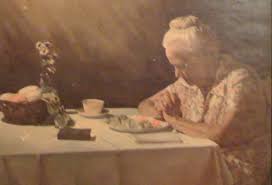


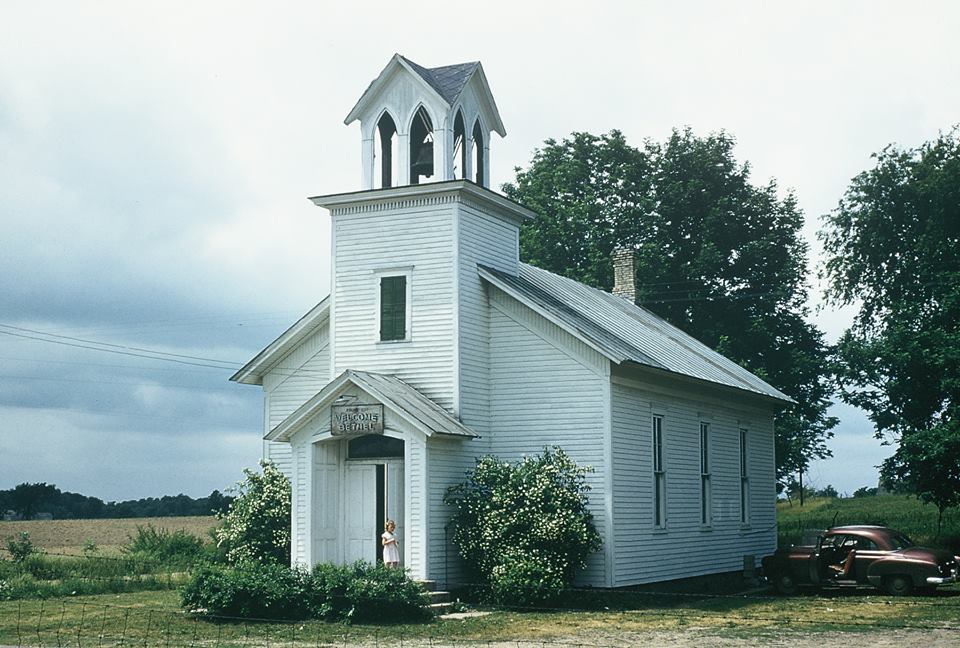 I grew up attending a tiny country church numbering only a few families. Church was not just a place to visit for coffee and a sermon on Sunday morning. There were no large screens, no light shows, no bands, no padded theater seats. What we didn’t have in the way of amenities, we made up for with fellowship– pot lucks, church-wide outings, bake sales to raise money for missionaries, and community-wide Christmas caroling every December. We didn’t have a big budget or slick publications. There was no website or gym; no trendy decor in the entryway, or sound system. But there was prayer– lots of it! Prayer to open Sunday School; prayer to open the service; prayer at the end of Sunday service; and Wednesday Evening Prayer Meeting. This was, for the children, an evening of games, singing, stories, and socializing with our friends, all in the church basement (painted cinder block walls, industrial fluorescent lights hanging down from beams to light up folding tables and metal folding chairs on the bare cement floor, which was sometimes home to spiders, toads and even the occasional salamander). But upstairs, it was all business. An hour of adults in the community coming together to pour their hearts out to God.
 Pursuing Prayer