Of Gingerbread, Christmas Trees, and Frankincense…

As the Christmas season approaches, people are decorating their homes– wreaths, Christmas Trees, lights, gingerbread houses, manger scenes, elves and reindeer, candles and more. And along with the sights and sounds and tastes, the air is redolent with the scents of the season.

Scents evoke memories and emotions deeper than any of our other senses. We can close our eyes or ears to unwanted stimuli, but it’s difficult not to breathe in the spicy air filled with cinnamon or cloves, or ignore the scent of pine or scented candles filling the room.

There was no gingerbread, or evergreen tree, or clove orange in the stable where Jesus was born so long ago– no candles or air fresheners to cover the other scents of animals and afterbirth. But when the wise men arrived to worship the infant King (which may have been a couple of weeks or even months later), they brought gifts, and two of the three were spices– Frankincense and Myrrh. They were precious spices, with medicinal and healing properties, and were also used in embalming– symbolic of Jesus’s future life and death. Oddly enough, their fragrances are reminiscent of citrus and pine, two scents we commonly associate with the Christmas season. https://www.history.com/news/a-wise-mans-cure-frankincense-and-myrrh

Photo by Jonathan Meyer on Pexels.com

God never wastes details. The Bible is full of them– lists of names, detailed instructions for the construction of the Tabernacle and Temple, references to various places, animals, trees, events– seemingly unimportant, sometimes even distracting–but all of them have a purpose. The gifts of the Wise Men (or Kings) were costly, prophetic, and worthy of a newborn king. But they were also physical gifts. The Bible never tells us how the gifts were eventually used– Did Joseph and Mary use the gold to help pay for their flight to Egypt? Did Mary save the frankincense and myrrh to use for Jesus’s burial? We don’t know. But the spices would have kept their scent for a long time, releasing their fragrance whenever the jars or containers were opened. And they reveal something about both the recipient and the givers.

God reveals Himself to us in many ways– and He appeals to all of our senses. Our worship of and fellowship with Him should do the same. We may not have access to frankincense or myrrh (though they have increased in popularity and are readily available from dealers in essential oils), but the Bible tells us that WE are a fragrance– our worship, our obedience, our sharing of the Gospel with others.

14 But thanks be to God, who in Christ always leads us in triumphal procession, and through us spreads the fragrance of the knowledge of him everywhere. 15 For we are the aroma of Christ to God among those who are being saved and among those who are perishing, 16 to one a fragrance from death to death, to the other a fragrance from life to life. Who is sufficient for these things?

2 Corinthians 2:14-16 (ESV) via http://www.biblegateway.com

Above all, our prayers are said to be incense– a pleasing aroma before the throne of heaven:

The Lamb Takes the Scroll (Revelation 5:1-10 CSB)

Then I saw in the right hand of the one seated on the throne a scroll with writing on both sides, sealed with seven seals. I also saw a mighty angel proclaiming with a loud voice, “Who is worthy to open the scroll and break its seals?” But no one in heaven or on earth or under the earth was able to open the scroll or even to look in it. I wept and wept because no one was found worthy to open the scroll or even to look in it. Then one of the elders said to me, “Do not weep. Look, the Lion from the tribe of Judah, the Root of David, has conquered so that he is able to open the scroll and its seven seals.”

Then I saw one like a slaughtered lamb standing in the midst of the throne and the four living creatures and among the elders. He had seven horns and seven eyes, which are the seven spirits of God sent into all the earth. He went and took the scroll out of the right hand of the one seated on the throne.

The Lamb Is Worthy

When he took the scroll, the four living creatures and the twenty-four elders fell down before the Lamb. Each one had a harp and golden bowls filled with incense, which are the prayers of the saints. And they sang a new song:

Photo by Josh Sorenson on Pexels.com

You are worthy to take the scroll
and to open its seals,
because you were slaughtered,
and you purchased people
for God by your blood
from every tribe and language
and people and nation.
10 You made them a kingdom
and priests to our God,
and they will reign on the earth.

Photo by Jeswin Thomas on Pexels.com

This season, as we revel in the scents of the season and remember the gifts given to the infant Emmanuel, let us present Him with the gift of fervent prayer and enthusiastic praise. He is Worthy!

Let Heaven And Nature Sing!

Christmas is so much bigger than just us. That struck me afresh as I was listening to Christmas Carols earlier this week. It is more than just preparing our individual hearts, as crucial as that is, to accept the wonder and miracle that the God of the Universe would empty Himself of all His Royal Prerogative; all His Glory, to become, not just a human being, but a baby! To grow up among His flawed and rebellious creation; to know hunger and exhaustion; to wait in lines, to obey His “elders.”

His coming was not just a quiet birth in the night– though it was that, too. Such a paradox. His birth split the heavens, and divided all time into “before” and “after.” And yet, it went unnoticed by so many people crowded into Bethlehem that night. People living outside of Judea had no idea (other than some wise men from the East) that their King and Savior; their Creator and Redeemer, had just burst into history and humanity with a tiny mewling cry and covered in placenta.

But the Heavens knew! Angels marveled and shouted His Praise! Rocks and hills thrummed with the joy of it. The oceans may have danced, mountains skipped, trees cheered, frosty air molecules jumped up and down, and the stars– the suns of millions of galaxies– laughed in delight! For this was Their Savior, too! Jesus came to redeem all of creation–to fulfill God’s perfect plan!

Photo by Felix Mittermeier on Pexels.com

How can this be? After all, we still have earthquakes and tidal waves; we still have forest fires and smog. Nature is still unpredictable and untamed. And yet, Christ’s coming was the sign that the “groaning” of all creation would certainly come to an end. The promise was true! The Hope of Heaven, the Light of the World, the Word of God, was HERE. Living ON the earth. Able to climb a tree, step into (or walk on top of) the water, breathe the scent of flowers, and look up at all the stars He Himself had placed in the reaches of space. Able to enjoy– as He meant for US to enjoy– all the bounty of the Earth. 

And this same Savior has prepared another place– one that is already perfect and needs no redemption, no taming or saving or reclaiming–for those who put their Trust in Him. This tiny Babe, held in the arms of an ordinary girl in a grubby little stable in a tiny corner of the world He holds in His own arms. He is Lord of ALL Nature– that we can see on the Earth, and that which awaits us in a New Heaven and a New Earth!

Christmas is bigger than you and I. It is bigger than our lights and traditions. It is bigger than all of history. Bigger than the night sky; bigger than all we can imagine or dream. Because Christmas is the Advent of Christ– the one who encompasses everything. Let ALL Heaven and Nature Sing! Let the Angels announce His Glory! And let us Repeat the sounding JOY!

Father, I marvel at your Creation. I marvel at your desire to enter into it; to teach us how to have Joy in our journey through it. And I bow in Awe that You would include me in the bigger picture of eternity. Help me to carry this marvel into each moment, as I seek to Honor You and Enjoy the Wonder of Your Nature– both Your Creation, and Your Character! Amen!

Where Are the Altars?

In the Biblical books of the prophets (Isaiah, Jeremiah, Ezekiel, etc.), there are many references to altars and sacrifices–both the ones built to honor Jehovah God, and those designed for idols.

Israel and Judah were guilty of building thousands of altars and shrines to false gods. Some of them were found even inside the Holy area of God’s own temple! As part of God’s judgment, He repeated that He would no longer accept the empty sacrifices of His people–He would no longer hear their prayers, unless they repented.

I read these words and wondered– Where are our altars today? When I was a child, many of the older churches had what we called an Altar. It was usually a raised platform, with a podium for the minister, and possibly a “host table” for communion. My childhood church also had a small table that held a large Bible. Sometimes, the platform would have a railing around the edge, with a couple of stairs on either side. And, while many churches “passed the plate” for offerings, some had a special plate on the railing of the altar, where people would march up and place their offerings for the week. There it would sit for the rest of the service–random dollar bills of random denominations in random states of being crumpled, folded, and worn, along with checks, and, sometimes even coins. All of them brought forward and placed on the altar.

In many churches, the altar was where congregants would come to receive communion. The most important church events happened “at the altar.” Weddings, baby dedications, Bible readings and sermons, even funerals– all happened at the altar.

And often, we would have an “altar call.” The pastor, or a guest evangelist would urge people from the congregation to meet at the altar– to repent, to receive forgiveness, to be renewed and refreshed as we offered ourselves to God. There we were– random denominations of people, in random stages of obedience or rebellion, all answering the call to follow Christ as Lord. Some stayed there for a few minutes, praying silently. Others might be there for an hour, crying out, trying to find the words to express pain, guilt, or gratitude and awe, that GOD would meet with US there! Sometimes, we would form small groups to pray and give encouragement; sometimes we would disperse, too moved to speak at all. The Altar was the focus of the service– the place where God met with us; where He received our worship and our offerings; where we were challenged and made ready for spiritual battle.

Today, many churches have stages, like any large theater or event center. There is no railing, but there are hundreds of spotlights and fog machines. There is no podium for the pastor–just a headset and maybe a small stand for notes. Sometimes, the pastor reads from a teleprompter. Often, he or she is joined by a full band or orchestra, and dozens of singers, actors, or other assistants. No one from the congregation approaches the stage– why would they get up from their comfortable reclining padded seat? No one even “needs” to bring a Bible– the sermon text is printed out on the giant screens hanging above the stage. Our worship is comfortable, and entertaining. Many of us don’t even go to a church building, anymore. We can livestream worship services, or watch from a satellite location. We don’t even have to change out of our pajamas! And we feel blessed, and filled with excitement to be part of something dynamic and spiritually uplifting.

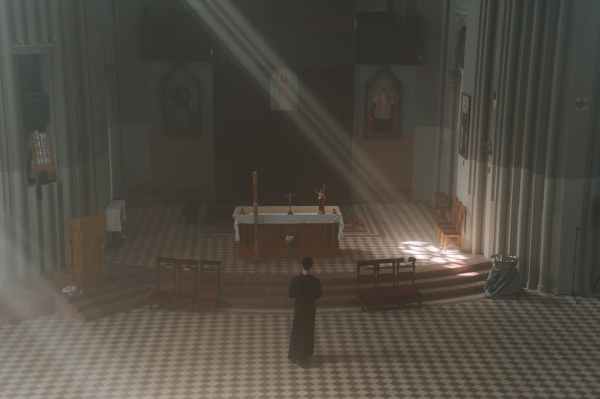
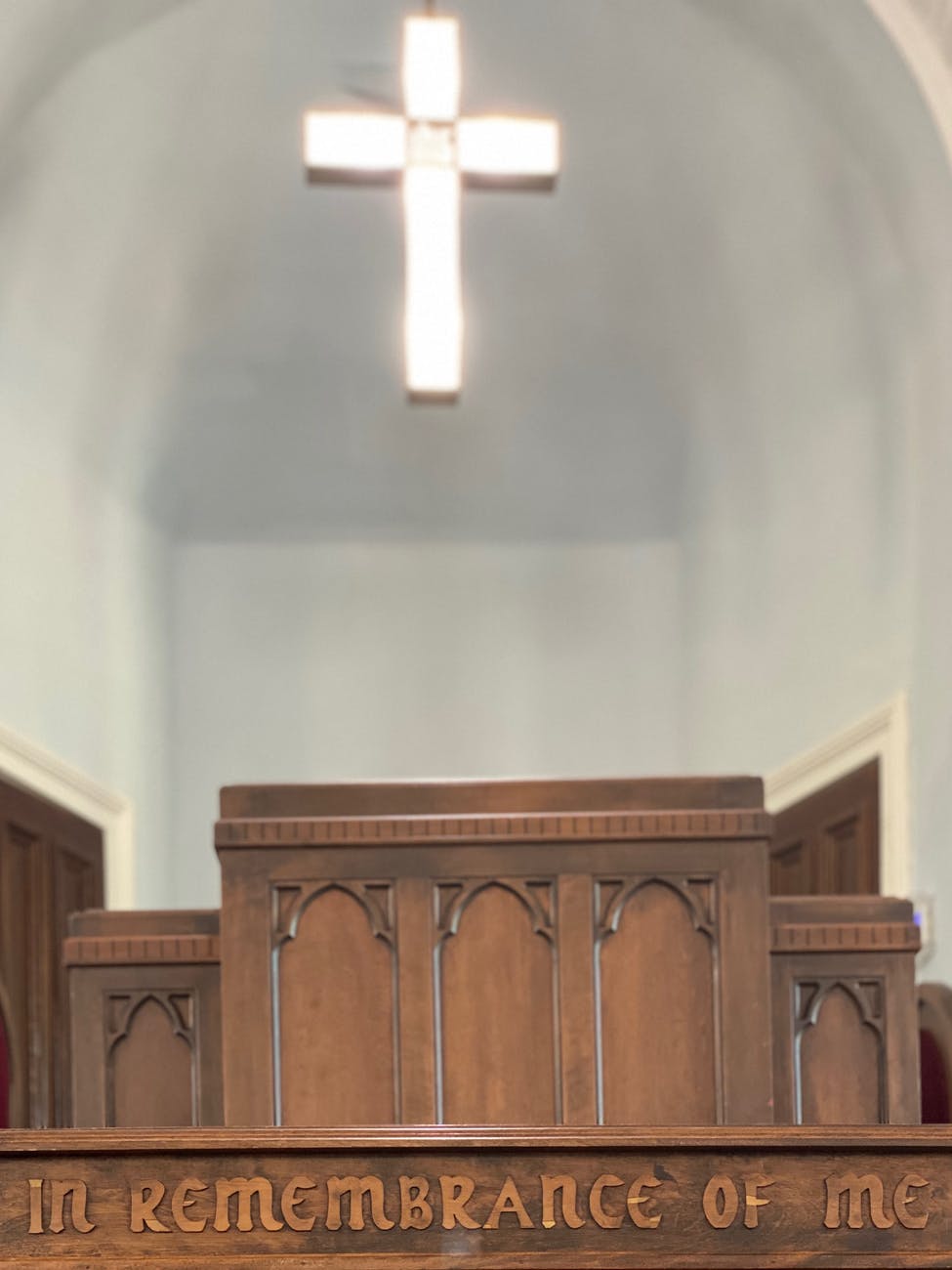
But we have no altars. There is no place for someone to lay their offering before God; no place to meet with Him in repentance or revival. There is no place to remind us of sacrifice and atonement. Oh, to be sure, many churches have a large cross on display somewhere. Some even have the “host table” for communion– somewhere in the wings, just in case–but the concept of an “altar” has all but disappeared from churches in the West. It is an anachronism–something ancient and uncomfortably part of the distant mists of tradition.

I miss the altar. I believe God misses it, too.

Building Blocks of Healthy Prayer

When I was in elementary school, we learned about nutrition. Back then, we were taught that there were four basic food groups (nutrition education has gone through several “cycles” since then– food pyramid, healthy plate, “eating the rainbow”, etc.). Eating a healthy balance of foods is essential to good health. If I only eat meat, or only sweets, I will not be healthy. If I just eat whatever or whenever I feel like it, my body won’t get all the necessary nutrients to grow, fight off diseases, and stay strong.

Pursuing a healthy prayer life includes essential “building blocks” or nutrients, as well. Over the course of many years, I have seen various guidelines and acronyms to help include different building blocks in prayer. I want to share a couple of them again today. These guidelines are just that– guidelines. But they can help balance our prayer life, and help it grow.

The first acronym I learned, and the one I have used for decades, is ACTS. Here’s how it works:

  • Adoration/Acknowledgement– begin each prayer by acknowledging God’s Sovereignty, His Holiness, His Goodness, and other qualities worth worshipping. This helps put you in the right frame of mind when talking to God. I am not just talking to a neighbor or a “good buddy”– I am speaking with the One who holds all of Creation in His hands! And He WANTS a relationship with me! He is all-powerful: there is nothing I can ask that He cannot do! His is all-loving: there is nothing I can ask that He won’t filter through His loving wisdom and will. Even if I don’t know what to ask for; even if I ask for the “wrong” thing– God will only allow those things that He can use for good. God is beyond space and time: He knows all that has happened– all the triumphs and tragedies of my life so far, and all that is to come. He is LORD: He is in control– now and forevermore. Whatever seemingly impossible circumstances I face, they are nothing compared to the eternal, almighty plans of God.
  • Confession–This doesn’t mean an endless repetition of all my failures and sins from six months ago, or raking myself over the coals for not being “holy enough.” This is an honest assessment of who I am in relation to God. God is Holy and perfect. I am not. If I acknowledge God’s goodness, I must also acknowledge that I fall short. I don’t know everything. I don’t always act with the right motives. I NEED the Holy Spirit’s guidance, and I DEPEND on Christ’s finished work on Calvary for my Salvation. This should naturally lead to
  • Thanksgiving/Trust– I can trust God to save me, NOT because of who I am, but because of what He has done. I can see God’s hand working in and around and through me as I yield to His Spirit in me. I can recall, and acknowledge so many of the ways that God has blessed me and others around me. Once I have these building blocks in place, I can bring burdens to God through
  • Supplication– this is just a fancy term for asking God to work His will in specific areas– healing, guidance, encouragement, strength, understanding, submitting to His will, and following Him. I can ask for personal help, or lift up family members, neighbors, friends, and yes, even enemies! I can pray about situations great and small–from wars and famines to lost keys and short tempers.

I learned about ACTS when I was in college, and I have found it to be a great guideline. While I don’t use it for every prayer– sometimes an issue calls for immediate and direct supplication, for instance– I find that using this in daily prayer helps me grow in faith, patience, endurance, and hope. When I come to God in panic or stress, and I haven’t built up a healthy, consistent practice of prayer, my words can be anemic– lacking in faith and based on my fear or anger. I pray with my focus on problems, rather than on God’s power to overcome any circumstance. Using ACTS helps me remember that it is GOD who “acts,” and always for the best!

The second acronym I have used is PRAY. It is very similar to ACTS, but the end focus is slightly different:

  • Praise/Adoration– once again, it begins with praising the God who is worthy; the God who hears me, sees me, loves me, and knows what is best. I cannot live victoriously without remembering the source of hope and victory, and putting my heart in HIS hands.
  • Repentance– as with Confession above, this is not an act of groveling and rehearsing past shame. It is acknowledging anything that I might be holding on to that gets in the way of my worship of and submission to God’. E.M. Blaiklock, the Christian apologist from New Zealand once said: “God alone knows how to humble us without humiliating us and how to exalt us without flattering us.”  Repentance is not about humiliation or holding on to guilt, but rather about staying humble and honest about our need for God’s Grace and Power. And turning from anything that might get in the way of following Jesus Christ.
  • Ask– once we have a right view of who God is, and who we are, we are free to ask Him whatever is on our mind, and share our questions, fears, burdens, etc., with the One who has all the answers!
  • Yield/ “Yes, LORD!”– The final step is making sure we are ready to listen and respond to God as we expect His answer. No matter what God’s answer may be, we should trust and obey His wisdom above our own.

I have come to value PRAY as a wonderful tool to help in my pursuit of prayer, and in my broader pursuit of Christlikeness. Both ACTS and PRAY help me pray “better.” It’s not that God grades my prayers or listens more or responds differently: but it helps me to better appreciate the power of prayer, and the power behind prayer. Individual prayers can change circumstances, but the pursuit of prayer is meant to change US as well. Prayer that shapes us, helps us grow– if that isn’t at least part of our pursuit of prayer, we are missing out on what God wants to do through us, and not just for us.

It is important, just as with nutrition, that we have a healthy balance in our prayer life. That balance consists of worship, repentance, sharing our burdens, showing gratitude, and offering ourselves in humble service. Prayer is too important to just “wing it.” We need to pursue it with the same (or better!) dedication that we give to our physical health.

Heart, Soul, and Mind..

Jesus was asked many trick questions by people who wanted to discredit him during His ministry. One such query involved all the many commands of the law. “Which is the greatest?” With so many commandments, laws, rituals, and traditions, it would be difficult to pick just one. Which is more evil– lying, stealing, murder, idolatry?

But Jesus didn’t skip a beat. 37 Jesus replied: “‘Love the Lord your God with all your heart and with all your soul and with all your mind.’ 9Matthew 22:37 NIV) Jesus was actually quoting from Deuteronomy (Deut. 6:5), when God was giving instructions to the people of Israel before they entered the Promised Land. Of course, Jesus, as part of the Triune Godhead, was actually present for these instructions– in fact, as the WORD of God, He may have been the very one speaking the same words hundreds of years before!

The first three of the Ten Commandments all involve this concept. “Thou shalt have no other gods before Me”–don’t give your soul (your very essence) to someone or something else ahead of Yahweh. “Thou shalt not make unto thee any graven image”–don’t give your heart to worship anyone or anything that is created; instead, worship your Creator. “Thou shalt not take the Name of the Lord your God in vain”–don’t use your mind to devalue and defame the Sovereign Lord.

God is Sovereign. He is Supreme. And He IS Love– it is not just something He chooses to do. Love is part of God’s essence, and it cannot live and thrive without Him.

But this brings up two questions: If God IS Love and He created us, why must he “command” us to love Him? This is one of the great arguments people try to use to deny God’s Sovereignty, His Goodness, even His existence. A Good, Wise, Sovereign, All-powerful God should not need to command love and worship from His creatures, should He? And, if He “commands” love and obedience, how can we truly love Him? We can fear Him, obey Him, be ruled by Him, but none of that sounds like Love.

In theory, such questions seem daunting. But we have dozens of real-life examples of how such commands work. Every nation (and principality, and even every household) has rules and laws directing us how to behave and demanding respect for certain values. “Don’t sass your parents.” “Don’t deface or defile sacred spaces.” “Don’t litter!” We find it distinctly unsettling when we see children treating their parents with disrespect, malice, even abuse. Or when we hear of people whose hatred leads them to burn places of worship, or defile gravestones in a cemetery, or commit treasonous acts that lead to the slaughter of hundreds of innocent neighbors or fellow-countrymen. The planet groans under the strain of people who dump their trash in rivers or streets, or wantonly start wildfires or kill helpless animals.

God does not “command” our love out of weakness. He could DEMAND abject obedience–overrule our will; punish without delay or hope of mercy; force us to act as robots or machines–but He desires us to Love Him freely. His command is for OUR good–when we choose to seek Him, follow Him, Love Him in ever greater measure, we grow to be more like Him–Loving Him teaches us what Love is really all about!

The Law itself, the “command,” is NOT what pleases God or makes us Love Him. God’s purpose is not that we become ritualistic, legalistic, or weak-willed. He wants us to be joyful and live abundant and productive lives. But left to our own devices and our own “wisdom,” we will not achieve any of this. In fact, even with the law and commandments, we will still fall short. God’s love is such that He gave us an impossible command– love Him with our entire heart, soul, and mind– and then, He provided the only Way to make it possible.

Photo by Pixabay on Pexels.com

It IS possible to love God with all our heart, soul, and mind. It doesn’t require that we become hermits or ascetics, wasting away in a cave or mountaintop, starving ourselves and crying out day and night. It does require that we recognize that He is God, and we are not. It requires that we accept His mercy for the times we have strayed. It requires that we seek His counsel, and His correction.

We need to love Him with our heart–draw near to Him in worship and thanksgiving.

We need to love Him with our soul–trust Him to direct our lives, now and in the future.

And we need to love Him with our mind–learn to listen to His words, and to meditate on them; to think more about the things of God, and less about the things of trivial and temporary import.

I’m a Believer!

When I was much younger, I was a huge fan of the Monkees. I loved their TV show, and their songs. One of my favorites was called “I’m a Believer!” It’s a catchy tune about instant infatuation– “Then I saw her face; now I’m a believer!”

YouTube video of “I’m a Believer!” (Written by Neil Diamond; performed by The Monkees)

Years after it was a hit song on the radio, it was used in the soundtrack of the movie “Shrek!”, where it found another generation of listeners. The tune is over fifty years old now, but I still think the tune is catchy, and I love to sing along when I get the chance. However, when I hear the phrase “I’m a Believer!” it means something immeasurably more than just a great pop hit..

It can be very easy to fall into the thinking behind this song. We all are looking for something positive to believe in– Love, music, friendship, success, religion. We all want to be believers in “something” beyond the mundane and the present. And we want a belief that will uplift us, sustain us, and make us want to sing along.

But singing about belief and having a real, sustaining Faith are not the same. The singer of the song claims that he wouldn’t leave– couldn’t leave– the object of his affection. Yet most infatuations are temporary. This love hasn’t matured and been tested by hardship and trials. We can feel good about new “love” in the moment, but we can also be disappointed and betrayed by it. Believing in romance and happily-ever-after can make us feel like singing, but the feeling cannot sustain us through grief and pain. Songs and movies may have a sappy, happy ending, but real life is a struggle.

Faith– real faith in a real and Loving God–is different. We may still be inspired to sing and worship, but we will also be inspired to serve and persevere in good times and bad. It brings strength and lasting peace. And it doesn’t depend on seeing God’s face– it is knowing that He is present, even in the darkest moments; knowing that our lives are in His hands, in spite of our circumstances or surroundings. True faith doesn’t even depend on the strength of our will to believe. It will survive momentary doubts and struggles, until there is “no doubt in my mind” that can triumph! And we can rest assured that God will keep HIS promise never to leave us. That’s what brings me hope and joy when I say, “I’m a Believer!”

It’s fun to sing along with The Monkees, or dance along with the characters in Shrek, but genuine Faith sounds more like this:

Tips for Praying Scripture

At least once each month, I want to give some practical tips I have learned that have improved my pursuit of prayer over the years. Today, I want to talk about praying scripture.

On its surface, praying scripture just means reading or saying Bible verses back to God. Of course, some Bible verses or passages lend themselves to this practice, while others do not. (Lists of genealogies in the Chronicles come to mind…) Sometimes, it requires that we change a pronoun or verb tense, or otherwise personalize the scripture, but we are echoing God’s “Word” back to Him in an act of worship. We may be echoing God’s literal words, or repeating words of worship spoken centuries earlier. Some examples:

“Lord, in the beginning YOU created the heavens and the earth”…(from Genesis 1:1)
“Give praise to the Lord, proclaim his name;
    make known among the nations what he has done.
Sing to him, sing praise to him;
    tell of all his wonderful acts.
Glory in his holy name;
    let the hearts of those who seek the Lord rejoice.
Look to the Lord and his strength;
    seek his face always.” 1 Chronicles 16:8-11

Create in me a pure heart, O God,
    and renew a steadfast spirit within me.
Do not cast me from your presence
    or take your Holy Spirit from me.
Restore to me the joy of your salvation
    and grant me a willing spirit, to sustain me.
(Psalm 51:10-12)

“On my bed I remember you; I think of you through the watches of the night” (Psalm 63:6)

“Search me, God, and know my heart; test me and know my anxious thoughts. See if there is any offensive way in me and lead me in the way everlasting” (Psalm 139: 23-24)

Now to YOU who are able to do immeasurably more than all we ask or imagine, according to Your power that is at work within us, to You be glory in the church and in Christ Jesus throughout all generations, for ever and ever! Amen. (taken from Ephesians 3:20-21)

There are some benefits of doing this, but also some pitfalls. First the benefits:

  • Praying scripture can help us when we just don’t know what to say. Sometimes, we are so burdened or so exasperated, or so overwhelmed with emotion, that our words are swallowed up. But a remembered passage of scripture may allow us to speak our emotions in a way that our own words cannot. Sometimes, scripture will give us a focus that we lack, allowing us to put aside distracting thoughts, as well.
  • Praying scripture can help us memorize or review scripture. It can be helpful to read scripture aloud as a prayer, or even repeat key verses as prayer. Sometimes, we will be studying scripture and it speaks to us in a way that causes us to stop and pray it back.
  • Praying scripture can keep our prayers grounded. When we are tempted to pray selfish, momentary requests, scripture reminds us of God’s majesty, sovereignty, and timeless nature. Scripture magnified God and puts our petty worries and desires in their proper perspective.
  • In a group setting, praying scripture can help others focus better, or inspire them to remember another scripture passage that relates to what you have just prayed!

There are many other benefits of praying scripture, but there are also a few pitfalls:

  • Beware of using scripture as a substitute for your own thoughts and concerns. It is powerful to pray the Bible as it relates to your own worship and emotions, but God doesn’t want to hear only the echo of His words– He wants to hear them coming from your heart, as well as your lips. The ancient prophets warned against those who used a form of worship that lacked conviction and submission to His will.
  • Don’t feel bad when you say a prayer that does not contain a direct scriptural quotation– praying scripture is a tool and a guide, not a ritual or requirement. Don’t feel arrogant or superior when you DO pray scripture– it is a tool and a guide, but it does not make your prayer more effective or more Godly than an earnest prayer without a scripture reference.
  • Don’t “cherry-pick” scripture to pray in a way that is out of context or goes against the overall flow of scripture. Two of the most overused and misused scripture passages are Romans 8:28 and Jeremiah 29:11. They are both verses of promise and encouragement, and certainly can be used in prayer. But in context, they are meant to encourage those who are in the midst of anguish and despair, NOT promises to make life carefree or answer a selfish desire for an immediate good outcome.

If you have never (or rarely) tried praying scripture, I hope you will incorporate this tool into your pursuit of prayer. Whether you use a print Bible, scroll through a list of verses on line, or draw upon memory, you will find God’s words to be uplifting, convicting, encouraging, and wholly sufficient as you pour out your heart to your Maker. And if you already use this practice, I hope these tips will help you remember to use scripture wisely and appropriately as you pursue and practice a closer walk with God.

Walk Humbly with Your God

I’ve been revisiting the prophet Micah’s words on how to please God. “He has shown you, O man, what is good; And what does the Lord require of you But to do justly, To love mercy, And to walk humbly with your God?” (Micah 6:8 NKJV)

Photo by Taryn Elliott on Pexels.com

Today, I want to focus on the last of these three “requirements:” to walk humbly with your God. As with the first two, this last requirement may seem simple and straightforward, but it is much easier said than done.

Let’s break it down to its component parts:

  • WALK– this is another action word. “Being” humble, even acting humble will look good and may even impress others. But God requires that we walk in humility–daily, consistently, and deliberately act in accordance with our status vis-a-vis both God and our fellow human beings. And we are to walk– not run or sprint (or crawl)–steadily, not in fits and starts, not trying to outdo our neighbor, but not meandering without purpose, either.
  • HUMBLY–not in pride, but also not in false humility or in humiliation and self-loathing. The late, apologist, Ravi Zacharias, used to quote another great Christian apologist, Edward Musgrave Blaiklock: “God alone knows how to humble us without humiliating us and how to exalt us without flattering us.” We cannot walk humbly in our own effort or insight or will. We cannot allow others’ opinions to determine the worth that God alone has given us. And we cannot allow our opinions to outweigh God’s judgment about others. There is no place in our walk for prejudice, finger-pointing, or being judgmental. We CAN boldly speak truth about dangerous or unrighteous behaviors, but we should never place someone else’s bad behavior above God’s LOVE for them as a person, OR above the Grace He has to lavish upon them.
Photo by Sankalpa Joshi on Pexels.com
  • WITH–we will never walk where God cannot go, or will not find us. But we can choose to walk apart from God; to ignore justice and mercy, or redefine God’s commands, or reject God’s grace and wisdom in favor of our own “moral compass.”
Photo by Jakson Martins on Pexels.com
  • YOUR GOD– we can believe ourselves to be walking humbly and justly in our own eyes; we can follow counselors or gurus, or “religious” leaders; we can make a practice of doing “righteous” actions, and still be practicing idolatry. We cannot please God if we don’t even know Him; we cannot walk with Him if he is merely an idea we aspire to worship. God does not want adulation from afar; He created us for intimacy with Himself and with each other. It pleases Him to be our Father– not our adversary.

Father, help us to walk humbly with you today– to enjoy the peace and fellowship of learning from You, practicing Justice toward others, delighting in Your Mercy, and resting in Your presence as we go through the day. Thank You for making it possible for us to walk with You, talk with You, and call ourselves “Your Own!”

Processed Prayer

I love to cook. I love looking at new recipes, and finding new ways to use fresh ingredient, use up that last bit of leftovers, or stretch staple foods like beans, flour, or rice. And I love to pray. I love being able to lift up praises, requests, and even questions. I love knowing that I can confess even my most shameful thoughts or deeds to a God who already knows, loves me more than I can imagine, and stands eager to forgive me and strengthen me to make wiser choices.

Cooking can be exciting, challenging, and creative. But it doesn’t have to be. I don’t have to cook at all in our culture. I can (at some expense) dine out every day, and let someone else do all the work. Or, I can buy pre-made meals, “processed” foods and “instant” mixes– “just add water,” “cooks in 6 minutes,” “ready to eat.” I can pray “processed” prayers, too. I can recite prayers of others, mumble graces by rote, and even read off a list of requests with little or no effort or emotion.

But processed prayer isn’t healthy– no more than processed food. Oh, it won’t seem much different– at first. And it isn’t “bad”–every once in a while. But a steady diet of praying someone else’s words and thoughts doesn’t build a personal relationship. We miss out on the “process” of praying, and the end result is not as fresh and healthful.

When I cook from scratch, I have to follow a process:

  • I need to make sure I have the proper ingredients.
  • Some ingredients need to be seeded, skinned, peeled, chopped, or otherwise readied before they can be used.
  • Ingredients need to be added in the proper order.
  • Measurements are important. 1 teaspoon of salt is not the same as 1/2 cup of salt!
  • I need to use the proper methods– simmer, boil, chill, bake, etc.
  • Timing is crucial, too. Cookies may take 10 minutes to bake– a roast may take 3 hours.
Photo by Gary Barnes on Pexels.com

Praying “from scratch” also follows a process:

  • I have to have the right heart attitude.
  • Distractions need to be put aside.
  • I want to include all the “ingredients” of a deep prayer– Adoration and Praise; Acknowledging God’s Sovereignty and Power; Confession and Repentance; Thankfulness; Presenting my requests; Lifting up the needs of others; and Committing to Listen and Obey God.
  • Timing is important–I need to make time to visit with God in Prayer. It shouldn’t be an afterthought or another activity to squeeze in IF I have a chance!

That doesn’t mean that we can’t (or shouldn’t) pray “in the moment” or recite The Lord’s Prayer, or the Prayer of St. Francis, or another written prayer. It doesn’t mean that we should make all our prayers from a “recipe” or a formula. But if our prayer “diet” is becoming dependent on “processed” prayers, we may need to go back to the kitchen!

Making God Look Good

A few years ago, I worked for a boss who told our staff that our number one job was to “make her look good”. This announcement came as a bit of a shock to all of us. It was nowhere in our employee manual, this idea that her status was more important than our work ethic, or our customer service, or our ability to work together as a team. What I’m sure she meant to convey was that everything we did reflected on her, and, by extension, all of us, our library, and our community. It should have been our priority to work, look, speak, and interact with patrons in a way that brought honor and respect to everyone in the building–including her–so that she could concentrate on making an already great library even better. But that’s not the way it was expressed or understood. And the results were unfortunate.

Photo by hadi ahmadi on Pexels.com

It WAS our job to respect her leadership, and do our best work, allowing her to guide the direction of the library’s growth and service. I’m ashamed to say that I did not do this– I fought her leadership, complained about the way she treated staff and patrons, criticized her ideas and her management style, and finally quit my job there.

I start with this story as a contrast to the story of Daniel as it is told in the Bible. Daniel’s job was to make his bosses–kings and emperors who had conquered his nation, exiled and enslaved him, and destroyed his home and culture–“look good.” He was an adviser to kings who were powerful, ruthless, vicious, and often petty, vindictive, and even edging on madness. He did not have the freedom to “quit” or to harbor pride or criticism.

Daniel’s ability to work under such circumstances sprang from his conviction that his number ONE priority was not to make his bosses look good, or even to be the best administrator or adviser he could be. His number one priority was to seek and to serve Almighty God. All the rest would fall into place if only Daniel would keep the right priorities.

The truth is, we cannot make someone else “look good”. We can try– we can sing someone else’s praises, brag about them, work hard to gain their approval, promote them and honor them, even worship them. And, in a superficial way, these things can make the other person appear important, wise, popular, or even “good.” But it can’t make someone else BE good, or important, or wise. And, often, our efforts are not really about making the other person look good. Our efforts are about making ourselves look good in another person’s eyes, or making someone else appear better than they really are.

Throughout his life, Daniel did his best to make God known. He made kings, from Nebuchadnezzar to Darius, acknowledge God’s power, His authority, His grace and mercy, and His goodness. But at the same time, Daniel could not “make” God look good– unless God was (and IS) all the things Daniel said He was. Daniel’s job was never to “make” God look good. His job was to point away from himself, and let God be God–awesome, mighty, loving, eternal, and Holy. In return, Daniel was used in amazing–even death-defying– ways that continue to astonish and teach us today.

My attitude toward my boss didn’t make her look good– or bad–her own actions and words spoke louder than anything I did or said about her. But my attitude and actions didn’t make me look good, either. They just made me look spiteful, arrogant, and uncooperative. Worse, they made my walk with Christ “look bad.” I wasn’t pointing people toward Him; I was pointing to the negative (and being negative) about a situation that was so much smaller than the God I serve. What a missed opportunity to demonstrate, as Daniel did, what obedience and faith look like. What a missed opportunity to let God’s goodness shine through me!

Today, as we pray to this same awesome, mighty, loving, eternal and Holy God, let us not waste time trying to “make God look good.” No amount of fancy rhetoric, holy elbow grease, finger-pointing, or pious posturing can make God better than He already is. Instead, let us come before Him humbly and with a contrite heart, ready to obey, honor, and worship Him with our whole being as Daniel did. Not in pride or arrogance, sounding like an advertisement for a new “super” product or exercise routine, or like an expert on spiritual living, but in awe that the God of Jacob, the God of Daniel, the God of the universe(!) wants to extend grace even to the least of us. God sees us in our troubles– exiled and oppressed, alone and in danger, surrounded by rivals, enemies, madmen, and beasts. God will provide; He will defend; He will bring justice; He will never leave us. Because God IS Good!

Blog at WordPress.com.

Up ↑