There is an old joke about a church that invited a visiting pastor to speak. The church secretary called him to ask the title of his sermon, and he very pompously announced that he would be speaking about “Justification by Faith, and Not of Works.” He was astonished to find, when he arrived to preach, that his pronouncement had been misinterpreted. The sign outside read, “Come this Sunday– Just a Vacation by Faith, and No Work!”
Christians often give the impression, and sometimes operate under the false belief, that we are on vacation– permanently; that our lives are, or should be, ones of carefree enjoyment and counting our blessings. We say things like “Let, go, and Let God!”; “This world is not my home!”, and “Won’t God Do It!” We wait for God or someone else to “fix” the problems around us, saying that “I’m praying about it.” It’s not wrong to say any of these things in context– we SHOULD let go of our needless worry and our constant running after the things of this world. We should remember that our citizenship is in Heaven. We should remember that it is God working all things together for good, and that “He who began a good work (in us) will be faithful to complete it.” And prayer should always be the first step we take. But that doesn’t excuse us from action. The Bible never paints a picture of saints on vacation. We have a race to run, seeds to plant, and battles to fight. We are not tourists in our neighborhoods and communities. We have a job to do. God gave us hands, and feet, and voices, and brains. He intends that we use them for his service.
We must remember this in our prayer life, as well. We need to “carry everything to God in Prayer,” the little things, the tough things, the awkward things. We must speak words of truth and encouragement, and challenge, to ourselves as well as others. We must not grow weary of doing good. God has promised an abundant life, with an easy yoke and rest for our souls. He promises to strengthen and encourage us in the work we do. Best of all, he promises that we will be “Justified” by our faith in HIS finished work. Our work will not be in vain, and our faith will be rewarded– not with a splendid vacation, but with eternal life with our Creator. Now that’s a trip worth working for!
There is an old comedy/vaudeville gag, where a character enters a stately home, or an office, or arrives at an important event. They are greeted by a “straight man” character, who tells them to “walk this way”. The “straight man” then turns and begins walking in a manner that uses exaggerated mannerisms. The comedic character doesn’t just follow in the general direction of the other character– s/he imitates the exaggerated mannerisms as well.
In the last of three prayers from the song, “Day by Day” (see this past Monday and Wednesday), I want to explore how to “follow Thee more nearly.”
I have this quibble with the song lyrics– I know that “nearly” rhymes with “clearly” and “dearly”, but it is not grammatically correct, as it implies that I almost, not quite, but nearly want to follow Jesus, instead of saying that I want to follow Him more closely, or become a better reflection of His character. That said, I sometimes think that I fall into the comedic trap of thinking that “walk this way” merely means following Christ with exaggerated mannerisms– I follow “more nearly” when I should be following more closely.
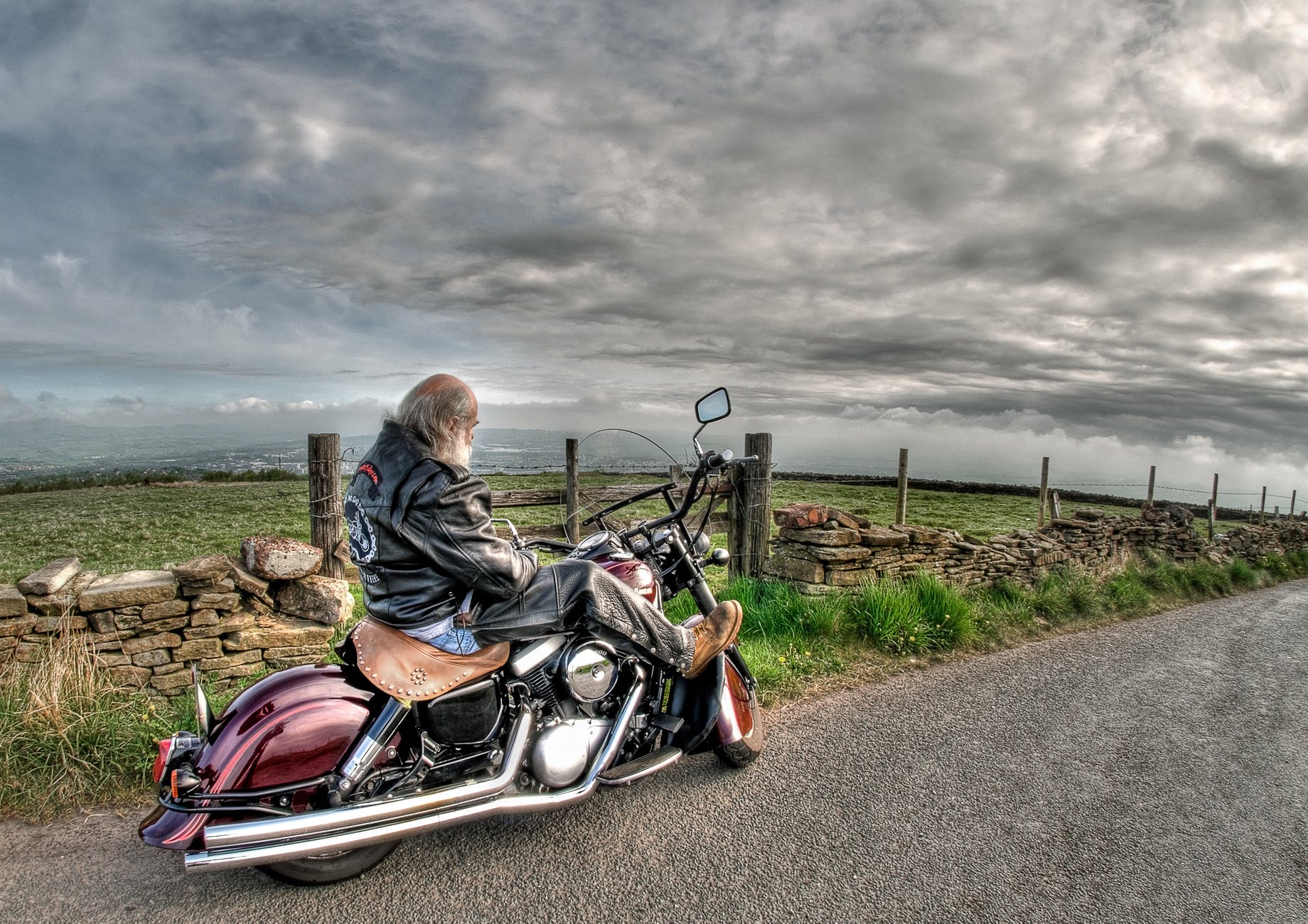
Years ago, a good friend of mine suggested that I read a book called “God On a Harley” (Review and summary here) It is a fable, and an interesting read. I don’t recommend it for theological content (the Christ it presents is more of a New-Age life coach, not a Messiah), but I’m glad I read it for two reasons: It challenged my conventional view of Jesus, and it challenged the way I thought about discipleship. At the time I was reading the book, I was also considering making some big changes in my life– changing careers, moving away from my home town, and trusting God to be “sufficient” in my singleness and lack of guaranteed income.
When we talk or think about Jesus’ time on Earth, we generally focus on His birth, His miracles, His death, and His resurrection. We don’t usually think of His everyday life…where He ate or slept or how He lived. If He were to walk among us today, He wouldn’t appear like the paintings we see– flowing long blond hair (which has always been inaccurate), white robe and sandals. He might wear a T-shirt and jeans, ride the bus or subway train, and hang out at Starbucks or the corner convenience store. Jesus didn’t live in a “holy huddle.” And, though He famously walked on water, He mostly walked the streets. He lived and walked and ate and spent His days among ordinary people–in fact, it was His willingness to eat with and talk to the marginalized, the forgotten, the ostracized people of Him time, that got Him in trouble with the religious leaders and those in power.
I don’t think Jesus in our time would be a tattooed, beer swilling, biker– but I’m convinced that He would be found sharing a story or a pizza with one; and with the kinds of people many of His “followers” would shun. The Jesus I want to follow “more nearly” is Holy, but He is not “Holier-than-thou.” I can’t follow Jesus more nearly if I’m following an image that only exists in a picture or my self-righteous imagination. In my youth, I had a picture of what “following Christ” looked like– but it was more about following expectations and selfish desires– successful career, marriage, giving to the “right” charities, becoming a pillar of the community. There is nothing wrong with any of those things, but if God calls me to serve in humble (even humiliating) ways, doing thankless tasks, and spending time, not helping the needy at my convenience, but truly serving– pouring out my time and my heart until only His strength keeps me going–I have learned the joy and honor that transcends anything I once imagined.
I’m not a biker, but I love the image of Jesus on a motorcycle, asking me to come along for a ride. If I want to follow Him “more nearly,” I couldn’t come up with a better metaphor. If Jesus came and asked me to ride off with Him on a Harley, several things would happen that relate to discipleship:
First, I have to commit. You can’t “sort of” ride along — you either get on the bike or you stay behind. You might know all about the motor, you might know how to ride, you might know the traffic laws, you might even watch a video of someone riding, but you won’t experience the horsepower under you, the wind in your face, the road slipping away behind you. The same is true of the Christian life. You can know about God; own a Bible– even memorize it; you can sing God’s praises, all without experiencing a relationship with Him. But you’ll never know the full power of His grace and acceptance until you commit.
Part of that commitment is to be willing to go when and where He’s going…you can’t go on the ride and stay at home. You can’t go two hours after He does. And that brings me to–
Trust! You won’t get on the bike if you don’t trust His ability to drive and His wisdom in knowing how and where to go. Once you’re on the bike, hanging on from behind, you can’t see all of the road ahead. You can’t steer or hit the brakes. In my own experience, I ended up leaving teaching after seven years with no “safety net.” I had no job waiting in the wings, no money saved up, and no “plan” other than to take whatever honest work I could find and follow God’s leading. I learned by experience that I can trust God’s ways to be better than mine; better than my expectations!
Riding together takes teamwork. Just because God is doing the driving and steering doesn’t mean that I just sit back and watch the scenery (though I can do a lot of that, too). If I’m not paying attention at curves, intersections, stops, turns, etc., I can throw everything off-balance.
Riding together, with my arms wrapped around Him is the closest I can “follow” Jesus. It’s not about what I know, or what I can “do” for God– it’s choosing to be in a deepening relationship with Him. As I live with Him, listen to Him, and trust Him, the knowing and doing will come naturally.
I want to follow with abandon– not just to walk several steps behind, or wander in His general direction, or watch what He’s doing from a distance. I want to hang on and share the adventure. That’s the way I want to “walk” with Him. That’s my prayer, “Day by Day.”
How can I love Jesus more than I already do? If I can love him more, does that mean that I don’t love Him enough? That I don’t really love Him as much as I think I do? That I love Him the wrong way? How can I “love thee more dearly…day by day”
I want to explore the second prayer in the folk rock song “Day by Day” from the musical “Godspell” (see my last post). When I write about pursuing prayer, this is a major focus of the pursuit– to develop my love for Jesus. But there’s more to it than just spending more time, or even “better” time in prayer.
I love my husband, and that love grows over the years– not because we are in an eternal “honeymoon” period, where life is rosy and all I know about him is the wonderful image I’ve built up–but because in living with him, working with him, even struggling with him, I learn to value who he really is. I learn about qualities I never knew he had. I learn to trust him and respect his judgment; I learn about the deepest part of his heart that he only shares with those closest to him. And even though I learn about his faults, I see him desiring to be the best that he can be. In his turn, my husband does the same with me– learning my strengths and weaknesses. Together we learn how to work together to strengthen and support each other. We even learn how to argue better!
But we all know marriages (and no marriage is immune) where doubt, distrust, disdain, and despair creep in. The very qualities that attracted us in the beginning become sore spots that tear us apart. The joy is swallowed up in little hurts that go unresolved; little misunderstandings that grow into lengthy silences and slammed doors. Struggles that should bring us together cause us to run to separate corners. Our feelings change, our hopes are dashed, and our relationship crumbles
Relationships require trust–if I say that I love God, but I don’t trust Him, I’m not being honest with myself. If I pray to Him, but I don’t really think He’s listening; if I read His word but make excuses for my continued disobedience–I don’t really love Him. I may idolize Him, even worship Him. But I don’t really love Him.
Unlike a marriage partner, family member, or close friend, God’s love for us never changes. We never have to pray that Jesus should love US more dearly. It’s impossible. The same love that spoke the universe into being and designed you to be the awesome and unique person you are, is the same love that stretched out his arms so they could be nailed to the cross– the same love that calls out to you no matter what you’ve done or who you are and offers you peace, joy, and rest. Loving Jesus isn’t a matter of measuring how I feel about Him from day to day, but spending each day learning to know Him better for who He is and not just what He has done or what He can do for me. The prayer should be for me to really learn better how to honor Him, how to trust Him, how to obey Him, praise Him, listen to Him, and walk close to him.
Spring has arrived. In my part of the world, that means many people are hoping for milder temperatures, gentle spring rains, and new growth after the cold and colorless winter. Most of us love the idea of spring, and the promise it brings. Those soft days of baby birds chirping outside our window as the gentle raindrops roll down; of newly budded trees and flowers opening to the warmth of the sun; the smell of freshly turned earth in gardens and fields; the bleating of lambs and the down of chicks and ducklings; children squealing in delight as they leap from puddle to puddle in their colorful boots; the world slowly waking up in a thousand shades of green..
Of course, it never seems to go exactly like that– sometimes the weather this time of year can be volatile– tornadoes, freak ice storms, sudden heat waves, flooding, or a mix of all of the above in a matter of hours! Chirping birds can’t be heard over the roar of traffic and blaring car radios. The smell of exhaust chokes out the aroma of rich dirt or fresh flowers. The same rain that brings puddles also brings mud and run-off and potholes in the road. And, possibly because we have such expectations of spring, it seems to fly by and disappear almost before it comes. There is a joke that sort of summarizes the unpredictable nature of spring around here– “I love spring in Michigan (or insert another Midwest state)– last year it was on a Wednesday!”
Like the season of spring, prayer holds promise and expectation. God promises to hear our prayers, but sometimes our expectations are not in line with God’s answers. Farmers pray for dry days to plow and plant, and rain to come before and after to soften the earth and water the seeds. Little League players want the rain to come on Monday, and the diamond to be dry by Saturday. School children want the rain to come overnight, so the playground will be dry for recess. Commuters want the rain to fall after they drive to work and before they have to drive home. All may pray for rain, but not in the same way, for the same reasons, or at the same time.
We all want the promise of easy growth, gentle weather, and comfortable routine. But God’s plan may involve blustery days and muddy driveways. God will bring rain, and sunshine, in his time. He will calm the storms and blow away the clouds. He will send us flowers and rainbows, and perfect days for flying kites and playing baseball. And maybe, this year, it will be on Wednesday! But the stormy days remind us of three things:
God is with us through the storm. He is with us when the rains come; and when the clouds roll back to reveal the rainbow. He knows the pain you feel when you view the storm damage and assess the loss. Even as the seasons change, he has promised to be with us always
God is stronger than our storms. His ways are wiser than ours, and his plans are better. We may be drenched and covered in mud when we expected to be dry and comfortable, but the race isn’t finished yet. We may fall down, but we’re not out! He can give us the resources and the power to rebuild, renew, and start over. No matter how short (or long) our season of storms, it is only a season– it will pass. Just as winter gave way to spring, spring leads to summer–sometimes overnight; sometimes in fits and starts.
God is eternal. Storms and seasons are local and temporary. I may be experiencing spring in Michigan, but others are experiencing rainy season in India, or “fall” in New Zealand. It can be sunny here, and snowing in Minnesota, and raining at my cousin’s house in Alabama. And when I am praying for rain, someone close by is praying for sunshine. But someday, and for all eternity, God will be our source of light– there will be no need for storms and seasons, no need to pray for rain.
“They sow the wind, and reap the whirlwind…” Hosea 8:7
Hosea was a prophet who foretold the destruction (and eventual restoration) of his people. God was pouring out his judgment against an unfaithful nation, and he used the tragic family life of Hosea as a living example of his dealings with Israel. Hosea married a prostitute; an unfaithful and unloving spouse who chased after men with ready money and cheap gifts. But when her activities resulted in slavery, shame, and despair, Hosea redeemed her and restored her as his wife. In the same way, God had made a promise to the people of Israel, but they had broken their covenant and followed their own rules, chasing after the surrounding cultures, with their foreign gods and their hedonistic rituals, including human sacrifice, temple prostitutes, and divination. There are many metaphors used throughout this book, but one that often stands out is the short phrase found in chapter eight. In it, God is talking about the unfaithful priests and leaders of Israel, who have not only betrayed God in their rebellion and idolatry, but have led others astray. God says of them that they have sown the wind, and are reaping/will reap the whirlwind.
How does this relate to us today in our pursuit of prayer?
I believe that many of us are sowing the wind– we do it in our careless words, gossip, rumor-mongering, complaining, babbling, prattling, and yes, in our half-hearted obedience, and our tepid prayers. We often come to God, not eager to commune with him, or to hear his voice, not in humble adoration and open confession, but to complain, wheedle, and boast. We pay lip service to his Holiness, while refusing to give up that bad habit that “isn’t really all that bad.” We thank him for his Grace, but harbor resentment against a neighbor or family member who slighted us. We ask for him to bring us success in our plans and ventures without really making sure if they line up with his will. We excuse our lack of attendance at church, and our failure to spend time in God’s word. We make rash promises to do “better” if God just gets us through this week. We ask for his blessing, and thank him for the riches he has bestowed on us, but we turn our noses at those in our backyard who are in need. We are bold about posting “Christian” sayings on Facebook, X, Pinterest, and Instagram–almost as bold as posting about our favorite new Brew Pub or Spa trip or “almost inappropriate” joke, or latest political rant. Except that our “Christian” posts are less entertaining and more critical of others. (They’re usually really pretty, though– pictures of flowers or mountain streams or desert sunsets–it’s really easy to “like” and “share” a sunset!.) We cheapen the Gospel, we cheapen the Christian walk, we cheapen prayer, when we pursue it as a hobby or a social habit. Bur prayer is not something we do only because (or only when) it makes us feel “good” or “better”– it is something we pursue because it brings us life and peace for eternity, and it brings glory and joy to the King of Kings.
“They sow the wind, and reap the whirlwind…” There is a price for this shallow, careless pursuit of something that looks and feels vaguely like Godliness. It is the whirlwind…being tossed about by “every wind of doctrine” as Paul warns against in Ephesians 4. It is being caught up in doubts and half-truths, compromises, hypocrisy, division, scandal, and shame. It is having to face the onslaught of detractors and persecution that come as a result of so many of us abusing and misrepresenting the very Gospel of the one whose name we carry. “Oh, what peace we often forfeit; Oh, what needless pain we bear; All because we do not carry everything to God in prayer.” The words of that old hymn are no less true today– when we trifle with prayer, carrying only our selfish needs, our petty complaints, and our flimsy agendas to God in prayer, we pay a huge price.
There is another metaphor, this one in the Gospel of John, that I think helps us combat this tendency to “sow the wind”– Jesus says of himself in John 15 that he is the vine, and we are the branches. If we are faithful, we remain in him– we draw our life and strength from him– and we are fruitful. Remaining in him, we are grounded– he provides the roots that keep us from blowing every which way. And he provides the nourishment, and strength to grow and produce more fruit.
I say “we” because I too am guilty of having sown the wind. The great news, in Hosea and in the Gospel of John, is that God is eager to restore us– to graft us in–to welcome us home after our storm-tossed wanderings. Let’s get serious about abiding in God, instead of scattering the latest “feel-good” religious spam. God, forgive me for the times I have cheapened your precious gift of prayer. Help me to abide in you, and refrain from careless words to you, about you, and about others.
Full disclosure– I’m not any type of expert on either prayer or journal writing. But I do keep a prayer log of sorts, and I want to share how that works for me, and why I think it is helpful.
My prayer “journal” is actually a set of four standard notebooks I picked up on sale about two and a half years ago at an office supply store. Each notebook has 100 pages. I have labeled each page with a day (February 12, for example) at the top– three months to each notebook. Below the date, I list people I know who are celebrating birthdays or anniversaries that day, as well as people who died on that day. Below that, I save space for urgent prayer requests as I become aware of them. To the side, I list a place (a country, city, or community) to pray for that day. In the front cover or each notebook, I have a list of focus areas to pray for each day of the week, as well– things like family, leaders and authority figures, cultural issues, missions, etc. The back side of each page is left to record answers, results, and updates.
The journal/notebook approach is not meant to lock my prayer life into a fixed routine; it is not a checklist of what I must pray for each day (and nothing else or added to everything else). I don’t take the notebook with me everywhere– instead, I have a small notepad in my purse to jot down thoughts or requests. Sometimes, I record these in the larger notebook later, but not always. I review the journal once a day, but I pray throughout the day– sometimes raising the names and places in the journal, other times people or situations as they come to my heart or mind. The point is not to make an unnecessary burden of prayer. The point is to remind me that prayer is a pursuit–an ongoing discipline as well as an intimate pouring out of my heart to God.
I’ve come to delight in turning the pages to see:
who is having a birthday/anniversary today– who might be encouraged with a FB post, a call or card or e-mail message
where in the world can I lift up people I may or may not know? There are enough days in the year to pray for every country in the world, every U.S. state, and several major world cities or local communities–and while my list is in alphabetical order, I could have organized by geographic location, or simply listed random places for each day. Some days, the places are familiar; other days I am inspired to look up information on places like Burkina Faso or find out more about West Virginia…
what was I praying about a year ago? Often, I find that my prayers have fallen into a particular pattern– and maybe I need to redirect my focus. Have I been mostly coming to God with burdens, or do my prayers reflect a heart of worship? Humility? Dependence on Him?
how faithful God has been over the years! Maybe there’s a burden that I’ve been praying about over many months or years, but far more often, I have forgotten the “urgent” need I was praying about just a few months ago–God answered in ways I did not anticipate. And those requests that are still “unanswered?” God HAS an answer. I just don’t know it yet.
Does the journal make me a better person or a better pray-er? Well, prayer isn’t a competition, so while I would hope that it helps me develop perseverance, compassion, faithfulness, hope, trust, and wisdom in the practice and pursuit of prayer, it doesn’t make me or my prayer life “better” than someone else’s. It is, however, a tool that is helping me chart the progress in this pursuit, and so I recommend it based on that experience.
If you feel (like I did for so many years) that your prayer life is haphazard and you want to grow in prayer, I encourage you to start with a simple journal– you don’t have to write out every thought or every request. You don’t have to have a plan for every day. But keep a remembrance of your prayer life –even a single item each day for a week, or a month–to look back on, and to move you forward.
For more detailed information, see my page about prayer journaling. Or do a search for “prayer journals.” You may find a system that works better for you– not because prayer needs to be systematic, but because prayer is a journey, and every journey can benefit from a journal!
Yesterday, David and I attended a family reunion. It was a relaxed atmosphere of cousins and siblings reuniting to share memories, and great food! As with all family gatherings, there were some who couldn’t make it– work, previous commitments, travel tangles, etc. Others chose not to come– some have been hurt in the past; others never saw their invitation; some just don’t like the other members of our family or don’t want to spend their time with family when they could be doing something else…
David and I went, not only because we genuinely enjoy spending time with family members, but also because I wanted to share the progress of a book I’m writing about our shared ancestors, George and Lila Green of Penn Township, Cass County, Michigan. I’m named after my great-grandmother, and I have been blessed to receive several boxes of memorabilia, including letters, photos, diaries, and other writings that cover many of the events and memories of their lives spanning over fifty years of marriage. I’m excited to have access to so many primary source materials for a family history.
As I brought in my “dish to pass,” I noticed that one of my cousins had the exact same idea as me! We had each brought two trays of devilled eggs– 40 each and 80 all together! We compared notes on recipes, and agreed to taste each other’s eggs to make sure they were all good– and they were all awesome. There were only a few eggs left after all the food was eaten– and there were fewer than 80 people in attendance, so it seems that almost everyone enjoyed at least one egg, and several came back for seconds, in spite of the fact that there were other wonderful dishes to enjoy. There can never be too many devilled eggs at a family reunion!
Before I got a chance to share about my book with everyone, I spoke with a couple of my cousins, and they shared some of their memories of my great-grandmother. Near the end of her life, she battled cancer, and near the end of her earthly struggle, she imparted to some of her grandchildren that she had a vision of an angel asking her if she was “ready to go.” She answered that she was. A few days later, she passed into glory. This was a great comfort to those who faced “losing” their loved one. Two different cousins recounted the same tale, which confirmed for me that her words (and her strong faith) had a great impact on our family.
One of the reasons I feel compelled to tell the story of my great-grandparents is the lasting legacy of Faith and Family that they left behind. From just two people who married in1909, the family grew over a century to include over 500 individuals! And, while some of them have abandoned the faith (and/or the family), most have stayed connected– we’ve had family members who have served as ministers, missionaries, Sunday School teachers, BIble study leaders–even a stray blogger or two! In every generation, we have had family members who can testify to the power of God’s love, His provision, His healing, and His faithfulness.
In sharing about my book, I read passages from Lila Green’s diary recounting her attendance at a church Christmas Program at the little country church where, years later, I would first hear the truth of the Gospel. She was so excited that 14 of her family members were part of the program, while 19 family members were in attendance! Some who were at the family reunion were among those 19 members attending church with Lila Green almost 70 years ago. And many in the fourth and fifth generation after her came to the reunion after attending church with their families in a different millennium. I also read about some of George and Lila Green’s own ancestors– many of whom served in churches dating back to the American Colonial Era– Quaker Churches and Baptist Churches and log cabin churches and churches held in homes and school buildings over two centuries removed from our small gathering yesterday.
Bethel Community Church– where over four generations of my family were introduced to the Gospel!
God is faithful. God created families to demonstrate His faithfulness across generations. When we teach our children about God, we continue to proclaim that faithfulness to the next generation. And when we teach about our family history, we demonstrate God’s faithfulness, not just to the patriarchs of the Bible but to “real” people just like us– people who faced sickness, hardship, and loss. People who had pets and hobbies, and even squabbles with their siblings over toys! Yet God has been there over all the years, teaching, giving wisdom, and loving them–and us– every hour of every day.
I think God was listening in when my cousins recounted my great-grandmothers vision. I think He probably had fun watching my cousin and I trading “devilled egg” recipes and tips. And I know He looked lovingly at each precious family member yesterday– those in attendance, as well as those we missed seeing.
I know not everyone has a happy family legacy like mine. But I also know that it’s never too late to start one! Who knows what another 100 years might bring to your descendants?! Who knows what kind of legacy you can leave behind? God knows! I pray that you will be aware this week of all the many ways God has blessed you over the years– perhaps through your family legacy…perhaps in spite of it–and that you will experience gratitude, peace, and joy in the knowledge of how God can take even just two people and bless thousands!
*Note: This was a post from a couple of years ago, but I thought it was worth posting again, as this past week has also been somewhat hectic…
This has not been a “peaceful” week– unexpected changes of plans, setbacks, last-minute opportunities–even the good things have not been restful or without some stress. I’m writing this mere hours before it’s supposed to be published. It’s getting close to midnight, and I’m exhausted. I’ve had writer’s block, and decided to look through an old hymn book for inspiration.
Happening upon an old favorite, I was ready to turn the page– I’ve already used this hymn for inspiration before. But one line caught my eye in a new way: “O, what peace we often forfeit, O, what needless pain we bear All because we do not carry Everything to God in prayer!” I’ve sung this hymn dozens, maybe even hundreds of times, and I always focus on the last phrases. I know so well the “needless pain” of not praying. I also know the restlessness and stress of “going it alone” and not seeking God first. But I was struck anew by the phrasing.
Most of us would say that we are seeking peace, not asking for stress or anxiety or worry. We would say that we finally find peace when we pray. But how many of us are aware that we already HAVE peace, and we are losing it or even giving it away when we don’t pray?
What a friend we HAVE in Jesus All our sins and griefs to bear What a privilege to carry Everything to God in prayer Jesus has already promised us PEACE–“Peace I leave with you; my peace I give to you. Not as the world gives do I give to you. Let not your hearts be troubled, neither let them be afraid.” (John 14:27 ESV) ; “do not be anxious about anything, but in everything by prayer and supplication with thanksgiving let your requests be made known to God. And the peace of God, which surpasses all understanding, will guard your hearts and your minds in Christ Jesus.” (Philippians 4:6-7 ESV)
Prayer doesn’t just help us find peace, it keeps us from losing peace.
I found that to be true this week–even with the surprises and last-minute changes, I have felt a peace that I can’t explain through ordinary means. It isn’t anything I’ve done differently, or anything about my circumstances. It comes from taking everything to God in prayer. I didn’t have to “find” peace– I never lost it!
What a wonderful privilege! (And, by the way, the writer’s block I was experiencing evaporated as soon as I refocused on taking it “to the Lord in prayer!”) It is still before midnight, and I will sleep in peace.
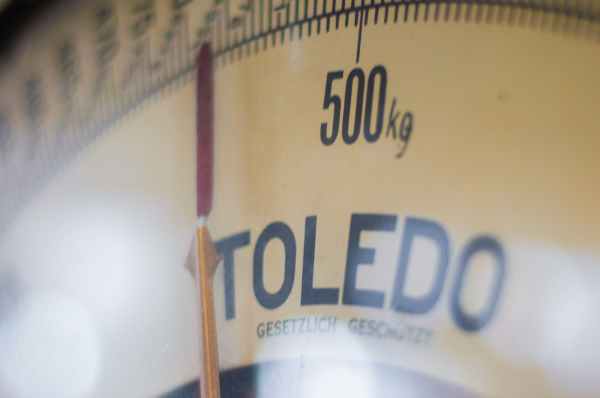
Words have weight– I’m not talking about thousand-page novels or multi-syllable legalese terms– some words simply weigh heavier on the mind and heart than others. Some everyday words spill out like dust motes carried on a light breeze. They hang suspended in midair, without any set purpose or destination, and finally settle, forgotten, until someone sweeps them away. Other words explode, sending shards and pellets at unwary targets. Some words thunder like falling rocks in an avalanche of guilt or anger or hatred. And some rare and precious words have the weight of a quilt or a hug, or an arm lifting you up when you are falling.
One of the amazing things about prayer is that as we pour out our words before the Savior, the weight of our words is lifted off our hearts and minds and given to him to carry– the weight of the guilt, the weight of worry, the weight of grief, the weight of anger, the weight of hurt. Not only does God take on the weight of our words (and our pain and guilt), but he makes sense of it all– maybe not instantly, or in the way we imagine– but he brings order and goodness out of our chaos and burden.
And those everyday words swirling around like dust fall into the light, where they shine like gold dust in His presence. When we bring everything to God, he transforms it; he transforms us.
Our words have weight in prayer. And our words to others have weight, as well. Today, I want to weigh my words carefully. Are my words burdening others, or helping them lift a load of care? If I had to carry the weight of my words– my criticisms and clever put-downs, my accusations and angry tantrums, my bragging and comparisons– would I be dragging them behind me with joy and pride? What if, instead, my words were filled with the weight of shared laughter, encouragement, hope, and compassion? What if my words held the weight of truth and kindness and peace?
Social media is a dangerous place these days. Everyone is an expert on something– pain, medicine, race relations, politics, religion… I’m an expert, too. I am an expert in my own opinion! I know all I ever need to know about how I feel, what I’ve experienced, how I would solve all the world’s problems, and what everyone else should know, do, and think.
And when I pray, I am an expert in what I want, and what God should do–right?
Turns out, the Bible disagrees with me. Prayer is not about telling God what I think He should do. And one of the things He doesn’t want me to do is go about telling everyone how much I know and how right I am about everything.
I know– it flies in the face of common thought and practice. But my words are not to be about how good I am, how smart I am, how righteous I am, how “woke” I am, or how tolerant I am. My words shouldn’t be all about ME. When I do speak (or write), it should be for one of four reasons:
To praise– to bring honor and glory to God for who He is and all that He has done. To rehearse and proclaim His good deeds and righteous acts so that others may hear and praise Him, too.
To encourage, build up, edify, or heal others. Words have the power to bring hope, energy, confidence, light, and love. They also have the power to destroy, devalue, and discourage. Finally, words have the power to suck energy, waste time, and bring confusion and chaos. When I speak carelessly, selfishly, or foolishly, it does nothing to build up others. (And it probably doesn’t do me much good, either!)
To speak truth and stand up for righteousness–not in an arrogant way, and not to win “points”, but to honestly and firmly defend what I know to be true. I must realize that there will be others who will stand in opposition to the truth and refuse to hear what I say. Others will misconstrue and misrepresent the truth. It is NOT for me to make them believe– only to stand up and give voice to the truth when I see it under attack.
To express unique and creative thoughts, which is part of praising my maker. Everyone has SOMETHING to say– something that expresses their inner thoughts and unique perspectives. That should cause me to take great joy. And it should cause me to take the same joy in helping others find their voice and share their stories and ideas. Not because I’m “right” about the world, or because they are “right” in their ideas. But because God gave each of us a voice. I can listen and not agree; they can do the same. But sometimes, in the act of listening, we do more to come to understanding and agreement than we ever do by speaking. And in being allowed to speak freely, we might listen to ourselves more carefully, too.
Jesus spoke wonderful parables, deep and thoughtful prayers, piercing sermons, and tender words of encouragement and love. But He also listened–not only to the critics and enemies, but to those who hid in the shadows; those who were outcast and oppressed; those whose voices were drowned out by the crowds. He was RIGHT! More than anyone ever, He had the right to be heard…He chose to listen as well as speak. Jesus was more interested in being Himself than being “right.” More interested in showing love than showing off. More interested in understanding than overpowering. Jesus spoke–but He also laughed, and wept, and lived, and listened.



































 Pursuing Prayer