Spiritual Understanding

5-9 So don’t lose a minute in building on what you’ve been given, complementing your basic faith with good character, spiritual understanding, alert discipline, passionate patience, reverent wonder, warm friendliness, and generous love, each dimension fitting into and developing the others. With these qualities active and growing in your lives, no grass will grow under your feet, no day will pass without its reward as you mature in your experience of our Master Jesus. Without these qualities you can’t see what’s right before you, oblivious that your old sinful life has been wiped off the books.

2 Peter 1:5-9 (The Message– emphasis added)
Photo by Tobias Bju00f8rkli on Pexels.com

“For my thoughts are not your thoughts,
and your ways are not my ways.”
This is the Lord’s declaration.
“For as heaven is higher than earth,
so my ways are higher than your ways,
and my thoughts than your thoughts.

Isaiah 55:8-9 (Christian Standard Bible)

I do not understand God’s ways. If I try to work it out with human understanding, I will never make sense of how God works. I don’t have His wisdom or omniscience; I don’t have His eternal perspective or omnipotence. God will never answer all of my questions; He will never reveal all of His plans or reasoning to me. He calls me to walk in Faith, not by sight (2 Corinthians 5:7) This is a stumbling block to many. It is especially frustrating for those who think they already DO know (almost) everything, and believe that they should be able to speak to God as a peer, even to be able to consult Him! I knew of a man (a convicted felon) who refused to repent of his actions. He admitted that he had done wrong, and that his prison sentence was deserved, but when challenged with how he would answer before God, he simply said–“God and I will come to an understanding.” He simply felt that if he explained “his side of the story,” God would change his immutable commandments and make an exception.

Photo by Armin Rimoldi on Pexels.com

God doesn’t need anyone to “explain” anything to Him. Nor does He “owe” any of His creation an explanation for His actions or seeming inactions. I will never understand why certain injustices are allowed to happen, and seem to go unpunished in my lifetime. I don’t understand God’s timing in my life– why my father died when he did, or why I had to wait so long to be married. But I am learning to trust that God knows every injustice, every need, every situation we face, and that He WILL make all things “right” in HIS time and in His perfect way.

Photo by Munmun Singh on Pexels.com

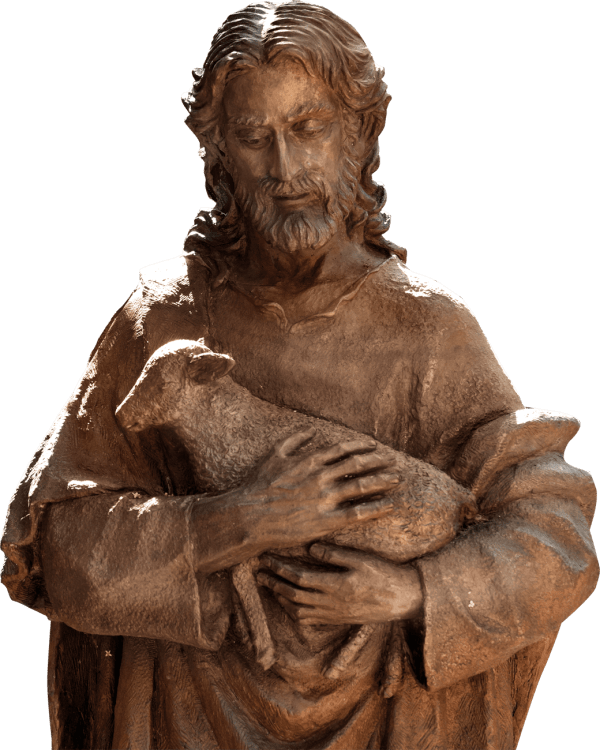
Spiritual Understanding has to come from the Spirit. It cannot come through our own wisdom or learning. It has to be built, not just on Faith, but on acting in Faith and walking humbly in conformity to our Good Shepherd’s example. We must become, not just “fans” of Christ, or even just students of Christ, but disciples of Christ, if we want to begin to have greater understanding. Like the apprentice, who must learn by doing, so we must learn through practice of God’s Word. We must also ASK for wisdom and understanding. (James 1:5) They are gifts, just like Salvation. We don’t earn understanding; we are granted it as we walk in obedience and faith.

Photo by Keenan Constance on Pexels.com

Today, my prayer is that I would receive insight as I learn to trust, and I would trust that God will give the wisdom I need for the day ahead– no more or less, and not a moment too late or too soon. And experience confirms that He is faithful to do just that!
For Goodness’ Sake!

5-9 So don’t lose a minute in building on what you’ve been given, complementing your basic faith with good character, spiritual understanding, alert discipline, passionate patience, reverent wonder, warm friendliness, and generous love, each dimension fitting into and developing the others. With these qualities active and growing in your lives, no grass will grow under your feet, no day will pass without its reward as you mature in your experience of our Master Jesus. Without these qualities you can’t see what’s right before you, oblivious that your old sinful life has been wiped off the books.

2 Peter 1:5-9 (The Message)
Photo by Lukas on Pexels.com

What does it mean to be “good?” This is a question that Jesus posed to the Rich Young Ruler in Luke 18:

18 A certain ruler asked him, “Good teacher, what must I do to inherit eternal life?” 19 “Why do you call me good?” Jesus answered. “No one is good—except God alone. 

Luke 18:18-19 (NIV)
Photo by The Lazy Artist Gallery on Pexels.com

Jesus went on to list several Biblical commandments– you shall not commit adultery, you shall not murder, you shall not steal, etc.., but even when the young man answers with confidence that he has kept all these commandments, Jesus says, “you still lack one thing. Sell everything you have and give to the poor, and you will have treasure in Heaven. Then come, follow me.” (v. 22)

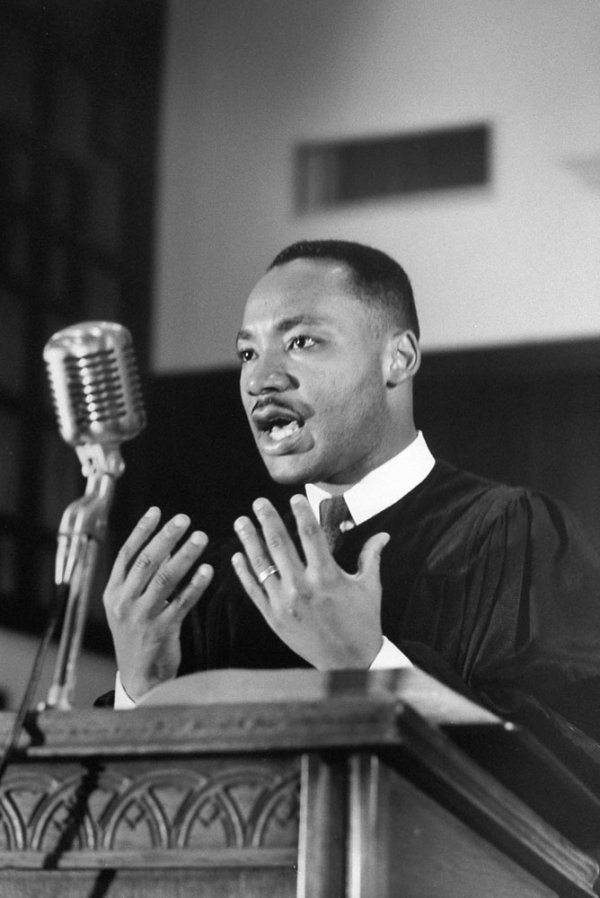
Civil Rights activist Rev. Dr. Martin Luther King Jr. gesturing during sermon at Ebenezer Baptist Church. (Photo by Donald Uhrbrock//Time Life Pictures/Getty Images)

Being “good” is not a matter of avoiding evil. It is more than being “correct” in our principles, and upright in our actions. Martin Luther King, Jr., in his famous address in 1963 said that he dreamed of a day when his children… would not be judged by the color of their skin but by the “content of their character.” Character, and more specifically the “good character” mentioned by Peter in the above passage, includes thoughts, principles, actions, and habits by which we are judged. I may never commit murder in the literal sense, but I will be judged wanting in character if my words and actions are vicious, snide, malicious, sarcastic, and brutal. I may never be convicted of theft, but I may be judged harshly for being ungenerous or miserly toward those in need. Dr. King wanted his children to be judged–positively–for their character, not for something as superficial and arbitrary as skin color, nor for whatever they hadn’t done.

Photo by HASSAN YAR JANJUA on Pexels.com

The young ruler in Luke’s story, not willing to give away his possessions, went away disappointed. But he missed the more important calling– “Then come, follow me.” Jesus wasn’t being self-effacing when He asked, “Why do you call me good?” Far from it! Jesus WAS good– He was (and is) the embodiment of Goodness! It is not through ritualistically following the commandments that anyone becomes “good.” It isn’t even in the self-sacrificing act of giving away one’s possessions. It is in the humble act of following the Master! To follow Christ is to step out in faith, and to walk in goodness.

Photo by Taryn Elliott on Pexels.com

Peter makes the natural connection that James also makes in his epistle– that Faith, while fundamental, must build good character through our actions, words, and habits. Faith, without works, is dead. (James 2:14-26) So the next building block is developing a good (or Godly) character. Our lives should reflect the Goodness of Christ. We won’t be perfect. But we will be given strength and guidance by the Holy Spirit to walk in Goodness. And as we walk, we will build on that foundation with the next step…Spiritual Understanding. (More about that next time.)

Today, I pray that God will show me how, and His Spirit empower me, to develop in goodness; that I would become more like the “Good Teacher” who is also my savior and Lord. For Goodness’ Sake!

Don’t Lose a Minute…

5-9 So don’t lose a minute in building on what you’ve been given, complementing your basic faith with good character, spiritual understanding, alert discipline, passionate patience, reverent wonder, warm friendliness, and generous love, each dimension fitting into and developing the others. With these qualities active and growing in your lives, no grass will grow under your feet, no day will pass without its reward as you mature in your experience of our Master Jesus. Without these qualities you can’t see what’s right before you, oblivious that your old sinful life has been wiped off the books.

2 Peter 1: 5-9 (The Message)
Photo by Liza Summer on Pexels.com

The Apostle Peter was writing to people in the early church– people who were under enormous pressures and persecution. The Epistles of 1 and 2 Peter are filled with dire warnings– and urgent calls to action! Earlier in his first letter, Peter spoke of prayer: “Give all your worries and cares to God, for he cares about you.” (1 Peter 5:7 New Living Translation). Prayer is primary, but it must be paired with action. In this passage, Peter lays out a progression of characteristics to pursue. We must actively chase after a Godly character. It will not develop in a vacuum. We must build on our foundation, and keep building up– so that we can build up others as well!

Photo by SHVETS production on Pexels.com

The foundation is basic Faith. We need a bedrock, solid and sure; unmoving and capable of handling stress and pressure. In our own power and our own wisdom, we will crumble under the kinds of stress and persecution we may face in modern circumstances. We need to trust God– and seek to trust Him more completely–before we can advance in Christlikeness. We will be tempted to doubt– that is normal in a broken world. But we must continue to bring those doubts before the power of the Holy Spirit’s guidance. Doubts, like other challenges, will test us. The challenge of doubt is particularly tricky, because the more we try to wrestle in our own mind, the more doubt (aided by pride) can take hold. It is counter-intuitive. The more I try to answer every doubt and every contradiction– the more evidence and reassurance I require before I am willing to trust, the less I am likely to find faith. Faith is like a muscle– if you never exercise it– you will hardly know it’s there. But when you need it, you’ll wish you had worked out more! Faith is not fully developed overnight. God will NOT answer every question, settle every niggling doubt, solve every seeming contradiction. But He HAS promised not to leave us alone, without hope or help. And when we do exercise Faith, we will learn to trust more. As we learn to trust God’s wisdom and provision, we will develop our other muscles…like goodness, self-discipline, and self-sacrificing love!

Photo by Niko Twisty on Pexels.com

I like the above translation, because it stresses the urgency that is a core of all Peter’s writings. “Don’t lose a minute…” Don’t waste time in second-guessing, excuse-making, distractions, or empty arguments. Don’t lose the opportunity to see God’s work unfolding as you take baby steps of Faith! Don’t become complacent, and lag behind, losing momentum and focus! Chase after Faith! Cling to the “hem of His garment”

20 Then suddenly a woman who had been suffering from hemorrhages for twelve years came up behind him and touched the fringe of his cloak, 21 for she said to herself, “If I only touch his cloak, I will be made well.” 22 Jesus turned, and seeing her he said, “Take heart, daughter; your faith has made you well.” And instantly the woman was made well.

Matthew 9:20-22 (NRSV)
Photo by Andrea Piacquadio on Pexels.com

We may not see the instant miracle of this woman, but our faith WILL make us “well.” It will change our perspective, open our eyes, and chase away doubts like a breeze chases away a cloud of smoke.

Peter’s list is worth exploring more deeply. I’ve looked at Faith today…next time, I want to explore good character (also translated as “goodness,” or “moral excellence.”) Today, I pray that I would build on the gift of Faith, and strive for a deeper faith, aided by the Holy Spirit, as I face whatever challenges life brings.

Laundry List Prayers

Do you ever feel like your prayer life has become an endless pile of laundry lists?

Photo by cottonbro on Pexels.com

I keep a prayer journal, and I have daily “prayer points” that help focus my prayers, but I have to be careful not to let my prayer life become all about “ticking the boxes.” It’s easy to see a list of names or a topic on paper or a screen, and make prayer about what is written in my journal, or making sure I don’t “miss” someone on the list. Prayer is a conversation, and it should flow like one. I would not like to have a conversation with someone who came to me with a long list of requests and nothing else.

Photo by cottonbro on Pexels.com

That doesn’t mean we can’t bring our requests to God– we should! And sometimes it makes sense to list them out methodically and specifically. But it’s also important to remember that God already knows all the concerns of our heart. He is eager to hear from us— not just our concerns, but our other thoughts, too. He wants to hear our excitement and joy over small triumphs; our questions and ponderings; and all the little things that make us go, “hmmm.”

Photo by Andrea Piacquadio on Pexels.com

When Jesus taught His disciples how to pray, He didn’t have a list of names or specific situations. He asked that “Thy will be done in earth as it is in Heaven.” (Matthew 6:10). He asked the Father to “give us this day our daily bread,”(v.11) without specifying when or how. And He asked, “Forgive us our debts, as we forgive our debtors,”(v.12) without naming names or reminding God of the debts involved! Sometimes we need to be reminded that that God knows our needs, our neighbors, and our universe far better than we do!

Photo by S Migaj on Pexels.com

Today, I want to put aside the “laundry list” and just spend time conversing with my Savior. I hope you will, too.

Untie? or Unite!

Photo by Pixabay on Pexels.com

I once saw a cartoon involving a person holding a sign that read, “Bad spellers of the world: UNTIE!” Part of what makes the joke funny (at least to a pun-lover like me) is that all the correct letters are there–just two letters are transposed–but the meanings are completely different. And, of course, the bad speller misspelled the most important word. Instead of asking for unity, the sign invites potential destruction and chaos!

There is a serious side to this cartoon, however. Just like the sign-bearer, we often carry a message that is vastly different from what we mean to project– it may look similar or close to what we intend; it may even go unnoticed at first–but eventually, it will make us look foolish and actually call more attention to our faults and failures.

As Christians, we often pray for unity– we talk about it, we long for it, and we call out for it. But what are we DOING to promote unity and love within the Church? I recently ended my subscription to an on-line forum with articles about Christian Living. I wanted to support discussion, encouragement, and even constructive criticism among the Christian community. But more and more, I found the articles and discussions were not constructive; they were divisive, sarcastic, boastful, and condescending to other believers based on how they worshiped– the kind of songs they sang, or the lighting and seating in their sanctuary, whether they wore suits and dresses or ripped jeans and flip flops, whether they collected offerings or had a diverse worship team. There was no effort to listen or present Biblical principals that might help congregations find a balanced way to discuss differences in worship styles. There was no invitation for consensus or inclusion; no discussion of doctrinal principles or lasting truths that must be upheld. It was a forum for bickering, snide commentary, complaints, and virtue-signaling from self-righteous people taking pot-shots at other self-righteous people. I’m ashamed to admit that I did not unsubscribe earlier–I sent in my own snide comments, my own self-justifying judgments of others.

Photo by Gratisography on Pexels.com

One of the pitfalls of social media is that it gives us the illusion of unity–we “like” posts, or others “like” what we have written or shared. We create convenient “echo chambers” filled with the kind of words and ideas that we find familiar or comfortable. This gives us a sense of well-being–even superiority–but it doesn’t promote true understanding with others. In fact, it may intimidate others into keeping silent about their own feelings or beliefs, while quietly resenting ours.

The Fruit of the Spirit (Galatians 5:22-23) includes Love, Joy, Peace, Patience, Kindness, Goodness, Faithfulness, Gentleness, and Self-Control– it doesn’t include cleverness, arrogance, criticism, complacency, or divisiveness!

Photo by Pressmaster on Pexels.com

Ephesians 4:1-6

As a prisoner for the Lord, then, I urge you to live a life worthy of the calling you have received. Be completely humble and gentle; be patient, bearing with one another in love. Make every effort to keep the unity of the Spirit through the bond of peace. There is one body and one Spirit, just as you were called to one hope when you were called; one Lord, one faith, one baptism; one God and Father of all, who is over all and through all and in all.

https://www.biblegateway.com/passage/?search=Ephesians+4&version=NIV
Photo by Kampus Production on Pexels.com

It is not difficult to let our thoughts and emotions lead us to react badly– to untie, rather than unite. Here are several handy questions to ask BEFORE we grab up our “misspelled” sign and march around spreading dis-unity and chaos:

  • If Jesus were listening to me or reading my posts– and He IS!–would He agree? Would He “like” or “share” this? Would I send it to Him? Would I say this to His face?
  • Have I really thought about what this says to my family? My friends? My neighbors? My enemies? My Pastor? My co-workers? Strangers? Will it bring people together? Or will it force people to take sides? (There are times when we all need to be challenged to take sides on important issues, but is this one of them?)
  • There are some great posters in elementary schools that use the acronym to evaluate social media, but it works equally well for gossip, news articles, or any information or opinion that we wish to pass along– THINK–T: is it True? Have you checked the facts, dates, assertions, etc., to see if they are valid? H–is it Helpful? Is this good information? Am I helping people find a solution to a problem, or offering encouragement? I–is it Inspiring/Important? Am I wasting time passing on information or opinion just because I find it clever or entertaining? Or will this information inspire and build people up?Are lives in jeopardy if I don’t pass this information along or if I don’t comment? N–is it Necessary? Does this information or opinion need to be shared? With everyone? By me? Now? Finally, K–is it Kind? Even if it is “true” and “helpful”, etc., it can be abrasive, hurtful, or condescending in tone. Being “right” can still be “wrong” when it comes to unity and encouragement.
Photo by rawpixel.com on Pexels.com

Lord, help me to speak and act in ways that bring unity. Help me reflect the Grace and Peace that comes from You. Let my words and deeds produce Spiritual Fruit that lasts. May I seek to build up others, not tear them down or “untie” relationships that You want to flourish.

Good Christians of the world– UNITE!

Of Lighthouses, Watchtowers, and “Friendly” Reminders…

I live just about an hour away from one of the Great Lakes. Within a comfortable driving distance, there are at least three beautiful lighthouses along the lake. Driving to or from the lighthouses, we pass through an area known as the “Fruit Belt.” Orchards, vineyards, and croplands are bursting this time of year–the very air is redolent with the smell of ripening apples, grapes, corn, beans, berries, wheat, and more. Some of the orchards and vineyards still have old watchtowers, though many have been removed or replaced with digital cameras.

Photo by Chris F on Pexels.com

Lighthouses and watchtowers serve a purpose– one that is still important today. Lighthouses help ships and other lake traffic avoid dangerous reefs and rocks along the shore, as well as sandbars. They guide travelers in the dark, and through storms. Watchmen in towers protect crops from dangers such as fire and predators. They watch for storms, and signs of draught and frost. Both lighthouses and watchtowers are fixed, steady, visible, and convey safety and security.

Photo by Travis Rupert on Pexels.com

I’ve been reading through the prophets lately– Isaiah, Jeremiah, Ezekiel…the prophets were sending out a warning to the rebellious people of Israel and Judah. Even though the imagery is often graphic and stark, the message was one of steady love and warning from God. God loves us enough to guide us through the rocks and perils of life. He sends warnings– not to harm us but to keep us from harm. He sends faithful friends and other messengers to stand firm with us through the storm and drought and danger around us.

Photo by SHVETS production on Pexels.com

Just like the light from the lighthouse, or the sound of a foghorn, the message may be glaring and unpleasant, sometimes. We may be sailing along with no notion of the rocks ahead. Or we may be strolling through the vineyard, unaware of a prowling animal or a fire just over the next rise. We may even resent the warnings we read in the Bible or hear from friends. We may be afraid to BE the one giving out the warning– afraid of being misunderstood or resented or even rejected.

God asks us to be watchmen– to be lighthouses– ready to shout out a warning to those who may be in danger. He also asks us to be vigilant and ready to heed the warnings He sends through others.

Photo by Monstera on Pexels.com

How do we know when “friendly” reminders and warnings are true? How can we be sure that they are not just petty criticism or overreactions?

Check them against Scripture. And check them in the context of Scripture. A single verse, taken out of context, that seems to contradict other passages should always be suspect. But a general principle, found throughout the Old and New Testaments should be heeded.

Look for consistency. Lighthouses and watchtowers don’t bend and sway with the winds of change. “Warnings” that change with circumstances, or seem relative to certain situations should be suspect.

Listen for (and speak with) Love. Friends may speak words of warning, but they will also speak of mercy and hope.

Listen for (and speak) truth–warnings should contain specifics, rather than vague fears or blanket accusations.

Listen (and speak) with humility. That doesn’t mean that we cannot speak in our defense, but we should not be defensive or resentful– even if the warnings are spurious. Remember, Jesus was accused of being “from Satan” during His own ministry, yet He answered firmly and gently, not with anger or hatred.

Give Thanks! Give thanks that God sends us warnings, and gives us opportunities to recognize danger and error, and opportunities to repent and change course, and encourage others to do the same!

I Will Arise and Go To Jesus

Prayer is a pursuit. It is a lifestyle. It is a practice. But it is, sadly, a last resort for some people. And for others, it is a habit, but one among several others.

Photo by Andrea Piacquadio on Pexels.com

What happens when we substitute other habits for prayer? When we turn to other sources first for our comfort or answers?

I know something of this from a brief but bitter experience– as a medium.

Photo by Felipe Cardoso on Pexels.com

It started out as a bit of fun. I never planned to dabble in the occult. In fact, I was repulsed by Ouija boards and Tarot cards and Palmistry. But the mother of a friend of mine taught some of us a “party trick.” Using an ordinary deck of playing cards, she showed us how we could “tell fortunes.” And it wasn’t full of “spiritual” or “mystic” symbolism at all. It was like making up a story. Certain cards would “represent” certain things– face cards represented men or women; a certain number card might represent communications, another finances, and another travel. The other person did all the “work”– they cut the cards, picked one pile, cut again, chose another pile (until it was small enough to tell a story without too many elements); they even laid the cards out in a random pattern, face up. All I did was the initial shuffle, and the “fortune telling/storytelling” at the end.

I had almost forgotten about this “trick.” I hadn’t seen it done in years. But when I was in college, and we were bored one night, I told my friends, and they wanted to try it. I never took it seriously; I never depended on cards to shape my own future, and I never thought of it as being any kind of substitute for prayer or trust in God. But it was “fun” to see what stories I could make from the cards. “You will soon receive a phone call from an old friend. They will invite you to take a short trip/run some errands with them. It will be costly.” All the details very vague– no names or dates, no specific locations or consequences–and I didn’t advise anyone what to do. My friends got in on the act, suggesting possible “stories” from the cards and their arrangements. Most were silly and had a positive tone.

Photo by MART PRODUCTION on Pexels.com

But then, something changed. A friend of a friend stopped by as we were “telling fortunes.” I explained that it wasn’t “real,” and she seemed to understand. But she went and got some more “friends.” And one of her “friends” took it very seriously. He wanted to know what he “should do” about an upcoming event…could I tell him whether he should go or not? Could I help him find out if his girlfriend was “the right one?” I explained that I couldn’t tell him anything like that, and nor could the playing cards– all I did was make up stories for fun. He pushed for awhile, and I refused to do another “reading” for him. He was disappointed and confused. Why wouldn’t I tell him what he needed to know? Why didn’t I help him?” I was a little angry at his insistence and I made an excuse to ask everyone to leave for the night– I had to study for a test; it was getting late–I just wanted it to end.

Photo by Sinitta Leunen on Pexels.com

But after he left, I began to shudder. This young man wanted ME to tell him what to do about situations about which I knew nothing. He was willing to place his hope and his future in the turn of a few ordinary playing cards and MY made-up story. I had never met him, but he assumed that I had knowledge about his future and the wisdom to guide him through it. And all I had offered him was a parlor trick. I hadn’t talked to him about his worries or offered to pray for him, or even asked if I could pray. I have no idea what his spiritual condition was, but he was eager to find easy answers from a stranger. And what if I had “made up” more stories for him? What if he acted on them? What harm might have come from a “harmless” parlor trick?

Photo by Darlene Alderson on Pexels.com

I have never done the “fortune telling trick” since that night. But I often think about all the many “games” I see that offer to “tell” me about my past, or my inner self, or my future. How often have I been tempted to “play?” How often have I, even in “fun,” allowed a stranger or an algorithm to “reveal” secrets or predict outcomes? And how often have I failed to bring my thoughts, questions, worries, or attitudes to the One who knows everything? How often have I neglected to put my whole trust in Him?

I know people may say it is “harmless” to consult a Horoscope, or play games involving the future, but it is not wise. There are dozens of Biblical warnings against such activities. We are to seek God first and foremost, and trust His will for our lives.

I hope that today, we are eager to arise from whatever tasks or worries we may face, and find in Jesus all the “charms” that we can never find in anyone or anything else!

Suing God

I have a friend who wants to sue God. She’s not entirely serious, but she has a lot of anger toward God. She feels that God “owes” her an explanation for her life circumstances, as well as a general justification for war, famine, and other evils that she reads about in the paper or sees on the news. She believes He (or She or S/he or It– my friend isn’t sure that God exists, but cavils at the idea of calling God “Father” or “He”–she finds it sexist) is being unfair in a thousand different ways.

Photo by Alex Green on Pexels.com

My friend doesn’t read the Bible, and is only vaguely familiar with the story of Job. Job wanted to take God to court. His life had crumbled around him, and he wanted God to explain why, especially as he didn’t “deserve” the circumstances he faced. Amazingly, in the Biblical account, we learn that Job was “right.” He didn’t deserve to lose his family, wealth, and health. He had done nothing “wrong.” That doesn’t mean that he was sinless. But he confessed any sins, made atonement– he even sacrificed to make atonement for any sins his children might have committed. Job was a “righteous dude!” My friend– not so much. Like most of us, she would probably be ready to admit that she’s made some mistakes here and there, though she doesn’t feel that they are particularly heinous. She’s more than willing to “let bygones by bygones” for herself and others– shouldn’t God do the same, without making us confess and humble ourselves? Who does God think He is, anyway?!

Photo by Craig Adderley on Pexels.com

But this is the point. God is GOD–He is not a man, or even a superman, that He is compelled to explain Himself to us; to seek our approval or accommodate our whims, wishes, or plans. In the story of Job, God never gives Job the explanation he’s looking for (again, amazingly, WE the readers are given a “behind the scenes” look and told exactly why Job is being tested and allowed to suffer). Nor does God justify Job’s circumstances or spell out his list his “rights.” Instead, He presents Job with a few keen questions to remind Job (and us!) of who God is, and who Job is not!

Photo by Keenan Constance on Pexels.com

Like my friend, I am often disturbed, puzzled, and saddened by some of life’s circumstances, and by the evils I see around me. But when I begin to question why, the Bible reminds me to ask a few keen questions: Did I create the world? Do I have the power or authority to re-create or re-order the world around me? Can I change my own circumstances, or those of others? Can I change nature, weather, geography, biology? Can I make times and seasons obey my instructions? Can I see a thousand years into the future, or remember a thousand years in the past? Am I immortal? Omniscient? Omnipotent? Holy?

Photo by Yunus Tuu011f on Pexels.com

But more than that, I have to ask: If God never gives me answers or explanations for what has happened or is happening, or will happen– what will change? If God answers all my questions– what can I say or do about it? Can I teach God how to oversee the Universe? Can I explain to God what He already knows better than I do? Job’s ultimate response was worship. I have a choice to rage against my creator, or I can trust Him with my past, present, and future. I can worship God right now, in my “not-knowing,” or I can rebel against the one who gives me life and breath– the one who created everything around me, before me, behind me, under and over me– the one who is sovereign over the entire universe.

Photo by Andrea Piacquadio on Pexels.com

My friend wants to sue God– or at least demand answers from Him. I hope she will consider pur-suing Him, instead. He is big enough to meet our anger and our questions, and He is big enough to handle all the things we don’t know or understand.

Running the Race

I am NOT a runner. If you ever see me running, I’ve either just encountered a snake, or there’s a wild animal chasing me. So I don’t know a lot about running a marathon, or even a 5-or 10-K race. Even in my daily life as a Christian, I prefer to use the term “Christian Walk!” But the Bible uses the imagery of a race to describe the Christian life. In our pursuit of Christ-likeness, including our pursuit of prayer, we need to think like a runner.

Photo by RUN 4 FFWPU on Pexels.com

For those of us who don’t run, this may pose a bit of a challenge, but the Bible gives us clear principles that provide good guidance.

  • Keep moving forward: “12-14 I’m not saying that I have this all together, that I have it made. But I am well on my way, reaching out for Christ, who has so wondrously reached out for me. Friends, don’t get me wrong: By no means do I count myself an expert in all of this, but I’ve got my eye on the goal, where God is beckoning us onward—to Jesus. I’m off and running, and I’m not turning back.” (Philippians 3:12-14 The Message) Runners don’t worry about what is behind them. They are focused on the goal– reaching the finish line. We need to stop focusing on our past, or the anxieties about the road ahead, and keep our focus on the ultimate goal.
Photo by RUN 4 FFWPU on Pexels.com
  • Travel light/Get rid of the baggage: “Therefore, since we are surrounded by such a great cloud of witnesses, let us throw off everything that hinders and the sin that so easily entangles. And let us run with perseverance the race marked out for us..” (Hebrews 12:1 NIV) What is weighing me down, that I need to let go of, if I want to keep running with endurance? I wrote earlier this month about the expectations attached to the “model” woman in Proverbs 31. Expectations, guilt, unforgiveness, shame, wanting to please other people, even our own self-talk can weigh us down, slow us down, and wear us out. It’s time to let go!
Photo by RUN 4 FFWPU on Pexels.com
  • Run with the pack: Running alone can be good for meditation, but we need the challenge and the encouragement of others if we want to train and grow stronger. Reconsider the passage I quoted above in its larger context: “Therefore, since we are surrounded by such a great cloud of witnesses, let us throw off everything that hinders and the sin that so easily entangles. And let us run with perseverance the race marked out for us, fixing our eyes on Jesus, the pioneer and perfecter of faith. For the joy set before him he endured the cross, scorning its shame, and sat down at the right hand of the throne of God. 3 Consider him who endured such opposition from sinners, so that you will not grow weary and lose heart. (Hebrews 12:1-3 NIV–emphasis added) We need to surround ourselves with companions, role models, teachers, friends, and others who can encourage, sharpen, comfort, and help us in our pursuit. And we need to remember that NO challenge or opposition we face is unknown to Christ. He is our ultimate role model, and, along with the Holy Spirit, our greatest coach!
  • Run/train with purpose: “25 Everyone who competes in the games goes into strict training. They do it to get a crown that will not last, but we do it to get a crown that will last forever. 26 Therefore I do not run like someone running aimlessly; I do not fight like a boxer beating the air.” (1 Corinthians 9:25-26 NIV) I know many people who “know” a lot about the Bible; they’ve grown up in the church or attended seminary; they’ve memorized scripture or studied theology– only to leave the church and their faith. I know many others who have a “faith” that bears little resemblance to the Bible’s teaching– it is based mostly on their “feelings” about God and a “truth” that is relative to their circumstances and changing emotions. Pursuing the Christian life involves discipline– being a disciple–and that involves all areas of life– studying the Bible, and putting it into practice. It’s not enough to “know” about doctrine or to “feel” like a Christian. We must pursue Christ-likeness in our words, prayers, habits, relationships, etc..
Photo by RUN 4 FFWPU on Pexels.com
  • Don’t run on “no fuel.” “29 He gives power to the weak, And to those who have no might He increases strength. 30 Even the youths shall faint and be weary, And the young men shall utterly fall, 31 But those who wait on the Lord Shall renew their strength; They shall mount up with wings like eagles, They shall run and not be weary, They shall walk and not faint.” (Isaiah 40:29-31 NKJV). It is tempting to run on an empty stomach (see traveling light above), or to start running without stretching or warming up. Anything we do in our own wisdom and power– even “good” things like prayer and Bible study, can leave us empty and worn out. We need to come back to our source of wisdom and power–(See Hebrews 12: 2-3 again!)
Photo by RUN 4 FFWPU on Pexels.com

Running a race isn’t easy. Walking through life is a challenge, too. Pursuing Christ-likeness in our habits, including our prayer life, takes dedication, discipline, guidance, and endurance. But God is faithful to provide all that we need to finish the race and gain the prize!

At Just the Right Time..

But when the right time came, the time God decided on, he sent his Son, born of a woman, born as a Jew, to buy freedom for us who were slaves to the law so that he could adopt us as his very own sons. And because we are his sons, God has sent the Spirit of his Son into our hearts, so now we can rightly speak of God as our dear Father.

Galatians 4:4-6 (Living Bible)
Photo by Adonyi Gu00e1bor on Pexels.com

I went to the local farmer’s market the other day. All the “in season” veggies and fruits were on display– peaches, zucchini, sweet corn, some late raspberries, onions, tomatoes, various flowers, peppers, summer squash, pickles, and more! This is the season that we seem to be almost drowning in certain veggies– tomatoes and zucchini seem to top the list–and something needs to be done with them all. Canning, freezing, making jams and jellies, and baking double batches of zucchini bread, making salsa…it is a busy time.

Photo by Ellie Burgin on Pexels.com
Photo by Geraud pfeiffer on Pexels.com

It got me thinking about God’s timing. Sometimes, we might question– why does it seem that so many veggies all ripen at the same time? And yet–I enjoyed blueberries back in July; asparagus earlier in the year, and I’m waiting for apples and pumpkins to ripen later in the fall. God has made every good thing in its own season. There is a “just right” time for each veggie and fruit. And even in times when we might feel overwhelmed by the produce of one season, we have an incredible variety of other produce to fill out the year. And the abundance now, properly preserved, will carry us through the long days of winter.

God created seasons– and not just for fruits and vegetables. We go through seasons of life– childhood, becoming an adult, parenting, empty-nesting, aging– and each season has its own “fruit” of growing, learning, and changing. But God lives outside of human time– His “seasons” include the rise and fall of empires, and the wide and sweeping changes of the centuries.

So when God talks about Christ coming at “the right time,” we can be assured that God knew precisely, exactly when the time was “right” for that series of events. Christ will return at precisely, exactly the “right” time in God’s plan. Just like a flower that seems to take forever to bud, and then seems to open up overnight; so God’s plan seems mysterious to us on this side of time. Our perspective is so narrow that we tend to see only a small part of the whole picture.

Photo by Pixabay on Pexels.com

This is true in our personal seasons as well. “When will I be older so I can…?” “When will I find the time to…?” “Where did the time go…?” And yet, everything comes according to God’s plan at the “right” time. This can be a comforting thought, in the midst of confusing circumstances. The same God who waited for the “right” time to enter human history controls all the “times” of my life. What ripens in my life– relationships, opportunities, even tragedies–comes at the exact moment the God has decided. Never a moment “too soon” or a nanosecond “too late.” While I may not understand or be prepared for events or circumstances, God is NEVER taken by surprise or shaken by “unexpected” harvests.

Photo by Daria Shevtsova on Pexels.com

My job in going to the farm market is not to choose which fruits, vegetables, or flowers will be available. My job is to choose which ones I will purchase and use from what is already there. My job in going through life is not to control my circumstances and their timing, but to use God’s wisdom and provision to keep going, growing, and producing His “fruit” along the way!

Photo by Mark Stebnicki on Pexels.com

I need to keep this in mind as I pray each day. God wants to listen to my heart– all my joys and all my concerns. But He already knows the end from the beginning. My job is to take it all to Him, and then trust Him (AND His timing) as I travel on. Everything will ripen in its season.

Blog at WordPress.com.

Up ↑