I am passionate about pursuing a relationship with Jesus Christ. To that end, I want to share my journey in learning more about prayer. I am a former teacher and librarian. I love to read, write, share awful puns with friends, and share the joy that comes from trusting my loving Savior.
I know some people who refuse to pray aloud in groups. Some of them are just modest or shy, or they get tongue-tied and feel awkward. But some of them refuse because they feel their prayers are “inadequate.” They wish their prayers were eloquent or flowery, righteous-sounding or inspiring, but they don’t believe their prayers are “enough.”
But God listens with perfect ears. He hears beyond our words. Simple, humble prayers– spoken or silent–are His favorite kind!
We often waste our time trying to impress God (or others) with our words. But God isn’t waiting to be impressed– He’s waiting to spend real time with His child!
When children are first learning to speak, we delight in their coo-ing and lisping. As they grow, we sometimes tune out their babbling, their stories, their griping, and their whining. But as the years go by, we miss hearing their voices, and we long to have them call and talk to us– even for a few minutes.
God never tunes out our babbling, but when we don’t pray, He misses the sound of our voices and the sharing of our thoughts, just like any parent would.
Never discount the power and the value of simple prayers. God doesn’t!
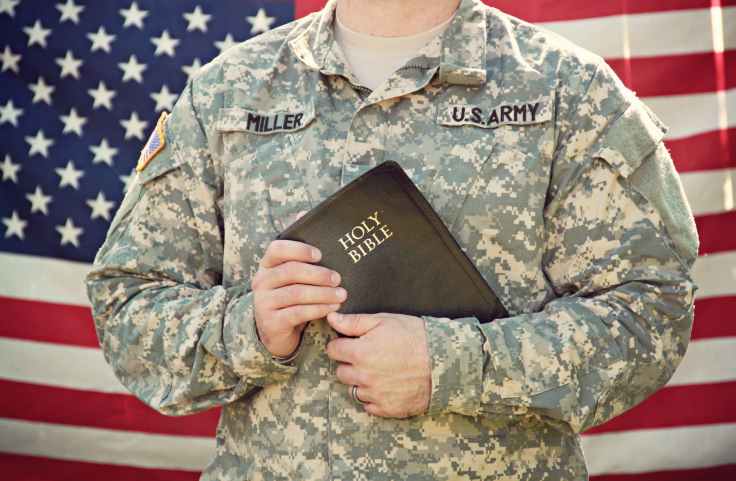
The U.S. is getting ready for a national general election. We’ll be voting for officials, from local commissioners all the way to the office of President. There are campaign ads and political conventions– banners, slogans, hats, t-shirts, and lots of American Flags. And, while many of the normal rallies and “whistle-stop” campaigns have been cancelled due to Covid-19, the conventions have been marked by people reciting the Pledge of Allegiance to our Flag and all it stands for.
“I pledge allegiance to the Flag of the United States of America, and to the Republic for which it stands, one Nation under God, indivisible, with liberty and justice for all.”
Much has been made recently about just two words of this pledge–“under God”– which were added more than 65 years ago. Interestingly, between 1892 and 1942, there were at least two versions of the pledge being used. One version stated: “I pledge allegiance to my flag, and the republic for which it stands. I pledge my head and my heart to God and my country. One country, one language and one flag.” Another version (which was altered and officially recognized by Congress in 1942), originally read: “I pledge allegiance to my Flag and the Republic for which it stands, one nation, indivisible, with liberty and justice for all.” https://en.wikipedia.org/wiki/Pledge_of_Allegiance.
There are Americans who are using the Pledge of Allegiance, the U.S. Flag, even the words, “under God,” to cause division, chaos, and ill-will to flourish in the weeks leading up to the election. Some are trying to redefine what it means to be an American; what the Flag stands for. People on “both sides” are trying to rewrite our history–denying that it contains both good and bad; triumph and tragedy, promises kept and promises broken.
As an American, I seek to live and act in such a way as to honor this nation and those who live here. Part of pledging allegiance to the flag (for me at least) is a promise to uphold those principles upon which this nation was founded: the conviction that all people are created equal (not just here, but around the world); that they are endowed by God with the right to live, to think and act according to the free will God gave them, and to pursue those dreams and activities that will bring hope, goodness, prosperity, and general “happiness” to themselves and to others. That does not mean that all people will use their free will wisely, or that they will all achieve equal outcomes and equal success regardless of their skills, resources, or efforts, however. Governments are instituted to protect the opportunities and rights of all, not to ensure that everyone gets the same life, the same will, and the same definition of “happiness.”
I also pledge to defend and protect and preserve this land–figuratively and literally. It is my duty to care for the trees and rivers, lakes and meadows, wildlife and even the air. It is my duty to encourage my neighbors, to vote on local ordinances, and cast my ballot for local, state, and federal offices. It is also my duty to speak out, to write, to act in the cause of justice. Finally, it is my duty to obey the laws that govern this country–not because I voted for them, or because they are convenient, or because I see an immediate benefit from them, but because they are justly enacted laws. If I don’t like a law, I pledge to see if it can be amended or repealed. I may use civil means to protest injustice– sit-ins, peaceful marches, legal suits, petitions, etc.. But my allegiance to this nation and its people means that I pledge not to put others in danger, or to deprive them of their lives or livelihoods in my pursuit of change. I will, however, defend myself and others from anyone who would try to take away these sacred rights.
I love my country. I love the world God created and the unique and diverse people He designed to fill it. But ultimately, my highest allegiance is not to America. It isn’t to my neighbors, or my family, or to the planet. My heart, mind, soul, and spirit belong to God. My allegiance to Him comes before any other. If my nation turns away from God; if it denounces all that is sacred, and demands that I do the same, I can no longer pledge my allegiance to its flag. If I am asked to destroy innocent lives, or deny God’s existence, or forced to speak lies in the name of patriotism, I must follow my first allegiance.
In times like these, it can be very easy to get “wrapped up” in the Flag, and the patriotic speeches, and the political rhetoric. Candidates paint themselves in the best colors, and attempt to make their opponents look evil, uncaring, and incompetent. But I have not pledged my allegiance to any candidate. I will choose to vote for the individuals I believe are best suited to bring about changes or preserve policies that honor both God and our founding principles. And I will pray for all elected leaders, whether I voted for them or not. But my hope, and trust, and allegiance, is to God above all, And all else, even the United States of America, is “Under God.”
Maybe it’s just because I was hungry, but I started thinking about making a pizza from scratch, and how it can be like praying…I know it’s kind of a stretch, but stay with me..
Faith/Crust–every pizza has to have a solid crust–and making crust from scratch usually involves stretching and pulling, flattening and forming it to make a round(ish) base for the toppings. Prayers rely on a solid foundation of faith. Even if it is a “thin” crust, faith is what gives us the confidence to approach God with our thoughts and thanks, our confessions and our concerns. Our faith is often stretched and pounded by circumstances, and it gets strengthened in the fires as God refines us.
Salvation/Sauce– right there with the crust comes a sauce. It is usually red (tomato-based) or white (cream-based). I am reminded that our faith, and our ability to approach God freely is “covered” by the shed blood of Jesus Christ. Our sins, though scarlet, are made white as snow. Whatever weaknesses we have– even our small or weak faith, are “covered”– God pours and spreads His grace and salvation over us. Jesus advocates for us every time we pray.
Content of our Prayers/Toppings–pizzas come in all types of varieties. I’ve had pizzas with goat cheese, tomatoes, onions, shrimp, smoked sausage, carrots, blueberries, ham, scrambled eggs, spinach, olives, gravy, cornmeal, mushrooms, grilled chicken, dried beef, taco meat, cocktail sauce…just not all on the same pizza! My point is that our prayers are as unique and individual as we are. Some of us pray “single topping” prayers– raising a special concern that God has laid on our heart– all day long, or for days or years on end. Some of us pray “scattershot” prayers– a little of this and a little of that as things come to mind. Some of us pray “house favorite” prayers– we follow a formula or a pattern in many of our prayers. But each prayer gives off a delicious aroma– each one has a unique combination of flavors, textures, and pleasing smells as they are offered up to the Father. And we prepare our toppings/our individual prayers…our thoughts may be chopped up, diced, sliced, and spread around. They may get layered and mixed up and melded.
Meditation/Baking– I’ve had fruit and vegetable pizzas that are served “uncooked” (except usually the crust has been pre-baked), but most pizzas have to go in the oven before they can be eaten. Some prayers are spoken in public or “in the moment,” but God wants to spend some time alone with us– even if it is in a “hot” oven for just a few minutes! Taking time to immerse ourselves in God’s presence not only refreshes us, it gives us time and space and openness to hear God’s voice; to catch a glimpse of His vision for our day; to close our eyes and ears to distractions and false promises, guilt and self-justification.
Reading/Recipe–great pizzas don’t just happen by trial and error. Even though I love to experiment with different toppings and different seasonings–even different crust variations–if I don’t follow a recipe, I can ruin an otherwise great pizza. If we’re not reading the Bible regularly, we can begin to fall into bad prayer habits– selfish or prideful prayers, praying in the wrong spirit (bitterness or anger), even praying in ways that don’t recognize God for who He is.
Serving/Serving! Pizzas are not meant to be created and left to sit and grow cold or moldy. Prayers offered up without obedience and active service don’t nourish anyone. Prayer should nourish our souls– we should be strengthened, changed, and experience growth. And God is gracious. Even if our prayer life has grown “cold”– well, cold pizza is still really good!
We live in a wonderfully diverse world, filled with unique individuals. One thing that defines us to our families, neighbors, and friends, is our name. Names can be tricky–some are difficult to pronounce, or spell. Some names are shortened or changed to form “nicknames.” Others are changed by circumstances, like adoption or marriage. Some names are common to several people, or shared as “namesakes” of others, or shared between generations, calling for additions, like “Jr.,” or “the elder” or “the fourth.” Some people reject the name they were given at birth, preferring to use an alias, or going through a legal process to change it. Some names have become symbolic, or stereotyped, famous, or infamous, or iconic.
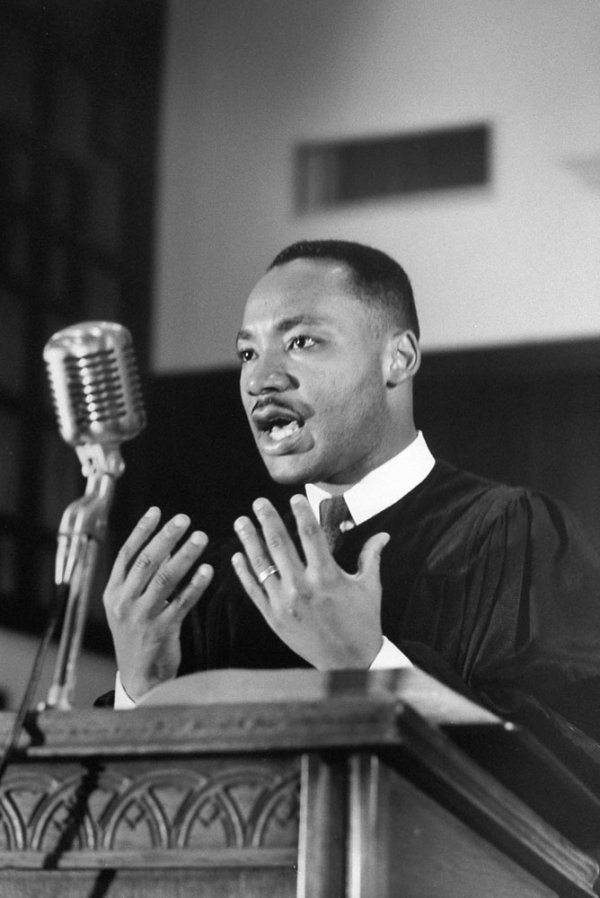
Civil Rights activist Rev. Dr. Martin Luther King Jr. gesturing during sermon at Ebenezer Baptist Church. (Photo by Donald Uhrbrock//Time Life Pictures/Getty Images)
Even though many of us may share a common first name, or surname, (or even both), our name still represents who we are–it becomes a symbolic representation of all that makes us unique– our personality, our history, and our character. And it’s not just people who carry names. We name rivers and mountains, cities, houses, farms, cars, products, pets, works of art…the list goes on. It is deep in the human soul to name things. This is a God-given desire. All the way back in the second chapter of Genesis, God brought all the beasts of the air and land to Adam, to see what name he would give them. Adam and Eve chose the names for their sons– names with very personal meanings. Names are important and carry power; they should never be taken lightly.
God recognizes each one of us by name. The prophets Isaiah and Jeremiah both refer to God calling them before they were even born! Before the great judge Samuel even knew how to recognize God’s voice, God called him by name. God often changes names– Abram to Abraham, Jacob to Israel, Saul of Tarsus to Paul, the disciple Simon to Peter (or Cephas). One reason God changes names is to show His power to transform people and give them, not just a new name, but a renewed nature and spirit.
And when we talk to God, whose very name is sacred, He allows us to call on Him through the Name He gave to Himself/His Son– Jesus. There are many boys and men who carry this name, but when we pray in the name of Jesus, we are referring to the one and only Begotten Son of God the Father; the Jesus of the Trinity; Jesus the Virgin-born Messiah. HIS name is above all other names. There is power in every ordinary name, but THIS name carries eternal, sovereign, immeasurable power. It encompasses His holiness, His compassion, His wisdom, His goodness, His faithfulness, and His Love. There is no other name by which we are saved; no other name by which we can be made new. It is not a name to be taken lightly or in vain. It is a name to be honored, cherished, and exalted. JESUS. The name above all names!
When I was just a girl, many of my cousins and playmates were fans of comic-book heroes: Superman, Batman, Wonder Woman, X-Men, Spiderman, and many others. In fact, in second grade, we had a “superhero” club that met at recess and played out scenarios. Most of us got to be heroes; a few had to take turns being villains. We ran as fast as we could; we pretended to fly; we pretended to save the world!
Each super hero has a special super power (or several super powers), and each one has a “fatal flaw”– some weakness that could keep him (or her) from easy victory over a villain. Superman can fly; but he cannot overcome the effects of Krypton. Batman has a seemingly endless array of cool gadgets, but they are not always enough to counter the cool gadgets of his foes. Spider-man can spin webs, but being a superhero doesn’t pay his bills. Wonder Woman has a lasso of truth and an invisible airplane, but she must struggle between promoting peace and fighting to stop violence and war.
I was reminded recently that we often confuse Biblical characters with comic-book superheroes. Abraham had extraordinary faith. Moses had his staff. Samson had great strength. David wrote poetry and killed giants…and so on. And each “hero” of the faith seemed to have a “fatal flaw”– Abraham did not wait for God’s promise of Isaac. Moses had a temper. Samson was arrogant and forgot the source of his strength. David was tempted by lust, which led him to commit adultery and murder!
There is nothing wrong with honoring men and women of faith and courage and obedience. The entire eleventh chapter of Hebrews is devoted to “heroes” of the faith, and the faith of Godly heroes.
But we can turn heroes into idols, and that leads us to false thinking. We falsely believe that God only calls those who are already heroic and strong. We sometimes feel that God cannot use us unless we first show that we have some super power. We also carry a false guilt about our “fatal flaws,” feeling that we have somehow ruined God’s plans or let the enemy “win” whenever we stumble. Finally, we fail to see that our ordinary obedience–even our shaky and stumbling faith– IS heroic.
Superheroes are not Biblical, and Biblical characters were never “super” heroes. Most of them spent their lives doing mostly ordinary things– farming, fishing, carpentry, tax collecting, herding sheep! There is only one “superhero” in the Bible– God himself–and He has no fatal flaw. Instead, He chooses flawed and ordinary people to obey Him as HE does extraordinary things through them.
One consistent thing about the people we celebrate as “heroes” in the Bible– they all prayed! They all knew that real power (and wisdom and help) comes from God alone. Prayer and obedience are not guaranteed to make us famous or heroic. But God can use the simplest acts and the smallest measure of true faith to do great things in, and around, and through ordinary people just like us!
Yesterday was a roller-coaster ride–pain, annoying interruptions, difficult encounters, successful ventures, bad moods, beautiful skies. And I almost forgot to write this post. It was just one of “those” days.
I am comforted by three things, though:
God’s love is never a roller-coaster. It is steady, eternal, and extravagant. Even on days when I can’t feel it or turn my back on it, God’s love surrounds me. No matter what the circumstances; no matter what I’ve done or what’s been done to me, God’s love never changes– it never falters, it never diminishes. He loves me just as much as he would on a perfect day; just as much as He has on my “better” days. God’s love is not based on what kind of day I might be having. It is based on WHO HE IS!
Jesus had days like this, too– he KNOWS what I’m going through. He knew pain, frustration, misunderstandings, betrayal, loneliness, grief, joy, struggle, success, and even “failure” (at least in the eyes of those around him). Some days, it feels like no one understands; that no one wants to listen. Jesus was a great listener during his time here; better than any of his friends or family. And when no one wanted to listen to Jesus, he simply found time to get away and talk with the Father. What a great example for us to follow. Better yet, Jesus is always on call to listen and advocate FOR us to the Father. And the Holy Spirit gets involved, too, helping us find words and expressions when we pray. God made us. He understands our weaknesses. He doesn’t condemn– He stands ready to help!
God is Alpha and Omega. He is eternal, and He is God of the Past, Present, and Future. Today may be an awful day– or a wonderful day. Tomorrow is a mystery to us. Yesterday tends to haunt us. But God is present in all three times at once. Nothing takes Him by surprise or causes Him to wallow in worry or regret. And that should give us courage to live in the present (even if it seems chaotic or frustrating), knowing that God’s plans and timing are for our Good. Even if we “mess up” in the present, God has the power to redeem and renew our future– if we let Him.
My wise Mama told me there would be days like this–she knows from experience. And she also knows all the ways God is ever-present and ever-ready to give wisdom, courage, and comfort. Today, I want to pass along a little of that wisdom– just like she passed it on to me. I hope your day is not the kind of roller-coaster I had yesterday. But even if it is: God Loves you, He knows what you’re going through, and He is eternally present and powerful to give you all that you need to get through.
Before I get started, I want to assure anyone reading this that there is no disaster in Nebraska (that I know of). No mass shooting, no tornado touchdown, no flooding or extreme drought…as far as I am aware, Nebraska is as it ever was.
But yesterday was my “day” to pray for Nebraska. I keep a journal– a home made set of notebooks with pages for each day of the calendar year. Every day, I pray for a geographical region– a city, state, nation, continent, ocean, etc. I also pray for people who are celebrating a birthday or anniversary (among those known to me), and people facing special circumstances (as I am made aware of them–upcoming surgeries, recent losses of family members, unspoken requests..) Throughout the day, there may be other requests, and there are web sites and other prayer opportunities that don’t make it into my journal. And there may be a day this autumn when Nebraska will feature in my prayers because there IS a disaster, or some other concern arises there.
Keeping a prayer journal doesn’t make me a “better” person. It doesn’t cover every prayer concern, or even every person I know and care for. My mind cannot hold every person, place, and situation that needs prayer on any given day. But a journal is a handy reminder to pray for people and places that are dear to the heart of God– not because they are in crisis (though we should lift up crisis areas, too)–but because He cares for everyone, everywhere, all the time. Keeping a journal doesn’t make me a better person; but it can make me a better pray-er. It reminds me that God is bigger than I can imagine, and His love is more powerful and everlasting than I can comprehend.
Another benefit of keeping a journal is that I have space to write in answers to prayer, questions, random thoughts– and come back to reminders of God’s faithfulness over the seasons and years. Because I use home made notebooks, I keep them for about three years at a time. This also gives me the opportunity to update and make changes. Last time, I added Catalonia to my list of countries, and I’ve added several new birthdays and anniversaries. I’ve also begun keeping track of deaths, because I can pray for those who may be grieving the anniversary of a loved one’s loss.
If you would like more information and suggestions on keeping a prayer journal, there are several suggestions, web sites, pre-printed journals for sale, and I have a page here Prayer Journal with some thoughts.
Now, I have to sign off and pray for the Netherlands!
My husband and I run a shop. He sells new and used amateur radios and supplies; I sell antiques, collectibles, and resale items. The nature of our business means that we often get merchandise that is “incomplete.” We have used radios– occasionally, there is a knob missing, or a component that needs to be replaced or repaired. We have used games and jigsaw puzzles, packs of playing cards, sets of dominoes, old silverware and buttons and dishes–mismatched, incomplete, and sometimes damaged or chipped. I spend many of my days surrounded by items that some would consider “junk.”
But what some would consider junk, others consider treasure. Collectors come in looking for specific items– old tobacco tins, embroidery samplers, antique kitchen tools, wooden toys, fishing rods, or costume jewelry. Crafters come in looking for old buttons, clothespins, linens, or keys. Some people come in to browse, and end up finding an old book, or a doll that catches their eye. And most items create conversations, spark memories, or inspire curiosity.
Ours is not a busy shop. We don’t sell convenience foods or new shoes or cell phones. We don’t offer fancy coffees or tea “bombs,” or expensive hand lotion. We don’t sell sporting goods (other than really old skis or the occasional tennis racket). We sell a few new batteries and antennas, and we offer a few local packaged food items (honey and maple syrup, craft sodas, etc.). We don’t make a lot of money at our shop–but we’ve made some friendships, and we’ve had the joy of seeing our customers find unique and useful items. We’re part of something bigger than just making a sale: like so many others with small businesses, we’re making a difference.
God created each of us to interact– to be part of something bigger than ourselves. Each of us has a need to find “missing pieces”– friendships, experiences, conversations, ideas, even old chipped dishes– that help us discover where we “fit” into a larger picture. As we interact, we make a difference, for better or for worse. We smile or we scream, we create unity or division, we spread hope or we spread hatred, we destroy or we build up. And we search for meaning and fulfillment. Ultimately, we are searching for God, who has promised to make all things new and bring wholeness, completion, and life to our “used” world. There will be no “junk;” no missing pieces or chipped plates or broken antennas in God’s perfect plan. Each of us is treasured by our creator. Even if others see us as filthy, broken, rusted, or worn out, God can says we are priceless and worth redemption. He has a place for us.
10 For if, while we were God’s enemies, we were reconciled to him through the death of his Son, how much more, having been reconciled, shall we be saved through his life!
Does it ever feel like you spend your days “putting out fires?” Taking care of little problems before they become bigger problems? Never getting a chance to rest or relax before the next crisis hits? Trying to put out a fire that keeps getting out of hand?
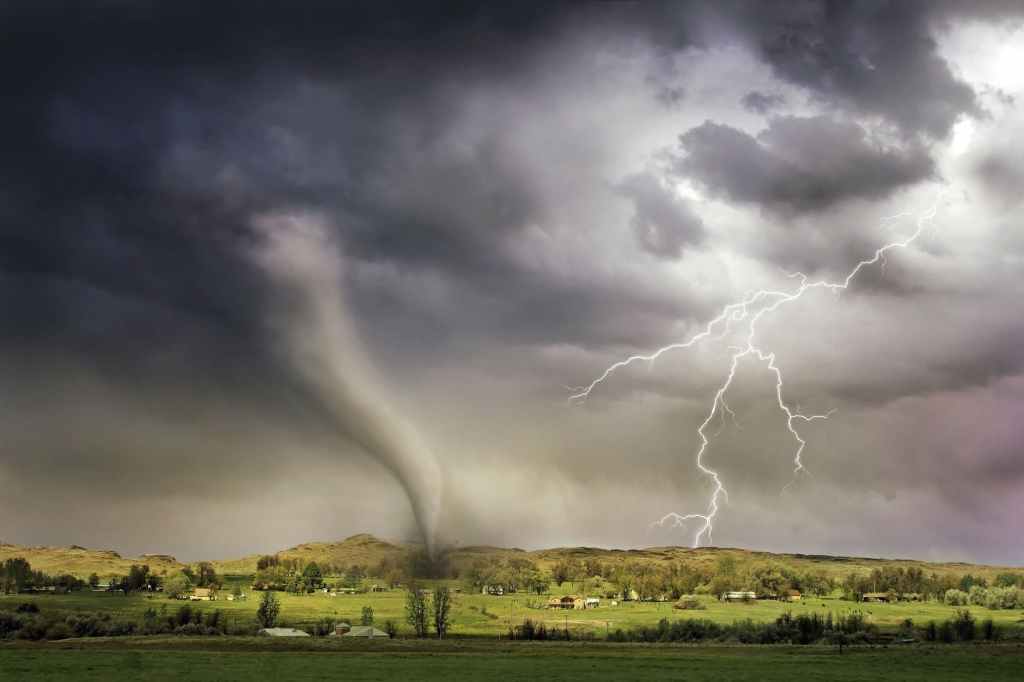
Fires can become very dangerous very quickly. Experts advise that we shouldn’t try to stay and fight a fire for which we are not equipped–it puts you and others at far greater risk. There is a simple phrase that can help people survive and escape a house or building fire: Stop. Drop. And Roll. A similar phrase can be helpful in facing the spiritual and emotional “fires” we face: Stop. Drop. And Pray!
Stop! Often when we face trials, our first reaction is to rush in and try to “save” things– ourselves, our loved ones, our possessions, our pride…the list goes on. This is a natural reaction, but not always the wisest course. In the initial panic, we are likely to make poor judgments, and miss warning signs. With the best of intentions, we can make situations worse: maybe we don’t have the skills, the equipment, the authority, or the knowledge to offer salvation or safety. That doesn’t mean that we must walk away from danger, or fail to offer help when we are able to do so. But it means that we must remember that Salvation and Wisdom come from God.
Drop. Fire is an obvious danger, but smoke is a silent killer. We can see fire; we can feel the heat of it. But the smoke can immobilize us long before the flames reach us. Spiritually, we may be able to see obvious sins in others, but ignore the smoke of compromise and apathy in the air all around us. Smoke rises– just like pride, and arrogance, and denial. We need to be “on our knees” –lowly and humble– if we want to keep from getting choked and suffocated.
Pray! Pray with a heart to listen for good advice and obey. Sometimes, we need to stay still and wait; sometimes we need to flee! Sometimes we need to get involved; sometimes we need to walk away. We don’t need to know the next seven or eight steps, however. We need to do the next right thing– even if it seems insignificant in the face of the threat. What we can see is not always where the danger is greatest, nor where the help is most available.
Finally– Don’t wait until you are in danger to practice these steps or prepare for what may lie ahead. There is a popular but unbiblical phrase: “God helps those who help themselves.” But this is NOT what God says! God says that He will help those who humble themselves (Luke 14:11; James 4:10); those who seek Him (Psalm24:6; Amos 5:4); and those who believe (Mark 9:23; John 20:29).
God keeps calling my attention to the book of Jonah. It’s not a very lengthy or in-depth book. It has only four chapters, and it tells a single story of the prophet Jonah and his mission to preach to the people of the Assyrian capital of Nineveh. But it is filled with lessons about prayer, obedience, gratitude, repentance, and Grace. https://www.biblegateway.com/passage/?search=Jonah%201&version=NIV And we learn four important things about God: He sends, He saves, He sustains, and He suspends.
FIrst: God sends. The book of Jonah reminds me of reading Ernest Hemingway. It is compact, terse, and to the point. The very first verse reads, “The word of the Lord came to Jonah, son of Amittai.” There is no other intro, no back story, no conversation between Jonah and God… Yet there IS a back story: elsewhere in the Bible, Jonah is mentioned as a prophet of God. Jonah wasn’t an unlikely choice to take a prophecy to Nineveh. He wasn’t new to the whole “prophet” gig– he wasn’t a farmer or a fisherman or a young shepherd boy. He was an experienced seer and prophet. I mention this because God sends who HE wants to send. He didn’t have to give this message to Jonah. And when Jonah ran away, God didn’t have to chase him down and give him a second chance. There were other prophets who might have delivered the message without any fuss or drama. There were priests, soldiers, merchants, and shepherds who could have done the job (and likely done a better job!) The book of Jonah reminds us that God’s purposes are often multi-faceted. God’s purpose in sending Jonah wasn’t just about the Ninevites– He wanted to work in and around and through Jonah to reveal His character. He also sent the big fish (the Bible never says it was actually a whale), and later a gourd vine and a worm– all to minister to Jonah. They all appear in the story, but only to Jonah, not to any of the others! God will send us–or He will send people (or big fish) TO us. He will send people and things to bless us; and to test our patience! But God sends us what is meant for our good and His glory.
God saves: Each chapter contains an example of God’s salvation– In chapter one, God not only saves Jonah from drowning by sending the big fish; He also saves everyone else on the ship. An entire crew of hardened seamen are stunned by God’s power and grace. In chapter two, God rescues Jonah from the fish’s belly, and gives him another opportunity to fulfill his mission. In chapter three, God sees and hears the pleas of the Ninevites–He withholds His judgment and showers the city with amazing Grace. In the final chapter, Jonah wants to die (twice!), yet God provides comfort, compassion, and correction in response. At the end of this book, in spite of storms and raging seas, prophecies of doom and destruction, dangerous journeys, scorching sun, and disobedience, rebellion, and evil– NO ONE DIES!
God Sustains: God could have rescued Jonah without the “whale.” He could have calmed the storm. He could have caused Jonah to walk on water. He could have created a path of dry land for Jonah to walk on… But God caused Jonah to be in the belly of the fish for three days– a circumstance that Jesus used to foretell His own death and resurrection. God sustained Jonah even in the midst of his bitterness, anger, depression, and rebellion. He gave Jonah a miraculous rescue– one Jonah could have shared with the Ninevites to illustrate God’s Mercy. I find it curious that the King of Nineveh invites everyone to fast and pray, saying “Who knows..” Jonah KNEW! He was a living example of God’s Grace and Power. He could have shared this wonderful news with the people of Nineveh, yet he chose to share only the message of God’s wrath. Jonah had the biggest “fish story” in history, and he chose to keep it a secret! In spite of this, God sustained Jonah’s life– against Jonah’s own wishes! How has God sustained us in moments of crisis, doubt, and infidelity?
God Suspends: What does that mean? Well, in this book, it means several things. God suspends His judgment against the city of Nineveh–in later Bible books, we see that the people of Nineveh and Assyria return to their evil ways. They do not turn completely from their worship of idols and their detestable practices. Within a couple of generations, they experience the total destruction that Jonah predicted. God is Gracious and Merciful; He is also Righteous and Just. Jonah’s mistake was to despise God’s Mercy toward his enemies; the Ninevites’ mistake was to forget God’s Holiness. But God also suspends Jonah’s life– three times Jonah expresses a passive desire to die: he asks to be thrown into the sea (he does not know or expect that God will rescue him); he asks to die after the Ninevites are spared; and he asks to die when the worm destroys the gourd vine. But Jonah’s desire to die goes unfulfilled. God’s purpose is not that Jonah should die, but that Jonah should learn to LIVE and love: love his life; love his God (better); and love his former enemies. Sadly, we never find if Jonah ever learned his lesson. The author of Jonah leaves us “suspended” as well.
Our God sends “whales” to rescue us from our rebellious wandering, and “worms” to take away those comforts that keep us from seeing our real needs. He saves us, even though we don’t deserve a second (or third or thirtieth) chance. He sustains us, even in times of failure. And He suspends us, withholding His wrath and giving us loving compassion and correction. Jonah is not a very lovable character– and that is a great comfort to me in times when I am faced with my own failures and missed opportunities. The people of Nineveh were despicable! They deserved justice and judgment. But God loved Jonah; and He loved the people of Nineveh. And He loves us– more than we deserve; more than we can imagine. He loves the unlovable. He loves the despicable. He loves those who cannot love themselves, and those we are convinced we cannot love.
May we learn a lesson today from the “whale” and the “worm”– we can trust God for Mercy and for Justice. We can trust Him to save and sustain us; to send us and suspend us. And we can rest in His love and care–whether we find ourselves in a raging sea or caught in the scorching heat, or sent on a mission that tests our heart and soul to its limit.



































 Pursuing Prayer