“Seasoning” Prayer

I plant an herb garden every year. This year, it’s been cold, so I started the plants indoors. Recently, my husband finally transplanted our starts into bigger pots, where they will grow through the summer and into the fall. I harvest the herbs for salads and other dishes, but I also dry the herbs for use throughout the winter. The herbs add flavor and texture to our food, and I love having fresh ones available. I was thinking about various herbs and their symbolism. What we plant in our garden; what we use in our cooking; how we “season” our prayer life– it all makes a difference. So here are some tips for “seasoning” our prayers…Make sure to add:

  • Rosemary– for remembrance. Remember and worship God for who He is. Remember His past goodness. Remember His faithfulness. Remember His Great Love. Remember that He sees and hears you; He knows you intimately, and loves you eternally. (Psalm 103:2)
  • Sage– for wisdom. Ask for it. God longs to give you stores of wisdom and guidance. He longs for you to seek His wisdom every day. (James 1:5)
  • Fennel– for praiseworthiness. God is worthy of all our praise and worship. Prayer is just one way of expressing His worthiness and glory! (Psalm 150:6)
  • Mustard seed– for faith. Faith grows exponentially larger and stronger when it is tended. One seed of faith can produce a large plant, which in turn produced hundreds of new seeds. Don’t let the weight of doubt crush that little seed–it really is enough! Not because of the size of your faith, but because of the size of the One in whom it rests. (Hebrews 11)
  • Horseradish/radishes– for bitterness and contrition. A Holy God can only be approached by those whose sins have been forgiven. God offers mercy and grace in abundance– for those who acknowledge their sin and wish to be restored in Grace. Confession and repentance should be a regular part of our prayer life… and this leads to..
  • Hyssop– for cleansing. King David prayed: “Cleanse me with hyssop, and I will be clean; wash me, and I will be whiter than snow…Create in me a pure heart, O God, and renew a steadfast spirit within me.” (Psalm 51: 7, 10) May we seek to have a pure heart and a steadfast spirit. And as we are cleansed, we will have…
  • Parsley– for gratitude and joy. Parsley brightens and garnishes; it brings a finishing touch and its bright green color suggests growth and abundance. Prayer should result in thankfulness and rejoicing as we enter into the very presence of the Giver of All Life. (1 Thessalonians 5:18)
  • Thyme–for, well, time. Take time every day to meet with God. Make both “quality time” and “quantity time” when you can, knowing that God wants to be part of your day, all day, every day.
  • Chives– for usefulness and peace. Chives add flavor and balance when used in cooking. Bring your daily tasks, your goals, even your everyday worries to God in prayer. Pray as you work, as you run, as you do useful things throughout the day. This will lead to peace and purpose.
  • Garlic– for strength and healing. Especially in times when people are experiencing sickness and confusion, prayer brings strength. As we pray for healing– physical, emotional, and spiritual– we cast our cares upon a Loving and Omnipotent God.

For some more interesting symbolic meanings of herbs and flowers, you can visit the following sites:
https://theherbalacademy.com/the-secret-meaning-of-herbs/
https://www.richters.com/show.cgi?page=InfoSheets/d9003.html
and many others.

Of Stubbed Toes, Pet Cats, and Lost Coins

Prayer doesn’t have to be BIG to catch God’s ear or His heart. God cares about the “big” things– war, cancer, broken relationships. And we must be persistent in our prayers about such things. But God also cares about stubbed toes. He cares about the illness of pets and the pop quiz at school and “that noise” the car has been making lately. And we are not just encouraged; we are commanded to come to Him about the ordinary and “little” things in life.

I was challenged in this a few weeks ago when someone disparaged the prayer group I belong to. We meet every Wednesday morning to pray. And we have a running list of concerns that have been brought to our attention– some requests come from our members, some from prayer cards and requests that have been turned in after Sunday Services at our church. Some of our requests are about “big” things– social issues, wars, the persecuted Church around the world, etc… And some of our requests stay on the list for months. We don’t give up– we rejoice in God’s timing. For instance, we were praying for several months for a dear sister who was having housing issues. She was in assisted living because of her many health issues. But she wanted to live independently. So, we prayed. Miraculously, many of her health issues disappeared, and it seemed that she would be able to move out of the facility, but she didn’t know where she could go on her limited budget, and she still had some issues with mobility. So, we prayed. We got updates– it seemed that a situation would be opening soon, only to find that she had been denied. And denied again! Still, we prayed. Then, a couple of weeks ago, God acted by taking her Home to Heaven unexpectedly. It wasn’t the answer we imagined, but it was God’s perfect timing to answer her greatest needs.
Often, the stories are much smaller. One of the children in our church filled out a prayer card asking for us to pray for their pet cat, who was ill. So, we prayed. There was more to this request than just an animal feeling sick. This child had just lost a grandparent. The family was already dealing with loss, and this child did exactly what Faith tells us to do– call on the LORD in our distress. Bring “everything” to God in prayer (“Do not worry about anything; instead, pray about everything. Tell God what you need, and thank him for all he has done. Then you will experience God’s peace, which exceeds anything we can understand. His peace will guard your hearts and minds as you live in Christ Jesus.” Philippians 4:6-7)And as brothers and sisters in Christ, we were encouraged by this child’s faith and willingness to share. We pray for twisted ankles and hip surgeries. We pray for broken-down cars and those who are struggling to buy groceries this week.

And when someone seemed to disparage our group’s efforts, I was confused and a bit hurt. The other person wasn’t saying that the requests themselves were wrong, but they felt that we might be “wasting” time on such requests at the expense of “more important” issues. Instead of praying for “uncle Joe’s stubbed toe,” we could be praying for social change in our community. “Uncle Joe” was on our list, but world peace was not. Their approach was that such “small” requests might be dealt with in a more personal and immediate way. And that shows another marvelous aspect of prayer. We don’t need to wait for Wednesday, or Sunday, or for a particular group to pray for our needs. In fact, on the strength of their suggestion, our church now announces that there is a “prayer team” at each Sunday service who will take time to offer immediate and personal prayer for those who want it. And both the weekly prayer group and the weekly prayer team can joyfully bring prayers before the Throne of Grace– no matter how big or small, dire or fleeting, personal or corporate.

Our group still offers to pray for “Uncle Joe’s stubbed toe” or Wendy’s car trouble, or Alice, who would like someone to help with yard work. Some of these requests also get passed on to or from our “Help” team, connecting them with practical help from volunteers in our congregation AND prayer support. Because it is our privilege to pray for others– to share their sorrows, struggles, and joys as we travel life together. And we also pray for war-torn areas, our persecuted churches around the world, and spiritual battles taking place in our congregation– addictions, ruptured families, stroke victims and their families, and much more.

Jesus told the three stories of people facing “loss” in Luke, chapter 15. The first story is of the lost sheep and the shepherd who is willing to abandon 99 sheep in order to look for one sheep that is lost. The third, and most famous of the three stories, is of the Prodigal Son, who runs away, spends all of his inheritance, and returns home to find that his father not only forgives him, but celebrates his return. Tucked in between is the story of a woman who loses one silver coin and sweeps through her entire house looking for it. When she finds it, she wants to celebrate with all her neighbors. THAT is what prayer can be–we don’t pray for lost coins or stubbed toes because they are earth-shaking events–we pray because that is how we share life with our neighbors, our brothers and sisters around the world, and the God who Loves each and every one with boundless, eternal, extravagant Love!

Prayers in the Dark

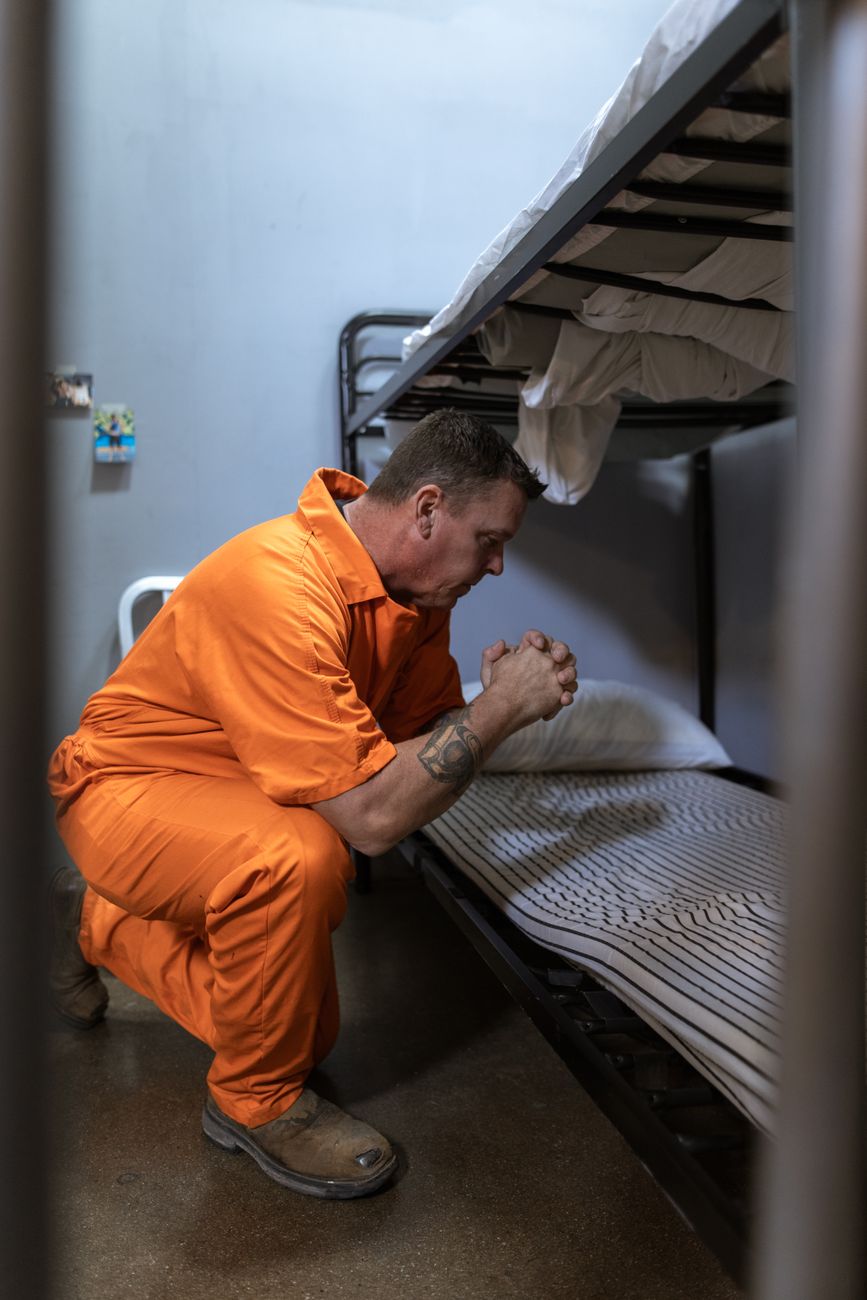
We live in dark times. War, hatred, terrorism, oppression, destruction, and despair– they are all around us. And yet, we pray. We do not succumb to the darkness, but we seek out the light. Many Christians pray in literal darkness, as they have no electricity, or they are in dark prisons, or they worship in secret locations and inner rooms. But many of us pray in figurative darkness– our minds and eyes clouded with overstimulation and muddied theology. And we may pray “in the dark” about the situations faced by our brothers and sisters in other parts of the world– even in other parts of our local communities!

Praying in the dark, much like walking in the dark, involves a lot of caution, and a lot of trust. We pray strategically, knowing there are unseen obstacles and dangers around us, but confident that, with God’s wisdom and presence, we can avoid them and reach our goals.

What are some specific features that prayer should have when we find ourselves in the dark places of life?

  • Fervency–There is a quality of urgent and whole-hearted commitment to seeing God’s face, God’s wisdom, God’s will, God’s timing, and God’s guidance as we pray. “Not my will, but THINE, be done!” Christ, as He prayed in Gethsemane (see Matthew 26:36-46) We may not sweat drops of blood, but we should pray with a fervent desire to offer our bodies as living sacrifices (Romans 12:1)
  • Focus– Sometimes, we can “see” more clearly in the dark. This is because we have fewer (visual) distractions. When we are overwhelmed with darkness, we let go of lesser things and concerns, and we pray for those things we really need, rather than those things we desire. We also have a greater sense of God’s provision and power, so we grow more grateful and joyful for what we DO have.
    ” For the sake of Christ, then, I am content with weaknesses, insults, hardships, persecutions, and calamities. For when I am weak, then I am strong.” 2 Corinthians 12:10 (ESV)
  • Frequency–I pray almost constantly when I am burdened or facing obstacles that seem impossible to overcome. Dark times can remind us that God alone can be trusted to lead us through. HE is God, and I am NOT! And like the men and women of the Bible who faced incredible odds, I can trust Him to hear and act. He sees me, He hears me, He Loves me, and He has a plan for my life that includes being with Him for Eternity!
    “Whom have I in heaven but you?
        And earth has nothing I desire besides you.
     My flesh and my heart may fail,
        but God is the strength of my heart
        and my portion forever.” Psalm 73:25-26 (NIV)
  • Fellowship– This one may seem counter-intuitive. Many times, I feel more alone in the dark. But I have learned that I can actually feel just as lonely in a crowd and in the light. Dark times may make our “circle” smaller, but we may find that our few relationships grow stronger, and we open ourselves up to suffering in others that we would ignore in our carefree days. I think of those who end up on refugee camps or cancer treatment centers– the friendships made there are sometimes stronger than family! 
    “Every time you cross my mind, I break out in exclamations of thanks to God. Each exclamation is a trigger to prayer. I find myself praying for you with a glad heart. I am so pleased that you have continued on in this with us, believing and proclaiming God’s Message, from the day you heard it right up to the present. There has never been the slightest doubt in my mind that the God who started this great work in you would keep at it and bring it to a flourishing finish on the very day Christ Jesus appears.” Philippians 1:3-6 (The Message)

Darkness and trials can drive us away from help and hope. But when we learn to Pray in the dark– to seek God with a whole and undivided heart– He will be our light in the darkness and our hope in the midst of desperate circumstances. And we can take comfort, even in the midst of pain and danger, in knowing that we are NEVER alone when we pray– even in the dark! We may not know the perfect words or have the perfect circumstances; we may not be able to see our next step– but we serve a perfect God, who will never let us go. There is no darkness– no circumstance– that can separate us from God’s love or His salvation, or keep our prayers from reaching Him.

Out of the Blue

There is an English phrase for something that happens completely unexpectedly; we say that “it came out of the blue.” I thought I understood that phrase, but I got a deeper understanding this past Friday. My husband and I were in Elkhart, Indiana, just across the border from our home county in Michigan. We often drive the 20 miles or so to Elkhart for shopping, banking, eating out, and more. The weather was surprisingly warm and humid for March, with a light breeze and blue skies dotted with light gray clouds. David and I had eschewed both coats and jackets for the day– nearly unheard of for this time of year in our area.

But as we prepared to return home, we noticed that the gray clouds to the north of us had grown darker and heavier. And lower. Still, there was blue sky above us and to the south. It wasn’t raining and there was only a light breeze. We were listening to a radio talk show, which was suddenly interrupted by a high-pitched alarm. The announcer said that there was a tornado warning for our county– the one we were driving through!– and that we should be looking for rain and hail, strong winds, and possible tornadic activity.

We searched the skies– the same clouds we had seen in the north looked darker than normal, but we experienced no strong winds and no rain. About a mile later, we saw evidence that it had rained recently, but otherwise, it was calm. The sky above us was blue. Birds were singing. The air seemed fresh and calm. Still, the weather alert kept giving details. A tornado warning was in effect for the next 35 minutes for our county and the one directly east of us. But we kept driving. A couple of miles later, we saw a small patch of damage– a few twigs and dead leaves had blown across the road in one spot. The evidence of rain became clearer– there were large puddles. We drove through some of the area that had been mentioned in the alert– we skirted Edwardsburg, Diamond Lake, and Cassopolis. We saw small spots of rain and wind damage, and we came into some rain that was still falling, but it was gentle. Behind us to the south and west, the skies were blue.

When we arrived home, we looked at the recent news posts. We were shocked to see that several houses on either side of our path had been touched by hail and tornadoes just before came home, and that tornadoes were still doing damage to the east– in the town where our son lives! We watched as video footage showed the grocery store where I had shopped just days ago losing parts of its roof, while the DIY store across the street lost its entire roof and some of the west wall! Power lines were down, cars and small buildings were being lifted, twisted, and thrown back down on the ground. This was only a mile from our son’s house! And now, our cell phones weren’t working, so we couldn’t call him to see if he was ok. And our skies were blue–someone close by even posted pictures of rainbows!

It turned out our son and his home were fine– they were out of power for a few hours, but no damage to the roof or house or vehicles. Some of my cousins, who also live in that city reported on-line that they were also safe. Whew!

Long story– scary afternoon and evening– but it got me thinking. We were right at the edge of a dangerous storm path, and without the radio warning, we would have concluded that there had been no more than a rain shower around us. Had we been traveling just a few minutes earlier, we might have been taken unawares. This storm came with very little warning, and did a lot of damage, yet people were going about their daily lives– unprepared and unaware of the danger.

Tornadoes are scary because they often come like that– with little warning, and little way of predicting how strong or fast or dangerous they will be. But how many other things in life hit us “out of the blue?” A heart attack, an auto accident, a house fire–suddenly our life spins out of control. How will we react?

After the first shock, we can become lost in the immediate chaos– everything we depend on can vanish in an instant. “Out of the blue” we can lose our health, our job, our home, our relationships, our bank account, and anything else where we find our security. OR, we can rediscover our strength, our hope, and our trust in a God who is more powerful than a tornado; more solid and eternal than any building, and constantly aware of our circumstances– whether we are enjoying blue skies or looking at threatening clouds from the ruins of our family home.

I am praying for the families who were impacted by the recent storms– especially those families who lost homes or loved ones. I can’t offer the comfort of knowing why this happened, or what exactly will come next. But I can offer the hope of knowing the One who knows all things, and whose love is greater than anything else we could ever trust.

Sometimes, bad things come “out of the blue.” Bad things happen to people– not just “bad” people, or “good” people–for reasons that make no earthly sense. But such things, like tornadoes, pass away, die out, leave their mark, or move on. And if we look again, we will be able to see the “blue” sky– the good things that remain, and the hope of renewal.

When God “Remembers No More…”

In my last post, I discussed what it means (or doesn’t mean) when the Bible says that “God remembered…” God is not forgetful. He is omniscient, meaning that He knows everything, all the time. When God “remembers,” the Bible is usually talking about God’s timing. God “remembers” His promises– meaning that the time has come for God’s promises to be fulfilled. The reminder isn’t for God– it is for US. We need to trust that God will fulfill ALL of His promises in His time, not ours.

So what does it mean when God says, “ “For I will forgive their wickedness and will remember their sins no more.” Hebrews 8:12? Or “And no longer shall each one teach his neighbor and each his brother, saying, ‘Know the Lord,’ for they shall all know me, from the least of them to the greatest, declares the Lord. For I will forgive their iniquity, and I will remember their sin no more.” Jeremiah 31:34 ? (emphasis added)

How can a God who knows everything and remembers everything say that He will NOT remember? Once again, God does not forget. But He does choose what He will call to mind– what He will hold against us, or what He will hold in our favor. And, just as God remembers His promises, He promises to “forget” our sins and remove them “as far as the east is from the west” Psalm 103:12.

God’s perfect justice demands that He should remember every wrong, every injustice, every sin–and punish them. God will never leave one of His precious children as an eternal victim. Every martyr, every victim of theft, abuse, betrayal, slander, and injury will someday be vindicated, healed, and made whole. But God can, more perfectly than any human being, remember and correct the injustice without attaching all of the punishment to guilty party. Instead, He sees the Blood of Christ as the complete and entire payment for our sins! God has promised that the Blood of Christ has fully atoned for Sin. Our response of Faith allows us to claim that promise and move forward in New Life. Not just Eternal Life, but newness and abundance of Life today. Just as God can “remember (our) sins no more,” so we too can turn away from them.

There is great comfort in remembering that God always remembers His promises. There is also great comfort in knowing that God will NOT remember all of our failures and rebellious thoughts and actions. His forgiveness is not conditional on our level of guilt or our attempt to make atonement. It is complete, even to the point of wiping clear the very memory of our past sins! And Christ’s finished work on the cross also guarantees that every hurt and injustice we have suffered will also be made right–in His perfect way and time.

But there is a further comfort– WE can rest in the promise that our guilt and shame can stay in the past. We do not have to continually ask for God’s forgiveness for the sins we committed years ago, nor do we have to continually live in the guilt of knowing we have fallen short of the Glory of God. We do not have to live as constant victims of someone else’s sin. We do not have to rehearse our failures, justify our scars, or live as second-class Christians, feeling that we are not “as good” as others, since we are all saved by Faith, and not by our own works of goodness (see Ephesians 2:8-9).

Being a Christian is not a matter of what we’ve done (or what has been done to us) in the past. It is walking a new road, following Christ’s example and resting in His assurances. It is allowing the Holy Spirit to guide us on the road ahead, not letting our accuser (Satan) drag us back to our former paths. We will still remember our old actions, the pain of what we have suffered, the pain we have caused others. But we need not live in those memories. We can be ecstatically grateful for God’s promise to “remember (our) sins no more!”

When God “Remembers”

“He remembers His covenant forever, the promise He made, for a thousand generations.” – Psalm 105:8

“God remembered Noah and all the wild animals and the livestock that were with him in the ark”– Genesis 8:1

“God heard their groaning and he remembered his covenant”–Exodus 2:24

Throughout the Bible, God “remembers” His people and His Promises. But that doesn’t mean that He ever “forgot” either one.

God is omniscient– He “knows” everything– He “forgets” nothing. When God says He remembers, He is not suddenly conscious of something that slipped His mind. He doesn’t suddenly recall a person or promise that He hasn’t thought about in a while. Sometimes, it may seem that we are forgotten. God may seem distant, or silent, or preoccupied when we call out to Him. The descendants of Jacob lived for four hundred years in Egypt, and many of them must have felt as though God had abandoned them and forgotten His promises. But when it says, “God heard their groaning and He remembered His covenant (Exodus 2:24), it doesn’t mean that God suddenly heard their groaning, or that He had not noticed their suffering and slavery in the years leading up to that time. When “God remembered Noah and all the wild animals and the livestock that were with him in the ark” (Genesis 8:1), it doesn’t mean that God was letting them drift along in the ark aimlessly while He went off and played golf or took a nap!

God is always watching– always aware– always in control. NOTHING can take Him by surprise or sneak in or out of His conscious awareness. When God says He remembers–that is for OUR benefit. God is reminding us that He will never– can never– forget His promises. It is a reminder that He will NEVER leave us or forsake us– even when we can’t see Him, or understand what He is doing. It is a call for US to remember just how faithful, powerful, and omnipotent God really is!

I love this reminder, because there are many days when I feel alone, ignored, unheard, or “passed by.” There are days when I question whether God really hears my prayers. But I don’t have to wonder or worry. God will never forget me. His love is eternal and unshakable. God’s thoughts toward me are a constant cosmic embrace– even if I don’t feel them in the pain of the moment.

When God “remembers,” it is a powerful testament to His eternal plans for us. He shows up, not when we expect, or not when we have earned His comfort or His grace; He shows up in His perfect timing and for His Glory. Our job is to “remember” who has us in His thoughts, and in His Hands. What a great thing to remember today!

Who Are My Enemies?

In the Parable of the Good Samaritan (see Luke 10:25-37), an expert in the law asks Jesus, “What must I do to be saved?” Jesus, as he so often does, answers with a question of his own. “What is written in the law? How do you read it?” Of course, the expert in the law answers with confidence, and Jesus commends him for his answer. But the law expert isn’t mollified by Jesus’s affirmation. The law is clear, but it is not necessarily specific. “Love the Lord your God with all your heart and with all your soul, and with all your strength, and with all your mind.” That seems pretty clear. But the rest– “Love your neighbor as yourself”– Just who IS my neighbor?

Jesus answers with the famous parable about a man who is beaten and left for dead on the side of a dangerous road. Two religious leaders see him, but each refuses to help. Instead, a Samaritan (despised by the Jews) offers help and compassion, beyond what the law would dictate. Thus, the expert in the law must conclude that a “neighbor” is one who shows mercy and kindness to those whose path he crosses.

In another instance, Jesus talks about enemies:

“You have heard that it was said, ‘Love your neighbor and hate your enemy.’  But I tell you, love your enemies and pray for those who persecute you, that you may be children of your Father in heaven. He causes his sun to rise on the evil and the good and sends rain on the righteous and the unrighteous.” Matthew 5:43-45 (NIV)

So, who is my enemy? If my neighbor is anyone who crosses my path, who is left to hate? Jesus IS more specific here. He commands us to pray for those who persecute us; that God causes the sun and rain (and other good and life-giving things) to happen for both the evil and the good; both the righteous and the unrighteous benefit from His mercy. God loves sinners so much that Jesus came to die for them! Jesus met a lot of needy people. He also met some nasty characters who never sought His forgiveness or His help. Yet He did not march in protest against oppression by Roman soldiers. He did not campaign to have the hypocritical Pharisees removed from their positions of power. He did not advocate stealing from the greedy tax collectors to pay for welfare programs. He allowed Himself to be arrested and even (unfairly) convicted and sentenced to death on a cross. His “enemies” were allowed to win a battle. But Jesus Christ has won the war. And when the war is over, there are no “enemies” left to fight!

There is a lot of talk today about enemies, and how they should be treated. We see enemies among our own neighbors who disagree with us politically, or who practice a different religion (or none at all). We see enemies in those who taunt us, or those who live more lavishly, or those whose position in life causes us to think of them as unfairly privileged, or unworthy of certain benefits. And, in many regions of the world, we see as enemies those who are causing war or inciting violence and damage against another nation. These are battles, indeed, but they are battles that, in God’s eyes, have already been won!

Jesus commands us to pray–even for those we may view as enemies! And we are to show mercy and love toward those who view US as the enemy! Not smug self-righteousness, or cold indifference. Not vengeful action or hateful rhetoric. Not name-calling or “cancelling,” “doxing,” or “ghosting” people. We are to pray for their well-being. We are to love them as we love ourselves!

In our own power, we cannot do this. It goes against our nature. We want to be “right.” We want to “win” our battles. We want to see justice done– NOW! We want to be able to dismiss and condemn those who are unrighteous. We want to see them pay. We want to be proved and justified. We want them to be found wanting in comparison with our own righteousness.

We do have a very real enemy– one who does not deserve our love or prayer. But it is not a person. Our enemy is Sin. Our “enemies” are godless spirits– of rebellion against God, of pride, of greed and rage and chaos. People may display behaviors and cling to false teachings; their actions may threaten us, horrify us, or disgust us. But there is a priceless soul involved– a soul who is in slavery to Sin. There is no person on earth who was not created in God’s image, or who is so far from God’s love and forgiveness that we are allowed to condemn. Therefore, there is no person for whom we cannot pray or show love.

Let me be very clear, however. There are certain actions that require us to stand up for truth and justice. Condoning dangerous, violent, unjust, evil actions– worse yet, promoting or participating in such actions in the name of kindness, empathy, “social justice,” equity, vengeance, or solidarity with a particular group–is not loving. We may defend the vulnerable, prosecute the violators of law, or work to remove ourselves from relationships that are abusive or oppressive, while still praying for our oppressors, persecutors, or self-described enemies. We may still show them forgiveness, work toward peace, and even treat them with respect without compromising our own dignity and adherence to the truth. We may (and should) continue to pray for justice. We may pray that the true enemy’s plans will be frustrated and ineffective, and that healing and righteousness will prevail.

Praying for our “enemies” is hard work. It requires us to be humble. It requires us to remember that we, too, are sinners saved by Grace, and not by our own actions or beliefs, but by God’s intervention and design. It requires us to see that our enemy is also our neighbor.

God, grant me the loving eyes to see others as You see them, and the wisdom to see my actions as others experience them.

Praying Locally; Praying Globally

Recently, a group of churches in our area have begun praying strategically for our communities. And many of the participants have asked for structure and guidance. What should I pray? How do I pray for specific needs if I don’t know all of the people involved? I know my own town, but what about the towns five or ten miles away?

There are many on-line or printed guidelines available, but let me just list a few that I have used over the years, as well as some tips I’ve picked up recently.

First, ask God for guidance! There is no “wrong” way to pray for others, but God can help direct your thoughts, your memory, and your heart in ways no person or list can.

Second, try to start with broad categories, and then narrow your focus. You can pray for:

  • The spiritual well-being of the community– churches, missions, groups of unsaved neighbors, protection from Satan’s attacks, etc.
  • The physical well-being of individuals (even if their names are not known to you). Think of cancer patients, newborns, those with heart issues, those with chronic diseases, the elderly, those recovering from surgery, those whose work involves danger or high stress, etc.
  • Mental and emotional well-being– those who suffer from mental illnesses, depression, suicidal thoughts, bi-polar, those who grieve a recent loss, the lonely, and those who are confused or tormented by their thoughts and feelings.
  • Pray for families! Families are under attack. Pray for those who are recently married, those who are facing divorce, those who are tempted to break their vows, children who are unruly or rebellious, parents who have been abusive or have placed their children in danger. Pray for families who struggle to stay together, and for those who are struggling to be reunited or reconciled.
  • Education– pray for local schools and for teachers. Pray for students– especially those who are struggling to learn or to continue their education and face barriers.
  • The Economy– pray for those who struggle to meet basic needs, as well as those who have been careless or wasteful with resources. Pray for growth and stability in the local community– for small businesses, and local employers.
  • The Government– local authorities and laws. Pray for your leaders and law enforcement– that they will make just laws and follow them. Pray for the safety and security of your neighborhood, and for each resident to be a good citizen– obedient to the law and respectful of their neighbors and authorities.

    Can you think of other areas? Culture? Weather/seasons? Infrastructure?

Third, get to know your neighborhood and community better! Take a walk or drive around your community. Introduce yourself to people you haven’t met or invite someone to tea or dinner. Get to know the friends of your children or your spouse’s co-workers. Consider meeting with other believers and building a community of local churches. Volunteer for a local charity or organization. Look for needs that you can help meet (and pray for!) Does your community have an online presence? Get to know your local officials or the men and women who patrol your neighborhood. Build positive relationships and ask others if you can pray for them or offer to listen and help.

There are also great opportunities to pray globally. Using some of the same strategies and categories above you can:
Pray for churches and missions around the globe– pray for the persecuted church, and for the churches that are in danger of falling asleep!
Pray for health crises around the world– COVID, AIDS, diseases, medical research, etc.
Pray for those in danger from War, Famine, and Oppression.
Pray for those who suffer from mental and emotional torment– demon possessions, mental illness, depression, moral confusion, dysphoria, and trauma.
Pray for families!
Pray for economic stability around the world– pray for nations and regions that are experiencing economic hardship, especially due to war, famine, corruption, etc.
Pray for Peace among the nations!
Get to know more about other countries and regions around the world. This will help you pray more strategically and with greater confidence.
Ask God to give you wisdom as you pray for your community AND your world!

Photo by Lara Jameson on Pexels.com

O Come, O Come, Emmanuel!

It is Advent season. We celebrate in four weeks an event that was anticipated for four hundred years! For four centuries, the people of Israel waited for the coming Messiah without ever hearing a word from God. Oh, there were prophecies– some stretching back centuries– that promised he would arrive. But when?!

Imagine praying earnestly for an event that would not happen for another three or four hundred years? Imagine praying into silence for an entire lifetime for an event that even your great-grandchildren would never witness?

We live in a fast world. Fast food, high-speed internet, overnight delivery of packages, instant communication, bullet trains– we have lost the skill of waiting. Yet Advent celebrates the waiting, the anticipation of a birth so amazing and so consequential, that we look back over 2,000 years in wonder!

The birth of Emmanuel was worth the wait. “God With Us” came into the world “at just the right time.” (Galatians 4:4). He was not a moment too early or too late to fulfill all the prophecies and bring Salvation to mankind. Those who prayed faithfully over the centuries may not have lived to see the fulfillment, but they put their hope and trust in the prophets and in the God they served.

We are in another Advent season– we await the return of Christ! We have no way of knowing the exact hour or day (or year or even century) of His return. But with the same wonder and hope of those faithful men and women of old, we should pray for His coming again! We should share the glorious story of His first coming. We should celebrate and worship the Faithfulness of God. He keeps all His promises “at just the right time.”

And as we wait, we must not give up hope or lose our passion for the Mission that Christ left with us. “Go, and make disciples of all nations” (Matthew 28:19-20). As wonderful as Christ’s birth was, it pales in comparison to His triumphant return to judge and rule the earth. May we look back in wonder and forward in joy as we celebrate this season.

How Must I Pray for My Enemies?

We are commanded to pray for our enemies. This is not an easy command to understand, let alone follow. Should I pray for the destruction of my enemies? Or should I pray for their success? Surely, God doesn’t want me to pray that they will continue in evil or succeed in corruption and destruction. So where is the balance? What does God want from me?

I wish I had a simple answer, but I don’t. The Bible, however, gives us several examples and guidelines. There are things we should pray for, and things that we need to give over to God.

DO pray for the following:

  • Pray for the protection of your enemies– protection from their own folly, protection from the temptations and wiles of the enemy, etc.
  • Pray for them to choose repentance and accept God’s salvation through Jesus Christ.
  • Pray for their physical, emotional, and spiritual needs. Is your enemy hungry? Suffering from grief or loneliness? Do they have cancer? Are they blind to God’s Grace because they have followed false teachers or doctrines? Pray for their health in all areas and be willing to offer practical help when possible.
  • Pray for their families.
  • Forgive them–pray for the strength to forgive and to let go of any bitterness or resentment against them for past wrongs or current actions.
  • Pray that God will bring peaceful resolution–and be willing to do whatever you can within God’s will to help bring that about.
  • Pray that God will bring Justice–not personal revenge for you. Pray that God will, in His way and His timing, uphold what is righteous and wholly just.

DO NOT pray for:

  • Their destruction. If they are not following Christ, they are already on the road to destruction! Praying for their death, or physical harm is not Biblical. This does NOT mean that we cannot pray that their deception should be exposed, or their power over others for evil should not be stripped away. Remember, our “enemy” is not the person or persons involved, but the EVIL they represent. If you are tempted to pray for someone’s death or wishing them to get cancer or cheering on those who would hurt them, YOU are just as guilty of grieving the Holy Spirit as they are!
  • Their triumph. “Praying for your enemy” is not the same as cheering them on. Forgiving them is not the same as praying that they get a “free pass” on past behavior.
  • God to “make” them change. God desires that we choose to follow Him. Pray instead that God will bring opportunities for others to want to seek Him, and to choose repentance.
  • Them to apologize, grovel, or be humiliated so that you can feel better. God MAY cause any of those things to happen, but we should not demand our own importance over God’s Grace.

Along with these guidelines, we should remember that we must treat everyone with respect and love. But that doesn’t mean that we compromise on the truth. Many of “our” enemies are really in rebellion against God and His Word. We can continue to love and respect their humanity and their need for compassion without condoning their behavior or accepting as valid their false narratives.

David spares Saul’s life in the cave (1 Samuel 24)

King David often prayed about his enemies. And some of his prayers may seem like the ones on the DO NOT list above. David often prayed that his enemies would be vanquished; that their names would be blotted out, or that they would fall victim to their own traps. But David also refused to harm his arch-enemy King Saul. Though God had promised that the kingdom would be taken from Saul and given to him, David refused to kill one who had been anointed as king of Israel (see 1 Samuel chapters 24 and 26). David killed many men in battle, and he committed murder in ordering the death of Uriah, but he showed kindness to Saul’s family, rather than punishing them (2 Samuel 9). God punished David for murder, but He blessed David for showing compassion to his enemies.

Jesus prayed for His disciples– that they would grow in Love and Grace. He instructed them to pray for those who have hurt them (Matthew 5:43-48). He never prayed for the destruction of the Pharisees or the Roman oppressors who caused so much suffering in Judea. Instead, he healed the son of the Roman official (see John 4:46-54) who asked for help. Even when the mob came to arrest Jesus in the garden before His crucifixion, He healed the ear of the soldier, after Peter cut it off trying to defend Him. And on the Cross, Jesus prayed that the father would “forgive them, for they know not what they do” (Luke 23:34)

Stephen, as he was being stoned, prayed for the forgiveness of his killers. Saul, who became the Apostle Paul, would have heard this prayer as he stood guarding the coats of the assassins. Throughout the epistles, we are reminded to pray for our enemies, AND to do our best to live in peace with them. (Romans 12:18; 1 Timothy 2:1-3; see also 2 Peter 3:9)

It is very tempting to want God to step in and do what we want– bring instant justice and punishment to those who harm us. But that is NOT God’s will. It IS His will that we should trust HIM to bring about true justice and to bring others to repentance. Including our “enemies.”

Blog at WordPress.com.

Up ↑