For many years, I owned a cat named Galahad. He was not, as his name suggests, a brave, noble sort of cat. He was often skittery, nervous, demanding, or absent. As he got older, he was sometimes irascible, and hissed at strangers and children. But he could also be cuddly and engaging, playful, and present.
Like many pet cats, Galahad would “meow” when he wanted attention–if he wanted to play, or wanted more food, or wanted me to stop singing along with the radio (or wanted the radio to be silent). Recently, I read an article that analyzed the different types of “meows” of a pet cat, and claimed that cats do not “meow”, except to communicate with humans. See https://www.psychologytoday.com/us/blog/all-dogs-go-heaven/201809/why-do-cats-meow-humans for more details. Cats have an entire language of “meows”– a language meant just for humans–to communicate their needs and moods more effectively. With other cats or other creatures, they communicate through scent, movement, growls and purring.
Galahad liked to “speak” to me, and I tried to respond to his needs and understand “his” language. But when Galahad was very happy, well-fed, content, or, late in life when we was in pain from arthritis, he would purr. This was intimate communication of a kind reserved for other cats and trusted humans. He would curl up in my lap, or near my feet, or on the bed by my side, and purr. Sometimes, he would lie, belly exposed, feet drawn up, head flopped back– completely vulnerable; completely relaxed–purring, snoring, drooling with absolute abandon.
When we pray, we often “meow”– we use formal prayer language, and try very hard to get God’s attention and express a variety of needs, as though God cannot understand an other expression. But God’s understanding goes beyond language. “26 In the same way, the Spirit helps us in our weakness. We do not know what we ought to pray for, but the Spirit himself intercedes for us through wordless groans. 27 And he who searches our hearts knows the mind of the Spirit, because the Spirit intercedes for God’s people in accordance with the will of God.” (Romans 8:26-27 NIV via http://www.biblegateway.com).
We don’t need to “meow” to get God’s attention. We can purr, content in the knowledge that God hears us, loves us, and knows our needs, wants, and moods– better than we know ourselves! In fact, God promises to keep “in ‘purr-fect’ peace” those whose minds are focused on Him; those who trust Him faithfully.
I have a very bad habit (one among many). I tend to be competitive, and a bit of a perfectionist when I work at something. I’m never satisfied with “good enough” when I think I can do a little better. This includes shopping for bargains. I will go to great lengths to stretch a dollar; to save a few cents–outlet and discount stores, sale shelves, bargain basements–I’ve haunted them all.
But prayer shouldn’t be a “bargain basement” encounter. God is not in the business of selling. He’s in the business of redeeming. God is lavish in his Grace, and sufficient– even abundant– in his blessings.
It’s not that I should sit back and expect God to lavish me with abundant resources and comforts. But why do I hunt for the “bargains” in my prayer life? Why do I ask God for the bare minimum when I pray– “Lord, just help me get through this next hour.” “Father, help me pass this test.” “God, I need 10 dollars to get through the week.”
I’m eager to hunt for resources that I “find” at a bargain. Why am I not eager to see how God provides for my needs every day? Why is it more satisfying to work hard for what I need, than to see God come to my rescue when my efforts are not enough?
It’s not that I am asking for bad things or wrong things, or that I should be asking for so much more. But what does my attitude say about God? I say that God is Love, I say that he is Good. I say that he can do anything, and that he is gracious and merciful. But my prayer life says otherwise.
It’s time that I ask God for “my daily bread”, without expecting day-old leftovers. And, when he chooses to give me Manna, it’s time for me to see that provision for the miracle and the blessing that it is.
Recently, a group of churches in our area have begun praying strategically for our communities. And many of the participants have asked for structure and guidance. What should I pray? How do I pray for specific needs if I don’t know all of the people involved? I know my own town, but what about the towns five or ten miles away?
There are many on-line or printed guidelines available, but let me just list a few that I have used over the years, as well as some tips I’ve picked up recently.
First, ask God for guidance! There is no “wrong” way to pray for others, but God can help direct your thoughts, your memory, and your heart in ways no person or list can.
Second, try to start with broad categories, and then narrow your focus. You can pray for:
The spiritual well-being of the community– churches, missions, groups of unsaved neighbors, protection from Satan’s attacks, etc.
The physical well-being of individuals (even if their names are not known to you). Think of cancer patients, newborns, those with heart issues, those with chronic diseases, the elderly, those recovering from surgery, those whose work involves danger or high stress, etc.
Mental and emotional well-being– those who suffer from mental illnesses, depression, suicidal thoughts, bi-polar, those who grieve a recent loss, the lonely, and those who are confused or tormented by their thoughts and feelings.
Pray for families! Families are under attack. Pray for those who are recently married, those who are facing divorce, those who are tempted to break their vows, children who are unruly or rebellious, parents who have been abusive or have placed their children in danger. Pray for families who struggle to stay together, and for those who are struggling to be reunited or reconciled.
Education– pray for local schools and for teachers. Pray for students– especially those who are struggling to learn or to continue their education and face barriers.
The Economy– pray for those who struggle to meet basic needs, as well as those who have been careless or wasteful with resources. Pray for growth and stability in the local community– for small businesses, and local employers.
The Government– local authorities and laws. Pray for your leaders and law enforcement– that they will make just laws and follow them. Pray for the safety and security of your neighborhood, and for each resident to be a good citizen– obedient to the law and respectful of their neighbors and authorities.
Can you think of other areas? Culture? Weather/seasons? Infrastructure?
Third, get to know your neighborhood and community better! Take a walk or drive around your community. Introduce yourself to people you haven’t met or invite someone to tea or dinner. Get to know the friends of your children or your spouse’s co-workers. Consider meeting with other believers and building a community of local churches. Volunteer for a local charity or organization. Look for needs that you can help meet (and pray for!) Does your community have an online presence? Get to know your local officials or the men and women who patrol your neighborhood. Build positive relationships and ask others if you can pray for them or offer to listen and help.
There are also great opportunities to pray globally. Using some of the same strategies and categories above you can: Pray for churches and missions around the globe– pray for the persecuted church, and for the churches that are in danger of falling asleep! Pray for health crises around the world– COVID, AIDS, diseases, medical research, etc. Pray for those in danger from War, Famine, and Oppression. Pray for those who suffer from mental and emotional torment– demon possessions, mental illness, depression, moral confusion, dysphoria, and trauma. Pray for families! Pray for economic stability around the world– pray for nations and regions that are experiencing economic hardship, especially due to war, famine, corruption, etc. Pray for Peace among the nations! Get to know more about other countries and regions around the world. This will help you pray more strategically and with greater confidence. Ask God to give you wisdom as you pray for your community AND your world!
I know several people (myself included) who are facing stressful situations on a daily basis– some are fighting cancer, some are caring for aging parents, some have rebellious teens, some have lost jobs or are in danger of losing their home, some are fighting depression or addiction, others have lost close family members–some are facing multiple stressors every day.
Stress is a killer and a thief. It robs us of energy, time, and focus. And it isolates us– as we focus on our stressful surroundings, they begin to close in on us, hemming us in and keeping others out. We long to be stress-free–sitting on a beach or lying in a hammock or on a chaise without a care in the world– no worries, just peace. And we pray for it.
But peace isn’t the absence of stressful circumstances. I once met a man who was, in fact, lying on a chaise by a poolside, a sandy beach less than 100 feet away– palm trees and gentle breezes relieving the searing heat, icy drinks available at a whim. He had nothing to do but soak in the heat and sea air, relax, and enjoy his day. He had all the time and money he needed to find perfect peace– but he didn’t have it. He was bored, and restless, and dissatisfied with life. He couldn’t lie still, and he found no wonder in all the beauty and peace all around him.
Peace doesn’t come by denying stressful circumstances, or running away from them, either. Ask the next three people you meet how they are doing, and they will likely answer, “I’m fine.” We know they’re not really “fine”– they know that we know they’re not “fine,” yet neither of us tells or demands to know the truth. Stress isn’t contagious, but we avoid sharing it. I don’t want to hear about your stress, in case it reminds me of my own; you don’t want to share your stress in case I judge you as being weak or whiny. We learn from others around us that “success sells.” “Fake it until you make it,” as some would say.
We can’t get peace by any means in our own power– we can’t manufacture it, legislate it, demand it, buy it, trade for it, or wish it into being. In fact, the more we try to chase after it, the more elusive it becomes. Peace is a by-product of faith and trust– the result of a relationship in which circumstances are not borne or understood only by us but shared with someone all-wise and all-powerful. Our circumstances don’t need to disappear, but we must believe that they are not insurmountable or permanent, and that we are not forgotten in the midst of them.
You will keep in perfect peace those whose minds are steadfast, because they trust in you. (Isaiah 26:3 NIV)
Peace comes from knowing and sharing with the Prince of Peace. He doesn’t take away our circumstances (though he can, and sometimes will remove some of our stressors–even against our will). Most of the time, Jesus will take away our blinders, instead. He will turn our focus away from our own pain, loss, frustration, or confusion, and allow us to see Him working around us, in us, through us, in ways that put things back in perspective.
The peaceful scene I described above– the beach, the pool, the gentle breezes– I was in the same location and enjoying every minute of it. This in spite of numerous bug bites, an almost certain case of sunburn, and a very short time before I had to return to the snowy Midwest, and the normal stresses of my ordinary life. But, while I knew they were waiting for me, I wasn’t concentrating on them. And even while I enjoyed the beauty of the beach, I wasn’t focused on the sun or the sand, or my tan/burn progress. I was enjoying the memory of working with rescued children, of meeting amazing foster parents and missionaries, and of seeing what God was doing to heal and bring peace to lives that had been ravaged. I was seeing in the beauty of my short stay at the resort the promise of what God has in store for me throughout eternity. THAT will be perfect peace– not shortened by time, not diminished by restlessness or dissatisfaction, or denial.
The story of Hannah is filled with a network of complex relationships– Hannah and her husband, her rival, her spiritual leaders, her son’s foster-parent, and the son she desired and yet gave away. But Hannah’s most complex and important relationship was with her God.
What can we learn by looking at this relationship?
Even when we don’t understand it, God has a plan, and it is always bigger than “us.” God closed Hannah’s womb– that was part of His plan. But it was not the end of the plan, or the point of the plan, or a hitch in the plan. Hannah’s barrenness was not a punishment for anything that she had done, but Hannah’s response to it (and the response of all the others) provides us with an example of faith, persistence, and obedience. Hannah didn’t know the end of her own story– she didn’t know that her son would play such an important role in the history of his nation or in the history of God’s ultimate plan of salvation for the human race. Hannah didn’t know her story would be contained in the pages of scriptures to encourage people centuries into the future. How would our response to current circumstances change if we considered that God may be using us them to bless, challenge, or encourage others through our stumbling steps of responding in faith? The results of our faith (or lack of faith) will have an impact far beyond just our immediate lives.
God is sovereign. Nothing happened to Hannah outside of God’s sight; nothing was beyond his control; nothing about this story took God by surprise. Hannah, even in her despair and frustration, could trust her all-knowing, all-seeing, all-powerful God.
God is more interested in our wholeness than our “happiness.” Our culture (and our selfish nature) tends to focus on our comfort, our accomplishments, and our happiness. When we are not happy, when we are frustrated in our goals, when we are restless or oppressed, we tend to think that God has turned His back on us. But it is often during times of grief, pain, loss, and darkness that we are stretched and reshaped to be stronger and wiser, growing closer to God and others. God doesn’t want us to wallow in despair and self-pity; but He will lead us through the very “valley of the shadow of death.” But, as Hannah experienced, God sees our sorrow, hears our cry, and answers our call.
God is trustworthy and faithful. God knew Hannah’s heart. He knew her longing for a child. In Hannah’s case, He had caused her to be barren for a season, and then He gave her the desire of her heart and much more. But even if He had not given her a child of the womb, God gave her a loving husband, a compassionate (if imperfect) spiritual leader, a rival who could not triumph over her, and most of all, His presence and love.
Hannah’s Prayer
2 Then Hannah prayed and said:
“My heart rejoices in the Lord;
in the Lord my horn is lifted high.
My mouth boasts over my enemies,
for I delight in your deliverance.
2 “There is no one holy like the Lord;
there is no one besides you;
there is no Rock like our God.
3 “Do not keep talking so proudly
or let your mouth speak such arrogance,
for the Lord is a God who knows,
and by him deeds are weighed.
4 “The bows of the warriors are broken,
but those who stumbled are armed with strength.
5 Those who were full hire themselves out for food,
but those who were hungry are hungry no more.
She who was barren has borne seven children,
but she who has had many sons pines away.
6 “The Lord brings death and makes alive;
he brings down to the grave and raises up.
7 The Lord sends poverty and wealth;
he humbles and he exalts.
8 He raises the poor from the dust
and lifts the needy from the ash heap;
he seats them with princes
and has them inherit a throne of honor.
“For the foundations of the earth are the Lord’s;
on them he has set the world.
9 He will guard the feet of his faithful servants,
but the wicked will be silenced in the place of darkness.
1 Samuel 1:11 New International Version (NIV) 11 And she made a vow, saying, “Lord Almighty, if you will only look on your servant’s misery and remember me, and not forget your servant but give her a son, then I will give him to the Lord for all the days of his life, and no razor will ever be used on his head.”
Today, we get to the essence of Hannah’s prayer. And it is not a prayer that most of us would pray. Hannah asks for a son to take away her misery and show her God’s favor. But in the same breath, she promises to give her son back to the Lord forever. How many of us would ask for something so rare and precious just to turn around and give it away?
As I write this, my country, my friends, and even my family are deeply divided over the issue of abortion. Much is being made about a woman’s “right” to decide whether and when she will have a child. “My body, My choice,” is a common cry among the pro-choice crowd, while the other side points fingers and yells, “baby killer” at those women who choose to end their pregnancy. But yelling and chanting don’t change hearts or facts. A woman cannot actually “choose” to become pregnant at will. In Hannah’s case, she was in anguish over her inability to “choose” to become pregnant. In the case of a modern woman, she may be in anguish over not being able to avoid an unwanted pregnancy or avoid unwanted complications resulting from her pregnancy. She may, like Hannah, be in anguish over her inability to conceive or to carry to full term. But in any case, the idea that pregnancy and birth are simply a matter of “choice” is based on a false reality. There is an illusion of “reproductive autonomy” because of modern medicine. We have birth control that makes claims of being “safe and effective”; we have methods to increase fertility, regulate menstruation, reduce the chances of conception, and even stop the fertilization process within a day or two. But no woman can simply “choose” to become pregnant (or stop being pregnant) at will. Women cannot choose the gender of their children; they cannot guarantee the date of birth; they cannot produce a future world leader or athletic prodigy just by force of will. They cannot guarantee their child perfect health, long life, wealth, or happiness. And reproduction among human beings is never “autonomous”!
Hannah’s story seems the antithesis of abortion– here we have a woman begging for a child; she is in anguish over her inability to conceive. And God hears her cry and blesses her with a son.
But today, I want to look at Hannah in a slightly different light. I think Hannah would have a great deal of compassion for those women who suffer anguish because of their womb– women whose wombs are achingly empty; women whose wombs seem to betray them as pregnancy after pregnancy ends in a miscarriage; women who long for their womb to be home to a little girl, even as they have a house full of much-loved little boys (or vice versa); women whose wombs hold anger and bitterness because they have been the unwilling vessel of abuse, incest, and rape.
Infertility and “unwanted” pregnancy are not mutually exclusive. They are distant cousins–manifestations of a fallen world where none of us control even the circumstances of our own bodies. And it is in this context that Hannah makes an extraordinary vow.
Hannah gives birth to a son– the fulfillment of all her longings. Or is he? Hannah gets to carry him in her womb; she gets to wean him. But then she vows that she will give him up– relinquish all rights to be there when he scrapes his knee or loses his first tooth, when his voice begins to deepen and his hugs require her to stand on tiptoe. What kind of mother is Hannah? She will never have all those stories of the little “mom” moments; no memories of tucking him in after a long day, or watching him climb a tree, or run after his dad. She will never hold his hand on dark stormy nights, or ruffle his hair after it gets a new cut (in fact, she vows he will never GET a haircut).
There are moms–unsung, living in the shadows– who have made the incredible sacrifice of “giving up” their children. Sometimes by choice, sometimes by force. Some have given them up for adoption at birth. Some have lost parental rights due to divorce, incarceration, or other life circumstances. Some have had their children stolen or taken from them in tragic circumstances. Hannah was given other children after she gave up Samuel, but she never “got over” the loss of her son. No one ever does.
Which brings me back to the debate about abortion. We do not have “reproductive autonomy.” Our wombs are not just another part of our bodies. They are designed to nurture and prepare for new life. To the extent that they fulfill that design, they bring joy and pain, hope and hurt. In denying that reality and embracing the false promise of “my body, my choice”, we don’t erase the lives lost to abortion– we just bury them. And for the women who are making that choice, we must offer compassion. The pain and anguish they suffer before and after an abortion are every bit as real as that suffered by Hannah in her quest to have a son, only to give him up.
The story in the Bible about Hannah is about prayer; it is also about depression, anguish, misunderstanding, marriage, rivalry, infertility, trust, and obedience.
Yesterday, I talked a bit about the priest, Eli, and his wicked sons. It is that same Eli who becomes a surrogate parent for Hannah’s precious, promised son, Samuel.
Think about that. In all my years reading through this story, it never occurred to me that Hannah had already known about Eli’s sons and their wickedness. Hannah knew that Eli was not the best role model for her small son. She knew that she was sending her child into an environment that included corruption, injustice, and perversion. This child she had promised to “give back” to God would grow up in a family more dysfunctional and dangerous than if he had stayed with Hannah, Elkanah, and even Peninnah and his half-siblings.
The Bible does not give us all the details of either family, (https://www.biblegateway.com/passage/?search=1+Samuel+2%3A11-26&version=ESV ) but there is evidence that Elkanah was a good provider, an honest and worthy man, and a good father. Eli, on the other hand, was told of his sons’ wickedness, and, other than giving one mild rebuke, he turned a blind eye to their practices and grew fat and lazy in his service. There is no mention of a mother or motherly influence at all in Samuel’s new “foster” family. Why would Hannah surrender her maternal rights (and why would Elkanah agree to forfeit his paternal rights) to send Samuel into this hornet’s nest?
Perhaps the answer can be found just before the account of Eli’s wicked sons. At the end of Hannah’s Song (which we will examine in more detail later), we have a profound statement of faith:
1 Samuel 2:9-10 English Standard Version (ESV) 9 “He will guard the feet of his faithful ones, but the wicked shall be cut off in darkness, for not by might shall a man prevail. 10 The adversaries of the Lord shall be broken to pieces; against them he will thunder in heaven. The Lord will judge the ends of the earth; he will give strength to his king and exalt the horn of his anointed.”
Hannah was not giving Samuel to Eli to raise; she was giving Samuel to God to raise and guide and protect.
I am writing this today, not to encourage parents to absolve themselves of responsibility for training and caring for their own family, but to encourage those parents who may not be in a position to guide and protect their children. Some of us have children, grandchildren, siblings, or other young and vulnerable family members living away from our care or influence. Some are living in dysfunctional and even dangerous environments. God KNOWS. He SEES. He HEARS. We do not know, nor do we understand, why God allows innocent people to suffer. We do not know what fears or concerns Hannah and Elkanah may have had about Samuel’s upbringing. We do not know what Samuel endured under Eli’s care, or what he saw or heard in the presence of Eli’s sons. As a child, he may have been spared some of the worst of their behavior.
We do know two things, however. Hannah and Elkanah may or may not have had reason to trust Eli. He did allow them to visit each year, and he seems to have been fond of young Samuel; certainly the Bible stories I used to read in Sunday School made Eli seem like a kindly uncle. But the reality was that Samuel’s life was not in Eli’s hands–it was in God’s! Hannah and Elkanah trusted God to guide their son, even as they relished every moment they were able to spend with him. They certainly prayed for his safety and growth in wisdom as he served in the Tabernacle of the Almighty.
Secondly, we know that God can bring good out of even bad circumstances. Eli was weak and indulgent with his sons; he was warned and did nothing. He sat down on the job and faced judgment without repentance. When Samuel was grown, this pattern could have been repeated. Samuel’s own sons began taking bribes and perverting justice. Samuel was still serving faithfully, even as an old man, but his sons were not following his good example. However, when the people came to Samuel with reports of his sons’ activities and asked him to step aside and appoint a king, Samuel sought the Lord. God reassured him, and Samuel was faithful to appoint and advise Israel’s first king, Saul. God was faithful to guide Samuel’s footsteps, and to bring justice against the wicked sons of Eli.
Eli’s flawed examples of fatherhood and leadership still served as models for Samuel. Even as a child, he showed wisdom, respect, and love for his “foster father” and mentor. Hannah and Elkanah never wavered in their trust that God could and would guide their son and provide for him. Their faith wasn’t based on the knowledge that Samuel would one day become the chief priest and anoint both Saul and his successor, David. They only knew that God could be trusted.
That is not a promise that every child in a bad environment will be “safe” and rise above their circumstances to become famous or powerful. But it is reason to keep hope and faith when we feel powerless. None of Hannah and Elkanah’s (or Peninnah’s) other children are mentioned in the Biblical narrative. They may have been honest, upright citizens, successful in business or esteemed in their hometown of Ramah. Samuel’s story is not a parable–there is no promise about “giving a child back” to God and being able to expect success and fame and blessing. There is, however, a lesson here about recognizing that every child is a gift– not a reward, not a burden–our children belong to God. We should do our best to guide them, nurture them, protect them, and above all, to love them. But their destiny– including tragic circumstances and glorious opportunities–is not ours to control.
Next time, we explore another important relationship– that of Hannah and her Son.
The story of Hannah in 1 Samuel is filled with priests. Her husband, Elkanah, is of the priestly class, and regularly goes to Shiloh to offer sacrifices. Chapter one quickly mentions Hophni and Phinehas who were the resident priests there. And of course, there is Eli, their father, the High Priest at that time. Hannah has access to counselors, spiritual guidance, and men whose ancestral calling is to bring people closer to God. Yet none of them can bring Hannah out of her anguish and offer comfort.
Hophni and Phinehas are noticeably absent in this story. The mention of their names calls attention to this absence. They were supposed to be the acting priests, but they don’t interact in any way with the grieving Hannah, or her husband, Elkanah. Further reading reveals that they were very wicked and due to be judged for abusing their priestly role. https://www.biblegateway.com/passage/?search=1+Samuel+2%3A12-36&version=NIV
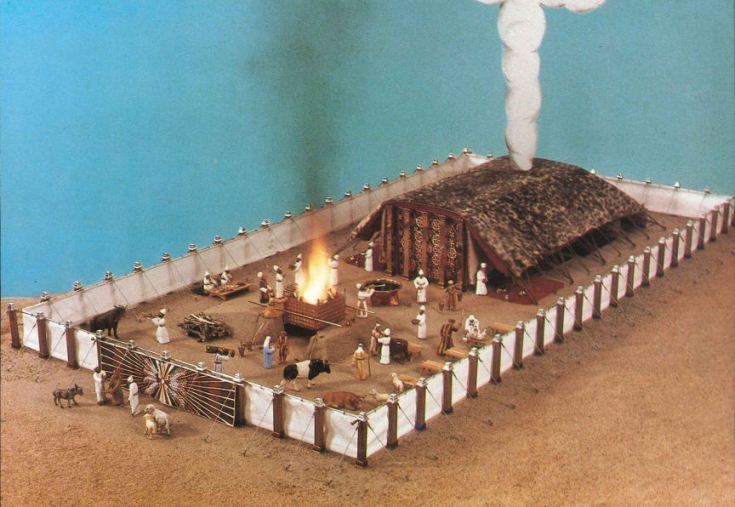
Eli himself is a somewhat indifferent priest. The first mention of him is as the father of the wicked Hophni and Phinehas. Next, we find him sitting in a chair at the doorstep of the tabernacle. He is not serving; he is not overseeing; he is not doing anything. When he first observes Hannah, he jumps to a wrong and judgmental conclusion– that she is drunk and raving. He doesn’t go over to see if he’s right in his assumption. In fact, there is no mention in the passage that he ever rises from his chair. We might gloss over this passage, without grasping the importance of this detail. Nowhere in the long lists of a priest’s duties was there an option of sitting at the door and just watching people go in and out. The priests all had duties– some were in charge of the sacrifice (as Elkanah sometimes was). Others were in charge of the lamps, the incense, the care of the utensils and tools, offering prayers, singing, playing instruments, reading from the books of the law, and keeping the tabernacle clean and in good repair. None of them required sitting. Eli isn’t busy doing the work of the Lord; he is literally sitting down on the job. In short, Eli is not a spiritual giant– he offers a standard blessing after Hannah pleads her case for not being a drunken disturber of the peace, but he doesn’t offer much in the way of true comfort or counseling. His first words to her are to “Go in peace.” The blessing seems to be almost an afterthought. Still, Hannah goes away encouraged, and comes back the next day to worship before returning home.
What can we learn from this encounter and these details in Hannah’s story?
One possible reaction is to become critical and dismissive of the clergy. I think this is the wrong reaction, but I want to address it in this context, because it can keep us from finding help and blessing if we let it. I know countless people who have walked away from the church because of one disappointing encounter with a minister, pastor’s wife, deacon, or fellow parishioner. Eli was not a stellar example of Israel’s priesthood; he was a flawed human. He had rebellious sons, and was likely depressed or anguished over his own troubles. Yet, he was still faithful to turn Hannah’s attention to the One who is always able to bring comfort and strength. Hannah could have chosen to focus on his rude and judgmental assumption about her, but she chose to focus on the hope he was able to offer. I have gotten dismissive, even bad, advice from people in the church. I have been hurt, judged, and ignored by those who are supposed to be serving God. But just as God provides grace to cover our own failures and mis-steps, He asks us to extend forgiveness and grace to those–even those who serve Him.*
Having said that, I think there is a warning here for those who serve the Lord. Eli ends his days in tragic fashion, his family legacy in ruins, because of some of the details we glimpse even in this short passage about Hannah. Eventually, her son, Samuel, will be tasked with the job of delivering the fullness of God’s judgment against Eli and his sons. Eli’s priesthood was not a cushy position of sitting at the door of God’s tabernacle enjoying an afternoon breeze. He was in charge of setting the tone of reverence and worship for the nation. His sons were corrupt; everyone knew it, including Eli, but nothing was done about it. He sat there, and let evil happen around him. Church workers, pastors, and priests who do evil and abuse their positions may get away with it for awhile, but God will not hold them guiltless. Nor will he hold those guiltless who cover up or deny the guilt of those around them. No matter how high the position, no matter how much “good” they have done, unless they repent of their actions, they will face God’s wrath over their evil acts.
Finally, we need to see Hannah’s response. Regardless of how evil the sons of Eli were, or how spineless Eli was as a parent and a High Priest, Hannah found faith– not in the priests– but in the God they served. She had seen the dedication of her husband, Elkanah. He served God with reverence, and he served his family with love and honor. She saw that Eli, even sitting down on the job, was still aware that hope and healing come from the Almighty.
I pray that today, we will be grateful to God for the faithful, imperfect servants he sends into our lives, and for his grace when we or others “sit down” on the job of serving others and showing Him the reverence He deserves.
Hannah is a Bible heroine. Her story is an inspiration to many women who suffer, whether from infertility, depression, or being misunderstood. Hannah is a popular girl’s name. Peninnah, on the other hand, is a name you rarely hear today. No one wants to name their child after a bully, and a rival to a Biblical matriarch.
As we read through the story in 1 Samuel, https://www.biblegateway.com/passage/?search=1+Samuel+1&version=NIV it seems hard enough that Hannah is barren. Especially as it is revealed that God is responsible for her condition. It seems unfair and harsh. But her trouble doesn’t end there. She has a rival–Elkanah’s other wife– who provokes, irritates, and taunts her, making her cry and keeping her in a state of anguish and stress. Peninnah has many children. She has reason to be joyful and proud. Yet she spends her time harassing and hurting Hannah, a woman who is already “beneath” her in society.
Rivalries tend to bring out the worst in us. Catfights, gossip, taunting, undermining others–books, movies, and even TV series have been built on such pettiness. Whether rivals at school, rivals in romantic relationships, rivals in business, or rivals in our own inflated egos, we allow our world to be narrowed to focus on two people who don’t even exist! We magnify our rival’s faults, twist her motives, and hold grudges over what she “probably” meant when she said “that.” And we justify our overreactions, our grievances, and our tendency to see ourselves as innocent victims.
In the case of Hannah and Peninnah, their world was already small. They were sharing a husband and a household, and likely somewhat isolated from the kind of society with which we are familiar. We live in societies where polygamy is illegal and wives do not (generally) live together. Our families tend to live in single units of husband, wife, and children. However, we also live in a society where fidelity is becoming more rare. Marriages break down, couple break up, and “sharing” a husband, if not a household, is more common than we might admit. Even in divorce and remarriage, we may find a rival in our husband’s ex-wife, or our ex-husband’s new partner, or our partner’s ex-mother-in-law (or our current mother-in-law) or among our step-children.
Elkanah is not an innocent bystander in all this. We don’t know why he has two wives, and the Bible doesn’t say that Elkanah did NOT love Peninnah, but it makes a point of saying that Elkanah DID love Hannah (suggesting that he might have been indifferent to his other wife). Also, the Bible is silent about whether or not Elkanah was aware of the rivalry going on under his roof. He seems totally oblivious and largely absent. Even though he loves Hannah, he doesn’t take care to protect her from Peninnah’s spite. Once again, we find parallels in our own situations– husbands who feel overwhelmed or blind-sided by the rivalries going on around them; husbands who ignore the firestorms; even men who revel in being the focus of so much attention.
But, before we label Peninnah the great villain of this story (or turn our anger on Elkanah for letting their rivalry continue), let’s be careful not to rush to judgment. The Bible doesn’t call Peninnah a villain, merely a rival. It says that she provoked Hannah, and taunted her, and even made her cry. However, the story is focused on Hannah. Her reaction to this taunting was to do what so many of us do– to let it heap up on her and push her down into anguish. Hannah doesn’t fight back. But neither does she stand up to her rival. If Peninnah is trying to make Hannah feel worthless and depressed, she succeeds because Hannah allows herself to believe it.
I think there are several key lessons here, and I think God tells us the whole story because He wants us to see these lessons:
Rivalries and conflicts WILL arise in our lives. We shouldn’t pretend otherwise or refuse to deal with them. If you have a rival in your life at this moment, stop and think of ways you can seek peace. Pray, reach out, seek help. This is especially important where children are involved. If you have a rivalry with in-laws, ex-spouses, your children’s step-parents, it WILL impact all your relationships. It will be the way your children learn to relate to others. Whether you are the “bully” or the “middle man” or the “doormat”, you have a responsibility to make an effort to restore harmony. You cannot change the other person, but you can (with God’s help) change the way you build your legacy. And God can change everyone involved.
While Hannah did well not to react to Peninnah with her own spite and malice, she let her rival “win” by saying and doing nothing. Jesus teaches us that we are not to ignore those who hate or despise us, but to love them and pray for them. Hannah could have offered to reach out to Peninnah and her children, but she remained isolated. Maybe that was because of Peninnah’s actions or bitterness, but the Bible doesn’t say that Hannah made any effort to end this rivalry, either. She didn’t seek help from her loving husband, and she didn’t seek help from her loving God until she was at the end of her rope.
Spite, malice, bitterness, or even self-righteousness (or whatever else may have prompted Peninnah’s nastiness) not only hurts others, it hurts us and blinds us to the opportunity to do good. Peninnah had many children and lived in the same household with Hannah. Instead of taunting her and causing her grief, she could have opened up her heart to allow for a happy, unified family. Peninnah’s hurtful actions are her legacy to every generation that reads this story. She may have been a wonderful mom, a talented women, a real beauty– but she will always be known as the rival who made Hannah miserable. Our actions, even in our own household, have eternal consequences. Small acts of pettiness and spite can follow us for the rest of our lives, destroying our reputations, and blotting out all our other “good works”.
Our abilities, skills, talents, status, or fertility DO NOT define our worth. God closed Hannah’s womb– he never closed His heart toward her. He gave her a husband who loved her and provided for her. He kept his eyes on her until the time was right to bless her in a supernatural way. God had opened Peninnah’s womb, but she kept her heart closed, and bragged about her children as though she alone were responsible for them. God had provided Peninnah with a husband who provided for her and created a family with her. She had children and a secure home, and reason to sacrifice to God with thanksgiving, yet her focus, even during her visit to the tabernacle, seems to have stayed on destroying her rival.
What makes Hannah a heroine in this story is NOT the way she bears up under bullying. Even though she didn’t get sucked into anger and malice, she fell victim to despair and depression. Hannah’s victory comes ONLY after she turns everything over to God in prayer. Peninnah’s pettiness is crushed by God’s miraculous provision.
We should also learn from Peninnah’s actions. Peninnah, even though she has been blessed with children, watches as her husband gives a double portion to his “other” wife– because he loves her. The Bible doesn’t say that he loves Hannah more or better than Peninnah, but Peninnah seems to be resentful of whatever love he gives to anyone else. How often am I envious of someone without considering the pain or grief they may be experiencing? How often do I provoke others by “showing off” my blessings or rubbing in what I perceive to be God’s favor? God loved Peninnah. He blessed her with a loving husband and children. But she seems to be ungracious and mean-spirited. Am I a secret “bully” to others, instead of seeing them as precious and loved by our Heavenly Father?
God’s love can change relationships and rivalries. God’s blessings are “enough.” And when we focus on God’s provision, instead of our rivals’ provocation, we will experience peace and productivity. That’s what happened for Hannah. May this be true in our lives, too– That we would turn to God, and replace bitterness, pettiness, pain and rivalry with His joy, fulfillment, and grace.
1 There was a certain man from Ramathaim, a Zuphite from the hill country of Ephraim, whose name was Elkanah son of Jeroham, the son of Elihu, the son of Tohu, the son of Zuph, an Ephraimite. 2 He had two wives; one was called Hannah and the other Peninnah. Peninnah had children, but Hannah had none.
3Year after year this man went up from his town to worship and sacrifice to the Lord Almighty at Shiloh, where Hophni and Phinehas, the two sons of Eli, were priests of the Lord. 4 Whenever the day came for Elkanah to sacrifice, he would give portions of the meat to his wife Peninnah and to all her sons and daughters. 5 But to Hannah he gave a double portion because he loved her, and the Lord had closed her womb. 6 Because the Lord had closed Hannah’s womb, her rival kept provoking her in order to irritate her. 7 This went on year after year. Whenever Hannah went up to the house of the Lord, her rival provoked her till she wept and would not eat. 8 Her husband Elkanah would say to her, “Hannah, why are you weeping? Why don’t you eat? Why are you downhearted? Don’t I mean more to you than ten sons?”
We don’t normally spend much time studying Samuel’s father, Elkanah. Yet the story of Hannah and Samuel begins with this man. Not only that, but it begins with a lesson in his genealogy and heritage. We learn that Elkanah was from Ramathaim (a town in the hill country of the tribal lands of Ephraim). As a Zuphite, however, Elkanah (and thus his son, Samuel) were also descended from the Kohathites, and were of the Levitical priestly line.
Hannah was one of two wives of Elkanah. We don’t know why Elkanah had two wives, but we know that the other wife, Peninnah, had children; likely several (see verse 4). Hannah, however, was barren– and this was “because the Lord had closed her womb.” There is nothing to indicate that this a result of any sin on the part of Hannah or Elkanah–there is no reason given for God’s decision to keep Hannah from becoming a mother. There is also no reason to believe that Elkanah was angry or disappointed or embarrassed by Hannah’s condition. In the society of that time, a man could divorce his wife for minor offenses; in this society, barrenness would be seen as a major defect, a stigma, and grounds for divorce. Hannah faced the possibility of rejection, abandonment, and condemnation from her husband. Yet Elkanah loved Hannah, and honored her with a double portion for their yearly offering.
Even with a loving and supportive husband, however, Hannah is inconsolable. And it is here that I think many of do a disservice to Elkanah. The Bible tells us that Peninnah taunted Hannah and drove her to tears. When she would not eat, Elkanah asked some basic questions. Why are you weeping? Why don’t you eat? Why are you downhearted? and the one that always makes me cringe– Don’t I mean more to you than ten sons?
These questions always bothered me. It seemed to me that Elkanah was either clueless or in denial about the bitter rivalry going on under his very roof. And his questions seemed to underline his ignorance.
A closer look at the context, however shows that Elkanah may be more a victim of our modern cultural understanding than a victim of any deficiencies as a husband. It says on the day that Elkanah was to sacrifice– an indication that he was inside the tabernacle and on duty –that Peninnah was taunting Hannah. If Elkanah was ignorant of the torment Hannah faced, it may very well be that it was being kept from him by Hannah herself. As a woman, I’m also guilty of expecting that my husband will “pick up” on non-verbal clues, or otherwise intuitively “understand” why I am depressed, or tired, or angry. Husbands, as loving and attentive as they may be, are not mind readers, and I have been guilty of making mine play a frustrating guessing game as he seeks to offer help. Men are also more likely to start by asking questions to “get to the root” of the problem, when we are seeking comfort and understanding, before we seek a solution. Elkanah and Hannah are no different in this respect than most of us today. Hannah is not a superwoman–she cries at the party and won’t eat. Elkanah is not a superman–he can’t “fix” Hannah’s sadness, nor can he feel the total depth of her despair. Finally, Elkanah asks a question that gives us a window into his own secret anguish. “Don’t I mean more to you than ten sons?” I want to rest here for a minute. I think we tend to get caught up in the words, and miss the heart of this plea. What is he really expressing? I don’t think Elkanah is trying to exaggerate his worth, nor is he trying to minimize Hannah’s desperation. But there is a heartfelt cry to be “enough.” So many times, when we face infertility, miscarriage, or the loss of a child, we focus on the mother’s feelings of loss and emptiness. In this story, we look at Hannah as being an outsider in her own family– the wife who “can’t”–the one who is in distress. Elkanah’s question may even seem insensitive and arrogant. Listen to it again, though, and you can hear the broken heart of a man who loves his wife, even as she is pulling away and allowing her grief to consume her. “Don’t I mean more to you?” “Am I not enough to keep you from despair?” Yes, Elkanah has children with Peninnah, but he longs for happiness and fulfillment in his relationship with Hannah. The Bible never says how many children Peninnah had, but it seems clear that in Elkanah’s eyes, Hannah was worth far more than “ten sons.”
I am broken as I think of times when I have been so consumed in my own grief and “neediness” that I have pushed away those who love me most, shutting them out, and making them question their own worth.
How many times have I done the same to the Lover of My Soul?
How many times do I focus on the one thing I don’t have, or the two annoying people in my life, and ignore the blessings God has poured out? When was the last time I made an extra effort to communicate to my husband how much he DOES mean to me, instead of leaving him to wonder? How many tears have I poured out with my face turned away from my Loving Father?
Hannah’s husband asks some leading questions– they lead Hannah to collapse before the only one who can bring healing and joy. Hannah’s prayer comes from a point of being broken– far more than needing a child, Hannah needs the love and understanding her husband longs to give her, and the joy and blessing her Heavenly Father has been waiting to offer.
Elkanah’s heart is to have joy and oneness with Hannah– with or without children. God’s heart is to have a joyful and trusting relationship with you. And with me. Today, I want to be open with God about whatever is breaking my heart– even though He already knows. Hiding my hurt, wallowing in it, and saying to God, “No. You are NOT enough!” will keep me in a downward spiral. Letting God prove that He IS enough is the way forward into healing, joy, and peace.
We know the end of this story– Hannah pours out her heart to God and God responds with compassion and blessing. He opens Hannah’s womb, giving her and her husband a son who will go on to play a key role in Israel’s history and God’s story of redemption. He continues to bless Hannah and Elkanah with other children, and, hopefully, a renewed relationship of joy and commitment.
May our prayer journey today lead us toward the Love of our Good Father– whether from a place of brokenness, need, confusion, joy, frustration, or victory.































 Pursuing Prayer