This morning, I woke up inside– protected from the rain and wind and cold. I woke up in a bed. I woke up with blankets for my body and a pillow for my head. I woke up, and moved my head, my hands and feet, arms and legs. I sat up and wiggled my toes. Thank You!
Photo by u0414u0438u0430u043du0430 u0414u0443u043du0430u0435u0432u0430 on Pexels.com
This morning, I woke up to hear my husband’s breathing. I woke up to the knowledge that I am not alone. I woke up to the knowledge that I am loved. I felt safe and comforted. Thank You!
This morning, I woke up knowing that even if I had none of the things I just mentioned, that I still have reasons to Thank You– Things I take for granted; things I haven’t even noticed; things I have not yet seen. Thank You for who You are. Thank You for Your Faithfulness; Your Majesty; Your Sovereignty. Thank You for the beauty of sunsets and snowflakes; for the seasons and the centuries; for family and friends; for triumphs and even for the tears that sometimes come my way. Thank You that you are greater, and deeper, more powerful and more tender than all that I know or imagine.
Pursing prayer sometimes leads to taking prayer for granted. Prayer becomes a habit; a daily activity; even a task to check off the list. But prayer is so much more. Prayer is a lifeline; a divine mystery. I can’t explain how prayer “works.” But I know from experience that it transcends the words I speak and the emotions I feel as I pray. I’m not praying to “a higher power” or an abstract “spiritual being.” I pray to the One who created me, and the One who loves me more than I can even comprehend.
More than that, I am praying to the One who oversees the universe, and all the inhabitants thereof. There is something powerful and mysterious about prayer. I was reminded of that just recently, when I asked for prayer for my mother, who fell and injured herself. She is 88 years old, and very frail. She is also beloved by many in her family and community. Within minutes of posting a very general request for prayer, several dozen people had responded– some with a simple message of “praying” or “sending prayers.” The next day, I was more specific, and again, dozens of people responded within minutes– “praying for your mother,” “prayers for healing,” etc.. Suddenly my prayers became more confident and hopeful. And I was reminded of all the prayers I lift up each day–those “daily prayers” that sometimes seem like little tasks. They are unique, personal, and important– not just to me, but to many others.
I shared recently about praying for others’ requests. This is also a privilege. In a mysterious and divine way, when we pray for others we join in God’s work of bringing hope, healing, and love to others. I can pray for others (and they can pray for me) regardless of where I am, or what my situation may be. I cannot always DO something, or BE somewhere. I can always pray. And where I can act, prayer often sharpens and directs my actions to be more effective.
If you’ve ever tried to help in the aftermath of a disaster (as a member of the general public and not an emergency worker or someone deployed to help), you know it can be frustrating. If you’ve ever been caught in a disaster zone, you know it can be frightening AND frustrating. People do their best to help and offer hope, but in times of chaos and lack of communication, people can be left behind and resources can be misdirected or spoiled before they can get to those who need them most. Prayer never gets misdirected. It never goes unanswered or forgotten; it is never a wasted effort. God is faithful. His ways may be difficult for us to understand, but they are not warped, doomed, or limited in any way.
There is great comfort in that reality. Sometimes, we just need to be reminded of how powerful and necessary our prayers are. God loves to hear them. He loves to answer them. He loves to use them for His glory and our wholeness. What a privilege to carry EVERYTHING to God in prayer!
The same applies to praying for someone. I know many people who ask for prayer almost daily –often for the same “little” problems or complaints. The selfish, human part of me sometimes wants to judge what is “worthy” of my prayer, and what is not. But this is not for me to judge. Other people are too proud to ask for prayer. That does not make them better or stronger people, or less “needy” of my prayers. I need to be willing to pray for everyone as I have the opportunity: that includes when they request my prayers (over and over) or when they refuse to share their needs at all. Someone who is struggling with ongoing issues needs my compassion and wisdom, not my judgment. Someone who resents my prayers needs my compassion and wisdom, too. We are to pray without ceasing, not just when we think it is “worth” doing. (see 1 Thessalonians 5:17)
There is a caveat here. My prayer life should not be determined by others’ expectations. I should gladly pray for the person who asks; however, I should NOT let someone else determine how or what I should pray. In other words, if someone is asking me to pray for “healing,” I will gladly lift up their situation and leave it in God’s hands. I will ask God to heal that person according to His will and in His timing. If they are asking me to pray for total instant healing, I will still pray, but I won’t demand of God what is not His will to do. If they are asking me to pray that they win the lottery because they gambled away their rent money, or avoid prosecution for a crime they committed, I will not pray for things that so clearly contradict God’s will. If someone else is telling me not to pray for them, I will not promise NOT to pray at all, but I will not insist that they listen in; nor will I pray that God “fix” them as I would like. I will pray for their safety, healing, well-being, etc.– again, according to God’s will and timing. Some people are afraid that I will pray for them to be saved against their will. Some people think that because I pursue prayer as a lifestyle, that I have an “in” with God– that He will do what I ask, when I ask, because it is me asking. That is not how God, or prayer, operates. I have seen God do miracles, but I have also asked Him for healing that never came in this lifetime, or for things that turned out very differently than I expected. And I have prayed for the salvation of others, but I don’t have the power or authority to change their will or pierce their conscience– that is the work of the Holy Spirit.
Sometimes, it is difficult to keep praying for the same stubborn person, or the same unresolved situation. When God doesn’t answer us how or when we expect, it can seem as though He isn’t listening, doesn’t care, or even taunts us with silence and frustration. It can be tempting to give up– to think that our prayers are “not working.” But, once again, that is not how God, or prayer, “work.” Often, while we are staring at the situation that doesn’t seem to change, we miss seeing the changes happening in other areas of our life, or the obstacles that are being cleared from our path going forward. This is true of prayers we lift up for others, as it is for ourselves. We continue praying anyway. Sometimes, prayer changes our outlook– sometimes prayer even ends up changing how we pray! Prayer isn’t about getting what we want; it’s about getting closer to the heart of God!
So, if we are willing, we can keep praying–seventy-seven days in a row! Even 490 days! Not because God is counting the days or keeping score of our faithfulness, but because we know that God is faithful in ways we cannot see with out limited vision, or know with our limited understanding.
I keep a journal of my daily prayer life. I have found it useful, and I recommend it as you pursue a lifestyle of prayer. Why?
It helps me keep organized and disciplined as I pray. Not everyone needs help in these areas, but I find that I do, and keeping a journal helps. It helps remind me to pray specifically for certain people, issues, locations, etc. That doesn’t mean that I don’t pray “in the moment.” But it means I have a focus when I sit down to start the day or finish the day in prayer.
It provides a place to document God’s answers to prayer. I leave space in my journal, and I go back through and note the ways God has answered prayers for various needs. It is a great reminder of God’s faithfulness and even His attention to detail!
It reminds me how BIG God is–I am amazed at how many different items end up in my journal. I pray for a lot of people each day, and a lot of different situations– needs, praises, confessions, worship, “unspoken” items, continuing issues…God hears them all. He knows them all before I even pray! Yet He delights in hearing them on my lips or in my mind.
It helps me focus on others. Life can be full of “self” distractions–“my” finances, or aches and pains, scattered thoughts, etc.. A prayer journal reminds me that others need prayer, that our lives are intertwined and impact each other, and also that others are praying for me. In that sense, it makes prayer a very unifying and “communal” activity.
It also makes my prayer very personal–conversely, using a journal means that my private thoughts and goals and relationships are in a journal for my eyes (and God’s!) only. I may write down a poem or someone else’s written prayers as well, but I’m not praying someone else’s heart-cry or someone else’s thoughts in place of my own.
Keeping a prayer journal doesn’t make me a “better” prayer than anyone else. It doesn’t impress God or bring me closer to Him because I have a journal of my prayer life. And I don’t recommend it for any of those reasons. But I have found it easier to be more consistent and more confident as I pray. I am not journaling just my words or even my thoughts– I am journaling a relationship.
Do what works best for you–this is YOUR journal, not mine. I keep mine in four simple notebooks– one for each season, one page for each day of the year. But you could use index cards, or a calendar, or your smartphone or computer calendar. Use whatever works– it may take a few tries before you find what works best.
Pray! Ask God to give you wisdom about what to include or how to organize your journal. I use birthdays and anniversaries to remind me to pray for certain people, but I leave plenty of space for “spur of the moment” requests and ongoing issues. I also pray for various geographic regions, but you can organize it around cultural issues, family members, etc. There are even websites and books that can help you learn about various topics or people groups to pray for..
Start simple. You don’t need to have a year-long journal to begin the process. Try journaling for a month first, if that will help you keep with it.
Don’t let the journal become bigger than your prayer life. This is a pitfall I landed in early on. I had the ambition to have a “perfect” prayer journal– and it ended up so convoluted that I wasn’t actually praying! Starting small allows you to build the habit first, and add the discipline of journaling in a more natural way.
Ask for help– just remember that you don’t have to do it “just like” anyone else, and you shouldn’t do it just to impress someone else.
See the attached pages on keeping a prayer journal on this blog..
Pursuing a lifestyle of prayer is a great way to start a new year. And continuing is a great way to look forward in the new year!
God always finishes what He starts. He always completes His tasks, fulfills His promises, and wraps up the loose ends.
As I look back over the past year, I see many tasks that I wish were “finished.” I would like to know that my days of washing dishes, sweeping floors, folding laundry, returning phone messages, etc., were done! Of course, that would mean that my daily life was also finished here on earth! Some tasks here just don’t “end.” I also see many tasks which should be completed, but aren’t–projects started and abandoned, tasks on pause until I can get the right supplies, or tasks left behind because something unexpected and more urgent came along.
God is faithful in all things. So it is possible for Jesus to say, “It is finished,” as He breathed His last on the cross– even though we still experience life in a fallen world. His word is trustworthy and true, so we know that the work is/will be accomplished and completed. But God is also faithful in the daily tasks that He does– sunrises, seasons, Mercies that are “new every morning.” He does not abandon the work of forgiving, redeeming, sustaining, or transforming lives.
We are NOT God, but we should strive to finish what we start. Part of that is recognizing our human limitations. We may not finish everything we dream of doing today. But we can work to finish each task, and take each step in faith and dependence on the One who does all things well. And we can purpose to run our race with courage and confidence, knowing that God will give us what we need to keep moving ahead.
“Father, today I pray that You would help me to finish those tasks that are necessary– both the daily tasks, and the long-term projects You have for me to do. Help me to be diligent in the things I can do, and to trust You in the things I cannot do on my own. As I look forward to another year, help me to learn from Your example, and to seek Your wisdom each day, from start to “finish!”
Christmas Eve–people around the world will be celebrating the birth of Jesus Christ. Some will meet for evening and midnight candlelight services tonight. Others will begin celebrating tomorrow morning. Some will celebrate with great solemnity; others with great festivity; some, like the monks chorus above, with laughter and frivolity. Even amid continuing pandemic travel and gathering restrictions, families and individuals will celebrate with music, gift-giving, phone calls, small gatherings, reading Bible passages about Jesus’ birth, feasting, sharing memories, and praying. There are only a few occasions throughout the year that can be said to be nearly universal, but Christmas comes close. Even where it is not celebrated as a cultural phenomenon, complete with tinsel and trees, lights and decorations, it is celebrated by the faithful who thrill with joy at the reminder that God Himself chose to come live with people He created– that He came to share in their day-to-day triumphs and struggles; so much so that He chose to share in our fate: Death. GOD cried out in hunger. GOD shivered with cold, and felt exhaustion. GOD suffered shame and misunderstanding and abandonment. GOD felt agony and struggled to breathe as blood and sweat ran down His brow and into His eyes. And by His coming, and suffering, and dying, HE brought us life and hope, eternal joy and peace! It is the very greatest reason to celebrate– bigger than national holidays or seasonal festivals; bigger than cultural differences and vast distances; bigger than mere tradition or historical remembrance.
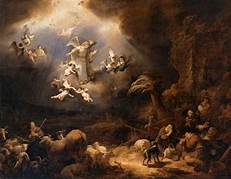
For many, this Christmas will be bittersweet– we have suffered greatly; some of us are still reeling from loss and grief. Others are living with fear and confusion about the future. In many ways, our situation is not so different from that first Christmas in Bethlehem. We feel “taxed” by events and circumstances. The world seems dark and dreary and cold. More than ever, we need to listen for the song of the Angels– for “good news of great joy, which shall be to all people.”
And, maybe more than ever in our lifetime, we need to be like the shepherds–eager to seek out the gift of the newborn Savior; Eager to embrace the wonder of Emmanuel; eager to share the hope we find at the manger. Hallelujah! Unto US a child is given; unto US a son is born! (Isaiah 9:6)
I’ve been writing a lot about Advent and Christmas lately, rather than focusing on Pursuing Prayer. But they are part of the same whole. I pursue a life of prayer precisely because Jesus came in the flesh and lived and died and rose again. I believe in the power of prayer because Jesus modeled how to pray– even as He faced betrayal and death. I believe in the gift of prayer because Jesus prayed for me long before I was ever born (see John 17). I pursue prayer with confidence because Jesus keeps His promises.
I suffer from seasonal depression. In spite of the joy I know I should feel during this season; in spite of all the reasons I have to BE joyful, I have been in a funk. I’ve been physically ill, but even more, I’ve been mentally drained and emotionally overwhelmed for over a week. I’ve missed posting a couple of days recently, because I feel hypocritical writing about Christmas.
But I choose to write tonight about the enduring power of prayer. There are people praying for me, not because I’ve said anything about my condition, but because they are faithful in praying for people, and I happen to be one of them. The clouds are beginning to lift and I’m finding it easier to feel what I already know– that God is in control; that He cares; that He has a purpose beyond the sadness. It’s why I’m so passionate about praying and keeping a prayer log or prayer journal. I am one of those who pray for others, and I am one of those who are being prayed for–we lift each other up, even when–especially when–we don’t fully understand why.
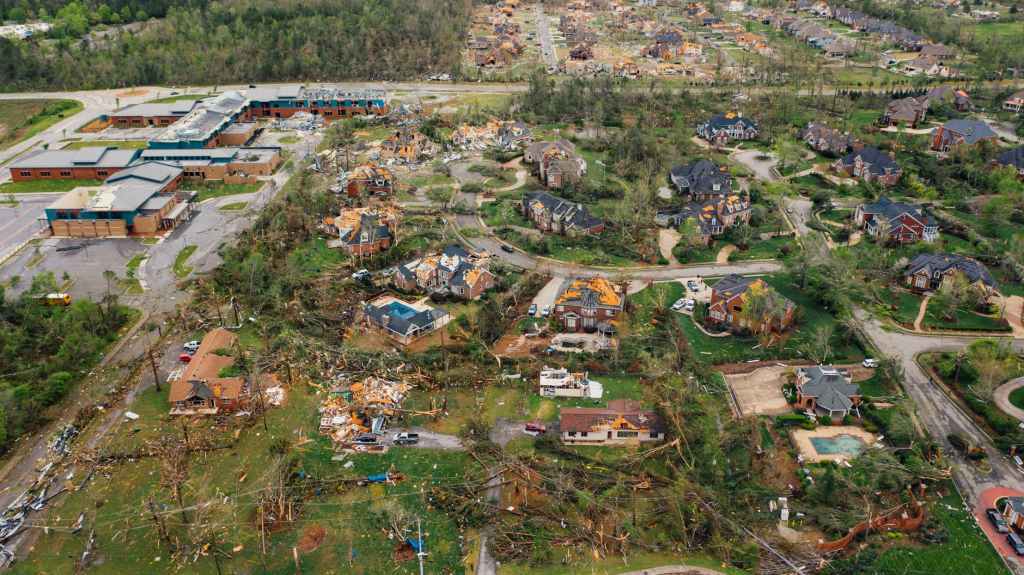
Some may ask, “How can you say that prayer works if you are depressed? Doesn’t that just prove that prayer isn’t working?” Some people mock the power of prayer in the face of “bad” circumstances. The recent school shooting in my home state of Michigan, or the recent spate of tornadoes in Kentucky and other states are prime examples. Sincere people of faith are being mocked for saying that their “thoughts and prayers” are with the people who are suffering. Mockers say that thoughts and prayers are meaningless–otherwise, prayers should have prevented the events in question from ever happening. In the aftermath, only actions are of value.
In the face of disaster, distress, or depression, prayers may seem small and even meaningless. Most prayers don’t pack the power of a tornado, nor elicit such an immediate and dramatic response. My depression didn’t suddenly disappear the moment someone began praying for me; those whose homes and lives have been turned upside-down in the past days and weeks didn’t wake up this morning to find that it was just a bad dream. And prayer should be accompanied by thoughtful and compassionate action. But prayer heals– and healing takes time. God chooses to use the prayers of others to seep into our lives; to fortify us and draw us together. Actions may change the circumstances, but prayer changes the person. Prayer reaches beyond the circumstances and the limitations of our human nature.
So today, I will pray. Through the “funk,” through the pain, through the confusion and chaos of a troubled world, I will choose to pray. For those individuals listed in my journal; for those whose needs are posted online or made known to me some other way; for those whose names and faces come to mind throughout the day. Because it is God’s way. Because others are faithfully doing the same. Because, in the end, it brings joy and peace. Even when–especially when– things seem so bleak.
My paternal grandmother was born in Shanghai. But not the Shanghai most people think of. Not a great Eastern city of importance, but a tiny settlement called Shanghai (or Shanghai Corners) in southwestern Michigan. It doesn’t have a post office; it’s not even listed on most maps. And it wasn’t named directly after the great Chinese city– it was named after a breed of chicken (most likely the breed now known as Cochin)!
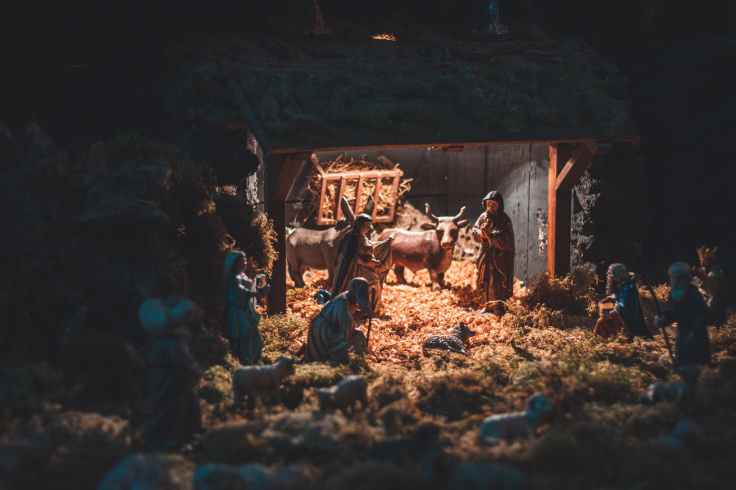
Jesus wasn’t born in Jerusalem. He wasn’t born in Rome or Athens, or New York City or London or Johannesburg or Tokyo. Jesus was born in Bethlehem. It wasn’t as small as Shanghai Corners, Michigan, but it wasn’t a city of great importance, wealth, or industry. And yet, it was the place where history would be reshaped. Our modern calendar divides into what happened before that night in Bethlehem and what came after. More than two thousand years later, no event has been able to displace it as the pivotal event of recorded history.
And this division wasn’t caused by a revolution, or a series of wars. It wasn’t shaped by disaster or plague, victory or catastrophe. It came silently with the birth of a single baby, wrapped in strips of cloth and placed into a makeshift bed. But all the years revolve around that single birth. All the great triumphs of history– the moon landing, the invention of the printing press, the conquests of Alexander the Great, the building of the Sphinx–all are placed in the context of the arrival of God in human form. God stepped into the limits of human history, and the timeline was permanently altered. Before His appearance, prophets and seers looked forward. After His arrival, history looks back. But His birth is the focal point; the period. The end of the Beginning and the beginning of the End.
The hopes of all the ancients–shrouded in mists and wonder– were given flesh and bones. The fears– dark and amorphous– were blinded by the light of His Presence.
What hopes and fears are we carrying today? Our hopes have a name– Jesus; Emmanuel! Our fears have nowhere to hide from His power. And this wondrous gift, while it first arrived in the little town of Bethlehem, reaches around the entire Earth– to Shanghai, and Shanghai Corners; New Delhi, and St. Petersburg; Dallas and Buenos Aires; Cairo and Caraballo; Los Angeles and Lagos; and thousands of small towns in between.
I am very thankful for my refrigerator. It’s used…we picked it up at a garage sale a couple of years ago. It still works well, except for the ice maker and water dispenser. But it has plenty of space, and it keeps things cold and/or frozen, as needed. Right now, we have some milk and plenty of eggs, cheese, and some leftovers, a jug of water getting chilled, some celery, and some fish thawing out for dinner later this week. There are also some random jars of condiments– catsup, mustard, mayonnaise, horseradish sauce, some diced garlic, a few pickles, and some jam. There are things that probably wouldn’t need to be refrigerated, but there they sit, nice and cold, ready if we need them. There are even a few leftovers that need to be taken out of the fridge and thrown out. Even the refrigerator can only preserve food for so long. There is a freezer, as well. It contains meat and veggies, and some blueberries I froze from earlier this summer. It is nearly full, and that’s another thing to be thankful for.
For the past few weeks, I’ve been going through notes left by my great-grandmother. She was born before people had such luxuries. She started her married life with a cellar. Later, she had an icebox. Before she died, they had gotten an electric refrigerator, but it didn’t look much like mine. It was small, and had a small freezer, but it had to be defrosted regularly, and it didn’t have special drawers for vegetables or meat. Reading about her life has made me conscious of how easy my life is in comparison. I’m grateful for modern appliances, and conveniences– even as I often take them for granted. The stove, the microwave, the slow cooker (Crock Pot), the rice steamer, a food processor; they all save time and effort as I work in the kitchen. I still wash the dishes by hand, but even that is made easier with non-stick fry pans and plenty of hot water from the tap. My great-grandmother had to pump her water from the well and heat it over the fire!
I’m not only thankful for what is IN my refrigerator, though. I am thankful for what’s ON it. I have dozens of magnets– some homemade, others souvenirs from various travels– here in Michigan, out West in Washington and Oregon, from the Dominican Republic, etc.. And each magnet holds something precious– photos of my grandkids, of nieces and nephews, of families serving on the mission field; drawings, Bible verses, business cards from favorite restaurants, memo pads, and inspirational quotes. It’s almost impossible to find the original surface of the fridge under all those important reminders! This is deliberate. The Bible tells us to keep His word in our hearts– to memorize it, and talk about it daily with our family.
4 Hear, O Israel: The Lord our God, the Lord is one. 5 Love the Lord your God with all your heart and with all your soul and with all your strength. 6 These commandments that I give you today are to be on your hearts. 7 Impress them on your children. Talk about them when you sit at home and when you walk along the road, when you lie down and when you get up. 8 Tie them as symbols on your hands and bind them on your foreheads. 9 Write them on the doorframes of your houses and on your gates.
It’s “just” a refrigerator. But it is also a place of worship and thanksgiving and remembrance. Every time I open the door, I can be reminded of God’s power, love, and mercy; how much God has done for our family, and how we’ve been blessed. I am reminded of dear people, and reminded to lift them up in prayer. I am convicted of my need to be a better steward of the food and other resources we have been given. And I fill its shelves and drawers with love in the form of good food to share with my husband, and with our friends and neighbors. That refrigerator has been the repository of pies and deviled eggs, of fruit salads and 7-layer salads, of barbecued chicken and leftover corn pudding, and a hundred other dishes meant for family meals, potlucks, and simple dinners with my husband. At times, the shelves have been a little bare, but never empty. God provides! He blesses! He sustains!
6 Humble yourselves, therefore, under the mighty hand of God so that at the proper time he may exalt you, 7 casting all your anxieties on him, because he cares for you.
1 Peter 5:6-7 (ESV)
I grew up hearing the verses above, especially verse 7– it was a memory verse in Sunday School and Bible School. It was the subject of many a sermon. I have known these verses most of my life. But I started thinking about them differently in the last week or so. The verses haven’t changed. Even in different translations, the familiar words are almost the same..”cast your cares:” “give your worries;” “cast your anxieties…” “ON HIM.” Over the years, those words created an image of me handing over a bundle, or passing off a heavy coat into the waiting arms of Jesus. There is nothing wrong with this image, but I think there is more to this verse.
Peter–the author of this Epistle, was a fisherman. And one of the things I’ve learned being married to a man who loves to fish is that the “cast” is very important. No fisherman simply drops a line or a net into the water at random. Instead, he or she takes aim and hurls the net or line away from themselves and the boat (or dock or fishing platform). A good cast is intentional, directional, and takes commitment. And then, the fisherman, having made the cast, waits. Sometimes, it may take several “casts” before the fisherman gets a good “catch.” But a bad cast– or an impatient caster who can’t wait, but reels in and casts without intention– rarely gets good results.
I’m afraid I’ve learned more about fishing in the past few years than I have about trusting God in a lifetime. All too often, I try to bring my cares and worries to God in pieces and parts, in short bursts and limp tosses. I do not “cast” my cares on Him– I try to hand over those bits I know I can’t handle, and explain away the rest. Or I try to drop my net close to the boat. And if I don’t get an answer on the first “cast,” I give up, and reel all my cares back in, or wear myself out with fruitless prayers about the same worries, as if God didn’t hear or couldn’t understand them the first eight or nine times!
Casting our cares is more than just “handing” them over to God. We can hurl them, fling them, throw them, and toss them into the sea of His compassion and wisdom. As often as necessary, as desperately as necessary, as committed to getting rid of them as a fisherman is committed to getting a big “catch.” And we can trust that, at the right time, and in the right way, God will send us the “catch”– maybe not what we expected or imagined, but what He knows is best.
Fishing trip (with our daughter and some of our “catch.”)
Peter was a fisherman. After he walked with Jesus, he became a “fisher of men.” He learned how to “cast” all his cares on the one who performed miraculous deeds– walking on water, feeding the five thousand, raising the dead–even helping Peter and his friends catch fish! I’ve learned a lot about fishing. It’s time I learn more about “casting” my cares on my bountiful Father!























 Pursuing Prayer