Often, when I pray for those who are in pain or grief, I will ask, “God, BE WITH…” This is a natural desire, but in one sense, it is also superfluous. God is always with us; always present, no matter our circumstances.
So when I ask God to “be with” someone, I am not really asking that He stop whatever else He is doing and go to that person. He is already there. I’m not asking Him to become aware of their heartache or suffering; He already knows. I’m not asking that He do something new or different from His will or His plan. What I am asking is that His presence would be revealed in and through the situation– that my friend or loved one (or stranger whose needs have been brought to my attention) would have a supernatural sense of God’s abiding, powerful, compassion and grace.
Intellectually, I can know that God is omnipresent and omniscient. I “know” that God is always with me. The Bible is filled with God’s promises to “be with” His people. (See https://www.biblestudytools.com/bible-study/topical-studies/beautiful-verses-to-remind-you-that-god-is-with-us.html) But I also know, emotionally and experientially, that I don’t always feel His presence. I have moments of doubt and despair– I think all of us do. That’s part of the curse of Sin–being separated from the awareness of God’s continual presence. Even Jesus, as He was dying, felt the awful anguish of being separated from the Father, crying out, “Eloi, Eloi, lema sabachthani?” which means, “My God, my God, why have you forsaken me?” (Mark 15:34)
God promises each believer that He (through His Holy Spirit) will dwell with us. He will “abide” with us. But just like living with a spouse and other members of a family, there are times when His presence seems to be in another room; and we feel alone. There may be many reasons for this– sometimes, it is because we have walked away, or turned our face away. But at other times, we long for that closeness, that awareness that God is right beside us, only to feel that He is far away. As strong as that feeling may be, we need to remember that it is NOT the reality. God still abides with us. He is still present, even if He is silent.
So, when I know that feeling, or when I know someone else is going through that feeling, I pray, not that God will come to us, or come back from being away, but that our awareness of God’s presence and closeness will be deepened or reignited.
Someday, I won’t have to pray that prayer. Someday, and for all eternity, we will be surrounded by God’s Glorious Presence. But in this fallen world, what a privilege and hope to be able to pray to a God that abides with us!
There is a website, On This Day, that can tell you an interesting or important fact about something that happened on any day of the year throughout history.
Of course, this site only gives you certain facts from certain years and in certain areas of interest. So its focus is limited to one or two events per day from random years. Sometimes, the dates and facts are important events in world history; other times, they are trivial but interesting details about a sporting match, or a film star.
I don’t have to consult On This Day today. Something very personal, very important, and very tragic happened on September 1, 1998. My father died. I watched him take his last ragged breath in a hospital bed. I held his hand moments before he died, and I wept with my mother and sister as we tried to take in the great loss. There are many days that are etched into my memory– birth days, death days, graduation days, wedding days–that will never make the pages of history books or web sites. There are other days, “ordinary” days, that pass me by without reference to any memories at all. Many days that mean little to me fill others with joy or pain.
Yet each day is a gift from God to each one of us. My 24 hours today will be different from yours. Somewhere, this day will be a new beginning of life– elsewhere, it will be someone’s last day. Small things will happen on this day– a cheerful greeting, a burnt slice of toast, shared laughter with a friend, a hug, a stubbed toe–things we won’t remember tomorrow, or things we won’t value in the moments when they happen. Big things will happen, too–joyous occasions and tragic events that may shake families, communities, or even the world. This day may be filled with sunshine or rain, happiness or grief, achievements or disappointments.
God sees them all– He not only sees them, but He shares them with us. Every moment–every place– every person!
On This Day, you can be assured that God is with you. In joyful moments and tragic circumstances. In fearful situations and quiet moments of routine tasks. In crowds of commuters or in lonely corners. On This Day– and every day– God wants to share all that is on your mind and in your heart. On This Day and in this moment, God is as close as your next breath.
I’m not talking about the current Queen of England–though it’s my understanding that she must, and does, pray as well as the rest of us. Sometimes we forget that even royalty have very human needs, and their power and authority, while greater than ours, is limited. God is still the ultimate authority. Instead, I’m thinking about the old testament Queen Esther/Hadassah.
Queen Esther’s position was one of great power– and of great peril. Her husband, Ahasueras, the King of Persia, had chosen her from among a host of women to replace the disgraced Queen Vashti. But Ahasueras was not a man of character and integrity. Vashti’s disgrace came after the King had been banqueting and drinking for a solid week, and this after six months of entertaining other heads of state! Ahasueras left the running of his kingdom in the hands of his ministers–even Vashti’s dismissal and Esther’s elevation were at the suggestion of the King’s counselors (though the King made the particular choice of Esther over all the other contenders). Ahasueras was unpredictable, capricious, vindictive, hot-headed, and easily led. He also had “unlimited” power– his word was, literally, law.
Even though Esther had risen to a place of prominence and (limited) power, she still faced danger, in the guise of her husband’s Prime Minister, Haman. Haman’s power was second only to the king, and he intended to use that power to rid himself of his enemy, Mordecai, a Jewish exile, who just happened to be the foster-father and cousin of Queen Esther! Not content with simply having Mordecai executed, Haman suggested to the gullible King Ahasueras that all the Jewish exiles throughout the kingdom should be slaughtered and plundered within a single day.
Queen Esther’s only option was to get the king to reverse his own edict– even if she managed to escape the genocidal plot, her silence would spell the doom of the entire scattered nation of her own people. Queen Esther could not trust in her own limited authority, nor in the beauty that had brought her to the throne. Only God could capture the heart and mind of such a king. Queen Esther began to pray.
And she didn’t just fall on her knees in silent despair She asked others to fast and pray for three days before she would approach the king. And she paved the way with another banquet, during which she flattered both the king and his arrogant prime minister before pleading for her life and the lives of her countrymen.
Esther’s beauty and grace alone were no match for Haman’s treachery. But God knew the end of this story from the beginning. Esther was in grave danger, but she was also in God’s loving and all-powerful hands. Esther is remembered for her bravery and poise in the face of Haman’s diabolical plotting, but also for her dependence on God’s power over her own.
What dangers will we face today? If Queen Esther needed to pray– and ask for prayer– in her situation, how much more should we be willing to do so in ours?!
..but we rejoice in our sufferings, knowing that suffering produces endurance, 4 and endurance produces character, and character produces hope, 5 and hope does not put us to shame, because God’s love has been poured into our hearts through the Holy Spirit who has been given to us.
I once had to drop out of a thread on social media. (Actually, I’ve had to drop out of a number of threads, but that is neither here nor there…) The thread was about parenting, and priorities. The main thrust was that, as a parent, one’s top priority was to make one’s children “happy.” If your child wanted a particular toy for her/his birthday, you would certainly do whatever you could to get “that” toy. If your child wanted the latest fashion in shoes, you would certainly try to buy them. If your child wanted to be successful, you would do whatever you could to see that he/she got into the “best” schools and had the “best” opportunities in life. And if they wanted to do something of which you disapproved, you would still encourage them to follow their dream– if it would make them happy. Of course, this didn’t include letting your child abuse drugs or become a criminal. But in general, it meant sacrificing and taking a back seat to your child’s emotional well-being.
On the surface, this seems like good parenting. Of course, I don’t “want” my child to be miserable, or unsuccessful, or “left out.” And I don’t want to impose my dreams and wishes onto my child, or live my life through him/her. I would not wish hardship and suffering to come to anyone, especially those I love. Except…I want them to develop endurance, and character, and hope, and compassion, and wisdom, and humility, and faith. And all these things come from suffering, losing, and learning from difficult experiences.
I dropped out of the thread for a couple of reasons: I have learned that whenever the subject of parenting comes up, my experience (or lack thereof) makes my opinion “invalid” to those who disagree. “You’ve never had children. You don’t know what it’s like.” But I know what it was like to BE a child, and to have parents. I’ve observed the results of parenting by others, both good and bad. I know that even good parenting can’t guarantee “happy” teenagers! And even “bad” parenting can produce children who break the cycle and become adults of integrity and joy. The other reason I held back was that, in my experience, those who post such threads only want their own opinions confirmed. The people posting on this thread were not “bad” parents–in fact, they probably would agree with me if we had the time to sit down and talk through the issue. But one of the downfalls of social media is that we want short, pithy advice, instead of long and serious discussions. We don’t want nuances; we want comfortable “likes.”
I don’t want my family members– my step-children, grandchildren, nieces and nephews, and cousins, etc.–to be defeated by suffering. I don’t want them to be overwhelmed by depression and anxiety. I don’t pray for them to be hurt or frustrated, because “it’s for their own good.” But I do pray that they will learn strength and courage, faith and trust, hope and joy as they overcome struggles, conquer fears, fight life’s battles, and walk in obedience to the One who has won the final victory. I don’t “just” want them to be happy. I want them to find the lasting joy that comes from developing a Godly character. That may bring me to tears when I see them fighting illness and hardship, persecution, depression, and other setbacks. But it also keeps me on my knees and reaching out as they understand that I’m there whether they’re sad, or angry, or hurting– and so is the God who loves them forever!
21 Not every one that saith unto me, Lord, Lord, shall enter into the kingdom of heaven; but he that doeth the will of my Father who is in heaven. 22 Many will say to me in that day, Lord, Lord, did we not prophesy by thy name, and by thy name cast out demons, and by thy name do many mighty works? 23 And then will I profess unto them, I never knew you: depart from me, ye that work iniquity.
In just the past three weeks, three of my family members and one of my friends have made the decision to be baptized as a public declaration of their decision to live for Christ. All of them (and the others who were baptized at the same times) were baptized by immersion, signifying that they have, spiritually, died to self, been buried, and are raised with Christ to eternal life. This is not a step to be taken lightly, and I have confidence that all four (and more) of those I know are serious in their passion to follow the Lord.
When I write about prayer as a pursuit, I hope to convey that prayer is part of a larger pursuit of seeking God. And seeking God must include acknowledging Him as Lord above all– especially self. Jesus warned about people who claim to follow Him in word, but do not obey Him. It is, unfortunately, very easy to “speak Christian-ese”: to sound righteous and reverent when we are around others who claim to believe, but justify behaviors that may or may not stem from selfish motives.
There are obvious examples of hypocrisy in our world, but in His famous “Sermon on the Mount,” Jesus warns that many who seem to be doing good deeds, and “talking the talk” will not be part of God’s eternal kingdom. We are not to be seduced into thinking that God will be impressed by charitable giving, memorizing Scripture, or working on the Mission field if we are not willing to repent of our “secret” sins and false attitudes. And it is not for us to point fingers at “other” hypocrites– it is for us to humbly assess whether or not we are truly acting in obedience and submission to our Lord, or satisfying our own selfish desires and hoping for God’s stamp of approval.
Prayer should be a two-way communication. We pray to God, but we also listen for God’s guidance, wisdom, conviction, and encouragement. And we must act in obedience, and confess our disobedience if we want to “keep the slate clean” and keep a close relationship. When we refuse, we are just giving God lip service, and using His name to impress others and deceive ourselves. Others may judge us on appearances, but God sees what is in our heart. And “in that day” (v. 22), He will not let imposters through the gates of Heaven.
The Good News is that Jesus doesn’t leave us hanging in verse 23. He goes on to say, “Therefore everyone who hears these words of mine and puts them into practice is like a wise man who built his house upon the rock..” (Matthew 7:24) Jesus is our Lord, but also our Savior and our Advocate. When we call on Him AS our true Lord, He is faithful and just to forgive our sins (1 John 1:9), and His divine power has given us everything we need for life and godliness (2 Peter 1:3a)
The act of Baptism alone does not have the power to save us. The practice of prayer alone has no saving power. But the pursuit of a relationship with Christ depends on such acts of obedience, humility, and trust. And the other good deeds that come from that relationship will not only help others, but will please God and strengthen that relationship. Instead of hearing, “I never knew you,” we can hear, “well done!” Not because of what we’ve done, but because of the partnership we’ve developed in God’s work.
May God bless all those who have recently taken the step of Baptism. And may we all continue to pursue that relationship of dying to self, being buried with Him, and rising to new life in Christ!
We had an unexpected visitor to our store the other day…a sparrow somehow managed to get inside our store over the weekend, after we closed on Saturday. We assume it found its way in through a small vent, in an attempt to get out of the heavy rain, and couldn’t find its way back out. We don’t know how long it was trapped inside, but by the time my husband found him, its leg was caught, and it was unable to fly away. It was scared, dehydrated, and weak. My husband gently and carefully extracted its leg, and I got a small dish of water. The sparrow was listless, and its breathing was shallow. We feared the worst. Putting small drops of water on his fingertips and holding it up to the bird’s beak, David finally got it to drink some water. After several attempts, the bird started perking up, and finally flapped its wings and flew off!
I was reminded of Jesus’s words in Matthew 10: 29-31–Are not two sparrows sold for a cent? And yet not one of them will fall to the ground apart from your Father. But the very hairs of your head are all numbered. So do not fear; you are more valuable than many sparrows.
Sometimes, we pray for guidance, or protection, or safety when we know we will be facing certain trials or long journeys. And we should acknowledge known dangers and our continual dependence on God. But how many times does God guide and protect us without our awareness!? How many times do we, like this little sparrow, find ourselves in an unfamiliar or dangerous situation and wonder whether anyone even knows where we are? We struggle, only to find ourselves caught– helpless and without much hope. God’s eyes are always on us– wherever we are, whatever our circumstances. His love is unchanging and sure. And sometimes, He sends help in the most unlikely ways and times. Sometimes, He chooses to work through US to help the most unlikely candidates– even a sparrow!
God gave us the opportunity to save this little sparrow– and He gives us opportunities throughout each day to help those around us– to encourage, give, protect, defend, support, and even “save” them as the arms, hands, feet, and voice of God in the world. Similarly, He sends others to cheer us, to warn us, to come alongside us, and to “save” us when it seems like all hope is lost.
Lord, for today, I pray that you will open my eyes to the “sparrow” moments– whether I am the one offering help, or the one who needs to accept it. May I see my worth, not in my circumstances, but in my relationship to you. May I see others as precious and worthy of care, respect, and love. Thank you for sending a little sparrow to remind me how much you love us all.
One of the classic comedy routines of the 20th century was a skit by Abbott and Costello, called “Who’s on First?” It’s all about mistaken identities and confusion, when the roster of players on a baseball team contains unusual names and nicknames that sound “question-able”.
I love baseball, and comedy, but the routine should make us do more than laugh. One of the big problems we face is that we often don’t know “who” is on first (or second, or in left field) in the game of life. We tend to become spectators, and fans, but we don’t always know the names of the players, or what position they play. We watch as players–celebrities, government power brokers, athletes, etc.–come and go on the “roster.”
And it can filter into our prayers. While we look at the line-up of human “players” around us, we can forget that God is in charge of the outcome of the “game.” God knows exactly “who’s on first,” and who will be there at the bottom of the fourth. He knows who will strike out in the third, who will hit a grand slam in the fifth, and who will drop the ball in the sixth. While we watch the players and bite our nails when the bases are loaded and there is a full count, God already knows the next pitch.
We may not understand why “Who” is on first, instead of someone else. Sometimes, we see people rise to a position only to abuse their power and oppress others. We may question “Why?” as well as “Who?” Sometimes, we may ask, “How?” “How could God put them in the line-up?” And the only answer I can offer is, “I don’t know.” God’s ways may not make sense to us in the moment. We may never understand the How or Why of our lives or circumstances. But God sees the whole picture, and His ways are not our ways. His understanding is far greater than ours.
Finally, we need to make sure that we are more than just spectators. Watching from the sidelines may seem safer, but we won’t really learn how to pray if we never learn how to “play.” God loves prayer warriors, but He commands us to be “doers of (His) Word.” (James 1:22-25) If we are just listening from the sidelines, we will continue to be confused and frustrated– in our praying and in our living!
We may not always know “Who’s on First.” But we should take comfort in knowing “Who IS First.” No matter who takes their position as shortstop or who is throwing the pitches, God is always sovereign. No matter who seems to be “winning” the game, God has already determined the outcome of the ultimate “World Series.” We can pray with confidence, knowing that, with God as our manager, Christ as the umpire, and the Holy Spirit as coach, we have the winning team!
This past weekend, my husband and I participated in “Field Day.” It is an annual Amateur Radio contest, in which operators have 24 hours to make as many unique “contacts” as possible within the U.S. and Canada, using low power and simulating “field” conditions (many operators and clubs literally set up with tents in fields and use only solar or battery power for their radio equipment).
Field Day can be a lot of fun, but it can also be very frustrating. Depending on where and how you set up, the weather conditions, and other random factors, you may end up with very few contacts, and a lot of static! Radio static comes from three main sources– natural electromagnetic atmospheric noise, such as lightning, high winds, and solar pulses; radio frequency interference, when the radio equipment picks up pulses from nearby electrical devices, including TVs, other radios, or even power lines; and thermal noise coming from within the radio device itself.
We chose to set up for Field Day at our radio store, which is located in town, just beneath our apartment. We have several antennas set up on the roof, along with a solar panel and battery, which can power all of our radio equipment. So we met the basic requirements for Field Day, operating the radios on Solar and Solar Battery power, without extra amplifiers and power boosts. We set up two stations, and we were able to make contacts through voice transmission or by Morse Code. But we were not exposed to the weather and discomfort of a tent in the field– we had a refrigerator stocked with food, we had air conditioning and comfy chairs, and we were able to sneak upstairs for a nap in our own bed, if we felt tired.
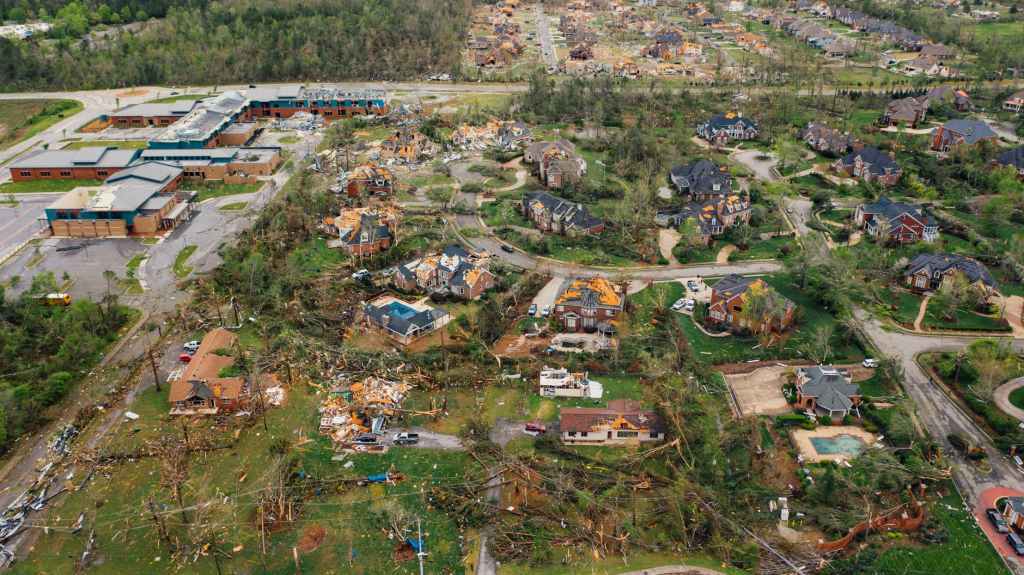
Atmospheric conditions were not so good this year for Field Day– not in Michigan, at any rate. We had a series of extreme storm cells coming through, with torrential rains, thunder and lighting, and a tornado watch, which spanned the first six hours of the contest. We were lucky not to have a tornado touch down, but other areas were not as lucky…
Staying in town also provided some complications– we are surrounded by power lines, neighbors with electronic equipment, street traffic, including cars with loud stereo systems and radios, and our own electronic and radio devices– cell phones, air conditioners, computers, etc.
Finally, we had an ongoing issue with our two radios. If we were using certain frequencies, the two radios interfered with each other. As I was listening to one radio, my husband would try tuning his radio. Suddenly, the noise of his radio could be heard over the sound of other transmissions.
All of this made for a somewhat frustrating contest, but it reminded me of some important aspects of prayer:
Prayer can be “choked out” by atmospheric conditions. If we are not “tuned in” to God’s presence, the noise of other worries, interests, concerns, and even “good” things can cause static. Life struggles, changes in our routine, or the “high winds” of adversity can seem louder than the faithfulness and compassion of the One who never changes and never leaves us. This is one reason we are to make prayer more than a habit or routine– it is to be a lifestyle and a blessed and constant pursuit– regardless of our circumstances or feelings at a given moment.
Prayer can also be derailed by “frequency interference.” If we don’t spend time in deep prayer and meditation with God, listening to His Word, or making ourselves accountable to Him, we will be susceptible to interference from other voices, other philosophies, and other “static” influences. Jesus’ prayer life included many times of retreat and separation from the crowds and stress of His ministry; not because He didn’t love others, but because He loved and honored God more.
Finally, prayer can get lost in the “internal” static of our wayward hearts. The heat of anger, bitterness, selfishness, pride, greed, and lust can keep us from meaningful communication and communion with our Father. Often, we struggle with prayer, because we are hanging on to the “static” of our own desires and fears. King David wrote: “Search me, O God, and know my heart; test me and know my anxious thoughts. Point out anything in me that offends you, and lead me along the path of everlasting life.” (Psalm 139:23-24, New Living Translation, via bible.com)
Field Day is over for another year. We were somewhat disappointed in our performance, but, in the end, it is just a contest– an opportunity to learn and grow in our hobby. While we enjoy being amateur radio operators, and we feel it is an important and worthwhile hobby, it pales in comparison to growing in our Faith and our pursuit of praying and obeying Jesus Christ!
In the middle of our contest this year, we had a singular opportunity– to leave the contest for a few hours and visit a local church where my niece and two of my nephews were getting baptized. It would mean fewer contacts for the contest, at a time when the atmospheric conditions were the best they had been for several hours. After a dismal evening, we could have chosen to focus on our own pursuits. We didn’t have to witness the baptism to rejoice in it. They would have been no “less” baptized, and they had other family and friends there to see it. And going there didn’t make us “better” or more righteous people. But we chose to shut down our contesting activities, pick up my Mom, and join in the happiness of watching three precious young people publicly declare their choice to follow Jesus. And they were among others who made that decision– others whose joy and radiance also filled the church that day.
Field Day is about listening through the static, reaching out, and making contact with others. Yesterday, I was reminded that there is a much more important “Field Day.”
Do you not say, ‘There are still four months, and then comes the harvest’? Behold, I tell you, raise your eyes and observe the fields, that they are white for harvest.
What static is preventing us from making “contact” with those who need to hear the Good News? What static is preventing us from hearing God’s voice? What static is keeping us from seeing the “fields” ready for harvest?
This has been a week full of distress.. My husband and I got our second COVID vaccine (even though we recovered from the virus earlier this year), and spent a day bedridden with fever, chills, and body aches. But we recovered. I got word that my great-nephew broke his arm. Someone I know had to take her daughter to the emergency room–Again–with a serious infection. Another couple delivered a stillborn son. Yet another delivered a tiny, premature little girl. Another woman is back in the hospital, and another friend is off work with a lingering illness that remains undiagnosed. And that is just a list of health issues!
It has been said that when we are in distress– especially with bedridden illness– we are forced to look up. And this gives us the impetus to call out to God. Not everyone will do so. And some will call out in anger or bitterness. But the Psalmist David used his distress to call out to God for help. In Psalm 18:6 he says: “In my distress I called upon the LORD; to my God I cried for help. From his temple he heard my voice, and my cry to him reached his ears.”(ESV via bibleref.com) David’s distress was not from illness, but from being hemmed in by King Saul, who had closed in and had David trapped and seemingly helpless–first in a walled city, then twice in the wilderness. (1 Samuel 23) Three times, David’s situation seemed hopeless, and three times, he was rescued from capture and death.
It is tempting to look out at our circumstances, and lose hope. Even when we know that God hears us and loves us, sometimes his answers are not what we expect. David called out to God, yet he had to face his enemy three times before Saul abandoned his hunt (temporarily!) My husband and I recovered quickly from our reaction earlier this week, but we faced the pain and symptoms three times– during the actual illness, and, less severely with each dose of the vaccine. My nephew will have to be in a cast most of the summer. The tiny baby will be in the neonatal ICU for several weeks, if she survives. Her family will be waiting and worrying and praying. Yet, God DID deliver David in a miraculous way; He brought my husband through a severe case of COVID that involved a stay in the hospital and a related case of pneumonia; He gave life to this precious little baby; He is bringing peace to the family that lost their precious little boy. His timing may not be ours; His ways are not our ways. But God’s ears are always open, and His ways are always good, and His wisdom is perfect.
Distress can make us impatient and cause us to doubt Our Father’s care. But when we remember God’s faithfulness in the past– both toward us and those we love–we can find the strength to wait and even praise God in the struggle.
Often throughout scripture, prayer is compared to a pleasant aroma, rising like incense toward Heaven. I love that God interacts with us through all of our senses, even the ones we may not value as much.
When I contracted COVID in late February of this year, I lost my sense of smell, and my sense of taste was dulled. Four months later, it’s only slowly coming back. I have a new appreciation for this wonderful sense. All my life, I have taken it for granted that I could smell– flowers, food, smoke from a fire, perfume, bleach.. When I lost that ability, I worried about things I had never worried about before. Would I be able to smell if I had added too much onion or not enough garlic to our food? Would I miss the warning smell of smoke if there was a fire nearby? Even ridiculous worries– would others smell bad breath or other body odors of which I was completely unaware?
As my sense of smell has begun to return, I am amazed at subtle smells that tickle my nose– exhaust fumes, warm bread, soap, my husband’s cup of coffee in the morning, fresh mowed grass, pine needles, fried chicken. Some of them I had missed for so long, only to have them surprise me with their reappearance. Some of them, I still miss, but I am hopeful that one day, they will suddenly stop me in my tracks and cause excitement and thanksgiving.
God never loses His senses; He never forgets what prayer smells like; He never misses or ignores the aroma of our prayers. But sometimes, we lose the joy of sending prayers toward His Throne. We lose the aroma of prayer. We lose our taste for spending time with God. We may not be able to identify what is missing– perhaps we can still smell other things, like fear,or pride, or decay.