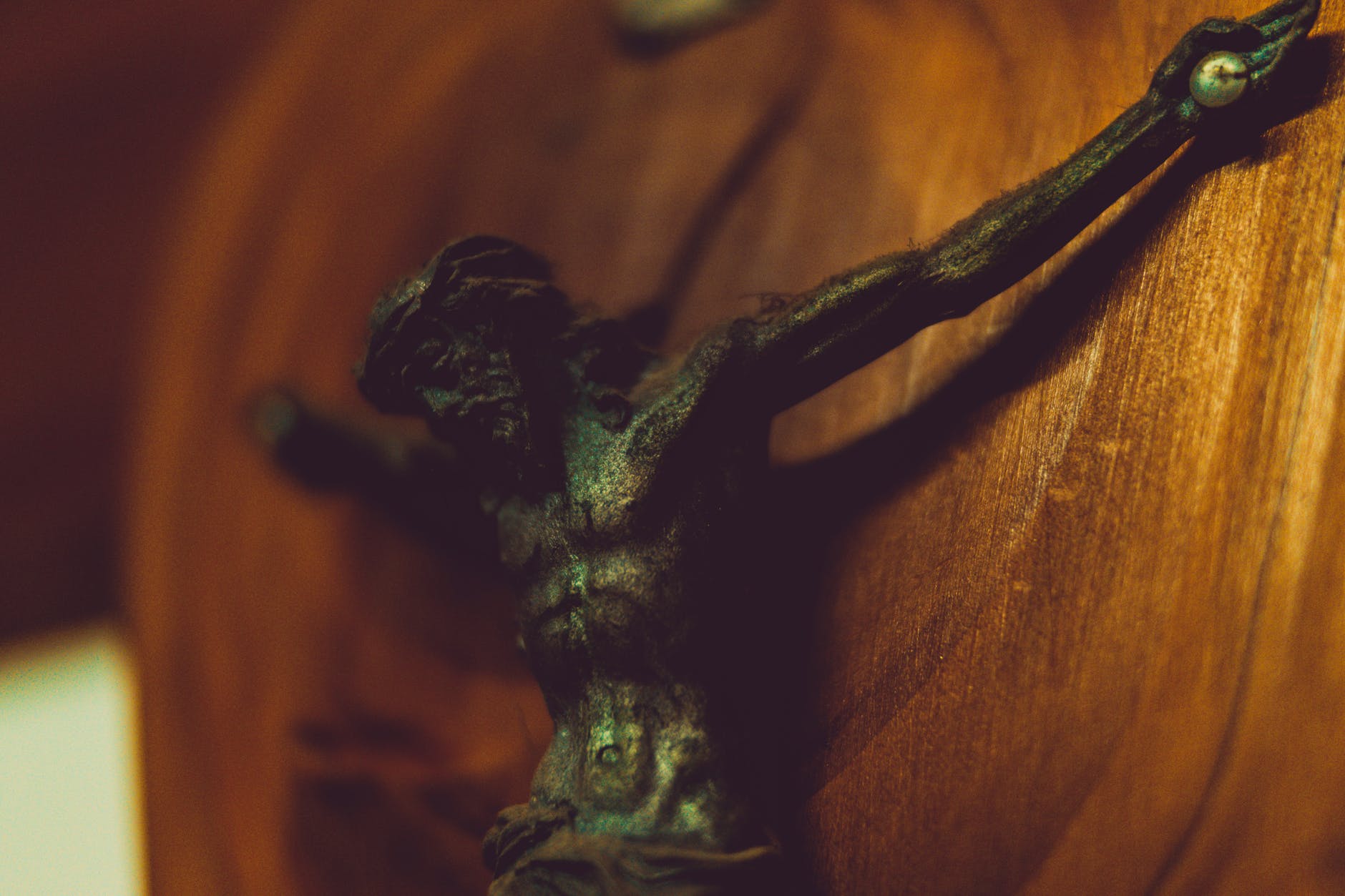
“Do This in Remembrance of ME” Remember My Creation. Remember My Life. Remember My Humble service. Remember My Death and Resurrection. Remember My Victory. Remember I am Coming Soon!
“Social Distancing” is the latest buzz-phrase in the media. With the spread of COVID-19, governments and health officials are asking people to avoid meeting in groups, avoid physical contact, and keep our distance from those outside our immediate family. Those who are most susceptible to the disease are being asked to self-quarantine; those who contract the disease are put in isolation. This is causing many people additional suffering, because they feel alone and even abandoned.
But God assures us that He will never leave nor forsake us. No matter how “distant” we may be from others, God is always with us– ALWAYS. Prayer does not summon God to our side, or capture His focus and attention from someone or something else. Our God is omnipresent and omniscient– He know our every thought; He is with us through every moment and every breath.
So why do we feel so alone and frightened at times like these?
Disaster, disease, hardship– especially when they come unexpectedly or develop rapidly– remind us that we live in a fallen world. We KNOW our world isn’t perfect. We know that life is fragile. We know that health and comfort are not guaranteed. But sudden tragedy leaves us unable to deny that our world is broken and we cannot, by our own efforts, fix it. We expect that God’s presence means God’s perfection will surround us, protect us, and shield us from the reality of Sin and its consequences– including the reality of Sin in the natural world around us. Hurricanes, earthquakes, infections, climate change– God allows them to happen. They will continue to impact our fallen world until God chooses to step in and put a permanent end to them. But He is still here WITH us through the storms and sicknesses and trials of life.
God’s voice is often gentle and comforting. Panic and fear are loud and insistent. We will hear the voice we focus on most. God whispers in our ear if we are listening to Him– if we concentrate on spending time with Him. How much of my time today was spent in Scripture and prayer? How much of it spent listening to the news or reading FB posts full of anger and confusion?
Sometimes, in the good times, we pay God lip service; taking for granted that He is there, but not acknowledging His presence. Sure, we say that He walks with us (or we walk with Him); but we don’t take a moment to look up and see where He is leading us. Instead of being close to God by following our Shepherd, we are close to Him because He is chasing us down to bring us back to the right path. He is right there, but in our panic, we don’t see Him, because He is no longer leading us.
Fear and panic draw our attention inward. It’s one of the reasons “social distancing” causes emotional distress. We are social creatures, but our focus is easily drawn inward, and more so when there seem to be no other people around. Our own thoughts, fears, and questions grow bigger– enough to consume us if we are not careful.
Pray. Pray some more. Pray without ceasing! (2 Thessalonians 5:17)
Let God speak– meditate on God’s word. Meditate on His names and His character.(Psalm 19) Seek out websites that magnify God. Call or e-mail friends who can pray or praise with you.
Sing! Worship the God who is bigger than any crisis we may face. Sing at the top of your lungs– if you are alone, there is no one else to hear you, but the one who adores your “joyful noise” (Psalm 100)
Encourage others– Be the reminder that someone else needs today. (1 John 4)
The world is waking up to a global pandemic as I write this. Over 100,000 cases worldwide have been diagnosed; thousands have died. Projections are dire, with the possibility of millions of people who will need to be quarantined or hospitalized, and several thousands more dead before the year is out. Panic has already set in– people are hoarding cleaning supplies, stealing medicines and masks from hospitals, demanding testing long before they show any symptoms, and spreading rumors and false information about how the disease is spread or ways to prevent its spread.
In the midst of chaos, fear-mongering, and panic, the Bible provides both comfort and practical wisdom to face times of struggle and crisis. Psalm 23, often used to comfort people in times of grief, actually says a lot more about life than death. We have no need to panic– even though we find ourselves in unknown, unfamiliar, and threatening situations.
“Yea, though I walk through the valley of the shadow of death…”
Yea, though–Not “if”, or even “when” I walk through tough times, but “though.” Death is inevitable and unpredictable, and the shadow of death, the threat of our mortality, will fall on us, often when we least expect it. Even without a traumatic event, like a pandemic, we all must travel this valley path at some point. A crisis like COVID-19 is unsettling, but death and disease wasn’t invented last year, and whatever steps we take to prevent or treat COVID-19 will not stop death or its shadow from touching our lives. Nor will panic and fear, denial, or wishful thinking make death’s shadow dissipate. It is wise to face the reality of this crisis with truth and the proper perspective.
I–Not “we.” We are surrounded by others who may share much of our fear, our grief, or our confusion at a time like this. But, when we walk through this valley, it is deeply personal, and our reactions, perspectives, beliefs, and emotions will be uniquely experienced. One of the most difficult things about times of crisis is the isolation we may feel when others cannot enter into our thoughts and hearts and painful emotions. Especially when they are dealing with similar fears and pain. Not only is this valley dark and low, it is often narrow. Even so, God is still present and powerful. We can turn to others for advice, comfort, or even excuses. But no one else can walk the road beneath our feet; no one else can choose whether we will focus on the shadows we see or the light beyond the shadows.
Walkthrough— There is a great temptation to try to hurry through any crisis– to look for the shortcut– the immediate cure; the escape hatch; the high ground; the detour. God’s love doesn’t give us the promise of ease and escape. God does not ask us to sprint through this part of our life’s journey. But God gives us the grace and power to keep walking– this valley is not the destination, but part of the longer race. This leg of the journey is difficult; there will be darkness, rocks and walls closing in on us; we may feel the cold finger of death, disease, and loss. Some days our walk may feel more like a crawl–but take heart and keep moving through.
The Valley of the Shadow of Death–Death is stark, uncompromising, cold, and overwhelming. Its shadow looms huge and oppressive. But the valley is not death; the shadow is NOT death; and even the reality of death is not bigger or more powerful or more eternal than God. COVID-19 will bring death to many thousands or millions of people, and it will bring sickness, fear, pain, grief, and distress to many more. But it cannot kill God– it cannot dim His great love for each person who suffers; it cannot catch God off guard and unprepared. We may question God’s timing and purpose. We may face hardship, loss, and confusion in the days and months ahead. But we will not face anything– even COVID-19– that can weaken God’s sovereignty. The same hand that raised Lazarus from the dead; the same power that rolled the stone away at Easter; the same Shepherd that led David all the days of his life–the One who holds galaxies in his hand and has numbered every hair on your head–He walks through this valley with us!
As God gives us wisdom, let us seek positive ways to reach out to those in crisis. Pray! Pray often, and fervently for those who are sick, and those who work in healthcare. Pray for wisdom, that our nations, regions, and communities will respond proactively and compassionately. And pray for opportunities to demonstrate and share God’s grace and mercy.
Many phones, tablets, even vehicles, come with a GPS– Global Positioning System–which uses satellite technology to tell you where you are. Combined with a satellite navigation system, the GPS helps tell you how to get from point A to point B– mapping out various routes, including estimated travel times, and information about road construction, detours, and traffic patterns. Applications like Google Maps or MapQuest can show you details and even images of the roads on which you are traveling. Such systems and apps can be very helpful, but they are not perfect. A GPS may be a few yards “off,” leading you close to your destination, but leaving you slightly lost and confused. If you type the wrong coordinates or address into a navigation system, you may end up far from where you expected to be!
As Christians, we have a GPS– God’s Provision and Sovereignty. God promises to lead us in the paths of righteousness. God’s direction and leadership are sure and good. We still have the responsibility of listening and adjusting our course, however. We can still miss a turn, go off in the wrong direction, or set the wrong coordinates for our destination.
But, unlike a satellite navigator, God’s provision is eternal and supernatural. God knows all the roads we can take, could take, should take, (or shouldn’t take), and will take– He knows every curve, every bump in the road, every traffic jam, and every scenic lookout and rest stop along the way! God’s MapQuest sets us on a course of righteousness– paths that will not only bring us safely to our ultimate destination of eternal life with Him, but do so in a way that brings honor and glory to Him. After all, it’s His reputation at stake as our Shepherd. He is the Good Shepherd– He won’t lead us down the wrong path; He WANTS us to reach our destination. And our full potential!
When we travel these paths, with our Shepherd leading the way, we will become familiar with the best roads; able to help others navigate the sharp turns and steep grades we have already traveled. We can share the glory of that sweet stretch of road beside the cool stream, or the view from the hidden rise. And we can share the blessings of being on the road with the one who owns it!
Sometimes, we pray for a different path– a short cut, or a road with more adventure (or less!)–God hears our prayers, and He knows where the road leads. When we look back, we may be amazed– not only at the road God laid out for us to follow, but the roads we didn’t take. We see a short-cut; God sees missed opportunities for growth. We see a detour; God sees the dangerous wash-out we were spared. But if we walk by faith, and not by sight (or intuition, or emotion), we will begin to see the goodness of the path we are on, no matter how difficult or how different from our expectation. And we will begin to pray, not for the path to change, but for wisdom to follow where our Shepherd leads.
The best part of God’s GPS is that no matter how lost we are; no matter which path we have chosen against His good will– God can get us back on course and to the right destination. He can turn our dead-end roads around, help us make the right turns, and help us reconnect with the paths of righteousness.
In my last post, I talked about “When God Doesn’t Answer..” Of course, there are times when God seems silent, and I spoke about a couple of times when that was true in my life. God’s timing and wisdom are reminders that He is God– and I am NOT.
I want to revisit that theme for a bit. I was reading the post and realized that I spoke of the waiting and hoping and God’s faithfulness in sending an answer in the person of David, who became my husband. I spoke of God’s ways being higher and better than our ways– and they are. But I left out one aspect of God’s character. Forgiveness.
It is tempting, and I gave in to the temptation, to focus on my feelings, and my positive actions during those years of waiting– taking good advice and making good use of my time as a single to volunteer and serve. But I also did plenty of wallowing in self-pity, of questioning God’s goodness and His timing. I slipped into bad habits that I had to break as a married woman– selfish habits and indulgent thought patterns. And I find myself battling new bad habits, slipping back into depression and isolation, or taking for granted the blessings of married life.
I don’t say this to negate God’s goodness in answering my longing for a husband and family, nor to suggest that God’s long silence and eventual answer were any less gracious and loving. Instead, I want to thank Him for being patient with me, for extending both mercy and grace in His good time, and in spite of my bad behavior.
Photo by u0410u043du043du0430 u0412u0430u0441u0438u043bu044cu0435u0432u0430 on Pexels.com
God’s mercy and his goodness surround us–especially when we don’t see them. When we doubt His presence, when we accuse Him of not caring, when we pout, and posture, and resent the road He has us traveling. God’s word is full of stories of people who waited– some patiently, some not so much– and people who wandered, and even rebelled. And many of them perished without ever seeing God’s answer or without repenting. But I cannot think of any instance where someone who sought God’s face or His forgiveness and was turned away– EVER. God followed the grumbling nation of Israel for forty years, His anger breaking out against them multiple times, but He remained faithful to His promise to bring them to the Promised Land. https://www.biblegateway.com/passage/?search=Deuteronomy+1&version=NCV God went so far as to remove His Spirit from King Saul, but He allowed Saul to continue to reign, even when Saul tried to kill God’s anointed one and his own son-in-law. https://www.biblegateway.com/passage/?search=1+Samuel+19-24&version=NIV God followed David from his days as a shepherd boy through his reign as Israel’s king– in spite of David’s sins, in spite of the drama and chaos of his household, in spite of betrayal by his own sons and generals.https://www.biblegateway.com/passage/?search=1+kings+2%3A1-10&version=CSB God chased down Saul on the road to Damascus– after Saul had hunted and hounded faithful followers of the Messiah.https://www.biblegateway.com/passage/?search=acts+8%3A1-3%3B+9%3A1-18&version=ESV
God is patient and faithful with us– whether we have grumbled at His timing, or turned our back on Him for a season, or actively rebelled against His sovereignty and kindness.
When God seems silent, we often forget that He also remains silent in the face of our grumbling. He withholds His righteous judgment, giving us ample opportunities to rethink, repent, and return. His silence reminds us that He is God– and we are not. He does not owe us an answer– nor does He owe us a second chance. But He will give us both in His time. Because He is God– in His sovereignty, in His boundless Love, and in His mercy–and I am not. I am not God. I am the (sometimes) grateful recipient of all that He gives.
May I be grateful today, not just for the blessings and gifts and answered prayers, but for the patience, grace and mercy I don’t deserve.
We’re getting ready to enter the Lenten season–six and a half weeks of reflection and preparation before Easter. Lent is not a celebration in the traditional sense– it is solemn and reflective, personal and, sometimes, painful. It is a time of getting “real” about our sinful condition. The Bible says we have all fallen short of the Glory and Holiness of God (Romans 3:10) and deserve God’s wrath. The natural consequence of sin is death (Romans 6:23), and permanent separation from the goodness of God.
There are many ways we can react to this reality. I know many people who resent God’s Holiness and His laws. They do not want to face God’s righteous judgment; they believe that God’s laws are cruel and unjust, and that they do not have to answer to anyone greater then themselves.
Others want to bargain with God. They feel that if they relent– if they set a goal to do more good than harm, if they strive to be better than “the next guy”–God will weigh their good deeds in the balance and judge them in comparison with how bad they “might have been.”
But God doesn’t judge on a curve– He doesn’t judge us by our measure, but by His. And none of us “make the grade.”
If that were the final word– the end of the story– there would be no reason to relent, and it wouldn’t make any difference if we were resentful. But God, from the very beginning, designed a different outcome. His judgement is just, but it is not without hope or remedy. God Himself has given us the chance to change– to repent. Repentance is agreeing with (not resenting) God’s judgment, and responding (not bargaining) with changed behavior and a changed attitude.
Lent begins when we confront the great gulf between God’s Holiness and our sinfulness. It stretches through the realization that sin and its consequences surround us, hem us in, and poison our world. It is a time of sadness and gaping loss, when we long for healing, for hope, and for a home we’ve never seen. It is a time for reflecting on the cost involved–not just in human suffering, but in God’s suffering as a human. God, who could have, in His righteousness, destroyed even the memory of mankind, chose to share our sufferings– hunger, cold, exhaustion, rejection, heartbreak, betrayal, death– to that we could be delivered into everlasting life.
Lent ends as we remember Jesus’ death and burial– His ultimate sacrifice for our debt. It ends with a shattering trumpet-blast of hope and joy on Easter Morning. Our sadness and loss is NOT the end– Sin’s power and poison are illusory. They have no power over our Great God.
It can be tempting to respond to our present circumstances with resentment. It can be tempting to relent in our rebellion– trying to bargain with God, and minimize the cost He had to pay, trying to pay the price ourselves with a show of good behavior and a superficial devotion.
But God’s great Love and Mercy should draw us to worship and true devotion. As we reflect on the great gulf between sin and holiness, it should cause us to gladly repent– to lay on the altar all the substitutes and lesser things that keep us from full communion with the Lover of Our Souls.
Our prayers during this season may be difficult. They may be filled with grief, loss, and pain. But they may also be filled with hope and joy as we anticipate the gift of Grace. And they should be filled with praise. After all, Lent is a season; a season to reflect, a season to repent, a season to mourn, but a season with a beginning and an end; a season that gives way to celebration and a sure hope of resurrection!
**Spoiler alert** If you have not seen this movie, or read the book, I will be disclosing large portions of the plot in the paragraphs below.
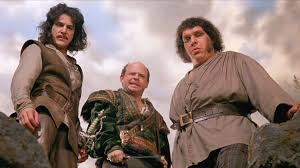
I love the movie, The Princess Bride. Though it is not a “spiritual” tale, and not meant to be a Christian allegory, I find a lot of Biblical truth in this story. In my last post, I looked at the skeptic, Vizzini, whose exaggerated claims of intellect and trust in his own brilliance lead to his downfall.
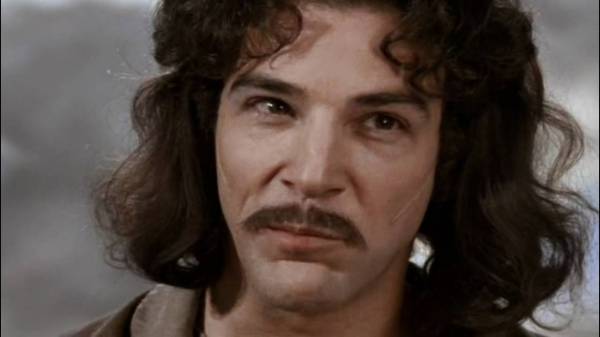
Today, I want to look at one of his sidekicks– Inigo Montoya. Inigo is a reluctant mercenary. He works for Vizzini “just to pay the bills.” His only real ambition is to find his father’s killer and demand vengeance. This has been his guiding ambition for over 20 years, and he is committed to killing his father’s murderer in a duel– if only he can find the elusive villain!
Inigo knows three things– he knows the villain roams free and has never been brought to justice; he carries the scars from his own failed sword fight with the man, so he knows his skill and ruthlessness; and he knows the man has six fingers on his right hand. He doesn’t know the man’s name or rank, where he lives, what he does for a living, if he still lives, if he has a family– he really doesn’t know how or where to look for him, and he has no plan beyond challenging the man to a rematch to avenge his father.
I cannot condone Inigo’s thirst for vengeance https://www.biblegateway.com/passage/?search=Romans+12%3A19&version=ESV, nor his half-baked plan to achieve his goal. But Inigo’s great love for his father and his belief in justice make him a likable character. Unlike Vizzini, Inigo seems concerned for the princess’s welfare and fate, and reluctant to be involved in something that could lead to her harm (or even death). Once he meets the “man in black” who comes to rescue the princess, he treats him with honor and admires his courage and skill, even as he is pledged to try to stop him. He allows his foe to catch his breath, prepare for battle, and even shares his sad tale in the hopes that the man in black can help him find his Nemesis.
Inigo isn’t a very good villain; he is too honorable, too ready to help others he meets along the way. But he attracts miracles along his journey, and I’d like to look at three-and-a-half miracles today.
Miracles come in different types. Some are miracles of preservation; some are miracles of healing; some of transformation.
Inigo’s first “miracle” is actually a series of miracles of preservation. Three times, Inigo is involved in sword battles, and three times he is preserved. At age eleven, he watches as his father is ruthlessly slaughtered by the villainous six-fingered man. Inigo tries to fight for his father’s honor, but is defeated. The six-fingered man leaves him scarred and humiliated, but considers Inigo nothing more than a “brat,” and considers that he has “taught him a lesson,” so he lets him live. It doesn’t seem like a miracle, but Inigo is given a chance to grow up, when he easily could have been killed. He uses this opportunity to become a great swordsman, so he can find his father’s killer and challenge him to a rematch! When Inigo challenges the mysterious man in black, he is formidable in battle, yet he loses. He is winded, scratched, and disarmed by the stranger, and expects to be killed. Yet, again, he is spared– this time out of respect. The stranger renders him unconscious, but does not kill him. Inigo recovers and finally gets the chance for vengeance against his nemesis, Count Rugen. He challenges the Count to a duel. But the Count cheats, and Inigo is gravely wounded before the battle even begins. Miraculously, he finds the strength of body and will to continue the fight. Struggling against the loss of blood, the taunts of his enemy, and his own sense of failure, Inigo continues to fight, gaining strength and momentum, until he wins–bringing justice to his father, and defeating his enemy.
The second miracle is one of guidance. Inigo needs help to reach his goal of finding and confronting Count Rugen. He needs the help of the very man he fought earlier– the mysterious man in black. But the tables have turned. The man in black has been taken captive and tortured. Inigo must find and rescue him. In desperation, he prays for guidance. He enlists God’s help in locating the man who can help him. But his prayer seems to go unanswered. He stumbles around in the woods, lost and defeated. Finally, he leans against an old tree–and in doing so, he triggers the secret door leading to the torture chamber where the man in black lies, left for dead.
The third miracle is one of revival and restoration. The man in black seems to be dead, so Inigo and his friend, Fezzik, take the body to a man named Miracle Max, to be brought back to life. Of course, this is a fairy tale (though a fractured one). We don’t expect to find miracle workers in the middle of a forest. But we often pray for miracles in hospital wards, courtrooms, and rescue shelters. God sends miracles– but he often does so through the skills and willingness of others. In this case, Miracle Max delivers a crushing blow– he does not have the power to bring someone back from the dead. However, the man is black is NOT dead; he is only “mostly” dead. Miracle Max concocts a restorative potion, delivered in a chocolate-coated pill. The man in black makes a halting, but timely, recovery, allowing Inigo to track down the evil Count and bring him to justice. (It also allows the man in black to finish his quest, rescue the Princess and defeat her wicked fiance.)
After three miracles, Inigo finishes his quest and faces a surprising new problem. His whole life has centered around revenge. Now that he has achieved his goal, he has no future; he has lost his sense of purpose. And this is where the “half” miracle happens. Inigo’s character is noble, even if his obsession with vengeance has been unhealthy. Along the way, he has befriended Fezzik, and rescued a man who was deemed to be an enemy. He has fought bravely and with honor, and has not been corrupted by money, power, or violence. His new friend, the man in black, offers him the chance to start over– as the Dread Pirate Roberts! (Lest this sound truly “dreadful”, it has already been explained that the name and reputation are what brings terror into the hearts of the other pirates..once again, this is a fairy tale, where pirates can be heroes.)
Inigo Montoya is a flawed character– he is a drunkard, a mercenary, living with years of failure and haunted by his thirst for revenge. He is not wicked in the same way as Count Rugen or the evil Prince Humperdink, but he is lost, confused, angry, bitter, and unable to save himself. He is a sympathetic character because he is a lot like many of us. But Inigo’s life is transformed by miracles– mostly unsought–giving him the opportunity to start a new life, make new friends, and explore new opportunities.
What unsought, and even unacknowledged, miracles have come into your life? How many times has God preserved your life, guided you in unexpected directions, provided healing or renewal to your physical, emotional, or spiritual being, and given you unexpected new opportunities?
God doesn’t always give us an instant or dramatic miracle– even when we pray for one. Sometimes, he allows us to collapse against a tree, or be scarred by our enemies, or spend twenty years chasing a quest only to find ourselves unfulfilled at the end of it.
I see a lot of articles, posts, and religious sites as I wander around the internet. And there has been a lot written and shared lately about the word Christian getting a “bad rap.” Many writers and church goers are no longer comfortable calling themselves Christians. They don’t want to be identified with “bad” Christians– hypocrites, political extremists, etc., who loudly and proudly use the label while treating others with contempt, and generally acting like bullies and/or clowns. The growing trend is to use the term “Christ-follower” to describe a lifestyle that seeks to mirror that of Jesus Christ during His life on earth.
Proponents of this practice point out that Jesus never called His followers “Christians.” Instead, He consistently invited people to “Follow me.” The term “Christian” is associated with the earliest Gentile churches and with the scattering of the persecuted church across Judea, Samaria, and Asia Minor. The term originated in Antioch a few years after Jesus’ resurrection:
19 Now those who were scattered after the persecution that arose over Stephen traveled as far as Phoenicia, Cyprus, and Antioch, preaching the word to no one but the Jews only. 20 But some of them were men from Cyprus and Cyrene, who, when they had come to Antioch, spoke to the Hellenists, preaching the Lord Jesus. 21 And the hand of the Lord was with them, and a great number believed and turned to the Lord. 22 Then news of these things came to the ears of the church in Jerusalem, and they sent out Barnabas to go as far as Antioch. 23 When he came and had seen the grace of God, he was glad, and encouraged them all that with purpose of heart they should continue with the Lord. 24 For he was a good man, full of the Holy Spirit and of faith. And a great many people were added to the Lord. 25 Then Barnabas departed for Tarsus to seek Saul. 26 And when he had found him, he brought him to Antioch. So it was that for a whole year they assembled with the church and taught a great many people. And the disciples were first called Christians in Antioch. (emphasis added)
Christian was not a positive or honorable label for the early followers of Jesus Christ. There are still many places in the world where the label “Christian” invites arrests, beatings, and death threats. There are places where the name “Christian” invites scorn and derision. What has changed (or seems to have changed) in the intervening years is that we see and hear of more and more places in the world where the label “Christian” brings up images of sneering protesters condemning gays or smug white faces spouting self-righteous phrases to justify greed, racism, and/or injustice. “Christians” are not just unwanted or misunderstood by others–Christians are unwanted by their own; misunderstood and misrepresented, at odds and at war with one another.
So what can be gained by followers of Jesus Christ in re-branding themselves as “Christ-followers?” After all, it’s just a name. In the 1960s, many Christians were condescendingly labeled “Jesus Freaks.” Jesus Freaks were viewed much like Hippies. They spoke of Peace and Love and Acceptance. They taught about kindness and unity. They were often young, and generally disillusioned with the older generation and its way of life. They acted a lot like Hippies; they just didn’t do as much experimenting with drugs and free sex. Much like the early Christians, they were labeled by those who dismissed their message and their way of life. They rejected traditional or mainstream Christianity, and were dismissed by many who called themselves Christians. Some were openly critical of previous generations of Christians. Many of those who wish to be called “Christ-followers” now are the descendants (or remnants) of the Jesus Freaks of the 60s. The mind set is very similar– disillusionment with others who have misused or abused the name of Christ, and a desire to “rescue” the reputation of the church.
There have been other groups across the centuries who have tried to re-brand and re-label their devotion to Jesus– God-fearers, Disciples, Reformers, Witnesses, Saints, Fellowships, etc.. And there is no command in Scripture that we must all call ourselves by a particular label.
But is seems odd to me that the very label, “Christian,” that came about because of persecution, that came about as a derisive, sneering, condescending term, was embraced by those it sought to shame and intimidate. Why didn’t the original “Christians” re-brand themselves to make their cause less offensive? Why has this term, “Christian,” endured over the centuries?
“Christians” bear the name of Christ, whatever other name they give themselves. When I say I am a Christian, I know that there are people who will compare me to others who make this claim. But I am not just a member of a group that likes the idea of Christ; I’m not just a Facebook follower of Christ, or a fan of Christ, or a student of Christ. Christ is my Lord; my life; my identity. Christ– Jesus the Christ, the Messiah. Not Joe Smith down the road who also attends my church, or a famous evangelist or Bible teacher, or even one of the Apostles, or Saints. Jesus– son of Mary and Joseph; Son of God and Son of Man. This same Christ was arrested, given a sham trial, condemned to be crucified like a common criminal, and hung, naked and tortured before a mocking crowd. He was humiliated, misunderstood, and abandoned by those who claimed to care the most. THAT is the name I willingly bear.
“Christian” is a label. I can label myself in any number of different ways– “Woman,” “American,” “Caucasian,” “College graduate.” But there are many others who can use those same labels. They may define what I am, but they don’t define who I am. I may be appalled (and I am, sometimes) at things other women do, at things other Americans say, at the history of Caucasians and their interactions with indigenous peoples in other parts of the world, at the snobbery of other college graduates…But I don’t say, “I’m no longer going be an American; I want to be known as a resident of the United States, but I have my own system of government and culture and language independent of those living in Missouri or Idaho or Chicago– they don’t represent who I am.” Of course they don’t represent who I am–they never did. We all, collectively, are Americans AND residents of the United States. I can’t decline to be a woman because I don’t like the way other women behave or speak. And I can’t choose to be “other than” a Christian…all I can do is give it another label.
Finally, who I am is not found in a name or title or label. It is the sum total of my character and the way I live my life. Jesus didn’t tell His disciples that they would be known by any particular name, but He did say they would be known and identified by their love: 34 A new commandment I give to you, that you love one another; as I have loved you, that you also love one another. 35 By this all will know that you are My disciples, if you have love for one another.” (John 13:34-35 NKJV). That doesn’t mean I have to approve of everything other “Christians” do– in fact, if they use the name Christian and do not have love for others, they prove they are liars– but it means that I must do everything in the name of Christ. I am a Christian first, before I am a woman or an American or any other label. That means that I am the co-heir and sister to a young man in India who has been rejected by his family and expelled from his school for being a Christian. I am an ambassador of Christ to the woman I meet in the grocery store whose children are taxing her patience and whose cart is blocking the aisle I want to enter. I am an example of Christ’s love to the young couple who have been victimized by other “Christians” because they are “different.” And I am a Christian in a world of “fake” Christians, and confused Christians, and faulty and very human Christians just like me, who need correction, mercy, justice, and wisdom to follow Christ, to die to self, and to bear the honor of His name. Ultimately, I can call myself a Christian, a Christ-follower, a Jesus Freak–any other label I want. Whether I AM a Christian or not will be determined by how I live, not what I call myself.
34 “A new command I give you: Love one another. As I have loved you, so you must love one another. 35 By this everyone will know that you are my disciples, if you love one another.”
Jesus was about to be tried and condemned to die. He was giving His disciples last instructions and reminders. But in the midst of it all, He gave this “new” command. I’ve read this passage dozens of times, and yet it struck me, possibly because we have just started a new year, that Jesus calls this a new command. Love one another. As if this was a revolutionary concept; as if it had never been spoken before.
So I began to search. ” You shall love the LORD your God with all your heart and with all your soul and with all your might. ” (Deuteronomy 6:5 ESV) “Do not take revenge on others or continue to hate them, but love your neighbors as you love yourself. I am the Lord.” (Leviticus 19:18) “So show your love for the alien, for you were aliens in the land of Egypt. ” (Deuteronomy 10:19)
Throughout the Old Testament, the Israelites are commanded to love God and to love their neighbors, especially to those who might otherwise know only hatred or injustice– enemies, conquered peoples, resident aliens, widows, orphans, etc.. Most often, the commands are given in negative terms– how NOT to treat others. “Thou shalt not steal; thou shalt not kill; thou shalt not commit adultery; thou shalt not bear false witness…”
There is nothing completely new about Jesus’ command in John 13, but it IS new– it is a positive command to show love for one another. And Jesus goes further– “As I have loved you, so you must love one another.” This goes beyond simply seeing that others are treated fairly within the broader society. Jesus washed feet. He went out of his way to speak to those who were despised and marginalized– tax collectors, prostitutes, lepers. He didn’t write a check to a non-profit charity and pat himself on the back. He didn’t share a political cartoon about Pharisees or the Roman Emperor with his followers or join the Jerusalem March for Jewish Rights–he challenged the Pharisees face-to-face about their unjust practices and healed the family members of Roman officials. He gave His life– not just on the cross, but in serving others’ needs throughout His earthly life.
Love One Another. It isn’t a suggestion. It is a command–one Jesus gave directly to His disciples. It is not a new command to the Church; but it is one we have not obeyed fully. We love those Christians in our small group at church, or those who share our politics, or those who look and talk just like us. Or we “love” those Christians who are struggling thousands of miles away– from our safe and comfortable lives thousands of miles away.
I find myself often reading this command, but trying to obey it the same way I look at the Ten Commandments– obedience by omission; obedience in the negative. “Thou shalt not offend. Thou shalt not intrude. Thou shalt not condescend.” But that’s where I stop. I don’t wash feet. I don’t visit the sick or disgraced. Sometimes I send a check or donate a box of unwanted items.
What would this new year look like if I followed this command more fully? What if, instead of just showing love to those I already like, or when it’s convenient, I reached out across town or across the globe to share my time, my heart, my resources, my skills, with those who need them most? What if I obeyed Jesus’ command to love those around me as Jesus has already loved me?
What if I dared to pray that God would bless others through me, instead of just asking that everyone would “be blessed.”
It is tempting to make bold plans, resolutions, or vague wishes for all the days at once– trying to fold the entire year into a single goal or set of goals. But is this consistent with Biblical principles?
Today, I want to pray, as Jesus did, that God would “give us THIS DAY our daily bread”– that I would walk and talk with my Savior each day, each moment as it comes. That doesn’t mean that I make no plans or goals for the future; rather, I keep things in a proper perspective. God knows the future much better than I do. I know where I am and where I’ve been (hopefully!), but only God knows everything that lies ahead. My job is not to dream about the finish line, but to continue running the race– step by step and moving forward, my eyes fixed on Jesus:
Therefore, since we are surrounded by such a great cloud of witnesses, let us throw off everything that hinders and the sin that so easily entangles. And let us run with perseverance the race marked out for us, 2 fixing our eyes on Jesus, the pioneer and perfecter of faith. For the joy set before him he endured the cross, scorning its shame, and sat down at the right hand of the throne of God. 3 Consider him who endured such opposition from sinners, so that you will not grow weary and lose heart.
Life is like a long race; it’s also like a story. As we enter a new year, we can look around and see where the story has brought us. Some of us are in crisis. Some of us have just defeated a giant, or survived a trip down the raging rapids. Some of us are headed for disaster, or about to head into battle. Some of us are caught in a trap and we can’t see any hope of rescue.
I can’t change the race course I must face in the coming year. Nor can I change the story I’ve lived so far– I can’t change anyone else’s. But I know this– the next unwritten chapter is in God’s expert hands. God, the author of miracles and second chances. God, who turns shepherd boys into heroic kings; God, who transforms prostitutes into saints; God, who sends Himself naked and shivering into His rebellious creation knowing He will suffer and die at the hands of those He loved into being, and knowing that this death is not the end, but a glorious beginning! This God has a triumphant and joyous ending in store for me– for you!
God has given us the amazing story of our lives–and the next chapter is here. God also gives us the amazing opportunity to write the next chapter. He will guide us through the process– bring in new characters and plot twists, or send us to new places through unexpected channels–but we have the power to choose the next step. Today and every day.
My prayer for this new year is a prayer for this new day. Tomorrow, I get the gift of taking the next step; of writing the next sentence!
















































 Pursuing Prayer