I Can Do All Things..

I know many Christians who cite Philippians 4:13 as their favorite verse: “I can do all things through Christ who gives me strength.” And while this is a powerful verse, and holds great promise, I think it has been misused and taken out of context too often in recent years.

The Apostle Paul wrote this– from a prison cell as he awaited trial and a likely sentence of death! And this thought is a summary statement. It follows a list of circumstances in which Paul had experienced needs, and questions, and setbacks, and lack of provision.

Photo by Nandhu Kumar on Pexels.com

In this season of “sheltering in place,” I have a new appreciation for Paul’s letter. I am not in jail, but there are many restrictions (temporary, but seemingly endless) on where I can go and what activities I can pursue in light of the COVID-19 pandemic. I cannot “do all things” in any normal sense. My family could not gather for Mother’s Day this year. We cannot have friends over for a meal, or take our grandchildren to the movies, or meet together for a traditional church service on Sundays. I cannot open my little shop to customers. I can’t go and get a haircut or hang out at the bakery or coffee shop.

Photo by Cliff Booth on Pexels.com

And there are others who are struggling, not just with restrictions, but with increased expectations. They cannot “do all things” to help a dying patient, or stop the spread of infection in their nursing home or hospital ward. They cannot answer frenzied questions about timelines and protocols. They cannot work effectively from home and still be available to their children as both parent and surrogate teacher. Or, they cannot meet the needs of their students without face-to-face interaction.

But Paul is not talking about the mere completion of a worldly task, or achieving a personal goal. Paul isn’t suggesting that he (or anyone else) can do anything and everything he might want to do or that others might wish him to do. He has just finished talking about times of lack, of wants and needs and facing uncertainties. Paul did not (even with Christ’s help) skip lightly around Asia Minor, making friends and influencing people.

Photo by Ylanite Koppens on Pexels.com

So what DID he do? What did he mean by “all things?”

Paul speaks often throughout his letter of “running a race.” Paul learned that in all circumstances, with whatever resources, whatever restrictions, and whatever obstacles, he could “run” his race. Under persecution or in times of great success; in times of plenty, or in times of hunger; in prison or on the road (or seas); in Jewish synagogues or Greek amphitheaters; alone or in crowds– Paul could worship God. He could proclaim the Gospel. He could spread the love and grace of Christ Jesus. If he couldn’t travel, he could still speak. If he couldn’t speak, he could write. If he couldn’t write, he could pray. He could do “all things” that were necessary to accomplish his one goal– to run the race; to finish strong; to live a life of purpose and worship.

Photo by Pixabay on Pexels.com

May we do the same today, through Christ, who gives us strength. I may not be able to gather with friends, but I have the blessing of being able to call, or e-mail, or IM, or send encouragement. I can still write this blog. I can still pray– in fact I have more time to do so! I can do “all things” that will fulfill my purpose and bring honor to God. And so can you. What a privilege–no matter where we are or what our circumstances!

Photo by Porapak Apichodilok on Pexels.com

Does Prayer “Work?”

I have a friend who is very keen to study if prayer “works.” His theory is that if someone were to measure the number of prayers said in various regions of the world during the COVID-19 pandemic, and compare those numbers to the rates of infection, numbers of deaths, etc, for the same regions, one could “prove” whether or not prayer is effective.

I don’t think my friend is being sarcastic or overly cynical– I believe he is sincere in wanting to study prayer. I accept his desire to study prayer–to quantify it, even to “prove” it, or legitimate it for those who are skeptical. Unfortunately, he wants to study it as an observer, and not a participant, and he wants to conduct a physical study of a metaphysical practice.

Photo by Ali Arapoğlu on Pexels.com

Scientists are conducting several studies during this time, to see what “works.” Does social distancing “work” better than building up “herd immunity?” Is there a treatment that works better, or faster than others? Can we develop an effective vaccine? What practices– social, hygienic, medical, political– might help mitigate the spread of future viruses? Even these studies will not be definitive. The results will depend a great deal on methodology, and the conclusions will be open to interpretation.

Photo by Lukas on Pexels.com

There are additional problems in studying whether or not prayer “works” or not, because prayer is metaphysical. Here are just a few of the “measurement” problems:

  • How do you measure prayer? By length of time? Number of words used? The number of prayers prayed by each person over a certain period of time?
  • Do you count ritual prayers? Mantras? Meditation? Unspoken “thought” prayers? Recitations? Prayers spoken “in tongues” or in ecstatic states?
  • Do you count corporate prayer as a single prayer or by the number of people in the group?
  • What about social media? Do you count all the people who say they will send “thoughts and prayers?” Do you count those who say they “will pray,” or only those who are “praying,” or “praying now.”
  • If you are testing by geographical region, how do you account for people who are praying for others around the world?
  • How do you measure the efficacy of prayer (as opposed to other factors)? If a region has a higher mortality rate, even though many people prayed, does that mean that prayer “doesn’t work?” Or does it mean that the mortality rate would have been even more devastating (given other factors) without prayer?

More than just measurement problems, there are problems with the very nature of prayer that make such a study impossible:

  • Even if you could come up with a standard definition of “prayer” in order to get a count, prayer is not a physical substance or action. Prayer is not a “cause and effect” exchange. It is communication. If ten people say the same thing at the same time to the same person, it is not necessarily “more effective” than a single person-to-person exchange. If a thousand people pray to the same “god” who is not a god–“Mother Nature” or “The Force,” for example, it cannot be compared to a single person praying to a Loving and All-Powerful God.
  • God’s ways are not our ways. If we are measuring for one thing, God may be working for a different, unseen outcome. If more people contract the virus during the “study period”, we see that as “failure.” But God may be preparing that region to build up a resistance or immunity for a future outbreak. God answered prayer in a mighty way that we won’t see immediately. I have known a great many people, and prayed for a great many people who have not received physical healing in this world. They have suffered. They have died. But that doesn’t mean that prayer “didn’t work.” Their sufferings and eventual deaths have often brought about unbelievable works of God– salvation, families restored, friends discovering renewed purpose, strengthened efforts to fight disease, injustice, poverty, etc., and communities coming together in unity and hope.
  • Prayer is not about measurable results. Prayer is a heart-cry to a caring Creator. It doesn’t just involve asking for healing or miracles or “wish fulfillment.” Prayer involves thanksgiving, worship and adoration, repentance and confession, sharing burdens, asking questions, and building an eternal relationship with God Almighty.
  • In the end, any study results will be interpreted differently by different people. Some people will be convinced by numerical comparisons to re-consider their view of prayer. Others will never be convinced, no matter how much “evidence” someone else presents.

Prayer isn’t like taking an aspirin, or holding a protest rally, or doing research for a cure. Prayer isn’t about “winning the battle.” It isn’t about “what works.” It isn’t about “what” at all. It’s about WHO.

Photo by Luis Quintero on Pexels.com

God “works.” God is sovereign, loving, and wise beyond what we can imagine. His ways endure. And He has vanquished the power of death and disease. Yes, it can still touch us in the here and now, spreading havoc and pain and mourning. But it will never triumph over Hope, and Life, Truth, and Faith. And when we pray, we connect to the source of all that is Eternally victorious! Beyond ANY measure!

WWJD–Coronavirus edition

What Would Jesus Do? This question, shortened to the acronym WWJD, appeared as a fad on bracelets, t-shirts, billboards, etc., a few years ago. The idea was to ask oneself how Jesus Christ would act or react in various situations.

While I don’t disagree with the premise, I have never been a fan of this trend– mostly because it calls for people to speculate or imagine what Jesus would or might have done in their place. There is nothing wrong with wanting to act like Jesus– that’s what we’re supposed to do–to be disciples of Christ, and be His ambassadors. But our minds and hearts are not perfect; in fact they can be deceitful and arrogant, self-righteous and self-justifying. It is more common for us to justify how Jesus would act like us, than for us to adjust our thoughts and actions to those we know Jesus took during His time on earth. Would Jesus be angry about injustice– of course! Would He want us to have empathy for others– undoubtedly! But what would He actually DO? There are some pretty clear examples in the Bible– both examples of what Jesus DID, and what He DID NOT do:
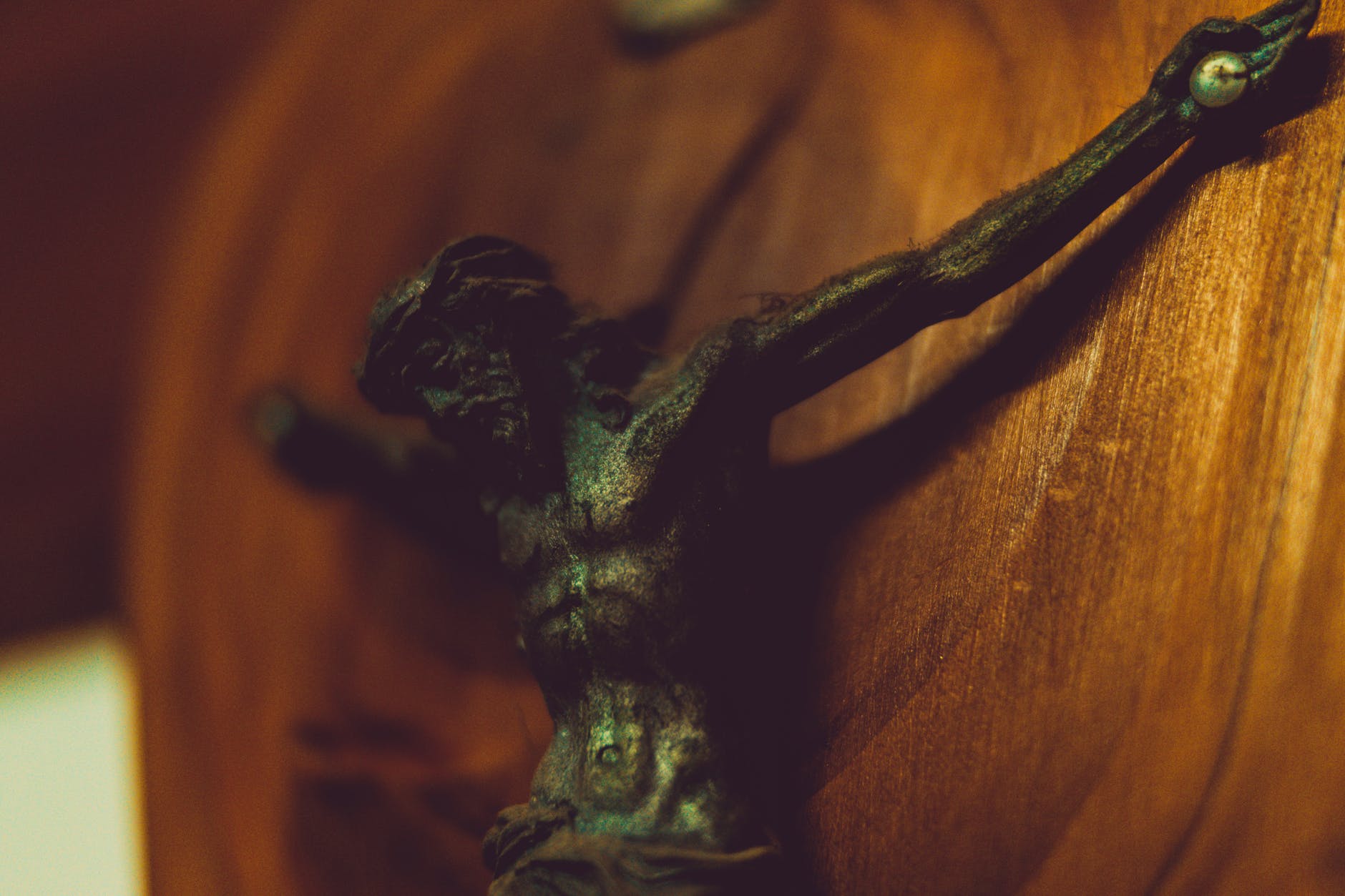
  • Jesus drank wine; He visited and ate with known sinners; healed on the Sabbath (in direct violation of the church leaders of His day); interacted with the Romans (soldiers and leaders, etc.)who were oppressing the Jews– without protesting their rule or joining rebel groups; healed and performed miracles for some, but not for others; forgave sins for some, but not for others; paid His taxes without complaint; challenged religious leaders and spoke harshly against their practices; refused to get drawn into condemning and stoning a guilty adultress….
  • Jesus prayed. He want to temple regularly; read and studied God’s word; He rested, meditated, and spent time alone; He listened to strangers and treated those He met with compassion and respect; He honored His mother, but did not put her above His work; He loved his friends, even those who did not understand Him and the one who betrayed Him; He did not flatter those in power or disdain those in lowly positions; He cared deeply, wept unashamedly, and laughed heartily…
  • Jesus did not own a home. He didn’t have a “regular” job; He had no savings account or retirement fund; He had no donkey or horse for transportation; He wasn’t a member of a particular congregation or church council, like the Pharisees. Jesus didn’t have a university education; He didn’t run for public office; He never got “employee of the month;” He never married or had kids; We have no evidence that He ever gave to a particular charity, or joined any activist group. Jesus never hosted a barbecue, or led an evangelistic gathering, like His cousin, John the Baptist…
  • Jesus never addressed many of the issues we deal with today– civil rights, gay rights, abortion, health care, income inequality, democracy/socialism, smoking, drug use, pornography, violence in the media, global climate change, speed limits on highways, income tax structure, campaign finance reform, gender dysphoria, unisex bathrooms, vegans vs. meat eaters…

But the point of Jesus’ ministry on earth was to preach the coming of the “Kingdom of God,” and to fulfill His promise to go to the cross, die for our sins, and to rise again on the third day. He spent time teaching and discipling twelve very different individuals, who saw and did things very differently from each other, and differently from Jesus himself. Peter was fiery, John was a quiet observer, James was stern and concerned about actions, Matthew was concerned with history and prophecy. And all of them were loved by and commissioned by Jesus to spread the Gospel.

In these days of COVID-19, faced with fear and panic, many Christians (myself included) are struggling with the “right” response–we all want to show the love of God, and honor Him above all. In doing so, however, I find myself spending a lot of time justifying my own actions, and condemning the words and actions of others. And I find myself getting hurt and angry when someone I know and love reacts differently, uses different words or tones, or gets caught up in arguments about what “we must do.”

Photo by Korhan Erdol on Pexels.com

We MUST seek God’s wisdom in these times. And we MUST listen to and obey His word. But beyond that, I believe that God wants us to be very different “parts of the body” (see 1 Corinthians 12) https://www.biblegateway.com/passage/?search=1+Corinthians+12&version=ESV And I believe that God wants us to work together, honoring the various gifts and personalities that we have been given. Some of us are going to be fiery in our defense of health care workers, and advocating for the best and fastest medical care and treatments available. Some of us are going to be spreading small words and acts of encouragement wherever we see the opportunity. Some of us are going to be standing up against threats of corruption and injustice lurking among the actions of those in power. Some of us are going to speak boldly about our Hope in Christ, evangelizing and calling people to repentance. Some are going to be “standing in the gap” in prayer and counseling. Some are going to be providing money, food, PPE (personal protective equipment), and other services. And we must honor the other members of the body– in whatever role they take on– and seek unity, rather than division.

Photo by Pixabay on Pexels.com

Instead of blasting each other on Facebook or angry e-mails, we need to bring our initial reactions– anger, disappointment, hurt, confusion– to God. HE is the one who will judge our actions and motives in the end. Unless we see Christians who are flagrantly violating God’s laws– looting, cheating, spreading malicious lies and causing division, cursing God and/or misrepresenting Him in heretical fashion–we should ask, not just what Jesus would/might do in my situation, but what DID Jesus do in my place.

Photo by Francesco Paggiaro on Pexels.com

Because He died for me when I was still a sinner. He sacrificed His life. Not because I had done anything “right,” or “good enough.” He didn’t keep a list of all the things I got “wrong.” He did not bring condemnation– He brought forgiveness, mercy, and hope! And His mercies are new every morning. If I “get it wrong,” if I do something, or don’t do something–because I am still human and I don’t know everything about COVID-19 or the global economy or what tomorrow will bring–God will still love me. God will forgive me.

My prayer is that I will do the same for others– that I will extend Grace, and true encouragement (rather than flattery or mutual congratulation), and Love, because I know without a shadow of doubt or speculation, that this is What Jesus Would Do.

For Thou Art With Me…

Photo by Korhan Erdol on Pexels.com

“Social Distancing” is the latest buzz-phrase in the media. With the spread of COVID-19, governments and health officials are asking people to avoid meeting in groups, avoid physical contact, and keep our distance from those outside our immediate family. Those who are most susceptible to the disease are being asked to self-quarantine; those who contract the disease are put in isolation. This is causing many people additional suffering, because they feel alone and even abandoned.

Photo by Engin Akyurt on Pexels.com

But God assures us that He will never leave nor forsake us. No matter how “distant” we may be from others, God is always with us– ALWAYS. Prayer does not summon God to our side, or capture His focus and attention from someone or something else. Our God is omnipresent and omniscient– He know our every thought; He is with us through every moment and every breath.

So why do we feel so alone and frightened at times like these?

Photo by Anna Shvets on Pexels.com

I think there are several reasons:

  • Disaster, disease, hardship– especially when they come unexpectedly or develop rapidly– remind us that we live in a fallen world. We KNOW our world isn’t perfect. We know that life is fragile. We know that health and comfort are not guaranteed. But sudden tragedy leaves us unable to deny that our world is broken and we cannot, by our own efforts, fix it. We expect that God’s presence means God’s perfection will surround us, protect us, and shield us from the reality of Sin and its consequences– including the reality of Sin in the natural world around us. Hurricanes, earthquakes, infections, climate change– God allows them to happen. They will continue to impact our fallen world until God chooses to step in and put a permanent end to them. But He is still here WITH us through the storms and sicknesses and trials of life.
  • God’s voice is often gentle and comforting. Panic and fear are loud and insistent. We will hear the voice we focus on most. God whispers in our ear if we are listening to Him– if we concentrate on spending time with Him. How much of my time today was spent in Scripture and prayer? How much of it spent listening to the news or reading FB posts full of anger and confusion?
  • Sometimes, in the good times, we pay God lip service; taking for granted that He is there, but not acknowledging His presence. Sure, we say that He walks with us (or we walk with Him); but we don’t take a moment to look up and see where He is leading us. Instead of being close to God by following our Shepherd, we are close to Him because He is chasing us down to bring us back to the right path. He is right there, but in our panic, we don’t see Him, because He is no longer leading us.
  • Fear and panic draw our attention inward. It’s one of the reasons “social distancing” causes emotional distress. We are social creatures, but our focus is easily drawn inward, and more so when there seem to be no other people around. Our own thoughts, fears, and questions grow bigger– enough to consume us if we are not careful.
Photo by samer daboul on Pexels.com

God IS with us–let’s rejoice and embrace it:

  • Pray. Pray some more. Pray without ceasing! (2 Thessalonians 5:17)
  • Let God speak– meditate on God’s word. Meditate on His names and His character.(Psalm 19) Seek out websites that magnify God. Call or e-mail friends who can pray or praise with you.
  • Sing! Worship the God who is bigger than any crisis we may face. Sing at the top of your lungs– if you are alone, there is no one else to hear you, but the one who adores your “joyful noise” (Psalm 100)
  • Encourage others– Be the reminder that someone else needs today. (1 John 4)
Photo by Vlad Cheu021ban on Pexels.com

Hearts, Hype, Hatred, and Hope

Today marks the celebration of St. Valentine– Valentine’s Day. It is a day of hearts and flowers, romantic dinners and gifts, all celebrating love and marriage. Many people choose to marry on Valentine’s day; many more choose this day to propose marriage (my dad did, in fact, and he and my mom were married just a few months later in 1963).

Photo by Blake Newman on Pexels.com

Gifts have gotten more elaborate and expensive over the years, though there are many who choose simple, homemade gifts or cards, as well. Advertisers promote their products as being perfect expressions of romance and love–diamonds, lacy nightwear, expensive candle-lit dinners, vacations, deluxe tool boxes, cars, spa treatments–if a new broom or pair of socks can be made to look romantic, look for them to be advertised as “perfect” for this year’s gift.

Photo by Pixabay on Pexels.com

I have a long and difficult history with Valentine’s Day. I remember, as a school girl, being forced to choose, sign, and address valentine cards for every person in my class at school. Some were easy enough, but I had to send cards to classmates I didn’t like; classmates who teased or bullied me, or were just “icky.” I think most parents did the same, but I noticed that I rarely got cards back from everyone, and sometimes, the “icky” kids only got two or three cards, which they hid away in their desk or threw away. I never knew if they were glad to have gotten the few cards, or if they were embarrassed and hurt (especially if they had no cards to give to anyone).

Photo by Ian Panelo on Pexels.com

As a young woman, I disliked Valentine’s Day for its way of sorting out the “loved” from the “unloved.” I was loved by my parents, and liked by friends and colleagues, students and neighbors. But every 14th of February, I was reminded painfully that I was not considered “loveable” by the young men buying candy, flowers, or engagement rings. Year after year passed with no gifts, no dates, nothing to signify that I was worthy of romantic love or attention. As I write this, I know there are millions of young women who are facing pain and rejection today, where they might feel confident and happy on any other, normal, day.

Photo by Ken Ozuna on Pexels.com

This year, Valentine’s Day seems like a bad joke– talk of love and romance rings very hollow when I see the amount of hatred being spread on social media. Should I feel “loved” if I receive a card from someone who spews hatred and death wishes for people they barely know because of something they said about politics or the environment? If I followed my parents’ rules and bought valentine cards for everyone at the office, would I be brave enough (or foolish enough) to send them?

Photo by Christina Morillo on Pexels.com

The original St. Valentine (though this is disputed and there may be more than one martyr with the same name from around the same time) is believed to be a young martyr who was beaten, stoned to death, and beheaded for marrying young Roman soldiers against the mandate of his emperor. It was felt that soldiers would fight better if they were unmarried and unencumbered by family ties, but soldiers who had converted to Christianity wanted to live pure lives, married to one woman, and faithful to their vows. St. Valentine was committed to helping these men and women live their new found faith and show love for each other, and for God. For that, he was jailed and sentenced to die a horrible death. There were no greeting cards, no diamonds, no spa treatments on that day. There was suffering, death, sacrifice, humiliation, and loss. And plenty of hatred.

But St. Valentine’s death had quite the opposite effect than the emperor intended. God’s love has a way of shining brighter for being targeted, tormented, and beaten down. Real love doesn’t show itself in new clothes, hothouse flowers, or candle-lit dinners. It shows itself in a pouring out of self, and being willing to suffer for others– even those who do not love us back.

Photo by Pixabay on Pexels.com

This Valentine’s Day, I live in hope that Christians around the world will demonstrate the true love that comes from God– a love that practices Grace, Kindness, Forgiveness, Humility, Patience, and Joy, even in the face of Hatred and Evil. Hatred shouts and raises its fists. Let Love whisper and reach out hands of service. Let Love kneel and pray for our enemies, and bless those who curse us. Let love be ready to die rather than spread hatred and return evil for evil.

Photo by Edward Eyer on Pexels.com

Love One Another (1 John 3:11-24 ESV)

11 For this is the message that you have heard from the beginning, that we should love one another. 12 We should not be like Cain, who was of the evil one and murdered his brother. And why did he murder him? Because his own deeds were evil and his brother’s righteous. 13 Do not be surprised, brothers,[a] that the world hates you. 14 We know that we have passed out of death into life, because we love the brothers. Whoever does not love abides in death. 15 Everyone who hates his brother is a murderer, and you know that no murderer has eternal life abiding in him.

16 By this we know love, that he laid down his life for us, and we ought to lay down our lives for the brothers. 17 But if anyone has the world’s goods and sees his brother in need, yet closes his heart against him, how does God’s love abide in him? 18 Little children, let us not love in word or talk but in deed and in truth.

19 By this we shall know that we are of the truth and reassure our heart before him; 20 for whenever our heart condemns us, God is greater than our heart, and he knows everything. 21 Beloved, if our heart does not condemn us, we have confidence before God; 22 and whatever we ask we receive from him, because we keep his commandments and do what pleases him. 23 And this is his commandment, that we believe in the name of his Son Jesus Christ and love one another, just as he has commanded us. 24 Whoever keeps his commandments abides in God,[b] and God[c] in him. And by this we know that he abides in us, by the Spirit whom he has given us.

Christians, Christ-followers, and Jesus Freaks

I see a lot of articles, posts, and religious sites as I wander around the internet. And there has been a lot written and shared lately about the word Christian getting a “bad rap.” Many writers and church goers are no longer comfortable calling themselves Christians. They don’t want to be identified with “bad” Christians– hypocrites, political extremists, etc., who loudly and proudly use the label while treating others with contempt, and generally acting like bullies and/or clowns. The growing trend is to use the term “Christ-follower” to describe a lifestyle that seeks to mirror that of Jesus Christ during His life on earth.

Photo by Pixabay on Pexels.com

Proponents of this practice point out that Jesus never called His followers “Christians.” Instead, He consistently invited people to “Follow me.” The term “Christian” is associated with the earliest Gentile churches and with the scattering of the persecuted church across Judea, Samaria, and Asia Minor. The term originated in Antioch a few years after Jesus’ resurrection:

19 Now those who were scattered after the persecution that arose over Stephen traveled as far as Phoenicia, Cyprus, and Antioch, preaching the word to no one but the Jews only. 20 But some of them were men from Cyprus and Cyrene, who, when they had come to Antioch, spoke to the Hellenists, preaching the Lord Jesus. 21 And the hand of the Lord was with them, and a great number believed and turned to the Lord. 22 Then news of these things came to the ears of the church in Jerusalem, and they sent out Barnabas to go as far as Antioch. 23 When he came and had seen the grace of God, he was glad, and encouraged them all that with purpose of heart they should continue with the Lord. 24 For he was a good man, full of the Holy Spirit and of faith. And a great many people were added to the Lord. 25 Then Barnabas departed for Tarsus to seek Saul. 26 And when he had found him, he brought him to Antioch. So it was that for a whole year they assembled with the church and taught a great many people. And the disciples were first called Christians in Antioch. (emphasis added)
Acts 11:19-26 (NKJV via biblegateway.com)

For a more detailed look, check out this link: http://www.bible.ca/ef/expository-acts-11-19-26.htm

Photo by Paul Theodor Oja on Pexels.com

Christian was not a positive or honorable label for the early followers of Jesus Christ. There are still many places in the world where the label “Christian” invites arrests, beatings, and death threats. There are places where the name “Christian” invites scorn and derision. What has changed (or seems to have changed) in the intervening years is that we see and hear of more and more places in the world where the label “Christian” brings up images of sneering protesters condemning gays or smug white faces spouting self-righteous phrases to justify greed, racism, and/or injustice. “Christians” are not just unwanted or misunderstood by others–Christians are unwanted by their own; misunderstood and misrepresented, at odds and at war with one another.

So what can be gained by followers of Jesus Christ in re-branding themselves as “Christ-followers?” After all, it’s just a name. In the 1960s, many Christians were condescendingly labeled “Jesus Freaks.” Jesus Freaks were viewed much like Hippies. They spoke of Peace and Love and Acceptance. They taught about kindness and unity. They were often young, and generally disillusioned with the older generation and its way of life. They acted a lot like Hippies; they just didn’t do as much experimenting with drugs and free sex. Much like the early Christians, they were labeled by those who dismissed their message and their way of life. They rejected traditional or mainstream Christianity, and were dismissed by many who called themselves Christians. Some were openly critical of previous generations of Christians. Many of those who wish to be called “Christ-followers” now are the descendants (or remnants) of the Jesus Freaks of the 60s. The mind set is very similar– disillusionment with others who have misused or abused the name of Christ, and a desire to “rescue” the reputation of the church.

Photo by Matthew T Rader on Pexels.com

There have been other groups across the centuries who have tried to re-brand and re-label their devotion to Jesus– God-fearers, Disciples, Reformers, Witnesses, Saints, Fellowships, etc.. And there is no command in Scripture that we must all call ourselves by a particular label.

But is seems odd to me that the very label, “Christian,” that came about because of persecution, that came about as a derisive, sneering, condescending term, was embraced by those it sought to shame and intimidate. Why didn’t the original “Christians” re-brand themselves to make their cause less offensive? Why has this term, “Christian,” endured over the centuries?

Photo by Francesco Paggiaro on Pexels.com

I think there are a few very good reasons:

  1. “Christians” bear the name of Christ, whatever other name they give themselves. When I say I am a Christian, I know that there are people who will compare me to others who make this claim. But I am not just a member of a group that likes the idea of Christ; I’m not just a Facebook follower of Christ, or a fan of Christ, or a student of Christ. Christ is my Lord; my life; my identity. Christ– Jesus the Christ, the Messiah. Not Joe Smith down the road who also attends my church, or a famous evangelist or Bible teacher, or even one of the Apostles, or Saints. Jesus– son of Mary and Joseph; Son of God and Son of Man. This same Christ was arrested, given a sham trial, condemned to be crucified like a common criminal, and hung, naked and tortured before a mocking crowd. He was humiliated, misunderstood, and abandoned by those who claimed to care the most. THAT is the name I willingly bear.
  2. “Christian” is a label. I can label myself in any number of different ways– “Woman,” “American,” “Caucasian,” “College graduate.” But there are many others who can use those same labels. They may define what I am, but they don’t define who I am. I may be appalled (and I am, sometimes) at things other women do, at things other Americans say, at the history of Caucasians and their interactions with indigenous peoples in other parts of the world, at the snobbery of other college graduates…But I don’t say, “I’m no longer going be an American; I want to be known as a resident of the United States, but I have my own system of government and culture and language independent of those living in Missouri or Idaho or Chicago– they don’t represent who I am.” Of course they don’t represent who I am–they never did. We all, collectively, are Americans AND residents of the United States. I can’t decline to be a woman because I don’t like the way other women behave or speak. And I can’t choose to be “other than” a Christian…all I can do is give it another label.
  3. Finally, who I am is not found in a name or title or label. It is the sum total of my character and the way I live my life. Jesus didn’t tell His disciples that they would be known by any particular name, but He did say they would be known and identified by their love: 34 A new commandment I give to you, that you love one another; as I have loved you, that you also love one another. 35 By this all will know that you are My disciples, if you have love for one another.” (John 13:34-35 NKJV). That doesn’t mean I have to approve of everything other “Christians” do– in fact, if they use the name Christian and do not have love for others, they prove they are liars– but it means that I must do everything in the name of Christ.
    I am a Christian first, before I am a woman or an American or any other label. That means that I am the co-heir and sister to a young man in India who has been rejected by his family and expelled from his school for being a Christian. I am an ambassador of Christ to the woman I meet in the grocery store whose children are taxing her patience and whose cart is blocking the aisle I want to enter. I am an example of Christ’s love to the young couple who have been victimized by other “Christians” because they are “different.” And I am a Christian in a world of “fake” Christians, and confused Christians, and faulty and very human Christians just like me, who need correction, mercy, justice, and wisdom to follow Christ, to die to self, and to bear the honor of His name. Ultimately, I can call myself a Christian, a Christ-follower, a Jesus Freak–any other label I want. Whether I AM a Christian or not will be determined by how I live, not what I call myself.
Photo by Pixabay on Pexels.com

If you are a Christian reading this– how are you bearing His name today?

Pray Without Ceasing…

I wanted to take a break from writing about Biblical characters and their prayers to revisit an important aspect of our prayer journey. Prayer can be formal, informal, structured, rote, spiritualized, meditative…it can be done silently, in tongues, standing, kneeling, or prostrated. It can be public or private. But it should continue throughout our days and years– it should be a natural and vital part of every day, permeating every event and activity.

That doesn’t mean, of course, that we stop everything we’re doing and spend our lives in constant bowed-head, closed-eye prayer or reciting psalms and hymns instead of working, driving, eating, sleeping, and interacting with other people. But it does mean having a “prayer attitude”– an awareness that God is everywhere with us and closer than our next breath, ready to communicate with us– a readiness to share our every thought, and listen for God’s gentle whispered response.

I was reminded of this in a strange way just today, when my cell phone started ringing while I was working at church. Cell phones are everywhere these days, and that can be a great thing, or a curse. For many of us, the cell phone is within arm’s length 24 hours a day. Anyone with our number can contact us at any time. Likewise, we can whip out the phone to call, text, take photos, or check email any time during the day or night.

Photo by Tamis Souza on Pexels.com

Today, when my cell phone rang, I ignored the call. I was busy with something I considered far more important. In fact, I was disappointed in myself for leaving the ringer “on,” instead of putting the phone on “vibrate” or “mute” mode. But I had to make a choice– leave what I was doing to answer the phone, ignore the call altogether, let the caller leave a message for me to deal with later, or answer the phone and try to do two tasks at once. I don’t like being interrupted by my cell phone, but I carry it with me, because I don’t want to be without the ability to call for help or to get an important message.

Photo by rawpixel.com on Pexels.com

We don’t think of carrying our cell phones as an impossible burden. Each day we make choices to use this tool (for better or worse) to keep in touch with family, friends, clients, business contacts, and much more. Sometimes, we resent the way it intrudes on our life and other times, we let it get in the way of our life! In fact, we could (and some of us remember when we had to) get along without cell phones (and internet, and other technologies), but most of us choose to carry our phones wherever we plan to go. Why then, do we not choose to “carry” an attitude of prayer the same way?

Photo by Tyler Lastovich on Pexels.com

God wants to be closer than our cell phone– there with us as we go through our days– ready for us to call on him, or “vibrating” to get our attention when He has a word for us. We don’t always have to be staring at our phone to have it handy. Just having it with us can make us feel more secure and confident as we face an uncertain situation. Similarly, having an attitude of “prayerfulness” will make us more aware of His presence as we face uncertain circumstances.

But we have to make sure that we don’t “mute” the Holy Spirit’s guidance in our lives, or let our prayer life get “drained” by busyness or lack of connection to power sources, like the Bible and Christian fellowship. Nor should we take the power of prayer for granted, grabbing it and stuffing it in our pocket or purse out of habit, without understanding that it is an amazing treasure and a lifeline.

Photo by Artem Beliaikin on Pexels.com

Prayer is so much better than any cell phone, of course. God is never too “busy” to answer our call. There is no need for “cell towers” to get good reception. There are no monthly fees, connection fees, telemarketing schemes, “robo” calls or “phishing” scams. Prayer can’t get a cracked case or get “out of range”, or become obsolete after several years! And God wants us to carry on with our other tasks as we carry Him with us! We can lift up another person even as we are speaking with them or getting a text message from them. We can raise a prayer of thanksgiving even as we get the test results we were hoping for (or ask for strength when the results are what we feared). We can ask for forgiveness even as we become aware of our sin. We can ask for extra grace even as we are dealing with that difficult customer, or patient, or student.. God is always on the other end, waiting to listen and be part of the ongoing conversation of our lives!

Photo by Munmun Singh on Pexels.com

Let No Tongue on Earth Be Silent…


“Of the Father’s Love Begotten”
by Aurelius C. Prudentius, 413, cento
Translated by John. M. Neale, 1818-1866
and Henry W. Baker, 1821-1977

1. Of the Father’s love begotten
Ere the worlds began to be,
He is Alpha and Omega,
He the Source, the Ending He,
Of the things that are, that have been,
And that future years shall see
Evermore and evermore.

2. Oh, that birth forever blessed
When the Virgin, full of grace,
By the Holy Ghost conceiving,
Bare the Savior of our race,
And the Babe, the world’s Redeemer,
First revealed His sacred face
Evermore and evermore.


3. O ye heights of heaven, adore Him;
Angel hosts, His praises sing;
Powers, dominions, bow before Him
And extol our God and King.
Let no tongue on earth be silent,
Every voice in concert ring
Evermore and evermore.


4. This is He whom Heaven-taught singers
Sang of old with one accord;
Whom the Scriptures of the prophets
Promised in their faithful word.
Now He shines, the Long-expected;
Let creation praise its Lord
Evermore and evermore.


5. Christ, to Thee, with God the Father,
And, O Holy Ghost, to Thee
Hymn and chant and high thanksgiving
And unending praises be,
Honor, glory, and dominion,
And eternal victory
Evermore and evermore.

taken from http://www.lutheranhymnal.com
Photo by Pixabay on Pexels.com


Christ’s Humility and Exaltation
Adopt the same attitude as that of Christ Jesus,
who, existing in the form of God,
did not consider equality with God
as something to be exploited.[a
Instead he emptied himself
by assuming the form of a servant,
taking on the likeness of humanity.
And when he had come as a man,
he humbled himself by becoming obedient
to the point of death—
even to death on a cross.
For this reason God highly exalted him
and gave him the name
that is above every name,
10 so that at the name of Jesus
every knee will bow—
in heaven and on earth
and under the earth—
11 and every tongue will confess
that Jesus Christ is Lord,
to the glory of God the Father.

Philippians 2:5-11 (Christian Standard Bible–CSB)

Photo by Pixabay on Pexels.com

An early Christian poet penned the words for this Christmas Hymn over 1500 years ago.  He was echoing the words of the Apostle Paul from 400 years before that.  Paul’s “hymn” was expressing truths penned by prophets and songmakers stretching back centuries before his time.  From the earliest recorded writings of Moses we see the same themes:  God is eternal–eternal in existence, eternal in power, eternal in glory; God extends himself on behalf of his creation–giving, sacrificing, inviting, forgiving; God exalts the humble–he notices the overlooked, elevates the lowly, honors the meek.

Photo by Pixabay on Pexels.com

These themes have not changed in centuries, but our interpretation and usage of them has.   I still love this old hymn, and the passage from Philippians, but I see people, Christians and non-Christians alike, using phrases like, “Let no tongue on earth be silent,” and “Every knee shall bow” not as invitations or extensions of God’s glory and sacrifice, but as threats.  I find this understandable, but not defensible– especially coming from Christians.

Photo by Shelagh Murphy on Pexels.com

I think our modern world has lost much of its wonder and ability to see “honor, glory and dominion.”  We spend our days “debunking” any idea or person who might seem worthy of respect or honor, but we replace them with ideas and people who are less worthy of respect, because they make us feel superior and smug in our own complacent, convenient lives.  We are satisfied by glitter, instead of seeking glory.  We have given the word “dominion” the same negative connotation as “colonialism” or “conquest”.  We do not choose to honor humility or service– we celebrate what is brash, flashy, loud, and self-serving.

Photo by Pixabay on Pexels.com

Some of our modern churches and worship services fall into the same trap.  We give more honor to the worship band and the comfortable seats than we do to the creator of the heavens.  We spend our money on t-shirts and CDs proclaiming the wonders of OUR faith, but we don’t have any money to share with those in need just two streets away.  I am not saying that this is unique to our time, or that the early Church was without fault.  But there is a very different feeling one gets in entering a medieval church or cathedral–they were not built for human comfort, but to inspire the sort of knee-bowing, tongue-confessing awe found in the ancient hymns.  Jesus grabbing a cup of Joe and plopping down next to us in a climate-controlled, renovated movie theater does not have the same effect.  We are sometimes left with the impression that Glory is ephemeral and glittery, and God is more interested in our comfort than in our transformation.

Photo by rawpixel.com on Pexels.com

So when we read that God is eternally glorious and that every knee WILL bow and every tongue WILL confess– we see this as coming from a self-important little-g  “god” who compels his creation to worship him out of a vain desire for imputed glory.  In contrast, the Bible presents a God whose very nature IS Glorious.  We worship him when we see him as he is.  When we choose in this life to exalt ourselves and ignore God’s invitation, and the ways in which he reveals his glory here on earth, it doesn’t diminish his glory or change his nature.   

Consider a beautiful sunset.  There was a glorious sunset in our area last Saturday night.  Several of my friends posted pictures of it– it was awe-inspiring!  That was its very nature.  But many people missed seeing it, or recognizing its beauty.  After all, the sun sets every day.  This sunset came and went like all the others.  The sky didn’t force anyone to look at it, but it was visible to anyone who would see it.  God’s presence, when fully revealed, will be stunning in its Glory and impossible to ignore.  Every knee WILL bow and every tongue WILL confess– simply in awe of it.  God invites us to open our eyes, to catch glimpses (like Saturday’s sunset) of the glory he imputes to even the most ordinary and humble things in life.

Photo by Pixabay on Pexels.com

And so it was in the incarnation.  God’s glory arrived in the form of a baby– one among thousands in Judea, His divine nature wrapped in the ordinariness of arms and legs, cooing and crying like any other baby, born in obscurity, yet announced from the beginning and heralded by the very hosts of heaven– Here HE is!  Come and behold Him!  Worship and adore Him!  Evermore and Evermore!

Go, Tell It on the Mountain


Go, Tell It On The Mountain

While shepherds kept their watching
O’er silent flocks by night,
Behold throughout the heavens
There shone a holy light


Go, tell it on the mountain
Over the hills and everywhere
Go, tell it on the mountain
That Jesus Christ is born.


The shepherds feared and trembled
When lo above the earth
Rang out the angel chorus
That hailed our Savior’s birth;


Go, tell it on the mountain
Over the hills and everywhere
Go, tell it on the mountain
That Jesus Christ is born.


Down in a lowly manger
The humble Christ was born;
And God sent out salvation
That blessed Christmas morn.


When I was a seeker
I sought both night and day
I sought the Lord to help me
And He showed me the way.


He made me a watchman
Upon the city wall
And If I am a Christian
I am the least of all.


Go, tell it on the mountain
Over the hills and everywhere
Go, tell it on the mountain
That Jesus Christ is born.

Photo by Gratisography on Pexels.com

During the Christmas season, we often focus on giving.  And it’s certainly appropriate.  But there is another aspect of Christmas that sometimes gets overlooked– Telling.

Photo by James Wheeler on Pexels.com

Christ came to earth humbly, but he didn’t come secretly.  Angels announced his arrival to the shepherds; stars aligned and shone brightly as a signal to the wise men.  Prophets had foretold his coming for centuries.  John the Baptist even went ahead of Jesus, baptizing and preparing his hearers for the good news yet to come.  The earliest followers of Christ were eager to tell of his words, his deeds, and his glorious resurrection.  Many lost their lives doing so.

Photo by Julian Jagtenberg on Pexels.com

If the birth of Christ was reason to fill the night sky with songs and wonders,  reason enough to send angels and stars, prophets and messengers; what about the news of his life, death, resurrection, and ascension?  Why do we allow this amazing news to sit on a dusty shelf, unopened and unshared?  Or treat it like a secret, good news for only the few, the righteous?

We have the greatest news in all of history– more important than any political scandal, more amazing than the latest technology, more joyous than any other announcement imaginable.  Emmanuel– God WITH US–He came, he lived, worked, spoke, laughed, shared, loved, cried, ate, slept, and died, WITH US.  And he died and rose so that we could continue to live WITH HIM!

Photo by Pixabay on Pexels.com

God didn’t send all the signs and wonders– he didn’t come into the world to be a guilty secret.  And though there is still a risk involved in proclaiming the gospel, it is no less good, and no less NEWS now than it was nearly 2000 years ago.  Let’s TELL it!  SHOW it!  POST it!  SING it out!– Everywhere!

Photo by Janez Podnar on Pexels.com

Father, Thank you for this wonderful news. Thank you for the Greatest Gift–Yourself.  Give us hearts filled with joy and courage, and lips eager to share your grace and love with those we meet.  Help us to be faithful messengers of that grace and love; transparent and true in word and deed.  May every mountain and valley, forest, meadow, desert and ocean ring with the hope and glory of your nativity, your ministry, and your death and resurrection.

Just a Minute…

I stumbled upon a site that promotes a concerted minute of prayer for our nation.  In the light of upcoming mid-term elections, recent violent outbreaks in some of our cities, and other urgent issues, there are movements afoot to unite American Christians in our prayer efforts.

silhouette of people beside usa flag
Photo by Brett Sayles on Pexels.com

National Minute of Prayer Home

The National Minute of Prayer is based on an effort carried out in England during World War II.  I want to be careful in promoting this idea– I DO NOT believe that God is swayed solely by people praying to Him in large numbers or at certain times– God sees our hearts and knows our minds.  He wants hearts that are sincere, humble, and attuned to His will, and He will act, not on our desires, but on His own knowledge of what is truly best for our individual lives, for our nation(s), and for our world.

Still, I think this is a good idea, even though I don’t necessarily agree with all the ideas and aspects of the blog.  I don’t believe there is anything magical or super spiritual about any given minute or hour of the day, so if the chosen hour of 9 p.m. (ET/8 p.m.CT, etc.) doesn’t work for you, or you can’t commit to a single minute during the day, just commit to pray for a solid minute at least once each day.  I think the value of a project like this is in the commitment and the community–even as individuals search for a closet or a quiet corner to seek God’s face, the knowledge that others are doing the same adds to our commitment and our courage.

four men seated on rocks facing mountain
Photo by Jan Krnc on Pexels.com

There are dozens of websites, blogs, and videos with similar programs and suggestions.  Find one and consider following or joining!

And this doesn’t just apply to a particular nation facing a particular time of crisis.  Christians living in Australia, Bolivia, Cambodia, Djibouti, Estonia, Fiji, Greenland, Haiti… you get the idea– can set aside one minute every day to pray for their nation and its leaders.

beige analog gauge
Photo by Ylanite Koppens on Pexels.com

Think what it would mean to the heart of God to hear His children praying in unison for healing and justice to be done around the world in our home nations!  Think what would happen if we set aside just one more minute to pray for the Church universal!

prayermotherdaughter

Blog at WordPress.com.

Up ↑