*Please note: My husband and I are “on vacation” this week to celebrate our Anniversary. There will be no posts today, Friday, or Monday. I will return on Wednesday, Sept. 27. Thank you.
Fitting In

(Today, I am revising a post from a couple of years ago.)
Matthew 5:1-12 (NIV via biblegateway.com):
5 Now when Jesus saw the crowds, he went up on a mountainside and sat down. His disciples came to him, 2 and he began to teach them.
The Beatitudes
He said:
3 “Blessed are the poor in spirit,
for theirs is the kingdom of heaven.
4 Blessed are those who mourn,
for they will be comforted.
5 Blessed are the meek,
for they will inherit the earth.
6 Blessed are those who hunger and thirst for righteousness,
for they will be filled.
7 Blessed are the merciful,
for they will be shown mercy.
8 Blessed are the pure in heart,
for they will see God.
9 Blessed are the peacemakers,
for they will be called children of God.
10 Blessed are those who are persecuted because of righteousness,
for theirs is the kingdom of heaven.
11 “Blessed are you when people insult you, persecute you and falsely say all kinds of evil against you because of me. 12 Rejoice and be glad, because great is your reward in heaven, for in the same way they persecuted the prophets who were before you.

No one likes to feel “left out.” We have a deep desire to be accepted, liked, loved, respected, and needed. We want to “fit in.” But sometimes, acceptance and inclusion are not possible. Sometimes, they are offered, but at a price too steep. Sometimes, we make unhealthy compromises in our efforts to avoid conflict or to win respect.

In His Sermon on the Mount, Jesus gave us at least seven principles/actions that will bring us blessing. But they are in opposition to human nature– NOT designed to help us “fit in” with most of society. Elsewhere in scripture, we are told to stand apart from what others are doing or saying. God wants people who will follow HIM, not the world.

- People who are poor in spirit— this can be taken at least two ways: those who consider themselves poor in a material sense, and hold their money and possessions lightly; or those who are aware of their spiritual poverty, knowing that they need guidance and wisdom from above. Such people are humble–not pushy, not arrogant, not greedy, not spending time proving how clever or wealthy they are. Such people will “possess” the kingdom of heaven– not by fighting and straining and striving and grasping for sole ownership–it is God’s gracious gift to be shared by all who are poor in spirit.
- People who mourn–not people who are eternally gloomy and depressed, but those who mourn the loss of innocence, the injustices of the world, the suffering and grief of others. Such people also rejoice at the sight of a glorious sunrise, or laugh to see children playing– but they do not deny or circumvent the realities of a fallen world. They face facts–even when those facts are convicting, grievous, and painful. And they do not react with denial or distraction, with outrage or disinterest. They mourn. Such people will be comforted, even in the midst of mourning, by God’s sovereignty and righteousness.

- People who are meek –there is a difference between being meek and lacking confidence or being a stooge or a fool. Meek people still have boundaries– and they respect the boundaries of others. They stand up for what is right, but they don’t insist on always being “right.” Such people will not stake a claim on the earth or try to grab their “fair share.” Instead, they will inherit all that God has in store for them! Notice the parallel with those who are “poor in spirit.” Meekness and humility are despised by the proud and the loud. But they are respected and honored by God, and sought out by people of discernment. Some of the greatest leaders are not bombastic and dictatorial, but humble and wise in creating success for everyone around them– not just themselves!
- People who hunger and thirst for righteousness–hunger and thirst are natural and ongoing processes. There are people who want “justice” or “righteousness.” They want it NOW. They want it to be retroactive. They want it to be a foregone conclusion. And they want it to be eternal. But they don’t long for personal righteousness, and they don’t want to feel hunger or thirst for it. They don’t want to seek after true righteousness; they just want the results. They just want the world to spin righteously all around them. But for those who hunger and thirst– Jesus is both the Living Water and the Bread of Life. He brings a daily portion of all-sufficient Grace, wisdom, and forgiveness to keep us filled.

- People who are merciful–I was struck as I read this again by the term merciful. We spend a lot of time and energy talking about God’s Grace– the fact that God gives us untold blessings that we don’t deserve. But here, Jesus is talking about the merciful– not giving others the condemnation or punishment they deserve. I find it much easier to be Graceful than to be Merciful. It is easy to bless others; to be charitable, or charming, encouraging, or bountiful. It is much more difficult to bite back an insulting or critical retort, to forgive a debt, to let go of a grudge, or keep from passing on a juicy morsel of gossip. It is easier to focus on the Golden Rule of doing unto others as you would like them to do unto you, than to Love your enemies. Jesus asked us to do both– but the blessing here is for those who show Mercy!
- People who are pure in heart–not just shiny on the surface. I can say all manner of spiritual-sounding things; I can do all kinds of good deeds; I can even write blog entries on scriptural truths– but God looks on my heart, to see if it is pure. And if I haven’t covered my heart in posturing and false rituals, justifications and excuses, denials and rebellion, I should be able to “see” God– to have a clearer picture of who He is, what He is doing in the world around me, what He wants me to do and say and become…And other will be able to see God reflected in my words and actions, as well!

- People who are peacemakers–not just people who “go along to get along,” but people who are willing to help bring about peace, and who will create an atmosphere of unity and respect–at home, in the workplace, and in their neighborhoods. When we bring peace to a chaotic relationship, or create a peaceful atmosphere, we are doing the work of reconciliation, and we are showing others the nature of our Father.

- When we cultivate (or allow God’s Spirit to cultivate) these characteristics in our lives, we will not “fit in” with the world around us. We will stand out and stand apart. And that will make us targets for persecution, abuse, misunderstanding, insults, and false accusations. But we can be encouraged, not only because of the blessings Jesus promises in the Beatitudes, but in the reminder that we stand in very good company. We may not fit in at the office; we may be ostracized by our family; we may be targeted in our community– but we fit in with a host of prophets, apostles, saints, and with Christ Himself!

Guard Your Heart


Above all else, guard your heart, for everything you do flows from it.
Proverbs 4:23 NIV https://www.biblestudytools.com/proverbs/4-23.html
The world has a lot to say about hearts. We can be heartsick, heartbroken, half-hearted, all heart, hard-hearted, tender-hearted; we can lead with our heart or follow our heart, wear our heart on our sleeve, or have a change of heart. We can have a heart of gold, or a heart of stone. Our heart can be in the right place, or it can wander.
The Bible has a lot to say about our hearts as well. In Proverbs, we are told to guard our hearts above all else.

Our hearts are precious, but they are also fragile and fickle. Our hearts can be led astray, bruised, crushed, and hardened by sin– not just our own sin, but sins that are committed against us. And hardened hearts are not immune to damage– they don’t become stronger, just more rigid and brittle. We live in a world of damaged hearts. And damaged hearts are prone to damage other hearts.

God does not want us to lock up our hearts or wrap them in barbed wire, but He does want us to be watchful and active in protecting our hearts from the enemy. God created us with emotions, but not every emotion should be indulged or shared with others. We are told to rejoice with those who rejoice and mourn with those who mourn. But we are never told to encourage jealousy, anger, depression, envy, apathy, rage, boastfulness, or hatred. Letting these emotions control our actions can only lead to further pain, destruction, sorrow, and heartache.
We need to guard our hearts, not only from external threats, but from internal deception. We think we know our own hearts– we tend to trust them more than we trust God, or His Word, or the godly advice of friends or family. We act at the prompting of our emotions– sometimes in direct conflict with God’s Word and Wisdom, and to our shame and pain.

When we pray, God’s spirit can heal our heartache, and give us the strength of heart to reach out and heal others. But we must be careful not to attempt healing others in our own power and wisdom. Our heart may seem to be “in the right place,” but often, that’s how we got hurt in the first place!

Tender hearts, broken hearts, even hard hearts– God can heal them all and use them to heal others. That’s because God’s heart is perfect–and on Calvary, He poured it out to rescue you, redeem you, and restore you. In return, you can safely and confidently pour out your heart before God. He is your loving Father. He created your heart, and He can be trusted to protect it.
Love Mercy

The prophet Micah gave us three “requirements” to please God– to act justly (do justice), love mercy, and to walk humbly with our God (Micah 6:8) I looked at the first of these more closely last time. I want to look at the second requirement today– Love Mercy.

Just like “do justice,” this statement seems simple and self-evident on the surface. We know God is merciful; we know that He delights to show mercy. In fact, throughout Psalm 136, the refrain is repeated, “His Mercy endures forever!” We also know that God is loving and faithful. It is reasonable to assume that God wants us to show mercy to others, and rejoice in His mercy toward us.

But unlike the first “requirement” of “do justice,” this is not primarily an action statement. I believe God is still pleased when we practice mercy, but the “requirement” is that we love mercy. That we embrace mercy; welcome it, and cherish it. And this is not always easy or straightforward.

- I am to love mercy when it is shown to me. I am not to cheapen it by trying to pay it back or “earn” it, or disparage or refuse it. I don’t deserve mercy. It is a gift. I deserve punishment. It’s the same as saying “I love charity.” I love showing charity to others…but am I gracious about receiving it?
- I am to love mercy as I show it to others. I am not to give it grudgingly, or keep a ledger. I am not to “guard” or “mete out” mercy. It is a free gift, and I am to give it lavishly. Smiles, compliments, notes of encouragement, random acts of kindness… These should not be items to check off because I want others to think I am a good person. These should be things I do naturally because I LOVE to spread love– to everyone I meet!
- And I am to love mercy when it is shown to others who don’t “deserve” it. Those who have wronged me and “gotten away with it.” Those who have taken advantage of mercy in the past. Those who have not repented. That is not the same as making excuses or failing to seek justice. But when I harbor vengeance or ask others to “earn” my forgiveness, I do not really love mercy; I only love my ability to lord my self-righteousness over someone who I think is less deserving.

This is difficult. I want to love justice and do mercy; not the other way around. I don’t want to see others experience mercy when I think they’ve done wrong to me. I don’t always want to rejoice with those whose sins have been forgiven. But until I can do all of this, and learn to love mercy, I cannot fully please God. My grudging show of mercy does not earn God’s approval, or highlight any righteousness on my part. My arrogance in deciding who “deserves” mercy does not endear me to my Maker and Judge.

Lord, have mercy on me for begrudging mercy to others. Help me to show mercy freely and joyfully. Help me to love mercy as You do–to rejoice in Your faithfulness, forgiveness, and love.
No More Goodbyes

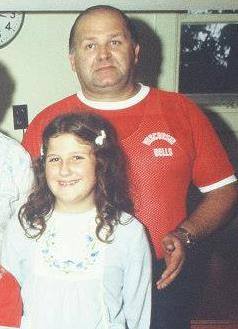
Today marks 25 years since I said “goodbye” to my father. My mother, sister, and I stood by his bedside at the hospital. The doctors had tried numerous times to re-start his heart. In the process, they had broken his sternum, and each new effort was causing additional pain and putting his lungs in danger of being punctured by bone fragments. His time was running out. We were allowed to come in and say our last words to him, before his worn-out heart finally stopped for good. I held his hand one last time, whispered that I loved him and that I would help take care of Mom. I kissed his forehead, and said a prayer. Mom and my sister did the same.
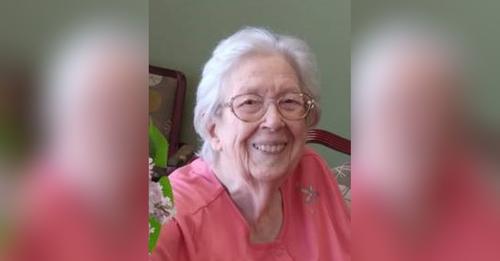
Earlier this year, I had to say goodbye to Mom as well. My sister and I were with her, and had read her mail aloud to her, as she had fallen into a coma. I was preparing to return home. I said, “goodbye;” I held her hand, kissed her cheek and turned to my sister. When I turned back around, Mom was gone–her oxygen machine was still running, but her heart had stopped beating, and she was peaceful and still. In that moment, I became an orphan.

Death is part of the curse of a fallen world. God is the source of all Life. In a fallen world, we are cut off from our life-source. Our mortal bodies must taste death. It is the consequence of Sin– our sin, and the sins of others. Disease, violence, aging, disasters, grieving, work, abuse– all conspire to drain the life out of our bodies. Life is a gift– we can’t “earn” it, and we can’t “hold on” to it indefinitely. Nor can we hold on to the lives of others–even those we love. Some day, I will lose my sister. Or she will lose me. Some day, I will lose, or be lost to my husband, my brother, my step-children, mother-in-law, grandchildren, cousins, friends, and neighbors.

And, just like leaves on the trees later this month, all of us will grow old, be changed, and fall into decay. Some will fall gently; others will be torn away by the winds of war, or crime, or cancer, or accidents. Some will fall early; others will cling to life until the last moment, but all will eventually die. More goodbyes. More grieving. More death.

But. God is the author of Life, not Death.

Death is not the end for those who have trusted their souls to God. Our bodies must still taste death. We must still say, “Goodbye” to those we love on earth. But our goodbyes are tempered with the promise that the One who conquered Death did so for US. Because Jesus was willing to die and able to rise again, we will also live again. And THIS life will be untainted and eternal. No more goodbyes. No more grieving and separation. No more fear of an unknown future that includes death. No more waiting. No more living without a father. Our Heavenly Father will never leave, never die, never suffer the ravages of age or disease, never fall. In fact, Jesus never said “Goodbye” to His disciples– it wasn’t in His vocabulary! He said that He would “Go to prepare a place…(John 14:2-3)”, and He charged His disciples to “Go into all the world…(Mark 16:15)” But He never said, “Goodbye!”

I had to say, “Goodbye,” to my wonderful parents. And I have the joy of knowing that our “goodbyes” are temporary. That I will see them again, even as I will see my Heavenly Father someday. So, while today holds in it the sadness of watching my Dad suffer in his last minutes of earthly life, it also holds the promise of reunion and restoration. My Dad will never again have to suffer; neither will my Mom. My future probably holds a few more “goodbyes.” But it also holds “Hello!” “Welcome Home!” and “I’m so happy to see you again!”

I thank God for the lives of both my parents– for their testimonies of faith, for their good examples, and for the wisdom, laughter, and love they shared. And I thank God that their deaths were not the end of that love and joy. In fact, it will be even better to share someday what we could never have here on earth–eternal peace and freedom from grief and loss.

Twenty-five years seems like a long time, but it is a drop in the bucket of time, and nothing in light of eternity. That truth brings me great comfort as I face today. I hope you will be encouraged and comforted as well. Heaven is a place with no more “goodbyes.” And that radically changes the way I say “Goodbye” here on earth!
How Firm a Foundation

- How firm a foundation, ye saints of the Lord,
Is laid for your faith in His excellent word!
What more can He say than to you He hath said—
To you who for refuge to Jesus have fled?- “Fear not, I am with thee, oh, be not dismayed,
For I am thy God, and will still give thee aid;
I’ll strengthen thee, help thee, and cause thee to stand,
Upheld by My gracious, omnipotent hand.- “When through the deep waters I call thee to go,
The rivers of sorrow shall not overflow;
For I will be with thee thy trouble to bless,
And sanctify to thee thy deepest distress.- “When through fiery trials thy pathway shall lie,
My grace, all-sufficient, shall be thy supply;
The flame shall not harm thee; I only design
Thy dross to consume and thy gold to refine.- “The soul that on Jesus doth lean for repose,
I will not, I will not, desert to his foes;
That soul, though all hell should endeavor to shake,
I’ll never, no never, no never forsake.”

“How can you believe in a God who lets bad things happen?”
We live in perilous times; dangerous times. Fires have swept through Canada and Hawaii (and elsewhere); massive heat waves have caused drought and death in many parts of the world; hurricanes have hit California and and the Caribbean, and another threatens Florida even as I write this. Wars rage in Ukraine and elsewhere; crime seems rampant in major cities on every continent. Diseases– even those we considered eradicated or “tamed” are making a comeback. Waste and pollution devastate our oceans, rivers, woodlands, and even the air we breathe. Often, it seems as if God is absent or powerless–sitting on the sidelines and letting bad things happen. Those of us who claim faith in an omnipotent, loving, and gracious God are mocked and challenged. How can we believe in the face of such evil, disaster, and injustice? How can we offer the empty comfort of prayers and assurances?
It can be very difficult to face such challenges– there are no easy answers and “mic-drop” moments for us in this world. But that doesn’t mean that there are no answers or that our faith is “blind” or without merit.
The Bible is filled with examples of people who followed God in extraordinary circumstances, often in the face of great evil and with little logical expectation of God’s blessing or help. Abraham traded a wealthy, safe, and honorable life in his native land to live as a stranger and a nomad among foreigners. Even after God seemed to fulfill the promise of a son, he tested Abraham’s faith, asking him to sacrifice his only son Read the complete story here... Many people see this story as a horrific example of injustice and cruelty– and if Abraham had been required to go through with the sacrifice, it might seem even more unjust and cruel. However, there are two points to consider:
- God clearly planned to rescue Isaac–there was a ram in the thicket all ready and waiting. Abraham may not have known God’s purpose in asking such a thing, but he had faith that “God will provide for himself the lamb…” God may have been “testing” Abraham, but he already knew the outcome. The “test” was not for God–perhaps not even for Abraham–the test was for Isaac and all who would follow and experience the blessings that came through this amazing act of faith.
- The story of Abraham, like so many others, is given to illustrate difficult truths– sometimes about God’s character, or OUR character, or the nature and consequences of Sin. These stories also often form patterns of allegory, foreshadowing, or illustrations of key principles and events. Abraham was told to sacrifice his only and very beloved son– a horrible prospect for any father. But God provided a substitute sacrifice– a lamb– allowing Isaac to live and become the father of many nations. God’s plan for the salvation of the world was built on the same pattern. God sent his only and very beloved “son” to be the substitutionary sacrifice for the sins of all mankind– a horrible prospect for a loving Heavenly Father. And this time, the son willingly gave His life to become the fulfillment of the promise acted out in Abraham’s story.

And, of course, there are hundreds of other stories– throughout the Bible, and throughout history– that demonstrate the blessings that come through radical and even tiny acts of faith in God.
Hebrews, chapter 11 lists several examples. And a key verse in the chapter points out:
13 These all died in faith, not having received the promises, but having seen them afar off, and were persuaded of them, and embraced them, and confessed that they were strangers and pilgrims on the earth.
Hebrews 11:13 (KJV)
These great examples of faith died without seeing the end results..but the end results are there for US to see! Faith in humanity– faith in Science– faith in ourselves– these are doomed to end in disappointment. Not because we don’t believe enough; not because these things are “bad”– but because faith needs an unshakeable, immovable, solid, and eternal foundation. Our faith in Christ is not a blind faith, an empty faith, or a desperate faith– it is a Faith that is firmly rooted in history, in observable facts, and in revealed truth. And even in the fiercest storms, the worst of disasters, and the overwhelming flood of hatred and evil in the world, our faith stands firm and sure– not because it is “our faith”, but because it is built on Him who is before and above all things–yesterday, today, and forevermore.

Our very firm foundation may seem invisible to the world, but that doesn’t change its reality or its power. We pray to the ONE who calms storms, who tears down and builds up kingdoms, and who holds all of eternity, including our future, in His hands. Fires, floods, trials, and terrors cannot overwhelm those who put their trust in Jesus. We may still get wet, singed, singled out, persecuted, and knocked down, but we will never be abandoned or defeated, or forsaken. Even if it seems like God is holding a knife to our neck– remember how the story ends! There is a lamb who has taken our place. God will not put an end to our hope. Even death cannot separate us from His Love and His Purpose for eternity. It’s all there– in His Excellent Word!
Where Does My Help Come From?


I read an on-line article the other day https://www.verywellhealth.com/perils-of-using-the-internet-to-self-diagnose-4117449 about people using the internet to find medical information, rather than seeing a doctor. The article focuses on self-diagnosis, and the dangers of using only on-line sources to diagnose and treat a chronic medical condition. But I was astonished to note that over two-thirds of American adults (according to various studies) are using the internet to get at least some of their medical advice, and many of them prefer to get their medical information in this way. Why is this?
I think there are several factors, many of which are not discussed in the article:
- Convenience–The internet is easy, quick, and convenient. I can look up medical terms, symptoms, treatment options, find testimonials and comparisons of various medications and procedures all at the touch of a few buttons, all from the privacy of my own home. I can stay in my pajamas!
- Cost (in both time and money)– I can save hours of sitting in waiting rooms and thousands of dollars by seeking help from the internet. I don’t need to “waste” time or money on multiple appointments in multiple locations with multiple specialists. I don’t need to spend more on medication if the internet offers alternative treatments.

- “Confirmation Bias”– the article does discuss the idea that using the internet often helps us achieve a sense that we “know” ourselves better than our health care provider– that the information on the internet can be customized to confirm our already-held beliefs about what is wrong and how to treat it. And we can find on-line groups and sites that will confirm and support whatever we already believe about our health or treatment options, or steer us toward a course of treatment that more closely aligns with our established preferences and habits.
- Community–One of the positive points about using the internet is that we can connect with a community of others who also suffer from similar chronic conditions. We can receive support and advice from people near and far, and connect with resources that would otherwise be unknown to us, given by those who seem to understand and sympathize.
- Credibility–The article does NOT go into much detail about this, but many Americans (and I suspect others) no longer have a blind trust in the medical profession. Even once respected institutions, such as the National Institutes of Health, the Center for Disease Control, and the World Health Organization have lost much of their status and credibility due to their handling of COVID and other recent medical crises. We no longer trust the “experts” to give us the best medical advice. We are looking for someone (anyone) who seems to have a better answer–one that doesn’t require us to trust where we have felt disappointed or hurt.

Of course, this poses danger and risk to anyone who is trying to “go it alone” in their medical journey. We risk getting it wrong and causing more harm– even risking our lives. We may end up spending more time, energy, and money “fixing” the damage we cause by trusting the wrong people, and end up confused, frustrated, and angry at ourselves and everyone else we trusted to help us. Even “support” groups have been known to give false encouragement and even prey on people or families who are struggling with chronic illness.
But this article also reminded me that we can risk our spiritual health in the same way– going it alone instead of getting connected to a local church, or substituting on-line articles and blogs (even this one!) for daily personal prayer and Bible study. How does this happen, and WHY?

- Do we find it more convenient to pick and choose our counsel from the abundance of resources available on-line? Do we only want to read or listen to those who tell us what we want to hear? (See 2 Timothy 4:3-5)
- Are we trying to “cut corners” in the cost of being a Christian? Do we find it too much to spend time in church, wrestle with questions, accept correction from others, or ask for help?
- Are we worried about “fitting in” or are we trying to create a “holy huddle” of like-minded people, regardless of our call to be part of the “Body of Christ?” (see 1 Corinthians 12:12-30)
- Have we lost faith in the Church because of past encounters with others, or the attacks of unbelievers? Do we find it easier to “customize” our spiritual life, closing ourselves off from the kind of challenges that cause us to grow, and falling into a comfortable compromise?
The internet can be a wonderful tool, allowing us to share encouragement, testimonies, warnings, and valuable information globally with a few keystrokes! But it is not without risks. Ultimately, we need to trust, not the makers of websites, or the self-proclaimed “experts” of the world, but in the Sovereign God– the Maker of Heaven and Earth, the one who holds the future of our health (both physical and spiritual) in His Almighty Hands!
Trust in the LORD with all your heart and lean not on your own understanding;
Proverbs 3:5-6 (NIV)
In all your ways submit to Him, and He will make your paths straight.
I lift my eyes toward the mountains.
Psalm 121:1-2
Where will my help from from?
My help comes from the LORD,
The Maker of heaven and earth.

My prayer today is that we would look beyond the mountains of information we find on the internet, and fix our sight and our trust in God for our daily bread, our health, and our future. May we rely on His wisdom to help us seek the right counsel, and to learn, even from our sufferings, that His Presence and His Promises are eternal, sufficient, and sure!
An Encouraging Word
It can be a dog-eat-dog kind of world out there. Every day, I hear of people who are facing difficult and trying circumstances– health issues, loss of a job or home, loss of a family member or close friend, depression, oppression, harassment, rebellious or estranged children, abuse, academic failures, exhaustion from being provider, caregiver, etc.– even just daily stress. It can really take a toll. But it becomes even more difficult when we isolate ourselves.

When I get stressed, I tend to withdraw. I don’t want others to think of me as a failure, or to think less of me in my struggles. But this is one of the worst things I can do. First, it means more worry and stress because I’m bearing the burden alone! Second, it forces me to cover up my level of anxiety or depression be pretending that things are fine when they aren’t. That would all be bad enough, but it gets worse. Isolating means my focus turns inward– my problems become bigger, not smaller; I’m so close to the problem, I’m not able to “look outside the box” for solutions, because my box keeps closing in on me. I can’t see beyond my circumstances to understand if they are temporary, or if they necessitate some life changes on the other side of whatever crisis I’m dealing with. And, worst of all, the only voice I listen to is my own, rehearsing and reminding me of the difficulties or failures I’m facing. What opportunities do I miss, not only to hear an encouraging word, but to share one with someone else?!

We all need an encouraging word now and then; a voice telling us that we are not alone; that all is not lost; that there is hope. I have been blessed with wonderful family, friends, and neighbors who are great about encouraging me, even when I try to shut them out or pretend that everything is grand. Sometimes that encouragement comes through conversation; sometimes a card or text message or a shared piece of scripture; sometimes it comes through prayer. I may not even know who prayed, or what words they used until days or weeks later, but their faithfulness in praying has become a lifeline when I feel isolated and overwhelmed.

This does not negate my need to pray and ask God for wisdom, healing, or strength for myself, nor does it suggest that God doesn’t answer my prayers. Instead, it shows a pattern– God often answers our prayers by incorporating and using those around us. God’s goodness and his love are shown best in teamwork. We run the race to win, but we race together as teammates, not competitors. We share sorrows, struggles, and joys. We come alongside; we lift others up, and they lift us up in return.
Encouragement does so much, we sometimes underestimate its power. In a world of sniping, criticism, name-calling, and finger-pointing, encouragement does the following:
- It lets someone know that they are seen and heard– that they are being noticed, thought of, and valued. This shouldn’t be uncommon, but in a world where we are connected to so many be technology, and to so few face-to-face, it is HUGE!
- It give us perspective to realize that we are not alone in our problems and not unique in facing difficulties.
- It reminds us that hope and help are gifts to be shared, not something we must earn.
- It gives us a purpose and a mission to be part of God’s redemptive work– Jesus gave encouragement and hope to those who needed it most, not to those who “deserved” it.

It can be a dog-eat-dog world out there, but we are not dogs. We are children of the King. Let’s send out some encouraging words today!
A word fitly spoken is like apples of gold in a setting of silver. (Proverbs 25:11 (ESV)

Also see James 5:13-16 on praying for one another.
Driven to Pray?

I met up with an old schoolmate last week, and he asked a question that made me think a lot. He wondered whether our generation– specifically our classmates and friends, were “driven.” His observation was that many of his nieces and nephews seem to have a lot of drive and ambition that he doesn’t remember seeing (or experiencing) in our youth. He noted that few of our friends have gone on to become lawyers or doctors, engineers or CEOs.

I wasn’t sure how to answer his observation. I started, but didn’t complete, a master’s degree. I know several of our friends who are teachers, paralegals, and business owners. Many have what most people would consider at least moderately “successful” lives– happy families, rewarding careers, the respect of others in their communities. And yet very few have distinguished themselves on the national or international front– aside, perhaps, from him! He is a tenured professor, with several published books, and has studied and/or taught at several universities around the world. If HE can’t remember being driven or ambitious, how does he explain his own “success?”

But the observation struck a nerve with me on a personal level. I know that many of my former classmates and long-time friends may find it odd that I have “settled” for the life I live. I own a business, but it is a modest one. I have taught and worked in libraries, but I could have chosen to become a professor or administrator or library director; I could have taken any of a number of more “important” or lucrative positions over the years. But I wasn’t driven to “succeed” in that way. Did I waste my potential? Was I lazy or fearful of success? Did I not have the potential, or did I not have the drive to become “more” than what I am?

Ultimately, I am driven (I hope) by the Holy Spirit. Not to become a “successful” person by the world’s standards, or even by my own ambitions, but to become the person God made me to be– a person who reflects His character and His priorities. I hope that I am becoming a “successful” follower of Christ– no matter what that looks like on the surface to classmates, neighbors, or family. I don’t need to be rich, famous, popular, or “important.” I DO need to be developing Love, Joy, Peace, Patience, Kindness, Goodness, Faithfulness, Gentleness, and Self-Control (Galatians 5:22-23)
This week, as I have been meditating on the idea of “drive” and ambition and “success,” I started thinking about how it relates to prayer. I am driven to become more like Christ, and that includes being driven to live a life of prayer. But what really drives my prayer life? Because my pursuit of prayer and my practice of prayer may be “driven” by something other than pure motives:
- Am I driven to pray because I believe that I am “ticking a box?” Have I read the Bible today? Check. Have I prayed some kind of prayer at some point? Check. Have I done a random act of kindness? Check. This is not really a spiritual pursuit of prayer. In fact, it can become idolatry– I can pray because I believe the act of praying makes me “better” or “good enough” to deserve God’s forgiveness or mercy. This drive comes from my own desire to control my growth and behavior. It is not “wrong” to set goals or make lists and stick to them. (After all, we are to be developing discipline and self-control!) But we must be careful not to shift our priorities from God’s discipline to our own lists and habits.
- Am I driven to pray when/because others are watching? Am I seeking their approval more than I am seeking God’s face? Am I seeking to be “important” or pious, when God is asking me to be humble and obedient?

- Perhaps I am praying out of fear, worry, or doubt. I am driven to pray in the same way that others are driven to consult a horoscope or carry a “lucky charm.” God wants me to trust Him. He knows that I will not always be perfect in Faith, but my prayers should not be double-minded (see James chapter one). I should not be using prayer to “hedge my bets” when faced with adversity. It is good to call out to God if we are frightened or uncertain, but we must develop Faith over fear. And in the end, God also wants us to be joyful in remembering and trusting in His promises
- Am I driven by guilt or shame? It is good to confess our sins. But we also have to remember that IF we confess our sins, He is faithful and just to forgive us, and to cleanse us (1 John 1:9). If I am still confessing the same sins over and over, is it because I didn’t really trust God to forgive me, or because I didn’t really want to repent and change my ways– I just wanted a “free pass” to keep sinning, but not feel guilty for the consequences?
- Maybe I am driven to pray for others because I think MY prayers can save them, or influence their life. Again, this can become idolatry. We have been given the amazing opportunity to pray for others. God already knows their needs– better than we can! And God can do miracles without any input from us. Yet He chooses to give us the privilege of praying and participating in His work! Again, it is commanded that we pray for one another, but we must remember to Whom we are praying. Our prayers for others are part of a circle– God’s Spirit moves us to compassion and concern– we take that compassion and lift up others before His throne. He knows what is best; He will do what is best. He wants us to participate, not to dictate!
- Sometimes, I may be driven to “dictate” a particular outcome in my own life. My own ambition may be to become what I want, rather than what God wants for me. This can be a tricky concept. There are ambitions that God lays on our hearts– they are not wrong, but God’s timing may not match ours. I prayed for years to be married; to “find” the “right” mate, and to “be” the right mate. I even prayed that God would change my heart if my ambition was “wrong.” God’s timing was certainly not my timing. The ambition was not wrong, but my patience and trust needed to be developed.
- Perhaps I am NOT driven to pray…maybe I lack the focus or lack the drive in my walk with Christ because I am drifting away from my first Love. I am driven to seek after something other than intimacy with my Creator. Maybe I am so content with my life “as it is” that I am not seeking direction and correction from the Holy Spirit. Perhaps I do not have the compassion and drive to pray for others because I do not see them fully as God sees them. Perhaps I do not trust God fully with the “little” things in my life because I do not see my need for His guidance.

I think it is not a bad thing to wrestle periodically with questions like this. Maybe today is the right time to ask, “Am I driven to pray? What drives me to my knees? What should be driving me there?”
Who Is My Neighbor?

One of the best known among the parables of Jesus is the story of the “Good Samaritan.” Jesus tells the parable in answer to a follow-up question from a n expert in the law:
Luke 10:25-37 (NIV)
The Parable of the Good Samaritan
25 On one occasion an expert in the law stood up to test Jesus. “Teacher,” he asked, “what must I do to inherit eternal life?”
26 “What is written in the Law?” he replied. “How do you read it?”
27 He answered, “‘Love the Lord your God with all your heart and with all your soul and with all your strength and with all your mind’; and, ‘Love your neighbor as yourself.’”
28 “You have answered correctly,” Jesus replied. “Do this and you will live.”
29 But he wanted to justify himself, so he asked Jesus, “And who is my neighbor?”
30 In reply Jesus said: “A man was going down from Jerusalem to Jericho, when he was attacked by robbers. They stripped him of his clothes, beat him and went away, leaving him half dead. 31 A priest happened to be going down the same road, and when he saw the man, he passed by on the other side. 32 So too, a Levite, when he came to the place and saw him, passed by on the other side. 33 But a Samaritan, as he traveled, came where the man was; and when he saw him, he took pity on him. 34 He went to him and bandaged his wounds, pouring on oil and wine. Then he put the man on his own donkey, brought him to an inn and took care of him. 35 The next day he took out two denarii and gave them to the innkeeper. ‘Look after him,’ he said, ‘and when I return, I will reimburse you for any extra expense you may have.’
36 “Which of these three do you think was a neighbor to the man who fell into the hands of robbers?”
37 The expert in the law replied, “The one who had mercy on him.”
Jesus told him, “Go and do likewise.”

Jesus paints with a broad brush, here– perhaps because the law expert “wanted to justify himself.” Our neighbor is anyone who crosses our path, engages our attention, and has a need for mercy, or help, or encouragement.
How do we apply this to prayer? Most of us are willing to pray for those in dire need or those close to us– friends, family, and such. But there is so much more we can do! Prayer is powerful and mysterious–much more so than most of us realize. If we want to pursue prayer, we need to consider how we can lift others up–including our “neighbors” who may not otherwise come to our attention. Here are a few suggestions to try:

- Make lists. It’s easy to list members of our families or close friends. Try some other lists: co-workers; the people who live on your block or on the floor of your apartment building. Are you feeling really adventurous? Dig up an old yearbook or staff directory from an old job; list all the people in local, regional, state or provincial, and federal government who directly represent you. Lists will help you to remember to pray for people, not because you already love them or know their needs, but because God already loves them and knows their needs!
- Find a focus–Choose a person (maybe someone who is facing chronic pain, or someone you don’t know as well as you would like, or even someone at random: Pray earnestly for that person every day for a week– or a month! Don’t turn it into a bludgeon (“I think you should know I’m praying for you, because I think you really need it…” In fact, you don’t need to tell the other person you are choosing to focus on them, but you may wish to ask if they would like prayer and how they would like you to pray for them).
- Pray for your enemies! You may not have a long list of “enemies”, but it is likely that you know several people who are “difficult”. Don’t pray at them or about them– pray for them. If they have caused you pain, ask for the grace to forgive them. (Keep asking as necessary!) Ask the Lord to bless them, and to help you be an encouragement to them. This is one of the most difficult things you will ever pray, but it can be life-changing.
- Pray the calendar–write in three or four names or general prayer requests for each day of the year. For example, on February 14, I could pray for my nephew who has a birthday, three couples I know with anniversaries that day, and for those I know who struggle with being alone on a day when others celebrate their relationships. On February 15, I can pray for those who broke up yesterday (even if I don’t know of anyone specific), for a friend who celebrates her birthday that day, and for marriage and relationship counselors.

- Pray the newspaper. NOT the TV or internet news! By this, I mean that the newspaper is organized into sections– pray for national and international news issues one day a week. Another day, pray for local issues; weather/environment on another day, etc. When I do this, it causes me to see God in every aspect of what is happening around me– business, government, entertainment and culture…
- Remember that prayer is not about “being good enough.” The primary purpose of pursuing prayer is to speak to, and hear from, and to obey God. As God’s Spirit inspires you, pray for whoever, or whatever, or wherever He leads you. Using tools may make it easier to get started, but don’t make the tools an idol that distracts from the focus of communing with Our Creator.
- There is no perfect formula for being a “Good Samaritan” in prayer. But there is good reason to pursue ways that God can be glorified (and we can reach maturity in our walk with God) through our prayer life.
- See more suggestions in the pages section of the blog.