As Iron Sharpens Iron

As iron sharpens iron, so one person sharpens another.

Proverbs 27:17
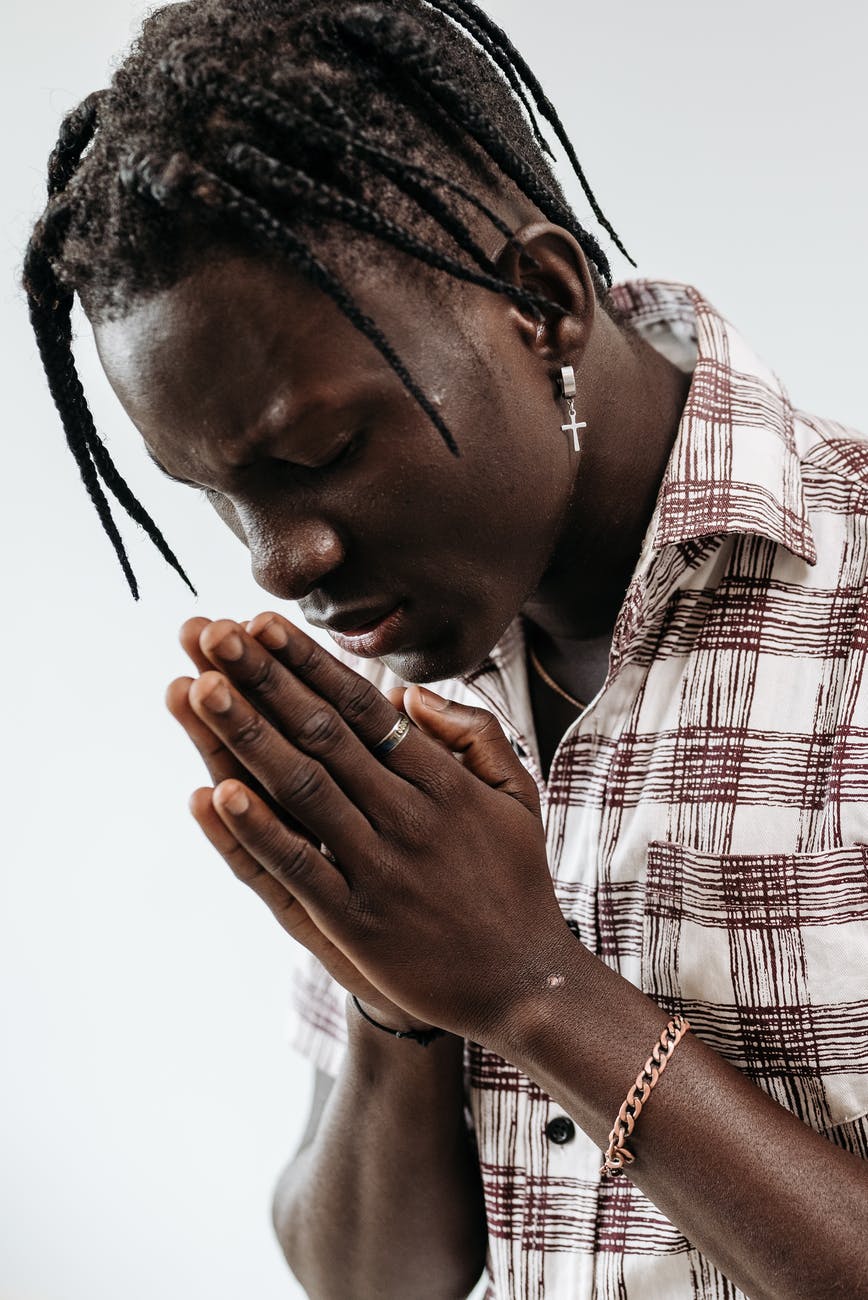
Photo by igovar igovar on Pexels.com

Do you have a friend who “sharpens” you? Someone who keeps you honest? Someone who challenges you? Someone who holds you accountable? The Bible has much to say about relationships that we form– and some of it may surprise us. Earlier in Proverbs 27, the writer says, “Better is open rebuke than hidden love.” (v.5 NIV) and, “Faithful are the wounds of a friend, but the kisses of an enemy are deceitful.” (v. 6 NKJV).

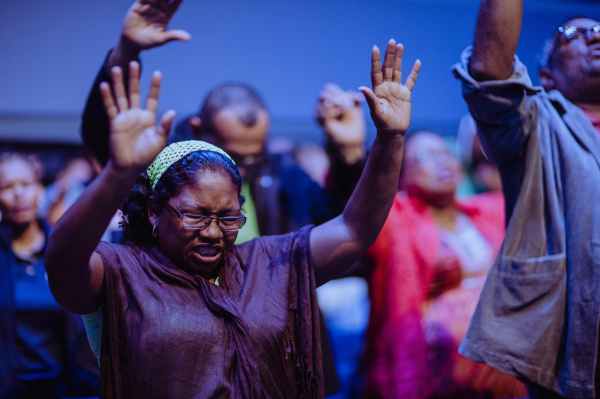
Photo by Liza Summer on Pexels.com

I don’t know about you, but I want friends who encourage, friends who make me feel good about myself; friends who make life more pleasant and uncomplicated. I don’t enjoy hearing criticism, or having my beliefs and ideas challenged. I don’t enjoy conflict, and I tend to avoid it whenever possible. However, I also know the truth of verse 6 from experience–I can trust the constructive criticism of a good friend, even when it stings in the moment. A loving friend will take the risk of saying what needs to be said, and not just what I want to hear.

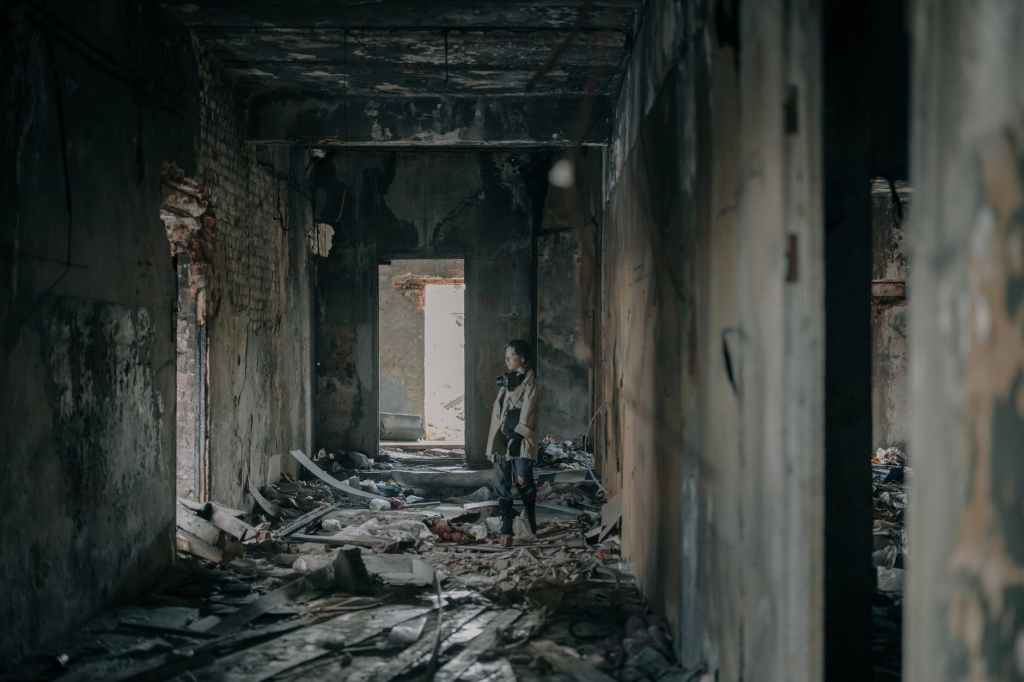
Photo by Tirachard Kumtanom on Pexels.com

There are three points that struck me recently as I came across these verses:

  • “Iron sharpens iron”–nothing gets sharpened by a marshmallow, and an iron blade that is left unsharpened will either lose its edge over time, or rust from disuse. We may not like conflict. But we need to be disciplined, and that means that we need to be held accountable. We need to be challenged and sharpened, or we will grow dull or rusty. God can use the “fire” of circumstances to soften our hard hearts, but He often uses other people to “spark” us into action. Left to my own devices, I can grow rusty and useless. I can feel sorry about a bad or sinful habit– I can confess it, and make plans to change. But I am more likely to grow and develop positive habits and actions if there is someone keeping me honest. I can have good ideas; I can know what the Bible says– but I can also fall into deception, lazy thinking, and pride. A good friend can help keep me “sharp” in both actions and thinking. We are not meant to do life alone, and God does not want “Holy Hermits.” He also does not want us to be so timid and accepting that we fail to sharpen others. It is really hard to risk a friendship by speaking the truth–but NOT speaking is sometimes more damaging to the friendship– and to our friends!
  • “Iron” is what sharpens “Iron”–We need to seek out truth and wisdom, and that’s what we need to offer others, as well. We should not waste time on petty disagreements, trying to “win” every point in an argument, or pointing out every minor fault. We also need to have mutual respect; being willing to listen, willing to let a few sparks fly, and willing to respect another’s strengths as we develop our own. This verse is not about letting someone else dominate you or shut down your voice, just as it is not about dominating or “fixing” someone else by forcing your opinions (even if grounded in the truth) down their throat.
  • “So one person sharpens another.” Notice it doesn’t say whether the person is a believer, a dear, personal friend, or a relative. Any person can “sharpen” us. I may disagree with another person– a coworker, a peer, a neighbor–and still respect that their ideas, their words, even their criticism.
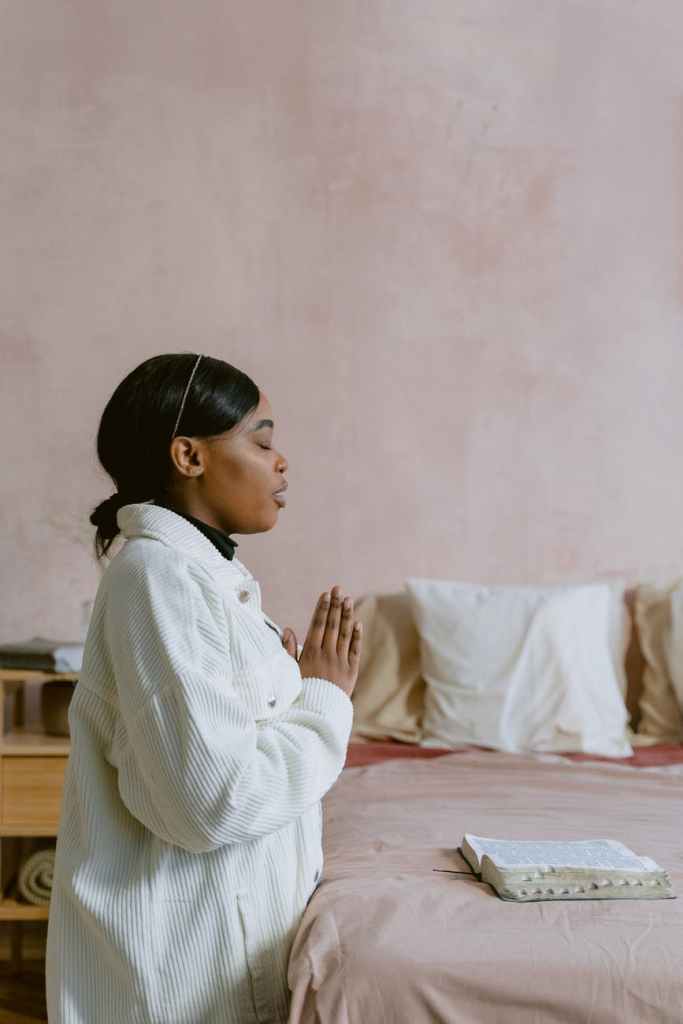
Photo by SHVETS production on Pexels.com

How does this tie into our pursuit of prayer? Conflict and testing can make us better or bitter–in this analogy, it can make us humble or it can make us brittle. A humble person will be shaped and sharpened. A brittle person will snap or break.
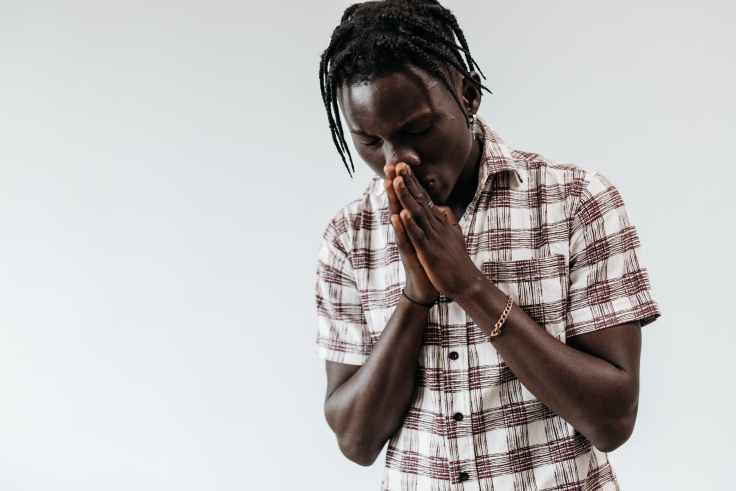
Photo by Pavel Danilyuk on Pexels.com

When I am challenged or criticized, do I take it to God or do I take it to heart? Do I ask God to reveal truth or have I already decided what I want to believe? Not all criticism is constructive; not all challenges are meant to sharpen us. Do I react in anger? Do I become sullen? Do I crumble into a puddle of doubt? Or do I see it as an opportunity to become sharper, to change course, or to refine my thinking? Conflict and criticism do not happen in a vacuum–God is as close as a prayer, and willing to give wisdom, discernment, and strength!

How do I react to the other person? Do I become bitter toward them? Do I seek for ways to repay them with criticism or prove myself to them? Do I pray for THEM to change, without looking at my own responsibility? Do I appreciate the risk they may have taken to speak up? (Or do I appreciate the reasons they may have for feeling or thinking as they do, even if I am convinced they are in error?) Can I offer thanks to God for the way He may be using that person to sharpen me–even if that is not their intent? Can I pray for God to bless and strengthen them, even if we don’t agree?

Photo by Jopwell on Pexels.com

This is all easier to write than to put into practice. But I can say from experience that God has often used the most unlikely people to “sharpen” me in unlikely ways and unlikely moments, and I am so grateful for the “faithful” (and temporary!) wounds of friends. I am also grateful for others who challenge me to defend the Faith, and who open their hearts to me– even when we clash sometimes.

Of Yeast, Mites, and Mustard Seeds

God is interested in the little things. We praise Him for his glory, majesty, and power–rightly so–but He is also the God of atoms, and quiet moments, and insect wings and snowflakes.
animal antenna biology black background
Photo by Egor Kamelev on Pexels.com

God celebrates with us in our smallest victories–biting our tongue instead of bragging, shaving a minute off our 5K run, not burning the dinner rolls, remembering to put gas in the car for my spouse.  He also sees our smallest sins–when no one else is looking; when no one else knows our motives or inner struggle– God sees every detail, every motive. God hears our prayers– not just our big urgent prayers, but our whispered secret prayers; our quick cries for help; our relieved sighs of gratitude; our shameful confessions.

photo of woman looking at the mirror
Photo by bruce mars on Pexels.com

God often uses yeast as a metaphor for sin–just a tiny bit can ruin everything.  One tiny act– a fib, passing along a rumor, snubbing a neighbor at the store, watching “soft” porn on TV, hanging out with the “fun” crowd and taking dangerous risks, gambling “for fun” with money you promise to pay back later, drinking a little too much just a little too often, spending more time with that co-worker who “understands” your marital woes better than anyone…Most of us don’t set out to become addicts, thieves, adulterers, bullies, sexual predators, rage-aholics, embezzlers, or compulsive liars.  But Jesus warns us that big sins start small: “murder” really starts with disdain and anger and hate (Matthew 5:21-22);  adultery begins with lust; and the love of money (greed) is the root of all kinds of evil (1 Timothy 6:10).  Selfishness, pride, envy, rebellion– they lurk in little lies and delayed obedience and easy justification we allow in our daily lives.

But God is not only watching us under a microscope, waiting to catch us in some small act of sin.  In fact, that is not His primary desire in watching us.  God is searching  eagerly for signs of obedience, faith, goodness, love, and kindness.

circle clean clear drop
Photo by Pixabay on Pexels.com

Jesus used parables about small things– a lost coin, a mustard seed, a pearl, a speck of dust, the eye of a needle, a narrow door/gate, a lily of the field– to illustrate joy, faith, self-control, obedience, trust, and even the kingdom of God.  Small things are important, sometimes even glorious, in God’s eyes.  Even some of Jesus’ miracles started with small, humble, simple things– water, five loaves and two fish, a few quiet words, a few tears.

Photo by Andrea Piacquadio on Pexels.com

Today, I want to pray that I will see God moving– not just in grand gestures and eloquent sermons (though I love to see Him move in those ways, too!)–but in the small moments.  I pray that I will be sensitive, not to the world’s crushing words of hatred and deception, but to the still small voice of encouragement; to the hopeful smile of a stranger; to the rushing wind that lifts dust mites to glory in the sun; to the unshed tears of a widowed friend.  I want to plant the mustard seed of faith and watch how God will grow it.  I want to be that cheerful giver of my last coins in gratitude for the riches of Grace that cost me nothing but cost my Savior everything.

Always On the Go

“On the Go..”, “Going, Going, Gone!”, “Get Up and Go”–it seems that we spend a lot of our time either going somewhere or planning to go somewhere. Traveling, commuting, hiking, even walking in place; it seems we can’t stay still and in one place for any length of time.

Photo by Dom J on Pexels.com

Sometimes we’re on the move trying to get to a destination; other times we’re trying to escape from a situation. We go to the store; we go to a party; we go to an amusement park or a movie to escape from home and “normal” life for awhile. We go to the beach or the woods to experience nature; we go to the city to experience more people “on the go!” We go to work; we go back home.

Photo by Lisa Fotios on Pexels.com

Many times in the Bible, God explicitly commanded people to “Go;” Abraham was told to go to a land where God would lead him; Moses was told to go to Pharaoh, and tell him to “Let my people GO!” Jonah was told to go to Ninevah; Ananias was told to go to the house where Saul was staying after his encounter on the road to Damascus. The Disciples were told to “Go into all the world!”

Photo by Valentin Antonucci on Pexels.com

But there is one important exception–Jesus calls us to go into all the world, but He also commands us to “Come!” And unlike a command to Go–first here, then there, then somewhere else–the command to “Come” is full of closure and finality. We will not be forever “on the go” in Heaven. We will be Home. The God who is outside of time and space bids us join Him in the Eternal Everywhere–we cannot “Go” anywhere where He doesn’t exist, but someday, we will live in our ultimate destination– the eternal awareness of His constant, encompassing presence!

Photo by Johannes Plenio on Pexels.com

That’s the great good news of the GOspel. But it comes with a warning. Just as Heaven is an eternal destination, with no more need to “Go” anywhere, so Hell is an eternal destination, with no way of escape. Those in Heaven will have eternal rest– the peace of being where we were meant to be. Those in Hell will be eternally restless–wanting to escape from shame, guilt, and loneliness; wanting to escape to peace, rest, joy, and communion– always wanting to go, but unable to leave.

Photo by Ekrulila on Pexels.com

This compulsion to “go” throughout life is a nagging reminder that we have an ultimate destination. Either we are “going” toward a purpose and a destination, or we are wandering, lost and restless, never reaching the end of the race.

Photo by Emma Bauso on Pexels.com

Today, let’s pause for a moment and evaluate where we are going today. Even a long journey, over rough terrain, can be filled with joyous anticipation. Even a short journey on smooth roads can be filled with stress and regret. Let’s remember our destination, even as we “press on” today.

“Wait For It…”

Movies and television shows are breeding grounds for popular phrases that enter the culture and resonate with millions of people.  Just utter the phrase, and nearly everyone in the group “gets” the reference.  A recent American sitcom has made the phrase “Wait for it..” an iconic reference to comedic timing.  It’s often the anticipation of a punchline, a pratfall, an ironic twist, that makes it memorable or noteworthy, and a clever person will use the timing to maximize the humor in a joke or prank.

We have an innate desire to see “what happens” next in life– “Where will I be in five years?”  “Will I get the job?”  “When will the baby come?” “Will she say ‘Yes’?” “Will the tests come back negative?”  The last thing we want at such times is a clever, smug comedian sitting back and using our anticipation for his own entertainment.

man wearing black zip up hooded jacket facing camera
Photo by Jou00e3o Jesus on Pexels.com

Often, the wait is exciting, short-lived, and rewarded with relief in the form of a pleasant outcome–She does say, “Yes!”; or the medical test comes back with good news. Sometimes, the anticipation of the “punch line” produces shared laughter. But sometimes, it seems that the “joke” is on us– the wait never seems to end, or the punch line comes with a gut-wrenching punch–we didn’t get the job; the baby comes too early; the plans and the hard work end in disaster and shame.

Some people imagine God sitting in Heaven, smug and distant, pointing at us and laughing, “Wait for it..”  Every time they face disappointment, frustration, oppression, they raise their fists to Heaven and blame their creator for everything they haven’t gotten, every missed opportunity, every setback, every heartache.  “If God really loved me, he would not let me be hurt/sad/poor…”

woman working girl sitting
Photo by Alexander Dummer on Pexels.com

But, when God says “Wait for it…”, he’s not talking about a punchline or an ironic twist of fate.  He knows that bad things will happen, but he’s not asking us to wait for those things.  And he certainly isn’t sitting back laughing at our pain and disappointment.  He’s asking us to wait for something better.  Something we cannot even begin to imagine.  A restoration of all things– the dead brought back to life, the sick completely healed, the love we long for lavishly poured out in its fullness.

Anticipation is not part of a joke; hope is not corny or naive– it is built into the very soul of each person.  We long for what we have never experienced, but what we know is “out there”.  In this world, we will be left anticipating, because NOTHING can measure up to what God has in store.  Even the best of relationships, the best of comforts, the best of experiences, will leave us wanting something more.  And this is a gift, even though it can leave us disappointed, restless, and even hurt.  In light of what’s coming, there is no loss or setback so great as to cancel out the hope and the promise that stirs within.

man architecture london kings cross
Photo by Negative Space on Pexels.com

It’s because of this that we can pray with confidence in the midst of our struggles, and with abandon in times of frustration and pain.  We live in the finished work of the cross, but the unfinished and ongoing work of renewal and restoration.

Photo by Min An on Pexels.com

Wait for it..

No Condemnation…

Therefore, there is now no condemnation for those who are in Christ Jesus, because through Christ Jesus the law of the Spirit who gives life has set you free from the law of sin and death.

Romans 8:1-2 (NIV)
Photo by Anete Lusina on Pexels.com

I looked in the mirror this morning.
There it was again, right in the middle of my forehead…
“Failure.”

The label peeled off. But some residue was left behind.
I could feel it.
Every time I knit my brow,
Every time I tried to smile,
Every time I tried to look up.

I cried out,
“God forgive me. I’m a failure.”
But I thought I had been forgiven before.
Why was I still wearing the label?
Why did it keep coming back?

I looked closer at the label I had thrown away.
“Made in USA.”
Not “Made in Heaven”
Labels are made on Earth.
By other people.
In my own mind.

This time, when I looked up, I couldn’t feel it.
But I saw the others–
Wearing labels, just like me.
“Failure”
“Hateful”
“Unwanted”
“Used”
“Unworthy”

And the labels were all made somewhere on Earth–
“USA”
“Pakistan”
“China”
“Zimbabwe”
“Honduras”

The labels were hard to ignore.
Someone had put them there for all to see.
But what if I could look beyond the labels
And just see the faces?
Look into the eyes of my sister,
And see the beauty God had intended to be there.

Photo by Rodolfo Quiru00f3s on Pexels.com

Father, Help me remember that there is NO Condemnation for those who belong to you. Condemnation comes from others. You are the righteous Judge, NOT the prosecutor. You have the authority to condemn– yet you offer Grace to anyone who will repent. Your only label is a banner of Love that says “Precious to the Lord.” Help me see Your label– whether in the mirror on on the street– whenever I look around.

“Idol” Thoughts…

I was in an odd mood the other day, and I started thinking about “Christian” Book Stores. There used to be several bookstores in the area that were “Christian” book stores. They sold Bibles, Bible study guides, devotional guides, prayer journals, hymnals and song books, contemporary Christian CDs, Christian DVDs, and all sorts of “Christian” gift items– tee shirts, wall hangings, jewelry, even candles! If it looked, sounded, felt, or even tasted “Christian” you could probably find it there.

Photo by Pixabay on Pexels.com

Many of these stores are now out of business. And it made me sad at first, but I think it’s worth a little analysis:

Photo by Tim Douglas on Pexels.com
  • Maybe the most obvious reason why any store or set of stores goes out of business is the law of supply and demand. As more and more Christian book stores popped up, they filled the market with more and more “stuff.” Every store had Bibles and books, but the demand was for “stuff.” Bracelets and CDs, Mother’s Day gifts, Christmas- and Easter-themes decorations…Bibles were relegated to the back of the store on a couple of shelves. And most of the stores ended up with the same “stuff” as the other stores– the same candles and t-shirts and throw-pillows and coffee mugs with the same “Christian” sayings. Other store chains caught on– you could buy the same coffee mug or DVD at Hobby Lobby, or Walmart– at half the price! And, of course, with e-publishing, streaming services and Spotify, etc., books, DVDs and CDs are almost a thing of the past, anyway. Years of buying “stuff” has resulted in families who can’t even give away all their “precious” used art and decorative items from 20 years ago. The demand just isn’t there.
  • More subtle is the psychology of the “Christian” Book store patron. Buying mugs and key chains and bracelets at a “Christian” book store is a form of virtue signaling. Buying a t-shirt with a provocative Christian message can make you feel like you’re witnessing for Christ– without actually having to engage in conversation or develop a relationship with anyone! That feels great for awhile, but the reality is that feelings and virtue signals change. It’s not trendy to wear WWJD bracelets anymore– it’s not even trendy to be a “Christian” anymore–much better to be an open-minded, accepting, and loving “Christ follower.” “Christian” has a bad connotation these days– judgmental, narrow-minded, and hateful. People who used to proudly stroll the aisles of Christian book stores are now full of disclaimers about their church affiliations.
  • More subtle still is the psychology of the “Christian” Book Store itself. There really is no such thing as a “Christian” book. There are books written by Christians, and about Christians, and for Christians, but a book is an inanimate object. It cannot be a “Christian” or a “Christ Follower,” or a “Believer.” The same is true about any of the other products sold at any store. There are no “Christian” pot holders or hand lotion sets or wall art. A store catering to a “Christian” audience must not expect to be wildly popular in a secular world. We don’t see a trending wave of Buddhist book stores or Muslim book stores, or book stores specializing in Wiccan coffee mugs– though we may see such trends come and go in the future.
Photo by Inna Lesyk on Pexels.com

What makes me saddest about the disappearance of the “Christian” Book stores is not that there are fewer cool t-shirts to consider buying, or that I have to travel farther to find a bookstore with a great “Christian” Sci-fi section, or a larger selection of devotionals. It is that, on some level, my “Faith” became an idol. I filled my bookshelf with “good” books, while neglecting to read the most important book of all. I spent time browsing aisles of great music, but less time singing from my own heart. I spent money on items that proclaimed my Faith, but spent less time and energy living it out.

There is nothing “wrong” or sinful about “Christian” Book Stores. I am very grateful to live in a country where I can freely shop for Bibles, and even a couple of throw pillows that remind me how much God loves me. I love that I can wear cross necklaces, or listen to wonderful songs about Christ without facing imprisonment or torture. But I want to be careful not to take for granted a culture that makes following Christ easy. I don’t want to worship the “Christian” culture and not the Christ it claims to love.

Photo by Tara Winstead on Pexels.com

One of the first items I remember not being able to find in the “Christian” Book Stores was a prayer journal. Oh, they had several leather-bound journals where you could write notes, or ones that had “prayer prompts” written on gilt-edged pages. But I wanted one like the one I had found years before– it had pages with information on various people groups around the world as prayer prompts, and space to list names and even answers to prayer. I have since created my own notebook-style prayer journal that tries to replicate that older one.

Photo by Pavel Danilyuk on Pexels.com

And perhaps that is a good thing. “Christian” books promise a lot–journals that prompt us to pray; devotionals that basically do the “worship” for us; even Bibles that speak to us in comfortable language, so we don’t struggle with unfamiliar words. But ease and comfort do not produce growth. “Christian” book stores do not necessarily produce strong Christians, either. Only Christ, through the work of the Holy Spirit, can do that. Christian Book Stores can be a valuable tool, or an idol.

Sixteen Little Things

If you are reading this blog, you have at least sixteen things for which to be thankful.  Some of them may seem like minor things, but they can form the beginning of a much longer list.

  • First, (and this is NOT one of the smaller things) you are alive to read this.  You woke up this morning (or afternoon, or whenever), and you have an opportunity to be thankful.  Not everyone who was here yesterday can say that!  Life is a precious commodity, and one that should cause us to be grateful.

girl wearing blue denim dress shirt
Photo by nappy on Pexels.com

  • I am (or was a few hours ago– hopefully I still am) alive to write this!  You may or may not be very thankful for this fact, depending on whether or not you agree with me, or enjoy the blog, but I am very grateful…
  • You can see to read this.  Close your eyes and imagine, or just look up from your screen to see all the other wonders within your sight!

close up portrait of human eye
Photo by Skitterphoto on Pexels.com

  • You can access this blog to read it.  We take for granted the availability of information and access to writings, graphics, and sound in the cyber age in which we live, but even 50 years ago it would have been impossible for a private person to share photos, writings, or videos to a global audience in real time.  And the time may come when such sharing is tightly regulated, restricted, or forbidden.  (Indeed, in certain areas, you may taking a risk to view this even now.)
  • You can read this.  Worldwide, the literacy rate is estimated at 86.3% See wikipedia chart here You may think this is a small thing to point out, but in many countries–perhaps even the one you live in–this percentage is much smaller.  And, if you look at historical accounts, literacy rates have exploded in just the last 100 years, especially for women.
    • You may be especially thankful if you are reading this in a second or third language, or if your computer is translating this into your native tongue.
    • You may not be reading this directly– if not, be grateful for whoever is able to read it to you, and is willing to do so.

toddler reading book
Photo by Daria Shevtsova on Pexels.com

  • If you have access to this blog, you probably have access to other modern conveniences — electricity, a cell phone or computer, indoor plumbing, etc.  Even if your access is limited, sporadic, or expensive, it is still something many of our great-great-grandparents did not know.
  • Chances are that you have been the beneficiary of medical advances of which you are not even consciously aware…vaccinations, inoculations, surgery, better nutritional practices, and more– most of us living in the world today have never had to face the ravages of Polio; Smallpox, once a dreaded disease, was deemed to be eradicated within the last 50 years.  It seems like such a small thing to be grateful for something you have never had, until you talk to someone or read about someone who DID have it.
  • You are completely unique and one-of-a-kind!  Even if you are an “identical” sibling, you are not the same as anyone else living or anyone else who has ever lived!  In all the world, throughout all time, there has never been or ever will be anyone exactly like you!

brand trademark cobblestones community denim pants
Photo by Ingo Joseph on Pexels.com

  • Conversely, you are part of a 7+ billion-member global family of humans who share the same commonalities– laughter, tears, hopes, disappointments, bad hair days (or no hair days), love, loss, hunger, and, sometimes, rest.  We all have thoughts and feelings, and a purpose.
  • God LOVES YOU– in fact, He adores you.  He loves you to death– and He died (and rose again) to prove it!  The Father, Son and Holy Spirit look on you and love you–want the best for you throughout all eternity, and want to have a deep and powerfully transformative relationship with you– forever!
  • I am praying for you– perhaps not simultaneous to your reading this, but I pray for readers.  I may not know your name, or where you are, or when you are reading this, but God does, and I’m praying to Him on your behalf.  I’m also praying as I write each entry that God will be glorified and that what I write will glorify Him and help others.

belief bible book business
Photo by Pixabay on Pexels.com

  • God is even more readily accessible than anything I will ever send out– more than anything that can pop up in your news feed, nearer than your next door neighbor.  God is available–whoever you are, however you feel, wherever you may be, whatever your circumstances, and whenever you call.  Every moment of every day is an opportunity to pursue Him and interact with Him through prayer!
  • God is not just accessible, He has revealed Himself– through His creation, through His words, through prophecies, visions, and miracles, through the life and ministry of Jesus, and through the examples and lives of those who follow Him.

man holding sheep statuette
Photo by Pixabay on Pexels.com

  • If you have reached this point, you may be scratching your head…I thought there were sixteen things…what’s left?  Well, if you count the smaller bullet points above, this is number sixteen, and the fact that you are still counting means that you are counting your blessings– that’s a small thing, maybe, but I think it means that you want to be grateful– and THAT is another thing to celebrate!

Free to Pray

Today, the United States will celebrate our “Independence Day.” Two hundred forty-six years ago, fifty-six men pledged their lives and fortunes by signing a Declaration of Independence from Great Britain and the rule of its king, George III.

We talk a lot about freedom and independence on this day. For many, it is a bittersweet reminder that not all Americans were “free” during the first decades of our existence as a nation. For others, it serves as a rallying point to urge for further movement toward freedom from tradition and restraint. We talk of freedom and independence as though the terms are interchangeable…as if the only way to understand freedom is in the context of independence from someone or something else. We want to be free from the constraints of tyrants, oppressive bosses, or prudish parents. But freedom from something implies freedom to do or become something else.

Photo by cottonbro on Pexels.com

In the case of our fledgling nation, freedom from the British Empire meant the freedom to create a new nation– not just to modify an old national identity, but to create a new identity; to have a new “birth” of freedom. Freedom from oppressive rule does not eliminate the need for restraint and responsibility. Indeed, it creates a great need to define limits and practice self-discipline. Total freedom– without boundaries, rules, or responsibilities– leads to its own destruction.

A few years after the Declaration of Independence, once “freedom” had been won by long years of war and the sacrifice of many soldiers and their families, some of the same men were joined by others to draft a national Constitution. Almost immediately, the Constitution was amended to include a Bill of Rights, outlining certain Freedoms which had been implicit, but were now spelled out for all to uphold. The very first of these rights covered the freedom of expression– both in speech, and in worship.

Photo by Sharefaith on Pexels.com

Americans have the freedom to speak. We can speak publicly about our thoughts, our feelings, our beliefs– without the fear of imprisonment or government retaliation. We can write or post blogs, regardless of whether others agree with us, or like what we have to say. This is an incredible freedom– I can create novels or poetry; I can recite speeches or create persuasive advertising; I can talk for hours about nothing at all! But it also comes with responsibility– I could write falsehoods about my competitors, or speak out disparagingly about a neighbor. I could do great damage with my words. My neighbor or competitor might take me to court and sue me for libel or defamation, but the damage would already be done.

Photo by EKATERINA BOLOVTSOVA on Pexels.com

Americans also have the right to religious expression. Our Supreme Court recently upheld the right of a high school football coach to say a prayer on the football field after a game. Americans can assemble for worship, whether in a church, a mosque, a synagogue, or an open field. We can pray– aloud, in a group, over a loudspeaker, even–and the Government cannot legislate that only “approved” prayers are allowed. This might make a few people squirm– Wiccans, Baptists, Scientologists, Hassidic Jews, Shi’ites, Druids, and Satanists ALL have this right. But each of us has the responsibility to respect the rights of all to pray.

Photo by Ivan Samkov on Pexels.com

But that brings me to this point– we have the freedom to pray under the Constitution, but that freedom means nothing to the Christian without the greater Freedom to Pray granted by God Himself. Anyone can offer a prayer to empty air, to a created idol, to a metaphysical “being”–but governments cannot give us the freedom to be HEARD, to be WELCOMED into the presence of the Almighty. Only God gives that freedom– and He gives it to ALL who seek His face! I don’t have to be an American to pray. I don’t have to be given the legal right to pour out my heart to my Heavenly Father– HE invites me to pray. All I need is the belief that God hears and responds to my prayer– even a silent one delivered in peril of Government retaliation. God’s invitation is more powerful than any oppression that seeks to stop me from calling on His Name!

Photo by Tima Miroshnichenko on Pexels.com

God took great pains to illustrate this in bringing the Israelites out of Egypt. God took a “nation” of slaves out of Egypt, and led them through the wilderness and into their own inheritance in the Promised Land. They had the freedom to pray, and to worship this Great God. But over the years, they lost that freedom, and ended up going into exile, slaves to the pagan nations around them. Yet God remained faithful, hearing their prayers even from the nations where they enslaved. God’s promises and His invitations remain, regardless of the rise and fall of Empires or religious movements.

So today, especially in light of my right as an American to pray freely and publicly, I want to challenge myself, and anyone reading this to spend time today in earnest prayer and thanksgiving. What a privilege to be “Free” to pray!

Do You Not Know? Have You Not Heard?

Within the last couple of weeks, several major news stories have broken in the United States, where I live. The Supreme Court has ruled on several major cases, with “game-changing” results. Important national issues, such as gun control, abortion, and freedom of religious expression were involved, and many Americans are either elated or upset by the decisions that were rendered.

Photo by Viktoria Slowikowska on Pexels.com

My husband and I don’t have television; no 24-hour news channels, or opinionated talk shows, or even late-night comedian commentators reminding us of the “big news” of the day. But we have internet, and radio, and we talk to people who have access to TV. We would have to live under a rock to be uninformed of what has been happening. Yet we find that many people who have access to “news” have little or no understanding of what these decisions actually mean for our nation or its citizens. The Supreme Court did not “abolish” abortion; it did not eliminate gun controls or restrictions. It did not “bring prayer back into the schools.” What we “know” and what we have heard are not always the same.

Photo by Startup Stock Photos on Pexels.com

The prophet Isaiah, writing to the people of Jerusalem (Judah), repeats the phrase, “Do you not know? Have you not heard?” The Jewish people were supposed to know God’s eternal character. They were supposed to have heard His laws, and heard the stories of His faithfulness throughout the years. But the message had become garbled, distorted, and even lost. The people were going to be disciplined– they would go into exile; yet God would bring them comfort and forgiveness and restoration. Isaiah reminds his readers and listeners of God’s timeless character– His power and authority; His compassion and healing; His care and His discipline for those He loves.

Photo by Pixabay on Pexels.com

21 Do you not know?
    Have you not heard?
Has it not been told you from the beginning?
    Have you not understood since the earth was founded?
22 He sits enthroned above the circle of the earth,
    and its people are like grasshoppers.
He stretches out the heavens like a canopy,
    and spreads them out like a tent to live in.
23 He brings princes to naught
    and reduces the rulers of this world to nothing.
24 No sooner are they planted,
    no sooner are they sown,
    no sooner do they take root in the ground,
than he blows on them and they wither,
    and a whirlwind sweeps them away like chaff.

25 “To whom will you compare me?
    Or who is my equal?” says the Holy One.
26 Lift up your eyes and look to the heavens:
    Who created all these?
He who brings out the starry host one by one
    and calls forth each of them by name.
Because of his great power and mighty strength,
    not one of them is missing.

27 Why do you complain, Jacob?
    Why do you say, Israel,
“My way is hidden from the Lord;
    my cause is disregarded by my God”?
28 Do you not know?
    Have you not heard?
The Lord is the everlasting God,
    the Creator of the ends of the earth.
He will not grow tired or weary,
    and his understanding no one can fathom.
29 He gives strength to the weary
    and increases the power of the weak.
30 Even youths grow tired and weary,
    and young men stumble and fall;
31 but those who hope in the Lord
    will renew their strength.
They will soar on wings like eagles;
    they will run and not grow weary,
    they will walk and not be faint.

Isaiah 40:21-31 NIV

It’s not that Isaiah’s fellow citizens had never heard about God; it’s not that they had no knowledge of God’s laws or of His character. But they had become complacent; they had knowledge, but no understanding; no insight. They knew about God; they no longer KNEW God.

Photo by Ron Lach on Pexels.com

How often do we hear a bit of news and react without understanding all of its implications? How often do we jump to conclusions about what God is like, or what His will might be? How many times do we assume that what we think or feel comes from the Bible, without consulting it? How often do we pray, not that God’s will should be done, but that God should do our will?

Photo by Alex Green on Pexels.com

Violence (including shootings), abortion, religious intolerance and persecution– all have been around for centuries. Human laws and justice have a long history of being twisted, ignored, amended, rewritten, forgotten, and supplanted. Supreme Court rulings can be overturned; laws can be rewritten or struck down; cultural expectations and trends will change. While I may feel cause to celebrate some of the Supreme Court’s recent rulings, or be discouraged by others, now or in the future, I cannot put my hope and trust in them. But I can put my hope and trust in the power and authority of God! God’s rulings are absolute and eternal.

And if I hear nothing else today; if I know nothing else for certain– I can rely on His truth and His faithfulness forever!

Photo by Ketut Subiyanto on Pexels.com

Looking at the Negative

(Please note: This is a re-post from a couple of years ago..)

Growing up in the age before digital cameras, I remember waiting for photos to be developed from a roll of film. We would drop off a roll at the pharmacy or photo shop, and pick up a package containing the prints and several strips of negatives from the original roll of film.

Photo by Pedro Sandrini on Pexels.com

I was fascinated by these negatives–images with the exact opposite of the prints– dark was light, light was dark, and everything seemed topsy-turvy. Sometimes things seemed creepy and even somewhat sinister–people with white hair and white pupils shining out of dark eyes; icy trees against a dark sky.

Photo by David Bartus on Pexels.com

Of course, the negatives were not the prints, nor were they intended to be the finished product. The negatives were included so that new prints could be made at a later time. We didn’t put the negatives in our photo album; we hid them away in a dark place, out of sight and far from the light. Most of them eventually got ruined or degraded over time, while the photos they produced were preserved and cherished.

Photo by Lisa Fotios on Pexels.com

Life holds a lot of “negatives”– negative experiences, negative emotions, negative thoughts, bad memories, scars–we all have them. But we are given the opportunity to produce something positive out of even the most negative of circumstances. It’s what God does– His light shines in the darkness and changes our view.

But we need to be exposed to the truth, and developed by faith, just like film. And we need to come back into the light, not as a negative, but as a faithful image of what (and who) God intends us to be.

Photo by Johan De Jager on Pexels.com

The world is full of negatives– distorted images and situations caused by exposure to sin, pain, grief, anger, bitterness, and hatred. We can dwell on such images, and fill our days staring at the negatives, never seeing the reality of what God has done all around us. Or we can allow God to develop the negatives in our life and create albums of God’s Grace–filling our eyes and minds with the truth and beauty that comes only from our Loving Father.

Philippians 4:6-8 NIV

Do not be anxious about anything, but in every situation, by prayer and petition, with thanksgiving, present your requests to God. And the peace of God, which transcends all understanding, will guard your hearts and your minds in Christ Jesus. Finally, brothers and sisters, whatever is true, whatever is noble, whatever is right, whatever is pure, whatever is lovely, whatever is admirable—if anything is excellent or praiseworthy—think about such things. (taken from bible.com)

Someday, God will finish destroying all the “negatives” in this fallen world, and reveal His full Glory. What a sight that will be!

Photo by Stijn Dijkstra on Pexels.com

Blog at WordPress.com.

Up ↑