“Cleanliness is next to Godliness.” If you grew up hearing this old maxim (as I did), it may seem like something very wise–even Biblical. After all, so many of the chapters in Leviticus talk about ritual washing and being clean (or unclean). God’s people should be clean and tidy, organized and pure. But if you continue reading through the Old Testament, God becomes very angry with His people. Sure, they are following the letter of His law. They are bringing sacrifices, making sure that they wash everything properly and measure out the right amounts of incense. In Jesus’ day, the Pharisees even tithed their spices! Yet, Jesus called the Pharisees a “brood of vipers,” (Matthew 12:34) and “whitewashed tombs, which look beautiful on the outside but on the inside are full of the bones of the dead and everything unclean.” (Matthew 23:27b NIV)
We spend so much time worrying about appearances. But just because our lives look “clean” and “tidy” doesn’t mean that we are close to God. God isn’t impressed by our outward observance of His laws or by our neat appearance. Jesus did not reach out to the clean and tidy Pharisees; He went out of His way to speak to lepers and tax collectors and others who were considered “dirty” and tainted.
That doesn’t give us a pass to be slovenly or careless about hygiene! But it does mean that we should care less about what others see, and more about what God sees–on the inside. God wants to see hearts that are humble and willing to serve. He doesn’t want clean hands that are unwilling to reach out in love; He doesn’t want spotless houses or cars filled with complaining, gossip, and anger. God hasn’t asked us to “tidy up” our lives or “get our act together” to impress our neighbors. He asks us to repent of our uncleanness; to be broken in spirit, so that we will submit to His yoke and follow Him. HE will provide the cleaning we need, through the power of His “once-for-all” sacrifice!
In other words, “Brokenness is next to Godliness; and Godliness leads to Perfect cleanliness.” Our sins cannot be covered up or cleaned up by our efforts; they can only be washed away by the Blood of the Lamb. Only through Him can we become truly clean.
When we come before God in prayer, let us come, not just with clean hands, but with hearts that are open and tender, willing to listen to His words of wisdom, and follow in His footsteps.
Yesterday and today mark two important milestones in North America. September 16 is Mexican Independence Day, and September 17 is Constitution Day in the United States. On these days, people in our two countries celebrate some of the great things that can be accomplished by “we the people.” The founders of our nations were not perfect, but they fought and worked and came together to make “a more perfect union,” and a brighter future for their citizens.
All around the world, governments are instituted to protect the rights and lives of people– to protect them from danger, to allow them to interact in peace and safety, and to provide for “the general welfare” of all. But governments– even the best–are run by fallible people.
The Bible tells a long and complex story of the ancient nation of Israel. Tracing its origins to a single patriarch (Abraham), the family grew to be a powerful nation, ruled first by priests and judges, and then by a series of kings. The nation split into two distinct countries, before being scattered and sent into exile. The story of the nation is chronicled (literally) in the books of 1 and 2 Samuel, 1 and 2 Kings, and 1 and 2 Chronicles. In the books of the prophets, the same message comes from God again and again–Israel and Judah have both fallen into the same idolatry and corruption that doomed the nations they had conquered in former times. Instead of seeking justice for all the people, and providing order and protection, the leaders had become drunkards, liars, thieves, and murderers. They betrayed their allies, made foolish treaties, oppressed the poor and helpless, and celebrated their own cleverness. “We the People” had devolved into “us versus them.” Worship of God had been replaced by worship of a pantheon of foreign gods–worship that involved ritual prostitution and human sacrifice. Family members and fellow citizens were sold into slavery, robbed and beaten, used and abused, and slaughtered–without remorse or fear of retribution. God’s warnings were followed by His justice and punishment, and the demise of both nations, as well as punishment for their neighbors.
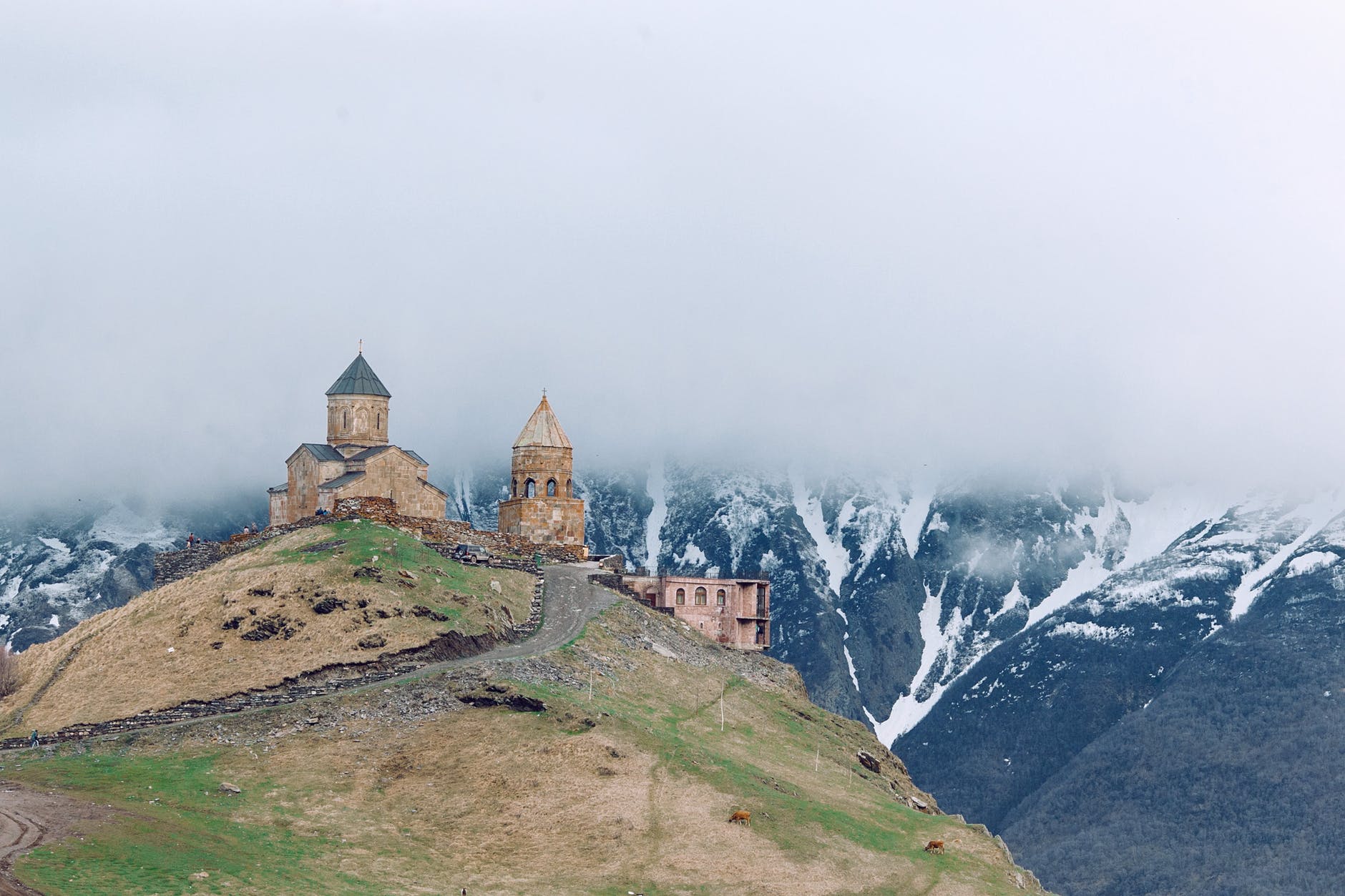
Photo by u0404u0432u0433u0435u043du0456u0439 u0421u0438u043cu043eu043du0435u043du043au043e on Pexels.com
Israel’s story, while very detailed, isn’t unique in history. Instead, it is a case study of what can happen when the people abandon unity and the rule of law for division and corruption. It is what happens when “who we are” becomes more important than “whose” we are; when “we” are more important than anyone else–even God. Israel and Judah continued to be religious right up to the point where they were dragged off to exile. They brought offerings and sacrifices, sang songs, prayed, and memorized scripture. Their leaders assured them that God would protect them and continue to let them prosper as their enemies marched up to the gates of Jerusalem. They had not abandoned the worship of God– they had just added idolatry to it. They worshipped their own prosperity, they worshipped gods and goddesses of the harvest, of war, of wealth, and wisdom. They still thought God was great– but not necessarily Sovereign.
Who or what are we worshipping today? What “new” and additional principles have we added to our own Constitution? To the laws of the land? To our way of being good citizens in our respective countries? To the eternal Word of God? When we hear the phrase, “We the People,” does it bring to mind people who look and live differently than us? Does it bring thoughts of justice and unity? Does it humble us?
King David, the second, and one of the greatest of Israel’s kings wrote: “Know that the Lord, He is God; It is He who has made us, and not we ourselves; We are His people and the sheep of His pasture.” (Psalm 100:3 NKJV) “We the People,” by ourselves, will scatter and fall into destruction, like sheep without a shepherd.
I have a story of a miracle that happened this past week.
This has been a difficult year for my husband and I. We had COVID back in February, and between hospital bills and David being unable to return to work for several weeks (and then being able to return only part-time), our finances have been rather tight. God has been faithful throughout, so it was a lack of faith that had me in a panic at the end of the week. Several of our monthly bills come due on the 10th each month, and we had only enough money in the bank to make a partial payment on one of them. David got paid on Friday (the 10th!), but that was still only enough to pay two bills. The one bill I was unable to pay was our health insurance premium– not a comfortable choice with our continuing health issues! We would be behind again, as I had paid last month’s bill a couple of days late. I had no idea when we would have enough money to make this month’s payment.
So Friday, we got a statement from our health insurance/health share network. I was afraid to open it. It wasn’t our regular monthly statement, and it was on pink paper, which generally means a warning about a past due account, or worse, a cancellation notice. I was sick with worry– so much so that I put the statement aside, afraid to open it and read the worst.
By Saturday night, I was frantic. I couldn’t sleep, wondering and worrying. I “knew” that God was aware of our situation, and that He was in control. I also knew that another big bill would come due on the 15th– with no money in sight. I cried, and pleaded with God to help me trust Him, and to meet our needs.
At that point, I heard a clear prompting from the Holy Spirit to find the statement and open it. How could I say I trusted God when I was too scared to even look at the situation? I found the statement and took it into the kitchen to open it and look, without waking my husband. My hands shook as I unfolded the pink paper.
And as I read, I cried– this time tears of joy and repentance as I read the short note and saw the attached check. Our insurance comes through a health share network. The members of the network pay a base fee each month and can send extra money to help other members in need. Their generosity meant that a check– more than enough to pay our own monthly premium and the other looming bill on the 15th– had arrived just when we most needed it. My fears were turned to praise in an instant as I SAW what God had done, instead of seeing what I dreaded.
God didn’t send us thousands of dollars to meet all our desires. But He sent, through the faithfulness of strangers, enough to meet our needs, and, more importantly, enough to remind us of His power to provide and His grace to meet our spiritual needs.
I know God answers prayer. I know it because the Bible says so. I know it because I have seen it in the lives of others. And I know it from personal experience. I know that, even if that pink notice had NOT been an unexpected miracle, that God was still present, waiting for me to trust His wisdom and timing.
“Faith is the substance of things hoped for; the evidence of things not seen”..(Hebrews 11:1). This weekend, what I imagined I saw through the eyes of doubt was really evidence of God’s great faithfulness. I just needed to open the eyes of faith– and open the evidence that was right before me all along!
Today would have been my paternal grandmother’s 118th birthday. I have many memories of my grandmother, and I wish more of them were pleasant.
I remember dreading time spent at Grandma’s house. She wasn’t a horrible woman, but she was not peaceful or kind or warm. Her house was small and dark, with cobwebs and dust bunnies in the corners and under furniture. There were very few toys, and most of them broken. Grandma always wanted my sister and I to be still and silent, and I always had the feeling that she dreaded our visits as much as we did. I had a cousin who loved it when we came over, because she was just a bit older and an only child. If the weather was nice, Grandma would send us all outside, and my cousin would dare us to climb trees, or jump over a pit or some other physical (usually dirty and dangerous, too) activity. When we came in, Grandma would frown and comment on how dirty and sweaty and noisy and un-ladylike we all were.
Growing up, I didn’t think of Grandma as someone who had ever been young, and noisy, or happy and excitable, or awkward and easily hurt. She seemed to have been perpetually old and cranky and bitter. In hindsight, I can see how circumstances– being the middle child of seven living on a farm; starting her married life living in with a bossy sister-in-law and verbally abusive father-in-law; losing her husband when he was only 50–had been allowed to shape her character in negative ways.
There are some pleasant memories, and I cherish them. Grandma was a good cook. She made wonderful chicken dinners, and a strange candy out of mashed potatoes and peanut butter. She always had cold tea on a hot day. I knew that she loved my dad, and that she could be proud of us, in her own way. I was sorry when she died. Sorry that I hadn’t made more of an effort to know her better. Sorry that she had chosen bitterness, and that I had chosen to stay distant from her.
I write all this, difficult as it is, to say that Grandma–both her good and bad qualities–lives on in my memory as someone I would not choose to be. I don’t want to grow old like her. I don’t want my family members to dread spending time with me while I live, and dig deep to remember something good about me when I’m gone, or justify my bitterness and negativity.
My grandmother claimed to be a woman of faith. And it is not my place to be her judge. But I saw very little evidence of faith in her daily life. I cannot remember ever hearing her pray. She did not attend church. She had a Bible, but I never saw her reading it. Her better qualities, and her walk with Christ were overshadowed by rancor, bitterness, anger, hurt, and pettiness. I do not want that to be my legacy. I want people to know, not just from my words, but in my actions and choices, that God’s love lives in me, brighter and stronger than memories of Grandma.
Shortly before her death, I ended up spending an afternoon with Grandma– just the two of us. She had moved into a small apartment in town, and somehow, it transpired that I had to be in town on Saturday morning for a school event, and no one could pick me up until that evening. We were forced to keep company. It began awkwardly, but as we talked, Grandma opened up about her childhood, her love of music, and more; she asked about my time at school and my love of history. It is the single most pleasant memory I have of her, and I wish there had been more afternoons like it; more afternoons to bond; more afternoons to cherish, rather than dread.
After her death, I learned a couple of things about my grandmother– things I wish I had known earlier. I found an old copy of her high school yearbook, which contained a story she had written. Grandma’s story was full of wonderful details and imaginative characters. She was a writer– and I never knew! I also found out that Grandma not only loved music, she was a singer– an alto, just like me. At some point in her life, she stopped writing, and she stopped singing. I hope that, even if I never saw it or heard it, that she never stopped praying. And I hope that when I’m gone, those who remember me will never have to wonder if I sang, or wrote, or prayed.
It’s growing and harvesting season in our area for many vegetables. Gardens have been spilling over with zucchini, cabbages, carrots, summer squash, onions, green beans, peas, tomatoes, potatoes, sweet corn, and much more. Similarly, the flower gardens are blooming with every color and variety imaginable– bright yellow sunflowers, tiny blue and white blossoms, and red cardinal flowers. I’m amazed at the variety of wonderful things God designed for us.
Did you know there are dozens of different varieties of just carrots?! Orange, yellow, purple, red, white, long and skinny, or short and fat, rounded ends or tapered…and that doesn’t begin to cover varieties of tomatoes, potatoes, squash, etc. Not to mention fruits, nuts, grains, herbs, flowers, fungi, and bark that are edible. Plants of every size, color, shape, taste, and texture. And many plants have other uses– medicine, fibers for clothing and rope, dyes, wood for building or burning as fuel, oils, and so much more.
And that’s just the plant world. There are millions of different varieties of insects in the world, and animals ranging from bats to butterflies, pandas to pigs, geese to giraffes, wolves to whales, ocelots to octopuses, and ponies to platypuses.
God could have provided only grass or leaves for us to eat, instead of giving us such a variety of tastes and textures for our nourishment. He could have made all trees look alike with the same texture of leaves/needles, and wood. He could have made just one kind of fish to swim the lakes and oceans. In the same way, God could have created us to act and look just the same. But God loves variety. He loves for us to discover and celebrate all the uniqueness of His creation– including our neighbors and family and friends.
We have a tendency to look down on or make fun of differences– we say that some people are a little “corny,” while others are just plain “nuts,” or go “against the grain.” But the truth is, God designed each of us to reflect His nature in all Its infinite, glorious variety. We shouldn’t try to be someone else, or belittle someone else for not being just like us. Instead, we should reach out and celebrate those fellow “human beans” who carry a unique imprint of God’s image.
Last week, I attended the funeral of my mom’s cousin. It was a joyful funeral–not only was it a celebration of a life well-lived, and an acknowledgement of God’s grace, but it was a reunion of sorts. Not only were there cousins I hadn’t seen in awhile, but I met people I hadn’t known before, but we were connected through my cousin and through the legacy of a tiny country church and the faithful witness of those who have been blessed there.
Friends and family spoke of my cousin’s generosity, his quiet and steadfast character, his diligence, and his love for Jesus Christ. We sang together, prayed together, and remembered. And some of the stories shared involved a small country church, once pastored by my cousin’s in-laws, and the site of many confessions of faith, prayer meetings, weddings, funerals, evangelistic services, pot-luck fellowships, Bible Schools, Easter services, Christmas programs, and weekly worship services. It was the church where I was introduced to the gospel. It was the church where I met my husband. It still stands, attended by faithful friends. It has, over the years, sent missionaries to Zambia, Nicaragua, Guatemala, Mexico, and the Philippines. It has supported local rescue missions, and local families in need. It is a tiny country church; I can remember when it had hard wooden pews, no fans or air conditioning in the summer, a damp and leaky basement with the occasional toad or salamander on the stairs, and no indoor bathroom.
Bethel Church
After the funeral, Mom and I went to the fellowship meal at another local church. It was beautiful, with a small cafe, a large sanctuary, two sets of bathrooms, a fellowship hall, and all the modern conveniences– located in an old strip mall. A far cry from the church of my youth, but filled with caring and gracious people who were there to provide food and comfort for the family. I don’t know how many local or foreign missions are served by the congregation there, but I suspect it would look similar to the list above.
As we found a seat for the meal, we were joined by a woman I had never met. As we made introductions, we realized two things– we were distantly related, and we had both attended Bethel Church as young children (though separated by a couple of decades). We both had fond memories of that small country church, and the wonderful people there.
Over the next few days, I thought about all the amazing people I have known–family members like my cousin, and this distant cousin I was able to meet; the various families who came and went over the years at Bethel Church and other churches I have attended; missionaries and evangelists, pastors, teachers, and their families; the people I have met through mission trips and conferences–and how many more amazing people I have NEVER met, but whose lives are intertwined because we belong to God’s family.
Someday, we will all be in the same place at the same time–HOME– with our Loving Father! When we all get to Heaven, what a day of rejoicing that will be! Until then, we are scattered by distance and circumstance. We worship in different ways, different languages, in different types of buildings, in small house churches, cathedrals, arenas, and strip malls. We have different outreach opportunities, different social challenges, different budgets, and different worship styles. But we are connected:
4 There is one body and one Spirit—just as you were called to the one hope that belongs to your call— 5 one Lord, one faith, one baptism, 6 one God and Father of all, who is over all and through all and in all.
Ephesians 4:4-6 ESV
Heaven will be incredibly diverse; and uniquely cohesive– brought together by a Love that transcends differences, disparity, and even death. And we will meet those whose lives paralleled ours, even if we never met on earth. We will meet those whose faithfulness brought about the little country church where I grew up, and those who planted churches in malls, and jungles, caves, hills, forests, and “underground.” All our amazingly diverse stories will be woven into one eternal “Hallelujah” as we praise the author of them all.
Funerals can be anguished events. But I was blessed last week to remember God’s incredible faithfulness. One of the verses quoted during the service was Psalm 116:15–“Precious in the sight of the Lord is the death of His saints.” Earlier in the same Psalm, the writer has this to say, “I love the Lord, because He has heard my voice and my supplications. Because He has inclined His ear to me, therefore I will call upon Him as long as I live.” I have seen and experienced God’s faithfulness– through the lives of other saints, through the work of His church, and as He has personally “inclined His ear to me.” May I be faithful to all upon Him for as long as I live. As my cousin was blessed and blessed others, may we hold true to our “One faith” as we await that day when we all get to Heaven!
I’m not talking about the current Queen of England–though it’s my understanding that she must, and does, pray as well as the rest of us. Sometimes we forget that even royalty have very human needs, and their power and authority, while greater than ours, is limited. God is still the ultimate authority. Instead, I’m thinking about the old testament Queen Esther/Hadassah.
Queen Esther’s position was one of great power– and of great peril. Her husband, Ahasueras, the King of Persia, had chosen her from among a host of women to replace the disgraced Queen Vashti. But Ahasueras was not a man of character and integrity. Vashti’s disgrace came after the King had been banqueting and drinking for a solid week, and this after six months of entertaining other heads of state! Ahasueras left the running of his kingdom in the hands of his ministers–even Vashti’s dismissal and Esther’s elevation were at the suggestion of the King’s counselors (though the King made the particular choice of Esther over all the other contenders). Ahasueras was unpredictable, capricious, vindictive, hot-headed, and easily led. He also had “unlimited” power– his word was, literally, law.
Even though Esther had risen to a place of prominence and (limited) power, she still faced danger, in the guise of her husband’s Prime Minister, Haman. Haman’s power was second only to the king, and he intended to use that power to rid himself of his enemy, Mordecai, a Jewish exile, who just happened to be the foster-father and cousin of Queen Esther! Not content with simply having Mordecai executed, Haman suggested to the gullible King Ahasueras that all the Jewish exiles throughout the kingdom should be slaughtered and plundered within a single day.
Queen Esther’s only option was to get the king to reverse his own edict– even if she managed to escape the genocidal plot, her silence would spell the doom of the entire scattered nation of her own people. Queen Esther could not trust in her own limited authority, nor in the beauty that had brought her to the throne. Only God could capture the heart and mind of such a king. Queen Esther began to pray.
And she didn’t just fall on her knees in silent despair She asked others to fast and pray for three days before she would approach the king. And she paved the way with another banquet, during which she flattered both the king and his arrogant prime minister before pleading for her life and the lives of her countrymen.
Esther’s beauty and grace alone were no match for Haman’s treachery. But God knew the end of this story from the beginning. Esther was in grave danger, but she was also in God’s loving and all-powerful hands. Esther is remembered for her bravery and poise in the face of Haman’s diabolical plotting, but also for her dependence on God’s power over her own.
What dangers will we face today? If Queen Esther needed to pray– and ask for prayer– in her situation, how much more should we be willing to do so in ours?!
13 Suppose I speak in the languages of human beings or of angels. If I don’t have love, I am only a loud gong or a noisy cymbal. 2 Suppose I have the gift of prophecy. Suppose I can understand all the secret things of God and know everything about him. And suppose I have enough faith to move mountains. If I don’t have love, I am nothing at all. 3 Suppose I give everything I have to poor people. And suppose I give myself over to a difficult life so I can brag. If I don’t have love, I get nothing at all.
We run a small shop, my husband and I. The other day, a sweet-looking elderly lady came in looking for antique buttons. She was delighted to find a few that would suit her purpose and she came to pay for them. We struck up a conversation, and I was appalled to hear the words coming out of her mouth. It was like listening to an R-rated stand-up comedian–filled with profanities and bigoted remarks–all delivered in quiet, honeyed tones. I was stunned!
Such talk becomes habitual. Most people don’t even notice how often they say offensive words or off-color remarks. In this situation, I simply kept a kind of stony silence– I neither exploded with offense, nor nodded in compliance. She stopped talking and made her exit, knowing she had somehow displeased me, but likely unaware of how she actually sounded. I felt guilty for not having challenged her, but I truly think she was oblivious. She had not been swearing in anger; she had not used obvious slurs, but to me, her language was like a cesspool. My ears felt dirty just listening.
But after I had judged her harshly, I turned the lens on myself. How often do I offend others with my language? I don’t mean with obvious swear words or racist language, but with careless statements or unkind sarcasm? Or with selfish empty boasts about how wonderful my life is or even how good God has been to me? How often do I sound like a clanging, clamoring “noisy cymbal?”
I love to talk, but do I talk with Love? Do I speak words of truth and beauty; blessing and encouragement? Do I speak words of conviction out of love for others, or out of my own contempt? Do I pray with a heart of grieving for those who struggle, and those who are lost? So I assume, as this woman did, that my ugly words will be accepted because I speak them in polite and dulcet tones to someone who looks like me? Or because “everyone else” I know uses such words or spreads such opinions? Do I choose to listen to celebrities, or neighbors, or family members whose speech is filled with hatred and filth? Do I add my nervous laughter when others make careless remarks– worse yet, am I developing bad habits in my own speech or in my social media interactions?
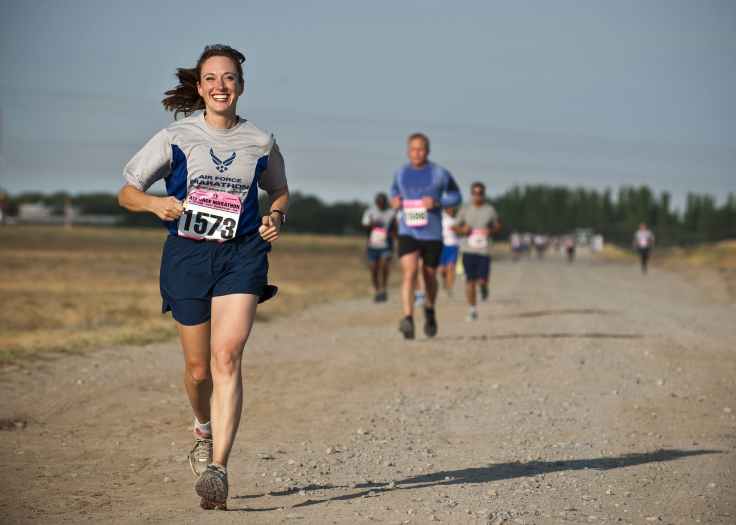
24 Don’t you know that the runners in a stadium all race, but only one receives the prize? Run in such a way to win the prize. 25 Now everyone who competes exercises self-control in everything. They do it to receive a perishable crown, but we an imperishable crown. 26 So I do not run like one who runs aimlessly or box like one beating the air. 27 Instead, I discipline my body and bring it under strict control, so that after preaching to others, I myself will not be disqualified.
1 Corinthians 9:24-27 CSB
I must confess, I haven’t been watching much of the Olympic games currently taking place in Tokyo. Over the years, I’ve spent hours glued to the television, watching the competitions, gobbling up the emotional stories of various athletes and their struggles to qualify and chase their dreams. In fact, I used to get so involved in watching the Olympics, that I would fall behind in my housework, social obligations, and sleep! It can be very inspiring to watch as various athletes from around the world challenge themselves (and their competitors) to go faster, reach farther, and climb higher. And many of the stories and names have stayed with me over the years.
There is nothing wrong with watching sports, and cheering on those who have worked so hard. And I love the pageantry and good will of the Olympic games, where I find myself cheering for athletes and sports I would never know otherwise–those who have overcome tragedy and incredible obstacles just to participate; those whose achievements have set new standards and inspired others to greater heights. But as Christians, we should consider our OWN level of achievement. Not in a competitive sense, and not in the sense of “earning” God’s salvation or approval, but in the sense of growth and development of self-discipline.
We admire athletes, not only for their natural abilities, but for their discipline and spirit. They train for years, undergoing rigorous drills, keeping tight schedules, pushing their bodies– often to the point of injury–to get a little more speed or distance or strength. They prepare for the stress of competition and the pressure of expectation. They learn to leave behind the failures and the victories of yesterday as they get ready for tomorrow. We watch them, and we talk about being inspired. But inspired to do what? I have never developed the level of self-discipline to rise every day at 6 a.m. to run or stretch, let alone train for a race or a swimming meet. I briefly flirted with becoming a gymnast after watching Nadia Comaneci score a perfect 10.0 in the Montreal Olympics of 1976, but I quit after only one weekend!
The Apostle Paul calls us to follow his example and “run the race” as we live for Christ–we are to develop our character and practice spiritual discipline in the same way that an athlete develops her body and practices physical and mental discipline. And our motivation is not a gold medal or a world record that will eventually be broken, but eternal victory over Sin and Death!
I’m ashamed to say that I have not always followed this example. I’ve been an “armchair Olympian”– content to watch others do the hard work, and enjoy the vicarious feeling of victory when they cross the finish line. I cheer for those Christians who are called to foreign missions–I’ve even traveled on “short term” mission trips– but I don’t always see my everyday life as a “mission.” But that’s exactly what it is. Jesus didn’t watch the disciples heal the sick or preach about the Kingdom of God as He sat on the sidelines. And He certainly didn’t spend time analyzing and dissecting the “performances” of the prophets and patriarchs of old. He didn’t even tell the disciples to analyze His miracles or study His sermons. He simply said, “Follow Me!” “Walk with Me.” Christianity is not passively cultivating a feeling of victory in Jesus. It is living victoriously THROUGH Jesus.
Our character won’t be changed by sitting on the couch or in an armchair, watching others do the hard training and running their race. Cheering from the sidelines isn’t going to increase our patience, or develop our faith, or make us more Christlike. Listening to Christian Radio or watching sermons on television won’t automatically translate into a life of integrity and peace. Even reading the Bible, or keeping a prayer journal, or writing a blog about spiritual things won’t teach us humility, gentleness, or love for others. We need to make the effort. And we need to seek the wisdom and discipline of the Holy Spirit– our “coach”– as we follow the example of Christ. It starts with small decisions– daily habits–and learning to be consistent. It also takes a willingness to repent and get back on track when we fail. And we will fail in our own efforts!
We can admire earthly athletes. But we shouldn’t worship them. And we shouldn’t let them become idols that substitute for the kind of work WE need to be doing to learn discipline and faithfulness. I want to reach the finish line, knowing that I’ve run my best race for the King!
My husband and I went blueberry picking earlier this week. The local blueberries are at the peak of their freshness and flavor. Our friends have a farm, complete with a blueberry patch, where you can buy farm fresh blueberries by the box, or you can pick your own and pay by the pound. We went early in the morning, while the dew was still on the berries. The day promised to be hot and muggy, but not until we had finished our labors among the bushes. We saw butterflies and heard the happy chirping of birds nearby; otherwise, it was quiet and we focused on gently rolling dark, sweet berries into our hands and dropping them into our buckets. We picked a little over 12 pounds of berries (enough for several pies!) in a little over an hour–a good harvest at a leisurely pace.
I love visiting the blueberry patch. It brings back wonderful memories of visits with my mom and grandma, my sister, my husband, and even my oldest nephews. I love the feel of the berries as I gently pull them off the bush and as they roll into the bucket. I love the feel of the bucket pulling as it fills with fruit. I love measuring out the berries for pies or cobbler or just making sure we have several quarts frozen for later use.
I’ve been picking blueberries for years. I’ve picked from several different farms in several different locations all around the area. Some years, the berries are huge. Other years, they are small and tend toward sour (still good for pies and baked goods, but not as tasty to eat by the handfull!) In all those years, I took for granted the wonderful freedom of being able to enjoy this activity. This year was different.
There were two reasons for the difference. First, this was the year after COVID kept many people from enjoying “normal” activities– even outdoors–throughout most of the world. Even the ability to pick berries was limited by social distancing mandates and fears of catching COVID from other pickers or from touching the same bucket or being in the same weighing area as someone else. This year, I knew what it was NOT to be able to do something I considered to routine.
Secondly, we’ve been talking about freedom lately at church– the freedom we enjoy as citizens of America, but more importantly, the Freedom we enjoy as citizens of God’s Kingdom. As citizens of this country, our friends have the freedom to own their farm and grow whatever crops they choose. They also have the freedom and the opportunity to sell their produce as they see fit– commercially to stores or privately at a farm stand, or as U-Pick. They have the freedom to set their own prices and hours. And we have the freedom to choose from many such farms to purchase delicious, fresh fruit–and even to select the fruit ourselves! I had always accepted this as a “given.” But many people have never had this incredible opportunity, and I am so thankful for the many years I have enjoyed it!
That’s an amazing thing– and I have spent a lifetime taking it for granted. But even more amazing is the Freedom I have through Christ. I am free to choose my attitude and behavior each day. I am empowered by the Holy Spirit to make the kind of choices I would not make in my own selfish mindset. I am free to live without the painful load of guilt and regret over the past– not because it didn’t happen or doesn’t have consequences, but because it no longer defines who I am or who I can be. Just like picking the plump, juicy blueberries from the bush, I can harvest the Fruit of the Spirit; I can have a life filled with Love, Joy, Peace, Patience, Kindness, Goodness, Faithfulness, Gentleness, and Self-control! (Galatians 5:22-23) Just like being able to store up delicious fruit for the coming months, I can do what is required to please God– to act justly, love mercy, and to walk humbly with (my) God (Micah 6:8 paraphrased). Just like choosing which farm I will visit, I can seek out opportunities to reach out to people near and far with the incredible Gospel of Christ– in word AND in action.
Who knew blueberries could be so powerful and so liberating! Thank you, Father, for blueberries. And thank you for the blessing of Freedom through Jesus Christ!






































 Pursuing Prayer