We Didn’t Know Who You Were…

Jesus was born in obscurity– yet he was also born during a Census year…

 And it came to pass in those days that a decree went out from Caesar Augustus that all the world should be registered. This census first took place while Quirinius was governing Syria. So all went to be registered, everyone to his own city. Joseph also went up from Galilee, out of the city of Nazareth, into Judea, to the city of David, which is called Bethlehem, because he was of the house and lineage of David, to be registered with Mary, his betrothed wife, who was with child. So it was, that while they were there, the days were completed for her to be delivered. And she brought forth her firstborn Son, and wrapped Him in swaddling cloths, and laid Him in a manger, because there was no room for them in the inn.

Luke 2:1-7 (NKJV via biblegateway.com)
Photo by TheWonderOfLife on Pexels.com

This is a Census year in the U.S. (something that has largely been forgotten in the wake of the COVID pandemic.) I actually worked for the Census Bureau for a few weeks this year, doing follow-up interviews for addresses which had not responded for various reasons. Census taking is much different now than it was in Jesus’ day. I had a script, and a smart phone, and several different forms to fill out or hand out to explain what we were doing–one form contained information in at least 14 different languages, and all of them had phone numbers and web addresses where people could “respond” electronically without ever leaving the comfort of their living room, let alone traveling over dangerous hills and trying to find room at crowded inns. I was the one who had to travel– mostly around my small town and within a 20-mile radius. One interview required me to travel 100 miles; another required me to utilize my ability to speak and understand Spanish. Otherwise, the interviews were simple and straightforward. Except when they weren’t.

Photo by Vera Arsic on Pexels.com

“Everyone Counts,” the Census Bureau told us, and I did my best to get names and ages for everyone at every address I visited. But many of the addresses were abandoned buildings– even demolished. Others were summer homes or vacation rentals–I had to be careful not to count the same people twice! Often, I could tell that people were living at the residence, but either they weren’t home at that time or they would not come to the door. Some houses required several attempts before I got any response, and it wasn’t always positive or cooperative.

Photo by David Garrison on Pexels.com

I imagine the scene in Bethlehem, though lacking the technology and ease of travel of our modern age, wasn’t so very different. There were people who wanted to do their civic duty; those who were annoyed at the inconvenience and general bureaucratic chaos; those who hated the Roman Government and everything it represented; and some who just wanted to get it all over with and go back to “normal life.”

We know that Joseph was called up to go to Bethlehem because is was his ancestral home. And we know that Joseph would have been counted as the head of the household. But is it possible that Jesus was counted in that census? That he was numbered among his people and with his family? That the God of all creation became a simple hash mark among thousands of others that year? “Jesus, son of Joseph of Nazareth.” “Infant son.” “Male child.” Jesus was counted. But He was also lost in the shuffle; discounted and ignored.

Photo by Jeswin Thomas on Pexels.com

10 He was in the world, and the world was made by him, and the world knew him not. 11 He came unto his own, and his own received him not.

John 1:10-11 (KJV via biblegateway.com)

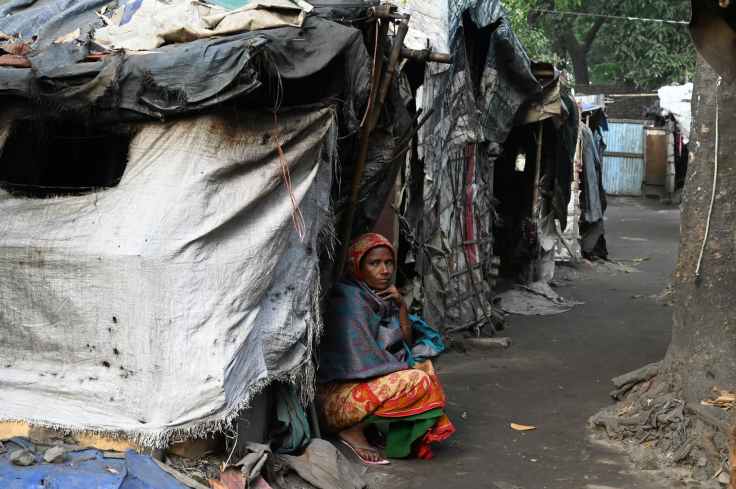
This season, it’s easy to feel left out, discounted, passed over. This year, especially, it can be lonely and discouraging as we look out on the world from lockdown, or look at faces covered by masks, unknown or unrecognizable. It’s easy to feel that no one sees us. Rest assured, Jesus knows what it is like to get lost in the numbers. He knows what it is to be discounted and misunderstood, rejected, and scorned.

Photo by Ken Ozuna on Pexels.com

And He knows exactly who you are and who I am– better than we know ourselves! We count! Not because of who we are, but because He is the creator and author of all life. No matter where you are, no matter who has rejected you in the past, no matter how dark and grim things look– God sees you; God loves you; God has taken you into His count. He doesn’t need a census count to find you, and you can’t get “lost” or hide in the crowd.

Photo by Johan De Jager on Pexels.com

He knows you– Do you know Him?

The Long and Winding Road

Joseph and Mary traveled dark and dangerous roads to reach Bethlehem before the birth of the Baby Jesus. The wise men made a long journey to see the newborn king. The entire nation of Israel spent more than 40 years wandering in the wilderness. Abraham, Jacob, Jonah, the Apostle Paul…there are many tales in the Bible of long journeys to unknown destinations and unknown outcomes.

Photo by rawpixel.com on Pexels.com

Traveling can be exciting and adventurous, but it can also be filled with detours, setbacks, and hardships. Traveling means being away from our comfort zone, our “safe” place– even if our “safe” place isn’t really safe. Travel often means going into the unknown, especially if we travel alone or travel against our own will. Where does this road lead? Who will I meet along the way? Where will I stay at night? Will I get lost? Will I get delayed? What if I get sick or hurt or attacked? Will I find my way back home? Can I feel safe in a new home, among unknown people and circumstances?

Photo by Andrea Piacquadio on Pexels.com

Jesus was born “away from home.” The first people to greet him were not grandparents or giddy relatives or neighbors, but shepherds– unnamed in scripture, unknown to his parents. In fact, the Bible doesn’t say much about Jesus being close to an extended family– his own small family always seemed to be on the move! Later, Joseph was told to take Mary and the child to Egypt; another long and unexpected journey, another long and winding road.

As an adult, Jesus was also “on the road” for much of his ministry. Long dusty roads leading to Galilee, or Jerusalem, Jericho, or Bethany.

Photo by Kamaji Ogino on Pexels.com

At times, it can seem like our “roads” in life are long, winding, dusty paths leading to strange new places– lonely, rambling trails or busy superhighways taking us where we don’t always want to go. But we don’t need to fear traveling– even if we have to walk through the “valley of the shadow of death,” God is always with us. Just as He was with Mary and Joseph on the long road to Bethlehem, where there was no room for them in the inn. Just as He was with Jesus on the lonely path in the Garden of Gethsemane. Just as He was with Jonah in the belly of the big fish!

As we await the Advent of the Christ Child this year, it is likely that most of us have been on a long and winding road. Though many of us have been prevented from physical travel to foreign lands, we’ve traveled on an emotionally and even spiritually exhausting road in 2020. Chaos, corruption, COVID, elections, “executive orders”, economic collapse, lock-downs, lawlessness, and loneliness–we seem to have traveled a lot of miles, and most of them have been perilous and unfamiliar. But God has a plan, and a destination. The journey may not make sense right now; it is not the journey we would have planned; not the journey we would have chosen. But let us follow it to Bethlehem– to the Manger– to the Cross– and finally, HOME!

O, Come!

O, Come, All Ye Faithful. O, Come, O, Come, Emmanuel. Come, let us adore Him. Come…

28 Come to Me, all you who labor and are heavy laden, and I will give you rest. 29 Take My yoke upon you and learn from Me, for I am gentle and lowly in heart, and you will find rest for your souls. 30 For My yoke is easy and My burden is light.”

Matthew 11:28-30 (NKJV via biblegateway.com)
Photo by Elias Tigiser on Pexels.com

Christmas is coming…Christmas is not only coming in the sense that we anticipate the season…Christmas is about “coming.” About Jesus coming into a world He had created; coming to rescue the souls of men and women; asking us to come to Him in return to receive from Him.

Photo by August de Richelieu on Pexels.com

“Come.” It can be a command; an imperative. But it can also be a plea. The nation of Israel was pleading with God to come to their rescue. And He came. Not as they expected. Not to rescue them from Roman occupation by military might. He came to live among them, to share their burdens, to rescue them from the darkness of sin and death.

“Come to me…” Jesus asks us to come, to follow Him. “Come, all ye faithful..” God, who has the power and authority to demand our obedience, our worship, instead asks for it. He pleads with us to come…to choose Him. To receive His gift of salvation. To share our lives with Him.

Photo by August de Richelieu on Pexels.com

“Lord, forgive me for the times when I have come to you reluctantly, half-heartedly, and out of a sense of duty. You came willingly, sacrificially, and joyfully. I want to do the same today.”

O, Come, All Ye Faithful…Come let us Adore Him!

Holy Infant, So Tender and Mild

It is one of the most popular Christmas Carols– we sing it every year: “Silent Night, Holy Night; All is calm, all is bright; ‘Round yon virgin mother and child– Holy infant, so tender and mild; Sleep in Heavenly Peace– Sleep in Heavenly Peace.”

Photo by Blue Ox Studio on Pexels.com

Each year, we celebrate the coming of Christ– “Son of God; Love’s Pure Light.” God coming to earth to live among His creation– Emmanuel, God with us. And it becomes familiar, and gets mixed in with stories of Santa Claus and gift-giving, decorated trees and flying reindeer.

Photo by cottonbro on Pexels.com

But stop a minute to reconsider the amazing juxtaposition–the very Word of creation became a speechless baby. The ruler of galaxies came to earth naked and needy, hungry and helpless. Holy Infant–fully God and fully human in His frailty.

Photo by Johannes Plenio on Pexels.com

God could have come as a ruler of might; He could have stepped out of Heaven in a blinding flash of light, spoken with a voice of thunder, and made the mountains tremble. He could have filled the skies and scattered all the stars and clouds. He could have come in all His Majesty– and someday, that’s how He will return.

Photo by Dominika Roseclay on Pexels.com

But on that Silent, Holy Night, He came in humility. He came in Heavenly Peace.

What an awesome enigma–the One who would break the power of death came in the weakness of an ordinary birth. The Giver of Life choosing to reside in the womb of an ordinary young woman, gasping for air as He took His first breath as a human. The omniscient one having to learn to sit up, and eat, to speak and to hold His mother’s hand; to stand up and walk.

God SO LOVED us that He went to extravagant lengths to meet us in our humanness. He didn’t need to become human for His sake– He did it for us; that WE could know Him more intimately; so that when we talk to Him, we are talking to one who has known hunger, and pain, and heartbreak, and loss– as one of us.

Photo by nappy on Pexels.com

It is terrifyingly easy to miss the significance of the incarnation after the fact. As we remember the Advent season, let us reflect on the world before that Holy birth.. a world so fallen that no one could imagine the face of God; no one could imagine walking with Him or sharing a meal or a smile with Him; no one had ever felt His touch on their cheek or heard Him laugh. No one could have imagined that God would bleed, or cry out in agony, or taste death. But He came. He lived and walked among us. He died. And He paid the penalty for your sins and mine, so that we can share life with Him– eternally.

Who Forgives All Your Sins…

Praise the Lord, my soul;

    all my inmost being, praise his holy name.

Praise the Lord, my soul,

    and forget not all his benefits—

who forgives all your sins

    and heals all your diseases,

who redeems your life from the pit

    and crowns you with love and compassion,

who satisfies your desires with good things

    so that your youth is renewed like the eagle’s.

Psalm 103:1-5 (NIV) via biblegateway.com

https://www.biblegateway.com/passage/?search=Psalm+103&version=NIV

Photo by omar alnahi on Pexels.com

Sin isn’t a popular topic of conversation. Most of us would rather talk of victorious living; of accomplishments, righteous thoughts, life choices that “worked out” to our benefit. If we must talk of wrongs, we prefer to speak of “shortcomings,” or circumstances “forcing” us to make bad choices. We point fingers at those who could have/should have helped us, or warned us, or given us better guidance. We may even acknowledge shame or guilt for choices we’ve made, and speak of atonement, or lessons learned.

Photo by Reafon Gates on Pexels.com

But God has provided for forgiveness–not a denial of our guilt; not a “free pass” for our actions–something beyond our capacity to give or “earn.” God alone is capable of perfect judgment. He never makes excuses; nor does he accept them. He knows every detail of every choice you’ve ever made–the motivations, the circumstances, the alternatives–and He has the power to pronounce eternal judgment AND eternal forgiveness.

Photo by RF._.studio on Pexels.com

We have a tendency to give partial forgiveness, because we do not have God’s perfect knowledge or judgment. We get trapped in a cycle of guilt and shame, or blame and bitterness, because we want to see a perfect justice that is often missing in our fallen world. We tend to forget the benefits of God, instead focusing on the deficiencies of ourselves and our neighbors.

Photo by Andrea Piacquadio on Pexels.com

God forgives ALL our sins–but we must seek that forgiveness and accept it! God heals all our diseases– some of them here and now; others in eternity. God redeems our lives from Hell–something we could never do on our own.
God crowns us (read that again!) with love and compassion. He pours His love all over us– lavishly, unreservedly, undeservedly–and raises us up to eternal life.

Photo by Wildan Zainul Faki on Pexels.com

Why do we fear to confess our sins to such a Loving God? It’s not as though He cannot see or know them. It’s not as though He is powerless or unwilling to forgive them. He wants to remove our sins “as far as the east is from the west” (v. 12) And only He can do this. When we deny or ignore our sins, they are not removed, only suppressed. When we wallow in our guilt and shame, our sin is constantly present in our mind. Only God’s perfect forgiveness can free us to make courageous and compassionate choices, confident in His love and power to heal and guide us in His ways.

Photo by Pixabay on Pexels.com

Sin is ugly. And its power is too great for us to overcome on our own. Its consequences are deadly, and far-reaching– too great for us to make atonement in a lifetime. But its power is broken in the light of Christ’s crucifixion and resurrection. The sentence is commuted. We are reconciled to the God of Holy, Righteous Perfection. The consequences now belong to Christ yoked with us, working in and through us. We cannot perfectly atone for our actions; but we can give the burden of atonement to the One who can– and the One who can give us His power to bring healing.

Photo by Edu Carvalho on Pexels.com

Praise the Lord, O my Soul!

Praying in Perspective

Have you ever seen a photo collage–a large picture made up of hundreds or thousands of tiny photos? If you stand back, you can see a large picture– a face, or a landscape, perhaps–but when you get closer, you can see the many smaller photos that make up the details.

Photo by Brett Sayles on Pexels.com

Prayer is like that. Each of us is a tiny details in the grander scope of the world’s population. Millions of people are praying at any given time on any given day. And we don’t see all of the others– sometimes we don’t see or hear or think of anyone else as we pray. But God sees and hears them all–moreover, God weaves and blends our prayers into something amazingly more than meets our awareness. Prayers of thanksgiving add a dash of bright color; prayers of anguish sound a minor tone; prayers of confession rise like incense, and prayers of worship wrap around all the colors and sounds and scents.

Photo by Pixabay on Pexels.com

Yesterday, I was feeling very depressed and small. It was difficult to pray. My perspective was off, and I could only see my own problems and emotions. Prayer helped change my perspective. As I spoke to God; as I thought about His power and omniscience, I began to see that I WAS small–but my God is enormous! And while He sees the entire picture– all places and times and peoples–He also looks on every tiny detail. He knows my name; He knows my every thought. He knows my needs and my desires; He knows my weaknesses and my unique gifts– gifts He has given! Even if no one else noticed, God would be able to pick out the smallest detail in His amazing creation, and bring it into perfect focus.

See Isaiah 55

What’s Next?

As I write this, votes are being counted in our Presidential/General Election. I don’t know what the final outcome will be, but it looks like the election will be close; it may even be contested for days or weeks to come.

Photo by cottonbro on Pexels.com

There are consequences to this election– consequences for our legal rights and freedoms– consequences for churches and Christians businesses and services, and the individual free exercise of speech and religion. And the consequences reach beyond just my city or state or even the U.S. This election may impact how (or if) I can continue to write about prayer and Christian living. It may impact how my local church continues to operate. It will impact how mission organizations and religious services continue.

But there are several things that will not change as a result of any election: God is still sovereign; the Bible is still true; I will still be a follower of Christ– committed to living for Him and sharing His Gospel.

Photo by Pixabay on Pexels.com

In that sense, “what’s next” is exactly the same today as it was yesterday or last year– I am to trust in God’s plan; God’s provision; God’s timing. And I am to obey His word. I am to “do justice, love mercy, and walk humbly with my God” (see Micah 6:8); I am to “love the Lord my God with all my heart, mind, and soul, and my neighbor as myself” (see Matthew 22:37-39).

Photo by August de Richelieu on Pexels.com

Yesterday, I did my civic duty; I voted my conscience. Today and going forward, I will do my civic duties– I will pay taxes, I will obey laws and guidelines that do not contradict God’s commands. And I will work to make a positive difference in my community and my country. I may have to make changes and adjustments in the way I serve and work and interact with other people. But “what’s next” in my Christian walk doesn’t depend on what happened yesterday, or what will happen tomorrow. My eyes have to be focused, not on any political race, or its immediate consequences, but on the race described by the Apostle Paul in his letter to the Philippians:

12 Not that I have already obtained all this, or have already arrived at my goal, but I press on to take hold of that for which Christ Jesus took hold of me. 13 Brothers and sisters, I do not consider myself yet to have taken hold of it. But one thing I do: Forgetting what is behind and straining toward what is ahead, 14 I press on toward the goal to win the prize for which God has called me heavenward in Christ Jesus...17 Join together in following my example, brothers and sisters, and just as you have us as a model, keep your eyes on those who live as we do. 18 For, as I have often told you before and now tell you again even with tears, many live as enemies of the cross of Christ. 19 Their destiny is destruction, their god is their stomach, and their glory is in their shame. Their mind is set on earthly things. 20 But our citizenship is in heaven. And we eagerly await a Savior from there, the Lord Jesus Christ, 21 who, by the power that enables him to bring everything under his control, will transform our lowly bodies so that they will be like his glorious body.

–Philippians 3:12-14; 17-21 (NIV via biblegateway.com)

Of course, I hope that outcome of this election will honor God and preserve the freedoms I hold dear. But God’s purposes and plans may involve hardship, persecution, and judgment on this nation. I must still run my race, and rejoice in my Heavenly citizenship– one that doesn’t change with election cycles or depend on politicians.

God Doesn’t Vote

Tomorrow is election day in America. People have been “early” voting for weeks; many will be voting tomorrow, myself included. And then we will watch and wait.

Photo by Element5 Digital on Pexels.com

Pundits and professional pollsters have been trying to predict the outcome for months. They will go at it for the next several days (if not longer), trying to analyze, synthesize, and dissect the voting patterns in various regions to explain why this candidate won, that one lost, or why this race is “too close to call.”

Photo by Element5 Digital on Pexels.com

Meanwhile, many Christians will be doing the same thing in their living rooms, Bible study groups, and neighborhoods. Is America under God’s blessing or His curse? Is this election God’s judgment, or a second chance?

Photo by Markus Spiske on Pexels.com

But God doesn’t “vote.” God is sovereign; He can direct the outcome of elections. He can raise up rulers and bring them down again. He can raise up a nation from nothing or tear down empires. But God doesn’t act on our whims or even on our fervent beliefs about politics, economics, social action, or social issues. He acts on HIS plans and in His wisdom. He asks us not to vote for Him, but to trust and obey Him!

Photo by Magda Ehlers on Pexels.com

I will vote for candidates and issues based on prayer, research, and hopefully, with God’s wisdom. But my vote is not the same as my everyday witness of how God is working in His world. I can vote for the “right” candidates or principles and still disobey God’s commandment to “love my neighbor as myself.” I can vote for the “wrong” candidate, because I am focused on what she says, and not how she treats the people around her, or how she honors God by her actions. I can not vote at all, and still work to spread the good news of the Gospel.

Photo by Toni ph on Pexels.com

God wants His people to live “in the world.” He wants us to be good citizens, interacting with those around us, even getting involved in causes, movements and social issues. But He also wants us to seek His Kingdom first and foremost (Matthew 6:33). Whether we live in a nation that has free elections; whether we vote red or blue (or purple or green); whether we take an active role in politics or sit on the sidelines– we should act in a manner that honors Him above our own ambitions or preferences. And if our candidate(s) should lose; if our nation adopts policies that continue to devalue life, denigrate families, and dishonor God– that does not give us the right to seek violence, retribution, endless recounts, or haughty isolation. We must continue to DO the right thing, in the right way, for the right reasons. We must continue to pray for our enemies, and bless those who curse us. We must continue to tell the truth– IN LOVE–and be ready to joyfully explain the hope that is in us (1 Peter 3:15).

Photo by cottonbro on Pexels.com

God doesn’t vote. He does love ALL those who do!

Holy Terror

It’s the end of October, and tomorrow will be Halloween. Stores and houses around the neighborhood are decorated with frightening figures of skeletons, witches, ghosts, and gravestones. Some of my friends love this time of year, and they look forward to binge-watching movies about zombies or vampires– anything scary, spooky, or terrifying.

Photo by Toni Cuenca on Pexels.com

I don’t like Halloween. I don’t like scary movies. But I believe in the value of fright. Life is filled with things–natural and supernatural– that fill us with real fear. And that is as it must be in a fallen world. Sin and death, evil and darkness, fires, earthquakes, violence and plague–they are real and should produce both fear and caution. The Bible is not silent or dismissive of such things. God’s laws warn against evil spirits, calling on the dead, consulting with witches, fortune telling, even giving in to anger, envy, and hatred. God’s laws also provide for hygienic practices to ward off disease and plague.

Photo by Mike on Pexels.com

And yet, the Bible also gives hundreds of warnings against giving in to fear and letting it control our lives. We are to be cautious and wise where fear is concerned. Over all, we are to remember that God is bigger and more powerful than our fears. God can calm storms, put out fires, even conquer disease and death! There is no power, no force, no terror, that can overwhelm God, or touch those under His protection.

Photo by Pixabay on Pexels.com

Terror holds no power in God’s presence. Therefore, if we know God, we can experience no true terror. But where there is no God, terror will reign. It’s like the saying: “No God; No Peace–Know God; Know Peace”. Terror comes with darkness, with chaos, with lawlessness and loneliness.

Photo by Skitterphoto on Pexels.com

There is only one other kind of terror– a Holy Terror. We can be terrified by the awesome Holiness of God. It is altogether more powerful and alien than anything we can even imagine. Even for those who know God, there is the knowledge that God is GOD, and we are not worthy to look on His face or enter into His presence on our own. Normally, when we think of terror, we think of things that are very unholy–evil things; supernatural forces of darkness. Yet Holiness can also inspire terror because it causes us to see our own unworthiness; our own sin and failure. I am reminded of the “face-melt” scene from Raiders of the Lost Ark– Nazis, who have been fearlessly and relentlessly pursuing the Ark of the Covenant, believing that it holds supernatural powers they can use to gain power over life and death, are suddenly and horrifically destroyed when they gaze inside–as they come in contact with the very Glory of God, their terror is absolute, and they are destroyed by its presence.

Photo by samer daboul on Pexels.com

This season, may we celebrate that God, in His awesome and mighty power, constantly reminds us that we can “Know” Him without fear; instead of running, cowering, or melting, we can come to Him with confidence and joy! And in doing so, we can face any other terror, knowing that God is with us, and for us, and even filling us with His peace! We need not be filled with Holy Terror– instead, we can be filled with the Holy Spirit!

Photo by Pixabay on Pexels.com

An Empty Cup

Sometimes, I come to God full– full of joy, full of worry, full of praise, full of confession. But sometimes, I come to God feeling very empty. I am worn out, tired, depressed, inadequate, and lacking. My cup is very empty.

Photo by Madison Inouye on Pexels.com

The Bible is filled with images of cups and pouring out– have you ever noticed? “My cup runneth over” (Psalm 23:5) “Let this cup pass from me.” (Matthew 26:39) “Take this cup..” (Luke 22:19-20) “I am being poured out like a drink offering..” (Philippians 2:17) (and many others).

Photo by Linnea Herner on Pexels.com

My husband and I went out to lunch recently. The hostess took our drink orders while we looked at the menu. By the time we were ready to order our food, there were glasses of ice water, lemonade, and hot coffee already at our table. Our waitress came over often to check on our food and drink. Before I had finished my lemonade, there was another glass waiting! Before David had finished his coffee, there was more– fresh and piping hot! We came into the restaurant hungry and thirsty– we left refreshed and full. Imagine if our hostess had brought us cups with only a small amount of water or drink, and refused to give us more. We would be disappointed, even surprised. And often, the hostess would come around to a table to find that no one wanted or needed a refill. There was plenty of water to satisfy thirst, yet some people drank sparingly, or left their drink nearly untouched. We take for granted that there will be plenty to drink at the restaurant, yet we often come to God expecting only a little of His rich blessings.

Photo by sergio omassi on Pexels.com

When we come to God empty, He is always ready to fill our cup to overflowing. God’s blessings are abundant. He fills us to overflowing, so the blessings can be shared. Jesus said to the woman at the well, “Everyone who drinks this water will be thirsty again, but whoever drinks the water I give them will never thirst. Indeed, the water I give them will become in them a spring of water welling up to eternal life.” (John 4:13-14 NIV via biblegateway.com)

Photo by Tuu1ea5n Kiu1ec7t Jr. on Pexels.com

I feel guilty when I come to God feeling empty and needy. I don’t deserve a full cup of God’s blessing. But I must come willing to accept, not what I think I deserve, but what God is pleased to give. Even if I feel empty, I may be ignoring a cup filled with pride, shame, guilt, or self-dependence. God cannot fill a cup already full of such things. But God is pleased to fill to overflowing the cup that is ready to receive Him! And He is not just filling my cup to overflowing– He is filling my cup so that I have something to pour out to others!

Photo by Cameron Rainey on Pexels.com

Sometimes, my cup seems empty because I have been pouring myself out. I can do this in good ways or bad, for the right reasons or in self-abasing ways. But Jesus poured Himself out for others–figuratively and even literally, spilling His blood for our atonement. We are to share our lives and resources with others– to pour out of our abundance. Sometimes this leaves us feeling empty–temporarily. God does not mean for us to live in emptiness, but He also doesn’t mean for us to hoard His blessings. The more we pour out, the more there is to refill our cup!

Photo by NIKOLAY OSMACHKO on Pexels.com

But there is another blessing– the blessing of another empty cup. There is a cup of wrath that should be ours– a cup filled with bitterness, regret, punishment, and pain–a cup of eternal thirst for justice and salvation–one that Jesus willingly drank for us. The cup He extends is the cup of blessing and joy that was His from the foundation of the world; a cup we could never have tasted but for His sacrifice.

Before us are two cups– one that can be forever filled to overflowing, and one that can remain empty of the bitter dregs of sin.

Photo by Karolina Grabowska on Pexels.com

Blog at WordPress.com.

Up ↑