20/20 Vision, Blind Faith, and Prayer

As we approach the arrival of a new year, there is a lot of talk about vision–20/20 vision, that is. For the past few years, I’ve heard of companies, community groups, even churches using the year 2020 as a target date for planning, and using the phrase “2020 Vision” in their mission statements, fund-raising drives, and talking points.

Photo by Christina Morillo on Pexels.com

The phrase comes from 20/20 vision, considered clear or “good” vision. Someone with 20/20 vision has no need of corrective lenses or surgery to improve their reading, or correct their sight. Figuratively, 20/20 vision suggests good planning or foresight. So it is desirable to plan with clear “vision” and forethought, rather than jumping into a project, or from one unmet goal to another.

But, while it’s clever to borrow the idea of 20/20 vision and tie it to the coming year, it doesn’t guarantee that our future plans will be wise or successful just because the calendar says 2020. In the same way, just because we have 20/20 vision, it doesn’t mean that we can see everything around us perfectly. We will see clearly those things on which we focus– those things that are right in front of us and not obstructed. Even with “good” vision, we cannot see things that are hidden from sight or things that are outside our scope of vision.

Photo by malcolm garret on Pexels.com

Even the old phrase, “Hindsight is 20/20 vision,” doesn’t mean that we will always gain clarity with time. Sometimes we understand past experiences in a different light after time has passed. But sometimes, we are still left wondering and asking about events from our past; no wiser or less damaged by setbacks or failures, and no better prepared for future trials and pains.

If vision, even good vision and planning, is no guarantee of future success, perhaps it would be better to trust to “blind faith.” After all, doesn’t the Bible say, “walk by faith, not by sight?” Except the Bible doesn’t exactly say that. Instead it says:

So we are always confident, knowing that while we are at home in the body we are absent from the Lord. For we walk by faith, not by sight. We are confident, yes, well pleased rather to be absent from the body and to be present with the Lord.

2 Corinthians 5:6-8 (NKJV via http://www.biblegateway.com)

This verse often gets taken out of context and twisted to suggest that “faith” is opposed to “sight,” and therefore faith must be “blind” to reason, experience, or reality. Many good articles and sermons have been written to clarify the concept (see one example here:
https://www.biblestudytools.com/blogs/theologically-driven/walk-by-faith-a-misused-verse.html). Faith is not blind–or should not be blind. Rather, it utilizes the ability and practice of seeing what is hidden or indistinct in the present. If our faith is based on empty myth, rumor, conjecture, or cloud dreams, it is not faith at all–it is nothing more than a mirage. Faith is seeing beyond the obvious, the blatantly visible, and trusting more than just what we can immediately see. We don’t walk through life ignoring reality, or dancing across a superhighway full of speeding cars. But we see our circumstances as having hidden elements; our lives have unseen depths, and are lived on both physical and metaphysical spheres. There is more to life than meets the eye– and while faith may not always show us a clear picture of what lies beyond our sight, it causes us to know that something beyond our “20/20 vision” exists and matters.

Photo by Daniel Spase on Pexels.com

The great old hymn, “It Is Well With My Soul,” speaks to this as well. No matter what our circumstances look like, we can have confidence that “It is well, it is well, with my soul!” “And Lord, haste the day when my faith shall be sight..” We look forward, even as we look around, and look back to the finished work of Jesus our Savior. We see the present, but we walk in the knowledge that there is more than what our eyes behold.

Faith doesn’t negate the need to use our senses and common sense to navigate life. And using planning and vision for the future doesn’t negate the need for faith. Rather, they work together. And they work together best in prayer.

When we pray, we are exercising our faith– speaking to the One we do not see, though we know Him and trust Him. And we bring to Him our plans and visions and hopes and dreams. We lay them in His Hands, trusting that where our vision is “good,” He will empower and bless us; where our own vision is lacking, His Spirit will help us to refocus and see enough of what lies beyond to keep walking forward.

Photo by Harrison Haines on Pexels.com

As we walk into a new year, may we have more than just 2020 vision– may we have faith and hope in the One who has perfect vision!

Merry Christmas!

I want to wish everyone a very Meaningful and Merry Christmas. May you find joy and peace in the gift of our Savior, Jesus the Christ, Messiah, God With Us!

Gifting “Outside the Box”

This year has been a difficult one for my family financially. With Christmas coming, there is no money for expensive (or inexpensive) gifts– barely any money for bills. We always like to say that it’s not about the gift, and that “it’s the thought that counts,” but we don’t enjoy putting those words to the test. Like it or not, we have a tendency to equate Christmas with shiny decorations and festive packages– especially for the kids and grandkids.

Photo by Pixabay on Pexels.com

Even the first Christmas featured gifts from the Wise Men of the East– Gold, Frankincense, and Myrrh. But what gifts did the shepherds bring? The Angel hosts? Jesus’s own parents? What they brought– love, worship, Good News of Great Joy– was priceless and just as precious as the physical gifts of the Wise Men.

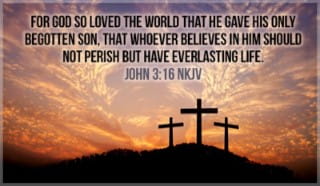
This Christmas, whatever gifts you choose to give; whatever gestures or actions you perform–let them be done with joy and with a full heart. After all, the REAL gift of Christmas wasn’t wrapped in a box. It was wrapped in flesh and blood, sacrifice and suffering. “For God so Loved the world, that He gave His only Begotten Son…” (John 3:16)

Our gifts matter– small gifts, fancy gifts, hugs, smiles, time spent listening, words of encouragement, even just sitting in silence with someone who is in pain.

Photo by Pixabay on Pexels.com

One of the greatest gifts we can give this season and in the coming year is the gift of prayer. Try this challenge for 2020. Choose a person (not necessarily someone in your family or close circle of friends) and pray for them every day for one month–if you know them well enough, ask them for specific ways that you can pray for them. Write their name and/or their requests somewhere (a calendar or datebook, index card..) where you will see it. At the end of the month, send the person a card or note or text message, or give them a call– let them know you’ve been thinking of them every day and praying for them.

Photo by Matheus Bertelli on Pexels.com

A few warnings:

  • DO NOT use this activity as a form of intimidation, “virtue-signaling”, or with any selfish motive. Be careful not to make this about the other person’s “neediness”– their inability or unwillingness to talk to God on their own; your superior righteousness or religiosity. Pray for their health, their well-being, and any needs that THEY express. Remember, this is a gift, not an intervention. If you are not praying that way, don’t pretend you are actually giving a gift.
  • Be ready to commit. You may even want to begin with one week, instead of a month. But don’t begin until you are ready to finish well. That doesn’t mean if you miss one day you’ve failed. But it does mean that you need to have an intention and a plan.
  • Follow through! It’s one kind of gift to offer to pray– but it’s kind of like giving a child a gift that requires batteries, and not providing the batteries…
  • Beware–gifts like this tend to come with surprises and unexpected obstacles:
    • Your offer of a gift will not always be accepted. Even if it is offered in the best of spirits, some people will find it offensive. You can still pray for them, but don’t expect gratitude or cooperation.
    • Your commitment will be tested– you may find yourself “extra” busy, or suddenly find it difficult to focus and remember your commitment; you may even find yourself tempted to give up for no reason or you may question the value of your gift.
    • Your prayer life may get challenged in unexpected ways– as you pray for someone new, you may be convicted of your own needs, your own unworthiness, your own lack…
    • You may be surprised by the realization that in giving, you also receive. As you pray for someone you don’t know well, you will find yourself developing a heart for them and wanting to know them better. You may find yourself blessed with a new and growing friendship, or a better understanding of needs and experiences you never knew before.
Photo by Daria Shevtsova on Pexels.com

This Little Light of Mine…

John 1:4-5 American Standard Version (ASV)
 4 In him was life; and the life was the light of men. And the light shineth in the darkness; and the darkness [a]apprehended it not.

Footnotes:John 1:5 Or, overcame.

via http://www.biblegateway.com
Photo by Pixabay on Pexels.com

I love words. But sometimes, it can be frustrating to find just the right word to express a complex idea. I’m sure the Apostle John felt the struggle as he began writing his Gospel account of the life of Christ. How can mere words describe the arrival of GOD– creator and ruler of the universe– into a darkened and sin-filled world, come to live among and serve the very lost souls He would die to save? John, of all the Gospel writers, uses the most visual metaphors to describe the Advent of Jesus (many of which he heard from the lips of Christ Himself)– He was the “Light of the World”, the “Bread of Life”, the “Living Water,” the “Way, the Truth, and the Life,” and the “Good Shepherd.”

But right away, the phrase John uses to talk about the “Light of the Life” causes modern English scholars confusion. John says that the light “shineth”, or “shines” in the darkness and the darkness “comprehended” (or apprehended, or understood, or overcame) it not. The phrase is simply too big for one word, or idea. The Greek word comes closer to expressing a dual idea, but even it can’t wrap up the totality of such an event.

Photo by Luck Galindo on Pexels.com

Consider–This Jesus, one with God from the beginning, and the “Word” of creation, spoke light into existence. Where there was darkness, He exploded– light upon light– stars and galaxies of light! Even on the darkest night we will ever know, there are millions of lights spread out across the vastness of space, including our own sun, even unseen on the other side of the planet. Darkness can never “comprehend”, let alone “overcome” the existence of light in our world.

Moreover, when we see physical light piercing the darkness, we are aware of it, but we rarely comprehend, or understand it. Whether we are blinded by a flash of light, or compelled to seek out a single hint of light in a darkened tunnel, it is not obvious at first glance (and sometimes even after diligent study) the source or scope of the light. It may be a candle, or a set of glaring headlights, or the glint of reflected light in a mirror. It could be a distant star, a satellite, or a street light shrouded in fog.

Photo by Miguel Á. Padriñán on Pexels.com

But in a spiritual sense, it is even more true that “Light has come into the world” (John 3:19), and it “shines” in the darkness, and the darkness has not understood, or apprehended, or overcome it. Jesus came as an infant to His own chosen people, people who were longing for the advent of their Messiah. But few of them recognized Him. They didn’t understand– even Jesus’ closest friends didn’t “get it” at first. And some of them tried their best to “overcome” and “apprehend” the Gospel message– zealous religious leaders like Saul tried to stop the “light” of Jesus’ message and all those who trusted in it. Saul had to be “blinded” by a light on his way to Damascus, so that he could finally “see” Christ (Acts 9).

And the light is still shining in the darkness– as followers of Christ, we are to reflect God’s love and grace to those around us. Many of them will not comprehend; many will try to overcome or even destroy the message we bring. Our light may seem small and insignificant. It may seem like we are surrounded by the vast darkness of space, or shrouded in fog. But the light of Christ cannot be extinguished, or rationalized out of existence, or contained. All the words ever spoken, written, or thought throughout all the ages of mankind cannot compare to the power of God’s “Word”, who spoke worlds into being in an instant, and yet entered His own creation with a soft cry of an infant in the middle of a dark night so long ago.

Photo by 3Motional Studio on Pexels.com

This is the “little light of mine”, and of yours if you are a follower of Christ. It pierces through the darkness of despair, hatred, addiction, injustice, greed, oppression, malice, rebellion, war, grief, loss, disease, and sin.

This season, as we anticipate the Advent, let us remember the greatness of the tiniest of lights, and the triumph of that light over the vast darkness. It is easy to get distracted by the twinkling of a thousand artificial and commercial lights this season, or blinded by the soot and smog and clouds of gloom and pain that surrounds us. It’s so important that we keep shining; continue reflecting the true light that only comes from the “Light of the World”

Photo by Lennart Wittstock on Pexels.com

“This little Light of mine–I’m gonna let it shine!
This little Light of mine– I’m gonna let it shine,
Let it shine, Let it shine!”

Great Is Thy Faithfulness

I generally write on Monday, Wednesday, and Friday each week. I missed Friday of last week and Monday of this week. I got busy with holidays and housework and mundane things. I was not faithful in my writing.

God is never unfaithful. There is never a day when the sun doesn’t rise, when the ocean waves don’t roll, when gravity suddenly stops, or when God stops answering prayer.

Photo by Pixabay on Pexels.com

There may be days when we don’t “see” God, or feel His presence; days when we don’t understand the way He works or why He chooses to answer, “No,” to our heart’s desire. But there is never a time when He simply stops caring, or takes His hand away from creation or removes Himself from all contact, leaving us alone and without hope.

Jesus said, “I am the way, and the truth, and the life…” (John 14:6 a) and the writer of Hebrews said, “Jesus Christ is the same yesterday, and today, yes, and forever.” (Heb. 13:8) We never have to worry or wonder about God’s Spirit leaving us, or disappearing; we don’t have to consider that God will suddenly change His character or that His love will grow cold.

Photo by nappy on Pexels.com

People will ultimately disappoint us–in small or big ways, or at surprising moments–not always because they are vicious or unfeeling. Most of the time, they will let us down because not one of us is perfect. We get tired, cranky, sick, or forgetful. We get delayed, distracted, or depressed. But God is Love, and “Love never fails” (1 Cor. 13:8a). God is sovereign and eternally unchanging.

So even when I fall short, I can call out to God for forgiveness, and strength to begin again. I can come to Him in confidence, assurance, and hope, knowing that His Grace is boundless, His love is limitless, and His arms are always open wide to receive me. All I have to do is run to Him and accept Him for who He is– My Faithful Redeemer, My Lord, and My Heavenly Father.

Photo by Darwis Alwan on Pexels.com

And in this pursuit of Prayer, and daily walk with Him, my goal is to become more like Him– including being more faithful.

I Love to Tell the Story

I’ve mentioned this before, but many of my childhood memories of church revolve around old hymns, sung with more gusto than musicality– joyful noises, just not always faithful to the notes. But they were faithful to the Word, and the Worship of Christ. I will always be grateful for that heritage.

Photo by Pixabay on Pexels.com

In the more informal services on Sunday nights or Wednesday nights before we settled in for prayer, the worship leader would often ask for members of the congregation to call out the number of any random hymn. We would (attempt) to sing it, often a capella, just the first verse, or maybe the first and last. It gave people a chance to sing an old favorite, or a hymn we hadn’t sung in awhile. Sometimes, a brave soul would find a “new” hymn– one no one (or almost no one) had ever heard. Occasionally, the evening church hour would revolve solely around this worship model– a hymn-sing service. It’s a dying practice, and one that deserves to be preserved. My church has done it a few times over the past years, a local chapel does it once a month, and Bible Study Fellowship in our area begins with hymn-sing every week. It’s a great way to learn old hymns, long-forgotten choruses, and treasured truths of doctrine set to music.

Photo by Luis Quintero on Pexels.com

But I digress. As a child, I liked this spontaneous activity, except for one thing. I knew that if Mr. Teeter opened the hymnal and started to clear his throat, that he would suggest the same hymn he always picked. It never seemed to vary– ever. Mr. Teeter was one of the older men of the church. He was in his seventies, short, with wisps of white hair, wise and twinkling eyes, and a big, red nose like a strawberry, which he often blew–loudly–into his pristine white handkerchief. He always came to church in a suit, complete with a hat, which had its own special spot on the hat rack in the entryway. I could not imagine him any other way. And every time he had the opportunity, he would choose to have us all sing, “I Love to Tell the Story.”

I wasn’t much impressed with the song. It seemed old-fashioned. It was simple. It had no soaring musical passages– sometimes, it even sounded whiny to my young ears. I dreaded the thought that we would sing it (yet) again. I would try to get my hand up and choose another hymn, any other hymn, before Mr. Teeter could clear his throat. I did not understand why he never seemed to want to sing other hymns– I knew he liked “Standing on the Promises,” “Blessed Assurance,” even “Leaning on the Everlasting Arms!” But, while he could be stalled for one or two other numbers, he would eventually call out the dreaded number, and we would sing at least one verse. It’s not that I hated the song, and I certainly had respect for Mr. Teeter, but I just couldn’t figure out why THIS song? Why EVERY time?

Photo by Pixabay on Pexels.com

Just a couple of years before his death, Mr. Teeter gave his salvation story in front of the church. Many of us had never known about his wild early years; his drinking or his rebellion against his family and the church. Many of us assumed he had always lived a quiet, rather pious life. He radiated the peace and wisdom of a man who walked daily with his God. And then, he told of his fascination with this old hymn. He liked the very simplicity of it–his life wasn’t based on some grand theological argument, or a complicated list of heroic actions he had achieved to win his salvation. His life–his born-again, wonderful, eternal life– was because someone had told him an old, old story, he had believed it, and that had made all the difference. That simple old story has been the same since the beginning– God made the world, mankind sinned and fell short of God’s glory, God sent His Son to pay the price of that fall, and Jesus’ death and resurrection allows anyone who believes to be adopted as a son or daughter of God. And though Mr. Teeter knew the old story inside and out, and lived it, he never tired of it. He was “hungering and thirsting” to hear it again!
Whenever I hear this song now (or suggest it), I think of Mr. Teeter singing with saints and angels, his quiet voice full of emotion, his eyes filling with tears of gratitude and worship, as he gets his request–“and when, in scenes of glory, I sing the new, new song, ’twill be the old, old story that I have loved so long. I love to tell the story; ’twill be my theme in glory to tell the old, old story of Jesus and His love!”

This is My Father’s World

Yesterday, in our Bible Fellowship class at church, we continued our series on a Christian view of “Hot” topics: we focused on Environmental issues.

“In the beginning, God created the heavens and the Earth.” (Genesis 1:1)
“The earth is the Lord’s, and the fullness thereof; the world, and they that dwell therein.” (Psalm 24:1) KJV

Our environment can become a politically and emotionally charged subject. How should we as Christians, view our environment, our environmental impact, and our attitudes toward dire reports about climate change, extinction rates, emissions, pollution, habitat reduction, natural resources, and energy needs?

The Bible gives us guidelines, warnings, and even hope!

  • Ultimately, the fate of the world does not rest on my shoulders, or yours, or our generation’s…This is MY FATHER’S world. He created it, He inhabits it, and He has a plan for it. That does not give me an excuse to ignore the problems facing our planet. It does not give me the right or the privilege of passing the problems along to someone else, where action can and should be taken. But it does remind me that God has not left us alone and helpless to stop an environmental apocalypse left to us by previous generations and accelerated by our own.
Photo by Brett Sayles on Pexels.com
  • GOD created the heavens and the Earth. God, who knows the end from the beginning. God designed our planet, our atmosphere, our universe. What even the best of our scientists know about our planet is infinitely smaller than what God knows, and what even the boldest plans of man propose are nothing to the power of God to heal and restore. That doesn’t mean we don’t need to be concerned about things that are happening– but we can’t let our concerns turn to despair and doubt. When the nation of Israel first entered the promised land, God gave them a list of blessings and curses. (Deuteronomy, chapter 28) If they obeyed, they would be blessed. If they were disobedient, they would be cursed. Many of these blessings and curses relate directly to the land and weather. God is still in control of nature, but this leads me to…
Photo by Pixabay on Pexels.com
  • God gave stewardship of the Earth to mankind. We are to be the daily caretakers of God’s Earth. That there are so many problems with our environment shows that mankind as a whole has failed to obey God in this matter. We are not under the direct blessings and curses that came to Israel in the promised land, but there is still a correlation–as Sin proliferates, so does death and destruction– including that of the world around us. That doesn’t give me the right to point the finger at others and justify my own disobedience because “at least I don’t…,” or “at least I do…”
    God expects me to act in ways that protect, preserve, or develop the environment to benefit those around me and give glory to Him. This includes the way I interact with the land, water, air, plants, animals, and other people. It includes the actions I take to destroy harmful plants and animals; to protect the soil and water; to dispose of waste; to eat; to build, or heat, or cool buildings; what I eat and drink and wear. It even includes being informed about second-hand resources that I buy and use, and whether or not those resources are being stewarded well by others. This doesn’t mean becoming an environmental Pharisee– publicly calling out all my neighbors who still use plastic bags or buy products from “that” company. And it doesn’t mean I must become a vegan, or a homesteader or give up my computer or cell phone. But what can I do to become a better steward?
  • Is it possible that my attitude toward the environment is coming from a lack of exposure to both the environment itself and its maker? Am I spending more time reading about climate change than I am spending in the climate itself? Have I thanked God for the world He created? Do I take the time to notice the beauty in a blade of grass, or the colors in a sunset, or the mystery of running water, and marvel at God’s handiwork? How would my view of Nature change if I developed my relationship with its maker?
Photo by Pixabay on Pexels.com
  • Lastly, I need to engage with others to find ways we all can become better stewards– not (necessarily) by bashing people over the head with statistics and mandates, but getting the facts– not just the hype or the denials–and sharing practical ideas.

I don’t have to save the world– that is God’s job; He’s the only one who can. But I CAN do my part to protect, preserve, develop, and enjoy all the beauty He created. And in doing so, I pray that I can help others see the One who loved us all enough to create such a beautiful home!

Hot Dogs and Eutychus..

There is a curious story in the Bible about the Apostle Paul and a young man named Eutychus. https://www.gotquestions.org/Eutychus-in-the-Bible.html. The story is found in Acts 20:7-12, and involves a young man listening to the Apostle Paul. As Paul talks on into the night, the young man, sitting in the third story window, falls asleep, falls out of the window, and plummets to his death. Luke, who authored the the gospel which bears his name and the book of Acts, was a doctor, and an eyewitness of this event. He clearly states that Eutychus died from his fall. But Paul runs outside and brings Eutychus back to life, returning inside to finish his talk and eat with the crowd– who are amazed and relieved to have their friend alive and well.

Photo by Mark Neal on Pexels.com

Luke’s story doesn’t say whether or not Eutychus was alone in the third story window, or leaning against a wide window frame or perched precariously before he fell into “a deep sleep.” I have always imagined him perched comfortably leaning against the side of a wide and open window frame, one leg drawn up and the other dangling as he listened to Paul speak. As the night wore on, he may have slouched a bit, or even turned to lean his whole back against the frame, pulling both legs up onto the wide ledge. My mental picture may be completely wrong, but I don’t think of him hugging a narrow space and sitting tense and clinging before sleep claimed him.

Photo by Suliman Sallehi on Pexels.com

A few days ago, I referenced an old hymn knows as “The Solid Rock” or “On Christ the Solid Rock I Stand. ” One of the lines of the hymn states, “I dare not trust the sweetest frame, but wholly lean on Jesus’ Name.” But the flip side of this is that Jesus IS the solid rock and the “frame” on which we can both stand and rest secure.

Photo by Pixabay on Pexels.com

I was reminded today of another old hymn; one that I heard as a child and did not understand at all. Have you ever heard a new song, and completely mis-heard the lyrics? As a young child, I often heard hymns sung that were old to the adults but “new” to me. This was one of them. I paid little attention to the first verse, but the chorus!?! I was sure the congregation was singing, “Wienies (the word my grandparents sometimes used for hot dogs)! Wienies! Wienies on the everlasting arms…” It sounded like a righteous chorus of hot dog vendors at a baseball game. I giggled and snorted, and my grandmother, who was standing next to me, quietly leaned over and asked what I found so funny. When I explained it to her, she too began to giggle a little, and we shared a (quieter) giggle and smiles throughout the rest of the hymn. (Sacrilegious, I know, but it seemed very funny to a five-year-old.) Later, my grandmother lovingly explained the hymn–turning a “silly” song into a wonderful testament of God’s tender, loving care that touches me to this day.

I don’t recommend to anyone that they trust themselves to a window frame, a third story balcony, a too-comfortable seat at the theater, or to hot dogs eaten in bleacher seats at the baseball game. God doesn’t call us to get comfortable! Even if we are listening, and trying to follow Jesus, we may still fall– literally, like Eutychus, or figuratively. We may misunderstand, or get confused or weary and lose our focus. We may put ourselves at risk by leaning on the wrong frame.

Photo by Ece AK on Pexels.com

God could have kept Eutychus from falling from that third story window, but I believe He meant for that story to come down through the ages. It is not just a miracle, and a testament to the power of God and given to the Apostle Paul. It is a great reminder that even when we are trying to listen and follow God, we can still end up trusting in the wrong things and “falling asleep”. But no matter how far we fall, or how broken or “dead” we may seem to be, God sees us, cares for us, and wants to give us new life! We can rest “safe and secure from all alarms” when we remain in (or return to) the reassuring, everlasting arms of our Savior.

Some days, I feel like Eutychus– lying broken and useless three stories below where I began. Other times, I feel like a confused hot dog vendor, calling out to God for “Wienies”, when I really need Wisdom and Grace. But God is faithful to bring me back time after time, wrapping me in his amazing “Everlasting Arms”:

I Don’t Know…

I spent a good portion of my adult life working in positions where my value rested in my ability to impart knowledge and answer questions. As a teacher, my job was to guide students into a base of knowledge about the English language (and especially spoken communication) so that they would be prepared to adequately speak, read, write, explain, defend, and use it. I was expected to know enough about grammar, spelling, connotations of words, nonverbal communication, sound logic (and fallacies to avoid), presentation, tone of voice, etc., to enable students to improve their communication and use language more effectively in their careers, academic endeavors, business dealings, and even in personal relationships. If they had questions about word choices, written or spoken directions, propaganda techniques, advertising tricks, euphemisms, or a hundred other topics, I was expected to have an answer– and one that would shape their ability to succeed.
When I made the transition to working in a public library, my job was to have answers– which books were at the appropriate reading level for various elementary students; where could someone find information about manatees; who wrote the Captain Underpants books (Dav Pilkey); did our library loan out encyclopedia volumes or sets of early reader books; could our library borrow a rare book from another library; what was the capital of Uganda (Kampala); did we have books that might help a child coping with the loss of a pet, or a parent struggling with toilet-training their toddler; where could someone find … the list was endless and extraordinarily varied. My job was to have an answer– or know where to find it.

Photo by Pixabay on Pexels.com


At no time was it expected that I would simply answer “I don’t know.” Even if I didn’t know in the moment, I was expected to search until I found an answer that was sufficient and satisfactory. However, in each case, I found situations where my “answer,” while satisfactory to me, and even to everyone else I had dealt with, was not enough to satisfy the person in front of me. Sometimes, I had misunderstood the question and given an answer to what I heard or assumed I had heard. I needed to listen some more, or ask for clarification before I could answer the question correctly. Sometimes, the other person was looking for an answer that didn’t exist– either they wanted confirmation of a falsehood they believed to be true, or they wanted a single, absolute answer to a question that was complex and open-ended. In rare cases, there were questions for which I could find no satisfactory answer– it doesn’t mean that there was none, but I had not found it, nor had I found someone else who could find it in the time allowed. I might find an answer that was not satisfactory, or I might find seven possible answers, but not one that stood out from the others, or I would find nothing but dead ends.


The Apostle Peter tells each follower of Christ:

15 But in your hearts revere Christ as Lord. Always be prepared to give an answer to everyone who asks you to give the reason for the hope that you have. But do this with gentleness and respect, 16 keeping a clear conscience, so that those who speak maliciously against your good behavior in Christ may be ashamed of their slander.

1 Peter 3:15 & 16 (NIV via biblegateway.com)–emphasis added
Photo by bruce mars on Pexels.com

This does not mean that we must completely satisfy everyone who asks– the curious neighbor who knows nothing of the Bible and has dozens of confusing questions, or the nay-saying agnostic with a single “gotcha” question. Nor must we fight and fuss and pound the Bible until we “win” every theological and metaphysical argument–because we won’t! There are many things about the Bible, about Spiritual matters, etc., for which we will not have absolute or definitive answers–and neither will they! (That’s why they ask, sometimes.) And those things that satisfy our longings, our questions, our doubts– sometimes don’t meet the needs of the one who is asking, not because the answers are deficient, but because we are all different in our needs, and understanding, and experiences.

Photo by Vera Arsic on Pexels.com

Some people will listen to us merely to scoff and try to make us lose heart or make us look foolish. Others are afraid that our answer will make them feel lost or guilty. Some people have been hurt by others who have used the Bible as a cudgel or a whip– bringing shame, judgment, and contention wherever they go. We must not expect that our answers, our arguments, even our favorite scripture verses– that WE are enough to satisfy the questions, the doubts, and the spiritual needs of everyone we meet.

Photo by Akshar Dave on Pexels.com

What we should always have is an answer for the hope that is in us– why have we chosen to believe? Why do we choose to trust when we do not know all the answers? And our answers should be given with gentleness and respect– not arrogance and snide judgment. I don’t have hope because I know answers to tough questions. In order to have that kind of hope, I would need to know all the answers to all the questions– even those I haven’t asked or imagined! I don’t know about the future– I can’t explain why God allows evil (there are compelling arguments for some reasons, but no absolute answer that stops the question)–I don’t know how God’s Spirit moves, or why He drew me to Himself. I cannot “prove” God to someone who is determined to deny Him– not because God doesn’t exist, but because He will not force anyone to accept Him in this life, and especially not because I said a few words based on my limited understanding. My job is not to explain God–only God is big enough and wise enough to do that– but to reflect His character in a changed nature, and to explain what God has done in my life to effect that change. My hope is in the ONE I choose to trust– the ONE who does have the answers! God has not promised to answer all our “what ifs” or our “whys”– but He has promised to answer all our needs, and to BE the answer in every situation, no matter how daunting.

There my Burdened Soul Found Liberty

Prayer is often about burdens– the burden of need; the burden of sin and guilt; the burden of worry and distress. We bring our burdens to God, to the “throne of Grace;” we bring them “in Jesus’ Name,”, and we bring them to “Our Father.” But how often do we bring them to “Calvary?”

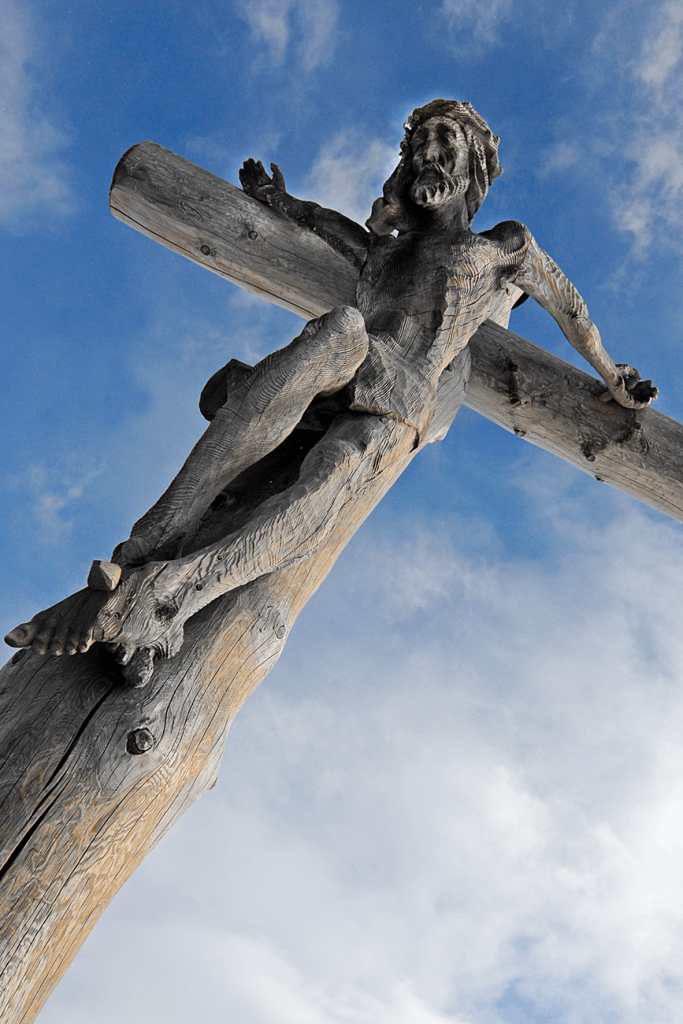
Not the victorious empty cross on the hillside with a beautiful sunset in the background, but the bloody, hot, dry and dreadful Calvary of the crucifixion? How often do we make the pilgrimage to that rocky outcropping with the smell of blood and sweat and death and agony? How often do we cry out to the one who was lifted up, struggling to breathe, pierced, wounded, broken and humiliated? When do we reach out to touch the scars and bruises he received in our place?

Photo by Pixabay on Pexels.com

It is at Calvary that we get the real story of Grace, Mercy, and forgiveness–the real cost of victory and peace. It is at Calvary that we see the full extent of God’s Holiness married to the full extent of His Love. Holiness demands justice; Love demands intimacy– together, they require sacrifice.

And it is at Calvary that we find, in the darkest and most hopeless of moments– God forsaking Himself, giving all He IS to bring justice and reconciliation for all we’ve done–that we trade our burdened souls, our worries, our despair for God’s embrace. Arms stretched so wide they are pulled from their sockets; blood spilled from head to toe; breathless and exposed in His passion for your soul and mine–that’s what God offers at Calvary.

Photo by Pixabay on Pexels.com

Why do I pray? I am ambushed and overwhelmed and enraptured by such a love. God had no need to suffer even a moment’s discomfort. He owed nothing to His rebellious creation; no mercy, no explanation, no hints as to His character (or ours). The creator of galaxies had no need to lift a finger to save one puny planet or any of its inhabitants from His own right to un-create them and blot out even their memory. Instead, He showed the greatest act of Love across all of space and time–to me!– At Calvary!

Photo by Pixabay on Pexels.com

Blog at WordPress.com.

Up ↑