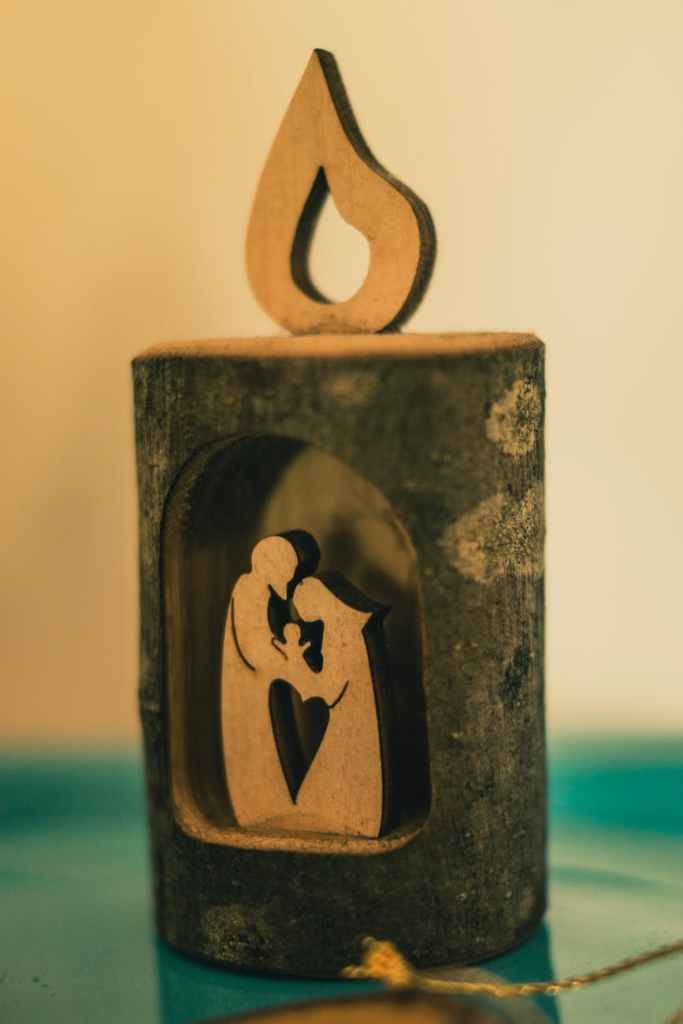
The Rocks Cry Out

A couple of days ago, while the weather was still cold, but clear, my husband and I visited one of the many beaches along the eastern coast of Lake Michigan.  The beaches are popular throughout the summer months, especially those with lots of dunes and smooth sand for sunbathing and picnics and beach volleyball.  We’re the sort of odd ducks who like to visit in the off-season, bundled in parkas and combing the rocky shores looking for unique stones and beach glass.

I was reminded of Jesus’ parable of the two men– one who built his house upon the rock, and the other who built his on sand.  https://www.biblegateway.com/passage/?search=Matthew+7%3A24-27&version=ESV.   Sandy beaches are wonderful to visit in the summer, when the weather is perfect, the sun is shining, and the lake is calm.  But over the winter months, people avoid sandy beaches (as we did) because the wind and waves can erode great patches of sand, moving it about and changing the shoreline considerably.  On the bigger public beaches, crews put up fences to keep the winter gales from blowing sand away from the shore and into the parking lots and streets.  The fences also trap the sand and snow on the shore.  Snow banks that form on the beach can melt and carry the sand back into the lake, forming new sand bars that can cause damage to small boats.  Even in the summer, large waves can produce undertows and dangerous currents for the unwary. 

Photo by Miro Alt on Pexels.com

In many ways, sand is like sin.  Sand is attractive– smooth and glistening in the sun.  It is warm and seems to yield to the touch.  But sand shifts; it blows and drifts easily, but it sticks in place where we least want it, tiny grains getting into hair and clothes, shoes, and beach towels.  It slips away, slides from under our feet, fails to hold its shape, unless we wet it down and pack it, and then it crumbles under the action of the waves.
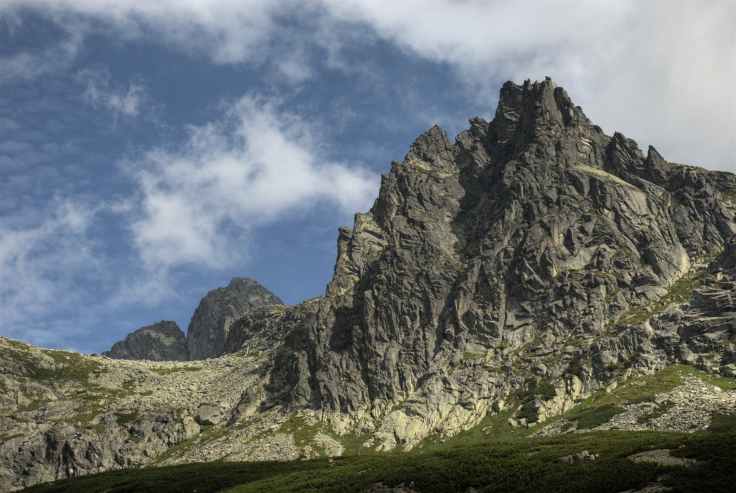
Photo by Pixabay on Pexels.com

Rock, on the other hand, is secure.  It takes centuries to erode; it doesn’t shift or fall away.  A rocky coast may not seem as inviting for pleasure, but it makes a far better foundation for a home or a lighthouse.  Even the smaller stones along the beach do not blow around in a strong wind, nor do they melt away with the snow.

Photo by Pixabay on Pexels.com

Beach stones can offer further illustrate how God works in our lives.  Stones on the beach start out with sharp edges.  They are cold and hard and uneven.  But over time, the rocks are slowly churned by the waves and the movement of smaller rocks and sand, and they are smoothed and polished by their environment.  Among the sharp rocks are beautiful agates and quartz, their varied colors seeming to absorb sunlight and heat.  Just so, we are transformed from hard and cold isolated individuals as we absorb the Son’s character.  And, as we are churned up against others, and the hard edges get smoothed away, His beautiful character is revealed in us, and we shine.  With further polishing, the stones reveal the kind of strength and beauty that make them worthy of being displayed or set in jewelry.  Not every rock along the beach will go through this transformation..some will remain hard and sharp; others will be ground into sand.  But some will cry out in their beauty and strength as testimonies of  God’s eternal process of redemption.

God Gave…


For God So Loved the World
16 “For God so loved the world, that he gave his only Son, that whoever believes in him should not perish but have eternal life.


John 3:16 English Standard Version (ESV)
Photo by Sharefaith on Pexels.com

From the very beginning, God has been a giver of good gifts.  He created a beautiful world, teeming with life and joy.  He gave mankind dominion over this beautiful creation, and even when we rebelled and fell short of our calling, God gave us promises of restoration and renewal.  He gave His words and demonstrations of His character and goodness as He interacted with His chosen people.  He took a childless man and promised to make him the father of many nations.  He took His people through the wilderness and provided for their every need– from their heads to their sandal-shod toes.

God’s greatest gift was himself– and He gave everything He had to give.

Photo by Francesco Paggiaro on Pexels.com


14 The Word became flesh and made his dwelling among us. We have seen his glory, the glory of the one and only Son, who came from the Father, full of grace and truth.


John 1:14 New International Version (NIV)


In your relationships with one another, have the same mindset as Christ Jesus:
Who, being in very nature God,
    did not consider equality with God something to be used to his own advantage;
rather, he made himself nothing
    by taking the very nature of a servant,
    being made in human likeness.
And being found in appearance as a man,
    he humbled himself
    by becoming obedient to death—
        even death on a cross!

Philippians 2:5-8
Photo by Pixabay on Pexels.com

Many of us are celebrating Thanksgiving today– but there is great reason to give thanks every day for this indescribable gift!

Photo by Element5 Digital on Pexels.com

Thanksgiving is so much more than turkey dinners or football on TV or shopping.  It is a lifestyle and an attitude that recognizes the God who gives lavishly, lovingly, eternally, and to the very last measure.

God Promised..

When we look around at all the beauty God created (see yesterday’s post:https://pursuingprayerblog.wordpress.com/wp-admin/post.php?post=1206&action=edit  ), we also see the ugliness of a fallen world.  What God created, he proclaimed “Good.”  That goodness still exists, but it is tainted and polluted by sin.  God has the authority and the right to destroy it all (and us along with it!); instead, he chose to redeem it.  God’s promise to do this has been playing out from the very beginning.

Photo by Pixabay on Pexels.com

God did not strike Adam and Eve– He allowed them to age, and reproduce, and live out their lifespan–but He did keep his promise that they would have to die (see Genesis 3).  God kept his promise to Noah, to save his family from a worldwide flood (Gensis 6-9).  He kept his promise to Abraham, to bring him to a new land and give it to his descendants– though the promise was made when Abraham as childless and wandering in the wilderness (Genesis 12-25).  God kept his promise to Abraham’s descendants, to bring them back to the land he had promised them (Exodus–Joshua). 

Photo by Brett Sayles on Pexels.com

God kept his promises to Israel– promises of blessings and of curses, of retribution and revival.  God chose King David, and kept many promises to him about his dynasty, the building of the temple, and the coming of a kingly redeemer in David’s line of ancestry (2 Samuel-1 Kings).  He kept his promises given through the prophets concerning the exile and return to Jerusalem.

Photo by Pixabay on Pexels.com

In this season, we celebrate all the many promises God made and kept regarding the coming of our Savior (Matthew-John). Just as God’s creation is “good,” so too are His promises– they are sure and true.  God’s promises reveal His nature–He is Just, He is Kind, and He is Omnipotent.  What He says, He can and will accomplish.

Photo by Pixabay on Pexels.com

Today, I am grateful for God’s promises– for all the ones He has already fulfilled, and for all He will bring to pass!

God Created…


For the Beauty of the Earth
The United Methodist Hymnal Number 092
Text: Folliot S. Pierpoint 
Music: Conrad Kocher; Arr. by W.H. Monk 
Tune: DIX, Meter: 77.77.77

1. For the beauty of the earth, 
for the glory of the skies, 
for the love which from our birth 
over and around us lies; 
Lord of all, to thee we raise 
this our hymn of grateful praise. 

Photo by Studio 7042 on Pexels.com


2. For the beauty of each hour 
of the day and of the night, 
hill and vale, and tree and flower, 
sun and moon, and stars of light; 
Lord of all, to thee we raise 
this our hymn of grateful praise. 


3. For the joy of ear and eye, 
for the heart and mind’s delight, 
for the mystic harmony, 
linking sense to sound and sight; 
Lord of all, to thee we raise 
this our hymn of grateful praise. 

\Photo by Pixabay on Pexels.com


4. For the joy of human love, 
brother, sister, parent, child, 
friends on earth and friends above, 
for all gentle thoughts and mild; 
Lord of all, to thee we raise 
this our hymn of grateful praise. 

Photo by Edward Eyer on Pexels.com


5. For thy church, that evermore 
lifteth holy hands above, 
offering up on every shore 
her pure sacrifice of love; 
Lord of all, to thee we raise 
this our hymn of grateful praise. 

Photo by Pixabay on Pexels.com


6. For thyself, best Gift Divine, 
to the world so freely given, 
for that great, great love of thine, 
peace on earth, and joy in heaven: 
Lord of all, to thee we raise 
this our hymn of grateful praise. 

Photo by David Dibert on Pexels.com

This week, may we raise hymns of grateful praise to the creator of all the beauty of the earth.

For by him all things were created: things in heaven and on earth, visible and invisible, whether thrones or powers or rulers or authorities; all tings were created by him and for him. 

Colossians 1:16


In the beginning was the Word, and the Word was with God, and the Word was God. He was in the beginning with God. All things were made through him, and without him was not any thing made that was made. In him was life, and the life was the light of men. The light shines in the darkness, and the darkness has not overcome it.

St. John 1:1-5 (ESV)

Hello, My Name Is…

Have you ever been to a conference for work, or a large meeting or convention, where you were required to wear a temporary name badge?  It might be a simple sticker with a space to write your name, or it might be a pre-printed card set inside a clear plastic pouch attached to a lanyard or a safety pin.  It may have a stripe or box in a bright color, and/or an introductory word or phrase, such as “Hello..” or “My name is…”
Perhaps you’ve had to wear a name tag for work on a daily basis, or you have to carry an ID tag pinned to your shirt, lapel, or around your neck or waist.

Photo by rawpixel.com on Pexels.com

Such tags serve a purpose; they are functional, if boring, and even if they are also annoying, they are temporary.  Some of them give a little more information, such as where you are from or what company, or plant, or building you represent.  Name tags make it easy to identify someone and put a name to a face.  But a name tag cannot reveal much beyond a person’s name.  Sometimes, a name tag doesn’t even meet that simple criterion.  I have a simple name, Lila, that is commonly misspelled and misspoken.  I have had people look right at my name tag and call me, “Lisa,” “Lily,” or “Leah.” Wearing my name on my shirt or hanging from my neck may (or may not) make me identifiable.  It does not make me knowable or known.

Photo by Edward Eyer on Pexels.com

When we come before the Throne of God, we need no name tag.  God not only knows our name, He knows us intimately– our thoughts, our attitude, our fears, our hopes, our weaknesses and strengths. He has numbered the hairs on our heads, and knows the words we will say before they reach our tongues.

Photo by Public Domain Pictures on Pexels.com

This knowledge might cause us apprehension– there can be no hiding from God–even if we can lie to ourselves about our actions, motivations, and feelings, we can’t lie to Him.  But this intimate knowledge should also ease our every fear– God knows all about us, and loves us unconditionally.

Prayer can be many things– joyful, contrite, needy– but it never needs to be small talk!

Bless the Lord, O My Soul


A Psalm of David.
103 Bless the Lord, O my soul;
And all that is within me, bless His holy name!
Bless the Lord, O my soul,
And forget not all His benefits:
Who forgives all your iniquities,
Who heals all your diseases,
Who redeems your life from destruction,
Who crowns you with lovingkindness and tender mercies,
Who satisfies your mouth with good things,
So that your youth is renewed like the eagle’s.
The Lord executes righteousness
And justice for all who are oppressed.
He made known His ways to Moses,
His acts to the children of Israel.
The Lord is merciful and gracious,
Slow to anger, and abounding in mercy.
He will not always strive with us,
Nor will He keep His anger forever.
10 He has not dealt with us according to our sins,
Nor punished us according to our iniquities.
11 For as the heavens are high above the earth,
So great is His mercy toward those who fear Him;
12 As far as the east is from the west,
So far has He removed our transgressions from us.
13 As a father pities his children,
So the Lord pities those who fear Him.
14 For He knows our frame;
He remembers that we are dust.
15 As for man, his days are like grass;
As a flower of the field, so he flourishes.
16 For the wind passes over it, and it is gone,
And its place remembers it no more.
17 But the mercy of the Lord is from everlasting to everlasting
On those who fear Him,
And His righteousness to children’s children,
18 To such as keep His covenant,
And to those who remember His commandments to do them.
19 The Lord has established His throne in heaven,
And His kingdom rules over all.
20 Bless the Lord, you His angels,
Who excel in strength, who do His word,
Heeding the voice of His word.
21 Bless the Lord, all you His hosts,
You ministers of His, who do His pleasure.
22 Bless the Lord, all His works,
In all places of His dominion.
Bless the Lord, O my soul!

Photo by Irina Kostenich on Pexels.com

Often in our churches, we focus on two factors of our relationship with Christ– worship and obedience.  Worship focuses on His majesty and worth.  Obedience focuses on His power and authority.  But when the Psalmist speaks here, he is actually focusing on another element.  Blessing isn’t so much about majesty or authority; it isn’t about obedience or worship.  It is about communion.  We bless and are blessed, not just by a word or deed, but by the speaker or doer–they bless us by what they say or do, but they ARE a blessing to us for who they are.

God is worthy of our worship and obedience, but he wants us to be a blessing– to come to him in Love and fellowship, and to be blessed by Who He Is as we meet with him.

Today, worship God.  Obey Him.  But let’s take time to bless Him and be blessed in return as we spend time with the Lover of Our Souls.

Photo by Pixabay on Pexels.com

The Birds of the Air

Yesterday, I was working in the Toddler Room at church.  The children had been playing and singing, when suddenly, our attention was caught by something happening outside our window.  Hundreds of birds were gathering in the front lawn and in the parking lot of the church, resting and re-organizing for the next leg of their long migration.  Birds were swooping in, landing, hopping about, lining up, changing places with other birds, circling in low flight, rearranging, and chattering before the entire flock took off and headed south.  The children gathered by the window in fascination for a few minutes, before returning to their play.

afterglow art backlit birds
Photo by luizclas on Pexels.com

I was reminded of the passage in Matthew 6:

25 “Therefore I tell you, do not worry about your life, what you will eat or drink; or about your body, what you will wear. Is not life more than food, and the body more than clothes? 26 Look at the birds of the air; they do not sow or reap or store away in barns, and yet your heavenly Father feeds them. Are you not much more valuable than they? 27 Can any one of you by worrying add a single hour to your life?

Ironically, yesterday was the first day of “falling back” from daylight savings time to “normal” time– literally trying to add a single hour to our lives by changing our clocks!

close up photography of wristwatch
Photo by Mat Brown on Pexels.com

The birds were not worried about clocks, or falling leaves.  They were not nervously searching about for seeds or worms or bread crumbs to eat.  They didn’t compare feathers or try to ostracize birds who were “different” in size or coloring or age.  Each year, the birds fly hundreds of miles, over lakes and fields and cities, to get to their “winter” home.  They repeat the process each spring to get to their “summer” home.  God has created them with a special GPS that not only gets them where they need to go, but helps them find food and resting places along the way– including the lawn and parking lot of our church!  And this is only one of thousands of flocks of birds.  They arrived, rested, regrouped, and left.  They didn’t collide with another incoming flock; they didn’t arrive upset or confused about the repaving that occurred this summer.  They didn’t need reservations or recalculations, credit or debit cards, cell phones with wi-fi hotspots, or pilots’ licenses.  God did not forget about them, abandon them, or set them up for failure.

The birds still have to face the long journey– they must gather food each day; rest each night; they must brave the very real dangers along the way.  Not every bird will reach its destination.  Some will be injured or become food for predators; some will succumb to bad weather or old age.  Some will even be blown off course or become separated from the rest of the flock.

flock of birds flying above sky during sunset
Photo by Irina Kostenich on Pexels.com

God doesn’t promise that we will never face danger, or that we will never have to struggle.  What He does promise is that we can trust Him to always be present and that He will provide all that is sufficient for us to follow Him.  There is nothing we can do to add an hour to our life– and nothing we can do to erase, amend, or alter His Love for us!

Holy Terror

All Hallow’s Eve, or Halloween, brings out the fearsome, garish, gory, scary, and macabre in many people.  Movies, costumes, and stories concentrate on death, mystery, nightmares, ghosts, and terror.

I am not a fan of horror in any of its forms.  I don’t like to be scared, startled, tricked, haunted, or frightened.  I don’t like seeing others being terrorized, tortured, or hurt.

So it is with great interest and some surprise to find that the Bible tells us to fear.  Of course, it also tells us NOT to fear– several times, in fact.  We are told that we need not fear the future (Matthew 6:34), struggles, battles, or long journeys (Joshua 1:9), shame or disgrace (Isaiah 54:4), terror, evil, and the “shadow of death” (Psalm 23:4),  actual death, angels or demons (Romans 8:38), or anyone at all (Psalm 27:1; Psalm 188:6).  But there is one fear the Bible does nothing to dispel.

metal vintage old antique
Photo by Skitterphoto on Pexels.com

There is a Holy terror that comes from the recognition that God is Holy– and we are NOT.  There is a very real, very terrible chasm separating us from an eternally sinless and perfect God.  There is nothing we can do on this side of the chasm to close the gap– no way to escape the eternal. hopeless and horrific state of being separated from all that is good, and noble, and peaceful, and joyous.  In life, we get glimpses of glory–flashes of amazing grace at work in the world around us.  Even though we live in a fallen world, we do not live in a place rejected or abandoned by God.

beautiful blue sky bright cloudiness
Photo by icon0.com on Pexels.com

This should cause us to have a healthy “fear” of God– a soul-deep awe of His “Other-ness”, His Authority, and His Pre-eminence.  And it should give us a terror of remaining in separation from Him– especially as He offers the very restoration and renewal we can never achieve for ourselves.  And He offers it as a free gift to ANYONE who will receive it!

ash background beautiful blaze
Photo by icon0.com on Pexels.com

Far from trying to “scare someone into Heaven,” sermons and admonitions about Hellfire and eternal damnation are meant as very real warnings with real and eternal consequences.  No horror on earth can compare with an existence devoid of all joy, peace, love, light, help, and hope–and filled with the knowledge of “all that might have been.”  Zombies, vampires, ghouls, and monsters can terrorize in the movies for an hour or two, or in books for a week or more, but what makes people willing to entertain such horrors is the latent hope that we will close the book cover, exit the theater, and wake up from the nightmares presented there.  The idea that Good will eventually triumph; that order, peace, and justice can be restored; that love conquers all, and “something” will survive, re-emerge, and carry on into the future.  All of these hopes are possible because God exists and is eternal.  When we reject God’s authority; His sovereign direction and His call to salvation, we reject all that comes with it.  While we live on His earth, we will still see the glimpses of glory– we can pretend that it is enough for now, or choose to settle for false “hope” of emptiness in death.  But we cannot escape the search for meaning and purpose that drives us to build and plan for a future we have never seen; nor can we know the peace that comes from looking forward and seeing more than darkness, doubt,  and destruction.

Praying in the Present

I don’t know about anyone else reading this, but I need a reminder every so often about living in the present (including keeping my prayer life centered in the present).  It is very tempting sometimes to wallow in the past or dream of the future.  There’s nothing wrong with learning from past mistakes or making future goals, but we are not to waste our time or our energies pursuing what isn’t, while ignoring what is happening around us.

TheLordsPrayer

If we look closely at the Lord’s Prayer, we see how centered it is in the present.  There are a couple of forward-looking phrases (Thy kingdom come…lead us not into temptation…For ever and ever..) but most of the prayer is for the present and foreseeable future.

I need to be reminded, through Christ’s example and through scripture, that God wants me to trust Him for my daily needs and follow one step at a time.  If I find myself spending more time asking God for things far out in my future, or continually bringing up things from my past, it may mean (though not always) that I am not fully trusting in the sufficiency of His Grace for today.

God has already seen my past– and loves me unconditionally.  His Grace will not be rescinded each time I face a reminder of my past; He will not change His mind if someone else carries a grudge against me.

God has also seen my future.  He knows my needs, my concerns, my desires.  He wants me to bring my whole heart to Him in prayer–a heart that is ready to trust His provision and plan, even when I don’t know the details.

Think what would happen if every parent-child conversation involved the following themes:

blur broken ceramic clay
Photo by Fancycrave.com on Pexels.com

  1. “Mom, do you remember the time I tipped over your plants when I was five, and you yelled at me.  I just want to tell you I’m so sorry I did that.  I know you said you’ve forgiven me, but I need to ask you again.”  “Dad, I know you were disappointed when I got into a fight with my brother back when I was eight, but I hope you can see how I’ve learned a lot since then.  Please don’t hold that against me today.”
  2. “Hey, Dad, I really want to drive when I turn 16.  Can I ask you for a purple sports car when I turn 16?  I want to be a good driver, and I just know that you want me to be a good driver.  I think a purple sports car would make me a great driver in another seven years.”  “Mom, will you promise to babysit my kids after I have kids?  I just know my kids will want to have a close relationship with you, so will you just promise to be close to my kids when I grow up and have them?”

action asphalt automobile automotive
Photo by Taras Makarenko on Pexels.com

There’s nothing essentially wrong with the actual requests– but when we focus on the past or the future at the expense of the present, we miss learning what God has for us TODAY.  We also risk seeing God only for what He gives and what He has done, and not for Who He Is!

Let’s enjoy time with God today (and every day) as it unfolds.

pexels-photo-546657.jpeg


The Politics of Prayer

I have been bombarded lately with political ads–and that takes some doing, since I don’t have television and don’t listen to the radio– still two major sources of “coverage” used by most candidates.  And many of the political ads are deceptive, in that they don’t seem to be “for” or “against” a particular candidate– rather they are trying to encourage me to see a particular issue (healthcare, abortion, gun control, education, taxes, etc.) in a particular way, or vote based on a single polarizing issue.  I get very frustrated with the intense saturation and obvious propaganda, but overall, I am thankful that we have the freedom to state our political preferences and encourage everyone to vote– hopefully based on thoughtfully looking at the issues, policies, and consequences of the actions proposed by the candidates.

One thing that frustrates me is the conflation of politics with religion and Christianity in particular.  God is apolitical…He is not a Republican or Democrat, a Socialist, Fascist, Capitalist, or even monarchist.  He is not American, Canadian, British, Honduran, Somalian, Laotian, Korean, German, Bolivian, Syrian, New Zealander, Nigerian, Greek, or Pole.  His Kingdom is a Theocracy– He is the sovereign and absolute ruler.  He does not consult with a Senate, or Assembly, or Cabinet, or Ministry.  He cannot be “voted” in or out, succeeded, or supplanted.  He allows for and even institutes worldly governments– He raised up priests and prophets in Israel and founded their Monarchy–but He also tears down corrupt governments and destroys empires.

close up photo of pharaoh figurine
Photo by Kalvin Sainz on Pexels.com

So when we pray for government officials, we are not doing so based on their merits in God’s eyes.  When we pray for upcoming elections, we do not pray for the “best” result, based on our personal political preferences..or we shouldn’t.  We should be praying that God will be honored by our vote; that our nation (and its leaders) will recognize God’s sovereignty and act in obedience to His will; and that we will be prepared for God’s blessings or corrective punishments as He sees fit to bring them..that we will learn from those in authority, pray for them with sincerity and good will, and use our vote as stewards of Grace, and not as power-hungry, politically rabid puppets trying to create a substitute Kingdom of God within our own state or nation.

woman holding newspapers
Photo by Rosemary Ketchum on Pexels.com

Consider King David– God had anointed him King of Israel to succeed King Saul, who had fallen out of favor with God.  David was hunted down as a traitor by Saul, his own father-in-law, and forced into exile.  Yet he continued to faithfully pray for and speak kindly of Saul.  When given the opportunity to kill his tormentor and take the crown, he refused– even though God had promised him the kingdom BECAUSE Saul had become corrupt. (see 1 Samuel, chapters 16, 19, 23 and 24)  David still prepared to become King–he learned many lessons during his exile that made him an excellent king– diplomacy, warfare, economics, and listening to his future subjects.  Most importantly, he learned from the bad example of King Saul that he should not second-guess God’s purposes and timing.

art carving close up crown
Photo by Mikes Photos on Pexels.com

Prayer isn’t about asking God to give us what we want– not on a personal level and not politically.  It is about asking God to help us want what He gives!

pexels-photo-767276.jpeg

Blog at WordPress.com.

Up ↑