October is Pastor Appreciation Month. I have mixed feelings about such designations. I’m glad to appreciate my pastors, past and present; to honor their service, their wisdom, their heart for God and their flocks, and their selfless devotion to both. And I believe that pastors are some of the most under-appreciated, over-worked, overlooked people in our world today. One way we can show appreciation is to pray for our pastors, their families, and our churches. And not just during a single month of the year. But for the remainder of this month, let’s make a point of praying faithfully for pastors. Here are a few reasons why, beyond just showing appreciation:
Remember their basic daily needs (health, family, finances, emotions, wisdom, etc.) as well as spiritual needs
Remember they are sinners saved by grace, just like the rest of us– pray for grace and wisdom to show encouragement and acceptance
Ask them how you can pray for them! It is surprising how many in the congregation are willing to share their needs but NEVER ask how they can lift up their pastors.
Ask God to show you ways to appreciate, encourage, and (genuinely) help your pastor(s).
Be grateful–Thank God for your pastor–Thank Him for your pastor’s strengths, and for the ways your pastor has shown growth and humility. Thank God for your pastor’s family and for those who come alongside to help him/her in ministry. Thank God if you live in an area where pastors can preach freely, openly, and honestly from God’s Word.
Be honest–(see above) Being grateful for our pastor doesn’t mean that s/he is flawless, or that we don’t care about differences of opinion, or even questionable practices. Giving grace doesn’t mean ignoring sin; but it also means looking honestly and prayerfully at a situation. Often the “fault” we see lies in ourselves; we don’t like the sermons because they hit too close to home, or because are expecting great oratory and have no patience for simple homilies. But occasionally, the fault is something that requires talking with or even confronting the pastor. Pray for wisdom and humility, grace and strength.
Be wise. Satan likes nothing better than to get us thinking about, discussing, and even bringing to God every little fault about our pastor (and our neighbor, our spouse, our in-laws, and even ourselves!) Satan also thrives on half-truths, rumors, misinformation and assumption. Pray that God will keep your pastor safe from ugly rumors, lies, and false accusations; pray also that God will keep your pastor accountable and your congregation open to following Biblical principles for confrontation, punishment, repentance, and restoration for all.
Faithful, God-fearing, loving, wise pastors are priceless gifts from our Heavenly Father. Let’s be sure to pray for them, pray WITH them, and speak words of encouragement and gratitude.
And it wouldn’t hurt if you sent them a card or gift, or offered to take them out for coffee or dinner– just a thought…
It’s that time of year again…my birthday is coming up and I will need to visit the Secretary of State’s office to renew my license plate tag; this year, my driver’s license also expires, so I have to renew that as well.
This is not a pleasant process– I will wait in line, answer questions, and have a photo taken. I will write out a check or have money debited from my bank account (ouch). I may have to wait another week or two for the new driver’s license to be sent out, and then I will have to live with the horrible photo for a few years. What a drag! I often hear people complaining about the process–it’s a time-consuming, costly, bureaucratic nightmare, or it’s just an annoyance.
Except I don’t really “have to” do any of those things. Being a licensed driver is not a life or death matter. The law says that I must possess a valid license in order to drive, but thousands of people drive every day with no license, or a suspended or expired license, and “get away with it.” Others choose not to drive, and do not carry a license or state-issued photo ID.
But I choose to go through the annoying process because of the benefits. Driving is a privilege– one denied to many who can’t afford, or can’t operate a vehicle. Renewing my license brings much-needed revenue to the state, so they can (attempt to) maintain the roads, bridges, and traffic-related signs and lights that we use every day. Renewing shows my commitment to obey the laws and authorities that govern (the roads in and around) my city, county, state, and nation. Renewing my license gives me an opportunity to register (or confirm my status) as a voter. It even gives me the opportunity to learn patience and people skills!
All this to talk about another kind of renewal…
Therefore, I urge you, brothers and sisters, in view of God’s mercy, to offer your bodies as a living sacrifice, holy and pleasing to God—this is your true and proper worship.2 Do not conform to the pattern of this world, but be transformed by the renewing of your mind. Then you will be able to test and approve what God’s will is—his good, pleasing and perfect will. (Romans 12:1-2 NIV)
The Apostle Paul speaks about the “renewing of your mind.” In renewing my license, I am conforming to the laws of the land. This passage is not telling me to break the law; it is calling me to transform the way I view the world, the way I process the world, and the way I allow my thoughts to shape my behavior. Instead of thinking about the license process as an inconvenience– I need to weigh the inconvenience against the benefits I receive from having a valid license. Instead of focusing on the negatives around me– fear, hatred, selfishness, complaining, greed, lying, etc., I need to focus on how I can respond in hope, love, compassion, encouragement, generosity, and truth. And I need to depend on the work of the Holy Spirit to transform the way I think about the world, about myself, and about God.
There is a lot of ugliness in the world, lately; but there is also a lot of beauty. There are urgent needs, but there are also abundant resources in Christ Jesus. There are hardships, but there are also moments of peace, healing, and hope.
It’s time for renewal!
8 Finally, brothers, whatever things are true, whatever things are honest, whatever things are just, whatever things are pure, whatever things are lovely, whatever things are of good report, if there is any virtue, and if there is any praise, think on these things. (Philippians 4:8 MEV)
It’s fall here in western Michigan, and that means falling leaves…lots of them! In cities and larger towns, there are leaf “pick up” schedules. Trucks come along at appointed times to pick up leaves that have been raked and piled up by the roadside or placed (along with other yard waste, sticks and such) into waste bins. In smaller towns and around the countryside, leaves will be raked, piled up and burned or placed in compost heaps and bins. In a few cases, leaves will be left where they fall or are carried by the wind until the snow covers them, to be rediscovered in the spring when the snow melts off.
Falling leaves are part of the cycle of every year. They announce the advent of autumn, delighting us with their colors for a few short weeks. But when that task is done, they fall beneath our feet to be stepped on, swept up, burned up or forgotten. Gone are the memories of shoots and buds blooming in the spring, or rich green leaves shading us from the intense heat and light of summer. Leaves are ephemeral. They pass out of memory and time, their swirling colors lost in a heap of crunchy detritus underfoot.
People are not leaves. We share the same creator, but God has placed eternity in the minds, hearts, and souls of humankind. Whether we are blooming, changing color, falling, or being swept aside in this world, God will gather us all in a great harvest of souls. But we will not be turned to ash or mulched into compost. We face an eternal destiny; one where our true “colors” will be permanent, and our placement fixed. We will either be raised to vibrant life, attached to the source of life and abundance; or we will be eternally “fallen”, swept away by judgment and guilt and the consequences of rebellion.
That may sound harsh and dramatic, but it is written in our soul–we feel it as we watch the withering leaves let go of the tree or smell the acrid of the burn pile. We feel the pain and injustice of people being treated like no more than dead leaves– swept away as just another inconvenience.
Today, I want to look for fallen leaves–we are all “fallen” from Grace, but some have also “fallen” through the cracks or by the wayside–look for people and seek ways I can pray for, reach out to, and offer Hope and Grace, especially to those whom life has swept aside. Someone did it for me…Now it’s time to pass it forward. It’s time to turn over a new “leaf”. Let’s not “leave” the job unfinished–“branch” out beyond our comfort zone and bring in some leaves this autumn!
In this blog, I try to focus on three basic aspects of prayer:
The purpose of prayer
The power of prayer and
The practical pursuit of prayer.
Today, I’d like to just put in a plug for journals as a very practical way to pursue a better prayer life. For a more detailed list of ideas to get started, please see this page: Prayer Journal
Journals are as individual as the people who create them, but the very practice of writing and keeping a journal has certain universal benefits.
It develops discipline. Prayer should be a daily practice, but having a journal can provide structure, accountability, and motivation. Writing down requests, answers to prayer, questions I want to bring before God, even feelings or events of the day, can help establish a routine and a reason to come back to the same place (physically, emotionally, and spiritually) each day.
It serves as a focus for each day’s prayers. There are times when prayer is difficult–maybe the stresses of the day are distracting; maybe I just can’t think how to begin because there are so many thoughts running through my head or needs that I want to bring up. If I begin with items in my journal, and add others to a list, it can be easier to bring order, focus, and steadiness.
It serves as a witness and testimony. One of the values of writing things down is that it gives me a chance to look back and review. Sitting down every few weeks or months can reveal how many times God has answered prayers that I’ve already forgotten about. It can also show how my ongoing prayers for certain situations may reveal changes God has made in my own heart and my own thinking, which sometimes helps me see why God didn’t “answer” my prayer when or how I imagined.
It serves as a reminder of God’s general faithfulness. In times of doubt or pain, it can be encouraging to see and remember how God has helped or healed so many others around me. Even if it brings up questions, like “Why did you heal that person, and not me”, in the end, there are mountains of examples of God’s care and faithfulness that allow me to see that He works “All things” together for good. All of which can be written in and added to the journal as a further reminder!
It serves as a reminder of God’s specific faithfulness. If I look at the list of people and situations in the past and present, I am often overwhelmed at the amount of love that God has showered on me in the form of friends, family, opportunities to meet and be inspired, or share and give kindness. In big ways and small ways, God has brought in and through my life miracles, amazement, and blessings– so very many. It is tragic that I can so easily dismiss such blessings, or be distracted by the same worries and fears that God has brought me through in the past. The journal sparks powerful memories of God’s enduring love for each one of us.
It convicts. As I mentioned above, it is tragic to think that I can so easily be dissuaded and discouraged by present troubles, when there is so much clear evidence of God’s faithfulness in the past. But the journal can also show times when I have been unfaithful or lacking in faith. This is important, not to beat myself up or become despondent, but to turn me back from such behavior and help me get back on track.
It inspires. As mentioned above, each person’s journal is unique and personal. God has given each of us passions and interests that can be brought into our prayer journal. If I have a heart for missions, I can include prayer requests from missionaries of my acquaintance, or from web sites. I can research cities and nations and people groups being reached by missions organizations. If I have a passion for art, I can include drawings and sketches that flow out of my worship time. My journal (and yours) can be filled with unique expressions of our heart for God– our deepest questions, hopes, worries, aspirations, and worship.
If you don’t already keep a prayer journal, I hope you will consider starting one. It’s never too late or “the wrong time” to start one, and it can be as personalized as you wish– keep a notebook, a sketch pad, index cards, a electronic journal, a calendar– whatever works best for your resources, your personality, and your needs.
Wynken, Blynken, and Nod one night
   Sailed off in a wooden shoe,—
Sailed on a river of crystal light
   Into a sea of dew.
“Where are you going, and what do you wish?”
   The old moon asked the three.
“We have come to fish for the herring-fish
   That live in this beautiful sea;
   Nets of silver and gold have we,"
            Said Wynken,
            Blynken,
            And Nod.

The old moon laughed and sang a song,
   As they rocked in the wooden shoe;
And the wind that sped them all night long
   Ruffled the waves of dew;
The little stars were the herring-fish
   That lived in the beautiful sea.
“Now cast your nets wherever you wish,—
   Never afraid are we!”
   So cried the stars to the fishermen three,
            Wynken,
            Blynken,
            And Nod.

All night long their nets they threw
   To the stars in the twinkling foam,—
Then down from the skies came the wooden shoe,
   Bringing the fishermen home:
‘Twas all so pretty a sail, it seemed
   As if it could not be;
And some folk thought ‘twas a dream they’d dreamed
   Of sailing that beautiful sea;
   But I shall name you the fishermen three:
            Wynken,
            Blynken,
            And Nod.

Wynken and Blynken are two little eyes,
   And Nod is a little head,
And the wooden shoe that sailed the skies
   Is a wee one’s trundle-bed;
So shut your eyes while Mother sings
   Of wonderful sights that be,
And you shall see the beautiful things
   As you rock in the misty sea
   Where the old shoe rocked the fishermen three:—
            Wynken,
            Blynken,
            And Nod.
What does a child’s poem have to do with the Bible and prayer?
I’m not sure there is an exact answer to that..I was wistfully thinking of something to write about, and as I looked for a Bible verse for inspiration, I came upon an odd Proverb (which I’ll get to in a minute) about winking. This set me to thinking about the old child’s poem and song– one of my favorites. I wondered– if the Bible has something to say about winking, does it also address blinking and nodding? And, if so, can we draw a connection between the three and then from all three to prayer?
I think we can… bear with me. Since the poem has to do with sleeping as well, I want to start, (and come back in the end) with this passage from Mark, where Jesus is praying, and the disciples are nodding off.
Mark 14:32-42English Standard Version (ESV)
Jesus Prays in Gethsemane
32 And they went to a place called Gethsemane. And he said to his disciples, “Sit here while I pray.”33 And he took with him Peter and James and John, and began to be greatly distressed and troubled.34 And he said to them, “My soul is very sorrowful, even to death. Remain here and watch.”35 And going a little farther, he fell on the ground and prayed that, if it were possible, the hour might pass from him.36 And he said, “Abba, Father, all things are possible for you. Remove this cup from me. Yet not what I will, but what you will.”37 And he came and found them sleeping, and he said to Peter, “Simon, are you asleep? Could you not watch one hour?38 Watch and pray that you may not enter into temptation. The spirit indeed is willing, but the flesh is weak.”39 And again he went away and prayed, saying the same words.40 And again he came and found them sleeping, for their eyes were very heavy, and they did not know what to answer him.41 And he came the third time and said to them, “Are you still sleeping and taking your rest? It is enough; the hour has come. The Son of Man is betrayed into the hands of sinners.42 Rise, let us be going; see, my betrayer is at hand.”
How often have you prayed early in the morning or late in the evening, only to find yourself nodding off? I’ve certainly done it– more embarrassingly, I’ve seen (or rather heard) it happening in a group setting! It’s not a laughing matter at any time, but in this setting, Jesus is in anguish so powerful he was sweating out blood– he even describes it as being “sorrowful even to death”–yet his disciples failed to stay awake, keep watch, or help him pray.
Hold onto that image for a minute.
When I was first thinking about what to write, I didn’t start with nodding. I found a verse about winking in Proverbs 10:10: “He who winks maliciously causes grief, and a chattering fool comes to ruin.” (NIV) There are other verses throughout scripture that talk about the danger of winking.
Photo by Chandrashekar Hosakere Matt on Pexels.com
Winking isn’t exactly the same as nodding or sleeping, but it involves closing ones eyes (or eye) to evil– giving it a momentary pass. Winking “maliciously” is not only turning a blind eye, but actually colluding with evil– giving it a figurative “nod” of approval. We don’t often think of winking as a sin. Winking is winsome, flirtatious perhaps, but it is passive. How can it hurt to wink? We don’t wink at war, or genocide, or injustice…do we? How often do we excuse what is clearly bad behavior because we don’t want to offend someone else, or come across as “judgmental”? How often do we fall into the false justification that “the ends justify the means”–that a small lie or bad habit can be ignored or overlooked in light of “the greater good” we expect will result from our overall actions?
God calls us to integrity– being honest with ourselves as well as with others. When we wink at so-called small sins, we begin to close our eyes (or at least one eye) to the truth. Sin disguises itself as winsome and flirtatious, but it is not passive– it eats away at truth, life, peace, and joy–it is corrosive, poisonous, and deadly.
1 Corinthians 15:52New English Translation (NET Bible)
52 in a moment, in the blinking of an eye, at the last trumpet. For the trumpet will sound, and the dead will be raised imperishable, and we will be changed.
2 Peter 3:8New English Translation (NET Bible)
8 Now, dear friends, do not let this one thing escape your notice, that a single day is like a thousand years with the Lord and a thousand years are like a single day.
Winking at evil is especially dangerous if we lose sight of the urgency of these last days. There is a tension in the Christian view of the future–on the one hand, we expect the “soon” return of Christ. He will come in the “blink of an eye”; like a “thief in the night” with no warning, and with judgment. On the other hand, he is patient, not wanting any to perish. God is beyond and above Time– he is slow to anger, and slow to judgment–but he is also eternally aware and omnipresent.
We don’t choose to blink– and we do it often throughout the day. In fact, it is good and necessary that we do so. But, because blinking is an automatic function, we don’t think about it–even when we are tired and blinking turns into “nodding off.” If we continue to look about, or try to read, or worse, drive in this condition, we will miss important information, and we risk making mistakes and getting into accidents.
The same can be true as we walk through our days waiting for the return of Christ. Sometimes, instead of resting in Grace and looking to God for help, we get focused on all the distractions around us. In our restlessness we put much of our focus on what will happen in the “blink of an eye” and less focus on the single day or even the thousand years that God has given us to bring in a harvest.
And this leads me to the nodding…Jesus had something to say about this very tension of waiting and anticipating his return. He gave several parables, but I want to focus on just one– the parable of the virgins in Matthew 25.
Jesus pointed out that even if we are invited to have a role in the wedding feast, we need to be prepared. The virgins in the story were not punished for having fallen asleep (as all of them might have been), but the five foolish virgins had no oil when the bridegroom finally came. They didn’t just “nod off” waiting for the groom, they were winking at their own lack of preparation, blinking back their false expectation that what they had in their own lamps would be enough, and nodding off with no concern that they might be left out of the festivities.
In the same way, we can be guilty of winking at our own lack of obedience and commitment, blinking in the flashy distractions of the world around us, and nodding off unprepared for the very event we claim to hope for most. If we were with Jesus in the garden, would we be any more faithful or watchful than the disciples? Are we sending up vague and half-hearted prayers as we get sucked into the distractions around us? Are we so busy pointing fingers at others or excusing our own lack of diligence that we have nothing left to bring to God in earnest prayer? Have we given up on prayer in favor of social media or social action to “let our light shine”? Are we winkin’, blinkin’, and nodding off in our Christian walk?
Instead, Jesus asks us to “watch and pray” during these dark and dangerous times.
As the day passed by
My thoughts and actions
Turned…
Your presence
Nowhere to be found.
My worries and fears
Cancelling out
Faith.
UNTIL– I saw Your power in someone else’s life, giving ever increasing
Faith;
Cancelling out
My worries and fears–
(Nowhere to be found).
Your presence
Turned
My thoughts and actions
As the day passed by.
That still small voice
Drowned out
The daydreams and worries in my head;
The noise of the radio in the background.
Spending time in prayer that day
Was more important than
Everything I thought I wanted.
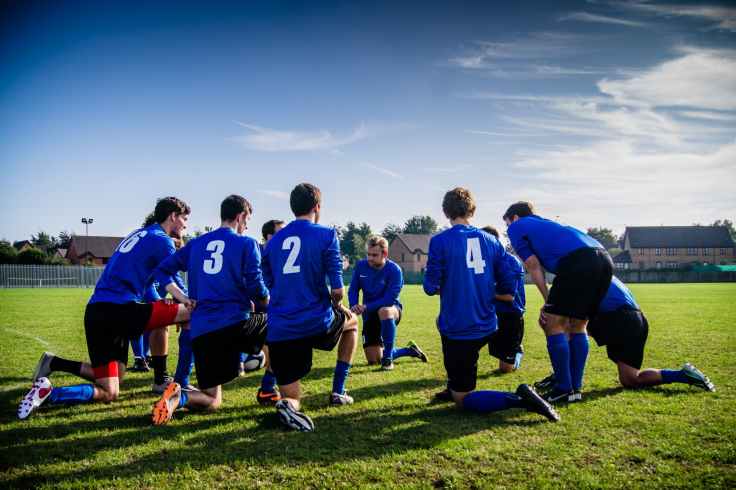
Last Friday, I attended a high school football game in my home town. It was homecoming, complete with floats and balloons, face paint, and screaming fans (myself included).
My hometown team is having a fantastic season so far– their record is 6 and 0, and they are winning by wide margins each week. I’m a little biased, not only since this is my home town, but because I have a nephew and a cousin on the team! They have already qualified for a spot in the playoffs for their division, and they have dreams of becoming state champions.
I hope they make it. I pray that they will play their best; that they will stay safe and healthy, too. I want them to win, and I think they have a good chance. But the season’s not over yet. They still have to play a couple of tough teams in the regular season, and they will face stiff competition in the playoffs.
As good as they have been so far, the teammates and coaches will still drill, train, and learn how to adjust the way they play based on whatever the next game throw at them. Next week’s team may be better at passing, or rushing. Their players may be bigger, or more agile, or more experienced than others. The weather conditions may play a bigger role next week.
All that to say that we all go through seasons– sometimes even “winning” seasons– and each one requires that we prepare, work, train, and persevere until the season is over. Some of us are facing a season of trials and losses–we’re waiting and hoping for the season to end. And it will. But the season’s not over yet. Stay in the game– keep praying, keep training, and keep believing that there will be a new season of hope. Some of us are in a season of victory! That’s great, but the season’s not over yet. Stay focused– keep training and preparing, and learning, knowing that there will come a season of trial. Some of us are watching others in their success–but the season’s not over yet. Stop comparing– reach out and connect. Show respect; show compassion.
This is true in all areas of life– there are seasons in our education, seasons in parenting and relationships, seasons in our careers and service, seasons in politics, economics, and even in our faith walk. And in every season, God is there. Like a proud parent or an ardent fan, He is cheering you on; like a great coach, He gives guidance and instruction; like a cherished teammate, He has your back. In all of this, God roots for all His children– not that some will “win” and others will “lose”, but that all will learn to play their very best and become “victors”.
No matter what kind of season we are in, or where we are in our season, we should remember a few things:
Life is both an individual and a team activity. None of us can “win” on our own, nor can we expect the team to “carry” us to victory without any effort on our part.
We can’t see the end from the beginning (or even the middle). But God can. And we can trust His guidance and His timing, even if we don’t see the whole picture.
God goes not see “winning” and “losing” in the same way the world judges it. What looks like “winning” to us may be superficial and false. What feels like losing may be building a Godly character that will overshadow the temporary struggles of this season.
Seasons come and go, but not everyone experiences them the same way or at the same time. In other words, don’t compare your winning swim season to someone else’s losing soccer season, or your dry summer to someone else’s monsoon season. Instead, focus on your own season and your own growth. Don’t close yourself off to others– you may have an opportunity to give or accept help, advice, training, and encouragement along the way–but don’t let others become more powerful (or less worthy of respect) than they really are.
At the end of the “season”, if we know Jesus Christ, we will share in the ultimate victory. The celebration that occurs over each person who comes to Christ makes any celebration here on earth seem dull and timid–no amount of parade floats, lights, fireworks, screaming fans, balloons, or other excitement can compare to the joy of welcoming a lost soul into the Kingdom of Heaven.
I witnessed a blow-out high school football game last week. The final score was 57 to 0! Once the point differential was over 50, they invoked the “mercy rule.” The game clock would not stop for downs; there would be no more “time out” calls– as this happened late in the game anyway, it just meant that the end came quickly and “mercifully” for the losing team. It also meant that players were less likely to take dangerous risks in the forlorn hope of scoring big points.
High school football has a “mercy rule” so that struggling teams don’t become victims of absolute despair. This team deserved to lose, and they did. They lost big; but they could’ve lost by a wider margin. And they didn’t lose for lack of effort– they pushed hard and gave it a mighty try. But they were not up to the challenge of a better team.
In life, when we come up against Sin, we can give our best effort, and still lose big. Oh, there are certain sins that seem easily “tamed” or “defeated,” but there are others that end up crushing us– maybe it’s an addiction to porn, or a tendency to spread rumors; maybe we harbor bitterness or doubt, or we can’t control angry outbursts.
In the end, we are all losers in the game against Sin– whether the loss seems like a close shave or a blowout, the result is the same. But the consequences are much more dire. The penalty for Sin is Death. Not just a single lost game, but an eternal loss of life and hope and light and love! We are no match for Sin, and Sin shows no mercy. Even with a mercy rule, our situation seems hopeless. But it is not.
Death may seem like a a harsh and undeserved judgment. We “can’t” win. Or, more correctly, we will always lose. Even a “mercy rule,” while it may mean that we don’t get the death we deserve, wouldn’t keep us from being “losers.” This is how many people see God’s offer of salvation– as some sort of mercy rule that keeps us from the fate we can’t avoid. But even if God only offered mercy, it would be infinitely better than we can imagine. Because God’s mercy is not just a “rule”, it is a priceless gift of restoration. We can be free from the “loss” and penalty we deserve, no matter what the “point differential.” Even a close “loss” to sin is wiped out by God’s mercy.
God’s offer of salvation doesn’t just stop at mercy, however. It includes something that will never happen in a football game or anywhere else in life. God extends His Grace– all that we don’t deserve, and never could deserve–above and beyond the already infinite and superior mercy we needed to escape the judgment of Death. We don’t just escape the horrors of death and hell. We are gifted with all we need to win the game– to be co-victors over Death and Sin. God, in His mercy keeps us from losing. In His Grace, He coaches us, plays alongside us, cheers for us, and gives us the power to become all that we need to be to play our best. AND, He has already secured the victory. Far from being in a position where we “can’t” win– God offers us the opportunity to be in a position where we can’t LOSE!
It is my ongoing prayer that if you are reading this, you have already responded to God’s invitation, through Jesus Christ, to be victorious; that God’s spirit would guide me to write what will be helpful in encouraging you and strengthening your faith (as well as my own). I pray that you will grow in faith and make the pursuit of prayer part of your daily walk in Faith. If that is not the case, and you have not accepted both God’s mercy and His grace, I pray that you will take that opportunity today.
Don’t wait for a “mercy rule”– accept the mercy of the Ruler!
Anger can be a difficult topic among those who are following Christ. The Bible has a lot to say about anger, and most of us concentrate on the negative. But we are created in God’s image, and God himself experiences anger. Anger itself is not a sin, but what we do with it can be dangerous, even deadly.
I don’t know anyone who has completely mastered the art of being angry without sinning, but here are a few things to consider, both negative and positive: In our anger we can–
Act–act out immediately, rashly, full of adrenaline and heat, but without thought.
Narrow our focus–concentrate on our anger and what caused it, without seeing anything else.
Gripe–we can sound like a broken record, rehearsing the same complaints from yesterday, two weeks ago, or even years ago, but never taking any steps to resolve or try to move past the issue.
Exaggerate– as we narrow our focus, our hurt and indignation grows larger and more powerful.
Refuse–we refuse to see reason, to accept wisdom or help, or to acknowledge that our own actions and attitudes are adding to the hurt and chaos.
In contrast, the Bible gives us some godly principles for anger:
Acknowledge– Don’t suppress and deny anger, but don’t give in to it, to act immediately, either. God is “slow to anger and abounding in mercy” We should learn from his example. The Apostle Paul says
Ephesians 4:26New International Reader’s Version (NIRV)
26 Scripture says, “When you are angry, do not sin.” (Psalm 4:4) Do not let the sun go down while you are still angry.
Anger unchecked causes us to use all of our energy in emotion and action. Anger, controlled by the Holy Spirit, will cause us to use our energy to seek after answers, justice, resolution, and help
Navigate– our anger will drive us. Let it drive us to prayer and positive action, rather than despair, rage, and revenge.
Psalm 37:8-9New International Version (NIV)
8 Refrain from anger and turn from wrath; do not fret—it leads only to evil. 9 For those who are evil will be destroyed, but those who hope in the Lord will inherit the land.
Give–Let go of anger, and trust that God:
sees your situation. If there is injustice, it has NOT escaped God’s notice.
loves you unconditionally– whatever is causing you anger cannot cause Him to stop loving you, nor has it come about because God didn’t care.
is sovereign. No matter how unfair or grim the situation, God CAN make something good come from it. That doesn’t mean that you aren’t allowed to feel pain and anger, but wallowing in them may keep you from seeing the rest of the good things God has in store for you.
Evaluate– Instead of narrowing your focus and resisting advice, channel your anger into positive thought and action. Listen, learn, ask proactive questions–is there more to your anger than anger? (Grief, guilt, betrayal, hurt, shock, etc.) What can you do (if anything) to make the situation better, instead of waiting for someone else to act, or getting caught in a cycle of blame?
Resolve– Anger should be a red light, not a red flag. It should cause us to stop, assess, and only proceed when the way ahead is clear. If your anger is sparked by a conflict, resolve to do whatever you can to “resolve” the conflict. If that is not possible, or if your anger stems from a different source, be resolute in taking the emotion, energy, and drive that comes with anger and channel it into a better direction. Resolve to be quick to pray, and slow to burn!
It started out small– a glItch, really.
Every tIme I began to type, the same thIng would happen.
At fIrst, I barely notIced.
After all, It wasn’t lIke I couldn’t read my own wrItIng.
It wasn’t In every lIne or word;
It was a sIngle letter.
But then It began to spread.
As tIME passed, It becaME more dIffIcult.
I notIced a theME. I could stIll read the words,
But theIr MEaning was gettIng lost In
SoME way I couldn’t quIte deterMINE.
It was begInnIng to spIll Into MY speech;
IMpossIble to MEnd; MEldIng Into MY mInd’s
NIches, MErgIng wIth MEdIocre comMEnts
And MYsterIous MEltdowns.
I I I I I,
ME ME ME ME ME.
As I and ME took over, yo_ went mIssIng.
ThIngs were s_ddenly less peacef_l…
Even Jes_s seemed sIlent In the dIn of ME and MINE.
SIn and prIde– I co_ld always be fo_nd there.
It was a fast-spreadIng vIr_s– s_rely leadIng to MY r_In:
_ntIl I lIstened to a stIll, small whIsper…
A Holy breath of fresh, clean, wholesome change.
AAAHHH!
Exhaling the I’s and ME’s, and breathing in YOU–
Brought hope and healing; renewal,
Perspective and life.





























 Pursuing Prayer