Holy Infant, So Tender and Mild

It is one of the most popular Christmas Carols– we sing it every year: “Silent Night, Holy Night; All is calm, all is bright; ‘Round yon virgin mother and child– Holy infant, so tender and mild; Sleep in Heavenly Peace– Sleep in Heavenly Peace.”

Photo by Blue Ox Studio on Pexels.com

Each year, we celebrate the coming of Christ– “Son of God; Love’s Pure Light.” God coming to earth to live among His creation– Emmanuel, God with us. And it becomes familiar, and gets mixed in with stories of Santa Claus and gift-giving, decorated trees and flying reindeer.

Photo by cottonbro on Pexels.com

But stop a minute to reconsider the amazing juxtaposition–the very Word of creation became a speechless baby. The ruler of galaxies came to earth naked and needy, hungry and helpless. Holy Infant–fully God and fully human in His frailty.

Photo by Johannes Plenio on Pexels.com

God could have come as a ruler of might; He could have stepped out of Heaven in a blinding flash of light, spoken with a voice of thunder, and made the mountains tremble. He could have filled the skies and scattered all the stars and clouds. He could have come in all His Majesty– and someday, that’s how He will return.

Photo by Dominika Roseclay on Pexels.com

But on that Silent, Holy Night, He came in humility. He came in Heavenly Peace.

What an awesome enigma–the One who would break the power of death came in the weakness of an ordinary birth. The Giver of Life choosing to reside in the womb of an ordinary young woman, gasping for air as He took His first breath as a human. The omniscient one having to learn to sit up, and eat, to speak and to hold His mother’s hand; to stand up and walk.

God SO LOVED us that He went to extravagant lengths to meet us in our humanness. He didn’t need to become human for His sake– He did it for us; that WE could know Him more intimately; so that when we talk to Him, we are talking to one who has known hunger, and pain, and heartbreak, and loss– as one of us.

Photo by nappy on Pexels.com

It is terrifyingly easy to miss the significance of the incarnation after the fact. As we remember the Advent season, let us reflect on the world before that Holy birth.. a world so fallen that no one could imagine the face of God; no one could imagine walking with Him or sharing a meal or a smile with Him; no one had ever felt His touch on their cheek or heard Him laugh. No one could have imagined that God would bleed, or cry out in agony, or taste death. But He came. He lived and walked among us. He died. And He paid the penalty for your sins and mine, so that we can share life with Him– eternally.


I Hate Waiting…

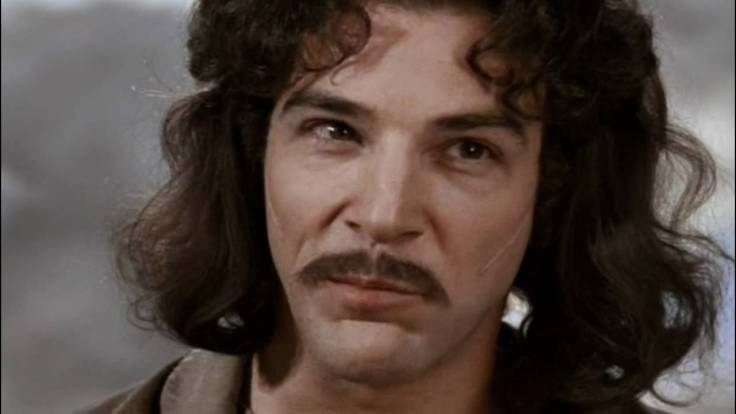
One of my favorite movies is “The Princess Bride.” It’s a quirky movie, based on a novel by William Goldman. It’s part fairy-tale, part satire, part warm and funny love story. In it, one of the characters, Inigo Montoya, is impatiently trying to track down his father’s killer, the vicious Count Rugen. Ironically, to fund his quest for revenge, he takes a job working as a mercenary for Rugen’s mentor, Prince Humperdinck. Part of his job is to kidnap Humperdinck’s fiancee, Princess Buttercup, and kill the mysterious man who is trying to rescue her. When the mysterious masked man climbs the perilous Cliffs of Despair, Inigo waits at the top to challenge him to a duel.

But Inigo is impatient. He calls down to the struggling masked man. “I do not suppose you can hurry things up a bit,” he suggests. He even offers to help the man–“though I do not think you will accept my help, since I am only waiting to kill you..”

Inigo is not cut out to be a vicious mercenary– clearly– because he befriends the masked man before their deadly duel (which doesn’t result in anyone’s death). He even waits–yes, WAITS– for his opponent to get rested and prepared before the duel begins. Inigo may hate to wait, but he has developed the gift of waiting for others when it really counts. (A skill he demonstrates elsewhere in the tale.)

Photo by Ric Rodrigues on Pexels.com

What does any of this have to do with prayer? We are entering a season of Advent. It is a reminder that the whole world waited impatiently for the coming of the Messiah. Centuries of impatience; centuries of expectation, centuries of waiting for a coming Hope.

Photo by Pixabay on Pexels.com

We will spend a few weeks waiting– and it may be made more anxious because of COVID–waiting for presents, or to reunite with family. And we all hate waiting. We are uncomfortable with delayed expectations, and uncertainty in our immediate future. Even with the joyous anticipation that Christmas brings, the period of Advent can be nerve-wracking.

Inigo Montoya spent years anticipating and “waiting” to exact revenge for his father’s death. He hated waiting. But he used that time wisely. In the waiting, he prepared. He studied the art of sword-fighting. He searched far and wide for his quarry. His life revolved around this less-than-holy goal. And, though he “hated” waiting, he waited for decades, never giving up, and finally, achieving his goal. Along the way, he made many mistakes, but he also made friends, and avenged his father’s honor.

Photo by Jeswin Thomas on Pexels.com

This Advent, we “await” the coming of the Christ child. And, as followers of that same Christ, we await His victorious second coming. This is so much better than waiting for revenge. We wait for reconciliation, for restoration, and for renewed life! We have a great hope– the anticipation of Eternal Victory and Joy! How are we preparing? Do we spend our time complaining? Do we give up? Or do we seek diligently, not for a six-fingered man to kill, but for opportunities to spread the Joy and Hope we have found?!

Photo by August de Richelieu on Pexels.com

The Lord Has Taken Away…

20 Then Job arose and tore his robe and shaved his head and fell on the ground and worshiped. 21 And he said, “Naked I came from my mother’s womb, and naked shall I return. The Lord gave, and the Lord has taken away; blessed be the name of the Lord.”

Job 1:20-21 ESV (via biblegateway.com)
Photo by Pixabay on Pexels.com

The book of Job presents us with a startling picture. Job is a godly man; a righteous man; a man of faith and good works. And yet, God allows him to experience loss upon loss– Job loses everything, short of his life and his nagging, bitter wife. His first response is praise and worship! But as the losses sink in; as the pain and agony and grief continue, Job questions God’s justice and wisdom. Job, like us, wants answers that make sense. He is willing to suffer– even greatly–IF he can see the purpose of his suffering, and justify it to himself.

Photo by RODNAE Productions on Pexels.com

We are getting ready to celebrate Thanksgiving tomorrow in the U.S.– a day when we celebrate what God has given us. We normally celebrate family, health, good food, material blessings, etc. We celebrate abundance and comfort; peace and plenty; family and freedom. But his year, our celebration will be quite different. The Lord has taken away…

Photo by Karolina Grabowska on Pexels.com

Some of us have lost jobs, or we’ve lost our good health to COVID or related factors, or we’ve lost loved ones, often without the chance to say our final “goodbyes”. Millions of us have lost the ability to move about freely and conduct “normal” errands and activities. Schools and businesses are closed or operating from a distance. Families and friends have been kept apart. Much that gave us comfort and happiness has been “taken away” this year. And God has allowed it all to unfold. He has not “taken away” this disease or its consequences. He has not “taken away” floods, or fires, or hurricanes. He has not given us answers or explanations.

Photo by Collis on Pexels.com

Job’s initial praise turns to questioning. While he does not “curse God and die,” as his wife suggests, Job spends his time wondering, “Why me?” His friends try to find answers– “you must have done something to deserve this, Job.” Because God does not “punish” the righteous. It isn’t logical; it isn’t fair; it isn’t just.

Photo by Alem Su00e1nchez on Pexels.com

Except that God laid on His own Son– on Himself– the guilt and punishment for all those who are unrighteous. What Job went through–unknown and unseen to him and his friends–was a glimpse into what God Himself would suffer. Christ lost everything–INCLUDING his life– in order to bring salvation to all those who are willing to believe and receive it. Christ was willing to give away His dignity, His power, His friends and family, and His life. And the Lord allowed it all to be taken.

Photo by Andrea Piacquadio on Pexels.com

Many people read the story of Job– his loss and all his questions and complaints–and conclude that God is not fair or just. They find Him to be capricious and unwilling to ease Job’s suffering or answer his questions. They conclude that God is wicked and unworthy of Job’s praise or trust.

But to do so is to ignore the end of the story– God DOES “answer” Job; He gives Job a chance to justify himself and bring his case. And more than that– He gives Job more than he had before. Job ends up with more children to love, renewed health, and even more wealth than he lost. https://www.biblegateway.com/passage/?search=Job+42&version=CSB And the same is true of Jesus Christ. Because of His “loss,” the world has gained the priceless gift of Salvation by Grace. Christ has become the first of millions to taste victory over death and enter into eternal life. https://www.biblegateway.com/passage/?search=1+Corinthians+15%3A20-23&version=NIV

Loss and grief still exist in this world; disease and suffering and hardship still plague us this year. But we have SO much to celebrate at Thanksgiving. When the Lord “takes away,” it is not because He is capricious, or jealous of our wealth or happiness. It is not because He is unkind or uncaring. At just the right time, and forever more, the Lord will Give without end– lavishly, extravagantly, abundantly. Nothing He takes away in this life– even a cherished love one–is beyond all hope of comfort, redemption, or restoration. Our losses cannot compare to the riches of His Grace and Love. This is a great mystery, but as Job discovered, God WILL DO IT!

Photo by mentatdgt on Pexels.com

Blessed be the name of the Lord! Let us Thank and Praise His Holy Name!

Who Forgives All Your Sins…

Praise the Lord, my soul;

    all my inmost being, praise his holy name.

Praise the Lord, my soul,

    and forget not all his benefits—

who forgives all your sins

    and heals all your diseases,

who redeems your life from the pit

    and crowns you with love and compassion,

who satisfies your desires with good things

    so that your youth is renewed like the eagle’s.

Psalm 103:1-5 (NIV) via biblegateway.com

https://www.biblegateway.com/passage/?search=Psalm+103&version=NIV

Photo by omar alnahi on Pexels.com

Sin isn’t a popular topic of conversation. Most of us would rather talk of victorious living; of accomplishments, righteous thoughts, life choices that “worked out” to our benefit. If we must talk of wrongs, we prefer to speak of “shortcomings,” or circumstances “forcing” us to make bad choices. We point fingers at those who could have/should have helped us, or warned us, or given us better guidance. We may even acknowledge shame or guilt for choices we’ve made, and speak of atonement, or lessons learned.

Photo by Reafon Gates on Pexels.com

But God has provided for forgiveness–not a denial of our guilt; not a “free pass” for our actions–something beyond our capacity to give or “earn.” God alone is capable of perfect judgment. He never makes excuses; nor does he accept them. He knows every detail of every choice you’ve ever made–the motivations, the circumstances, the alternatives–and He has the power to pronounce eternal judgment AND eternal forgiveness.

Photo by RF._.studio on Pexels.com

We have a tendency to give partial forgiveness, because we do not have God’s perfect knowledge or judgment. We get trapped in a cycle of guilt and shame, or blame and bitterness, because we want to see a perfect justice that is often missing in our fallen world. We tend to forget the benefits of God, instead focusing on the deficiencies of ourselves and our neighbors.

Photo by Andrea Piacquadio on Pexels.com

God forgives ALL our sins–but we must seek that forgiveness and accept it! God heals all our diseases– some of them here and now; others in eternity. God redeems our lives from Hell–something we could never do on our own.
God crowns us (read that again!) with love and compassion. He pours His love all over us– lavishly, unreservedly, undeservedly–and raises us up to eternal life.

Photo by Wildan Zainul Faki on Pexels.com

Why do we fear to confess our sins to such a Loving God? It’s not as though He cannot see or know them. It’s not as though He is powerless or unwilling to forgive them. He wants to remove our sins “as far as the east is from the west” (v. 12) And only He can do this. When we deny or ignore our sins, they are not removed, only suppressed. When we wallow in our guilt and shame, our sin is constantly present in our mind. Only God’s perfect forgiveness can free us to make courageous and compassionate choices, confident in His love and power to heal and guide us in His ways.

Photo by Pixabay on Pexels.com

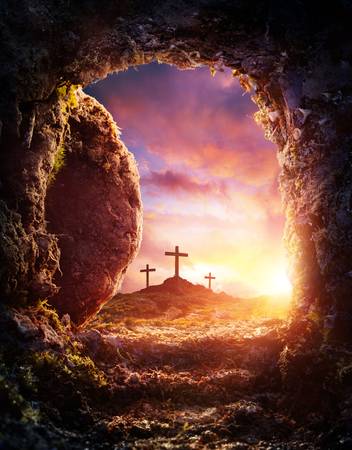
Sin is ugly. And its power is too great for us to overcome on our own. Its consequences are deadly, and far-reaching– too great for us to make atonement in a lifetime. But its power is broken in the light of Christ’s crucifixion and resurrection. The sentence is commuted. We are reconciled to the God of Holy, Righteous Perfection. The consequences now belong to Christ yoked with us, working in and through us. We cannot perfectly atone for our actions; but we can give the burden of atonement to the One who can– and the One who can give us His power to bring healing.

Photo by Edu Carvalho on Pexels.com

Praise the Lord, O my Soul!

My Father’s World

As I look outside, there are bare branches on the trees, and the grass is covered in fallen leaves. The beauty of early autumn has almost gone, and winter is coming. The air is brittle and chilly, but not as cold as it will be in another month.

Photo by Alexander Butenko on Pexels.com

Yet, this is My Father’s world. I trust that winter will come, and pass. Spring will follow, and the trees will once again be covered in leaves and filled with birdsong and new life.

Photo by Lina Kivaka on Pexels.com

As I listen to the news, I hear of COVID deaths and hospitals filled with the sick and suffering. I hear of political unrest, and people spewing hatred, anger, and fear for the future. There is chaos and uncertainty, injustice, and pain. There are hurricanes and fires, floods, and earthquakes.

Photo by Inzmam Khan on Pexels.com

Yet, this is My Father’s world. He sends rain on the just and the unjust; He brings healing and hope, even in the darkest hours. This world does not belong to any one nation, or political party, or natural disaster, or epidemic. Such circumstances have the power to cause destruction and fear, but they do not have power over the Creator of all things. Their reign is temporary and limited. And ” ‘tho the wrong seems oft so strong,” God is eternally sovereign– nothing that happens today can either take God by surprise, or cause Him to quake.

Photo by Pixabay on Pexels.com

I meet with people who are discouraged, angry, bitter, and scared. And I cannot “fix” the world around me with good intentions, or hard work. I cannot give assurance based on my own efforts or my own wisdom. I don’t know the answers, and I don’t have the solutions. I will make mistakes. I will say things that cause confusion, or even offense.

Photo by Ken Ozuna on Pexels.com

But this is not my world; and it isn’t the world of those who try to discourage me, judge me, take advantage of me, or manipulate me. This is My Father’s world. And in this moment, I will choose to look for His hand and listen for His voice.

Photo by Magda Ehlers on Pexels.com

AMEN!

Showers of Blessing

One of the things I find amazing about prayer is hearing about and seeing God work globally through the prayers of His people. God is Sovereign–He can choose to work however, whenever, and wherever He chooses. But He gives us the awesome privilege of participating in His work.

I use a prayer journal. In it, I keep names of people, ongoing and urgent prayer requests, and a list of places. Each day, I pray for those who are celebrating their birthdays or anniversaries (if I know them). I also pray for ongoing and urgent requests as I receive them. I pray for world leaders, local officials, and even those who wish me ill (if I know of them). Lastly, I pray for a particular place each day–as I write this, I am on the day reserved for Uganda. I don’t know anyone in Uganda; I’ve never visited, and I know very little about the nation. But God knows. God knows the people, He knows the weather, the land, the economy, and the spiritual needs of Uganda. I don’t have to know any of that. I just need to be faithful to call out to God on behalf of this land that is precious to Him. Some days, I pray for a nation; sometimes a city or a region; sometimes an ocean or desert.

Photo by Magda Ehlers on Pexels.com

My prayers rise to God like a mist, but God gathers prayers to form clouds and send a shower of blessing wherever He wills it. I may never see the answer to my prayer for Uganda today. But I trust that God will send blessings like rain– maybe today, maybe next week– to someone in Uganda. Someone I’ve never met. Someone I hope to meet and love in Eternity–my long-lost, never-before-met brother or sister! And as I pray for those with birthdays or urgent needs, I trust that others are doing the same. God may not choose to answer those prayers in the way we expect. But He WILL send out showers of blessing. The rain will fall on the just and the unjust https://www.biblegateway.com/passage/?search=matthew+5%3A44-45&version=NIV and it will fall where and when God decides.

Photo by Kaique Rocha on Pexels.com

God doesn’t need me to pray for Uganda or any particular person or place. His work will progress with or without me. And if I pray for Moldova or Tokyo or the Arctic Ocean tomorrow, it won’t change God’s plans. But it might change MY outlook. And I will know the joy and glory of joining in God’s work as I watch it unfold. Amazingly, I know that some of those showers will fall on me and my family as other believers– perhaps strangers I have never met– pray today. https://www.biblegateway.com/passage/?search=Psalm+113%3A3&version=NIV

Photo by sergio omassi on Pexels.com

Pray without ceasing..

1 Thessalonians 5:17

Of Incense and Vapors..

Sometimes, prayer seems like a vapor–something that rises without substance, only to evaporate. We say our prayers and wait for an answer. And the Bible describes prayer like incense. It rises to God as a sweet fragrance. https://www.biblegateway.com/passage/?search=Revelation+5%3A8&version=ESV But incense and vapor dissipate and evaporate without a visible trace. They have no form or solid substance. Is prayer equally fleeting and amorphous? Is prayer “real,” if we can’t see it working?

Photo by Jan Kroon on Pexels.com

And yet…

Photo by eberhard grossgasteiger on Pexels.com

Vapors rise and mix with other vapors. They are carried on the wind. They form clouds, and the waters return to the earth as rain and snow. And incense diffuses and leaves its scent throughout a building long after it is burned. We know that incense has been burned. We know that water has evaporated. And we know that they are “present” even if we can’t see or touch them.

Photo by Flickr on Pexels.com

Prayers– especially prayers lifted in petition–rise away from us. They are meant to disappear from our view. Our focus should not stay on the visible troubles we lift up in our prayers, but on the invisible and all-powerful God who receives our cries. And as prayers rise, they are gathered and formed by God into clouds of blessing. The rain will fall where God wills it, to water thirsty souls, bring healing, and be lifted up in new prayers. The incense of our prayers will permeate the world with the fragrance of God’s love, even as they ascend to His throne.

Photo by Luis Quintero on Pexels.com

This is part of the mystery of prayer. Just as God designs water to be lifted up and returned to the earth hundreds of miles away; just as He designs fragrance to spread without any visible evidence, so He has designed prayer to work in unseen and unpredictable ways. God delights in our participation in this mystery. He invites us to be part of the process of spreading His beauty and glory throughout the world!

Photo by Evgeny Tchebotarev on Pexels.com

Mustard Seeds..

He said to them, “Because of your little faith. For truly, I say to you, if you have faith like a grain of mustard seed, you will say to this mountain, ‘Move from here to there,’ and it will move, and nothing will be impossible for you.”

Matthew17:20 ESV (via biblehub.com)

Faith is a vital part of life, and especially a life in pursuit of prayer. If I don’t believe that God exists, and that He rewards those who earnestly seek Him (Hebrews 11:6) then my prayers are little more than wishes made on a star or empty dreams.

Photo by sobhan joodi on Pexels.com

During Jesus’ ministry on earth, He lamented often that His disciples had so little faith. And yet, He said that if they had “faith like a grain of mustard seed,” nothing would be impossible. In fact, Jesus used seeds in a lot of His teaching. He talked of seeds scattered on different types of soil; mustard seeds growing into large plants; seeds in good soil yielding exponentially large harvests. There is something about seeds that can teach us about the nature of faith. And, according to Jesus Himself, we need to learn about and practice faith in greater measure!

Photo by Karolina Grabowska on Pexels.com

So what are some of the seed lessons we still need to learn?

  • Seeds start out small. Jesus used a mustard seed, mentioning that it is one of the smallest of all seeds. So often, we want to start out “large” in our faith. We see our doubts as failure, rather than immaturity. We see our slow growth as weakness–and it is! It is that very weakness that God wants to use to show HIS strength. When Jesus “lamented” that the disciples had so little faith, He wasn’t condemning them– instead He was pointing out that faith is a process–that seeds GROW into larger plants.
  • Seeds do not produce plants unless they are planted! I see websites and Christian bookstores selling jewelry featuring a small glass case with a tiny mustard seed inside. It’s a nice reminder of Jesus’ teaching about faith, but carrying around a mustard seed is NOT the same thing as having faith like a mustard seed. Faith that is never planted and rooted in good soil will remain nothing more than a seed– useful as a piece of decoration, perhaps, but dormant and unproductive. If I have faith “like a mustard seed” in money, or power, or in my own wisdom and skills, it is no more effective than if I throw it on the sidewalk, wear it around my neck, or put it in my pocket.
Photo by Torsten Dettlaff on Pexels.com
  • Seeds need soil, light, and water. Faith doesn’t grow in isolation. I need to listen to others, share with others, and, most of all, live in the good soil of God’s word. I need to pray for others– and I need the prayers of others! I need to talk to God daily; but I also need to read His words to me daily!
  • Seeds are designed to produce a harvest– fruit, grain, trees, and new seeds! I get distracted, thinking of how faith impacts MY life and my Christian walk. God wants me to grow stronger in my own, yes. But He wants my faith to be multiplied by being visible. Even a root vegetable sends a shoot or a plant above-ground, so there is evidence of growth underground. In doing go, the original seed will disappear! There are days when I cannot see my “mustard seed.” But that is (I hope) because the seed is becoming a mustard plant– producing evidence of God’s sustaining power and love, and providing “seeds” for others to plant.
Photo by icon0.com on Pexels.com

There are days when my faith may feel small and dead. But I need to remember that the power is not in the “seed” of faith– no matter how small; no matter how large its potential–it is in planting that seed and letting God’s power transform a seed into fruit that will last!

Photo by Pixabay on Pexels.com

More more on this topic, see:https://www.crosswalk.com/faith/bible-study/what-does-jesus-mean-by-faith-as-small-as-a-mustard-seed.html

Praying in Perspective

Have you ever seen a photo collage–a large picture made up of hundreds or thousands of tiny photos? If you stand back, you can see a large picture– a face, or a landscape, perhaps–but when you get closer, you can see the many smaller photos that make up the details.

Photo by Brett Sayles on Pexels.com

Prayer is like that. Each of us is a tiny details in the grander scope of the world’s population. Millions of people are praying at any given time on any given day. And we don’t see all of the others– sometimes we don’t see or hear or think of anyone else as we pray. But God sees and hears them all–moreover, God weaves and blends our prayers into something amazingly more than meets our awareness. Prayers of thanksgiving add a dash of bright color; prayers of anguish sound a minor tone; prayers of confession rise like incense, and prayers of worship wrap around all the colors and sounds and scents.

Photo by Pixabay on Pexels.com

Yesterday, I was feeling very depressed and small. It was difficult to pray. My perspective was off, and I could only see my own problems and emotions. Prayer helped change my perspective. As I spoke to God; as I thought about His power and omniscience, I began to see that I WAS small–but my God is enormous! And while He sees the entire picture– all places and times and peoples–He also looks on every tiny detail. He knows my name; He knows my every thought. He knows my needs and my desires; He knows my weaknesses and my unique gifts– gifts He has given! Even if no one else noticed, God would be able to pick out the smallest detail in His amazing creation, and bring it into perfect focus.

See Isaiah 55

Holy Terror

It’s the end of October, and tomorrow will be Halloween. Stores and houses around the neighborhood are decorated with frightening figures of skeletons, witches, ghosts, and gravestones. Some of my friends love this time of year, and they look forward to binge-watching movies about zombies or vampires– anything scary, spooky, or terrifying.

Photo by Toni Cuenca on Pexels.com

I don’t like Halloween. I don’t like scary movies. But I believe in the value of fright. Life is filled with things–natural and supernatural– that fill us with real fear. And that is as it must be in a fallen world. Sin and death, evil and darkness, fires, earthquakes, violence and plague–they are real and should produce both fear and caution. The Bible is not silent or dismissive of such things. God’s laws warn against evil spirits, calling on the dead, consulting with witches, fortune telling, even giving in to anger, envy, and hatred. God’s laws also provide for hygienic practices to ward off disease and plague.

Photo by Mike on Pexels.com

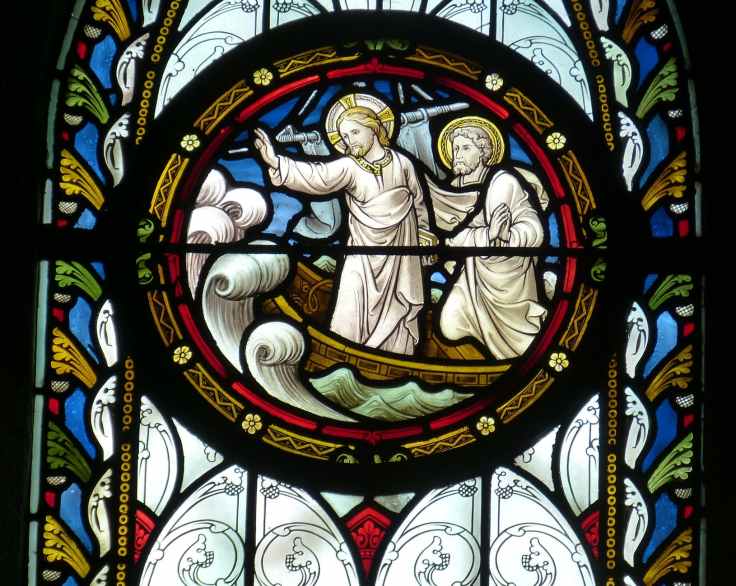
And yet, the Bible also gives hundreds of warnings against giving in to fear and letting it control our lives. We are to be cautious and wise where fear is concerned. Over all, we are to remember that God is bigger and more powerful than our fears. God can calm storms, put out fires, even conquer disease and death! There is no power, no force, no terror, that can overwhelm God, or touch those under His protection.

Photo by Pixabay on Pexels.com

Terror holds no power in God’s presence. Therefore, if we know God, we can experience no true terror. But where there is no God, terror will reign. It’s like the saying: “No God; No Peace–Know God; Know Peace”. Terror comes with darkness, with chaos, with lawlessness and loneliness.

Photo by Skitterphoto on Pexels.com

There is only one other kind of terror– a Holy Terror. We can be terrified by the awesome Holiness of God. It is altogether more powerful and alien than anything we can even imagine. Even for those who know God, there is the knowledge that God is GOD, and we are not worthy to look on His face or enter into His presence on our own. Normally, when we think of terror, we think of things that are very unholy–evil things; supernatural forces of darkness. Yet Holiness can also inspire terror because it causes us to see our own unworthiness; our own sin and failure. I am reminded of the “face-melt” scene from Raiders of the Lost Ark– Nazis, who have been fearlessly and relentlessly pursuing the Ark of the Covenant, believing that it holds supernatural powers they can use to gain power over life and death, are suddenly and horrifically destroyed when they gaze inside–as they come in contact with the very Glory of God, their terror is absolute, and they are destroyed by its presence.

Photo by samer daboul on Pexels.com

This season, may we celebrate that God, in His awesome and mighty power, constantly reminds us that we can “Know” Him without fear; instead of running, cowering, or melting, we can come to Him with confidence and joy! And in doing so, we can face any other terror, knowing that God is with us, and for us, and even filling us with His peace! We need not be filled with Holy Terror– instead, we can be filled with the Holy Spirit!

Photo by Pixabay on Pexels.com

Blog at WordPress.com.

Up ↑