Today marks Epiphany– the day traditionally celebrating the arrival of the Magi to see the Baby Jesus. (Matthew 2:1-12) The Bible does not give us many details about the Wise Men. We don’t know if there were three or thirty. We don’t know if they all came from the same region, or if they came from many different nations and regions and met up along the journey. We only know that they had studied the skies; having seen a new and very bright star (or comet or conjunction of stars), they plotted its course across the sky and “followed” it to Israel– first to Jerusalem, and then to Bethlehem. They brought gifts fit for the king they expected to meet.
What a surprise it must have been for them to reach Jerusalem. After many days (weeks? months?) of travel, they arrived, only to be met with shock and confusion by the leaders and wise men of Israel. Hundreds of prophesies pointed to the birth of Messiah, yet the Jewish leaders were oblivious to His arrival, almost under their very noses! They were not ignorant of the prophesies– they “knew” that Messiah would be born in Bethlehem. Yet, they showed no interest in traveling with the other wise men to meet their own redeemer. Instead, they sent the foreigners to pay homage, while they plotted in Jerusalem to help Herod kill hundreds of innocent infants. These are the same priests, prophets, and wise men who had been studying, praying for, and waiting for the arrival of Messiah for hundreds of years. How could they have missed it?!
Epiphany is not just the name for this day of the Kings with their three gifts of Gold, Frankincense, and Myrrh– it is a word that tells of a sudden realization or understanding of the essence of a truth. But how often do we chase an epiphany–pray for answers, or memorize scripture–only to miss the point? How often are we focused on the pages of history, or our computer screens, only to miss the wondrous star in the sky? Are we, like the Jewish leaders of their age, missing the Epiphany?
God is ready to show us the miracle of His Mercy, the sufficiency of His Grace, and the depths of His great Love– are we chasing an Epiphany that is right under our noses? Let’s be ready to look up, to follow the star, and to be amazed!
I love visiting old churches and cathedrals, with their vaulted ceilings and solid stone walls infused with centuries of incense and the echoed prayers. And I love being outdoors surrounded by the glorious beauty of creation. These spaces seem infused with a special sense of the sacred. It is easy to feel close to God is such spaces.
But God is omnipresent. A crowded bus is no farther from God’s presence than a majestic mesa. The hush of a hospital ward is just as close to His heart as the swelling choir in a cathedral. In fact, when Jesus lived among us on earth, He spent much of His time walking dusty roads, talking and working miracles among the noisy “rabble” of ordinary people. He did not seek out “sacred spaces;” instead, He took the “sacred” into the dark and dirty streets where it was often ignored or dismissed.
Sometimes, Jesus would go off by Himself into the wilderness or into the hills to pray, as well. It is important to make a time or space to do this. But there is nothing especially sacred about particular spaces– even ones designed to be places of worship. It may not be easy to find a physical space for prayer and worship, but we can make a mental “space”– close off distractions, move or turn away from others for a few precious minutes–focus on God’s presence. Remember, His presence is always with us; we just need to acknowledge it!
Prayer connects us to God– wherever and whenever we pray. That doesn’t mean that we should not seek out special times and places to be alone with God. But we needn’t wait for a certain moment or location or position in which to meet with God. He is eternally, immediately available to listen. Are we?
Today is Boxing Day. Some people will leave their Christmas decorations up for awhile longer; maybe even until after the New Year. Others will box up all the holiday trappings for next year. But the boxes and bags that held gifts yesterday are likely put away– some put aside; others in the trash. We laugh about toddlers and pets being more fascinated with the boxes than with the gifts inside, but most of us tear off the paper and rip open the boxes to get to the “good stuff” hidden inside. The ribbons and bows, the gift card holders and glittery greeting cards, while they delight us in the moment, pale in comparison to the gifts and the thoughts behind them.
What a shame it would be if all the wonderful gifts under the tree remained unopened– boxed away for another year, just to be placed back under a Christmas tree in 2023. What a useless tradition it would be to give gifts that were never opened or used, or even seen!
And yet…the Greatest gift of all–the very reason for the Christmas season– often remains boxed up and carefully preserved for another year. “Jesus is the reason for the Season,” as some people say. But have we RECEIVED Him? Have we opened up the gift of His coming; of His offer of salvation and reconciliation– or do we just enjoy the idea of the Baby in the Manger and the Wise Men coming from afar and offering gifts; the angels singing in the night sky, and the gentle animals in the stall?
The Gospel writer and Apostle John wrote that Jesus “came unto His own, and His own received Him not.” (John 1:11) God so Loved the world that He gave His son (John 3:16), but the gift remained unopened and ignored by those who should have welcomed Him. He grew up and lived among them– healed their diseases, spoke comfort and truth, laughed and shared sorrows with them– and they cried out, “Crucify Him!” God’s “one-size-fits-all” perfect gift– the “gift that keeps on giving” eternally!–was despised and rejected. And the Gift is still rejected, ignored, scorned, and unopened today.
All the splendor and glitter of the Christmas season will fade away– the decorations will go back in their boxes; the wrappings and trimmings will be forgotten. But the Gift! Let’s bring it out and use it– revel in it; wonder at it. God with Us. God reaching down and out and beyond to bring us Home–forever! And God giving us the privilege and the power to BE His hands and feet and eyes and lips as we minister to those around us! God holding us close as sons and daughters. “But as many as received Him, to them He gave the right to become children of God, to those who believe in His name..”(John 1:12) When we open this gift, we are not just recipients, not merely believers or followers– we are Children of God.
Lord, help me not make the grave mistake of taking your incredible gift and leaving it in a box, or worse, opening it up and putting it back in a box for later. Help me to live in the “present”– in every way– and to enjoy the privilege of being Your child forever. Amen!
During this season of the year, we hear a lot of “Christmas” music. Much of it is secular music–Santa Claus and magical snowmen, gifts and parties, and the Holiday “blues.” But much of it is related to the real reason for Christmas: the birth of Our Lord. And the number of songs, hymns, cantatas and symphonies related to Christ’s birth is staggering! Popular secular singers record “their” versions of favorite hymns; choirs and orchestras present new songs and ancient melodies. Many of the songs fall into two distinct categories, however. There are quiet lullabies–peaceful and meditative, focused on the infant in the manger; and there are Hallelujahs– joyful and majestic, focused on the wonder of God coming to earth.
I don’t know if there were actually lullabies OR Hallelujahs on that first Christmas. The Bible mentions the visit of the angels, but they were “praising God and SAYING, ‘Glory to God in the Highest..'” We often assume that their praise included singing, but the Bible isn’t specific. But it is interesting to look at the contrast of the quietness of the manger and the Glory of the angel hosts, and hear the contrast in the hymns we raise at this time of year.
Lullabies, and quiet songs, like “Silent Night,” or “Away in a Manger” call our minds and hearts to the humility of the Christ child. Babies are cute and engaging. And they are not “silent.” But they do not command authority and majesty. Babies cry out for help. They are needy in a way that God is NOT. And yet…God came in the form of a helpless baby. The God who created the galaxies needed someone to feed and change Him; to carry Him from place to place and rock Him to sleep. “O, Little Town of Bethlehem” reminds us that He came to a cattle shed in a small town, rather than to a palace in the seat of power.
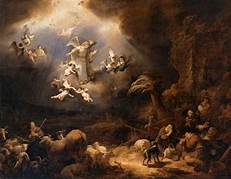
Hallelujahs, like “Joy to the World” and “Hark, the Herald Angels Sing,” remind us that this was no ordinary child. And yet…the angels did not appear IN the manger or even in the little Town of Bethlehem. The Angels were compelled to sing their praises, not to the learned priests, or the courts of power, but to dumb-founded shepherds on a cold hillside. What an explosive visitation! Their praises (whether shouted or sung) shattered the quiet and the darkness. Like a sudden fireworks display, the Glory of God’s servants split the night.
God enters our hearts– sometimes quietly, like the cooing of an infant; sometimes dramatically, like a chorus of angels. God is at work– sometimes in humble moments and ordinary gestures; sometimes in glorious flashes of insight and inexplicable miracles. And this season, our prayers will rise up– sometimes like the humble cries of a newborn baby; sometimes like the soaring songs of angel hosts– prayers of need; prayers of thanksgiving; prayers of awe-struck worship; prayers of simple confession of our own unworthiness, and of God’s sufficiency and everlasting Love. Peace and Glory; lullabies and Hallelujahs; simplicity and majesty– all wrapped up on a manger of hay on one Holy Night.
In the beginning was the Word, and the Word was with God, and the Word was God. 2 He was with God in the beginning. 3 Through him all things were made; without him nothing was made that has been made. 4 In him was life, and that life was the light of all mankind. 5 The light shines in the darkness, and the darkness has not overcome it…14 The Word became flesh and made his dwelling among us. We have seen his glory, the glory of the one and only Son, who came from the Father, full of grace and truth.
John 1:1-5; 14
Emmanuel– God WITH us. The Baby Jesus in the manger is the same Jesus on the Cross; the same Jesus who was involved in the Creation of the universe.
We love seeing the Baby Jesus in the manger. We like the idea of Jesus, the good teacher and friend. We even bow our heads to honor the Jesus of the cross. We pray to Jesus, acknowledging that He is the God-Man who came to save us from Sin. But sometimes, we get so comfortable seeing Jesus lying peacefully in the manger or serenely enduring the pain of the Cross, that we ignore His absolute Holiness and Power.
Jesus was fully human– he ate, slept, cried, felt cold, and felt pain. But He is also God– fully Divine; fully Sovereign. He doesn’t force us to worship Him– not now, anyway. Someday, though, every knee will bow, and every tongue compelled to confess that Jesus is the Ultimate Authority in Heaven and on Earth (Philippians 2:10-11). Larger than life; more permanent than history; eternally Sovereign.
We pray to a God who is so awesome and glorious that no person can see His face and live. And yet, we pray to a God who so loved mankind that He came and walked among us, lived among us, and died among us. We look at Baby Jesus in the manger– we see the face of God. And when we look at our neighbors and friends, we look at those made in the image of God– we see those beloved of God; those Jesus came to save.
This is not new theology. This is basic Christianity. But sometimes, in the bustle of the “Season, ” we forget the wonder and the miracle that is the very reason for it all. God is NOT distant. He is not looking for reasons to reject or condemn us. He reaches out to us EXACTLY like a baby reaches out– seeking to be held close. He is as close as the person sitting next to you at the dinner table, or sharing a seat on the bus. GOD! Not a theology; not a list of do’s and don’t’s. Not an esoteric idea. A Presence; a living Christmas Present! An eternal Gift of Love! One with arms and legs; a twinkling eye and infectious smile.
In this season of Advent and Christmas, may we let the Glory of God fill us with awe and wonder. And may we let the Love of God fill us with hope and joy. May our prayers be like the sweet singing of the Angels on that Holy Night so long ago. “Glory to God in the Highest! And, on earth, Peace among those with whom He is pleased.” (Luke 2:14).
(This post is a reprint from a little over a year ago, but I thought it worth sharing again.)
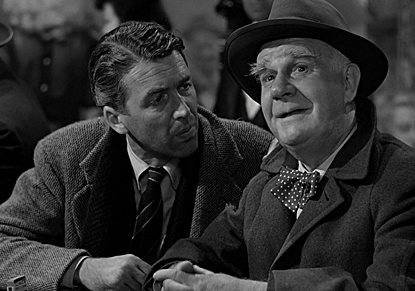
I’m a huge fan of the movie, “It’s a Wonderful Life.” It tells the story of George Bailey (played by Jimmy Stewart) who considers committing suicide on Christmas Eve. His uncle and business partner has lost $8,000– enough to ruin their business. His rival has called for him to be arrested, after George has begged him for help. He had nowhere left to turn. In desperation, he leaves his family, goes to a bar, has a drink, and finally, broken and crying, he prays a simple prayer. Almost immediately, an angry man slugs him in the jaw, and both men are thrown out into the cold. George runs his car into a tree, and proceeds on foot to a bridge, where he plans to jump to his death before he can be arrested and sent to prison. Not a feel-good holiday movie, right?
However, that simple prayer has been heard in Heaven. George thinks that the “answer” to his prayer was being punched, but God has other plans, which include sending a “guardian angel” to help George change his mind. But God doesn’t send a mighty angel to prevent George from jumping off the bridge. He doesn’t send a glorious angel of light to amaze and instruct George. He doesn’t send a warrior angel to protect him from his rival or the consequences of his uncle’s mistake. Instead, He sends Clarence.
Now, I have to pause a moment to say that I disagree with the film in its depiction of angels. I believe angels are spiritual beings who serve the Lord of Heaven, but I don’t believe that humans “become” angels after they die, nor do I believe that they must “earn their wings.” In fact, this flies in the face of the Gospel, that we are justified by faith in the saving work of Christ on the Cross.
But I mention Clarence, because, in the film, he is precisely the sort of “help” we do not expect of God– someone who is earnest, but inept and uninformed. Clarence has almost no clue how to keep George from throwing away his life. He tries to reason with George, but to no avail. He tries to cheer him up, encourage him, and befriend him, even explaining that if George would just let him help, Clarence would earn his wings. George is still determined that his life has been in vain. Finally, he tells Clarence to go away, and claims it would have just been better if he (George) had never been born.
I don’t want to spoil the movie for anyone who has never seen it, but the story reaffirms the value and the joy of life, even as it faces the very real darkness of depression and despair. George finally realizes that his life is really far more wonderful than his circumstances– and very much worth living!
We live in a desperate and dark world– many people are discouraged and facing dark days. Debt, sickness, grief, homelessness, betrayal, alcoholism and addiction, prison, abuse–they are all very real and overwhelmingly oppressive. Sometimes those who face such circumstances cry out in desperation, only to have an experience similar to George Bailey’s– they end up getting punched in the jaw! But this is NOT the answer from God– this is the world’s “solution.” Anger, despair, chaos, violence and abuse come when we try to run away from problems or solve them in our own powerlessness. God’s answers often come in unexpected packages. An unexpected encounter with a stranger; an overheard conversation on a bus or train; even an ad on TV or a song on the radio. God doesn’t usually send an angel– He often “sends” ordinary people in ordinary ways to do His extraordinary work.
But God hath chosen the foolish things of the world to confound the wise; and God hath chosen the weak things of the world to confound the things which are mighty;
1 Corinthians 1:27 (KJV)
God delights in using the “simple” things and ordinary people. (See a much fuller exposition here:) https://biblehub.com/commentaries/1_corinthians/1-27.htm#:~:text=To%20confound%20the%20wise%20%E2%80%94%20To%20shame%20those,he%20does%20it%20in%20irony%2C%20he%20aggrandizes%20them. George Bailey is a simple man who stays true (often in spite of himself) to what he knows is right. Even as he despises his life, it has produced dozens of small miracles. But it requires a change of perspective to see them. “Clever” people; “powerful” people, and “successful” people have surrounded, and even “surpassed” George, but it takes a “Clarence” to make him see the eternal value of a life well-lived. George’s life is worth far more than money; far more than worldly success; far more than power and greed. George is truly “the richest man in town” in all the things that most matter.
It’s a Wonderful Life– George with his family
If God has blessed you by sending a “Clarence,” take a moment to thank Him. If God is calling you to be a “Clarence” in someone’s life today, take a moment to thank Him for that, too! You may not earn a pair of wings, but I guarantee you will be blessed.
What can wash away my sin? Nothing but the blood of Jesus; What can make me whole again? Nothing but the blood of Jesus. Oh! precious is the flow That makes me white as snow; No other fount I know, Nothing but the blood of Jesus. For my cleansing this I see— Nothing but the blood of Jesus! For my pardon this my plea— Nothing but the blood of Jesus! Nothing can my sin erase Nothing but the blood of Jesus! Naught of works, ’tis all of grace— Nothing but the blood of Jesus! This is all my hope and peace— Nothing but the blood of Jesus! This is all my righteousness— Nothing but the blood of Jesus!
What Can Wash Away My Sin (Nothing But the Blood of Jesus) by Robert Lowry (emphasis added)
Last week, I was out shoveling snow. It is not unheard of for us to get snow at this time of year, but it is not usual to have this much, this early. I don’t like shoveling, but I love watching the snow fall– thousands of individual flakes floating around, glinting in the light, and turning everything a pure, sparkling white.
It doesn’t last– the snow gets blown around, and the snow near the streets gets brown and dingy from the traffic. It turns slushy or gets piled up into heaps like so much garbage. The snow in the country gets crusty, even if it stays relatively white. It looks colder, harder, more brittle. There is something pure and magical in new-fallen snow that even snow itself can’t replicate. Artists have tried to capture it in paintings; scientists have tried to study it and replicate it; Hollywood has tried to use substitutes in movies (sometimes painted corn flakes, or sometimes soap flakes). There is still something about real, new snow that is unique and fragile and filled with promise–even in its coldness, it speaks of laughter and joy. (Maybe not while I am shoveling it, but…)
God is the creator and sender of snow. He has storehouses of it (Psalm 135:7; Job 38:22) And it is the image God gives us of forgiveness. (Isaiah 1:18) The purity and softness; the glimmer and weightlessness; the crisp, other-worldliness of falling snow–that is the picture of a forgiven heart! Just as God sends snow to refresh the earth when it looks the most bleak and dead, so God sends forgiveness to hearts that feel cold and dead inside, weighted down and dirty with guilt and shame and Sin. God covers our sins with His forgiveness– and He brings renewal from the inside; new growth, new blossoms, new fruit from what was empty, barren, and used up. And even when snow gets dirty, or crusty– a fresh blanket of new snow revives, cheers, and brightens the landscape.
God’s forgiveness is compared to snow, but it is far more powerful. White snow can cover up brown and barren trees and gray streets for a f, but God’s forgiveness comes, not in white, but in bright red. It comes through the shed blood of Christ, freely and lavishly given to wash away the scarlet stain of Sin. Red cancels out red, leaving purity and newness that comes from no other source. No artist can capture it; no scientist can discover its makeup; no Hollywood studio can recreate it; nothing on earth can compare or compete with its wonder and power.
Today, I am thankful for the message of snow, and even more thankful for the forgiveness that God offers. He may have storehouses for the snow, but His power to forgive is beyond measure, and His mercies are new every morning! (Lamentations 3:23)
7 “Ask and it will be given to you; seek and you will find; knock and the door will be opened to you. 8 For everyone who asks receives; the one who seeks finds; and to the one who knocks, the door will be opened.
9 “Which of you, if your son asks for bread, will give him a stone? 10 Or if he asks for a fish, will give him a snake? 11 If you, then, though you are evil, know how to give good gifts to your children, how much more will your Father in heaven give good gifts to those who ask him! 12 So in everything, do to others what you would have them do to you, for this sums up the Law and the Prophets.
A couple of years ago, I took on a part-time, temporary job with the Census Bureau in which I had to make visits to various households and ask to conduct an interview. I knocked on a lot of doors. Few of them were ever opened. Many of the houses were unoccupied– either the family wasn’t at home, or the home was vacant or even abandoned. At others, there were clearly people at home, but they wouldn’t come to the door. At still others, a person would come to the door, or respond via intercom or speaker, but they would not open up or consent to do the interview. This occurred during the height of the pandemic, so some of the fear and evasion was expected. But even though I was wearing a mask and promised to practice social distancing; even though the interview was less than 10 minutes, and would help their community and country, they would not speak to me or let me step up to or across the threshold. *(For the record, I was not required to actually enter anyone’s home to conduct an interview; most took place across the threshold or through a screen door or even out on the front steps.) A select few, however, were gracious and welcoming. They opened the door, invited me in, offered me a seat, and refreshed my spirit. I knocked on the doors of the wealthy, and those in extreme poverty. I knocked on fancy doors with cyber-security, and doors that were hanging off their hinges. I knocked on the doors of large families, and lonely widows. I knocked on the doors of the dying, and the doors of families with newborns. I knocked on the doors of mobile homes, and lake cottages, and apartments, and old farm houses. Some of the kindest people I found were in so-called “bad” neighborhoods. Some of the people who were the most gracious were those who were in the most pain, and had the least to gain by being kind. Those who were threatening and rude were quick to point out that their time was more valuable than mine– that they were too important, or too comfortable, or too busy to answer a few simple questions. In a couple of cases, I had to leave because I was threatened with harm or faced verbal abuse.
My job required me to knock on a lot of doors! And throughout our lives, we will have to “knock” on doors– seek out opportunities, ask for needed help, go to places outside our comfort zone– and many of the doors will remain closed. Others will require that we knock several times, or even return another day to knock and seek entrance. But God will never turn away those who knock at His door. God will never tell us we must stand outside or come back at a more convenient time. He will never have a sign that says “No Trespassing,” or “Keep Out!” In fact the only thing keeping us from entering His Courts is our own refusal to accept His invitation; our own pride or guilty conscience, or resentment and rebellion; our own reluctance to approach the door, let alone knock. We don’t need an appointment, or an official summons to “Come!” The invitation is always open, and the door is not locked.
God is not “too busy”, and our questions, requests, and praises are not “too small” to get His attention. God is gracious. God is available. God is accessible. And God’s opened door is so much more than an entry to someone’s hallway or front room or kitchen. God opens the doors to His very throne room! He invites us to “Enter His gates with thanksgiving and His courts with praise”! (Psalm 100) He invites us to the wedding feast of the Lamb (Revelations), and to everlasting life (John 3:16).
Photo by Augustinus Martinus Noppu00e9 on Pexels.com
Jesus also “knocks” at the door of our hearts, asking to “come in.” (Revelation 3:20) What does He find? Are we “away from home”– so busy chasing after foolish things that we don’t even inhabit our own hearts? Are we ignoring Him, hoping He’ll go away? Are we telling Him to come back another time, or coming up with excuses why we don’t need to speak with Him? Do we try to chase Him away with our anger or bitterness? Or do we open the door, invite Him in, and offer Him a seat?
Jesus urged His listeners on the Mount to Ask, Seek, and Knock. And then, He challenged them to “do to others what you would have them do to you.” How are we treating those who “knock” at our door? Those who need a friend, or a listening ear? Those who need to hear the truth, and the hope that is in us? Trust me– how we answer that “knock” at our door will leave an impression. It will testify to our true nature.
God doesn’t just hear us knocking, He opens the door and gives us all we need for life and godliness (2 Peter 1:3). What are we giving to those who knock on our door?
As followers of Christ and believers in an Eternal God, we live in the “here and now,” but we also live in something called the “not yet.” Our life here is finite, but our life in the “not yet” is eternal.
Most of what we pray for belongs in the “here and now.” We pray about what we see and know. We may pray for an upcoming surgery, or a looming job loss, or give thanks for something that happened in the recent past, but most of our prayers do not venture into the eternal future.
Yet, God speaks to us of things to come. No, He doesn’t always reveal details or give us a calendar of times and dates; but He does remind us that what we see is not the whole picture. And we need to remember this when we pray and when we look around us.
Much of the Old Testament, plus parts of the New Testament, are given over to prophecy– visions, promises, warnings about the future. Many of the prophecies have already been fulfilled– in detail. Some of the prophets prayed for revival in Israel and Judah; others prayed for the coming of the Messiah. Their prayers were answered– but not always in their lifetime, and not always in a way they understood. The Apostles, writing to Jesus’ followers looked forward to His return– but they never saw it in their lifetime.
Now faith is confidence in what we hope for and assurance about what we do not see…And without faith it is impossible to please God, because anyone who comes to him must believe that he exists and that he rewards those who earnestly seek him.
Hebrews 11:1, 6 (NIV)
Following Christ involves living in both the “now” of immediate life, and the “not yet” of our faith. We can have confidence in what was, what is, and what is to come. And we must learn patience, and stand firm in God’s promises, as well as living “in the moment” of service and obedience,. We cannot sit back and wait for life to come to us; neither can we live such short-sighted lives that we waste our energy chasing after constant gratification and emotional peaks. Sometimes, the very circumstances we are praying for God to “change” or take away are the circumstances He will use to teach us, grow us, and bless us!
Prayer is not just about us and our immediate needs. Today, spend some time praying with an eternal mindset–that God’s will would be done, in His time and His way. And then, trust that whatever is going on in the “here and now,” it is all part of God’s perfect plan. One that we will understand more fully in the “not yet.”
As I look out my window today, I see a wonderful palette of fall colors waving in the wind. There are trees still filled with dark green; others with variegated shades of red and orange and yellow; some have brown leaves– so brown, they are tinged with purple! Back in the spring, the trees had so many subtle shades of green– bright green, yellow-green, and un-nameable greens in between. The colors of nature are astounding in their variety and their ability to change throughout the seasons.
God loves variety– not just in colors, but in all of life. Giraffes and gerbils; elephants and eels; ladybugs and llamas; koalas and kingfishers; swans and sloths; trees and termites; roses and raccoons…different shapes and sizes, with different lifespans and different habitats. Nature is a kaleidoscope. And precious people, too. Skin tones that span a vast spectrum; different hair; different eyes; different noses; different heights. But also different speech; different ways of thinking and doing; different ways of life–people living in city apartments, isolated huts, houseboats, underground houses–infinite variety.
Our prayers are also uniquely different from those of other people. And God LOVES to hear the differences as we lift up our unique praises and petitions. God created us to be uniquely ourselves– and uniquely His!
Just think– at this very moment, someone is praying in a language you’ve never spoken, in a place you’ve never visited. Someone else is praying for needs you have never even imagined, and thanking God for blessings you’ve never dreamed of.
It is a wonderful exercise to pray in a group– dozens, even hundreds of God’s people speaking the same thing in agreement; raising united hearts in praise or even in pain. But there is also something wonderful about listening to others as they express their hearts, knowing that God values each of us for the unique person He made us to be. We can be just as awed by the variety of amazing people we meet as we are by the amazing colors of the autumn leaves. The same God loves to fill the world with infinite variety and beauty.
Today, let’s try to see people for who God made them to be–infinitely precious and unique. And don’t forget that person in the mirror! God loves you. He loves to hear from you. He loves to lavish His love on you and through you, in ways that only He and You can experience.


































 Pursuing Prayer