There Was No Room…

Photo by Jessica Lewis on Pexels.com

Thou didst leave Thy throne and Thy kingly crown,
When Thou camest to earth for me;
But in Bethlehem’s home was there found no room
For Thy holy nativity.
(Refrain 1-4):
O come to my heart, Lord Jesus,
There is room in my heart for Thee.
Heaven’s arches rang when the angels sang,
Proclaiming Thy royal degree;
But of lowly birth didst Thou come to earth,
And in great humility.
The foxes found rest, and the birds their nest
In the shade of the forest tree;
But Thy couch was the sod, O Thou Son of God,
In the deserts of Galilee.
Thou camest, O Lord, with the living Word,
That should set Thy people free;
But with mocking scorn and with crown of thorn,
They bore Thee to Calvary.
When the heav’ns shall ring, and her choirs shall sing,
At Thy coming to victory,
Let Thy voice call me home, saying “Yet there is room,
There is room at My side for thee.”
Refrain 5:
My heart shall rejoice, Lord Jesus,
When Thou comest and callest for me.

Photo by Negative Space on Pexels.com

Christmas is a time of gathering:  with friends or family, co-workers or congregations.  But, as we gather, we must make room– room for a tree; room for decorations; room for tables laden with food and drink; room for guests; room for gifts; “room” in our schedules–for shopping, programs and parties, travel time, etc.

We spend a large part of the holiday season making room for all these things.  We plan ahead, and rearrange our lives and rooms for all the trappings of Christmas.  Do we make room for the Christ?
Photo by Kaique Rocha on Pexels.com

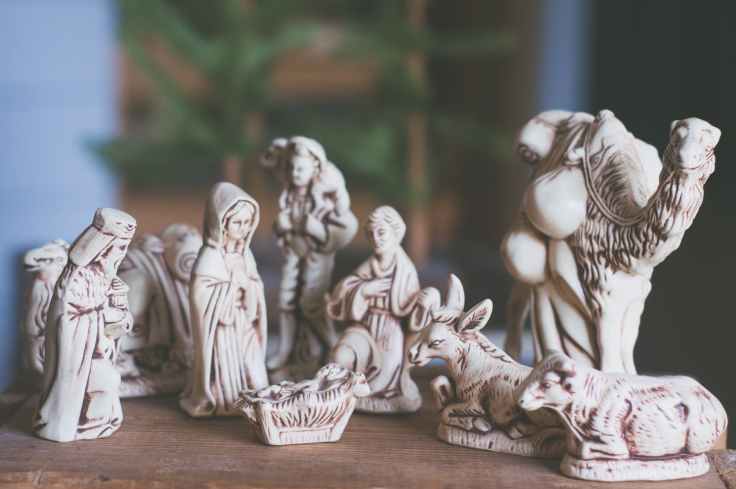
God planned from the beginning for the incarnation. He sent word through the patriarchs and prophets that He would come, but He  made no reservations or detailed plans for His arrival in the humble town of Bethlehem. And while the Christ child received gifts from the Wise Men (see yesterday’s post), He asked for none.  He asked for no great halls filled with feasting and merriment. All He asked for was room–and there was none.  Bethlehem was flooded with visitors.  Everyone was busy with the census, pre-occupied with annoyances, worries, taxes, paperwork, registrations, and more.  The residents of the town, who might otherwise have shown great concern and even generosity toward a visiting young couple expecting their first child, could not be bothered to find help for this family.

At its heart, Christmas is all about making room– but not just for the glitter and comforts and the expected guests– we have the opportunity to make room for the wonder that arrives unannounced, and even inconvenient; for the realization that God often arrives as an unexpected guest.

We don’t often celebrate Las Posadas in the bitter cold of Michigan, but it’s a wonderful tradition that reminds us of this very truth.  For nine nights before Christmas, people throughout neighborhoods in Mexico and Guatemala parade through the streets re-enacting the journey of Mary and Joseph to Bethlehem.  A couple representing the expectant parents go door to door, asking for shelter.  Door after door is closed to them, until they arrive at a house that has been designated as La Posada (the lodging), where the entire group will be welcomed in to warmth and celebration.  Click here to see a more detailed description:   https://www.franciscanmedia.org/las-posadas-a-mexican-christmas-tradition/

Photo by Pixabay on Pexels.com

I pray that we will always have room in our hearts for the Christ– and for all those whom He loves.  As we make room for all the trappings of Christmas, let’s not fill the space and time with so much that we crowd out the real reason for the season!

Photo by Brigitte Tohm on Pexels.com

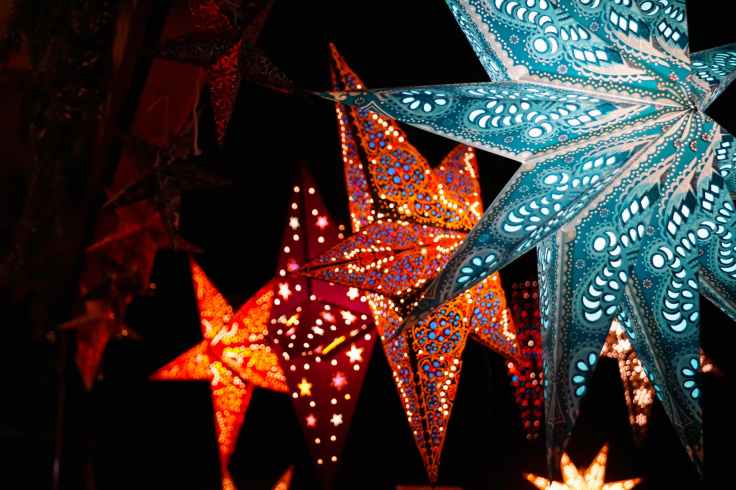
Star of Wonder…


We three kings of Orient are;
Bearing gifts we traverse afar,
Field and fountain, moor and mountain,
Following yonder star.Refrain:
O star of wonder, star of night,
Star with royal beauty bright,
Westward leading, still proceeding,
Guide us to thy perfect light.
Born a King on Bethlehem’s plain
Gold I bring to crown Him again,
King forever, ceasing never,
Over us all to reign.
Frankincense to offer have I;
Incense owns a Deity nigh;
Prayer and praising, voices raising,
Worshiping God on high.
Myrrh is mine, its bitter perfume
Breathes a life of gathering gloom;
Sorr’wing, sighing, bleeding, dying,
Sealed in the stone cold tomb.
Glorious now behold Him arise;
King and God and sacrifice;
Alleluia, Alleluia,
Sounds through the earth and skies.

John H, Hopkins, Jr.
Photo by Jonathan Meyer on Pexels.com


The Visit of the Wise Men
Now after Jesus was born in Bethlehem of Judea in the days of Herod the king, wise men came from the east to Jerusalem, saying, “Where is He who was born King of the Jews? For we have seen His star in the east and have come to worship Him.”
When Herod the king heard these things, he was troubled, and all Jerusalem with him. And when he had gathered all the chief priests and scribes of the people together, he inquired of them where Christ should be born. They told him, “In Bethlehem of Judea, for this is what the prophet wrote:
‘And you, Bethlehem, in the land of Judah,
    are no longer least among the princes of Judah;
for out of you shall come a Governor,
    who will shepherd My people Israel.’[a
Then Herod, when he had privately called the wise men, carefully inquired of them what time the star appeared. And he sent them to Bethlehem and said, “Go and search diligently for the young Child, and when you have found Him, bring me word again, so that I may come and worship Him also.”
When they heard the king, they departed. And the star which they saw in the east went before them until it came and stood over where the young Child was. 10 When they saw the star, they rejoiced with great excitement. 11 And when they came into the house, they saw the young Child with Mary, His mother, and fell down and worshipped Him. And when they had opened their treasures, they presented gifts to Him: gold, frankincense, and myrrh. 12 But being warned in a dream that they should not return to Herod, they returned to their own country by another route.

Matthew 2:1-12 (MEV)

Yesterday, I revisited the account of the shepherds; today, I’d like to take a closer look at the wise men from the East.  First, a bit of clarification:

  • They are (most likely) NOT three kings– at least not in the literal account given in Matthew.  (See more about the number and possible names  and places of origin of the wise men in various traditions here:  https://en.wikipedia.org/wiki/Biblical_Magi)
  • They did not arrive alongside the shepherds on the night of Christ’s birth.  Again, tradition says they may have arrived as early as twelve days after his birth, or up to two years later.  Matthew’s account is very vague.  It quotes the prophesy about Bethlehem, but does not say that this is where the wise men actually found the child (notice that Matthew does not call him and infant or babe).  Their arrival in Jerusalem to make inquiries suggests that some time had elapsed, and the travelers were expecting to find ready knowledge of the birth (or perhaps the child himself) in the capital city.
  • They came “from the East”– which leads me to ask: Why were there no wise men in Judea studying this star and its significance?  These wise men had traveled for weeks or months, bringing gifts. They were  ready to honor a king they knew only from a few prophecies and their study of the night sky. Matthew’s account tells of their arrival and their questions.  They came looking for “the king of the Jews”, suggesting that they were aware of some of the prophecies about Messiah, but they were unaware of Micah’s prophecy concerning his birth in Bethlehem.  Yet the scholars and wise men of Jerusalem were “disturbed” rather than elated or excited by these revelations.   God had not spoken through the prophets of Israel for over 400 years, but He had not forgotten His promises, nor had He abandoned His people.  They, however, had lost their desire to study the prophecies; they had lost much of their hope and faith.  Not everyone had fallen into complacency– the book of Luke points out two specific people who eagerly awaited the coming of Messiah (See Luke 2:21-40).
Photo by Marta Branco on Pexels.com

But it is not just the wise men that capture my attention…it is that miraculous “Star of Wonder.”

Scholars debate whether or not the “star of Bethlehem” was an actual star or another astronomical event.  See one good explanation here:   https://www.timesofisrael.com/can-astronomy-explain-the-biblical-star-of-bethlehem/

Photo by Snapwire on Pexels.com

I am not an astronomer, but everything about this story brings a sense of awe… If this was an actual star (either a new star or a star exploding into a supernova of intense bright light), its light would be traveling several millions of miles, even light years to be visible on Earth.  The star would have to have been burning several years before the birth it announced, and its light would have to reach the Earth in coordination with the events taking place across the vast emptiness of space.  If the “star” was actually a configuration of planets or another astronomical event, the same impeccable timing needed to be activated across the span of eons– just waiting for this exact moment for all the planets and other cosmic elements to align.  It is yet another incredible example of God’s sovereignty and omniscience that all of time, space, history, politics, and celestial objects came together to fulfill multiple prophecies given over multiple centuries and studied by people the world over.

Photo by Lennart kcotsttiw on Pexels.com

What can we learn from all this?  I pray that we would be open to the wonder and awe of every aspect of the Advent and Nativity.  I pray that we would seek as intently as these wise men of the East– that we would not be “disturbed” and taken aback when God fulfills His promises and sends signs and portents.  And I pray that we would shine in such a way as to draw people to the wonder of the Savior, even those from distant lands who have never heard the gospel.

While Shepherds Watched Their Flocks


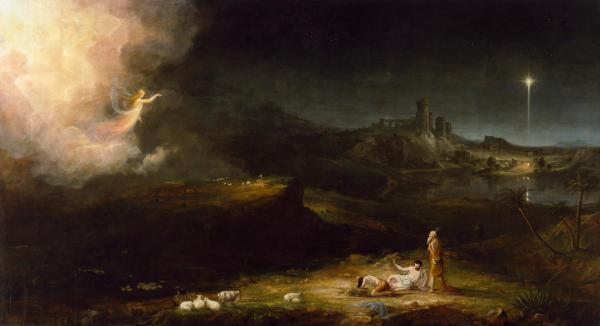
While shepherds watched their flocks by night,
All seated on the ground,
The angel of the Lord came down,
And glory shone around.
“Fear not!” said he, for mighty dread
Had seized their troubled mind;
“Glad tidings of great joy I bring
To you and all mankind.
“To you, in David’s town, this day
Is born of David’s line
A Savior, who is Christ the Lord,
And this shall be the sign:
“The heav’nly Babe you there shall find
To human view displayed,
All meanly wrapped in swathing bands,
And in a manger laid.”
Thus spake the seraph and forthwith
Appeared a shining throng
Of angels praising God on high,
Who thus addressed their song:
“All glory be to God on high,
And to the Earth be peace;
Good will henceforth from heav’n to men
Begin and never cease!”

Words by Nahum Tate

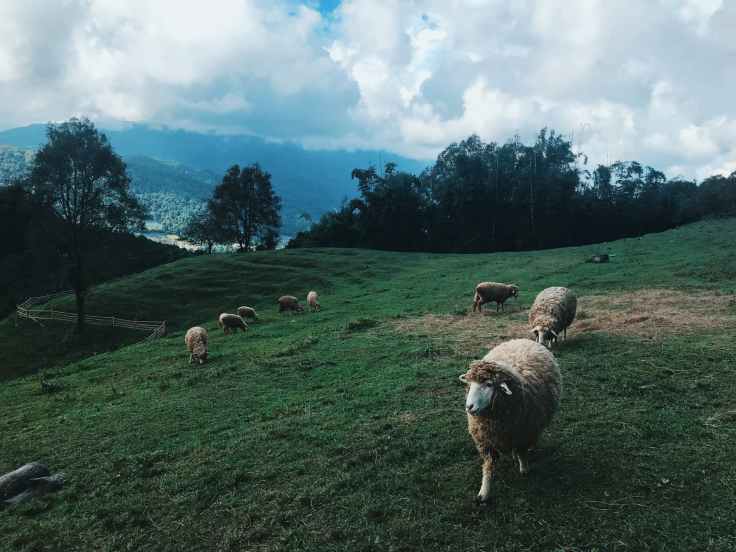
Why the shepherds? Angels might have appeared to the rulers and priests of Israel, announcing the birth of their long-awaited Messiah, but they did not.  Nor did they appear to the common citizens (and other visitors) in Bethlehem.  We make much of the shepherds being lowly and humble, and that is true enough.  But there were other poor and humble people throughout the land.  And there were “important” people who waited to hear the news.  

Photo by Magda Ehlers on Pexels.com

There is something about shepherds that is close to the heart of God.  All the way back in Genesis– Abel was a shepherd.  The early patriarchs– Abraham, Isaac, Jacob– were all shepherds.  Moses, when God called him, was working as a shepherd.  King David started as a shepherd, tending his father’s sheep, while his older brothers were serving in the army.  The prophet Amos was a shepherd.  Jesus used several parables about and allusions to shepherds and sheep as well.  (See Matthew 18:10-14; John 10 among others.)

Shepherds are humble, yes, but there are other traits that I think are at work in the story of the Nativity– some important, and others incidental:

  • Shepherds watch.  That seems pretty self-evident from songs and passages, but it’s also important.  The shepherds weren’t watching for angels that night, but they were alert, combing the area for dangers, pitfalls, straying sheep, wandering predators…There is nothing in the Bible that says that the angels were invisible to anyone else in the neighborhood; only that the angel appeared to the shepherds and was joined by the hosts of heaven.
  • Shepherds must focus on others.  Much is made of the “lowly” station of shepherds.  But that is the nature of the job.  A “Good” shepherd is one whose focus and efforts are directed at the sheep.  He doesn’t “climb the ladder of success”, “toot his own horn”, “keep banker’s hours”– in fact the shepherds of the Nativity story were the “night shift”, tending the flocks when it was cold, dark, dangerous, and thankless!
  • Shepherds were familiar with “unconventional” birth.  An announcement that Messiah was born in a stable and could be found wrapped in strips of cloth would come as a surprise to shepherds, but not as an impossibility or a cruel joke.  Shepherds (anyone whose livelihood depends on the safe delivery of livestock) would understand and rejoice over new life, even in unexpectedly humble or unconventional circumstances.
  • Shepherds were often “left out” of ceremonies and celebrations, because of their frequent contact with blood and death.  The angel’s announcement had special meaning in the inclusion of shepherds, which was to show that even those who had been deemed ritually unclean were to be included in the “Good news of Great Joy!”
  • The shepherds were “abiding” in the fields.  These were not the temporary visitors thronging to Bethlehem for the census.  They were not the patriarchs of great families living in walled compounds or great estates; neither were they awake in the middle of the night plotting, scheming, or creating havoc.  They were humble, but they were faithfully doing their work.
Photo by Chama on Pexels.com

This Advent season, may we consider the shepherds and learn to be watchful, other-focused, joyful, ready to accept the Good News, and faithful in all that we do and say in response to our Good Shepherd!

Photo by Pixabay on Pexels.com

Blog at WordPress.com.

Up ↑