…And the Word WAS God!

Photo by Daniel Maforte on Pexels.com

In the beginning was the Word, and the Word was with God, and the Word was God. He was with God in the beginning. Through him all things were made; without him nothing was made that has been made. In him was life, and that life was the light of all mankind. The light shines in the darkness, and the darkness has not overcome it…14 The Word became flesh and made his dwelling among us. We have seen his glory, the glory of the one and only Son, who came from the Father, full of grace and truth.

John 1:1-5; 14

Emmanuel– God WITH us. The Baby Jesus in the manger is the same Jesus on the Cross; the same Jesus who was involved in the Creation of the universe.

We love seeing the Baby Jesus in the manger. We like the idea of Jesus, the good teacher and friend. We even bow our heads to honor the Jesus of the cross. We pray to Jesus, acknowledging that He is the God-Man who came to save us from Sin. But sometimes, we get so comfortable seeing Jesus lying peacefully in the manger or serenely enduring the pain of the Cross, that we ignore His absolute Holiness and Power.

Jesus was fully human– he ate, slept, cried, felt cold, and felt pain. But He is also God– fully Divine; fully Sovereign. He doesn’t force us to worship Him– not now, anyway. Someday, though, every knee will bow, and every tongue compelled to confess that Jesus is the Ultimate Authority in Heaven and on Earth (Philippians 2:10-11). Larger than life; more permanent than history; eternally Sovereign.

Photo by Tima Miroshnichenko on Pexels.com

We pray to a God who is so awesome and glorious that no person can see His face and live. And yet, we pray to a God who so loved mankind that He came and walked among us, lived among us, and died among us. We look at Baby Jesus in the manger– we see the face of God. And when we look at our neighbors and friends, we look at those made in the image of God– we see those beloved of God; those Jesus came to save.

Photo by Henlynn on Pexels.com

This is not new theology. This is basic Christianity. But sometimes, in the bustle of the “Season, ” we forget the wonder and the miracle that is the very reason for it all. God is NOT distant. He is not looking for reasons to reject or condemn us. He reaches out to us EXACTLY like a baby reaches out– seeking to be held close. He is as close as the person sitting next to you at the dinner table, or sharing a seat on the bus. GOD! Not a theology; not a list of do’s and don’t’s. Not an esoteric idea. A Presence; a living Christmas Present! An eternal Gift of Love! One with arms and legs; a twinkling eye and infectious smile.

In this season of Advent and Christmas, may we let the Glory of God fill us with awe and wonder. And may we let the Love of God fill us with hope and joy. May our prayers be like the sweet singing of the Angels on that Holy Night so long ago. “Glory to God in the Highest! And, on earth, Peace among those with whom He is pleased.” (Luke 2:14).

Author and Perfecter…

12 Therefore, since we are surrounded by so great a cloud of witnesses [who by faith have testified to the truth of God’s absolute faithfulness], stripping off every unnecessary weight and the sin which so easily and cleverly entangles us, let us run with endurance and active persistence the race that is set before us, [looking away from all that will distract us and] focusing our eyes on Jesus, who is the Author and Perfecter of faith [the first incentive for our belief and the One who brings our faith to maturity], who for the joy [of accomplishing the goal] set before Him endured the cross, disregarding the shame, and sat down at the right hand of the throne of God [revealing His deity, His authority, and the completion of His work].

Hebrews 12:1-2 (The Amplified Bible, via biblegateway.com)
Photo by Andrea Piacquadio on Pexels.com

My first job out of college was in an advertising/public relations firm. I was not a copywriter or an executive. I was a proofreader. It was not my job to write ad copy, or even edit it. But it was my job to see that the end product was perfect– no spelling or typographical errors, no missing punctuation or wrong spacing, no missing or “covered” text near the graphics.

Photo by Vlada Karpovich on Pexels.com

Most publishers don’t use proofreaders anymore. In this age of spellcheck and computer grammar programs, they no longer feel the need to hire a person to do such a mundane job. And it wasn’t a thrilling job. It was boring and repetitive to look over the same copy several times to make corrections or to sign off on corrected copy. Sometimes, I would look at the same few lines of text five or six times–a misspelling here, a missed comma there, or a client wanted to change the word order or the font, so I had to check if the typography matched the written specifications, and if the font change made any difference in the spacing and word divisions at the ends of lines.

One day, a mistake got by me, and made it into the final product. It was a “small job,” one that I had looked at near the end of a busy day. I looked at the changed copy, but not the entire text. I was distracted, and I signed off on it without giving it a complete study. The client caught the new mistake, and brought it to my boss’s attention. Suddenly, my obscure little corner of the office was a hot spot. The initial mistake wasn’t mine, but because I had not caught it, the print run would have to be destroyed and a new print run ordered at the company’s expense– a $14,000 mistake! I was not fired, but I was given a chewing-out, and I lost my chance at a raise and a promotion. Just one little mistake, but it ruined the message our client wanted to create!


Photo by August de Richelieu on Pexels.com

In Hebrews 12:2, we are told to “fix our eyes on Jesus, the author and perfecter of our faith.” (emphasis added) Instead of fixing our eyes on imperfect text, or being distracted by what we see going on around us, we are to study the life and words of Jesus– to be “proofreaders” of His perfect words. As we listen to, and read, and live out His words and follow His example, we will see– and become– “proof” of His wisdom and righteousness. As we study His perfection, we will also see how many of the world’s “answers” fall short.

Photo by Andrea Piacquadio on Pexels.com

Jesus is the author of our faith– not us. We cannot write our own story of obedience and faithfulness without falling short. We cannot live a perfect life; nor can we “perfect” the life we have already lived. We cannot undo our own mistakes; nor can we undo the wrongs that have been done to us. Finally, we do not have the authority or the power to create life, or establish the principles needed to have abundant or eternal life. We cannot create purpose or arrange circumstances to give our life meaning and perfection. Jesus writes the story; Jesus, by His blood and power, edits our story.

Photo by Magda Ehlers on Pexels.com

Jesus is also the perfecter of our faith– He gives us wisdom, and helps us build self-control, perseverance, goodness, patience, and love for others. He brings us through trials and sufferings, and allows us to see His faithfulness in the midst of even our worst pain. He redeems us, transforms us, and gives us the power to grow more like Him in Holiness. He sanctifies us, and readies us for our future life with Him in Glory. We can’t do any of this in our own power or strength of will. We still have a role to play in living out our own story, and our own faith–but the power and the results come from God’s work through our lives.

Photo by Vinu00edcius Vieira ft on Pexels.com

God doesn’t make mistakes. God never needs an editor. He doesn’t “need” a proofreader. But WE need to see the “proof” of God’s promises, His provisions, and His perfection. God sent His WORD to live among us– that is what we celebrate throughout this Advent season– God’s WORD is sufficient; it is perfect; it is true. And it is for ALL who believe!

Mercy There Was Great, and Grace Was Free…

How big is God’s forgiveness? I know the Biblical answer: “As far as the East is from the West, so far does He remove our transgressions from us” (Psalm 103:12 ESV); but sometimes, I add subconscious limits to God’s Grace. Sure, I know He can forgive my sins. And your sins. And even sins that make me shudder. I know that He offers forgiveness to all who call on His name in Faith. But sometimes, I question. I add qualifications–“if only..”–because sometimes, it’s overwhelming to think about the enormity and scope and freedom of God’s Grace.

Often, we see God as the great Judge– and He is–the only one with final authority to judge what is right and wrong; who “deserves” punishment or reward. But Jesus came, not only to be the perfect sacrifice for our Sin, but to demonstrate how much God desires to have us be reconciled to Him.

Photo by RFA on Pexels.com

The Cross is a stumbling block to many. I have some friends who find the cross offensive. They say that if God were truly merciful, He would simply forgive our sins without Christ’s sacrifice–just snap His fingers and say, “we’re all good.” They claim that God is harsh, that He delights in sending people to Hell, or He would’ve found a “better” way so that no one would have to suffer (or repent). But Sin isn’t just a trifling matter. It is not just a “boo boo” or a “whoopsie” when we defy the Sovereign, Eternal God. And it isn’t just a trifling matter to bring justice to a fallen world. Absolute justice without mercy would require that we die in the first instant of our rebellion–the moment we tell a lie; the instant we think a lustful thought; in the very act of taking the Lord’s Name in vain. Harsh justice would mean eternal separation with no second chances; no possibility for atonement; no hope of redemption. And Mercy without Justice is not true mercy. It is a cheap imitation. It offers temporary relief from guilt, without effecting any change.

Photo by Victoria Borodinova on Pexels.com

36 One of the Pharisees asked him to eat with him, and he went into the Pharisee’s house and reclined at table. 37 And behold, a woman of the city, who was a sinner, when she learned that he was reclining at table in the Pharisee’s house, brought an alabaster flask of ointment, 38 and standing behind him at his feet, weeping, she began to wet his feet with her tears and wiped them with the hair of her head and kissed his feet and anointed them with the ointment. 39 Now when the Pharisee who had invited him saw this, he said to himself, “If this man were a prophet, he would have known who and what sort of woman this is who is touching him, for she is a sinner.” 40 And Jesus answering said to him, “Simon, I have something to say to you.” And he answered, “Say it, Teacher.” 41 “A certain moneylender had two debtors. One owed five hundred denarii, and the other fifty. 42 When they could not pay, he cancelled the debt of both. Now which of them will love him more?” 43 Simon answered, “The one, I suppose, for whom he cancelled the larger debt.” And he said to him, “You have judged rightly.” 44 Then turning toward the woman he said to Simon, “Do you see this woman? I entered your house; you gave me no water for my feet, but she has wet my feet with her tears and wiped them with her hair. 45 You gave me no kiss, but from the time I came in she has not ceased to kiss my feet. 46 You did not anoint my head with oil, but she has anointed my feet with ointment. 47 Therefore I tell you, her sins, which are many, are forgiven—for she loved much. But he who is forgiven little, loves little.” 48 And he said to her, “Your sins are forgiven.” 49 Then those who were at table with him began to say among themselves, “Who is this, who even forgives sins?” 50 And he said to the woman, “Your faith has saved you; go in peace.”

Luke 7:36-50 ESV)
Photo by Craig Adderley on Pexels.com

The Pharisee in the above story wasn’t looking for forgiveness– nor did He receive it. But the woman who came to Jesus received both forgiveness and blessing. She did not receive it because of the expense of the ointment she used to anoint Jesus’ feet; she didn’t receive forgiveness because her need was so much more pressing than that of Simon the Pharisee; Jesus simply said her faith had saved her. Jesus didn’t refuse to forgive Simon–it’s just that Simon never asked for forgiveness. He wasn’t looking for it. He wasn’t looking for a relationship with Jesus– He wasn’t even really interested in hearing what Jesus had to say. Simon had invited Jesus to show off his own righteousness and get Jesus’ “stamp of approval.” And he didn’t pass muster! The short parable that Jesus told seemed to pass right over Simon’s head. Simon merely “supposed” that someone who had been forgiven more would love more. He didn’t know from experience, because He had never seen a need for mercy or forgiveness– nor the need to extend it to others! He didn’t value Mercy, because he had never desired it. Yet all of the Law and the prophets that Simon had spent his life studying pointed to the very great need we all have to be cleansed from our sins. Simon should have known that God desired “mercy rather than sacrifice” (Hosea 6:6), and that the “righteous will live by faith” (Habakkuk 2:4) Instead, he was trying to live by condemning others and comparing his efforts to theirs, instead of to a Holy God. The sinful woman, in contrast, desired mercy and craved forgiveness. And she got them! Forgiveness from Immanuel Himself, who would soon die to provide complete Mercy and Grace to all!

Photo by Pixabay on Pexels.com

The Cross shows us the high cost of God’s Mercy– and yet He gives it freely to those of us who don’t deserve it and can never earn it. And He does it without condition. When I ask for God’s forgiveness, there is no form to fill out; no waiting list; no qualification test. And no label, identifying me by what I have done or failed to do; by who I was or who I thought I should have been, or what others told me I was. I am redeemed! I am cleansed– thoroughly renewed! Every time! There is no limit on how much or how often God will forgive me–NONE!

Photo by Monstera on Pexels.com

Except. “Aha, here it comes. I knew God would have at least one limit,” my friends would say. It’s not a limit of God’s love or willingness to forgive, but our limit in accepting and passing along God’s forgiveness. God will forgive us. Will we forgive ourselves? Will we withhold forgiveness from someone else God has forgiven? Are we a greater Judge than God? Are we more just? Holier? Harsher?

Photo by John Ray Ebora on Pexels.com

Today, I want to spend time trying to grasp just how wide and deep and huge God’s Grace is toward us; how free and limitless His Mercy; how infinite His willingness to pardon and cleanse even my chronic pride and selfishness; and His passion for reshaping me and restoring me to be all that He created me to be! I hope you will join me.

Why Should I Pray for My Enemy?

But I say to you, Love your enemies and pray for those who persecute you,

Matthew 5:44 (ESV)

The obvious answer to the question in the title is that Jesus commands it. But what practical and spiritual reasons are there for such a counter-intuitive action? Jesus himself continues:

43-47 “You’re familiar with the old written law, ‘Love your friend,’ and its unwritten companion, ‘Hate your enemy.’ I’m challenging that. I’m telling you to love your enemies. Let them bring out the best in you, not the worst. When someone gives you a hard time, respond with the supple moves of prayer, for then you are working out of your true selves, your God-created selves. This is what God does. He gives his best—the sun to warm and the rain to nourish—to everyone, regardless: the good and bad, the nice and nasty. If all you do is love the lovable, do you expect a bonus? Anybody can do that. If you simply say hello to those who greet you, do you expect a medal? Any run-of-the-mill sinner does that.

Matthew 5:43-47 (The Message)
Photo by Keira Burton on Pexels.com

If we are following Christ and asking His Spirit to help us grow in Godliness, we should be acting– and reacting– like God. God makes the sun shine and the rain to fall on everyone. He is Mercy and Grace personified. That takes away nothing from His ability to exact justice. But His true desire is to show mercy– and that includes mercy THROUGH us!

But there are other good (and related) reasons to pray for our enemies.

  • Such prayers put things in perspective. If I focus on the injustices that my enemies have done (or continue to do), they become larger than God’s power to restore and redeem. If I focus on God’s power, the injustices, while still real, take their proper place. God is bigger; God is greater; God is wiser; God is Sovereign.
  • Such prayers remind me that I am not immune from causing pain and distress to others. It is natural for us to see our enemies as completely different from ourselves. “They” are evil, callous, and deserving of punishment. But, if we are honest– we are also deserving of punishment. We, too, have been callous, careless, selfish, angry, or bitter with someone, somewhere, at some time. God has dealt with us mercifully. How can we be grateful for His mercy and fail to pray for others who need it?
Photo by Ketut Subiyanto on Pexels.com
  • Praying for our enemies may not change them, but it will change US. Praying for my enemies forces me to release my anger and bitterness, so that I don’t become trapped in a cycle of letting my enemy become my obsession or even my role model. I say this from negative experience; NOT praying for someone I considered my enemy led to me say and do things that were unkind and vicious– because I thought she “deserved” the same treatment she had given me and others. One day I woke up and realized that I was slowly becoming like her– letting her behavior determine who I was in return: suspicious, hard-hearted, critical, and vindictive.
Photo by Matt Jerome Connor on Pexels.com
  • Praying for others reminds us that our true enemies are not other people. Once again, it is easy and natural to create a monster out of the person who is our “enemy.” They have often caused very real and very intense pain and suffering– personal, physical, psychological, emotional, financial, and sometimes chronic and catastrophic–sometimes, they show no remorse; sometimes, they refuse to accept responsibility for their actions. God knows all this. He sees all this. He aches for our pain– and for their rebellion. But the root cause is not a person– no matter how involved they are in delivering the pain. The real cause is Sin and Brokenness. That’s why WE can’t fix it. That’s why WE don’t have the power or authority to administer righteous judgment over it. And that also means–
  • Such prayers can free us of the burden of guilt, shame, bitterness, and hurt of the past. That doesn’t mean that we must deny the very real hurt we have felt. But we no longer have to be bound and shackled by it. When we can lift up our enemies and our past, and give them to God– really let go and give them to Him–He will carry that load, and let us run the race before us.
Photo by Pixabay on Pexels.com

One caveat here. Loving your enemy; praying for them– these are not the same as believing their lies or consenting to their abuse. There may be people in your life that you must pray for– from a distance! You can love someone, and still set clear boundaries to protect yourself and others. God will never abandon us. But He doesn’t call us to enable others in their evil actions. This is especially true in cases of domestic violence. Love your enemy, but get help and healing. And continue to pray!

A Mighty Wind

It’s been very windy here lately. Even when the sun is shining, the wind still makes it feel like winter (which, technically, it still is)! I don’t know that I have ever bothered to thank God for wind. After all, most of the time, we think of wind as being destructive–tornados, hurricanes, typhoons–winds tend to blow things over, knock things down, and they are often accompanied by water in the form of rain, waves, or hail.

Photo by Harrison Haines on Pexels.com

God created wind. He uses it for many good purposes that we may ignore or take for granted:

  • God used winds to dry up the waters after the great flood. (see Genesis 8:1)
  • God used a strong wind to blow locusts into Egypt as one of the plagues demonstrating His power to Pharaoh. He used another strong wind to blow them back out of the land and into the Red Sea. (see Exodus 10: 13-19)
  • God used a mighty wind to blow on the Red Sea, dividing the waters and allowing the Israelites to escape from the Egyptian army that pursued them. (Exodus 14)
Photo by Ricardo Esquivel on Pexels.com

  • God used a wind to blow thousands of quail into the Israelite camp, providing so much meat that they got sick from it! (Numbers 11)
  • God often demonstrates His power, authority, and judgment through wind. (see Amos 4:13; Psalm 78:26; Jeremiah 10:13; Jonah 1 and 4; etc.)
  • God sent His Holy Sprit on Pentecost with a sound like a mighty rushing wind (Acts 2:2)
Photo by BARBARA RIBEIRO on Pexels.com

Wind moves things. Without at least some wind, the air becomes stagnant, wind-borne seeds cannot find a home, and flying creatures must work harder to stay aloft. Wind can act as a cleanser, blowing away dead leaves and dust so that new growth can occur. Wind moves the waters– from gentle ripples to white-capped waves–pushing along the boats and ships over lakes and seas. Wind bears clouds and brings gentle rains and shade from the harsh sun. Wind can be directed for power in windmills and wind tunnels. Wind can even “sing” as it whistles through bare tree branches or moves wind chimes.

Photo by Ylanite Koppens on Pexels.com

One of the most unusual uses of wind in the Bible happened to the great prophet Elijah. In 1Kings19:11, God told Elijah to stand on the mountain. Elijah had fled for his life from the wrath of Jezebel and Ahab. He was discouraged to the point of death. God sent a strong and destructive wind, but His presence wasn’t in it. He sent an earthquake, but His presence wasn’t in that, either. Finally, in the stillness, God appeared to Elijah and gave him a message of hope and encouragement. Sometimes, the winds come, not as a judgment, not as a message, but as a signal that God wants us to be still. HE is the mover; HE is the wind– but He is also in the middle of the stillness, if we are ready to listen!

Photo by John Diez on Pexels.com

I don’t know that I have ever bothered to thank God for wind. I take it for granted when it is gentle, and I dislike it when it is destructive– even when it just musses my hair or makes me shiver on an otherwise sunny day. But today, I thank God that He has the power, wisdom, and authority to use wind for His purposes. May He blow away all that is old and stagnant in my life, and move me to see His power at work in the world around me today. Thank You, God!

Even the Queen Has to Pray

I’m not talking about the current Queen of England–though it’s my understanding that she must, and does, pray as well as the rest of us. Sometimes we forget that even royalty have very human needs, and their power and authority, while greater than ours, is limited. God is still the ultimate authority. Instead, I’m thinking about the old testament Queen Esther/Hadassah.

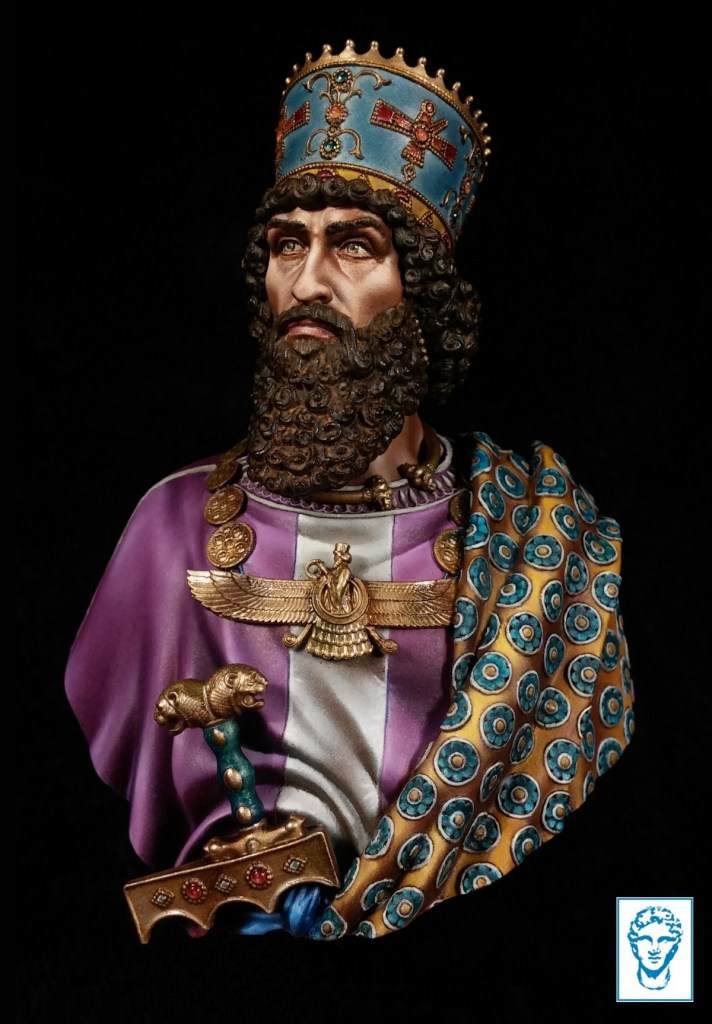
Queen Esther’s position was one of great power– and of great peril. Her husband, Ahasueras, the King of Persia, had chosen her from among a host of women to replace the disgraced Queen Vashti. But Ahasueras was not a man of character and integrity. Vashti’s disgrace came after the King had been banqueting and drinking for a solid week, and this after six months of entertaining other heads of state! Ahasueras left the running of his kingdom in the hands of his ministers–even Vashti’s dismissal and Esther’s elevation were at the suggestion of the King’s counselors (though the King made the particular choice of Esther over all the other contenders). Ahasueras was unpredictable, capricious, vindictive, hot-headed, and easily led. He also had “unlimited” power– his word was, literally, law.

Even though Esther had risen to a place of prominence and (limited) power, she still faced danger, in the guise of her husband’s Prime Minister, Haman. Haman’s power was second only to the king, and he intended to use that power to rid himself of his enemy, Mordecai, a Jewish exile, who just happened to be the foster-father and cousin of Queen Esther! Not content with simply having Mordecai executed, Haman suggested to the gullible King Ahasueras that all the Jewish exiles throughout the kingdom should be slaughtered and plundered within a single day.

Queen Esther’s only option was to get the king to reverse his own edict– even if she managed to escape the genocidal plot, her silence would spell the doom of the entire scattered nation of her own people. Queen Esther could not trust in her own limited authority, nor in the beauty that had brought her to the throne. Only God could capture the heart and mind of such a king. Queen Esther began to pray.

And she didn’t just fall on her knees in silent despair She asked others to fast and pray for three days before she would approach the king. And she paved the way with another banquet, during which she flattered both the king and his arrogant prime minister before pleading for her life and the lives of her countrymen.

Esther’s beauty and grace alone were no match for Haman’s treachery. But God knew the end of this story from the beginning. Esther was in grave danger, but she was also in God’s loving and all-powerful hands. Esther is remembered for her bravery and poise in the face of Haman’s diabolical plotting, but also for her dependence on God’s power over her own.

What dangers will we face today? If Queen Esther needed to pray– and ask for prayer– in her situation, how much more should we be willing to do so in ours?!

Photo by Michelle Leman on Pexels.com

Thy Rod and Thy Staff, They Comfort Me

I don’t know about anyone else, but this phrase always made me feel uncomfortable. Growing up, I thought of rods and staffs (staves?) the same way I thought of the teacher’s wooden paddle at school– something to be avoided at all costs. They didn’t comfort me one bit; instead, they inspired fear and loathing. “Spare the rod and spoil the child (Proverbs 13:24)*,” meant that someone was due for a spanking. Spanking was in fashion when I was young, though my parents used it extremely rarely, and the dreaded teacher’s paddle never touched my tiny terrified tush. A rod, staff, switch, paddle, or hand– all were threats of punishment– sometimes inspiring fear and even resentment.

Photo by Ian Panelo on Pexels.com

And yet, in all my youth, I never stood in fear of my parents. They never beat me, or spanked me without cause, or withheld loving forgiveness and reconciliation. Their discipline, which rested almost exclusively with other methods, was for my benefit– teaching me to respect just authority, recognize the limits of my will, and develop patience, compassion, and responsible behavior.

Photo by Agung Pandit Wiguna on Pexels.com

God does not hold the rod and staff as instruments of terror. God’s love and wisdom are infinitely greater than the love and wisdom of human parents. And God’s sovereignty and authority are infinitely greater than that of any ruler or earthly power we know. God’s rod and staff are not weapons to be used against us. Instead, they are the symbols of authority and tools of our Good Shepherd. His staff is like the scepter of the King of Kings, or the staff of a warrior. He will gently use the rod to direct our steps or keep us from going off the path. And he will use the staff to protect us from the advances of the enemy. He has the authority to use these tools, and the grace and wisdom to use them for our good.

Photo by Ekrulila on Pexels.com

During times of trial and confusion, the Shepherd’s authority should bring us enormous comfort. When disease and fear are closing in, when we travel down the valley of the shadow of death, when evil seems to be prowling, stalking, and ready to pounce– we have a Shepherd who has every resource to keep them from devouring us. Circumstances like the current pandemic are not sent by God to terrorize us. In fact, God holds the rod and staff in hand– He has set the limits of COVID-19; He has provided (and will provide) opportunities for us to learn many good lessons and see many astonishing developments– treatments, protocols, cooperative efforts– that will be for our ongoing benefit; for those who do get ill, suffer loss, or even die from COVID-19, He gives grace and peace to those who seek Him. He comforts us in ways that go beyond our natural understanding.

One of my favorite stories is The Lord of the Rings, by J.R.R. Tolkein. In this saga, the wizard, Gandalf, always carries a staff. It looks harmless enough– a walking stick in the hands of an old man. But when faced with an enemy, or when members of the Fellowship are threatened, Gandalf uses his staff effectively to chase away shadows, defend his friends, and battle the most fearsome of monsters. Gandalf is no threat to the frightened Hobbits, or even to the mad king Theoden. But to the traitorous Saruman and wicked steward, Denethor, he stands in fearless opposition. That doesn’t mean that the Hobbits never face danger or that Gandalf fights all their battles for them. And, because Gandalf is not all-powerful and omniscient, he cannot guarantee their ultimate victory. But his presence is enough to instill hope and comfort wherever he goes.

God will let us see uncertain days– days when things look grim and we don’t see how anything good can come of our circumstances. But one thing is certain–our God is ever-present, and more than able to bring us hope, peace beyond understanding, joy, and comfort along the way– no matter, where; no matter what!

  • Note–If we see the “rod” and “staff” only as instruments of punishment, we are missing the point of this proverb. If we “spare” the rod of authority– never providing discipline and correction or teaching respect and responsibility– that is when we spoil the child. And whatever one’s views about corporal punishment, it should never be used to promote terror or abuse.

Blog at WordPress.com.

Up ↑