Fearfully and Wonderfully Made

I just finished reading a book about atheism– or more accurately, a book about the unreasonableness and faulty logic of modern atheism as espoused by many scientists and philosophers. https://www.goodreads.com/book/show/56614922-is-atheism-dead One of the arguments concerns the view, held by many atheists, that life exists only in the material– in other words, that only “matter” “matters.” They argue against the existence of the soul, or the uniqueness of mankind in relation to other living things. There is nothing beyond science and whatever science can explain. Therefore, there is no God. If there is no God, and we were not created in His image, they argue, then there is no Heaven or Hell, and nothing beyond what we can experience with our senses. There is no purpose for our lives; no consequences for our thoughts or actions; no higher power or authority than our own. We are simply a product of the evolutionary process and a sum of our material components. Our thoughts are simply products of brainwaves firing in a certain pattern; our emotions conditioned and triggered by no more than a series of chemical and physical reactions to stimuli.

Photo by Pixabay on Pexels.com

It is not my intention to argue or take the time to explain in the same detail that was in the book I finished, but I was struck by one of the points the author made. Without a belief in the God of creation, it is illogical and inexplicable that we should be affected emotionally by ANYTHING outside of the realm of material experience and scientific study. That means that we cannot fully explain or appreciate art, music, the grandeur of the night sky, the softness and warmth of a baby’s cheek, the thrill of a perfect sunset, the memory-evoking smell of a loved-one’s perfume or after-shave…our senses should not “move” our emotions. We can analyze a piece of artwork– it’s color or composition, the balance of light and dark, or the perfection of its perspective. But we cannot explain why it is “art,” or why it “speaks” to us (or turns us off!) We can discuss sound waves and tonality in music, but we cannot explain why certain songs move us to tears or cheer our spirits. We cannot say what makes a poem “connect” to something in our psyche, such that its lines come to us almost unbidden in times of distress.

Photo by Aron Visuals on Pexels.com

But all of this makes amazing sense in a world where God exists– a God that is the Author of Creation; of Glory; of Compassion and Wonder. God not only exists– He makes Himself known in the music of a waterfall, in the gentle fall of snowflakes, in the scent of lilacs, and in the smile of someone we love. And He has given us the ability to feel awe, and to strive to add beauty, art, and meaning to the world around us. This is unique among His creation. Birds sing; dogs romp and play; flowers bloom– but they do not fall to their knees in worship; they do not compose sonnets or build cathedrals in acts of sheer adoration. They are not moved to tears or stunned into silence by sun glinting on a spider’s web– even the spider ignores the beauty of its own functional creation.

Photo by Chase McBride on Pexels.com

We are fearfully and wonderfully made–and wonder-ful-ly made! Today is a great day to look and listen for God’s glorious touches all around us. And it’s a great day to reflect back to Him all the wonder and glory of Who He Is in praise!

The heavens declare the glory of God; and the firmament sheweth his handywork.  Day unto day uttereth speech, and night unto night sheweth knowledge. There is no speech nor language, where their voice is not heard. Their line is gone out through all the earth, and their words to the end of the world. In them hath he set a tabernacle for the sun, which is as a bridegroom coming out of his chamber, and rejoiceth as a strong man to run a race. His going forth is from the end of the heaven, and his circuit unto the ends of it: and there is nothing hid from the heat thereof.

Psalm 19:1-6
Photo by Pixabay on Pexels.com

Blessed Are the Meek

I’ve been looking at the Beatitudes lately, and how they relate to prayer. Today I am focusing on “Blessed are the meek, for they shall inherit the earth.” (Matthew 5:5) Does this verse suggest that we should be meek or timid about prayer? Is God offended when we plead with Him or pour out our frustrations about pain or injustice? Doesn’t this contradict the writer of Hebrews, who says that we should “boldly approach the throne of grace” (Hebrews 4:16)?

Photo by Pavel Danilyuk on Pexels.com

God invites us to have a relationship with Him. Good relationships cannot survive in an atmosphere of fear. But they must involve respect. There is a tendency in the Church today to look at prayer as a casual conversation with God, where God is our “pal,” someone we hang out with and chat with like a best friend. But even our close relationship with God as “Father” demands the same kind of respect we should give to an earthly father or an elder. God is not “one of the gang,” or “the man upstairs.” He is God Almighty, and Lord of All Creation.

Like any Good Father, God wants to hear from us– all that is on our minds and hearts. But we must remember who God is– and who we are. We are His children, not His “crew.” In The Lord’s Prayer, Jesus began by addressing His Father, and establishing His place– “Our Father, which art in Heaven, Hallowed be Thy Name.” (Matthew 6:9 or Luke 11:2) The meek person comes before God gladly, with awe and gratitude, eager to honor Him before all else.

Photo by sergio omassi on Pexels.com

And the second part of the Beatitude is also key in how we pray. “Blessed are the meek, for they shall inherit the earth.” Many times, we focus on the inheritance itself– “the earth.” But what about the act of inheriting? The meek will not conquer the earth. The meek will not purchase the earth. The meek will not gain the earth, or win it, or demand it. Instead, the meek wait patiently for their inheritance. How would our prayers change if we took this to heart? God will give us all that we require– in His time, in His wisdom, for His purpose, and with His delight! The whole earth belongs to God– and He desires to share it with us! There is never a reason NOT to be meek, humble, grateful, or reverent before our Father. There is never a reason to be demanding, rude, dismissive, or grumbling when we pray.

Photo by cottonbro on Pexels.com

This can be a very freeing realization. No matter how chaotic, frightening, or painful our situation, God IS in control. Wars rage, disease stalks, famine strikes, yet God has promised to give us access to all of His riches, including a peace that passes understanding and unspeakable joy! They are a guaranteed inheritance from our great Father– His lavish Grace and everlasting Love poured out on us.

Photo by Tima Miroshnichenko on Pexels.com

Amen!

It’s the last word in the Bible. It’s normally the last word of our prayers. It is frequently used by the congregation during a particularly inspiring part of a sermon.

Photo by Binti Malu on Pexels.com

But what does it mean to say, “Amen!”? The original Hebrew word means, “so be it,” or “let it be so.” It is spoken to express confirmation, solemn ratification, or agreement. Saying, “Amen!” is saying that we agree with the words the pastor has spoken, or the words that someone else has just prayed. But, ultimately, it is confirmation that we agree with what God will choose to do, and how He will choose to answer the prayer or speak to us.

Photo by Flickr on Pexels.com

When we say, “Amen,” we are letting go of our will and trusting our prayers, our thoughts, our feelings, and our desires to God’s hands. God is sovereign. He can do anything He wants, regardless of our desires or plans; regardless of our feelings or our actions. He can thwart our plans, upset our circumstances, and set His face against us. But that’s not HIS desire. He wants our willing cooperation and approval. He doesn’t need it, but He desires it. He wants to hear us echo His heart, and respond to His loving care with a hearty “Amen!” Not because He needs it– but because WE need it. We need to rest in His sovereign power instead of trying to fight blindly against our circumstances. We need to wake up and act in accordance with His design, instead of wasting time in apathy and disdain.

Photo by Andrea Piacquadio on Pexels.com

But “Amen!,” like any other word, shouldn’t be used lightly. “Can I get an Amen?” “In Jesus’ name, Amen” These are solemn oaths. “Amen” isn’t just a word of cheer or enthusiasm. It is an acknowledgement of God’s right to rule our lives. Even when it brings testing; even when it involves struggle and pain. All the time, God is in charge, and His ways can be trusted. “AMEN!”

Let No Tongue on Earth Be Silent…


“Of the Father’s Love Begotten”
by Aurelius C. Prudentius, 413, cento
Translated by John. M. Neale, 1818-1866
and Henry W. Baker, 1821-1977

1. Of the Father’s love begotten
Ere the worlds began to be,
He is Alpha and Omega,
He the Source, the Ending He,
Of the things that are, that have been,
And that future years shall see
Evermore and evermore.

2. Oh, that birth forever blessed
When the Virgin, full of grace,
By the Holy Ghost conceiving,
Bare the Savior of our race,
And the Babe, the world’s Redeemer,
First revealed His sacred face
Evermore and evermore.


3. O ye heights of heaven, adore Him;
Angel hosts, His praises sing;
Powers, dominions, bow before Him
And extol our God and King.
Let no tongue on earth be silent,
Every voice in concert ring
Evermore and evermore.


4. This is He whom Heaven-taught singers
Sang of old with one accord;
Whom the Scriptures of the prophets
Promised in their faithful word.
Now He shines, the Long-expected;
Let creation praise its Lord
Evermore and evermore.


5. Christ, to Thee, with God the Father,
And, O Holy Ghost, to Thee
Hymn and chant and high thanksgiving
And unending praises be,
Honor, glory, and dominion,
And eternal victory
Evermore and evermore.

taken from http://www.lutheranhymnal.com
Photo by Pixabay on Pexels.com


Christ’s Humility and Exaltation
Adopt the same attitude as that of Christ Jesus,
who, existing in the form of God,
did not consider equality with God
as something to be exploited.[a
Instead he emptied himself
by assuming the form of a servant,
taking on the likeness of humanity.
And when he had come as a man,
he humbled himself by becoming obedient
to the point of death—
even to death on a cross.
For this reason God highly exalted him
and gave him the name
that is above every name,
10 so that at the name of Jesus
every knee will bow—
in heaven and on earth
and under the earth—
11 and every tongue will confess
that Jesus Christ is Lord,
to the glory of God the Father.

Philippians 2:5-11 (Christian Standard Bible–CSB)

Photo by Pixabay on Pexels.com

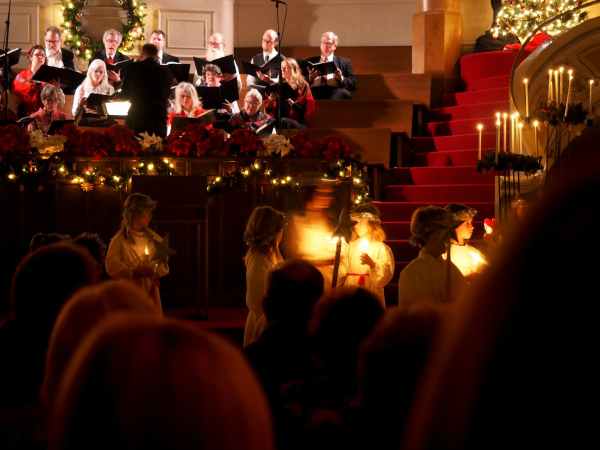
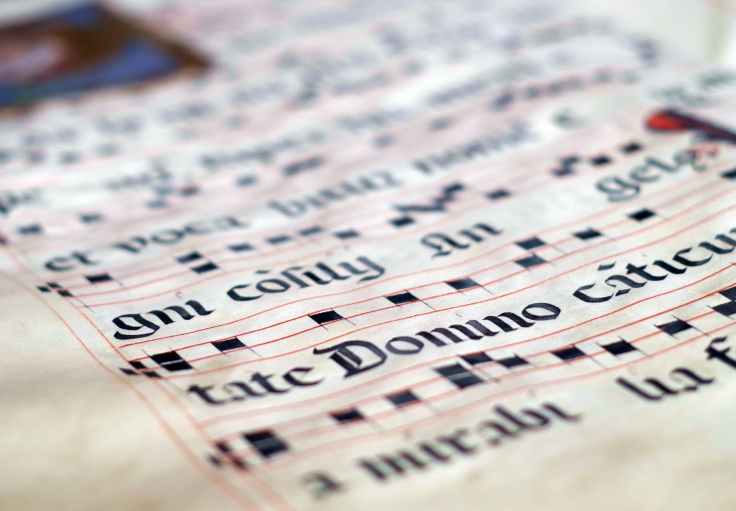
An early Christian poet penned the words for this Christmas Hymn over 1500 years ago.  He was echoing the words of the Apostle Paul from 400 years before that.  Paul’s “hymn” was expressing truths penned by prophets and songmakers stretching back centuries before his time.  From the earliest recorded writings of Moses we see the same themes:  God is eternal–eternal in existence, eternal in power, eternal in glory; God extends himself on behalf of his creation–giving, sacrificing, inviting, forgiving; God exalts the humble–he notices the overlooked, elevates the lowly, honors the meek.

Photo by Pixabay on Pexels.com

These themes have not changed in centuries, but our interpretation and usage of them has.   I still love this old hymn, and the passage from Philippians, but I see people, Christians and non-Christians alike, using phrases like, “Let no tongue on earth be silent,” and “Every knee shall bow” not as invitations or extensions of God’s glory and sacrifice, but as threats.  I find this understandable, but not defensible– especially coming from Christians.

Photo by Shelagh Murphy on Pexels.com

I think our modern world has lost much of its wonder and ability to see “honor, glory and dominion.”  We spend our days “debunking” any idea or person who might seem worthy of respect or honor, but we replace them with ideas and people who are less worthy of respect, because they make us feel superior and smug in our own complacent, convenient lives.  We are satisfied by glitter, instead of seeking glory.  We have given the word “dominion” the same negative connotation as “colonialism” or “conquest”.  We do not choose to honor humility or service– we celebrate what is brash, flashy, loud, and self-serving.

Photo by Pixabay on Pexels.com

Some of our modern churches and worship services fall into the same trap.  We give more honor to the worship band and the comfortable seats than we do to the creator of the heavens.  We spend our money on t-shirts and CDs proclaiming the wonders of OUR faith, but we don’t have any money to share with those in need just two streets away.  I am not saying that this is unique to our time, or that the early Church was without fault.  But there is a very different feeling one gets in entering a medieval church or cathedral–they were not built for human comfort, but to inspire the sort of knee-bowing, tongue-confessing awe found in the ancient hymns.  Jesus grabbing a cup of Joe and plopping down next to us in a climate-controlled, renovated movie theater does not have the same effect.  We are sometimes left with the impression that Glory is ephemeral and glittery, and God is more interested in our comfort than in our transformation.

Photo by rawpixel.com on Pexels.com

So when we read that God is eternally glorious and that every knee WILL bow and every tongue WILL confess– we see this as coming from a self-important little-g  “god” who compels his creation to worship him out of a vain desire for imputed glory.  In contrast, the Bible presents a God whose very nature IS Glorious.  We worship him when we see him as he is.  When we choose in this life to exalt ourselves and ignore God’s invitation, and the ways in which he reveals his glory here on earth, it doesn’t diminish his glory or change his nature.   

Consider a beautiful sunset.  There was a glorious sunset in our area last Saturday night.  Several of my friends posted pictures of it– it was awe-inspiring!  That was its very nature.  But many people missed seeing it, or recognizing its beauty.  After all, the sun sets every day.  This sunset came and went like all the others.  The sky didn’t force anyone to look at it, but it was visible to anyone who would see it.  God’s presence, when fully revealed, will be stunning in its Glory and impossible to ignore.  Every knee WILL bow and every tongue WILL confess– simply in awe of it.  God invites us to open our eyes, to catch glimpses (like Saturday’s sunset) of the glory he imputes to even the most ordinary and humble things in life.

Photo by Pixabay on Pexels.com

And so it was in the incarnation.  God’s glory arrived in the form of a baby– one among thousands in Judea, His divine nature wrapped in the ordinariness of arms and legs, cooing and crying like any other baby, born in obscurity, yet announced from the beginning and heralded by the very hosts of heaven– Here HE is!  Come and behold Him!  Worship and adore Him!  Evermore and Evermore!

Blog at WordPress.com.

Up ↑