He Who Began a Good Work…

 And I am sure of this, that he who began a good work in you will bring it to completion at the day of Jesus Christ.

Philippians 1:6 (ESV)
Photo by Karolina Grabowska on Pexels.com

I have a lot of unfinished projects–scrapbook pages, crafts, stories I began writing, closets I started cleaning out..some projects were abandoned due to waning interest; others due to distractions or other more urgent tasks. A few of the projects I can pick up and continue (if I choose). Others must be discarded or started over again. I began each task with good intentions, but some proved to be more complicated than I anticipated. Their very presence reminds me that I bit off more than I could chew.

Sometimes, it feels like I am an unfinished project– because I am! While I still live, I continue learning and (hopefully) growing more like Christ. But every day I am reminded (as with my unfinished projects around the house) that I have a long way to go. And I occasionally wonder if God will get tired of me and set me aside– lose interest or just decide His efforts will be more rewarding somewhere else. And yet, Paul assures me that I will never be abandoned or left “undone”–God always– ALWAYS– finishes what He starts. And His finished project are always perfect.

Photo by Pixabay on Pexels.com

And what is true in my life is true in the lives of others, and in the wider world. We may not see the way forward. It may seem as though things or people around us are falling apart. But God sees the end from the beginning. And He works — sometimes in mysterious ways–to bring all things to their appointed end.

There are two “caveats” to the above statements:

“He who began a good work in you…” God created all of us in His glorious image, but He has not begun a good work in those who have not trusted Him to do so. It is God’s desire that all of us should reach perfection, and that none should perish. However, the Bible is very clear that not all of us will seek to be reborn, reshaped, redeemed, and reconciled to God.

Photo by Nikita Krasnov on Pexels.com

“…at the day of Jesus Christ.” We will not be perfected in “our” time, but in God’s. We will be tested, refined, purified, stretched and shaped, but what we will be “has not yet been revealed” (1 John 3:2) We should pray for continued growth; we should humbly submit to the renewing of our minds and hearts through the work of the Holy Spirit, but we should not consider that we have reached perfection or that we have learned all there is to know.

Photo by cottonbro on Pexels.com

I am so glad that I serve a God who will never tire of me, or find me “too much” to handle. And I am so glad I can fall on His grace and mercy when I fail in my tasks (or fail to complete them). God isn’t finished with me yet– but by His Grace, He will not leave me incomplete or lacking in any good thing!

Could You Repeat That?

“Peter, do you love me?” Three times asked. Three times answered. (See John 21) Once for each time Peter had denied his Lord. You’d think the lesson had been learned. But when Peter had a vision filled with food that he refused to eat, it took another three times before he got the message.(Acts 10) We could say that Peter was consistently stubborn. But maybe Peter is not so different from us.

Photo by Ketut Subiyanto on Pexels.com

Fear not. Do NOT be afraid. Be strong and courageous. The Bible is filled with such messages. Over and over, God’s people need reminders to look beyond fear and find faith. Go and preach the Gospel. Go out into all the world. Go make disciples. Love one another. Love your neighbor. Love your enemies. Pray without ceasing. Run the race. Don’t give up. Ask. Seek. Knock.

Photo by RUN 4 FFWPU on Pexels.com

God is not annoyed or afraid of repetition. He uses it when speaking patiently to us. He welcomes it from us in prayer. Sometimes, I feel like I’m “nagging” God about certain things. After all, He already knows my needs, so why am I bringing the same request for the 19th time this month? Except God not only knows about my need, He knows my tendency to get discouraged and distracted. God doesn’t need to hear my request again, but He wants to hear me ask. More than that, He wants to hear me ask with confidence, knowing that He HAS heard and WILL provide– in ways and times I cannot know.

Photo by Arina Krasnikova on Pexels.com

God hears. God knows. God cares. It’s worth repeating! It’s worth asking– again!

The Work is “Donne”

Wilt Thou forgive that sin where I begun,
Which is my sin, though it were done before?
Wilt Thou forgive those sins through which I run,
And do them still, though still I do deplore?
When Thou hast done, Thou hast not done,
For I have more.
Wilt Thou forgive that sin by which I have won
Others to sin? and made my sin their door?
Wilt Thou forgive that sin which I did shun
A year or two, but wallowed in a score?
When Thou hast done, Thou hast not done,
For I have more.
I have a sin of fear, that when I have spun
My last thread, I shall perish on the shore;
Swear by Thyself that at my death Thy Sun
Shall sine as it shines now, and heretofore;
And, having done that, Thou hast done,
I have no more.

A Hymn to God the Father John Donne, 1623
John Donne

I enjoy studying the poetry of John Donne. https://www.biography.com/writer/john-donne Even though he lived 400 years ago, he wrote about very timeless and personal topics. Donne lived during a time of religious tumult and persecution. Born into a Catholic family, he later converted to Anglicanism and became a powerful preacher, as well as a poet, and lawyer. Throughout his life, he wrestled with deep theological questions of sin, guilt, redemption, and death. Yet he did so with wit, humor, and passion. The poem above, written during a long illness and near the end of his life, is filled with puns on his last name, Donne. Would God’s redemptive work ever be “done” in “Donne?” He struggles with the knowledge that his sins, having been forgiven, must be forgiven again and again. Does God never say, “Enough! I am done!?” What about stubborn sinful habits? What about sins that have led others to sin? What about last-minute, unconfessed sins?

Photo by Teona Swift on Pexels.com

The real question is, “How sufficient is God’s Grace?” Does God sprinkle out Grace sparingly on each sinful act, or does Christ’s blood cover All? Do our stubborn, habitual acts of rebellion pile up to a point where God cannot forgive? Having forgiven us once, twice, seventy times seven– is there a limit to His willingness to pour out Mercy? Theologically, the Bible is clear. The answer is a resounding, “NO.” God will not withhold His Grace from those who have sought it. God will never be “Done” with “Donne.” Nor will He be “done” with any of us who have chosen to follow Him. But in his all-too-human logic, Donne jokingly suggests that though God “hast” done/Donne, He “hast not” done/Donne. In other words, while Donne “belongs” to God– he has confessed his sins, and eagerly seeks to follow Christ, he still wrestles with fears that his small sinful acts prove that God does not fully “have” him– that He still lives separated from God.

Photo by Sinitta Leunen on Pexels.com

But the final sin of the poem is fear– fear that somehow, at the last, Death will prevail, and Donne will “perish on the shore,” rather than be taken into Heaven. He pleads that Christ’s blood (“Thy Sun/Son”) will be sufficient; that God’s promise of eternal life will indeed hold true, and that the work of salvation is indeed “done.” In the end, the poet hopes that “Thou hast Donne.” And he must trust that God’s promises will hold, for “I have no more.” Donne cannot stop death, he cannot do anything to save himself from sin, but he can be “done” with worry and trust in “Thy Sun/Son.”
Photo by Samuel Theo Manat Silitonga on Pexels.com

I am strangely encouraged by Donne’s poem. We all have moments of questioning and niggling doubts. And even though we “Know” the truth, our fears and emotions can play tricks on our mind. But Donne, even while putting such doubts and fears on paper, takes them to the Source of Hope. This is not a poem of accusation or despair. It is an honest and passionate desire to hear God’s calm assurance. And it is part of a long tradition that runs through the Bible. Jacob literally wrestled with an angel of the Lord (Gensis 32), Moses argued with God about going back to Egypt (Exodus 4), David questioned God (Psalm 10); even Jesus asked God, “Why have you forsaken me?” (Matthew 27). But in our doubts and questions, God’s still, small voice echoes, “I will never leave you nor forsake you.” (Hebrews 13:5), “My Grace is sufficient for you.” (2 Corinthians 12:9), and “Neither height nor depth, nor anything else in all creation, will be able to separate us from the love of God that is in Christ Jesus our Lord.” (Romans 8:39).

Photo by S Migaj on Pexels.com

God’s work is ongoing, but it is also “done”– it is complete, whole, sufficient, and eternal. And even if we occasionally wonder and even question, we can choose to rest in His promises. Just as the poet concluded, if God “hast” done/Donne, “I have no more”– he needed to have no other fear of sin or sin of fear. And through Donne’s poetry, God’s assurance is being passed on– the work continues to be “Donne!”

Photo by Nicholas Githiri on Pexels.com

The Unchanging God

Photo by Designecologist on Pexels.com

As I look out the window today, I see an array of autumn colors–yellow, red, orange, green, brown, and even purple leaves against a vibrant blue sky. Autumn is full of changes; changing leaves, changing temperatures, changing wardrobes. I love living in an area where the seasons change dramatically. I don’t always like the drama, however. We’ve had warm days, wet days, cold days– sometimes all three in the same day! But I do like the variety– snow in the winter, colorful leaves in the fall, new life in spring, and summer trips to the beach or the shady woods.

It isn’t only the weather or the trees that change. The times are changing– literally–we will be turning our clocks back this weekend, “falling back” to conventional time after several months of “daylight savings time. Our neighborhood is changing–the bank down the street just changed its name, and a couple of new businesses are opening, as a couple others close. We are experiencing life changes. My husband and I are in the “autumn” of life– feeling the slow creep of age, in good ways and bad. We enjoy spending time with our kids and grandkids, nieces and nephews, as they embark on new adventures and challenges of “becoming.” We don’t enjoy the aches and pains and slower pace we now find ourselves adopting, but we appreciate the wisdom of life lived and learned. We have aging parents who are facing their own decisions, many of which will involve us in one way or another.

God watches over all these changes. He sees them, orders them, anticipates them. God is the master of renewal, redemption, and restoration. God can move mountains, heal diseases, restore relationships, and raise the dead! And, unless we allow God to change our very nature and give us new birth through His Son, we will miss the greatest change of all.
Photo by Jonathan Petersson on Pexels.com

But God never changes. The same God who formed me in my mother’s womb is the God who will be with me as I take my last earthly breath. The same God who formed the oceans and spoke galaxies into being is the God who whispered frost onto the grass this morning. This God is faithful through every season of the year and every season of life. I will not wake up tomorrow to find that there will be no more winter or spring seasons, or that the grass has all turned purple, or that God’s word is no longer true and powerful. And there will never be a time when I cannot trust God’s Sovereignty, His Mercy, or His Love. God’s promises are eternally sure; His Faithfulness is everlasting; and His power is limitless. God will never quit; He will never grow tired; He will never be “confused” about the road ahead; He will never resort to “plan B.”

Photo by Pixabay on Pexels.com

Very soon, the colorful leaves will fall, the morning frost will be replaced with snow and ice, and my fall jacket will have to give way to my winter coat and gloves. In time, my gray hair will turn white, and my wrinkles will multiply. Someday, my great-grandchildren may find my name carved on a stone and wonder what I sounded like or what kind of person I was. But God will still be the same as He was in the days of Noah, and King Solomon; the same God who watched the fall of the Roman Empire, the horrors of the Holocaust, and the first Moon landing. That’s the God who hears my prayers– and yours. He can be trusted. He is faithful.

The steadfast love of the Lord never ceases; his mercies never come to an end; they are new every morning; great is your faithfulness. “The Lord is my portion,” says my soul, “therefore I will hope in him.”

Lamentations 3:22-24 (ESV)

We Like Us

Photo by Askar Abayev on Pexels.com

I’ve been very blessed with a large extended family–in-laws, cousins, step-cousins, half-cousins, aunts and uncles, nieces and nephews, second cousins–well over 600! (and counting). I’ve spent a lot of time recently attending family events, and each one has been happy, encouraging, and invigorating. I know that is not always the case in families. Some families argue; some won’t even speak to each other. And there is not perfect harmony, even in the best of human families. We’ve had divorces and divides, too; but mostly, as my one cousin is fond of saying, “We like us.” We like belonging to a family, but even more, we like belonging to our family. As our family grows, it is becoming more diverse, and we like that, too. Many years ago, most of our family members were farmers from a small area in southwestern Michigan. Now, our family includes truck drivers, mechanics, teachers, architects, coaches, doctors, office managers, car salesmen, nurses, dispatchers, accountants, chefs, shopkeepers, ministers, photographers, cosmetologists, pet groomers, medical transcriptionists, cinematographers, artists, dancers, contractors, factory workers, and yes, some farmers, too. We have family members with varying skin tones and ethnic backgrounds, and differing physical and mental abilities. And we LIKE “us.”

Photo by RODNAE Productions on Pexels.com

Jesus likened the Kingdom of Heaven to a family– it is made up of many members, but we are all brothers and sisters “in Christ.” And, like a family, we are supposed to like “us.” More than that, we are supposed to LOVE one another! We are to be there for each other, in good times and bad; in mourning and in rejoicing. “For better, for worse, richer or poorer, in sickness and in health..” It shouldn’t matter if our brothers and sisters live close by or halfway around the world; whether they belong to our local congregation of “that other church across town.” And it SHOULD matter when we see some of our family members being persecuted or facing hardship while others live in comfortable apathy.

Photo by Denniz Futalan on Pexels.com

But Jesus went even further. We are to love those who are not “US.” We are to show love and mercy to those who don’t “belong.” We are to reach out to those who dislike, despise, and even persecute us. The way we treat each other as “family” and the way we treat those “outside” will either attract or repel others, and it will show whether or not we have learned to love as Jesus did.

Photo by Keira Burton on Pexels.com

God “Likes” us. He wants to share life with us –any of us who will respond to His call. And God LOVES us. He treats us with the same compassion and love, regardless of who we are or what we’ve done, or how we’ve responded (or failed to respond) to His outreach.

Photo by kelvin octa on Pexels.com

Clearly, there are those who do not like us; who do not wish us well. And God does not call us to be victims, dupes, and doormats for abusive relatives or strangers. We are to Love– but wisely, and with the strength of God. Liking someone does not obligate us to betray our conscience, or enable abusive and immoral behavior in others. Loving someone may mean setting boundaries where they are needed. But it also may involve tearing down false walls of fear and “inconvenience” that we’ve been using to excuse action.

Photo by Karolina Grabowska on Pexels.com

Who can we reach out to this week, extending the kind of welcome and acceptance we give our family? How can we begin seeing more of “us” in the people we meet, and less of “them?” And, if there are family members (either our birth families, or our church families) with whom we have a broken relationship, are there ways we can make a move to try to mend fences? How can we set wise boundaries, while tearing down false ones? One sure way is to begin praying– pray for those we meet, whether or not we consider them “family.” Pray for those who have hurt us– and those we have hurt. Pray for those who seem different and hard to understand or accept. Pray for God to bless them, encourage them, meet their needs– Pray that God will give us wisdom, opportunities, and strength to reach out.

Face to Face

Photo by Anna Tarazevich on Pexels.com

The other day, someone complained that she couldn’t “hear” me because we were both wearing face masks, due to COVID restrictions at the doctor’s office. I remarked that the masks didn’t cover her ears, but I know what she meant. Not only did the mask cover my mouth, which limited my volume, but, more importantly, it covered the lower half of my face, so that she couldn’t see my lips or read my facial expressions. Nor could I see hers. It is terribly frustrating to be sitting half-face-to-half-face!

Effective communication is up to 90% non-verbal! That means facial expressions, tone of voice, choice of words, etc.. When we cannot see fully “face-to-face” we lose a lot of our ability to understand and interpret what someone else is saying– even if we can hear the words.

Photo by SHVETS production on Pexels.com

The same is true in communication by phone or social media. Someone can read my words or listen to me talk, and still be confused about my meaning. Am I being serious or sarcastic? Am I fully engaged, or just “throwing out” words? How can I know if someone has understood what I’ve said or written?

Photo by Ketut Subiyanto on Pexels.com

We crave the intimacy of “real” communication– talking and being “heard;” listening and being engaged with another person’s thoughts and feelings. Knowing that someone else understands and sympathizes. Someday, our human limitations will be removed. The Apostle Paul writes about it this way:

12 For now we see in a mirror dimly, but then face to face. Now I know in part; then I shall know fully, even as I have been fully known.

1 Corinthians 13:12 (ESV)
Photo by Ismael Sanchez on Pexels.com

The Apostle John also comments:

Beloved, now we are children of God; and it has not yet been revealed what we shall be, but we know that when He is revealed, we shall be like Him, for we shall see Him as He is.

1 John 3:2 (NKJV)
Photo by Artem Beliaikin on Pexels.com

What an amazing promise! The next time you are having a “face-to-face” conversation with a friend, imagine what it will be like to be able to talk and share that kind of intimacy with God! And then, when you pray, remember that God ALREADY sees and hears you with perfect clarity and understanding!

There is a flip side to this, however. Imagine that your thoughts and “hidden” comments are also uncovered and known by all. One of the dangers of living in a digital, global age is that we feel free to post our immediate thoughts and feelings without regard to how they may be received and interpreted. We post things and say things that we might never say “face-to-face.” We spew out indignation, sarcasm, arrogance, snide criticism, and offense, assuming that others will admire our cleverness or our virtue, rather than seeing our selfish conceit and our rush to judgment. We spill out all the supposed “wrongs” done to us, but we excuse our own wrongs and failings– even brag about them.

Photo by David Selbert on Pexels.com

Someday, we will see how very hurtful, selfish, and short-sighted we have been– and so will everyone else. This will shock or embarrass many of us, but God will not be surprised or upset– He has already known the worst about us. And He still listens to us and speaks words of compassion that we often ignore or dismiss. Someday we will not only hear the words, but see the compassion, love, and mercy in His eyes as they meet ours.

Photo by cottonbro on Pexels.com

That’s the image I want to take into prayer today– and every day. Even though I can’t see it today, it is already eternal reality!

All the Same

When I was growing up, my Mom used to say, “I love all my children differently, but I love them all the same.” It didn’t make sense to me at first, but what she meant was that she loved us equally, but also uniquely as individuals. She didn’t treat us exactly the same, because we weren’t the same person, and because our circumstances were different. When my brother was small, there wasn’t enough time or money to do some of the things she did with me or my sister. When my sister and I were young, Mom was older and had less energy to do some of the things she had done with my brother. She punished us in slightly different ways, and encouraged us in slightly different ways, because we responded differently.

Photo by RODNAE Productions on Pexels.com

Mom is human, so even her best efforts weren’t perfect. Sometimes, we felt she treated us unfairly in certain matters. But overall, Mom has lived out her intention to “love us all the same.”

God follows the same principle. He shows no partiality; no favoritism. He sends rain and sunshine on “the just and the unjust.” (Matthew 5:45) He allows us to face sickness, trials, hardships, and disasters, regardless of our status or our relationship with Him. And He allows others, even evil-doers, to prosper and enjoy good health. This can be difficult for some of us to accept. I know many people who believe that they have an “in” with God– a special status that is supposed to keep them “safe” from disappointments and hardships, while punishing those who cross them in some way. But it doesn’t happen like that. God loves us and treats us each differently, according to our unique circumstances and personalities.

Photo by Emre Kuzu on Pexels.com

It is especially difficult to accept this in relation to prayer. God does not promise that, if we pray or if we have dozens of others praying for us, we will be spared pain and suffering, or receive only blessing and favor. This past year, we prayed for many friends and family who struggled with COVID (including David and I!) Many of them recovered; but others died. I just heard some wonderful news about a relative who was supposed to have a biopsy of a tumor on his brain. As he was being prepped for surgery, the surgeon realized that the lump had disappeared– there was nothing to biopsy! Case closed! It was wonderful news, and an answer to prayer. But what about my friend who had dozens praying for him to be healed of cancer? He had been in remission, but his cancer came back and just kept getting worse, and then he died. Does God love my relative more than my friend? Is he a “better” person, or more deserving of health and life? Absolutely not!

Photo by sergio omassi on Pexels.com

When we pray, we pray about what we see and what we understand. But God loves us each as individuals, and with perfect understanding and wisdom that we lack. I may never understand why some of my friends died of COVID or cancer, while others lived. I don’t know why some of the people I love have had to suffer pain and grief and loss, while others have been blessed with good health, opportunity, and riches. But I know this– God loves each one exactly as much as the others, and exactly as much as He loves me. Nothing about who I am or what I do can change God’s love for me– but it can and DOES change my love for Him!

Photo by Luis Quintero on Pexels.com

Praying for those we love, especially those who are suffering, is not a “magic” formula. While God listens to and answers prayer, He doesn’t guarantee that “more” prayers or “better” prayers will change our circumstances or the outcomes of our circumstances. But prayer changes US. It can change our outlook and our attitude. It can change circumstances in unseen ways we cannot measure or imagine. One thing prayer cannot change– it won’t cause God to love us any more or less than He already does. His love is perfect in scope and power. He loves us–“All the Same!”

Lord, Lord!

21 Not every one that saith unto me, Lord, Lord, shall enter into the kingdom of heaven; but he that doeth the will of my Father who is in heaven. 22 Many will say to me in that day, Lord, Lord, did we not prophesy by thy name, and by thy name cast out demons, and by thy name do many mighty works? 23 And then will I profess unto them, I never knew you: depart from me, ye that work iniquity.

Matthew 7:21-23
Photo by Pixabay on Pexels.com

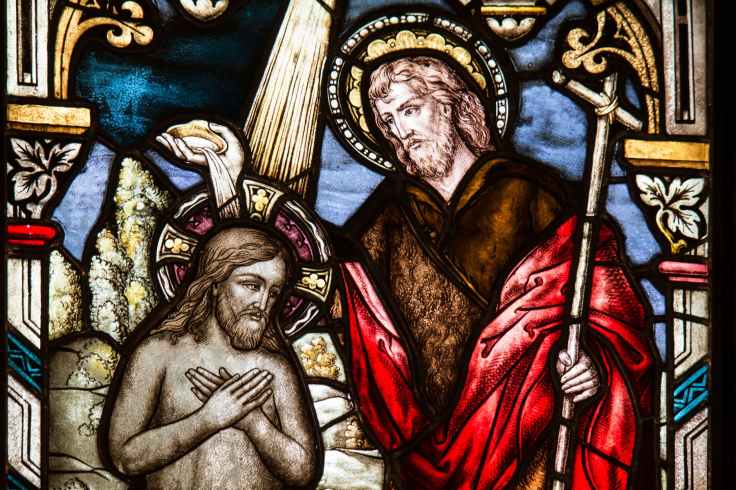
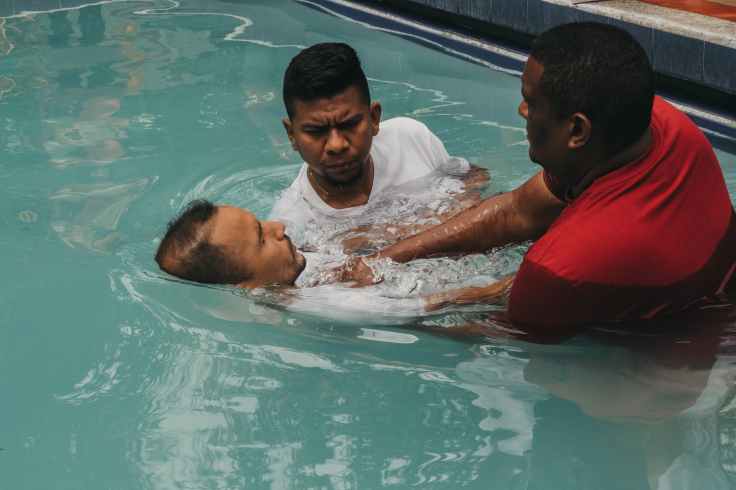
In just the past three weeks, three of my family members and one of my friends have made the decision to be baptized as a public declaration of their decision to live for Christ. All of them (and the others who were baptized at the same times) were baptized by immersion, signifying that they have, spiritually, died to self, been buried, and are raised with Christ to eternal life. This is not a step to be taken lightly, and I have confidence that all four (and more) of those I know are serious in their passion to follow the Lord.

Photo by Ali Arapou011flu on Pexels.com

When I write about prayer as a pursuit, I hope to convey that prayer is part of a larger pursuit of seeking God. And seeking God must include acknowledging Him as Lord above all– especially self. Jesus warned about people who claim to follow Him in word, but do not obey Him. It is, unfortunately, very easy to “speak Christian-ese”: to sound righteous and reverent when we are around others who claim to believe, but justify behaviors that may or may not stem from selfish motives.

There are obvious examples of hypocrisy in our world, but in His famous “Sermon on the Mount,” Jesus warns that many who seem to be doing good deeds, and “talking the talk” will not be part of God’s eternal kingdom. We are not to be seduced into thinking that God will be impressed by charitable giving, memorizing Scripture, or working on the Mission field if we are not willing to repent of our “secret” sins and false attitudes. And it is not for us to point fingers at “other” hypocrites– it is for us to humbly assess whether or not we are truly acting in obedience and submission to our Lord, or satisfying our own selfish desires and hoping for God’s stamp of approval.

Prayer should be a two-way communication. We pray to God, but we also listen for God’s guidance, wisdom, conviction, and encouragement. And we must act in obedience, and confess our disobedience if we want to “keep the slate clean” and keep a close relationship. When we refuse, we are just giving God lip service, and using His name to impress others and deceive ourselves. Others may judge us on appearances, but God sees what is in our heart. And “in that day” (v. 22), He will not let imposters through the gates of Heaven.

Photo by Foss Valentine on Pexels.com

The Good News is that Jesus doesn’t leave us hanging in verse 23. He goes on to say, “Therefore everyone who hears these words of mine and puts them into practice is like a wise man who built his house upon the rock..” (Matthew 7:24) Jesus is our Lord, but also our Savior and our Advocate. When we call on Him AS our true Lord, He is faithful and just to forgive our sins (1 John 1:9), and His divine power has given us everything we need for life and godliness (2 Peter 1:3a)

Photo by Transformation Films on Pexels.com

The act of Baptism alone does not have the power to save us. The practice of prayer alone has no saving power. But the pursuit of a relationship with Christ depends on such acts of obedience, humility, and trust. And the other good deeds that come from that relationship will not only help others, but will please God and strengthen that relationship. Instead of hearing, “I never knew you,” we can hear, “well done!” Not because of what we’ve done, but because of the partnership we’ve developed in God’s work.

Photo by Artem Beliaikin on Pexels.com

May God bless all those who have recently taken the step of Baptism. And may we all continue to pursue that relationship of dying to self, being buried with Him, and rising to new life in Christ!

Our Father

Yesterday was Father’s Day. It can be a very difficult day for many people– a day of loss, of regret, of anger, and bitterness. There is an epidemic of people growing up with no fathers, absentee fathers, temporary fathers, or abusive fathers. And it can give us a very distorted view of Our Heavenly Father.

Photo by Lgh_9 on Pexels.com

They say that our earthly fathers often become the model of how we see God. If my father was passive, I may see God as apathetic or distant. If my father was demanding, I may see God as just, but not merciful. If my father was moody and unpredictable, I may see God as capricious and unfair. I grew up with a loving, gentle, and wise earthly father. But that doesn’t make me immune to distorted views of God. Dad was honest, a steady worker, a faithful husband, and a humble man of faith. But Dad wasn’t perfect– no father is.

Photo by Andrea Piacquadio on Pexels.com

My husband’s father was another terrific Dad. He was a great storyteller, a diligent worker, a man of great faith, wisdom, and gentle humor. And, although he was a great Dad and worthy of respect, he wasn’t perfect, either. Both fathers reflected aspects of God’s love to our families, and I’m so grateful for their legacies.

Our tendency to view God through the lens of our earthly experiences can distort our view of who God is, but it can also distort our view of who WE are to God. David and I each grew up confident of our earthly fathers’ love and care, but that doesn’t mean that God somehow loved us more than my neighbor whose father died when he was just a child, or more that his friend whose father was cold and distant, or our friend whose father was a respected minister. God’s love doesn’t depend on how we view Him, or how we view our family circumstances. God’s love comes from who He is. And He desires a close, eternally loving relationship with each of us– one that transcends human shortcomings and limitations.

Photo by Josh Willink on Pexels.com

My mom was once asked if she had a “favorite” child. And her answer was, “I love them all the same, and I love them all differently.” God’s love for us as a father is the same. His love for each of us is eternal, incomprehensible, and constant. But it is also uniquely demonstrated in the way He guides us, disciplines us, and shows His compassion for us. We may never know the love of our earthly fathers; we may only know their failures, or their memory, or the emptiness where they should have been. But God is the ultimate Good, Good Father– the one we can always look up to; the one who always has our back.

As much as I loved my Dads, and miss their advice and laughter, steady guidance, and examples, they cannot compare to the incredible love and wisdom of Our Father. No matter what legacy our earthly fathers have left us, God’s love is better, wider, deeper, and more powerful.

The Aroma of Prayer

Often throughout scripture, prayer is compared to a pleasant aroma, rising like incense toward Heaven. I love that God interacts with us through all of our senses, even the ones we may not value as much.

Photo by Tetyana Kovyrina on Pexels.com

When I contracted COVID in late February of this year, I lost my sense of smell, and my sense of taste was dulled. Four months later, it’s only slowly coming back. I have a new appreciation for this wonderful sense. All my life, I have taken it for granted that I could smell– flowers, food, smoke from a fire, perfume, bleach.. When I lost that ability, I worried about things I had never worried about before. Would I be able to smell if I had added too much onion or not enough garlic to our food? Would I miss the warning smell of smoke if there was a fire nearby? Even ridiculous worries– would others smell bad breath or other body odors of which I was completely unaware?

Photo by Amina Filkins on Pexels.com

As my sense of smell has begun to return, I am amazed at subtle smells that tickle my nose– exhaust fumes, warm bread, soap, my husband’s cup of coffee in the morning, fresh mowed grass, pine needles, fried chicken. Some of them I had missed for so long, only to have them surprise me with their reappearance. Some of them, I still miss, but I am hopeful that one day, they will suddenly stop me in my tracks and cause excitement and thanksgiving.

Photo by Michelle Leman on Pexels.com

God never loses His senses; He never forgets what prayer smells like; He never misses or ignores the aroma of our prayers. But sometimes, we lose the joy of sending prayers toward His Throne. We lose the aroma of prayer. We lose our taste for spending time with God. We may not be able to identify what is missing– perhaps we can still smell other things, like fear,or pride, or decay.

Photo by Pavel Danilyuk on Pexels.com

Thankfully, God is eager to restore our senses, including the fresh aroma of prayer rising on the breeze to bring Him pleasure.

Blog at WordPress.com.

Up ↑