Processed Prayer

I love to cook. I love looking at new recipes, and finding new ways to use fresh ingredient, use up that last bit of leftovers, or stretch staple foods like beans, flour, or rice. And I love to pray. I love being able to lift up praises, requests, and even questions. I love knowing that I can confess even my most shameful thoughts or deeds to a God who already knows, loves me more than I can imagine, and stands eager to forgive me and strengthen me to make wiser choices.

Cooking can be exciting, challenging, and creative. But it doesn’t have to be. I don’t have to cook at all in our culture. I can (at some expense) dine out every day, and let someone else do all the work. Or, I can buy pre-made meals, “processed” foods and “instant” mixes– “just add water,” “cooks in 6 minutes,” “ready to eat.” I can pray “processed” prayers, too. I can recite prayers of others, mumble graces by rote, and even read off a list of requests with little or no effort or emotion.

But processed prayer isn’t healthy– no more than processed food. Oh, it won’t seem much different– at first. And it isn’t “bad”–every once in a while. But a steady diet of praying someone else’s words and thoughts doesn’t build a personal relationship. We miss out on the “process” of praying, and the end result is not as fresh and healthful.

When I cook from scratch, I have to follow a process:

  • I need to make sure I have the proper ingredients.
  • Some ingredients need to be seeded, skinned, peeled, chopped, or otherwise readied before they can be used.
  • Ingredients need to be added in the proper order.
  • Measurements are important. 1 teaspoon of salt is not the same as 1/2 cup of salt!
  • I need to use the proper methods– simmer, boil, chill, bake, etc.
  • Timing is crucial, too. Cookies may take 10 minutes to bake– a roast may take 3 hours.
Photo by Gary Barnes on Pexels.com

Praying “from scratch” also follows a process:

  • I have to have the right heart attitude.
  • Distractions need to be put aside.
  • I want to include all the “ingredients” of a deep prayer– Adoration and Praise; Acknowledging God’s Sovereignty and Power; Confession and Repentance; Thankfulness; Presenting my requests; Lifting up the needs of others; and Committing to Listen and Obey God.
  • Timing is important–I need to make time to visit with God in Prayer. It shouldn’t be an afterthought or another activity to squeeze in IF I have a chance!
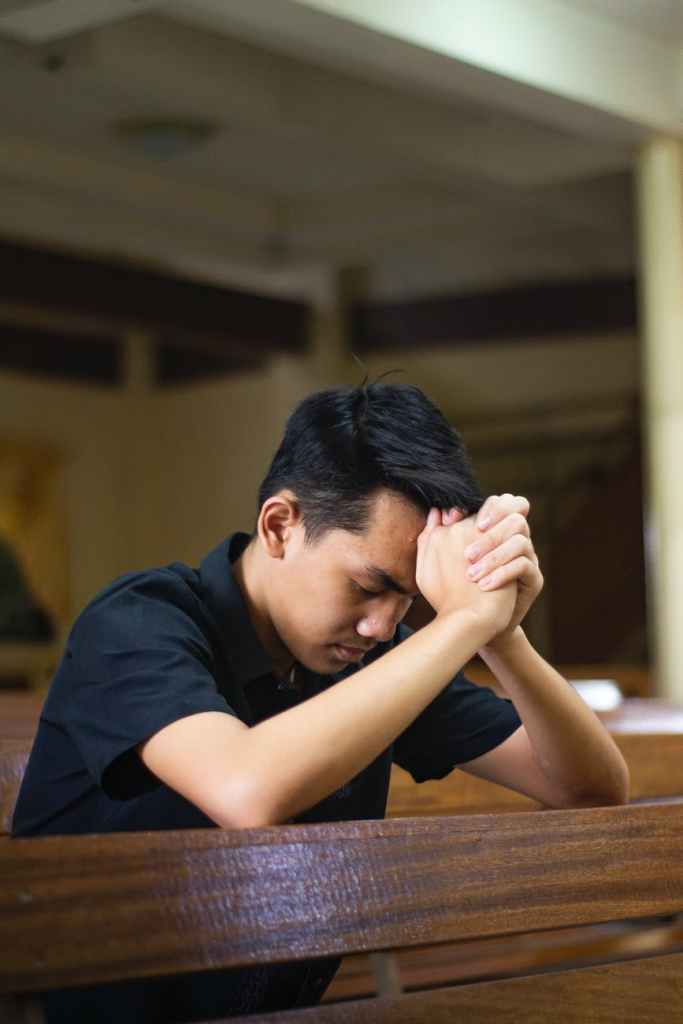
That doesn’t mean that we can’t (or shouldn’t) pray “in the moment” or recite The Lord’s Prayer, or the Prayer of St. Francis, or another written prayer. It doesn’t mean that we should make all our prayers from a “recipe” or a formula. But if our prayer “diet” is becoming dependent on “processed” prayers, we may need to go back to the kitchen!

Sticks and Stones…

Children can be very inventive when finding ways to hurt other children. Name-calling, shunning, shaming, or just pushing, shoving, and tripping each other on the playground. As parents, teachers, and concerned adults, we should be working to instill compassion and discipline in our children– compassion to see how such actions and words hurt, and discipline to keep them from speaking and acting out of emotion and carelessness. We also spend time wiping away the tears and comforting those children who have been bullied and hurt by their peers. And we teach them sayings like, “Stick and stones may break my bones, but words (or names) can never hurt me.” Such sayings mean well, but they are not entirely true. Words and names can hurt. They DO hurt. And they don’t just hurt the person who is the target of such words. They hurt the speaker and everyone who lets the words fall unanswered, or who picks up the words to hurt someone else.

Christians should stand out as beacons of light and love. Yet many of us are guilty of throwing “sticks and stones” every bit as hurtful and thoughtless as those hurled by playground bullies.

A few years ago, I read with some shock a hate-filled article from a Christian woman who was urging all her Christian friends to boycott “Operation Christmas Child”, a group sponsored by Samaritan’s Purse, a charitable organization founded by Franklin Graham, son of the famous Evangelist, Billy Graham. Every year, Operation Christmas Child sends out millions of shoeboxes filled with Christmas gifts, meant for some of the poorest children around the world– orphans, refugees, and those in extreme poverty. But according to this woman, Operation Christmas Child is a hate-filled organization, spreading racism and condescension by sending “white” “western” baubles meant to taunt the recipients–useless articles like dolls and toy cars and color books with crayons. She also called out Mr. Graham as a racist, homophobic, hate-monger who should be — well she did stop short of asking for his assassination, but not by much. (I’m not here to champion Mr. Graham. But she gave no examples of racism and homophobia, nor did she give Mr. Graham any chance to defend his organization.)

Her proposal was that anyone wishing to help someone in a “third-world” country should instead send their donations to a group that provides livestock– goats and chickens–to struggling farmers and families in developing countries, giving them the means to be self-sufficient, independent, and providing practical help instead of “frivolous toys”.

I spent hours crafting a response to this woman’s article– one I later deleted without sending. I believe her proposal came from a heart that sincerely wanted to help others in practical ways. And I think her hatred and disgust for Operation Christmas Child was based on criticisms she felt were warranted. But her article left me in tears for three reasons:

  • It was hateful and filled with the kind of name-calling and condemnation that Christians should not just avoid, but mend and correct with love and grace. That doesn’t mean that we cannot say anything negative about other Christians or criticize their actions if they seem inconsistent with the Gospel. But there are Biblical guidelines for doing so.
  • Second, the article was divisive. She did not allow that anything about Operation Christmas Child could be done with a loving motive or a positive outcome. And she was ready to condemn anyone connected to the organization– including anyone who refused to join in her condemnation. Because she found issue with the founder and with the design of the boxes and certain contents, she felt justified in condemning everything and everyone connected with it. And because she had found a solution that made her feel virtuous, she wanted every Christian to follow suit. There was no room for any other group who might send toys or school supplies to children. There was no room for mercy or the possibility that her judgment was biased or tainted.
  • Finally, I believed her article was driven primarily by the passing emotions of rage and disgust. It came from a place self-righteousness, instead of a desire to do whatever she could to honor God and help those He loves. In fact, the majority of those living in poverty around the world (and thus subject to the goals of the charities she contrasted) live in urban areas–often they are homeless or live in crowded refugee camps or sprawling housing complexes. Sending livestock can certainly help farms or families who have land and food available to tend them. It is a helpful and loving gift to send a goat to a family or small village–it is however, impractical to send a pair of chickens to someone living in a high rise in Nairobi, Mumbai, or Tegucigalpa, and her advocacy shows a “western”, “white” naivete that rivals the one she sees in dolls and color books and cartoon pictures printed on the boxes used to send them.

My response was no better–it pointed out her faults (as I saw them), and was designed to make her feel foolish and belittled and “wrong”. And just because I deleted it then, I obviously have not forgotten the incident. But I bring it up now because I see in it an ongoing problem—one to which I am not immune, even as (or maybe especially as) a Christian. It is very easy, especially with social media, to speak “in the moment”– and often in the emotion of the moment. We react, rebuke, chime in with our “two cents,” and let our tongues (and fingertips) destroy when they should be building up.

As schools throughout my area are starting a new year, I am reminded that bullying and name-calling are ongoing problems, and they aren’t just happening in school yards and on buses, and in classrooms. I need to ask myself: Am I hurling sticks and stones, as I sneer at those with whom I disagree? Am I like the playground bully, finding delight in calling others names, or laughing at their expense? Am I tearing down other Christians because I hear others being critical? Or am I using my tongue (and my keyboard) to bless others? Do I speak the truth (harsh as it sometimes is) with love and grace, or with pride and condescension? Do I listen more than I speak? Would I want Jesus to read my Facebook posts or hear my conversations? (Because He DOES!) Does He speak through me?

“A word fitly spoken is like apples of gold in settings of silver” Proverbs 25:11

Taken from pinterest.com, based on Proverbs 25:11

So let’s hand out “apples of gold” this school year– whether teachers, students, parents, or bloggers–let’s spread love and healing. And, where there is bullying, angry recrimination, or harsh judgment, may we be defenders and peacemakers. Our words can build people up, or tear them down– even those caught in the crossfire. Let’s teach our children (and relearn the lessons ourselves) to honor God with our words, both spoken and written!

May His words take up residence in our hearts and spill out of our mouths and fingertips today!

Voice Mail

A couple of weeks ago, I was at a prayer meeting, and I set my phone to vibrate, so it wouldn’t ring and disturb everyone during prayer time. But I forgot to change the settings afterward. For three days, things were pretty quiet as my phone sat vibrating in my purse across the room, or plugged in to the charger overnight! I had several missed calls, and many voice mail messages waiting for me when I finally noticed what had happened. Some of the callers were trying to get in touch with me about my car’s extended warranty, but most were calls about personal or business matters that I should have responded to– if only I had heard the phone ring. This didn’t stop me from sending calls or text messages to other people; it just meant that I didn’t get their messages to me.

I think sometimes, we can do the same thing with other forms of communication, including prayer and Bible study. We send messages to God, but we live with our “ringers” off– unable to receive or respond to God’s messages to us. And, as we become aware of our neglect, we are afraid to check our “voice mail,” lest we find harsh or condemning messages from God. “Where have you been? Why aren’t you answering my calls? I’ve been trying to get in touch!”

Throughout the books of the prophets, God left such messages for His people. They “knew” His law, and His promises; yet they were deaf to His voice, and hard-hearted toward Him. Even as invaders were approaching, ready to destroy the Temple and carry the people away into exile, they ignored God’s call to return to Him and follow His ways. Instead, they prayed to worthless idols and made worthless treaties with neighboring nations– treaties they wouldn’t even keep. They listened to false prophets who only told them what they wanted to hear– that God would come to their rescue and ignore their “bad habits” and idolatry. Again and again, God sent prophets with messages of terror and destruction. And mixed into each was a message of hope and restoration–exile would come, but so would a Savior.

God still speaks through prophecies, though rarely. His greatest word was Jesus Himself, living out His Holy character, and dying to show us both the cost of Sin and the Glory of Grace! God’s “Voice Mail” message to us is Our Savior– not to save us from foreign invaders or earthly trials, but to save us from the power and slavery of Sin. His message is clear and consistent–“Follow Me!”

There are many other messages clogging our voice mail– from car warranties to frivolous memes; from distracting messages to false promises. It is important to check which messages are coming from God’s word, which messages are consistent with His Word, and which ones are contrary to His Word. God will never send a message that contradicts His Character– He will not whisper to us about “cheap grace” or set us up for failure. He WILL warn us of the consequences of Sin and offer us forgiveness whenever we repent.

Photo by Sunshine Caro on Pexels.com

Today, I need to check my “Voice Mail”. God is glad when I speak to Him, but He also wants me to listen and obey; to follow Him. There is a warning in God’s message– something far worse than a temporary exile is headed our way. But there is NO condemnation– only a plea to return to Him, and enjoy the Grace He wants to lavish on us. God’s message is far better than a car warranty– it is a message of Salvation and Eternal life; a continuing message of Hope and Restoration. If only I will listen and respond! Have you checked your voice mail lately?

Mumbled Prayers

As I write this, I’m having an “off” day. I don’t feel well. I don’t particularly feel like worshipping or saying joyful prayers. I don’t even feel particularly like saying a prayer. But I will pray– even if it’s just a mumble or a groan.

God meets us where we are. He is not just the God of the joyful and productive; the “shiny, happy people,” or the ones who feel like overcomers. God is the God of the hurting; the God of the lonely; the God of those who are sad, tired, and feeling “off.” Of course, God doesn’t want me to go through life this way. I will have better days– days of accomplishments and celebration. But God does not leave me alone when I am grumpy, upset, or “blue.” He is right beside me, surrounding me with His presence. So I can mumble today, even if I sang yesterday or cry out in anguish tomorrow.

Prayer is a pursuit for every day– not just when we “feel like it” or when we are desperate for answers. It is a discipline. If I choose not to pray today, I may more easily choose not to pray tomorrow, or the next day. And God will still be waiting there, patiently, whether I mumble or give Him the “silent treatment.” Because prayer is more than just a pursuit and a discipline. It is part of a relationship. God already knows me intimately, but He wants ME to know HIM as well. And He wants me to know and experience His Love– even when I don’t feel it; even when I know I’m not very loveable. And that knowledge–that enduring relationship–will carry me through days like today. I can mumble, or whisper all the lies and sadness I feel on a particular day, but God’s presence will break through and wrap me in the cloak of Truth–the everlasting Truth of His Love and Faithfulness. Feelings will pass, but Faithfulness endures. And I pray to the God who is Eternally Faithful–even when I am temporarily feeling faithless and far away.

God is an expert at turning mumbles into melodies!

An Encouraging Word

It can be a dog-eat-dog kind of world out there.  Every day, I hear of people who are facing difficult and trying circumstances– health issues, loss of a job or home, loss of a family member or close friend, depression, oppression, harassment, rebellious or estranged children, abuse, academic failures, exhaustion from being provider, caregiver, etc.– even just daily stress.  It can really take a toll.  But it becomes even more difficult when we isolate ourselves.

When I get stressed, I tend to withdraw.  I don’t want others to think of me as a failure, or to think less of me in my struggles.  But this is one of the worst things I can do.  First, it means more worry and stress because I’m bearing the burden alone!  Second, it forces me to cover up my level of anxiety or depression be pretending that things are fine when they aren’t.  That would all be bad enough, but it gets worse.  Isolating means my focus turns inward– my problems become bigger, not smaller;  I’m so close to the problem, I’m not able to “look outside the box” for solutions, because my box keeps closing in on me.  I can’t see beyond my circumstances to understand if they are temporary, or if they necessitate some life changes on the other side of whatever crisis I’m dealing with.  And, worst of all, the only voice I listen to is my own, rehearsing and reminding me of the difficulties or failures I’m facing. What opportunities do I miss, not only to hear an encouraging word, but to share one with someone else?!

pexels-photo-936048.jpeg

We all need an encouraging word now and then; a voice telling us that we are not alone; that all is not lost; that there is hope.  I have been blessed with wonderful family, friends, and neighbors who are great about encouraging me, even when I try to shut them out or pretend that everything is grand.  Sometimes that encouragement comes through conversation; sometimes a card or text message or a shared piece of scripture; sometimes it comes through prayer.  I may not even know who prayed, or what words they used until days or weeks later, but their faithfulness in praying has become a lifeline when I feel isolated and overwhelmed.

This does not negate my need to pray and ask God for wisdom, healing, or strength for myself, nor does it suggest that God doesn’t answer my prayers.  Instead, it shows a pattern– God often answers our prayers by incorporating and using those around us.  God’s goodness and his love are shown best in teamwork.  We run the race to win, but we race together as teammates, not competitors.  We share sorrows, struggles, and joys. We come alongside; we lift others up, and they lift us up in return.

Encouragement does so much, we sometimes underestimate its power.  In a world of sniping, criticism, name-calling, and finger-pointing, encouragement does the following:

  • It lets someone know that they are seen and heard– that they are being noticed, thought of, and valued.  This shouldn’t be uncommon, but in a world where we are connected to so many be technology, and to so few face-to-face, it is HUGE!
  • It give us perspective to realize that we are not alone in our problems and not unique in facing difficulties.
  • It reminds us that hope and help are gifts to be shared, not something we must earn.
  • It gives us a purpose and a mission to be part of God’s redemptive work– Jesus gave encouragement and hope to those who needed it most, not to those who “deserved” it.

It can be a dog-eat-dog world out there, but we are not dogs.  We are children of the King.  Let’s send out some encouraging words today!

A word fitly spoken is like apples of gold in a setting of silver. (Proverbs 25:11 (ESV)

pexels-photo-416443.jpeg

Also see James 5:13-16 on praying for one another.

“Praying” Hide and Seek With God

A strange image popped into my head the other day while praying with our Wednesday morning prayer group from church. I was trying to express the amazing paradox that we are being pursued by a God who is omnipresent, while seeking the same omnipresent God. And the image God gave me was one of playing a game– “Peek-a-boo” or “Hide and Seek.” Of course, prayer is not just a game– it is nothing less than communicating with the Sovereign Lord of the Universe! But God delights in our prayers, and He delights in delighting us as we learn and experience new aspects of His Character.

I love to play “Peek-a-Boo” with babies and toddlers. They love the idea of being “discovered” and “finding” someone. There is a moment of supreme joy in finally seeing oneself in the eyes of the beholder– that moment of recognition and reaction to being the focus of someone’s attention–the joy of intimate connection, “I SEE YOU!” But the game only brings joy if both of us are present and interacting. It brings no joy to a baby to see me staring off into space, or glued to my cell phone. The baby might be intrigued, or even comforted by my nearness, but there is a deeper thrill when she knows that my eyes will shine as they are revealed– looking directly at her! And I get great joy from seeing the baby’s delight.

The same is true of “Hide and Seek.” Yes, the idea is to hide from sight–for awhile. But what fun is it to hide and never be found? What fun to search for someone who has gone away and has no desire to be discovered again? The joy of the game is in that moment of discovery and being discovered– even though we know the other person is somewhere close by, there is that moment of re-connection that brings a jolt of delight. AHA!! I have found you! AHA! You searched for me and found me!

Photo by Nicola Barts on Pexels.com

This is the great tragedy of Sin. Sin causes us to want to hide and NOT be found. (See Genesis 3:8-10). We live in shame and fear, dreading the thought of God finding the “real” us, the secrets we carry, and the ugliness of our hearts. We are frightened by the thought that God is omnipresent– that He sees us; that He sees THROUGH us! We do not want to “Face” God’s justice, and see disappointment and anger in His face. Instead, we want to run away, to cover our eyes, if He will not cover His.

Conversely, this is the great joy of being a Christian. We don’t hide from God’s presence; instead, we turn to Him in delight and recognition. We pray to BE found and to be seen! Finding God, and being found BY Him, involves no fear, no condemnation (Romans 8:1), and no shame. God sees us– all our secrets and shame– through the blood of Christ’s redemption. We are “Born” again– like babies, we can revel in the connection with Our Loving Father. Like a child waiting for the “boo” in Peek-a-Boo, we anticipate the day when we will see Him face-to-face in all His Glory; in the meantime, each glimpse of His Grace, each revelation of His Faithfulness, builds our Hope and our Joy, excites our anticipation, and makes our Heart yearn for the future.

God is omnipresent. His spirit is all around us all the time. As Christians, His Spirit is indwelling– He is not just all around us, but He lives and works IN us and THROUGH us! And yet, God delights in those moments when we turn away from the world around us to focus on just Him. In the same way, even though God is everywhere, He seeks after us and pursues us with a passion and devotion that knows no limits– “Here I am!” “I SEE YOU!” “You are the one who makes my eyes shine!” “I LOVE YOU!”

Today, as you turn away from the world to focus on the Lover of Your Soul, may you find that incredible delight in recognizing His Presence for what it is– Divine, Eternal, Limitless, and Loving.

Making God Look Good

A few years ago, I worked for a boss who told our staff that our number one job was to “make her look good”. This announcement came as a bit of a shock to all of us. It was nowhere in our employee manual, this idea that her status was more important than our work ethic, or our customer service, or our ability to work together as a team. What I’m sure she meant to convey was that everything we did reflected on her, and, by extension, all of us, our library, and our community. It should have been our priority to work, look, speak, and interact with patrons in a way that brought honor and respect to everyone in the building–including her–so that she could concentrate on making an already great library even better. But that’s not the way it was expressed or understood. And the results were unfortunate.

Photo by hadi ahmadi on Pexels.com

It WAS our job to respect her leadership, and do our best work, allowing her to guide the direction of the library’s growth and service. I’m ashamed to say that I did not do this– I fought her leadership, complained about the way she treated staff and patrons, criticized her ideas and her management style, and finally quit my job there.

I start with this story as a contrast to the story of Daniel as it is told in the Bible. Daniel’s job was to make his bosses–kings and emperors who had conquered his nation, exiled and enslaved him, and destroyed his home and culture–“look good.” He was an adviser to kings who were powerful, ruthless, vicious, and often petty, vindictive, and even edging on madness. He did not have the freedom to “quit” or to harbor pride or criticism.

Daniel’s ability to work under such circumstances sprang from his conviction that his number ONE priority was not to make his bosses look good, or even to be the best administrator or adviser he could be. His number one priority was to seek and to serve Almighty God. All the rest would fall into place if only Daniel would keep the right priorities.

The truth is, we cannot make someone else “look good”. We can try– we can sing someone else’s praises, brag about them, work hard to gain their approval, promote them and honor them, even worship them. And, in a superficial way, these things can make the other person appear important, wise, popular, or even “good.” But it can’t make someone else BE good, or important, or wise. And, often, our efforts are not really about making the other person look good. Our efforts are about making ourselves look good in another person’s eyes, or making someone else appear better than they really are.

Throughout his life, Daniel did his best to make God known. He made kings, from Nebuchadnezzar to Darius, acknowledge God’s power, His authority, His grace and mercy, and His goodness. But at the same time, Daniel could not “make” God look good– unless God was (and IS) all the things Daniel said He was. Daniel’s job was never to “make” God look good. His job was to point away from himself, and let God be God–awesome, mighty, loving, eternal, and Holy. In return, Daniel was used in amazing–even death-defying– ways that continue to astonish and teach us today.

My attitude toward my boss didn’t make her look good– or bad–her own actions and words spoke louder than anything I did or said about her. But my attitude and actions didn’t make me look good, either. They just made me look spiteful, arrogant, and uncooperative. Worse, they made my walk with Christ “look bad.” I wasn’t pointing people toward Him; I was pointing to the negative (and being negative) about a situation that was so much smaller than the God I serve. What a missed opportunity to demonstrate, as Daniel did, what obedience and faith look like. What a missed opportunity to let God’s goodness shine through me!

Today, as we pray to this same awesome, mighty, loving, eternal and Holy God, let us not waste time trying to “make God look good.” No amount of fancy rhetoric, holy elbow grease, finger-pointing, or pious posturing can make God better than He already is. Instead, let us come before Him humbly and with a contrite heart, ready to obey, honor, and worship Him with our whole being as Daniel did. Not in pride or arrogance, sounding like an advertisement for a new “super” product or exercise routine, or like an expert on spiritual living, but in awe that the God of Jacob, the God of Daniel, the God of the universe(!) wants to extend grace even to the least of us. God sees us in our troubles– exiled and oppressed, alone and in danger, surrounded by rivals, enemies, madmen, and beasts. God will provide; He will defend; He will bring justice; He will never leave us. Because God IS Good!

My Anchor Holds…

(Note: This is a post from a couple of years ago…)

My husband and I like to go fishing. We have a small boat, and we take it out on a local lake, and spend many happy hours enjoying nature and casting about for fish. One piece of equipment we keep on the boat is an anchor. It’s a small anchor (for a small boat), but it is heavy and solid. The anchor stays within the boat while we travel, but once we’ve found the spot where we want to fish, out it comes. We “drop anchor”, and tie off the rope. The anchor sinks to the lake bed, where it digs in and holds the boat, keeping it from drifting with the water and the wind. The boat still moves a bit, but the anchor and the rope ensure that the boat will stay close to the spot where the anchor lies.

On calm days, it may seem as if the anchor is hardly necessary. The lake is still, and the boat doesn’t seem to drift at all. On windy days, the boat will be driven by the waves, unless the anchor is dropped and holds firm. But the waves still churn and batter against the sides.

Photo by Maria Orlova on Pexels.com

The author of Hebrews compares the hope we have in Christ to an anchor. ” We have this hope as an anchor for the soul, firm and secure.” (Hebrews 6:19a NIV) And as I thought of that, I was reminded of some key things about Hope (and its sister, Faith):

  • An anchor does no good unless it is IN the boat every time we leave shore. I have seen several anchors on display– in parks or at ports–huge and imposing. But they are useless to any vehicle out in the water. Similarly, we have to have the Hope of Christ IN US–we cannot “borrow” someone else’s hope or faith in moments of testing and suffering. We cannot leave our hope in the boathouse, or hang it up on display on shore, and assume that the waters will stay calm, or that our boat cannot drift.
  • An anchor is also useless unless there is a rope or chain or line attaching it to the boat. If I say that my Hope is in Christ, but I’m not in relationship WITH Him, the Anchor will still drop and hold, but my boat will be at the mercy of the waves and wind. If I know “about” God, but I have never spent time getting to “know” God, whatever hope I have will be detached and of little use.
  • An anchor is heavy. It is bulky. It sinks deep and isn’t easy to reposition. That’s how our Faith is meant to be. True faith isn’t lightweight, or convenient, or “cute.” Hope isn’t a balloon or a kite or a parachute. What will keep us from drifting in good times or bad is a faith that is heavy and unshakeable. And our Hope is not airy and wishful, based on wisps and popular philosophy; it is based on God’s eternal nature, and His enduring Word.
  • An anchor, while important, doesn’t make the boat move. Faith and Hope, by themselves, will not get us to our “fishing spot.” The Christian life isn’t about drifting or just staying still. There are times when we need to move out into deeper waters, or turn the boat around and head for home. For that, we need Love to be the motor, or the sail, or the oars to propel us. And we need the “chart”– God’s word, and the wisdom of the Holy Spirit– to guide us to our destination. Only then can we get the most out of our Anchor and its ability to keep us firmly in the place we need to be.
  • An anchor, left dragging behind, will actually hinder or stop our movement. We can get so “anchored” on a certain doctrinal argument, or a certain job at church, or a certain tradition, that we fail to move where God would have us go next. Once again, the anchor does no good unless it is IN the boat as we travel. When God calls us to repent, to change, or to move, we have to trust Him enough to bring the anchor aboard and let His Spirit move us to our next destination.

There is much more that can be said about our sure Hope and Faith, but I want to stop and digest this much for now. I pray for wisdom to use the Anchor of Hope properly all my days.

The Longest Day

Today is the Summer Solstice. In the Northern Hemisphere, it marks the “longest day” of the year. However, today will have exactly the same number of minutes and hours as any other day. The difference is the amount of sunlight/daylight hours, as opposed to hours of night/darkness. And even this varies by where we live in relation to the equator. Those who live close to the equator will see little difference today– those near the North Pole will not see the sun dip below the horizon at all.

In some ways, today is NOT the longest day of my year. One of the longest days for me so far this year was the day my mother died. Even though it was February, when the days are “short,” that day was filled with questions, emotions, and obligations. Time seemed to stand still for a while, as we took in the reality that she had left us to go Home, and then time seemed to expend for all the aftermath of death. Who needed to be called and contacted? What would we need to do in the coming days and weeks to plan a funeral, notify authorities, pay bills and close accounts, etc.? How would we notify family and friends without “missing” someone? Each tick of the clock seemed to bring new thoughts and emotions.

I was thinking about time recently. We are still busy cleaning up Mom’s house and settling her estate. Days seem to pass quickly now, as we have deadlines, and much work to keep us busy. I’m glad for the extended daylight hours, but I’m also tired! Most days– even longer days!– I feel like I’m falling behind. And I find many hours are “wasted” on unimportant things; inconsequential things. Will I spend my time today any differently or more efficiently than any of the “shorter” days to come?

The Bible says a lot about time. (https://www.openbible.info/topics/time) We are creatures bound by time. We have a beginning and an end; we have a limited life span. And we do not know those limits. We cannot break the bonds of time to live longer lives, or to live our lives in the distant past or future. That is the “stuff” of science fiction and daydreams. We cannot bargain for more time, whether we are thirty and diagnosed with cancer or ALS or another terminal illness, or we are ninety-two and long to reach our centennial birthday. Even our individual days are dictated by the march of time. We cannot live our days backward. We cannot stop the clock or stretch out a certain hour over any other. Instead, we must make the most of every minute; every day that we are given.

But we were not created just for one short lifespan. Our bodies will wear out and die, but our spirits were created for eternity. There will be no “longest” or “shortest” days in Heaven or Hell. There will be no sunsets, no endings or “do-overs”, no deadlines. For the Christian, this is a great comfort. My Mom has said her last “Goodbye.” She never has to worry about deadlines, unfinished tasks, or “putting off until tomorrow..” My grieving is over a temporary loss; a brief “au revoir”, rather than a gaping chasm of eternal separation.

But there will be a very different “longest day” for those who do not choose Christ in this life. And that day will be one of endless darkness, endless despair. There will be no sunrise, no rest, no refreshment or renewal, no “tomorrow.” Today, I pray that we would “number our days” in this life (Psalm 90:12), and put them to good use. I pray that I would reflect God’s love to those who are living in the shadow of that endless darkness. I pray that the Holy Spirit might shine a light (through me and through others) that would draw people to Him.

There will be many hours of light today, but the days will grow shorter. The seasons remind us that time on Earth is fickle and fleeting. May we live wisely in this “longest” day of the year!

A Prayer For Fathers

Photo by Pixabay on Pexels.com

We are approaching Father’s Day. It is a day of celebration for many people, but it can also be a day of sadness for others. This year will be a milestone for our family, as my father passed away 25 years ago; and yet–we are preparing to celebrate the birth of my grand-nephew’s first child. This will make him a father, my nephew will become a grandfather, and my brother will become a great-grandfather! My husband is a father and grandfather, and so are three of his brothers. We also have brothers, brothers-in-law, nephews and cousins who are great dads. So we really have a lot to celebrate!

Fatherhood– the kind we celebrate– is more than just contributing genetic material to a new life, or claiming a child on an income tax statement, or showing up once in awhile for major events. Fatherhood involves sacrifice. It requires wisdom and patience. It involves ongoing commitments, and the tough love that says, “No” because it’s the right thing, rather than the easy thing to say. Fatherhood requires a man to be a teacher, provider, protector, defender, coach, and disciplinarian. It also requires humility, and grace, encouragement and sometimes tears. In addition, fatherhood requires prayer. No father is perfect, and no father can do all that he needs to in his own power. Fathers need our support and encouragement, our grace, and our prayers.

Photo by Kaysha on Pexels.com

It is tempting to label our fathers. I have known “good” fathers. And I have known fathers who have abandoned or even abused their responsibilities, causing trauma, anguish, and hurt to their families, lasting for generations. My own father wasn’t perfect, but he was a “good” father. He was a man of humor and integrity, faithful, honest, loving and humble; a man of faith, and a man of honor. My father-in-law was the same. They left wonderful legacies of wisdom, hard work, and quiet strength. But I know of other fathers who have ruined the lives of their children (as well as their own lives) through fear, selfishness, addictions, abuse, anger, greed, and pride. Father’s Day can cause regret, envy, and bitterness in the hearts of many fathers and children alike. Many people would like to forget about their fathers on Father’s Day. Some don’t even know how to celebrate– they’ve never seen or heard from their father; some don’t even know his name!

Photo by Ketut Subiyanto on Pexels.com

But Father’s Day is not only for “good” fathers. It is a time to honor those who have been faithful, but it is also a time to reach out to those who need help. Good fathers are needed! And “bad” fathers need to be called out– not indulged or ignored, but held, guided, rehabilitated, or even incarcerated, for the good of their children. Hurting boys often grow up to be hurtful fathers. Hurting girls often end up in hurtful relationships. Hurtful fathers often struggle with their own baggage of hurt and disappointment from past generations, without knowing how to change. Fathers need more than a “day”, a cook-out, or another tie. They need a mission and a purpose; they need respect and forgiveness; they need encouragement and accountability.

My prayer today is that this Father’s Day can be a day of honor AND of healing for fathers and their children. I pray that struggling fathers will be encouraged and strengthened; that hard-working, faithful fathers will see the rewards of their efforts and find hope to keep going; that absent and apathetic fathers will wake up to the challenge and the gift of fatherhood; that broken fathers will find help and healing for themselves AND for their families; that hurting sons and daughters will find the grace to move beyond the pain of unmet expectations and abuse to become better men and women.

Photo by Anna Shvets on Pexels.com

All that I pray for is made possible because we have a Heavenly Father– a perfect, loving, eternally wise Father– who loves us through our struggles and our pain. He knows our every need, sees our every tear, and hears our every prayer. He is ready to be our coach, our provider, our healer, our disciplinarian, and our protector. No matter our experiences or how we feel about our earthly fathers, or about being a father, we can trust Him to be all that we need. Our Heavenly Father will never abandon us, reject us, abuse us, or despise us. He will comfort, encourage, uplift, and guide us– now and forever. All we need to do is pray and accept Him for all that He is!

Blog at WordPress.com.

Up ↑