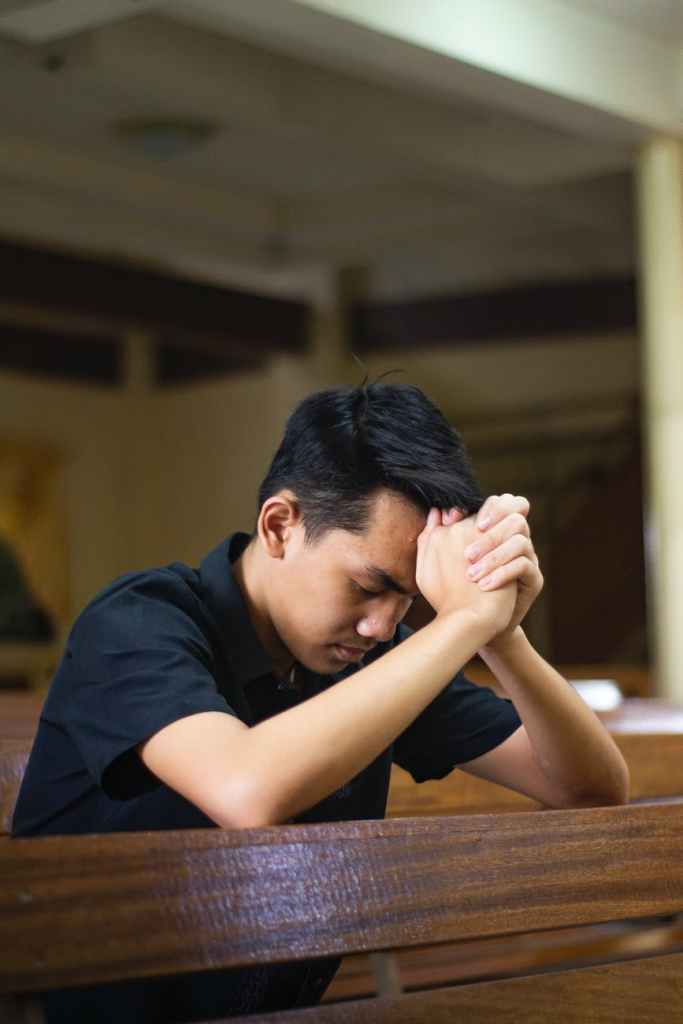
As In the Days of Noah

We’re getting some rain outside as I write this. Not pouring rain; nor torrential rain; just a steady drizzle. But it looks as though we will get rain for another two days at least. Without stop. Cloudy, wet, chilly, dreary weather.

The news has been dreary, too. War, political upheaval, economic disaster looming, and general unrest. And it isn’t just localized. There is trouble everywhere, and, seemingly, all the time. And yet…events march along as though things are normal– as though the future will be bright tomorrow. There are festivals being planned (some with rain dates, others may be cancelled or lightly attended if the rain continues or worsens); people seem to be in the same hurrying, scurrying rhythm as yesterday. Some complain, or seem a bit oppressed, but most don’t even comment on the catastrophic events unfolding around us. They buy and sell, eat and drink, and rush to and fro like always.

There seems to be a universal weariness– people are tired of bad news, anger, protests, and arguing, but no one seems to want to DO anything positive, unless it is to live in denial of what is actually happening. “Oh, they are just exaggerating.” “That might happen elsewhere, but it will never happen HERE!” “Things will work out– we just need to wait it out.”

It reminds me of the warning of Jesus in Matthew 24:

 For as in those days before the flood they were eating and drinking, marrying and giving in marriage, until the day when Noah entered the ark, 39 and they were unaware until the flood came and swept them all away, so will be the coming of the Son of Man.

Matthew 24:38-39 ESV

While I can listen to or watch bad news unfolding, it hasn’t impacted me directly. I don’t have to worry about bombs coming into my neighborhood (at least, I’m not expecting any today); I haven’t lost my home or a loved one in the past week. I watch the clouds and rain from the safety of a warm, dry apartment. It is easy to become apathetic. And, if I think about any of it, it is easy enough to say a quick prayer for “others” “over there.”

But I’m not building an ark. Jesus’s warning was not to “toss off a quick prayer” as we see signs of danger and await His return. Prayer is important, but it isn’t something to be done lightly. Living for Christ is more than wearing the name “Christ Follower” and a t-shirt or cross necklace. When was the last time I spent an hour in earnest prayer? When was the last time I fasted? When was the last time I felt compelled to act for the cause of Christ?

I’m not surprised that most people walk around angry, or apathetic about the state of the world. But as Christians, we should be working to make a visible difference. And that means our prayers must also be different than the comfortable “good wish” prayers that many of us (and I must include myself) often practice.

In the days of Noah, people were going about their daily lives without any clue of the horrors to come. And yet, there were signs, even then. There was evil everywhere– corruption, fighting, cheating, lies, danger, disease, famine, and oppression. But only Noah was building an Ark. He wasn’t caught up in watching CNN or trolling the internet, but he also wasn’t leading an “ordinary” life. His life stood out, because he listened to God. He was focused on what really mattered– saving those who would enter the Ark and survive the judgment to come. The Ark had room for more people– but they refused the invitation. Maybe they had a dentist appointment scheduled for that day; maybe they didn’t want to miss their “girls day out.” Perhaps they were planning a fishing trip or they were buying a house.

But he said to him, “A man once gave a great banquet and invited many. 17 And at the time for the banquet he sent his servant to say to those who had been invited, ‘Come, for everything is now ready.’ 18 But they all alike began to make excuses. The first said to him, ‘I have bought a field, and I must go out and see it. Please have me excused.’ 19 And another said, ‘I have bought five yoke of oxen, and I go to examine them. Please have me excused.’ 20 And another said, ‘I have married a wife, and therefore I cannot come.’ 21 So the servant came and reported these things to his master. Then the master of the house became angry and said to his servant, ‘Go out quickly to the streets and lanes of the city, and bring in the poor and crippled and blind and lame.’ 22 And the servant said, ‘Sir, what you commanded has been done, and still there is room.’ 23 And the master said to the servant, ‘Go out to the highways and hedges and compel people to come in, that my house may be filled. 24 For I tell you, none of those men who were invited shall taste my banquet.’”

Luke 14:16-35 ESV

Again, Jesus warns that we are to be prepared to drop the “business” of daily living; to be prepared for the Return of Christ. There is a cost involved in being a “Christian” or a “Christ Follower.” We are not to be like those who are walking around with our heads in the clouds, or worse, with our heads filled with apathy or gloom. We are to be salt and light in this dark world. We should be praying for boldness and wisdom to seek out opportunities to serve, to encourage, and to share the Gospel.

“Lord, take over my days and my prayers, that I would not settle for comfort, but seek you with a fervent heart, and seek not to just observe, but to serve!”

Building Blocks of Healthy Prayer

When I was in elementary school, we learned about nutrition. Back then, we were taught that there were four basic food groups (nutrition education has gone through several “cycles” since then– food pyramid, healthy plate, “eating the rainbow”, etc.). Eating a healthy balance of foods is essential to good health. If I only eat meat, or only sweets, I will not be healthy. If I just eat whatever or whenever I feel like it, my body won’t get all the necessary nutrients to grow, fight off diseases, and stay strong.

Pursuing a healthy prayer life includes essential “building blocks” or nutrients, as well. Over the course of many years, I have seen various guidelines and acronyms to help include different building blocks in prayer. I want to share a couple of them again today. These guidelines are just that– guidelines. But they can help balance our prayer life, and help it grow.

The first acronym I learned, and the one I have used for decades, is ACTS. Here’s how it works:

  • Adoration/Acknowledgement– begin each prayer by acknowledging God’s Sovereignty, His Holiness, His Goodness, and other qualities worth worshipping. This helps put you in the right frame of mind when talking to God. I am not just talking to a neighbor or a “good buddy”– I am speaking with the One who holds all of Creation in His hands! And He WANTS a relationship with me! He is all-powerful: there is nothing I can ask that He cannot do! His is all-loving: there is nothing I can ask that He won’t filter through His loving wisdom and will. Even if I don’t know what to ask for; even if I ask for the “wrong” thing– God will only allow those things that He can use for good. God is beyond space and time: He knows all that has happened– all the triumphs and tragedies of my life so far, and all that is to come. He is LORD: He is in control– now and forevermore. Whatever seemingly impossible circumstances I face, they are nothing compared to the eternal, almighty plans of God.
  • Confession–This doesn’t mean an endless repetition of all my failures and sins from six months ago, or raking myself over the coals for not being “holy enough.” This is an honest assessment of who I am in relation to God. God is Holy and perfect. I am not. If I acknowledge God’s goodness, I must also acknowledge that I fall short. I don’t know everything. I don’t always act with the right motives. I NEED the Holy Spirit’s guidance, and I DEPEND on Christ’s finished work on Calvary for my Salvation. This should naturally lead to
  • Thanksgiving/Trust– I can trust God to save me, NOT because of who I am, but because of what He has done. I can see God’s hand working in and around and through me as I yield to His Spirit in me. I can recall, and acknowledge so many of the ways that God has blessed me and others around me. Once I have these building blocks in place, I can bring burdens to God through
  • Supplication– this is just a fancy term for asking God to work His will in specific areas– healing, guidance, encouragement, strength, understanding, submitting to His will, and following Him. I can ask for personal help, or lift up family members, neighbors, friends, and yes, even enemies! I can pray about situations great and small–from wars and famines to lost keys and short tempers.

I learned about ACTS when I was in college, and I have found it to be a great guideline. While I don’t use it for every prayer– sometimes an issue calls for immediate and direct supplication, for instance– I find that using this in daily prayer helps me grow in faith, patience, endurance, and hope. When I come to God in panic or stress, and I haven’t built up a healthy, consistent practice of prayer, my words can be anemic– lacking in faith and based on my fear or anger. I pray with my focus on problems, rather than on God’s power to overcome any circumstance. Using ACTS helps me remember that it is GOD who “acts,” and always for the best!

The second acronym I have used is PRAY. It is very similar to ACTS, but the end focus is slightly different:

  • Praise/Adoration– once again, it begins with praising the God who is worthy; the God who hears me, sees me, loves me, and knows what is best. I cannot live victoriously without remembering the source of hope and victory, and putting my heart in HIS hands.
  • Repentance– as with Confession above, this is not an act of groveling and rehearsing past shame. It is acknowledging anything that I might be holding on to that gets in the way of my worship of and submission to God’. E.M. Blaiklock, the Christian apologist from New Zealand once said: “God alone knows how to humble us without humiliating us and how to exalt us without flattering us.”  Repentance is not about humiliation or holding on to guilt, but rather about staying humble and honest about our need for God’s Grace and Power. And turning from anything that might get in the way of following Jesus Christ.
  • Ask– once we have a right view of who God is, and who we are, we are free to ask Him whatever is on our mind, and share our questions, fears, burdens, etc., with the One who has all the answers!
  • Yield/ “Yes, LORD!”– The final step is making sure we are ready to listen and respond to God as we expect His answer. No matter what God’s answer may be, we should trust and obey His wisdom above our own.

I have come to value PRAY as a wonderful tool to help in my pursuit of prayer, and in my broader pursuit of Christlikeness. Both ACTS and PRAY help me pray “better.” It’s not that God grades my prayers or listens more or responds differently: but it helps me to better appreciate the power of prayer, and the power behind prayer. Individual prayers can change circumstances, but the pursuit of prayer is meant to change US as well. Prayer that shapes us, helps us grow– if that isn’t at least part of our pursuit of prayer, we are missing out on what God wants to do through us, and not just for us.

It is important, just as with nutrition, that we have a healthy balance in our prayer life. That balance consists of worship, repentance, sharing our burdens, showing gratitude, and offering ourselves in humble service. Prayer is too important to just “wing it.” We need to pursue it with the same (or better!) dedication that we give to our physical health.

..And Love Your Neighbor as Yourself

How can I please God? What does He require of me? I’ve been exploring the most basic answer to this question by looking at Jesus’ answer to the related question, “What is the greatest of all the commandments?” (See Matthew 22: 34-40) Jesus quoted from Deuteronomy (6:5) as He gave His two-part answer– Love God with all your heart, soul, and mind, and Love your neighbor as yourself! He went on to say that ALL of the commandments and laws hang on these two concepts.

So today, I want to look closer at the last of these– Love your neighbor as yourself. In another gospel, we see that Jesus is challenged to clarify, “Who is my neighbor?” https://www.biblegateway.com/passage/?search=Luke%2010%3A25-37&version=NIV When we want to justify ourselves, or narrow the letter of the law, we often stall obedience by seeking to “clarify” God’s commands. Jesus’ words are broad, but perfectly clear– Love your neighbor as yourself–love the next person you meet; the person closest to you, as if they were YOU.

This doesn’t give us room to reject anyone or exclude anyone from our love, compassion, or respect as a child of God. Nor does it give us the right to live someone else’s life, or take away their God-given free will to think and act for themselves. I have been guilty of both offenses, and I don’t think I am alone.

Two of the great mistakes we make in failing to “love our neighbor” come through fear and pride. In the story of the “Good Samaritan,” we see two examples of a priest and a Levite, who fail to show love to their fellow Jew. They act in fear– fear of being the next victim, perhaps, but also fear of being inconvenienced or pulled away from their plans and purposes, and fear of being “defiled.” How many times do I let fear keep me from reaching out? How often do I fear that people, even God, will think less of me for associating with those who need help? Yet Jesus was known for interacting with sinners, lepers, and other outcasts. How can I act differently, and please God more than His own son?

The other great mistake I have made is to “love” out of pride. Sometimes, I think I have more wisdom, or more material wealth, or greater skills, and that it is my right to “help” my neighbor in my own way and at my own convenience. I think I know how they should live, what they should do, and what they need– more than they do; sometimes even more than God knows! But I cannot love where I am not willing to be humble. This is true with God, and it is equally true with others.

That doesn’t mean that I love others best when I let them take advantage to my harm or to their own harm. And it doesn’t mean that I must agree with them completely or deny what I know to be right. But it means that I must value their well-being and worth in God’s eyes as equal to (and often greater) than my own. It makes me feel good to “fix” someone else by fixing their circumstances, or demanding that they accept my help, but their greater need may be to take control of their own circumstances and attitudes. My need to be “right” or “righteous” or “charitable” needs to take a back seat to whatever their greater need may be. I need to listen more than I speak; wait when I would rather act (or vice versa); to take direction rather than give it; and to give advice rather than orders.

The Apostle Paul spoke at length about love:

13 If I speak in the tongues of men or of angels, but do not have love, I am only a resounding gong or a clanging cymbal. If I have the gift of prophecy and can fathom all mysteries and all knowledge, and if I have a faith that can move mountains, but do not have love, I am nothing. If I give all I possess to the poor and give over my body to hardship that I may boast, but do not have love, I gain nothing. Love is patient, love is kind. It does not envy, it does not boast, it is not proud. It does not dishonor others, it is not self-seeking, it is not easily angered, it keeps no record of wrongs. Love does not delight in evil but rejoices with the truth. It always protects, always trusts, always hopes, always perseveres.

1 Corinthians 13: 1-7 NIV (via biblegateway.com)

I can “care” about others; I can be generous; I can be knowledgeable; I can volunteer, and make sacrifices; I can “feel” deeply, and empathize with others– and still NOT love them. Conversely, I can disagree with them about a number of things, including their life choices, political views, and spending habits, and still love them as Christ loves them. I can love those who like me, or ignore me; those who hate me, as well as those who love me back. But I cannot do this in pride or in my own emotions and thoughts. This kind of love can only be sustained by the source of true Love– God Himself.

This is why it is so important to learn from Jesus’ example. His perfect Love casts out fear and pride, and allows us to see others (and ourselves!) in the proper perspective.

He Hath Shewed Thee…

Wherewith shall I come before the Lord, and bow myself before the high God? Shall I come before Him with burnt offerings, with calves of a year old?
Will the Lord be pleased with thousands of rams, or with ten thousands of rivers of oil? Shall I give my firstborn for my transgression, the fruit of my body for the sin of my soul?
He hath shewed thee, O man, what is good; and what doth the Lord require of thee, but to do justly, and to love mercy, and to walk humbly with thy God…

Micah 6:6-8 (KJV)

“What does God want from me?!” Ask a dozen people this question, and you will very likely get a dozen different (and even conflicting) answers!

Abject obedience? Memorizing a creed or list of rules? Shiny, happy, saccharine sweetness? Sacrifice? Humiliation or self-abasement? Blind faith? Isolation and meditation? Constant repentance and confession? A crusader’s militancy? Your answer reflects your relationship with and belief in God and His character.

But instead of asking a dozen people, you can ask God Himself! The prophet Micah does this, and receives a simple but startling answer– God requires three things: to do justly (or practice justice), to love mercy, and to walk humbly with Him. Jesus also gives us a simple answer in the book of Matthew. When asked by a lawyer, “Master, which is the greatest commandment?,” Jesus replies, “Thou shalt love the Lord thy God with all thy heart, and with all they soul, and with all thy mind. This is the first and great commandment. And the second is like unto it, Thou shalt love thy neighbour as thyself. On these two commandment hang all the law and the prophets.” (Matthew 22:36-40 KJV) In giving this answer, Jesus was referring to writings He had dictated hundreds of years before to Moses (Deuteronomy 6:5, and Leviticus 19:18 respectively).

God is very clear– there is no single and measurable act we can do, no oath we can take, no quest we can complete, and no gift we can give that will, in itself, please Him. There is no magical number of times we must confess, or sacrifices we must make, or rites we must go through to be acceptable. But, as simple as the answers appear, it is impossible for us to meet the requirements on our own. We do not love God with all our heart, soul, and mind– we do not walk humbly with Him; nor do we do what is just, or love mercy toward our neighbors– we do not love others as ourselves.

Even though Micah wrote before Jesus came to earth, he proclaims that God “hath shewed” us how to please Him. His commands teach us His priorities and His character–God values life (Thou shalt not kill); He values family (Honor thy Father and Mother/ Thou shalt not commit adultery); He loves truth (Thou shalt not bear false witness) and Holiness (Thou shalt not have any other gods before Me/Thou shalt not make graven images/Thou shalt not take the name of the Lord in vain). God loves those who trust and rest in His provision (Thou shalt not steal/ Thou shalt not covet/Remember the Sabbath). He is pleased to provide good things; He is a God of Love.

Jesus came to “fulfill” the law– to demonstrate both who God is, and how He wants to help us live life to the fullest. He also came to prove that the law, while good, is not a means to an end for us to please God.

I have a heart to explore this further over the next few days. I pray that what God has laid on my heart will draw me closer to Him, and that sharing it might help others to do the same.

No More Goodbyes

Today marks 25 years since I said “goodbye” to my father. My mother, sister, and I stood by his bedside at the hospital. The doctors had tried numerous times to re-start his heart. In the process, they had broken his sternum, and each new effort was causing additional pain and putting his lungs in danger of being punctured by bone fragments. His time was running out. We were allowed to come in and say our last words to him, before his worn-out heart finally stopped for good. I held his hand one last time, whispered that I loved him and that I would help take care of Mom. I kissed his forehead, and said a prayer. Mom and my sister did the same.

Earlier this year, I had to say goodbye to Mom as well. My sister and I were with her, and had read her mail aloud to her, as she had fallen into a coma. I was preparing to return home. I said, “goodbye;” I held her hand, kissed her cheek and turned to my sister. When I turned back around, Mom was gone–her oxygen machine was still running, but her heart had stopped beating, and she was peaceful and still. In that moment, I became an orphan.


Death is part of the curse of a fallen world. God is the source of all Life. In a fallen world, we are cut off from our life-source. Our mortal bodies must taste death. It is the consequence of Sin– our sin, and the sins of others. Disease, violence, aging, disasters, grieving, work, abuse– all conspire to drain the life out of our bodies. Life is a gift– we can’t “earn” it, and we can’t “hold on” to it indefinitely. Nor can we hold on to the lives of others–even those we love. Some day, I will lose my sister. Or she will lose me. Some day, I will lose, or be lost to my husband, my brother, my step-children, mother-in-law, grandchildren, cousins, friends, and neighbors.


And, just like leaves on the trees later this month, all of us will grow old, be changed, and fall into decay. Some will fall gently; others will be torn away by the winds of war, or crime, or cancer, or accidents. Some will fall early; others will cling to life until the last moment, but all will eventually die. More goodbyes. More grieving. More death.


But. God is the author of Life, not Death.


Death is not the end for those who have trusted their souls to God. Our bodies must still taste death. We must still say, “Goodbye” to those we love on earth. But our goodbyes are tempered with the promise that the One who conquered Death did so for US. Because Jesus was willing to die and able to rise again, we will also live again. And THIS life will be untainted and eternal. No more goodbyes. No more grieving and separation. No more fear of an unknown future that includes death. No more waiting. No more living without a father. Our Heavenly Father will never leave, never die, never suffer the ravages of age or disease, never fall. In fact, Jesus never said “Goodbye” to His disciples– it wasn’t in His vocabulary! He said that He would “Go to prepare a place…(John 14:2-3)”, and He charged His disciples to “Go into all the world…(Mark 16:15)” But He never said, “Goodbye!”

I had to say, “Goodbye,” to my wonderful parents. And I have the joy of knowing that our “goodbyes” are temporary. That I will see them again, even as I will see my Heavenly Father someday. So, while today holds in it the sadness of watching my Dad suffer in his last minutes of earthly life, it also holds the promise of reunion and restoration. My Dad will never again have to suffer; neither will my Mom. My future probably holds a few more “goodbyes.” But it also holds “Hello!” “Welcome Home!” and “I’m so happy to see you again!”

Photo by Polina Zimmerman on Pexels.com

I thank God for the lives of both my parents– for their testimonies of faith, for their good examples, and for the wisdom, laughter, and love they shared. And I thank God that their deaths were not the end of that love and joy. In fact, it will be even better to share someday what we could never have here on earth–eternal peace and freedom from grief and loss.

Twenty-five years seems like a long time, but it is a drop in the bucket of time, and nothing in light of eternity. That truth brings me great comfort as I face today. I hope you will be encouraged and comforted as well. Heaven is a place with no more “goodbyes.” And that radically changes the way I say “Goodbye” here on earth!

Processed Prayer

I love to cook. I love looking at new recipes, and finding new ways to use fresh ingredient, use up that last bit of leftovers, or stretch staple foods like beans, flour, or rice. And I love to pray. I love being able to lift up praises, requests, and even questions. I love knowing that I can confess even my most shameful thoughts or deeds to a God who already knows, loves me more than I can imagine, and stands eager to forgive me and strengthen me to make wiser choices.

Cooking can be exciting, challenging, and creative. But it doesn’t have to be. I don’t have to cook at all in our culture. I can (at some expense) dine out every day, and let someone else do all the work. Or, I can buy pre-made meals, “processed” foods and “instant” mixes– “just add water,” “cooks in 6 minutes,” “ready to eat.” I can pray “processed” prayers, too. I can recite prayers of others, mumble graces by rote, and even read off a list of requests with little or no effort or emotion.

But processed prayer isn’t healthy– no more than processed food. Oh, it won’t seem much different– at first. And it isn’t “bad”–every once in a while. But a steady diet of praying someone else’s words and thoughts doesn’t build a personal relationship. We miss out on the “process” of praying, and the end result is not as fresh and healthful.

When I cook from scratch, I have to follow a process:

  • I need to make sure I have the proper ingredients.
  • Some ingredients need to be seeded, skinned, peeled, chopped, or otherwise readied before they can be used.
  • Ingredients need to be added in the proper order.
  • Measurements are important. 1 teaspoon of salt is not the same as 1/2 cup of salt!
  • I need to use the proper methods– simmer, boil, chill, bake, etc.
  • Timing is crucial, too. Cookies may take 10 minutes to bake– a roast may take 3 hours.
Photo by Gary Barnes on Pexels.com

Praying “from scratch” also follows a process:

  • I have to have the right heart attitude.
  • Distractions need to be put aside.
  • I want to include all the “ingredients” of a deep prayer– Adoration and Praise; Acknowledging God’s Sovereignty and Power; Confession and Repentance; Thankfulness; Presenting my requests; Lifting up the needs of others; and Committing to Listen and Obey God.
  • Timing is important–I need to make time to visit with God in Prayer. It shouldn’t be an afterthought or another activity to squeeze in IF I have a chance!

That doesn’t mean that we can’t (or shouldn’t) pray “in the moment” or recite The Lord’s Prayer, or the Prayer of St. Francis, or another written prayer. It doesn’t mean that we should make all our prayers from a “recipe” or a formula. But if our prayer “diet” is becoming dependent on “processed” prayers, we may need to go back to the kitchen!

Sticks and Stones…

Children can be very inventive when finding ways to hurt other children. Name-calling, shunning, shaming, or just pushing, shoving, and tripping each other on the playground. As parents, teachers, and concerned adults, we should be working to instill compassion and discipline in our children– compassion to see how such actions and words hurt, and discipline to keep them from speaking and acting out of emotion and carelessness. We also spend time wiping away the tears and comforting those children who have been bullied and hurt by their peers. And we teach them sayings like, “Stick and stones may break my bones, but words (or names) can never hurt me.” Such sayings mean well, but they are not entirely true. Words and names can hurt. They DO hurt. And they don’t just hurt the person who is the target of such words. They hurt the speaker and everyone who lets the words fall unanswered, or who picks up the words to hurt someone else.

Christians should stand out as beacons of light and love. Yet many of us are guilty of throwing “sticks and stones” every bit as hurtful and thoughtless as those hurled by playground bullies.

A few years ago, I read with some shock a hate-filled article from a Christian woman who was urging all her Christian friends to boycott “Operation Christmas Child”, a group sponsored by Samaritan’s Purse, a charitable organization founded by Franklin Graham, son of the famous Evangelist, Billy Graham. Every year, Operation Christmas Child sends out millions of shoeboxes filled with Christmas gifts, meant for some of the poorest children around the world– orphans, refugees, and those in extreme poverty. But according to this woman, Operation Christmas Child is a hate-filled organization, spreading racism and condescension by sending “white” “western” baubles meant to taunt the recipients–useless articles like dolls and toy cars and color books with crayons. She also called out Mr. Graham as a racist, homophobic, hate-monger who should be — well she did stop short of asking for his assassination, but not by much. (I’m not here to champion Mr. Graham. But she gave no examples of racism and homophobia, nor did she give Mr. Graham any chance to defend his organization.)

Her proposal was that anyone wishing to help someone in a “third-world” country should instead send their donations to a group that provides livestock– goats and chickens–to struggling farmers and families in developing countries, giving them the means to be self-sufficient, independent, and providing practical help instead of “frivolous toys”.

I spent hours crafting a response to this woman’s article– one I later deleted without sending. I believe her proposal came from a heart that sincerely wanted to help others in practical ways. And I think her hatred and disgust for Operation Christmas Child was based on criticisms she felt were warranted. But her article left me in tears for three reasons:

  • It was hateful and filled with the kind of name-calling and condemnation that Christians should not just avoid, but mend and correct with love and grace. That doesn’t mean that we cannot say anything negative about other Christians or criticize their actions if they seem inconsistent with the Gospel. But there are Biblical guidelines for doing so.
  • Second, the article was divisive. She did not allow that anything about Operation Christmas Child could be done with a loving motive or a positive outcome. And she was ready to condemn anyone connected to the organization– including anyone who refused to join in her condemnation. Because she found issue with the founder and with the design of the boxes and certain contents, she felt justified in condemning everything and everyone connected with it. And because she had found a solution that made her feel virtuous, she wanted every Christian to follow suit. There was no room for any other group who might send toys or school supplies to children. There was no room for mercy or the possibility that her judgment was biased or tainted.
  • Finally, I believed her article was driven primarily by the passing emotions of rage and disgust. It came from a place self-righteousness, instead of a desire to do whatever she could to honor God and help those He loves. In fact, the majority of those living in poverty around the world (and thus subject to the goals of the charities she contrasted) live in urban areas–often they are homeless or live in crowded refugee camps or sprawling housing complexes. Sending livestock can certainly help farms or families who have land and food available to tend them. It is a helpful and loving gift to send a goat to a family or small village–it is however, impractical to send a pair of chickens to someone living in a high rise in Nairobi, Mumbai, or Tegucigalpa, and her advocacy shows a “western”, “white” naivete that rivals the one she sees in dolls and color books and cartoon pictures printed on the boxes used to send them.

My response was no better–it pointed out her faults (as I saw them), and was designed to make her feel foolish and belittled and “wrong”. And just because I deleted it then, I obviously have not forgotten the incident. But I bring it up now because I see in it an ongoing problem—one to which I am not immune, even as (or maybe especially as) a Christian. It is very easy, especially with social media, to speak “in the moment”– and often in the emotion of the moment. We react, rebuke, chime in with our “two cents,” and let our tongues (and fingertips) destroy when they should be building up.

As schools throughout my area are starting a new year, I am reminded that bullying and name-calling are ongoing problems, and they aren’t just happening in school yards and on buses, and in classrooms. I need to ask myself: Am I hurling sticks and stones, as I sneer at those with whom I disagree? Am I like the playground bully, finding delight in calling others names, or laughing at their expense? Am I tearing down other Christians because I hear others being critical? Or am I using my tongue (and my keyboard) to bless others? Do I speak the truth (harsh as it sometimes is) with love and grace, or with pride and condescension? Do I listen more than I speak? Would I want Jesus to read my Facebook posts or hear my conversations? (Because He DOES!) Does He speak through me?

“A word fitly spoken is like apples of gold in settings of silver” Proverbs 25:11

Taken from pinterest.com, based on Proverbs 25:11

So let’s hand out “apples of gold” this school year– whether teachers, students, parents, or bloggers–let’s spread love and healing. And, where there is bullying, angry recrimination, or harsh judgment, may we be defenders and peacemakers. Our words can build people up, or tear them down– even those caught in the crossfire. Let’s teach our children (and relearn the lessons ourselves) to honor God with our words, both spoken and written!

May His words take up residence in our hearts and spill out of our mouths and fingertips today!

Voice Mail

A couple of weeks ago, I was at a prayer meeting, and I set my phone to vibrate, so it wouldn’t ring and disturb everyone during prayer time. But I forgot to change the settings afterward. For three days, things were pretty quiet as my phone sat vibrating in my purse across the room, or plugged in to the charger overnight! I had several missed calls, and many voice mail messages waiting for me when I finally noticed what had happened. Some of the callers were trying to get in touch with me about my car’s extended warranty, but most were calls about personal or business matters that I should have responded to– if only I had heard the phone ring. This didn’t stop me from sending calls or text messages to other people; it just meant that I didn’t get their messages to me.

I think sometimes, we can do the same thing with other forms of communication, including prayer and Bible study. We send messages to God, but we live with our “ringers” off– unable to receive or respond to God’s messages to us. And, as we become aware of our neglect, we are afraid to check our “voice mail,” lest we find harsh or condemning messages from God. “Where have you been? Why aren’t you answering my calls? I’ve been trying to get in touch!”

Throughout the books of the prophets, God left such messages for His people. They “knew” His law, and His promises; yet they were deaf to His voice, and hard-hearted toward Him. Even as invaders were approaching, ready to destroy the Temple and carry the people away into exile, they ignored God’s call to return to Him and follow His ways. Instead, they prayed to worthless idols and made worthless treaties with neighboring nations– treaties they wouldn’t even keep. They listened to false prophets who only told them what they wanted to hear– that God would come to their rescue and ignore their “bad habits” and idolatry. Again and again, God sent prophets with messages of terror and destruction. And mixed into each was a message of hope and restoration–exile would come, but so would a Savior.

God still speaks through prophecies, though rarely. His greatest word was Jesus Himself, living out His Holy character, and dying to show us both the cost of Sin and the Glory of Grace! God’s “Voice Mail” message to us is Our Savior– not to save us from foreign invaders or earthly trials, but to save us from the power and slavery of Sin. His message is clear and consistent–“Follow Me!”

There are many other messages clogging our voice mail– from car warranties to frivolous memes; from distracting messages to false promises. It is important to check which messages are coming from God’s word, which messages are consistent with His Word, and which ones are contrary to His Word. God will never send a message that contradicts His Character– He will not whisper to us about “cheap grace” or set us up for failure. He WILL warn us of the consequences of Sin and offer us forgiveness whenever we repent.

Photo by Sunshine Caro on Pexels.com

Today, I need to check my “Voice Mail”. God is glad when I speak to Him, but He also wants me to listen and obey; to follow Him. There is a warning in God’s message– something far worse than a temporary exile is headed our way. But there is NO condemnation– only a plea to return to Him, and enjoy the Grace He wants to lavish on us. God’s message is far better than a car warranty– it is a message of Salvation and Eternal life; a continuing message of Hope and Restoration. If only I will listen and respond! Have you checked your voice mail lately?

Mumbled Prayers

As I write this, I’m having an “off” day. I don’t feel well. I don’t particularly feel like worshipping or saying joyful prayers. I don’t even feel particularly like saying a prayer. But I will pray– even if it’s just a mumble or a groan.

God meets us where we are. He is not just the God of the joyful and productive; the “shiny, happy people,” or the ones who feel like overcomers. God is the God of the hurting; the God of the lonely; the God of those who are sad, tired, and feeling “off.” Of course, God doesn’t want me to go through life this way. I will have better days– days of accomplishments and celebration. But God does not leave me alone when I am grumpy, upset, or “blue.” He is right beside me, surrounding me with His presence. So I can mumble today, even if I sang yesterday or cry out in anguish tomorrow.

Prayer is a pursuit for every day– not just when we “feel like it” or when we are desperate for answers. It is a discipline. If I choose not to pray today, I may more easily choose not to pray tomorrow, or the next day. And God will still be waiting there, patiently, whether I mumble or give Him the “silent treatment.” Because prayer is more than just a pursuit and a discipline. It is part of a relationship. God already knows me intimately, but He wants ME to know HIM as well. And He wants me to know and experience His Love– even when I don’t feel it; even when I know I’m not very loveable. And that knowledge–that enduring relationship–will carry me through days like today. I can mumble, or whisper all the lies and sadness I feel on a particular day, but God’s presence will break through and wrap me in the cloak of Truth–the everlasting Truth of His Love and Faithfulness. Feelings will pass, but Faithfulness endures. And I pray to the God who is Eternally Faithful–even when I am temporarily feeling faithless and far away.

God is an expert at turning mumbles into melodies!

An Encouraging Word

It can be a dog-eat-dog kind of world out there.  Every day, I hear of people who are facing difficult and trying circumstances– health issues, loss of a job or home, loss of a family member or close friend, depression, oppression, harassment, rebellious or estranged children, abuse, academic failures, exhaustion from being provider, caregiver, etc.– even just daily stress.  It can really take a toll.  But it becomes even more difficult when we isolate ourselves.

When I get stressed, I tend to withdraw.  I don’t want others to think of me as a failure, or to think less of me in my struggles.  But this is one of the worst things I can do.  First, it means more worry and stress because I’m bearing the burden alone!  Second, it forces me to cover up my level of anxiety or depression be pretending that things are fine when they aren’t.  That would all be bad enough, but it gets worse.  Isolating means my focus turns inward– my problems become bigger, not smaller;  I’m so close to the problem, I’m not able to “look outside the box” for solutions, because my box keeps closing in on me.  I can’t see beyond my circumstances to understand if they are temporary, or if they necessitate some life changes on the other side of whatever crisis I’m dealing with.  And, worst of all, the only voice I listen to is my own, rehearsing and reminding me of the difficulties or failures I’m facing. What opportunities do I miss, not only to hear an encouraging word, but to share one with someone else?!

pexels-photo-936048.jpeg

We all need an encouraging word now and then; a voice telling us that we are not alone; that all is not lost; that there is hope.  I have been blessed with wonderful family, friends, and neighbors who are great about encouraging me, even when I try to shut them out or pretend that everything is grand.  Sometimes that encouragement comes through conversation; sometimes a card or text message or a shared piece of scripture; sometimes it comes through prayer.  I may not even know who prayed, or what words they used until days or weeks later, but their faithfulness in praying has become a lifeline when I feel isolated and overwhelmed.

This does not negate my need to pray and ask God for wisdom, healing, or strength for myself, nor does it suggest that God doesn’t answer my prayers.  Instead, it shows a pattern– God often answers our prayers by incorporating and using those around us.  God’s goodness and his love are shown best in teamwork.  We run the race to win, but we race together as teammates, not competitors.  We share sorrows, struggles, and joys. We come alongside; we lift others up, and they lift us up in return.

Encouragement does so much, we sometimes underestimate its power.  In a world of sniping, criticism, name-calling, and finger-pointing, encouragement does the following:

  • It lets someone know that they are seen and heard– that they are being noticed, thought of, and valued.  This shouldn’t be uncommon, but in a world where we are connected to so many be technology, and to so few face-to-face, it is HUGE!
  • It give us perspective to realize that we are not alone in our problems and not unique in facing difficulties.
  • It reminds us that hope and help are gifts to be shared, not something we must earn.
  • It gives us a purpose and a mission to be part of God’s redemptive work– Jesus gave encouragement and hope to those who needed it most, not to those who “deserved” it.

It can be a dog-eat-dog world out there, but we are not dogs.  We are children of the King.  Let’s send out some encouraging words today!

A word fitly spoken is like apples of gold in a setting of silver. (Proverbs 25:11 (ESV)

pexels-photo-416443.jpeg

Also see James 5:13-16 on praying for one another.

Blog at WordPress.com.

Up ↑