“Praying” Hide and Seek With God

A strange image popped into my head the other day while praying with our Wednesday morning prayer group from church. I was trying to express the amazing paradox that we are being pursued by a God who is omnipresent, while seeking the same omnipresent God. And the image God gave me was one of playing a game– “Peek-a-boo” or “Hide and Seek.” Of course, prayer is not just a game– it is nothing less than communicating with the Sovereign Lord of the Universe! But God delights in our prayers, and He delights in delighting us as we learn and experience new aspects of His Character.

I love to play “Peek-a-Boo” with babies and toddlers. They love the idea of being “discovered” and “finding” someone. There is a moment of supreme joy in finally seeing oneself in the eyes of the beholder– that moment of recognition and reaction to being the focus of someone’s attention–the joy of intimate connection, “I SEE YOU!” But the game only brings joy if both of us are present and interacting. It brings no joy to a baby to see me staring off into space, or glued to my cell phone. The baby might be intrigued, or even comforted by my nearness, but there is a deeper thrill when she knows that my eyes will shine as they are revealed– looking directly at her! And I get great joy from seeing the baby’s delight.

The same is true of “Hide and Seek.” Yes, the idea is to hide from sight–for awhile. But what fun is it to hide and never be found? What fun to search for someone who has gone away and has no desire to be discovered again? The joy of the game is in that moment of discovery and being discovered– even though we know the other person is somewhere close by, there is that moment of re-connection that brings a jolt of delight. AHA!! I have found you! AHA! You searched for me and found me!

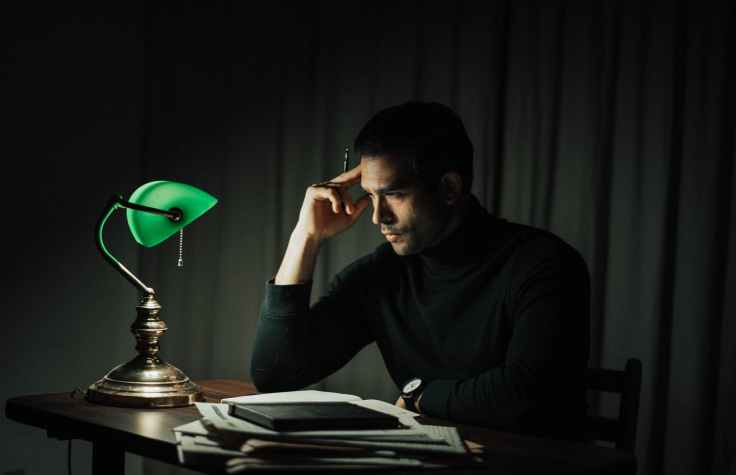
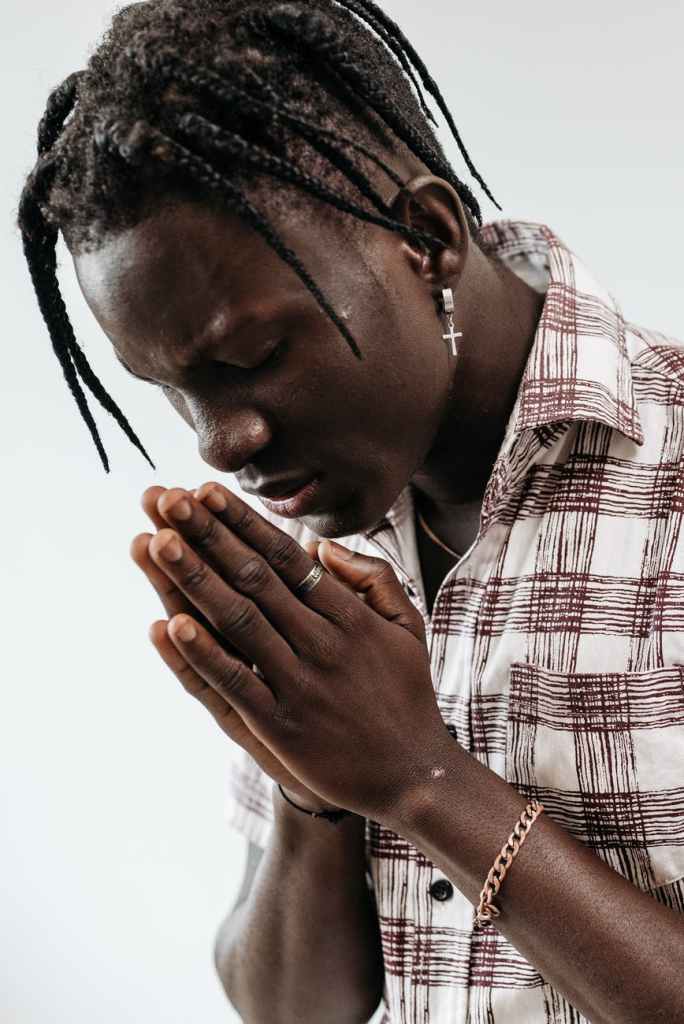
Photo by Nicola Barts on Pexels.com

This is the great tragedy of Sin. Sin causes us to want to hide and NOT be found. (See Genesis 3:8-10). We live in shame and fear, dreading the thought of God finding the “real” us, the secrets we carry, and the ugliness of our hearts. We are frightened by the thought that God is omnipresent– that He sees us; that He sees THROUGH us! We do not want to “Face” God’s justice, and see disappointment and anger in His face. Instead, we want to run away, to cover our eyes, if He will not cover His.

Conversely, this is the great joy of being a Christian. We don’t hide from God’s presence; instead, we turn to Him in delight and recognition. We pray to BE found and to be seen! Finding God, and being found BY Him, involves no fear, no condemnation (Romans 8:1), and no shame. God sees us– all our secrets and shame– through the blood of Christ’s redemption. We are “Born” again– like babies, we can revel in the connection with Our Loving Father. Like a child waiting for the “boo” in Peek-a-Boo, we anticipate the day when we will see Him face-to-face in all His Glory; in the meantime, each glimpse of His Grace, each revelation of His Faithfulness, builds our Hope and our Joy, excites our anticipation, and makes our Heart yearn for the future.

God is omnipresent. His spirit is all around us all the time. As Christians, His Spirit is indwelling– He is not just all around us, but He lives and works IN us and THROUGH us! And yet, God delights in those moments when we turn away from the world around us to focus on just Him. In the same way, even though God is everywhere, He seeks after us and pursues us with a passion and devotion that knows no limits– “Here I am!” “I SEE YOU!” “You are the one who makes my eyes shine!” “I LOVE YOU!”

Today, as you turn away from the world to focus on the Lover of Your Soul, may you find that incredible delight in recognizing His Presence for what it is– Divine, Eternal, Limitless, and Loving.

Making God Look Good

A few years ago, I worked for a boss who told our staff that our number one job was to “make her look good”. This announcement came as a bit of a shock to all of us. It was nowhere in our employee manual, this idea that her status was more important than our work ethic, or our customer service, or our ability to work together as a team. What I’m sure she meant to convey was that everything we did reflected on her, and, by extension, all of us, our library, and our community. It should have been our priority to work, look, speak, and interact with patrons in a way that brought honor and respect to everyone in the building–including her–so that she could concentrate on making an already great library even better. But that’s not the way it was expressed or understood. And the results were unfortunate.

Photo by hadi ahmadi on Pexels.com

It WAS our job to respect her leadership, and do our best work, allowing her to guide the direction of the library’s growth and service. I’m ashamed to say that I did not do this– I fought her leadership, complained about the way she treated staff and patrons, criticized her ideas and her management style, and finally quit my job there.

I start with this story as a contrast to the story of Daniel as it is told in the Bible. Daniel’s job was to make his bosses–kings and emperors who had conquered his nation, exiled and enslaved him, and destroyed his home and culture–“look good.” He was an adviser to kings who were powerful, ruthless, vicious, and often petty, vindictive, and even edging on madness. He did not have the freedom to “quit” or to harbor pride or criticism.

Daniel’s ability to work under such circumstances sprang from his conviction that his number ONE priority was not to make his bosses look good, or even to be the best administrator or adviser he could be. His number one priority was to seek and to serve Almighty God. All the rest would fall into place if only Daniel would keep the right priorities.

The truth is, we cannot make someone else “look good”. We can try– we can sing someone else’s praises, brag about them, work hard to gain their approval, promote them and honor them, even worship them. And, in a superficial way, these things can make the other person appear important, wise, popular, or even “good.” But it can’t make someone else BE good, or important, or wise. And, often, our efforts are not really about making the other person look good. Our efforts are about making ourselves look good in another person’s eyes, or making someone else appear better than they really are.

Throughout his life, Daniel did his best to make God known. He made kings, from Nebuchadnezzar to Darius, acknowledge God’s power, His authority, His grace and mercy, and His goodness. But at the same time, Daniel could not “make” God look good– unless God was (and IS) all the things Daniel said He was. Daniel’s job was never to “make” God look good. His job was to point away from himself, and let God be God–awesome, mighty, loving, eternal, and Holy. In return, Daniel was used in amazing–even death-defying– ways that continue to astonish and teach us today.

My attitude toward my boss didn’t make her look good– or bad–her own actions and words spoke louder than anything I did or said about her. But my attitude and actions didn’t make me look good, either. They just made me look spiteful, arrogant, and uncooperative. Worse, they made my walk with Christ “look bad.” I wasn’t pointing people toward Him; I was pointing to the negative (and being negative) about a situation that was so much smaller than the God I serve. What a missed opportunity to demonstrate, as Daniel did, what obedience and faith look like. What a missed opportunity to let God’s goodness shine through me!

Today, as we pray to this same awesome, mighty, loving, eternal and Holy God, let us not waste time trying to “make God look good.” No amount of fancy rhetoric, holy elbow grease, finger-pointing, or pious posturing can make God better than He already is. Instead, let us come before Him humbly and with a contrite heart, ready to obey, honor, and worship Him with our whole being as Daniel did. Not in pride or arrogance, sounding like an advertisement for a new “super” product or exercise routine, or like an expert on spiritual living, but in awe that the God of Jacob, the God of Daniel, the God of the universe(!) wants to extend grace even to the least of us. God sees us in our troubles– exiled and oppressed, alone and in danger, surrounded by rivals, enemies, madmen, and beasts. God will provide; He will defend; He will bring justice; He will never leave us. Because God IS Good!

My Anchor Holds…

(Note: This is a post from a couple of years ago…)

My husband and I like to go fishing. We have a small boat, and we take it out on a local lake, and spend many happy hours enjoying nature and casting about for fish. One piece of equipment we keep on the boat is an anchor. It’s a small anchor (for a small boat), but it is heavy and solid. The anchor stays within the boat while we travel, but once we’ve found the spot where we want to fish, out it comes. We “drop anchor”, and tie off the rope. The anchor sinks to the lake bed, where it digs in and holds the boat, keeping it from drifting with the water and the wind. The boat still moves a bit, but the anchor and the rope ensure that the boat will stay close to the spot where the anchor lies.

On calm days, it may seem as if the anchor is hardly necessary. The lake is still, and the boat doesn’t seem to drift at all. On windy days, the boat will be driven by the waves, unless the anchor is dropped and holds firm. But the waves still churn and batter against the sides.

Photo by Maria Orlova on Pexels.com

The author of Hebrews compares the hope we have in Christ to an anchor. ” We have this hope as an anchor for the soul, firm and secure.” (Hebrews 6:19a NIV) And as I thought of that, I was reminded of some key things about Hope (and its sister, Faith):

  • An anchor does no good unless it is IN the boat every time we leave shore. I have seen several anchors on display– in parks or at ports–huge and imposing. But they are useless to any vehicle out in the water. Similarly, we have to have the Hope of Christ IN US–we cannot “borrow” someone else’s hope or faith in moments of testing and suffering. We cannot leave our hope in the boathouse, or hang it up on display on shore, and assume that the waters will stay calm, or that our boat cannot drift.
  • An anchor is also useless unless there is a rope or chain or line attaching it to the boat. If I say that my Hope is in Christ, but I’m not in relationship WITH Him, the Anchor will still drop and hold, but my boat will be at the mercy of the waves and wind. If I know “about” God, but I have never spent time getting to “know” God, whatever hope I have will be detached and of little use.
  • An anchor is heavy. It is bulky. It sinks deep and isn’t easy to reposition. That’s how our Faith is meant to be. True faith isn’t lightweight, or convenient, or “cute.” Hope isn’t a balloon or a kite or a parachute. What will keep us from drifting in good times or bad is a faith that is heavy and unshakeable. And our Hope is not airy and wishful, based on wisps and popular philosophy; it is based on God’s eternal nature, and His enduring Word.
  • An anchor, while important, doesn’t make the boat move. Faith and Hope, by themselves, will not get us to our “fishing spot.” The Christian life isn’t about drifting or just staying still. There are times when we need to move out into deeper waters, or turn the boat around and head for home. For that, we need Love to be the motor, or the sail, or the oars to propel us. And we need the “chart”– God’s word, and the wisdom of the Holy Spirit– to guide us to our destination. Only then can we get the most out of our Anchor and its ability to keep us firmly in the place we need to be.
  • An anchor, left dragging behind, will actually hinder or stop our movement. We can get so “anchored” on a certain doctrinal argument, or a certain job at church, or a certain tradition, that we fail to move where God would have us go next. Once again, the anchor does no good unless it is IN the boat as we travel. When God calls us to repent, to change, or to move, we have to trust Him enough to bring the anchor aboard and let His Spirit move us to our next destination.

There is much more that can be said about our sure Hope and Faith, but I want to stop and digest this much for now. I pray for wisdom to use the Anchor of Hope properly all my days.

The Longest Day

Today is the Summer Solstice. In the Northern Hemisphere, it marks the “longest day” of the year. However, today will have exactly the same number of minutes and hours as any other day. The difference is the amount of sunlight/daylight hours, as opposed to hours of night/darkness. And even this varies by where we live in relation to the equator. Those who live close to the equator will see little difference today– those near the North Pole will not see the sun dip below the horizon at all.

In some ways, today is NOT the longest day of my year. One of the longest days for me so far this year was the day my mother died. Even though it was February, when the days are “short,” that day was filled with questions, emotions, and obligations. Time seemed to stand still for a while, as we took in the reality that she had left us to go Home, and then time seemed to expend for all the aftermath of death. Who needed to be called and contacted? What would we need to do in the coming days and weeks to plan a funeral, notify authorities, pay bills and close accounts, etc.? How would we notify family and friends without “missing” someone? Each tick of the clock seemed to bring new thoughts and emotions.

I was thinking about time recently. We are still busy cleaning up Mom’s house and settling her estate. Days seem to pass quickly now, as we have deadlines, and much work to keep us busy. I’m glad for the extended daylight hours, but I’m also tired! Most days– even longer days!– I feel like I’m falling behind. And I find many hours are “wasted” on unimportant things; inconsequential things. Will I spend my time today any differently or more efficiently than any of the “shorter” days to come?

The Bible says a lot about time. (https://www.openbible.info/topics/time) We are creatures bound by time. We have a beginning and an end; we have a limited life span. And we do not know those limits. We cannot break the bonds of time to live longer lives, or to live our lives in the distant past or future. That is the “stuff” of science fiction and daydreams. We cannot bargain for more time, whether we are thirty and diagnosed with cancer or ALS or another terminal illness, or we are ninety-two and long to reach our centennial birthday. Even our individual days are dictated by the march of time. We cannot live our days backward. We cannot stop the clock or stretch out a certain hour over any other. Instead, we must make the most of every minute; every day that we are given.

But we were not created just for one short lifespan. Our bodies will wear out and die, but our spirits were created for eternity. There will be no “longest” or “shortest” days in Heaven or Hell. There will be no sunsets, no endings or “do-overs”, no deadlines. For the Christian, this is a great comfort. My Mom has said her last “Goodbye.” She never has to worry about deadlines, unfinished tasks, or “putting off until tomorrow..” My grieving is over a temporary loss; a brief “au revoir”, rather than a gaping chasm of eternal separation.

But there will be a very different “longest day” for those who do not choose Christ in this life. And that day will be one of endless darkness, endless despair. There will be no sunrise, no rest, no refreshment or renewal, no “tomorrow.” Today, I pray that we would “number our days” in this life (Psalm 90:12), and put them to good use. I pray that I would reflect God’s love to those who are living in the shadow of that endless darkness. I pray that the Holy Spirit might shine a light (through me and through others) that would draw people to Him.

There will be many hours of light today, but the days will grow shorter. The seasons remind us that time on Earth is fickle and fleeting. May we live wisely in this “longest” day of the year!

A Prayer For Fathers

Photo by Pixabay on Pexels.com

We are approaching Father’s Day. It is a day of celebration for many people, but it can also be a day of sadness for others. This year will be a milestone for our family, as my father passed away 25 years ago; and yet–we are preparing to celebrate the birth of my grand-nephew’s first child. This will make him a father, my nephew will become a grandfather, and my brother will become a great-grandfather! My husband is a father and grandfather, and so are three of his brothers. We also have brothers, brothers-in-law, nephews and cousins who are great dads. So we really have a lot to celebrate!

Fatherhood– the kind we celebrate– is more than just contributing genetic material to a new life, or claiming a child on an income tax statement, or showing up once in awhile for major events. Fatherhood involves sacrifice. It requires wisdom and patience. It involves ongoing commitments, and the tough love that says, “No” because it’s the right thing, rather than the easy thing to say. Fatherhood requires a man to be a teacher, provider, protector, defender, coach, and disciplinarian. It also requires humility, and grace, encouragement and sometimes tears. In addition, fatherhood requires prayer. No father is perfect, and no father can do all that he needs to in his own power. Fathers need our support and encouragement, our grace, and our prayers.

Photo by Kaysha on Pexels.com

It is tempting to label our fathers. I have known “good” fathers. And I have known fathers who have abandoned or even abused their responsibilities, causing trauma, anguish, and hurt to their families, lasting for generations. My own father wasn’t perfect, but he was a “good” father. He was a man of humor and integrity, faithful, honest, loving and humble; a man of faith, and a man of honor. My father-in-law was the same. They left wonderful legacies of wisdom, hard work, and quiet strength. But I know of other fathers who have ruined the lives of their children (as well as their own lives) through fear, selfishness, addictions, abuse, anger, greed, and pride. Father’s Day can cause regret, envy, and bitterness in the hearts of many fathers and children alike. Many people would like to forget about their fathers on Father’s Day. Some don’t even know how to celebrate– they’ve never seen or heard from their father; some don’t even know his name!

Photo by Ketut Subiyanto on Pexels.com

But Father’s Day is not only for “good” fathers. It is a time to honor those who have been faithful, but it is also a time to reach out to those who need help. Good fathers are needed! And “bad” fathers need to be called out– not indulged or ignored, but held, guided, rehabilitated, or even incarcerated, for the good of their children. Hurting boys often grow up to be hurtful fathers. Hurting girls often end up in hurtful relationships. Hurtful fathers often struggle with their own baggage of hurt and disappointment from past generations, without knowing how to change. Fathers need more than a “day”, a cook-out, or another tie. They need a mission and a purpose; they need respect and forgiveness; they need encouragement and accountability.

My prayer today is that this Father’s Day can be a day of honor AND of healing for fathers and their children. I pray that struggling fathers will be encouraged and strengthened; that hard-working, faithful fathers will see the rewards of their efforts and find hope to keep going; that absent and apathetic fathers will wake up to the challenge and the gift of fatherhood; that broken fathers will find help and healing for themselves AND for their families; that hurting sons and daughters will find the grace to move beyond the pain of unmet expectations and abuse to become better men and women.

Photo by Anna Shvets on Pexels.com

All that I pray for is made possible because we have a Heavenly Father– a perfect, loving, eternally wise Father– who loves us through our struggles and our pain. He knows our every need, sees our every tear, and hears our every prayer. He is ready to be our coach, our provider, our healer, our disciplinarian, and our protector. No matter our experiences or how we feel about our earthly fathers, or about being a father, we can trust Him to be all that we need. Our Heavenly Father will never abandon us, reject us, abuse us, or despise us. He will comfort, encourage, uplift, and guide us– now and forever. All we need to do is pray and accept Him for all that He is!

“I’m Praying For You!”

Each month, I want to give some practical suggestions on ways we can better pursue a lifestyle of prayer.

Photo by Tima Miroshnichenko on Pexels.com

This month, I want to encourage you to let people know you are praying for them. This seems like such a simple thing, and not necessarily a way to improve one’s prayer life. After all, didn’t Jesus teach us not to brag about our praying? Aren’t we supposed to pray in private, not calling attention to ourselves? (See Matthew 6:1-15)

There are four “do’s” and a couple of “don’t’s” when it comes to telling others about praying that I want to emphasize today. Not because I have a perfect formula, but these are things I have found true in my own experience, and I think they line up with Biblical principles:

DO:

  • When you hear a need, pray about it. Don’t put it off; don’t promise to pray at a more convenient time. Do it now. If that means stopping in the middle of a conversation and praying with someone who is pouring out their heart– do it (assuming that it is possible). Not only is this practicing obedience to the prompting of the Holy Spirit, but it is honoring the importance and value of the other person. (see Philippians 4:6; Romans 12:12; Ephesians 6:18; others…) Showing others that their needs are important and that God cares about their needs is NOT boasting or being hypocritical. Just remember to approach with humility. Don’t be offended if they refuse in the moment; don’t use the opportunity to pray “over them”– pray beside them; pray with them; pray for their needs, not your own virtue-signaling. If you are worried about your actions being misconstrued or offensive in some way, ask first. “May I pray for you right now?” “Would you mind if we just stopped and said a quick prayer about this situation?” They can always refuse to let you pray immediately, but at least they will know you sincerely want to bring their burden before God. Also, if there is practical help you can give in the moments following, don’t hold back. Maybe their need is beyond your ability, but if you can direct them to counseling, aid from a local church group or non-profit, or offer to follow-up, you should do what you honestly can. Don’t promise beyond your ability, but don’t just pray and walk away, either.
  • The same goes for on-line requests for prayer. Don’t just scroll past someone’s need. It takes three seconds or less to type, “Praying”, or “I’m praying for you.” Again, if there is practical help you can offer, this is an opportunity to do so. There is no need to go overboard– but letting others know that someone “out there” is praying can be an enormous encouragement.
  • Be specific. Generic prayers aren’t “bad,” but they are often hasty and leave something lacking. The same goes for practical help. One of the mistakes I often make is to say, “If there’s anything I can do, give me a call.” I mean it– I want to help, and don’t know just how. But this puts the burden of asking on the person you meant to help! If you don’t know what to do– say so– but give them something solid to go on. It may be a phone number or e-mail, or an idea of a service you are able to offer–“I have Wednesday afternoons off if you need someone to drive you/go with you to an appointment.” or “If you ever want to meet for coffee…” or “I know the church has a Benevolence fund for unexpected bills and expenses. I could contact someone or give you their contact information,” etc..
  • Follow through! If someone asks for prayer for an ongoing concern, make a point of checking in every so often. Call, send a note or text, stop them at church and let them know you are still thinking of them and praying for them. This can also be another opportunity to offer practical help, a hug, or other form of encouragement. Often a week or two can be time enough to reveal practical steps to meet some of the smaller needs related to a big crisis or situation.

DON’T:

  • Say you will pray and then forget to do it. I used to be bad about this on-line. It only takes three seconds to promise to pray or to type a message about prayer, but don’t say it/send it if you aren’t going to act on it. Either stop then and there to pray about it, or stop and write it down where you will see it later and act on it! Good intentions are NOT enough to bring real encouragement and change. And good intentions do not form a disciplined and growing pursuit of prayerful living. In fact, such lost opportunities can become a barrier to our prayer life AND our relationships with others.
  • Break confidences. If someone asks publicly for prayer, it is fine to respond publicly that you will pray or are praying. It is NOT fine to then share someone else’s burden with ten of your other neighbors or closest friends. It is not fine to repost someone else’s request without their permission. It is not fine to publicize others’ private burdens, confessions, or pain. You may want to ask others to join in prayer, but don’t share details and names. Even if you have permission to share a prayer request, it is not for you to pour out someone else’s feelings, relationships, or struggles. This is another area in which I’ve had to learn a lot. I tend to over-share my own struggles when asking for prayer, and I want others to be concerned, so they will pray also. But it is very easy to fall into gossip, oversharing, and speculation, which has no place in prayer– and no place in my relationships! Share only those specifics that are helpful– “S______ is battling cancer. She has an appointment with her oncologist this week and would like prayer.” It is tempting to give the time and date of the appointment– and S______ may be ok with you doing this so people can be praying “in the moment.” However, she may be concerned about too many people knowing when she will or won’t be home, which might tempt a burglar. She may not want to receive a host of phone calls later that afternoon from people wanting “updates” or wanting to “cheer her up” when she is exhausted. Respect others’ privacy.

We are commanded to pray for one another (see Galatians 6:2; Colossians 4:2, etc.) And prayer is the most powerful tool we have to help those around us. Even though I recommend “practical” help along with prayer, I do not mean to say that prayer is impractical. Prayer IS practical and powerful. It should never be dismissed as “lesser than” other forms of help. But neither should it be used as an excuse not to meet needs in others ways as God gives us resources.

Photo by Luis Quintero on Pexels.com

Making a habit of praying for others– really responding to needs immediately and faithfully in prayer– is a great way to experience its power. We will see God working through the prayers we offer– not just in the way He answers in the lives of others, but in the way He will change our hearts and minds about situations, relationships, and in growing Faith and confidence. It will train you to listen for needs, and to prepare to help. It will also train you to see needs in your own life, and make it easier to trust God with the needs in your life. You will find it easier to share your needs with others, and to accept help when you experience how much your efforts (even small ones) can encourage others. It may even encourage you to begin networking with others to meet needs and be proactive, instead of just reacting to needs after they are felt! If you are already strong in this area, be grateful for the way God is using you in the lives of others. If you are struggling in this area, I hope you will persevere. God is gracious in giving us opportunities to grow and serve!

Afraid to Call?

Some fears are understandable. Some fears are even logical. Some are not. I wouldn’t say that I am “afraid” of most things. I don’t spend hours of my life being afraid of unlikely events, like being struck by lightning or choking to death on a cracker. I have a healthy fear of electricity and fire. I don’t tempt fate by walking along the edge of cliffs or hanging out of thirty-story windows (both of which are rare where I come from, anyway) . But I have two phobias– irrational fears–that plague me. The first is my fear of snakes. My fear of snakes has not ruined my life, but it has caused me to limit activities– mostly nature walks– where I might be exposed to seeing a snake. I avoid the reptile house at the zoo; I avoid visiting places where snakes are more common. I don’t like to see pictures of them; I don’t watch “snake” movies.

Photo by NEOSiAM 2020 on Pexels.com

The second fear is more irrational and causes more problems in my daily life. I am afraid of phones. This doesn’t mean that I cannot make a phone call, or ever answer the phone. But if anyone asks about the best way to contact me, I always suggest e-mail, texts, or other forms of communication. I don’t like hearing the phone ring. I don’t like making calls. I don’t like answering calls. And it has little to do with who is on the other end. It has much more to do with the medium. I can’t see the other person’s face; I can’t predict whether or not the other person is busy or distracted; whether they want a quick answer or a lengthy talk; whether the conversation will end well or leave one (or both) of us at a loss. People call at their convenience–not at the convenience of the person at the other end. Are they in the middle of cooking dinner? Taking a shower? Having an important conversation with a spouse or child?

Photo by Vlada Karpovich on Pexels.com

But if I determine never to make or receive a phone call, I will miss other important conversations– family members who live far away; business that cannot be conducted in person; appointments that need to be set up; news about births, deaths, hospitalizations, even prayers and prayer requests.

Photo by Ric Rodrigues on Pexels.com

I say all this because I knew there are some people who have a phobia about prayer. They are afraid to pray– not just in public, but even privately. They fear that they will say the wrong thing, or that they will “bother” God with their petitions. Some fear that God will not hear their prayer or that they will not get an answer. Some are afraid that they will “get what they pray for”– that God will hear their prayer and answer it, but that the answer will involve change, hardship, or pain that they were hoping to avoid. Some fear that their prayers will not be “good enough;” that God will misunderstand their motives or be offended by their words or their lack of knowledge. Some people are afraid of God– that He will reject them and their prayers because of something they have done or the way they have lived in the past.

Photo by Ken Ozuna on Pexels.com

Prayer is not meant to be intimidating or difficult. It is healthy to have awe for God. Even “fear” of God– He holds the power of life and death; He cannot be fooled or mocked or bargained with; He knows everything about us, including our thoughts and our past–God is not to be trifled with, even in prayer. But God invites us to pray. He calls us to come to Him; He seeks our fellowship, no matter what we’ve done or what words we string together. There is no magical “prayer formula”– no phrases or special “religious” words or a certain ritual or routine– that we must use to be heard. God– who formed the universe and keeps it running– is never too busy or too distracted to listen to us. Even groans and whimpers are important to Him.

Don’t be “afraid to pray.” And don’t let a fear keep you from praying. Pray through the fear– draw near to God– and He has promised to draw near to you.

Photo by mentatdgt on Pexels.com

Many years ago, I prayed to God, that He would increase my patience. I had well-meaning people– even pastors and other Christians– who told me not to do it. They were afraid that God’s answer to such a prayer would bring difficulty– that God would answer my prayer by making me go through hard times to learn patience. And He did just that. I wanted to be married and have a family–and I spent nearly 30 years waiting and learning patience! But I would not go back and undo those years. God answered my prayer and He gave me a wonderful husband and family– in His time. Sometimes in those decades of wondering and hurting, I had pain. But I also had many blessings in singleness–opportunities I had never planned on, changes in perspective, unforeseen experiences and relationships that, I think, prepared me to be a better person and a better wife than I would have been at age 18 or 20.

My prayer for patience was something I felt strongly about– and patience is a Godly thing; it is an aspect of the fruit of the spirit (Galatians 5:22-23). I wasn’t praying for money or fame or a life without struggles. In fact– I wasn’t praying that God would “make me” patient. People who believe that my years of waiting for a husband were the direct result of my prayer for increased patience assume that God changed the circumstances of my life to force me to learn a lesson. But what if God changed my desires to match my circumstances? What if, knowing that I would marry after age 45, God put that prayer in my young and impatient heart? If I hadn’t asked for patience, would I have taken matters into my own hands and tried to “make” a family in my way and my time? Would I have experienced more pain– and brought pain to others– if I hadn’t learned patience?

Photo by Juan Pablo Serrano Arenas on Pexels.com

God knows what we need. He knows that there WILL be trouble and hardship in our lives. And He knows that we can survive, and even thrive, in times of trouble, because He will be there with us. Nothing about prayer should make us afraid. Nothing about God’s answers should cause us not to seek His face. He loves us extravagantly; He knows us intimately; He controls and safeguards our future with perfect power.

Photo by Jonas Ferlin on Pexels.com

And we don’t need to use a phone to call on Him!

Two or More

10 If one falls, the other pulls him up; but if a man falls when he is alone, he’s in trouble.11 Also, on a cold night, two under the same blanket gain warmth from each other, but how can one be warm alone? 12 And one standing alone can be attacked and defeated, but two can stand back-to-back and conquer; three is even better, for a triple-braided cord is not easily broken.

Ecclesiastes 4:10-12

At least once each month this year, I want to write about practical ways to develop our Pursuit of Prayer. Today, I want to focus on seeking out a partner or prayer group.

There are many benefits of adding corporate or communal prayer to our lives. Most of our prayers will take place between just ourselves and God. We may pray during our quiet time, early in the morning, or just before bedtime. Our prayers may be short or long; full of joy or sorrow; silent or even mumbled. But when we pray with at least one other person, the following should happen:

  • We should be more focused. It may sound shallow or presumptuous, but praying aloud in front of a “human” audience has a tendency to keep us focused on the words we use and the thoughts we are sharing. And, while we can fall victim to the temptation to show off our eloquence, or say what we think others want to hear, we can also be sharpened by the reality that God AND others are listening! Have you ever “caught” yourself praying without really “hearing” your own thoughts? Sometimes, prayers can become rote or stale. We can pray on “automatic pilot”– repeating requests or phrases without really meaning them. Praying aloud in front of others won’t necessarily stop that from happening, but it should make us more focused.
  • We should learn from the prayers of others. Listening to others pray gives us insight into THEIR thoughts and hearts. It can also give us insight into how others communicate with the Father. Sometimes others have knowledge of issues and requests of which I am unaware or unburdened. Sometimes, they have a different way of relating to the Father– not “better,” but different in perspective or experience. I have been startled, convicted, encouraged, and emboldened by listening to the prayers of my brothers and sisters in Christ. And there is a “flip-side” to this, namely
  • We should allow others to learn from our prayers. I know many people who feel their prayers are somehow “inferior.” They use simple words, or their words don’t flow smoothly. They are ashamed to pray in public. And yet, thousands have been inspired and humbled by so-called “simple” prayers. They teach faith and humility; trust and caring; and even courage and strength. If everyone’s prayers were the same, or if everyone’s prayers were about their own abilities or eloquence, they would lose much of their power– because prayer is not about US; it is about God working THROUGH us.
  • We can agree in prayer. As one of us prays aloud, the other(s) can pray along silently in agreement. This may seem like a simple truth, or a trivial point, but it is not. Prayer, like the rest of our life, is meant to be done in communion with others–we are not meant to be solitary and self-sufficient. There is exponential power in communal prayer, as we come together in agreement on various issues. It is one of the reasons that so many revival experiences begin with a small group of people who pray fervently. This isn’t just a metaphysical phenomenon. Hearing others pray about the things weighing on my heart encourages me to keep praying when I am alone again. Hearing others pray with the same heart encourages my faith and resolve. Hearing others agree in prayer may even plant a seed that wasn’t there before. Conversely, hearing others pray may cause me to reevaluate my own thinking, or help us better hear faulty thinking and disagreement over certain issues, causing us to seek resolution and truth over long-held but unquestioned beliefs. Praying aloud can help bring us closer toward unity!

  • Our prayers become more powerful. “Where two or three are gathered…” Matthew 18:20 says that where two or three are gathered together in my (Jesus’) name, he will there in the midst of them. This verse is often taken out of context. It does NOT mean that Jesus will ONLY be with groups of two or more. Jesus promises never to leave or forsake ANYONE who puts their trust in Him. Others have taken this promise (along with its preceding verse) to mean that where two or three people pray together, Jesus is obligated to give them whatever they ask for. This is also misleading. Jesus is with us, not to give us a particular outcome or answer, but to guide us into truth and faith. It means that Jesus is with each person, AND with everyone who gathers together in HIS name. His presence is magnified; His power is magnified (if such a thing is possible…) Just as in the passage in Ecclesiastes, the power of a united group– even a small group of two or three PLUS JESUS– cannot be over-emphasized. Remember the story of Shadrach, Meshach, and Abednego? Satan does not worry when Christians gather together to protest or complain. It warms his heart to see a small group of Christians come together to gossip, boast, or argue. But he shudders when Christians meet together in Faith to pray! It is much more difficult for him to distract, distort, and discourage us when we pray together–for each other, with each other, beside each other!
  • We become more accountable. This happens best when we meet regularly for prayer with another/others. It doesn’t have to be daily or even weekly, but when we meet consistently, we challenge one another to be faithful, active, and accountable in our prayers and in our living. I pray more often alone when I pray more often with a friend or group! I pray with more focus and purpose. I pray more intentionally.

If you don’t have a regular prayer partner or prayer group, I encourage you to seek out a friend or a group of people who will meet regularly. Even if it is not a “Prayer” group– it may be a Bible Study group, a group of friends meeting for lunch once a month, or a neighbor who carpools or commutes with you. Make prayer part of your friendship or group on a regular basis.

As Far as the East is From the West..

In blogging about prayer and in keeping a prayer journal, there is one type of prayer I don’t dwell on very often.  Prayers of confession and repentance are very important, but I don’t  include them in my journal and I don’t spend much time analyzing them.  It’s not that I want to ignore them or that I want to give a false impression that I don’t say them.

arrogant

I’m a saint–but only in the sense that Christ’s blood is my atonement and my only hope of salvation.  He who started the work is still working, and there’s a lot of work yet to be done.  So, while I include prayers of confession and repentance in my practice of pursuing prayer, I don’t write them down or share them publicly.

Photo by Mikhail Nilov on Pexels.com

Here are some of the reasons I don’t spend more time talking about confession:

trueconfessions
  • Confession is not meant to be a public spectacle.  It is generally private and very personal between an individual and God.  Apologies may be public, and repentance may include public atonement or recompense, but those are not prayer; rather they are the actions taken in conjunction with  and as a result of prayer and confession.
  • Confession is fundamental– it’s not a prayer option, or a stylistic preference–every one of us has sinned, and we all need to admit to our sins, bring them before the throne of God’s grace, and ask for his forgiveness.  Hiding sins, denying sins, or lying about them will get in the way of all our other prayers.
  • Writing about past sins keeps them alive and keeps the focus on me and on my faults, rather than on God and on His Grace.
  • Making confession public has a tendency to devolve into gossip and self-justification.  Descriptions of my sinful actions will necessarily be from my incomplete and very biased point of view.  Other people can be misrepresented and hurt.
  • But the last reason is my favorite– I don’t waste time writing down and discussing past sins because GOD HAS FORGOTTEN THEM!  Writing them down, rehearsing them, analyzing them–even analyzing how I might approach confession won’t change God’s response:

10 he does not treat us as our sins deserve
    or repay us according to our iniquities.
11 For as high as the heavens are above the earth,
    so great is his love for those who fear him;
12 as far as the east is from the west,
    so far has he removed our transgressions from us.

Psalm 103:10-12 New International Version (NIV)
  • The key is that we DO confess– humbly, consistently, and with a heart of true repentance.  What follows is a free and forgiven conscience, no longer weighted down or pulled off focus by guilt and doubt.
pexels-photo-941693.jpeg

Happy Birthdays

Today marks 90 years since my mother was born. She didn’t live to see this birthday; she died back at the end of February. But birthdays were important to my mother– hugely important. She never forgot a birthday. Mom was pretty sharp into her later years. She might forget someone’s name–for awhile. She might forget a few details about what happened yesterday or last year, but she didn’t forget to take her medication. She would eventually remember that name she couldn’t come up with earlier in the day. And she had an elaborate system of calendars, date books, and directories to help her remember birthdays.

Photo by Bich Tran on Pexels.com

Mom had a large desk calendar. Each day’s “square” was covered in her handwriting– names, numbers, etc., reminding her of birthdays and anniversaries of her relatives, friends, neighbors, and church family. If she knew your name and birthday, it was on her calendar. If she knew your age, it was on there, as well. If she knew your anniversary, it was there, too. If she knew. your birthday and/or anniversary AND your address, you received a greeting card– and it generally arrived on the exact date! Mom did this for literally hundreds of people each year.

Today hits me hard. Not because Mom made a fuss about her own birthday–even special ones like a 90th. She enjoyed getting a card or gift, or having some cake or ice cream on her birthday, but that’s not what I miss. I miss the absolute joy she had in remembering others, and in being remembered. I can still see the look of childlike glee on her face when she and a friend were both surprised with a birthday party a few years ago. She was delighted for her friend as much as for herself. I can remember her insistence that certain cards be placed in the mailbox on certain days, so that they would not arrive too early or late, but just at the right time for someone’s special day. I remember shopping with her for box after box of greeting cards. Even though she bought “in bulk,” filling a basket or cart with multiple boxes of cards, she was very choosy about them– looking over the designs and the messages inside each box. Often, she had “buyer’s remorse” about a particular box of cards: she wasn’t satisfied with the tone or the greeting. In a box with four different designs, she might send out cards with two of the designs and just leave the others untouched.

Birthdays were important to Mom because individuals were important to her. She wanted every person she knew to feel loved, remembered, and special. Because they ARE! Not just by Mom, but by the God she loved and served.

Mom loved birthdays, including her own. But Mom had another birthday. Mom won’t celebrate another earthly birthday– she won’t get any cards or ice cream today– but she is celebrating her “other” birthday today. She did not knew the exact date, but she was born into eternal life when she accepted Jesus as her savior, and that birthday has no end. It is much more important than her earthly birthday, and fills her (and all who love her) with a greater joy. I can only imagine the gleeful expression on her face at this moment that “was” her birthday, and in every moment since she went “home.” And it’s in large part due to my Mother’s witness and influence that I also have a “second” birthday. I don’t knew its exact date, though I remember it was a beautiful summer day. Later this year, I will celebrate my earthly birthday–and it will be a bit sad without Mom’s card and her smile. But I know that we will someday share much more than a cake with candles, or a greeting card or a wrapped gift.

Photo by Pixabay on Pexels.com

Mom taught me to appreciate birthdays– and to share the joy of wishing others a “Happy Birthday.” And to anyone celebrating an earthly birthday today, “Happy Birthday!” But I am looking forward to the day that I can share eternity with all those who have a “second birthday” in Christ! I’ll see Mom again, but even that will pale in comparison to experiencing God’s presence and the love He lavishes on His Children!

Just think– God loves you so much that He never forgets your earthly birthday. He not only knows your birthday, He remembers the exact moment of your conception, and every moment since! He knows you and loves you so much that He wants you to have another Birthday into eternal life with Him! And that is better than any earthly birthday card, cake, gift, or party you could ever celebrate! If you have a “second” birthday, even if you don’t know the exact date, I want to wish you a “Happy Birthday” as well– today and every day!

Blog at WordPress.com.

Up ↑