The phrase comes from Tennyson in Idylls of the King, but it is reminiscent of phrases given to Joshua as he prepared to lead the Israelites across the Jordan and into the promised land.
Joshua 1:2-3 (NKJV) 2 “Moses My servant is dead. Now therefore, arise, go over this Jordan, you and all this people, to the land which I am giving to them—the children of Israel. 3 Every place that the sole of your foot will tread upon I have given you, as I said to Moses.
God tells him several times to “Be strong and courageous..” (Joshua 1:6), “Be strong and very courageous.” (Joshua 1:7), “…be strong and courageous. Do not be terrified; do not be discouraged, for the Lord your God will be with you wherever you go.” (Joshua 1:9)
When I think of being strong and courageous, I don’t usually think of ducklings! I think of hero bodybuilders or armored knights of old…people who are prepared to crush and conquer and face an army. Yet God repeats the phrase to Joshua, including at last the command to “not be terrified; do not be discouraged..”, which indicates that Joshua was close to terror and despair, rather than filled with hope and adrenaline.
And little wonder. Joshua had to be experiencing a slight sense of Déjà vu. About forty years earlier, he had been part of the group of spies sent to scout out the promised land…spies who had come back terrified and discouraged. The entire nation was ready to rebel against Moses and even God. Now, forty years later, Joshua was to try again– this time as Moses’ replacement, a new leader for a new generation already prone to complain and rebel.
Some days I feel a little like Joshua– facing walled cities, giants, and feeling totally inadequate to the task. Some days it even feels like a struggle to “arise”, let alone going forth to conquer.
And then God reminds me…”Every place that the sole of your foot will tread upon I have given you, as I said to Moses.” It’s not that God is literally leading me into the promised land as I go to the grocery store or face a difficult customer at work or walk around the neighborhood. But, figuratively, He is helping me win battles against temptation, discouragement, anger, and bitterness. He IS with me wherever I go, and He wants me to trust HIS strength and wisdom to triumph. I become “more than a conquerer” (Romans 8:37) when I stop trying to fight in my own strenth and rely on His. My strength may be minimal, my motivation questionable, and my wisdom lacking, but I can waddle confidently into battle, knowing that the victory is certain!
This is also true for my pursuit of prayer– My prayers are often flighty, inadequate, sporadic, and even grudging. I keep a prayer journal, and that can help with motivation, discipline, and even praise, but it doesn’t guarantee that I will draw perfectly near to God or follow Him with total faithfulness. The more I rely on MY efforts, the more I am fighting to replace God’s strength and wisdom with my own. God doesn’t want me on the sidelines, or sleeping in– He wants me in the game. But the outcome doesn’t depend on my ability or my performance (or my lack of feathers!)
A few months ago, I went to the theater to see the movie “Paul, the Apostle of Christ.” It was an excellent movie, not the least because I found so much of it relevant to what is happening in the world today. The movie was centered around Paul’s time in prison in Rome; the upheaval and persecution facing the early church, and the looming certainty that Paul would be martyred and his words and leadership sorely missed. The church in Rome was facing division– some were militantly opposed to the corruption in Rome under Nero, and wanted to form a rebellion. Others wanted to flee Rome in hope of supporting outlying churches, starting new churches, or just finding a safer haven. Still others were losing hope and wanted to give up or hide.
The movie also covered (in a series of flashbacks) scenes of Paul’s earlier life. I don’t want to spoil the movie for anyone who hasn’t seen it, but this part of Paul’s life is covered in the Bible, so I will stick to the facts presented there, rather than the drama from the screen…
Saul of Tarsus was both a Jew and a Roman citizen by birth. He had studied God’s word intensely his whole life, and became a Pharisee. He had studied under some of the greatest scholars of his age–in today’s world, he would have been one of the greatest legal minds of our time– a superstar in the arena of law, philosophy, and logic. Of all the people in Jerusalem and throughout the Jewish world, Paul KNEW right from wrong. He KNEW the words of God, the laws of God, the traditions of God’s people. The result of all that knowledge was an obsession with wiping out those people (Jews, especially, but also Gentiles) who followed Jesus of Nazareth and “The Way.” Saul was a man filled with righteous anger, and a zeal to have everyone conform to what was “right.” He was a man of power and influence– a man to be feared and respected. In his letters, we can still see some of that intensity and the way he has of arguing both sides to their logical ends. But something happened to Saul..something that changed his entire future, including his name.
Paul, the Apostle of Christ, was still a Jew and a Roman citizen. He was the same man who had studied vigorously and knew the laws of Moses and God’s words through the centuries written by prophets and historians and psalmists. But the Paul we see in scripture, while still bearing the intensity of his youth, is a man of gratitude and peace. Here is a man who works steadily with his hands for honest but meager wages compared to what he might have made as a Pharisee. He is a man who boldly faces down even Peter and James in Jerusalem, but who nevertheless takes orders from a council made up of former fishermen and tradesmen. Paul undergoes flogging, arrests, prison, cold, hardship, physical pain, poverty, and disgrace with the kind of stoic acceptance, and even joy, that makes him a great hero of the early church. Never once does he return to the anger that drove him to persecute others who did not agree with him. Instead, he is willing to be the victim of persecution at the hands of those he used to serve.
I was scrolling through Facebook the other night, and I chanced upon posts from two women I know. Both are about the same age, both mothers of five children, and both are practicing Christians. The first woman was posting about two recent difficulties faced by her family, and how God had been faithful and gracious in spite of a huge loss and a tense situation that could have turned into another tragedy. She spoke of God’s answers to prayer, and how their family was reminded of God’s goodness as people came alongside at just the right moment, and the loss was not as great as it might have been. I was inspired and encouraged by the way she saw God’s love, and gave credit to all who had helped them.

The second woman spoke in vicious tones about how she would not associate with certain Christians who hold political and social views she sees as hateful. She cursed fellow followers of Christ for being “anti-Jesus,” and condemned several of her early teachers and pastors. I read her remarks with great sadness, because I remember her as a younger woman, eagerly memorizing scripture and being a loving and encouraging example to others. I also read her remarks with pain, because I think she includes me in the “hateful” group based solely on the type of church I attend.
It is not my place to say that one woman is a “better” Christian than the other– on another day, their FB posts might cause me to think very differently. And God sees more than just what we post on FB or say in passing conversation–He knows our every thought and motive. So I want to be careful–these women, though similar in some superficial ways, lead very different lives and have very different experiences of following God. But I saw in their posts two ways of “seeing” Christ.
When Saul of Tarsus, in his anger and zeal, traveled toward Damascus intending to kill people he may have never met, he was already a crusader for Jehovah– ready to mete out justice against anyone who didn’t meet his standards. He KNEW all about God. He knew what it took to be righteous.
But when he actually encountered Christ– he was knocked off his horse, blinded and overwhelmed by a vision. And when Christ spoke to him, “Saul, Saul, why do you persecute me?” (Acts 9:4), Saul didn’t recognize the voice of the very God he so proudly served. Saul remained blinded for three days, but his vision was never the same again.
As Paul, he became a man of prayer– his letters are filled with prayers for the well-being and spiritual growth of those he misses and longs to see. They overflow with doxologies and prayers of worship for the Savior he loves and serves with gladness. He can’t stop talking about God’s goodness– to him, to Israel throughout the centuries, and to the Gentiles who now have access to the throne of Grace. He still has harsh things to say to some of the followers who “don’t get it.” To those who want to compromise with sin or go back to legalism. But he pleads with them; he doesn’t throw stones.
It can be very frustrating in today’s world and in our society to see Christians who have very different ideas about worship styles, ways of interacting with others, even ways of living out the words of Christ. Sometimes, it seems that fellow Christians are blind to the needs of the poor, or the sins of their friends, or the hypocrisy in their lifestyle. I think scripture gives us a clear directive:
Why do you see the speck that is in your brother’s eye, but do not notice the log that is in your own eye? Or how can you say to your brother, ‘Let me take the speck out of your eye,’ when there is the log in your own eye? Hypocrite! First get rid of the log in your own eye; then you will see well enough to deal with the speck in your friend’s eye.
Matthew 7:3-5 (English Standard Version)
We should not rush to condemnation, name-calling, and finger-pointing. Instead, we should do a “vision” test and see if we are looking and acting in love or in self-righteous hypocrisy.
God doesn’t want us to be blinded by the light of our own knowledge and self-righteousness. Instead, He wants us to walk in the light of His Word–His Word made flesh! May we live in the light of Paul’s example of prayer, loving correction, and running the good race.
It is a great reminder that, as followers of Christ, we always have a reason to be happy and to sing his praises, even when circumstances are confusing or situations are trying.
I love this old song, but sometimes, even though I have reason to be happy, I don’t feel like singing. The same happens with prayer. Some days, I’m just not feelin’ it. It’s not necessarily that I’m miserable or angry. Sometimes, I’m distracted, or even happy doing self-centered things.
I find it easier to pray when I’m sad or needy– my brokenness brings me closer to God. When things are going along just fine, I sometimes forget the true source of my joy and strength. I take for granted that God and I are close, not realizing that I haven’t spoken to him lately, or that I have whispered a quick, shallow prayer, but I haven’t spent much quality time with the lover of my soul.
There is an old Chinese proverb that says: “I don’t sing because I am Happy– I am happy because I sing.”
At first, it may sound like this is a contradiction of the beloved hymn, but really it is a complement. I sing because I’m happy, but if I sing no matter how I start out feeling, I find myself happier! I pray because I want to be close to God, but I stay closer to God because I pray. When I was younger, I used to base my prayer life on how I felt. It’s yet another reason I now use a prayer journal. Read more about keeping a Prayer Journal It keeps me disciplined and helps me maintain a stronger prayer life. We all know that prayer is a key element in building a strong relationship with God and others, but it has to be practiced to be effective. Other key elements are:
Reading the Bible/doing a Bible study
Fellowship with other believers
Obedience– Actively following God’s example
Confession/Forgiveness
Any of these elements can become lackluster and difficult, especially if we aren’t practicing them daily. And all of the elements will become stronger through practice. Not only that, but they will blend together better, and the end result is a stronger, healthier, happier you.
Yesterday, I posted about praying for our enemies– those who have hurt us. We are commanded to forgive those who have wronged us, to do good to them, and to pray for them. But I want to make sure I don’t give the wrong impression about offering forgiveness.
Forgiveness doesn’t ask us to excuse the inexcusable, or trust the untrustworthy. Forgiveness is trusting that God, in His wisdom, His Holiness, and His timing, will bring justice, healing, and peace, when nothing else can. This is important to remember, both as someone who asks for forgiveness, and as someone who gives it.
Jesus offers forgiveness–full, and free, and perfect– he died to make that offer. He gave it to whoever believes on His Name. But here’s the catch…he didn’t make that offer so you can temporarily wipe the slate clean and go on sinning without consequence.
Oscar Wilde wrote a chilling novel, “The Picture of Dorian Gray”, Dorian Gray/Wikipedia in which the title character finds a way to trap his soul, with all its ugliness, hatred, anger, and sin, inside a portrait. No matter what Dorian does, no matter how twisted or evil, he continues to look fresh, young, innocent, and handsome. The effects of his dissipated lifestyle–drug addiction, sleepless nights, years of hard living, even murder–are all trapped in the portrait. Over the years, the portrait haunts Dorian with its monstrous transformation from young man to gnarled wraith. In desperation, he “kills” the portrait– and himself– in disgust and anguish.
We live in an age of appearances– if all appears well on the surface, we ignore the deeper, long-term consequences of our sin. If we “get away with” small sins, we run the risk of sinking deeper into a sham lifestyle. We go through the motions of asking forgiveness, when what we really seek is escape from the consequences of our own actions. We begin to see sin as a valid alternative to obedience–I can obey God if it is convenient, but when it’s not, I can just ask forgiveness. This is a road strewn with lies, excuses, evasions, and it ends in death. It is a lifestyle that makes a mockery of God, of his Holiness, His Sacrifice on the cross, and His loving offer of restoration.


God doesn’t just want to transfer your ugliness and rebellion into a painting to hide it away. He wants to remove it “as far as the east is from the west.” We don’t become perfect in an instant, but our past is expunged so that we can be free to choose obedience and live more abundantly in fellowship with a Holy God. When we are truly sorry for our sins and seek true forgiveness, we want to make better decisions, we want to right wrongs– we want to redeem the past rather than merely escape from it.
When we, as imperfect people, offer forgiveness to someone else, we are not able to do what God does. Our forgiveness is imperfect; like love, or discipline, or a new habit, it needs to develop and grow. Forgiveness is not about freeing the offender, or wiping the slate clean for the other person. It’s about freeing yourself to heal, to move away from slavery to the pain of the past, and to learn to trust God to bring justice.
Forgiveness isn’t natural or easy. No one deserves forgiveness– that’s what makes it a miracle that God offers it to anyone who asks. But God doesn’t undo our sin. He doesn’t erase our actions, or clean up the messes we have made. If I commit murder, God can forgive me, wash away the guilt of what I’ve done, and give me the power to live a life that seeks to do good, rather than evil. But he’s not going to bring my victim back to life, or cause a judge and jury and the family of my victim to say, “Aw, that’s alright– you’ve probably learned your lesson. No hard feelings.” He can (and has) caused amazing healing to happen in such situations, but that’s the exception, not the expectation.
Similarly, if you have been hurt and you offer forgiveness, it doesn’t mean that the other person is no longer responsible for his/her actions. It doesn’t mean that you were never hurt or betrayed, and it doesn’t mean that you trust them immediately and without reservation. It is not hateful, intolerant, or unforgiving to allow justice to catch up with someone who has hurt you– it IS unforgiving to seek beyond justice to vengeance and self-defined retribution.
This is particularly important in cases of abuse. If someone has abused you, physically, emotionally, or mentally, they are likely to make you feel the guilt they don’t want to deal with. “You drove me to it.” “You are the only one who understands my anger.” Forgiving this person does not mean– it NEVER means– that you agree with their tactics and false accusations, or that you are giving them a pass. But it DOES mean that you are giving them, and the damage they caused, over to the God of all justice. Your case is closed; your final judgment is in his hands, and you are free to begin again– begin to heal, begin to see how God can bring something important and good and eternal out of something broken. Forgiveness is impossible, but God will give you the power to do it– it may take several attempts, and several years, but when it comes, it will be the miracle of God working through you to glory!
Mother’s Day is coming, and I wanted to say a few words about the mothers in my life and their legacy of prayer. My Mom is a prayer warrior. I blog about prayer, and I pursue a better prayer life, but my Mom is a seasoned soldier, and the daughter of another mighty woman of prayer. Most of what I know about prayer, I learned through the examples of my Mom and Gram, but I have also been blessed by the godly examples of my mother-in-law, sister and sisters-in-law, aunts, cousins, and many more.
From my Mother, I learned to pray from the depths of my heart. I have seen and heard her pray through pain, grief, and despair– not just her own, but more often that of someone else. I have caught her holding back sobs over relatives and neighbors who don’t know or aren’t following Christ. I’ve seen her pause in silent prayer over the plight of a person who is facing a lost job, or chemotherapy, or a migraine. She very seldom offers to pray aloud,”in the moment”, but she prays fervently, nonetheless.
From my Grandmother, I learned to be patient and consistent in prayer. Gram was quiet and unassuming, but she had an unshakable faith. She prayed for years over situations that looked hopeless; often for people who or situations which never changed. I asked her once how she kept from getting angry and frustrated. She looked me straight in the eye and said, “We can’t change somebody else, and we can’t make them do what’s right. That’s not our job. Our job is to love each other, pray for each another, and let God deal with the rest.” She died never seeing answers to some of what she prayed for, but that didn’t stop others from taking up the banner, and it never stopped her from earnestly and joyfully “taking it to the Lord in Prayer.” She never gave up, never lost hope, and never stopped showing compassion.
There have been many other prayer warriors in my life– women (and men) of great faith who sought the Lord, and whose lives and words have had an unimaginable impact. My family, members of my church family, classmates and friends from school or college, neighbors through the years…some of them have held my hand and prayed with me face-to-face; others have prayed on their knees in private; some have prayed for special needs and circumstances; others have prayed at the Holy Spirit’s prompting, never knowing why, but bowing in obedience.
Praying mothers are a treasure. If you have one, or had one, don’t underestimate the value of her example. And don’t just say, “Thank you”…Pay it forward. Pray for family, neighbors and friends. Pray early, pray often, pray without ceasing. We all need more praying mothers, fathers, cousins, neighbors, co-workers, etc. If you did not have a praying mother, you have a golden opportunity to become that good example to someone else. You also have the opportunity to adopt a prayer partner– a surrogate praying mother–to pray with you and for you.
I get to travel every day. I journal my prayers in a daily notebook. Prayer Journal (click here to get ideas or learn more) Each day has a heading and four sections– one for birthdays or other “memory days”; one for thematic prayers (generalized themes like “family”, “community”, “global concerns”, “culture”, etc.); one for urgent requests, and one for a region of the world–nations, major cities, local communities. On busy days, I send a short prayer and try to remember what I know, or imagine what I’d like to know, about that area. Some days, I have the luxury of time to look up information or history about that area– what is the language, capital city, literacy rate, average age, major religion, geography, economy, etc.
Our world is full of wonder, variety, crisis, and opportunity–I want to add all of this to my pursuit of prayer. It reminds me of several things:
I am not the center of the universe– my issues and problems are not unique or exceptional.
God has placed me here to interact with others–I can’t reach out and connect with 6 billion others, but I can become more aware of their needs and way of life.
The world is a big place–seeing it on the screen via the internet sometimes causes me to forget that. And as I see how big the world is, I also need to remember that God is even bigger!
The world is full of variety. Not everyone lives or thinks or worships as I do. Not everyone faces the same circumstances, the same temptations, the same struggles. Yet God sees and hears each one who calls on him. He doesn’t have trouble understanding languages and dialects– he doesn’t get culture shock. He is not an American Jesus, or a Brazilian Jesus, or a Korean Jesus. He’s not an urban Jesus or a remote mountain village Jesus, or a gated community Jesus. When we enter eternity, we will share it with amazing brothers and sisters from every corner of creation. He’s got the whole world in his hands!
Many millions of people around the globe have never heard the Gospel– or they’ve heard lies and misrepresentations. Millions of other believers are being persecuted for believing in Jesus or for sharing the good news of Salvation in His Name. People in every nation, every community, are suffering.
We are commanded, as Christians, to “go into all the world” and preach the gospel. I may not be able to travel to “all the world”, but I can “go” in prayer, sharing on-line, and learning about needs, as well as in sending out and praying for those who can travel.
I am grateful for the opportunities God has given me– to learn about him and worship him in freedom; to travel and participate on short-term mission opportunities; to meet and share with missionaries, travelers, students, foreign workers, and others who share their culture and knowledge and perspectives; and for the global work of the Savior, and my privilege to share in it.
Time to pack my bags– I’m heading to Germany tomorrow!
Have you ever looked at a series of pictures that “zoom” in or out (or both)? Something that seems “normal” in size suddenly becomes a tiny detail in a much larger picture. Or one tiny detail grows large enough to show intricacies hitherto unseen. It is mind-blowing to think of how many details there are in God’s universe–little things that go unnoticed and unappreciated every day. But not by God. God knows and cares about every single detail– from the individual hairs on your head, to the variations and whorls of each of your fingerprints; from the gradations of colors in each moment of each sunrise, to the exact air temperature in each square foot of atmosphere around the world; from the wings of every butterfly to the fins of every fish– nothing escapes his notice or falls through the cracks.
We can pray with confidence that God hears every word we say, and knows the thoughts we can’t even put into words. I believe God loves to hear all our details. He loves listening to us, because of his great love for us. He wants us to hold nothing back. This is especially true when we pour out our deepest delights and our most pressing burdens. He wants to share them with us– to double our joy, and shoulder our pain.
I was reminded about God’s attention to detail while reading His word this morning. I was reading through one of the books of history (II Kings) in which the various kings of Israel and Judah are listed, along with short accounts of “what happened” during their reigns–some kings are given several paragraphs or a couple of chapters; others merely a sentence or two. In the midst of all this, there is a curious reference in II Kings 14:25. King Jeroboam II of Israel is accounted a generally wicked king, but he did restore some of the ancient boundaries of the country, “in accordance with the word of the Lord, the God of Israel, spoken through his servant Jonah, son of Amittai, the prophet from Gath Hepher”– that’s right, THAT Jonah– the one of the giant fish and the adventure in Ninevah (see Paltry Prayer ). How many times have I read the story of Jonah, and passed right over this reference to him in another book! The Bible is full of such hidden hints and corroborating details. I believe that God put them there to remind us of his great attention to detail. The God who lists genealogies throughout his word— long lists of otherwise forgotten names; the one who makes a point of listing palace guards and minor officials, and builders and temple workers–this God sees ME! He sees YOU! He hears us when we call. He knows all of our quirks and idiosyncrasies– and loves each unique detail of our makeup.
I love being “in the know”–being part of a great secret and knowing that I got the information first (or at least earlier than someone else). But I don’t like spoilers– learning about things that I was hoping to discover for myself. I don’t want to know the ending to that new novel from my favorite author until I read it. I don’t want to know how the new blockbuster movie ends before I have had a chance to see it. I don’t want to know that my favorite character in a TV show dies at the end of season three (Downton Abbey!) before watching it in all its tragic impact.
There are, however, some spoilers that should be shared, and God has given them to us in His word.
First and foremost– in the battle of good and evil– God Wins! The victory has already been won, and the outcome is certain.
Second– Christ Messiah will return to earth. He will come in triumph and glory. While none of us know the hour or the day of that return, it will come quickly, like a flash.
Before Christ’s return, we will face chaos and trouble in this world. That is also certain, though we have the power to face it and God has the power to turn it to good.
We will face death and the judgment of God–those who trust in Jesus Christ will still die; we will still be judged. Only the blood of Christ, and our faith in his finished work will save us from the wrath our acts deserve.
Every knee shall bow, and every tongue confess, that Jesus Christ is Lord to the Glory of the Father (Phil. 2:10-11).
Knowing these “spoilers” doesn’t ruin our prayer life– instead, that knowledge gives us the power, the passion, and the promise to pray as if our lives depend on it! Moreover, it should move us to pray and act on these truths in all our dealings with others. Not to become arrogant about our knowledge, but to be compassionate and forgiving toward those who don’t have it or haven’t accepted it.
The world is full of surprises– some good, some bad. Open your mailbox on any given day, or walk down the street…you are bound to see something unexpected. You may get a bill you forgot about, or run into an old friend. There are surprises in the weather patterns, in traffic patterns, in relationships, in jobs, all around our houses and neighborhoods, in world events. Some are shocking, some delightful, and any of them can change our days or even our lives.
We like pleasant surprises; we fear the unpleasant ones. But most of us don’t pray for them. We pray for miracles–healing and rescue and transformation–pleasant outcomes that we hope for or imagine. We pray for ease and comfort, or wisdom and strength to face the bad times. But we don’t ask God to surprise us.
Why don’t I ask God to awe me? Dazzle me? Surprise me? Sometimes I fear that he might surprise me with what my past actions deserve. More often, I simply want to stay in the comfort and simplicity of what I already know. I don’t want to be delighted; I just want to be entertained.
One thing I know, but I need to be reminded: God does not give bad surprises. He does not send ANYTHING into my life that can’t be used for my good and his glory. The world will send tragedy and I will have to face the consequences of Sin– mine and others’. I may be unfairly treated at work; I may be struck by a drunk driver and paralyzed. I may face difficult losses, and inexplicable circumstances. And the mistake is to see these as “surprises” from God. God never promised a pain-free, problem-free life in this world, but he surprises us with the kind of gifts that overcome and even confound our tragic circumstances– the power to forgive, to be joyful, to have peace, and share love.
John 16:33English Standard Version (ESV)
33 I have said these things to you, that in me you may have peace. In the world you will have tribulation. But take heart; I have overcome the world.”
Matthew 7:9-11New International Version (NIV)
9 “Which of you, if your son asks for bread, will give him a stone?10 Or if he asks for a fish, will give him a snake?11 If you, then, though you are evil, know how to give good gifts to your children, how much more will your Father in heaven give good gifts to those who ask him!
The road ahead is full of surprises–that’s a great reason to pray. God loves to surprise us with good things– that’s another great reason to pray for them!
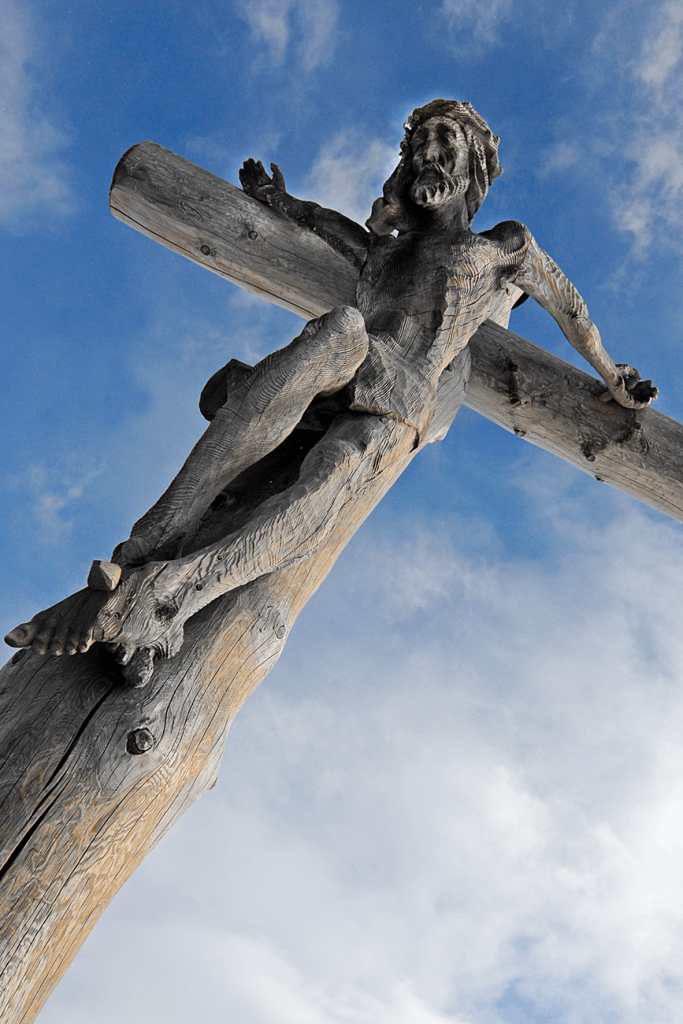
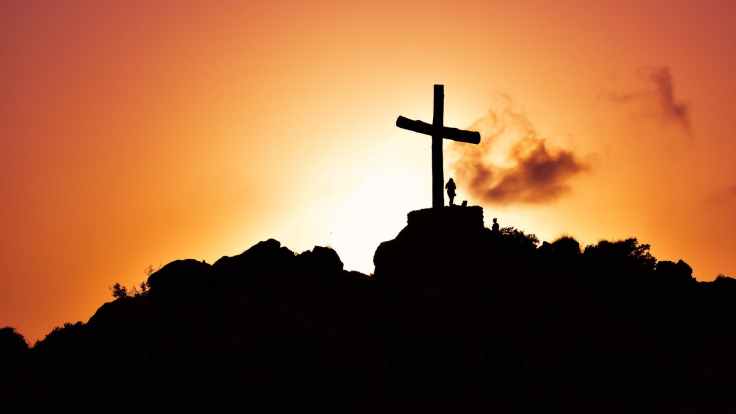
The most common symbol of the Christian religion is the cross. And, while many statues and necklaces and artistic renderings include a dying Christ figure , the kind you most often see is the empty cross. On this day between the crucifixion and the resurrection, I want to consider the significance of the empty cross.
First, the empty cross reminds us that Christ lived. In spite of those who continue to challenge the historical evidence, there was a man named Jesus of Nazareth. He lived in a particular time and place, and he was tried and sentenced to death by crucifixion. His existence caused the modern Western Calendar to be split into two distinctive parts based on the estimated year of his birth, and his life, death, and resurrection gave rise to a movement that has never been stamped out, equaled, or eclipsed.
Second, it reminds us that Christ died. He was fully human in his capacity to feel pain, rejection, betrayal, hunger, thirst, and grief. Yet he also experienced joy, companionship, hope, love, compassion, laughter, and growth. He didn’t just grow old or fade into obscurity. He didn’t leave his life’s work unfinished, he didn’t compromise or change his message; he didn’t give up or start over with a different “crew.” Though he never staged a coup, or built up an arsenal, or rose to a seat of power or influence, this homeless, itinerant, soft-spoken rabbi was seen as enough of a threat to the leaders of his time that he was framed, tried and convicted, and sentenced to death.
The empty cross also reminds us how he died. Modern crosses often look imposing and even triumphant, as they tower over a mega church parking lot, or hang on a chain of elegant silver, or stand in rows of chiseled rock in a military cemetery. “O death, where is your sting? O grave, where is your victory?” (I Cor. 15:55) But the torture before and during the crucifixion were brutal– bones were not broken, but they were pulled out of joint and then forced to bear the full weight of a bloody, swollen and bruised body of ripped muscles and exposed flesh. Heat caused the salty sweat mixed with blood to drip into his eyes, his open wounds, and around his nose and mouth, but he was unable to wipe any of it away. Flies gathered; he couldn’t keep them from buzzing or biting. Each breath was a torturous push and pull of the arms and body upon the nails holding him at an unnatural angle against a wooden bar that rubbed against his already raw back. And all of this was public; entertainment for the masses of hecklers, and those who were rejoicing in his humiliation and failure. There was nothing pretty or majestic about the cross on that day.
The empty cross reminds us that Jesus was buried and put under Roman guard. His emaciated, bloody, barely recognizable remains were wrapped up and prepared with spices. Guards, whose lives depended on this body remaining in the tomb and undisturbed, were posted, and a huge boulder rolled into place to block entry to and exit from the tomb. Jesus didn’t spontaneously climb down off the cross, or waltz out of an air-conditioned cave.
Finally, the empty cross reminds us that Jesus was the Christ–death could not stop him; the grave could not hold him. His victory was complete. He didn’t claw his way out of that tomb; he didn’t sneak out in the dead of night; he didn’t hobble into hiding for several weeks because he was only “mostly dead” of his torturous injuries. He arose, victorious, recognizable to those who knew him best; healed and full of power.
There are hundreds of reasons why we “cherish the Old Rugged Cross.” And, though the cross stands empty, our reasons are not. Hallelujah! Tomorrow, hundreds of millions of Christians will be celebrating the empty tomb. But for today, I want to celebrate the empty cross.