“Little” Prayers

Do you ever wonder if your prayers are “too little?”  Are you bothering God, pestering him with requests to help you find your misplaced keys, or help you make the green light on your way through a busy part of town?  After all, God is the ruler of galaxies– there are over six billion people, let alone the cattle on thousands of hills, sparrows, and lilies of the field for him to consider just on our planet.

I know many people who find it awkward, or even impossible, to offer up “little” prayers.  They believe that God is too busy, too important, and “too Holy” to be concerned with their petty wishes.  I know others who pray about almost everything– what flavor of ice cream to choose; what color nail polish to wear; whether to join  their friends for a game of Monopoly or a trip to McDonald’s…  Is there a happy medium; a guideline on what constitutes an “appropriate” subject for prayer?  Is there such a thing as a prayer that is “too” little to bring to our Father?

I don’t think so.  I think there are prayers that exasperate God because they are selfish and prideful.  I think there are prayers that come to God with disrespect and disbelief, and a lack of consideration for who he is.  But I think those who come to God asking for his help, his wisdom, his grace, and his protection– no matter how small their request may seem–bless the heart of God and receive his full attention.

God constantly uses the small and seemingly unimportant things of this world to make huge statements of great value.  Consider sand.  Sand is almost everywhere– it is under our feet, blowing in the wind, all along the beach; it gets in our shoes, between our toes, even in our hair!  Sand seems unimportant, even annoying sometimes.  We use it for all kinds of things, most of which we consider unimportant– sandbags for weight, sand to play in, or build a temporary sand castle.  We use sand to make glass, or to polish stones, or to keep time.  A single grain of sand has no value to us, except in the rarest of circumstances, when it becomes the nucleus of a pearl.  But God sees each grain of sand.  He knows the value of sand.  In explaining to Abram about his promise, God said that he would make Abram’s descendants like the grains of sand– beyond counting!

sosua.jpg

God uses tiny seeds to produce and reproduce big harvests.  God uses bugs and insects to create amazing (and sometimes terrifying) structures–giant anthills, enormous beehives and hornet nests, spider webs and more.  He uses the simple and even foolish things of this world to confound the wise.

Moreover, God delights in the little things– the details and minutiae.  King David, and later Jesus, would be moved to compare our day-to-day living to that of grass, and common birds, and flowers– not because we are not important to God, but because THEY ARE– if the things we take for grated are under God’s constant care, how much more are we!?

Lastly, God ASKS us to be faithful in the little things–to care for the grass and sand and flowers in our midst– to offer up the little prayers and share our “small” concerns with him.  I like to remember childhood, and the shared delight of my parents when we made “little” discoveries on nature walks, or learned to make cookies, or grew another inch.  It was much easier for them to tie our shoes, but they loved watching us learn to do it.  God doesn’t want us to hide in a corner and try to figure out all of life before we come to him.  He wants to teach us, help us, and celebrate the small victories with us– as well as the great triumphs.

I think our society has lost its appreciation for the “small” moments and the “stuff” of life.  We try to cram our lives full of importance and purpose, only to find it slipping through our fingers like sand.

“Father, thank you for being a God of galaxies and grains of sand. Thank you that no detail is too small for you to notice; that you care about each one. Help me to see the blessings in the “little things” and to seek you first– with my praise and with my ponderings, life’s triumphs and its trials.”


The Prince of Peace

They have healed the wound of my people lightly, saying, ‘Peace, peace,’ when there is no peace. Jeremiah 8:11(ESV)

While people are saying, “There is peace and security,” then sudden destruction will come upon them as labor pains come upon a pregnant woman, and they will not escape. 1 Thessalonians 5:3 (ESV)

Peace I leave with you; my peace I give to you. Not as the world gives do I give to you. Let not your hearts be troubled, neither let them be afraid. John 14:27 (ESV)

I have said these things to you, that in me you may have peace. In the world you will have tribulation. But take heart; I have overcome the world.” John 16:33 (ESV)

Jesus answered: “Watch out that no one deceives you. For many will come in my name, claiming, ‘I am the Messiah,’ and will deceive many. You will hear of wars and rumors of wars, but see to it that you are not alarmed. Such things must happen, but the end is still to come. Nation will rise against nation, and kingdom against kingdom. There will be famines and earthquakes in various places. All these are the beginning of birth pains…21 For then there will be great distress, unequaled from the beginning of the world until now—and never to be equaled again. Matthew 24:4-8; 21 (NIV)

One of the prophetic names given to Jesus in the book of Isaiah is “Prince of Peace” (Isaiah 9:6). And yet, Jesus did not bring an end to the Roman occupation of Judea while He walked the earth. He did not end slavery or war or oppression. He did not bring the kind of “peace” that most of us look for even today. We live in a world of war, dissention, upheaval, and chaos. There is hatred, injustice, slavery, abuse, and oppression, and none of the efforts to bring peace in our world have succeeded in wiping out any of these evils. In the nearly 2000 years since His crucifixion and the rise of the Christian Church, these evils have remained. Great strides have been made over the years– slavery is officially outlawed in many areas of the world; human rights have been codified. Humanitarian efforts have greatly decreased the number of people who die of starvation and disease, homelessness and exposure to the elements. But there are thousands, and indeed hundreds of thousands of people around the world who are refugees from their home countries, who are denied human rights, who live in fear of bombing raids and terrorist attacks.

Where is the Peace?

Jesus spoke freely of the tribulations His followers through the generations would face. He never promised us a world without any trouble. He promised that, in this life, we WILL have trouble. And it will increase over time. People will grow suspicious, hateful, and cold. Nations will rise up against other nations; families will be divided in such a way that one’s greatest enemies will be their closest relatives! Wars and natural disasters will intensify. And ONLY Christ’s return will stop any of it. Human efforts may make a difference for a short while, or make a small difference for a long while, but nothing we can do, single-handedly or as a human race, will deliver us from the evil that lives in the human heart. In fact, we often delude ourselves into thinking that we can change the world on our own; we seek to force our plans on others “for their own good,” little knowing that we may be sowing the seeds of bitterness, backlash, and revenge.

Jesus Christ is the Prince of Peace. He will administer perfect peace and justice when He returns. And in the meantime, He offers us an inner peace that passes all understanding. We can experience peace as bullets whip around us; as we are being misunderstood, mistreated, and abused; as we face injustice and oppression. We can do this because Jesus gave us the example. He did not fight back or even complain as He was arrested, falsely accused, sentenced, and executed. He did not seek to force everyone to accept His rightful claims. He did not even protest the unjust treatment of His people by the Romans.

What He did instead was to focus on God’s mission– He interacted with those who were suffering; He healed the sick; He brought comfort to those who were grieving. He brought sinners to repentance and sought to make peace between individuals and God. Jesus is the Prince of real and lasting Peace– not just peace in “our time” or peace for a generation, but eternal and everlastingly joyous Peace. This is the kind of peace that sees trouble and tribulation for what it is– temporary and transformational. Suffering can make us bitter or better, and Jesus shows us how to experience the latter. When we protest instead of pray, we forfeit that peace. When we pray, we gain wisdom in how to stand firm against injustice without losing our own peace and perspective.

These are not peaceful times, but we can still experience peace, hope, trust, endurance, joy, and light in the days ahead, thanks to our Prince of Peace.

Jehovah Jireh– The God Who Provides

Often when I am praying, I’m asking for something– “Bless this food,” “bring healing to _______,” “help the victims of (insert recent natural disaster) to find shelter, food, water, etc.,”..

God is a provider. He is the owner of everything, yet He chooses to share good things with us. He provides for the birds of the air and the flowers of the field. He provides for insects and elephants. He provides water and sunlight for all the plants– whether in the rain forest or the desert. He provides air for us to breathe and provides plants to recycle what we breathe out. He provides for the orphan and the widow, the homeless and the dispossessed. And for those who seem to “have it all”– God is the ultimate source of their riches, too.

In the book of Job, we meet a man who seemed to “have it all.” He was wealthy, healthy, respected, and surrounded by family. And when it all disappeared in a flash, his response was very telling. He said, ” Naked I came from my mother’s womb, and naked I will leave this life. The Lord gives, and the Lord takes away. Blessed be the name of the Lord.” (Job 1:21 CSB). Job had learned that in good times or bad, God was his provider. And Job’s faith in God’s provision and His faithfulness gave him hope, even in the worst of his troubles.

The first time we hear of Jehovah (or Yahweh) Jireh is in the story of Abraham and Isaac and the sacrifice at Mount Moriah. God asks Abraham to take his son– the son of the promise; the son for whom he had waited so long– and give him as a sacrifice. Nowhere else in the Bible does God ask for a human sacrifice– in fact, God says He detests the practices of the nations and religions who sacrifice their children to Molech or other gods. Yet, when Abraham obeys, in spite of whatever fear or horror is conjured up by the command, God stops him and provides a ram as an alternate sacrifice. Abraham names Him Jehovah Jireh– the LORD who will provide–as a result of that experience. (See Genesis 22)

But Jehovah Jireh means more than just God providing what we need in the moment or what we ask for in prayer. It also means, “the LORD who perceives, or experiences.” God does not just stand removed from our situation and write a blank check for us to cash when or how we see fit. God is with us (Emmanuel) and sees our deepest and most profound needs. He also sees our daily and even seemingly silly needs. He knows, He cares, and He provides good gifts. God did not send Abraham and Isaac alone on their perilous mission. He was right there, ready to step in and provide what was needed. What an amazing turn-around for Abraham. He went from anguish to absolute joy in those precious moments, and learned to know God in a personal, experiential, and powerful way.

Sometimes, we lose sight of that. Sometimes, it seems as though God is far away and indifferent, or even cruel. When Job accepted the loss of his wealth, his health, his status, and all of his children, it was not easy for him to say, “Blessed be the name of the LORD.” God had taken away nearly everything– in fact, the only things Job had left were some unhelpful finger-pointing friends and a complaining wife! But God restored everything that Job had lost, and then some! God does take away. And it hurts. He doesn’t stop us from experiencing heartache and grief. But even then, He is Jehovah Jireh– the LORD who experiences; the LORD who perceives. He does not leave us without hope or comfort, if we seek His face. As the Psalmist says: “The nights of crying your eyes out give way to days of laughter.” (Psalm 30: 5b The Message)

The story of Abraham and Isaac; the story of Job and his losses– each points us to another truth about how God is our provider. He provided His own Son to be our sacrifice– to pay the debt for our Sin, and to give us Eternal Life (see John 3:16). God experienced all the anguish and loss of death so that we would only have to taste it once. Jesus lost everything to gain our redemption. And He rose victorious over death, so we can have hope and joy in this life and in the life to come!

Recently, I was worried about finances– not because we had no money, but we had unexpected bills. I asked the LORD to provide, knowing that He could, but expecting that we would have to raid our “rainy day” fund to get through the week. But God had an amazing surprise– an unexpected gift of $100! Just when we needed it. God could have provided ten dollars, or a thousand dollars. He could have allowed us to dip into the “rainy day” fund and provided some unexpected money the following week. But I believe God saw, not just our monetary need, but my need to be reminded of His loving care and faithfulness. God knew what we needed. He provided what we needed. And He shared in our experience of dependence on Him and joy in His creative answer.

I don’t know where I will be today or tomorrow. I don’t know what needs are on the horizon. And I don’t know how or what God will provide. He may not provide healing for a disease, but strength for the fight. He may not provide a cash gift for our material needs, but He may provide opportunities to trade with neighbors or earn extra money when we need it next. Whatever God chooses to do– whatever He gives or takes away– He is my provider of abundant life. “Blessed be the Name of the LORD!”

(For more about this Name of God, see https://www.christianity.com/wiki/god/what-does-it-mean-that-god-is-jehovah-jireh.html)

Following Christ Like You “Meme” It

For a change of pace, I thought I’d pass along a few memes and sayings about prayer and the Christian Life:

  • The best vitamin for a Christian is B1!
  • It’s harder to stumble when you’re on your knees.
  • Church isn’t the same unless U-R in it!
  • A clear conscience makes a soft pillow.
  • God answers “knee-mail”
  • Christians “keep the faith” by sharing it with others
  • Prevent truth decay– brush up on your Bible!
  • Can’t sleep– try counting your blessings.
  • If you don’t want to reap the fruit of sin, stay out of the Devil’s orchard.
  • Seven days without prayer makes one “weak.”
  • Son screen prevents sin burn.
  • Is prayer your spare tire or your steering wheel?
  • God’s Garden: Lettuce be kind; pray for peas; squash gossip; turnip for church!
  • Some people forget how to pray until the cop makes a u-turn…
  • Come to Church as you are– you can change inside!
  • Waiter: “Jesus, how would you like your steak?” Jesus: “Well done, thou good and faithful servant.”
  • God wants spiritual fruit–not religious nuts.

“Thy Will Be Done”

At the age of 14 months, just after I had learned to walk well, and had learned to say “Mama” and “Da-da”, I became very ill.  Our doctor was baffled– I was tired and weak, I was losing weight, but I wasn’t carrying a fever.  It wasn’t any of the “usual” culprits– we did find out I was allergic to penicillin, but other antibiotics had no effect.  We tried a different doctor– he was also stumped, and all the while, I got weaker.  My desperate parents prayed for healing as the weeks went on.  I was too little to even describe any symptoms– I whimpered and slept; I ate very little, and became too weak to walk.

God was listening to my parents’ prayers, even though the situation seemed impossible and tragic, and God seemed silent and distant.  My mother, in the years since this incident, has shared with me the “breakthrough” moment for her– that moment when her prayers changed from “heal my little girl”, to “thy will be done.”  Not immediately, but shortly after that, the new doctor was inspired to look for another cause.  After some blood tests, he determined that my body wasn’t absorbing and processing protein.  As soon as I began a regimen of protein booster shots, my health began to improve.  I was still sickly as a child; I had immunity issues, and I was small for my age, but I was out of grave danger.  I had to relearn how to walk, and my return to solid foods (especially meat) was a gradual one.  I have no actual memory of these events, but I learned a valuable lesson about prayer.

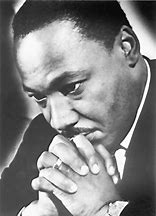
Praying hands

When we pray “Thy will be done,” we sometimes think it is “our” will vs. “God’s” will… that God’s will is always opposed to ours; that it will lead to us losing whatever it is we are holding on to.  That may be the case, sometimes.  We grapple with God’s will, struggling and wrestling, like Jacob, until we are forced to give in.  Some of us limp our way to the altar of prayer.  But God’s will is not set in relation to ours– His will is His own.  It is higher than ours.  It is perfect and complete.  That doesn’t always make it pleasant, comfortable, or easy.  In my family’s case, it meant months of trips to get shots– every day for the first few weeks; every week for months afterwards, and every month after that until the time I started Kindergarten (a year later than I might have if I had been healthier).  For many, “Thy will be done,” means saying goodbye to a loved one.  Sometimes it means losing a limb, or letting go of a cherished dream.  But what we see; what we experience; these are mere moments in God’s plan for our eternity.  Like the booster shots I had to have as a child, they bring a momentary sting, and the fear of them may loom large, but in God’s plan, they bring us the opportunity for life and health and ultimately, triumph.

Sometimes God’s will means walking through the fire, or walking through the valley of the shadow of death.  Long before my birth and health scare, my mother had lost twins, and been a divorced mother of a young son.  She had already faced death and heartbreak and hardship.  After this incident, she would be hurt by my brother’s teenage rebellion, face depression, and go through health issues with my father before his death; but she would also gain another daughter and live to see grandchildren and great-grandchildren who brought her joy.  In my own life, I have faced the shattered dream of wanting children of my own. I struggled for years with singleness, when I wanted to be married and have a family.  But God’s will was for me to learn patience, compassion, and empathy for others who hurt in these areas.  And he has blessed me with a family I would never have imagined–not only the husband, step-children, and grandkids, but all the students and children I met through my careers in education and public libraries.

It is natural and easy to pray for what our will, our feelings, or our intuition tells us is best– healing for the sick (immediate healing is even better), success for our ventures and those of our families and friends, safety in travels and daily routines, prosperity, and happiness.  It is not wrong to want these things.  But it is better by far to remember that God is sovereign and good.  Giving him complete control over our situations is not weakness; it is not “giving up”.  Instead, it is investing our future– putting it in the hands of the one who holds tomorrow, and all of eternity!  It is trusting the one who is most trustworthy to make the most of our hours and days, our treasures and our dreams.

Even Jesus taught His disciples to pray “thy will be done on earth as it is in heaven” (Matthew 6:10b). But He didn’t just teach that phrase to His disciples– He prayed it Himself in the Garden of Gethsemane. “Father, if you are willing, take this cup from me; yet not my will, but yours be done” (Luke 22:42). Jesus knew he would face humiliation, torture, and death. He knew that He would take on the punishment for all the sins of the world– punishment He did not deserve– and that He would be subject to the full wrath of God. In His humanness, He was anguished to the point of sweating drops of blood. Yet He chose to pray, “Thy will be done.”

I have never been in that kind of anguish– even when I was so very sick or depressed about seemingly broken dreams. But I still find it difficult to fully surrender to God’s sovereign will when the future is in doubt, and when the present looks overwhelming. But growth and victory come when I let God take the reins and guide me through the valleys and wilderness walkways of life. His will is mysterious and sometimes scary, but He is always faithful. And I know that from experience.

Adonai–LORD

I’m choosing to focus for a few posts on the Names of God– titles, descriptions of His Character–that we can (and should) use in thinking about and praying to God. Today, I want to look at the term LORD, or Adonai, and what it signifies.

In English, we use the word “lord” to refer to someone who has power or authority over something– think “Lord of the Rings” or “lord and master”– someone with the power to control. In Hebrew, the word “Adonai” also means “Lord”, but in the plural form, denoting special respect or reverence. In the Bible, when we see LORD (in all capitals), it refers to the ONE who has power over all things– THE LORD, or MY LORD. (For a more detailed explanation, see https://www.christianity.com/wiki/god/what-does-adonai-mean.html)

There is an interesting passage in Jesus’ Sermon on the Mount in which Jesus uses the term “Lord.” He warns that not all those who use the phrase, “Lord, Lord” will enter the Kingdom of Heaven.

21 “Not all who sound religious are really godly people. They may refer to me as ‘Lord,’ but still won’t get to heaven. For the decisive question is whether they obey my Father in heaven. 22 At the Judgment many will tell me, ‘Lord, Lord, we told others about you and used your name to cast out demons and to do many other great miracles.’ 23 But I will reply, ‘You have never been mine. Go away, for your deeds are evil.’ (Matthew 7:21-23 The Living Bible)

We can use the name “Lord” and still not understand how fully Sovereign and Holy He is. When we acknowledge Jesus as “Lord”, we may simply mean that we think of Jesus (and the Father) as a “Lord” over certain aspects of our lives– He controls the weather, or we can pray to Him to change our present circumstances or make someone else do what we can’t make them do. But Jesus is not just a “Lord.” He is THE LORD–He is Adonai. This name (when printed in all caps) is often used as a substitute for the given Holy Name of God (Yahweh or YHWH). It IS who He IS– the One LORD over all creation. The One who is the Master of ALL. If we call Him, “Lord,” but ignore what He says, and only turn to Him as a last resort, or use His name only to sound Righteous, we are literally taking His Name in Vain and breaking the third Commandment!

What amazes me is that THE LORD of the universe wants to hear from me! He has no need of a relationship with me; there is absolutely nothing that I can bring to Him– even my obedience is only an acknowledgement of who He already IS, and the power He already has over me. He CAN make me obey Him; He has the power to circumvent my will and impose His will upon it. Yet, He chooses to ask me to follow Him; He not only tells me to obey Him, He tells me why and how! And He gives me the power (through His Holy Spirit) to do it!

God is ADONAI– He is THE LORD! And He is patient, compassionate, and humble. When Jesus came, lived among us, and died on the cross, it wasn’t because any of us deserved His substitutionary sacrifice for our Sin. It was an extension of His nature AS “LORD.” And isn’t that worth a prayer of worship today!

TGIF!

Many people look forward to Friday. For students and many workers, it marks the end of the working week and heralds the weekend. For many, it may also be payday! Fridays represent accomplishment; completion of work done, reward for recent efforts; a measure of our success. We chant “T.G.I.F.”– “Thank God it’s Friday.” But we might just as easily say, “Thank God it’s Finished!”

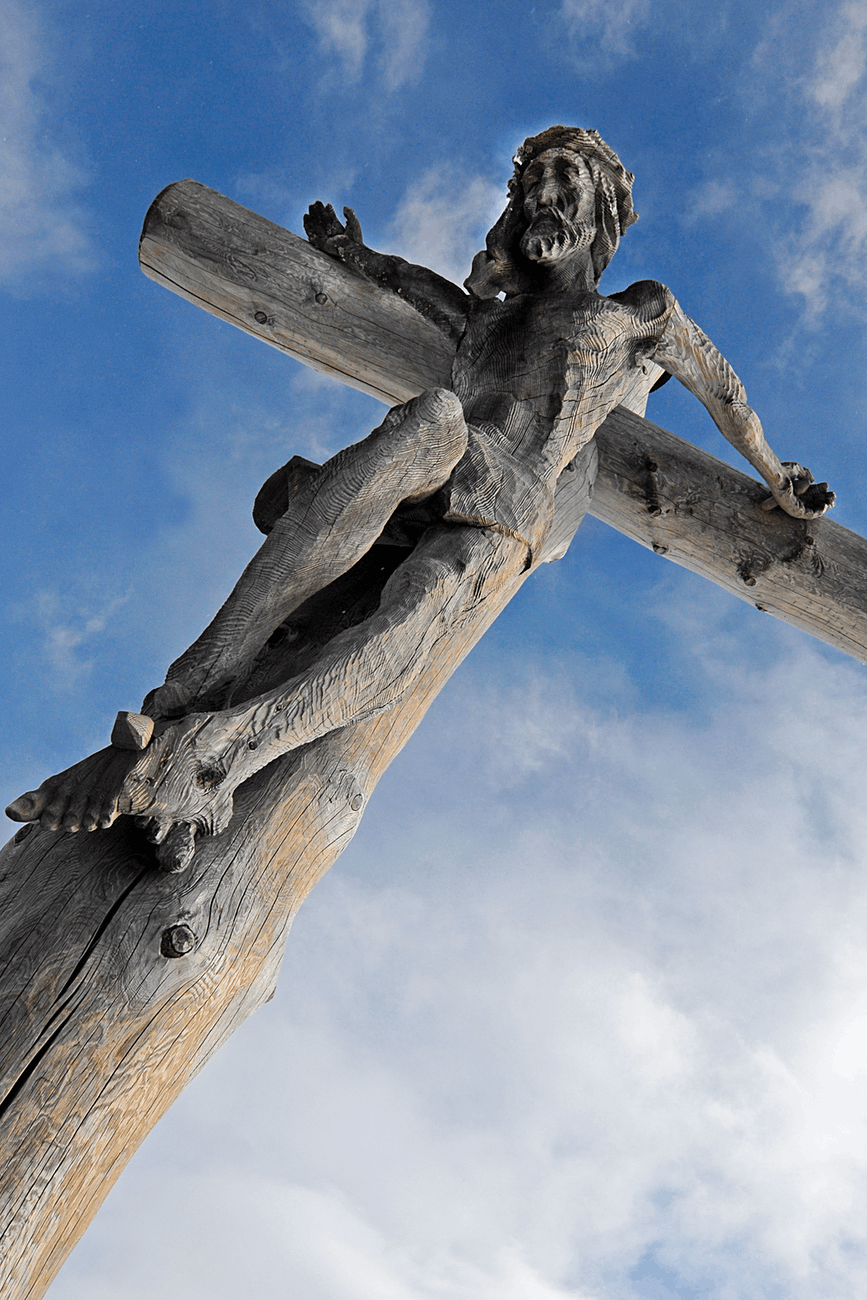
We’re in the Lenten season, leading up to Easter, and, of course, Good Friday. Much more significant than any ordinary Friday, Good Friday is the day we remember the Crucifixion of Jesus Christ. It was on that day that Jesus Himself cried, “It Is Finished!” just before He took his last breath.

On that first “Good Friday” there seemed to be little reason for celebration. Jesus had been found guilty in a hasty, overnight trial, by the Jewish Sanhedrin for saying that He was the Son of God– Blasphemy if one is NOT God, but simple truth if one is the promised Messiah! The Roman Governor, Pontius Pilate, after examining Jesus’ claims and trying to literally “wash his hands” of the case, turns Jesus over to be crucified by the angry mobs whipped up by the Jewish leaders. And Jesus is beaten, tortured, taunted, and nailed to a cross to die a gruesome, public death. “It is finished!” For Jesus’ followers, this meant defeat, fear, and gloom, rather than accomplishment or celebration.

But Jesus knew better. Even though His death was filled with suffering and humiliation, it was the culmination of His life on earth. And it was the necessary final scene before the next Act– the Acts of the Apostles–the coming of power and hope by the release of the Holy Spirit to indwell those who had put their faith in Jesus AS the Messiah! And so it is today. We have great cause to celebrate Good Friday. Without the Pain of the Cross, there would be no Glory of the Resurrection or Promise of Eternal Life!

Even though this Friday is not Good Friday, we can spend today reflecting on the life of Jesus– the incredible example He gave of how we are to trust in God, love others as God loves, and cherish life–both now and through eternity, as God’s gift. And we can be thankful that, because of Jesus, “IT IS FINISHED!”– the battle against Sin and Death is over. We can live abundant lives, without the fear of eternal death, and we can look beyond the curse of Sin to the Glory of Restoration and Renewal.

Thank God it’s Friday!

Praying for Rain

Spring has arrived.  In my part of the world, that means many people are hoping for milder temperatures, gentle spring rains, and new growth after the cold and colorless winter.  Most of us love the idea of spring, and the promise it brings.  Those soft days of baby birds chirping outside our window as the gentle raindrops roll down; of newly budded trees and flowers opening to the warmth of the sun; the smell of freshly turned earth in gardens and fields; the bleating of lambs and the down of chicks and ducklings; children squealing in delight as they leap from puddle to puddle in their colorful boots; the world slowly waking up in a thousand shades of green..

rain-boots-umbrella-wet.jpg

Of course, it never seems to go exactly like that– sometimes the weather this time of year can be volatile– tornadoes, freak ice storms, sudden heat waves, flooding, or a mix of all of the above in a matter of hours!  Chirping birds can’t be heard over the roar of traffic and blaring car radios.  The smell of exhaust chokes out the aroma of rich dirt or fresh flowers.  The same rain that brings puddles also brings mud and run-off and potholes in the road.  And, possibly because we have such expectations of spring, it seems to fly by and disappear almost before it comes.  There is a joke that sort of summarizes the unpredictable nature of spring around here– “I love spring in Michigan (or insert another Midwest state)– last year it was on a Wednesday!”

Like the season of spring, prayer holds promise and expectation.  God promises to hear our prayers, but sometimes our expectations are not in line with God’s answers.  Farmers pray for dry days to plow and plant, and rain to come before and after to soften the earth and water the seeds.  Little League players want the rain to come on Monday, and the diamond to be dry by Saturday.  School children want the rain to come overnight, so the playground will be dry for recess.  Commuters want the rain to fall after they drive to work and before they have to drive home.  All may pray for rain, but not in the same way, for the same reasons, or at the same time.

pexels-photo-890600.jpeg

We all want the promise of easy growth, gentle weather, and comfortable routine.  But God’s plan may involve blustery days and muddy driveways.  God will bring rain, and sunshine, in his time.  He will calm the storms and blow away the clouds.  He will send us flowers and rainbows, and perfect days for flying kites and playing baseball.  And maybe, this year, it will be on Wednesday!  But the stormy days remind us of three things:

  • God is with us through the storm.  He is with us when the rains come; and when the clouds roll back to reveal the rainbow.  He knows the pain you feel when you view the storm damage and assess the loss.  Even as the seasons change, he has promised to be with us always
  • God is stronger than our storms.  His ways are wiser than ours, and his plans are better.  We may be drenched and covered in mud when we expected to be dry and comfortable, but the race isn’t finished yet.  We may fall down, but we’re not out!  He can give us the resources and the power to rebuild, renew, and start over.  No matter how short (or long) our season of storms, it is only a season– it will pass.  Just as winter gave way to spring, spring leads to summer–sometimes overnight; sometimes in fits and starts.
  • God is eternal.  Storms and seasons are local and temporary.  I may be experiencing spring in Michigan, but others are experiencing rainy season in India, or “fall” in New Zealand.  It can be sunny here, and snowing in Minnesota, and raining at my cousin’s house in Alabama.  And when I am praying for rain, someone close by is praying for sunshine.  But someday, and for all eternity, God will be our source of light– there will be no need for storms and seasons, no need to pray for rain.

crocus-flower-spring-buhen-53595.jpeg

Jephthah or Jabez?

There are many great examples of prayer throughout the Bible, but there are two that are often used out of context and applied wrongly.  One is found in the book of the Judges; the other in the Chronicles.

Jephthah was a mighty warrior– the son of a mighty warrior and a prostitute.  He had several half-brothers, but they wanted nothing to do with him.  He was an outcast for much of his life, but when things got tough, the people of the region changed their tune and begged him to be their leader and help deliver them from the oppressive Ammonites.   Before going into battle, Jephthah prayed, and made a tragic vow.  In fact, his vow has become a model of what NOT to do in approaching God.

pexels-photo-415380.jpeg
Judges 11:30-31 New American Standard Bible (NASB)
30 Jephthah made a vow to the Lord and said, “If You will indeed give the sons of Ammon into my hand, 31 then it shall be that whatever comes out of the doors of my house to meet me when I return in peace from the sons of Ammon, it shall be the Lord’s, and I will offer it up as a burnt offering.”

Upon returning from his success in battle, who should come out of the door of his house, but his only daughter, singing and dancing in celebration of her father’s victory!  Having made such a rash vow, Jephthah now has to fulfill it, and sacrifices his only child on the altar.

Many people read this passage of scripture and are shocked– how could God be so cruel?  Why didn’t he stop Jephthah from making such a rash vow?  How could he hold Jephthah to such a vow?  Doesn’t this prove that God is either clueless or deliberately cruel?  Either God knew that the tragedy would happen, and failed to prevent it, or he had no idea  of the outcome.

But I think this is a misreading of events and a misrepresentation of God.  Just before Jephthah makes his vow, the text states that “the Spirit of the Lord came upon Jephthah.  He crossed Gilead and Manasseh, passed through Mizpah of Gilead, and from there he advanced upon the Ammonites.”  People make note of the first part of verse 29, that the Spirit of the Lord came upon Jephthah prior to his making the rash vow.  But we should note that God’s Spirit did not require Jephthah to make ANY vow.   Jephthah’s vow was rash and ill-considered– these are not attributes of God or of His Spirit.  And God’s Spirit came upon Jephthah before he crossed his own native territory– territory he had fled early in life.  In crossing back through lands that now welcomed him after making him feel unwanted and ashamed, Jephthah gets cocky.  His vow is not about saving his nation from harm and oppression, or about bringing God glory.  It is about himself.  He mentions himself five times; his enemies, God, and his sacrifice, each twice; Israel never. 

Jephthah had an incredible opportunity, not only to save his nation, but to redeem his reputation and become a leader of might and integrity.  Instead, he is remembered for his rash vow.  I believe that God could have stopped Jephthah from making such a vow; and God could have kept his daughter from coming out of the house that day of her father’s return.  But I don’t believe it was cruelty that prevented him from acting.  I believe God is both omnipotent and good.  Jephthah learned the hard way that his rash self-promotion had disastrous consequences.  His daughter, who was innocent, could have berated her father, or cursed God– instead, she honored them both in a way that reflected her culture and teaching.  We are given a shocking reminder not to play games with our unknown future.  God does not keep us from our own folly, nor from its consequences, when we fail to seek His wisdom above our own pride.

In contrast, we see another prayer in 1 Chronicles:

1 Chronicles 4:9-10 New American Standard Bible (NASB)
Jabez was more honorable than his brothers, and his mother named him Jabez saying, “Because I bore him with pain.” 10 Now Jabez called on the God of Israel, saying, “Oh that You would bless me indeed and enlarge my border, and that Your hand might be with me, and that You would keep me from harm that it may not pain me!” And God granted him what he requested.

Once again, this prayer is sometimes taken out of context and misused to suggest that God is like a genie in a bottle, and that a pain-free life and expanded riches are ours just for the asking.  If we pray the prayer of Jabez, and we don’t see an immediate change in our circumstances, we sometimes question God’s goodness and His provision– doesn’t He care about our needs?  Doesn’t he hear our prayer?

Jabez, unlike Jephthah above, is described as honorable.  His prayer is more balanced and conscious of God’s sovereignty.  Jabez mentions himself five times, just like Jephthah; but he mentions God three times in supplication– asking God to be with him, help him, and bless him, rather than vowing what he can do for God if God grants him victory.    Notice also the context of the preceding verse.  His prayer is partly asking God to remove the sting and curse of his name, which meant “pain.”  He is not asking for enormous wealth or power, so much as asking for God’s presence and blessing.  There is a subtle, but important difference here.  Jephthah is playing at making a deal with God– If you grant me a victory, I will make it up to you by offering whatever comes out of my house.  Jephthah is asking for God’s help, but he is also vowing to give God “whatever comes out of the doors of MY house” (emphasis added). If a rat had come scurrying out, would Jabez have offered that? If it was a chicken or a lizard, or a lame sheep? And “whatever” came out of Jephthah’s house already belonged to God, and came from the hand of God, didn’t it?

pexels-photo-156151.jpeg

Jabez comes with nothing and asks God to be his portion and protection.  He makes no bargain with God contingent on God’s answer.  There is nothing in this prayer that assumes God’s riches will be his or that God owes him anything; only the faith that God is able to bless him, and that God, in his goodness can keep him from harm.

Jephthah, or Jabez?  Two examples…two very different outcomes.  May we have the wisdom not to confuse the two, or lose the lessons they teach.

Coming Out of the Closet

For anyone who is reading this expecting a big announcement or a shocking confession– please don’t read too much into the title…this is a blog about a lifestyle of prayer, not about gender identity or sexual orientation.  I want to talk about the benefits of communal prayer as opposed to prayer that is deeply personal, and takes place in isolation.

There is a time and place for solitary meditation and prayer, and it should become our habit and practice to meet with God daily.  But we are told that we should also meet with and interact with others– and this includes sharing our prayer life.  For many years, I was one of the “lone rangers.”  I rarely met with others specifically to pray or even share prayer concerns.  I would get notices on FB or e-mail, or in the church’s weekly newsletter, but it wasn’t the same.  Just as God wants to hear our hearts and share communication and communion with us, he wants us to share closeness with others.

gracelady

Why isn’t it enough to just go into the closet (or other quiet space) to pray?  What are the benefits of praying with a small group?  Here are some:

  • We need social interaction– FACE-TO-FACE interaction.  God did not create us to live in isolation. We need to have eye contact, hear inflections and tones of voice from others, and to have others listen to ours.  We need to share more than just stories on a screen– we need to share laughter, tears, and common ground.  We make deeper friendships when we share concerns (not gossip), struggles, and triumphs (not bragging).  And we can share burdens, recipes!, helpful tips, jokes, and more
  • Meeting with others helps us keep our perspective–when we are alone, our problems become bigger; our joys fade, and our talents waste away.  Meeting together helps shrink our worry and pride, ignite our hope, and drive our confidence.  It also opens up our world to the experiences and concerns of others and teaches us about differences and commonalities
  • Our faith is strengthened to hear from others who are “in the same” place in their walk; it encourages us to hear from others who have been “through the fire”; it reminds us to be grateful, and gives us an opportunity to build someone up if we have been in their shoes; and it amazes us to hear again what a mighty God we serve, and how he has been faithful
  • Communal prayer creates a time to break us out of our routine– whether that routine is zooming or “glooming”– we need to mix things up and get out of our rut
  • God commands us to meet together, to live in unity, and to lift each other up

Can you think of other benefits?  Are you in the habit of praying with others?  If not, you may be wondering– how do I find others?  What are the ground rules (if any)?  Are there issues I should be aware of?

Once again, I can list a few that come to mind or that have arisen from experience:

To find others:

  • Join an existing group– a Bible study group that includes prayer time; a weekly or monthly prayer meeting group; a special interest group within a local church– Moms of Pre-schoolers, or a Dorcas group, or a volunteer group that includes prayer
  • Start up a group!  Meet weekly, twice a week, monthly– whenever, wherever, and whatever works for you and a few others.  If you don’t have a space in your home or don’t want to meet at a church, be creative– meet at a park or a local coffee house, or take turns hosting a prayer meeting with others in your group.  Don’t be discouraged if there are only two in your “group”; and don’t feel bad about keeping your group limited– you may find enough interested people to form two or three groups in your neighborhood!
  • Think outside the box– you may stumble on to a group during your commute to work each day; in your child’s play group; at the gym; at a neighborhood church you have never visited (it doesn’t mean you are being “unfaithful” to your church to reach out to fellow brothers or sisters throughout the week!)

Ground rules:

  • Groups should have some structure, leadership, and accountability
  • Participants (including leaders) should be careful not to confuse gossip for “concerns”, or use the group for a sounding board, on-going therapy, or a captive audience for their personal drama or their political or social agenda
  • Group leaders need to create boundaries, so participants feel free to share real burdens and concerns but take responsibility for others’ privacy and vulnerability
  • Groups should be open to visitors, new members, and seekers of all backgrounds
pexels-photo-754769.jpeg

Issues to watch for–Any group that is made up of humans can fall victim to unhealthy and unwholesome practices.  Just because a group meets with good intentions and calls itself a prayer group doesn’t mean that it is a “safe” place to meet.  Keep your eyes and ears open for the following:

  • Groups that make you feel uncomfortable for showing up, or for sharing (or not sharing every one of) your authentic concerns, your questions, or your feedback.  Sometimes, we can feel uncomfortable sharing about ourselves because we feel shame or guilt about our past or about our lack of knowledge or experience; sometimes we’re defensive or hypersensitive because we’re in a new situation.  But if you are being made to feel ashamed or isolated or patronized, especially if you are being labeled or discriminated against, get out.  LEAVE– shake the dust off of your shoes as you go  (One caveat here– there are groups that meet for specific issues (see below)…if the group is meeting to pray as parents of toddlers, and you aren’t a parent or grandparent or aunt or uncle of a toddler– not only will you feel uncomfortable, but so will the rest of the group.  You should still leave this group, but you can forego the shoe shaking…)
  • Groups that have one or two members who dominate and intimidate the other members.  Leaders need to provide boundaries and structure, but they should not squash authentic dialogue or force everyone to listen to someone else’s “true confessions” (especially if it’s a repeat of the last meeting!)  This is more a “comfort zone” issue than the first one– some groups just have a couple of “talkers” and a couple of “listeners”–the point here is that there needs to be a balance so that all members have a chance to contribute
  • .
    arrogant
  • Groups that get “taken over” or sidetracked by a single issue– unless that is what you signed up for.  If you are a group whose purpose is prayer, it’s not safe to assume that everyone in your group will also want to go on a protest march or volunteer an entire Saturday at the soup kitchen.  There’s nothing wrong with other activities, but it shouldn’t be a requirement of your prayer group (see above)
  • Groups that are only “token” prayer groups–they may “share” what’s going on in their families as “requests” but they don’t actually take time to pray about them in the group setting.  They talk and eat, and maybe even say “spiritual” things.  There’s nothing wrong with friends getting together, whether they pray or not, but if you’re going to call it a prayer group or a prayer meeting….
  • pexels-photo-618544.jpeg
  • That brings me to the group that uses “prayer” as a cover for gossip or grumbling.  Prayer should be constructive and God-centered.  If it isn’t either, it isn’t really prayer.  Even if it sounds positive and holy, if it is centered on how “blessed” you are, or what you know God needs to do in someone else’s life– it isn’t really prayer unless His name is magnified and ours is minimized.
  • Any group that does not honor God’s word, God’s sovereignty, or God’s goodness–Not every group that prays is praying to Almighty God, in the name of Jesus Christ, or for His will to be accomplished.  While prayer groups should be open to all people, and there are wonderful opportunities for ecumenical and all-faith prayer in the public forum, a weekly or monthly prayer group is probably not the best venue.  That being said, I recommend exposure to various Christian prayer styles and practices– formal and ritual prayer, spirit-filled worship prayer, gospel-infused crying out, simple “popcorn” utterances, and eloquent prayers that roll off righteous tongues in an engaging crescendo, punctuated with holy hushes.
pexels-photo-267559.jpeg

Blog at WordPress.com.

Up ↑