Passionate Patience

5-9 So don’t lose a minute in building on what you’ve been given, complementing your basic faith with good character, spiritual understanding, alert discipline, passionate patience, reverent wonder, warm friendliness, and generous love, each dimension fitting into and developing the others. With these qualities active and growing in your lives, no grass will grow under your feet, no day will pass without its reward as you mature in your experience of our Master Jesus. Without these qualities you can’t see what’s right before you, oblivious that your old sinful life has been wiped off the books.

2 Peter 1:5-9 (The Message– emphasis added)

Photo by Ana M. on Pexels.com

I’ve seen lots of posts recently about the “-ber” months–September, October, November, December–and the excitement for some as this season comes ’round. September in Michigan is filled with ripening fruits and changing colors. October brings pumpkins, apple cider, and frosty mornings. November is often spent thinking of and planning for Thanksgiving– bountiful feasts and time with family. And December brings the Christmas season– snow, caroling, giving and receiving gifts, and families gathered around trees and fireplaces, sharing old memories and making new ones.

Photo by Any Lane on Pexels.com

Part of this season of summer morphing into autumn and “falling” into winter is anticipation. The first apple harvest; the first frost; the first snowfall; those eager moments of wondering what will be under the Christmas Tree…we know they will come, but when, and how?

Photo by Vlada Karpovich on Pexels.com

My birthday is at the end of November, and as a child, I always loved Thanksgiving. It meant that family would gather, and at some point, they would sing “Happy Birthday” and there would be a cake among all the wonderful Thanksgiving desserts with my name on it! Four weeks later, Christmas would come, and the same excitement filled the house. It was difficult to be patient, but I learned that everything special was worth waiting for. In fact, sometimes, the anticipation is part of what makes such times more wonderful. There is no fun in rushing through precious moments or “ruining” the surprise of what is to come; nor is there any virtue in losing passion for what is possible, just because we can’t see the outcome, yet.

The Apostle Peter gave early Christians a list of attributes and spiritual traits that they should be developing in increasing measure. One of these attributes is “passionate patience.” In other translations, it is also called “perseverance,” “endurance,” “patience,” and “strength to keep going.” I like this wording, “passionate patience,” because it reminds us that patience isn’t just passive and meek. Especially as we work on building our spiritual understanding and alert discipline, patience becomes a powerful trait– one that distinguishes Christians from those around them. Some people are marked by impatience, anger, and dissatisfaction. Others are marked with complacency and resignation. Christians are asked to be passionately patient! Our faith and hope should radiate, even as we endure trials and anticipate God’s movement in the world around us.

Photo by Ivan Samkov on Pexels.com

Jesus modeled “passionate patience” in His ministry on earth. Peter was witness to Jesus’ endurance in the face of rejection, unbelief, misunderstanding, and injustice– both to those around Him, and personal injustices. Jesus remained faithful, passionate for the truth, and compassionate toward others. He did not give in to despair, or waste His energy in anger or revenge. He did not make excuses for inaction, but He did not “burn out” in useless activities, either. He confidently did what the Father told Him to do– no more and no less.

Photo by mohsen AMERI on Pexels.com

How do I reflect “passionate patience?” When I look around me and see injustice, do I explode in anger? Do I shrug my shoulders in resignation? Do I lose faith and passion? Or do I remain positive and faithful in doing what I know to be right and speaking up for the truth? Do I spread compassion or consternation? Antipathy, anger, or aspiration? When my life circumstances are filled with pain or hardship, do I endure? Do I persevere? Do I thrive? Or do I complain? Do I remain passionately hopeful, or give in to anxiety or despair? Do I wait for God’s strength and wisdom, or do I try to “fix” things in my own power? Do I accept help and guidance when I need it, or resent others’ efforts? Do I spread hope and healing? Or do I spread doubt and gloom? Do I grow bitter or better? I’d love to say that I respond with the kind of endurance, patience, and fortitude that Peter spoke of. And sometimes, with God’s help, I have. But I have much to learn, and room to grow!

Photo by Engin Akyurt on Pexels.com

I pray that God’s spirit will help me grow in “passionate patience,” as I actively seek to follow Christ and reflect His love today.

Spiritual Understanding

5-9 So don’t lose a minute in building on what you’ve been given, complementing your basic faith with good character, spiritual understanding, alert discipline, passionate patience, reverent wonder, warm friendliness, and generous love, each dimension fitting into and developing the others. With these qualities active and growing in your lives, no grass will grow under your feet, no day will pass without its reward as you mature in your experience of our Master Jesus. Without these qualities you can’t see what’s right before you, oblivious that your old sinful life has been wiped off the books.

2 Peter 1:5-9 (The Message– emphasis added)
Photo by Tobias Bju00f8rkli on Pexels.com

“For my thoughts are not your thoughts,
and your ways are not my ways.”
This is the Lord’s declaration.
“For as heaven is higher than earth,
so my ways are higher than your ways,
and my thoughts than your thoughts.

Isaiah 55:8-9 (Christian Standard Bible)

I do not understand God’s ways. If I try to work it out with human understanding, I will never make sense of how God works. I don’t have His wisdom or omniscience; I don’t have His eternal perspective or omnipotence. God will never answer all of my questions; He will never reveal all of His plans or reasoning to me. He calls me to walk in Faith, not by sight (2 Corinthians 5:7) This is a stumbling block to many. It is especially frustrating for those who think they already DO know (almost) everything, and believe that they should be able to speak to God as a peer, even to be able to consult Him! I knew of a man (a convicted felon) who refused to repent of his actions. He admitted that he had done wrong, and that his prison sentence was deserved, but when challenged with how he would answer before God, he simply said–“God and I will come to an understanding.” He simply felt that if he explained “his side of the story,” God would change his immutable commandments and make an exception.

Photo by Armin Rimoldi on Pexels.com

God doesn’t need anyone to “explain” anything to Him. Nor does He “owe” any of His creation an explanation for His actions or seeming inactions. I will never understand why certain injustices are allowed to happen, and seem to go unpunished in my lifetime. I don’t understand God’s timing in my life– why my father died when he did, or why I had to wait so long to be married. But I am learning to trust that God knows every injustice, every need, every situation we face, and that He WILL make all things “right” in HIS time and in His perfect way.

Photo by Munmun Singh on Pexels.com

Spiritual Understanding has to come from the Spirit. It cannot come through our own wisdom or learning. It has to be built, not just on Faith, but on acting in Faith and walking humbly in conformity to our Good Shepherd’s example. We must become, not just “fans” of Christ, or even just students of Christ, but disciples of Christ, if we want to begin to have greater understanding. Like the apprentice, who must learn by doing, so we must learn through practice of God’s Word. We must also ASK for wisdom and understanding. (James 1:5) They are gifts, just like Salvation. We don’t earn understanding; we are granted it as we walk in obedience and faith.

Photo by Keenan Constance on Pexels.com

Today, my prayer is that I would receive insight as I learn to trust, and I would trust that God will give the wisdom I need for the day ahead– no more or less, and not a moment too late or too soon. And experience confirms that He is faithful to do just that!

For Goodness’ Sake!

5-9 So don’t lose a minute in building on what you’ve been given, complementing your basic faith with good character, spiritual understanding, alert discipline, passionate patience, reverent wonder, warm friendliness, and generous love, each dimension fitting into and developing the others. With these qualities active and growing in your lives, no grass will grow under your feet, no day will pass without its reward as you mature in your experience of our Master Jesus. Without these qualities you can’t see what’s right before you, oblivious that your old sinful life has been wiped off the books.

2 Peter 1:5-9 (The Message)
Photo by Lukas on Pexels.com

What does it mean to be “good?” This is a question that Jesus posed to the Rich Young Ruler in Luke 18:

18 A certain ruler asked him, “Good teacher, what must I do to inherit eternal life?” 19 “Why do you call me good?” Jesus answered. “No one is good—except God alone. 

Luke 18:18-19 (NIV)
Photo by The Lazy Artist Gallery on Pexels.com

Jesus went on to list several Biblical commandments– you shall not commit adultery, you shall not murder, you shall not steal, etc.., but even when the young man answers with confidence that he has kept all these commandments, Jesus says, “you still lack one thing. Sell everything you have and give to the poor, and you will have treasure in Heaven. Then come, follow me.” (v. 22)

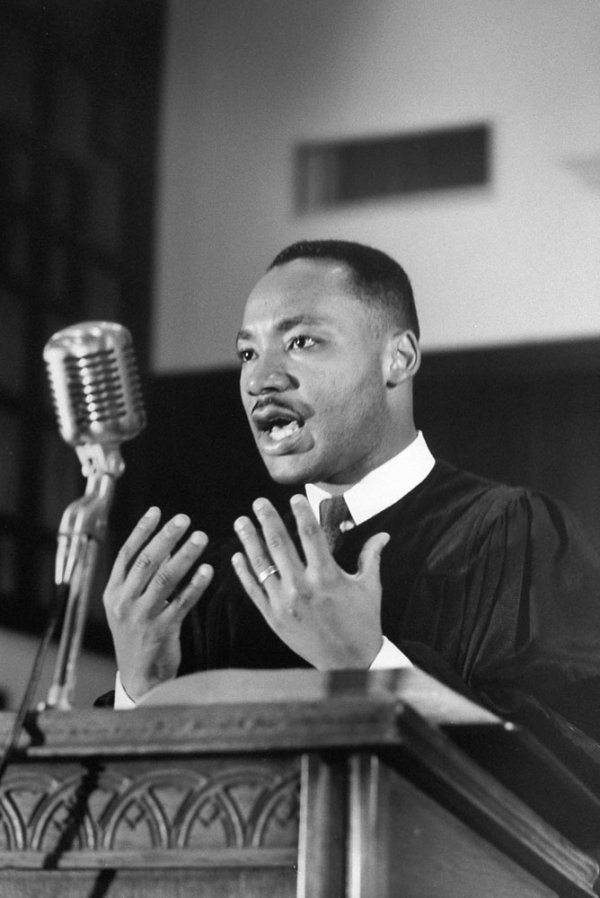
Civil Rights activist Rev. Dr. Martin Luther King Jr. gesturing during sermon at Ebenezer Baptist Church. (Photo by Donald Uhrbrock//Time Life Pictures/Getty Images)

Being “good” is not a matter of avoiding evil. It is more than being “correct” in our principles, and upright in our actions. Martin Luther King, Jr., in his famous address in 1963 said that he dreamed of a day when his children… would not be judged by the color of their skin but by the “content of their character.” Character, and more specifically the “good character” mentioned by Peter in the above passage, includes thoughts, principles, actions, and habits by which we are judged. I may never commit murder in the literal sense, but I will be judged wanting in character if my words and actions are vicious, snide, malicious, sarcastic, and brutal. I may never be convicted of theft, but I may be judged harshly for being ungenerous or miserly toward those in need. Dr. King wanted his children to be judged–positively–for their character, not for something as superficial and arbitrary as skin color, nor for whatever they hadn’t done.

Photo by HASSAN YAR JANJUA on Pexels.com

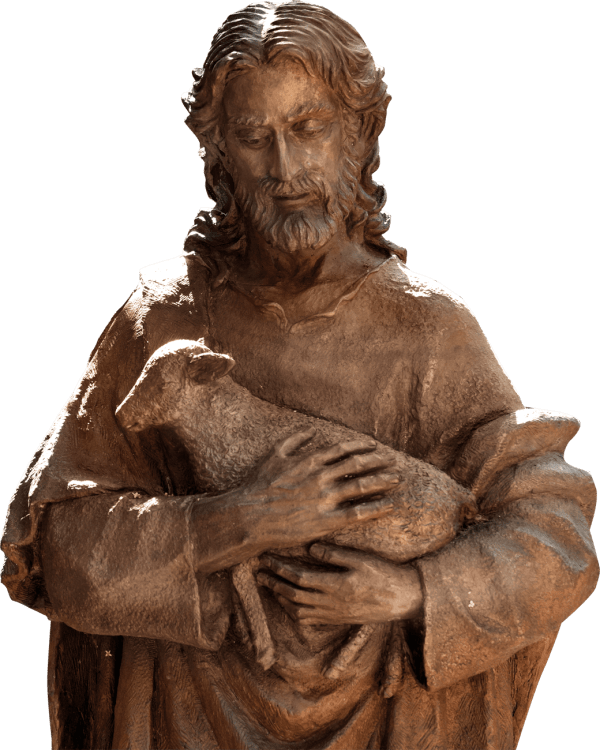
The young ruler in Luke’s story, not willing to give away his possessions, went away disappointed. But he missed the more important calling– “Then come, follow me.” Jesus wasn’t being self-effacing when He asked, “Why do you call me good?” Far from it! Jesus WAS good– He was (and is) the embodiment of Goodness! It is not through ritualistically following the commandments that anyone becomes “good.” It isn’t even in the self-sacrificing act of giving away one’s possessions. It is in the humble act of following the Master! To follow Christ is to step out in faith, and to walk in goodness.

Photo by Taryn Elliott on Pexels.com

Peter makes the natural connection that James also makes in his epistle– that Faith, while fundamental, must build good character through our actions, words, and habits. Faith, without works, is dead. (James 2:14-26) So the next building block is developing a good (or Godly) character. Our lives should reflect the Goodness of Christ. We won’t be perfect. But we will be given strength and guidance by the Holy Spirit to walk in Goodness. And as we walk, we will build on that foundation with the next step…Spiritual Understanding. (More about that next time.)

Today, I pray that God will show me how, and His Spirit empower me, to develop in goodness; that I would become more like the “Good Teacher” who is also my savior and Lord. For Goodness’ Sake!

Laundry List Prayers

Do you ever feel like your prayer life has become an endless pile of laundry lists?

Photo by cottonbro on Pexels.com

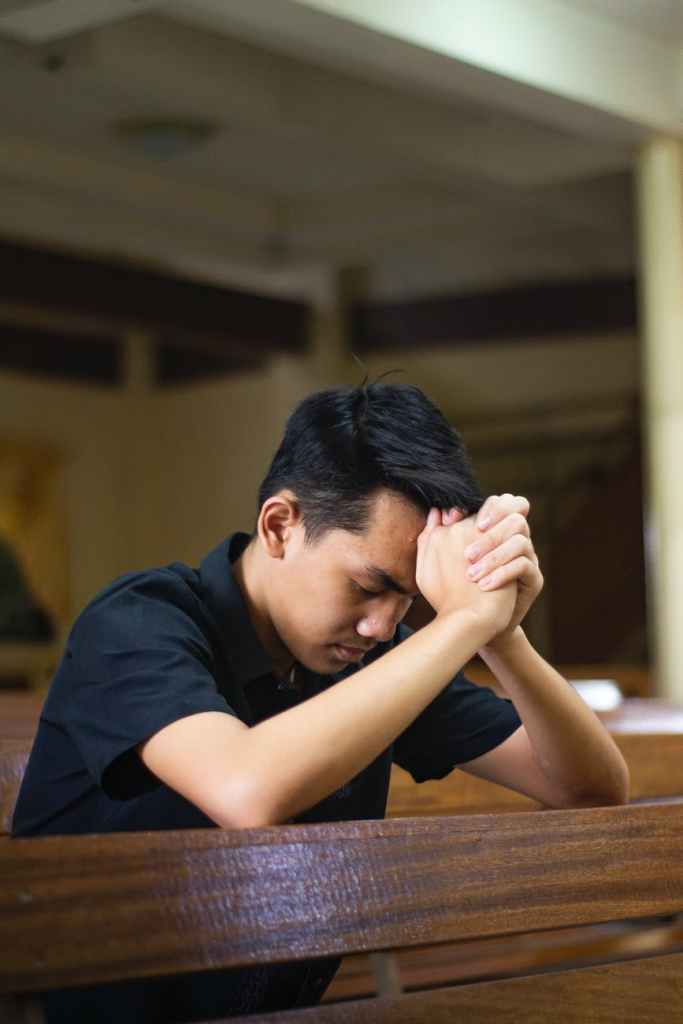
I keep a prayer journal, and I have daily “prayer points” that help focus my prayers, but I have to be careful not to let my prayer life become all about “ticking the boxes.” It’s easy to see a list of names or a topic on paper or a screen, and make prayer about what is written in my journal, or making sure I don’t “miss” someone on the list. Prayer is a conversation, and it should flow like one. I would not like to have a conversation with someone who came to me with a long list of requests and nothing else.

Photo by cottonbro on Pexels.com

That doesn’t mean we can’t bring our requests to God– we should! And sometimes it makes sense to list them out methodically and specifically. But it’s also important to remember that God already knows all the concerns of our heart. He is eager to hear from us— not just our concerns, but our other thoughts, too. He wants to hear our excitement and joy over small triumphs; our questions and ponderings; and all the little things that make us go, “hmmm.”

Photo by Andrea Piacquadio on Pexels.com

When Jesus taught His disciples how to pray, He didn’t have a list of names or specific situations. He asked that “Thy will be done in earth as it is in Heaven.” (Matthew 6:10). He asked the Father to “give us this day our daily bread,”(v.11) without specifying when or how. And He asked, “Forgive us our debts, as we forgive our debtors,”(v.12) without naming names or reminding God of the debts involved! Sometimes we need to be reminded that that God knows our needs, our neighbors, and our universe far better than we do!

Photo by S Migaj on Pexels.com

Today, I want to put aside the “laundry list” and just spend time conversing with my Savior. I hope you will, too.

Running the Race

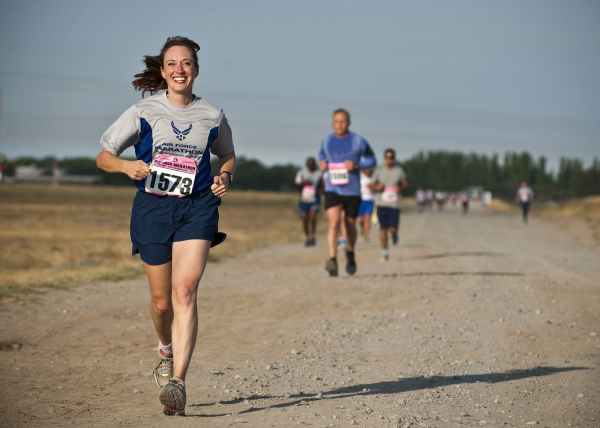
I am NOT a runner. If you ever see me running, I’ve either just encountered a snake, or there’s a wild animal chasing me. So I don’t know a lot about running a marathon, or even a 5-or 10-K race. Even in my daily life as a Christian, I prefer to use the term “Christian Walk!” But the Bible uses the imagery of a race to describe the Christian life. In our pursuit of Christ-likeness, including our pursuit of prayer, we need to think like a runner.

Photo by RUN 4 FFWPU on Pexels.com

For those of us who don’t run, this may pose a bit of a challenge, but the Bible gives us clear principles that provide good guidance.

  • Keep moving forward: “12-14 I’m not saying that I have this all together, that I have it made. But I am well on my way, reaching out for Christ, who has so wondrously reached out for me. Friends, don’t get me wrong: By no means do I count myself an expert in all of this, but I’ve got my eye on the goal, where God is beckoning us onward—to Jesus. I’m off and running, and I’m not turning back.” (Philippians 3:12-14 The Message) Runners don’t worry about what is behind them. They are focused on the goal– reaching the finish line. We need to stop focusing on our past, or the anxieties about the road ahead, and keep our focus on the ultimate goal.
Photo by RUN 4 FFWPU on Pexels.com
  • Travel light/Get rid of the baggage: “Therefore, since we are surrounded by such a great cloud of witnesses, let us throw off everything that hinders and the sin that so easily entangles. And let us run with perseverance the race marked out for us..” (Hebrews 12:1 NIV) What is weighing me down, that I need to let go of, if I want to keep running with endurance? I wrote earlier this month about the expectations attached to the “model” woman in Proverbs 31. Expectations, guilt, unforgiveness, shame, wanting to please other people, even our own self-talk can weigh us down, slow us down, and wear us out. It’s time to let go!
Photo by RUN 4 FFWPU on Pexels.com
  • Run with the pack: Running alone can be good for meditation, but we need the challenge and the encouragement of others if we want to train and grow stronger. Reconsider the passage I quoted above in its larger context: “Therefore, since we are surrounded by such a great cloud of witnesses, let us throw off everything that hinders and the sin that so easily entangles. And let us run with perseverance the race marked out for us, fixing our eyes on Jesus, the pioneer and perfecter of faith. For the joy set before him he endured the cross, scorning its shame, and sat down at the right hand of the throne of God. 3 Consider him who endured such opposition from sinners, so that you will not grow weary and lose heart. (Hebrews 12:1-3 NIV–emphasis added) We need to surround ourselves with companions, role models, teachers, friends, and others who can encourage, sharpen, comfort, and help us in our pursuit. And we need to remember that NO challenge or opposition we face is unknown to Christ. He is our ultimate role model, and, along with the Holy Spirit, our greatest coach!
  • Run/train with purpose: “25 Everyone who competes in the games goes into strict training. They do it to get a crown that will not last, but we do it to get a crown that will last forever. 26 Therefore I do not run like someone running aimlessly; I do not fight like a boxer beating the air.” (1 Corinthians 9:25-26 NIV) I know many people who “know” a lot about the Bible; they’ve grown up in the church or attended seminary; they’ve memorized scripture or studied theology– only to leave the church and their faith. I know many others who have a “faith” that bears little resemblance to the Bible’s teaching– it is based mostly on their “feelings” about God and a “truth” that is relative to their circumstances and changing emotions. Pursuing the Christian life involves discipline– being a disciple–and that involves all areas of life– studying the Bible, and putting it into practice. It’s not enough to “know” about doctrine or to “feel” like a Christian. We must pursue Christ-likeness in our words, prayers, habits, relationships, etc..
Photo by RUN 4 FFWPU on Pexels.com
  • Don’t run on “no fuel.” “29 He gives power to the weak, And to those who have no might He increases strength. 30 Even the youths shall faint and be weary, And the young men shall utterly fall, 31 But those who wait on the Lord Shall renew their strength; They shall mount up with wings like eagles, They shall run and not be weary, They shall walk and not faint.” (Isaiah 40:29-31 NKJV). It is tempting to run on an empty stomach (see traveling light above), or to start running without stretching or warming up. Anything we do in our own wisdom and power– even “good” things like prayer and Bible study, can leave us empty and worn out. We need to come back to our source of wisdom and power–(See Hebrews 12: 2-3 again!)
Photo by RUN 4 FFWPU on Pexels.com

Running a race isn’t easy. Walking through life is a challenge, too. Pursuing Christ-likeness in our habits, including our prayer life, takes dedication, discipline, guidance, and endurance. But God is faithful to provide all that we need to finish the race and gain the prize!

His Banner Over Me is Love

Tomorrow is Flag Day in the United States– a day in which we honor our nation’s flag and all for which it stands. It is an odd holiday in a sense; most countries have a national day of celebration, but not a whole day just to celebrate their flag. We already have an day to celebrate our Independence, and days to honor the sacrifices of soldiers or the dates of famous military victories in our history. Why should we spend a day honoring our flag. Isn’t that arrogant? Isn’t it taking nationalism a bit too far?

Photo by Brett Sayles on Pexels.com

Flags and banners are important to us. They are a visual representation of an idea or a series of ideas–“America,” perhaps, but also, “Freedom,” “Loyalty,” “Sacrifice,” “Honor,” “Bravery,” etc. We have national flags, state flags, organizational flags, family crests, even sports team flags and mascots. Flags can be used to rally troupes and inspire citizens, signify commitment to a cause or nationality, show pride or loyalty, and represent ideals held by those in a group. Colors, shapes, stripes, animals or plants, stars, shields, letters or single words– all represent something important or noble to those who see them on a flag or banner. And there is no real point to having a flag if you are never going to display it or let it fly high for all to see.

Photo by Jessica Lewis Creative on Pexels.com

In the Song of Solomon (Song of Songs) the bride tells that her lover has brought her to a house of feasting, and that “his banner over me is love.” (Song of Solomon 2:4) The Song is an allegory that can be seen as Christ and His Church. Christ also has a banner–and it is Love–not the romantic love of the Song, but everlasting and limitless love! His Love rallies us, unites us, inspires us, and leads us. When we look for a symbol of who Christ is (and what the Church should be) we use a flag of white with a cross symbol in red on a blue (or sometimes purple) background for the corner. The white represents Christ’s purity, and the pure white robes that will be given to His saints. The blue/purple represents Christ’s majesty and authority. The red of the cross is a reminder of the blood He shed on Calvary’s cross.

Banners and flags are important. But we don’t need a flag or banner to represent Christ’s love– WE are to be His banner for the world. The world should be able to look at us and see a reflection of the limitless and unconditional Love of Christ in the way we speak and interact with others, and the way we live our lives.

Photo by Design Killer on Pexels.com

Today (and tomorrow) when we happen to see a flag, let us remember that we are Christ’s ambassadors– we do more than just absorb God’s love– we are to reflect it, and be living symbols of God’s great love for the World. We should be visible testimonies that God’s love is all-important, and available to all! May that be more than just a prayer– may it be our earnest pursuit every day.

Blessed Are Those Who Hunger…

“Blessed are those who hunger and thirst after righteousness, for they will be filled.”(Matthew 5:6) I’m looking at the Beatitudes and how they can relate to our prayer life. Today, I’m looking at the fourth in the series, shown above.

Photo by Adrienn on Pexels.com

I recently found out that I am diabetic. I’m trying to lose weight and eat in ways that will help manage my body’s response to carbohydrates. And I find that when I feel hungry, I seem to crave all the wrong things! I miss pasta and chocolate and a large sized Coca Cola from the drive-thru. I don’t normally crave steamed cauliflower or unsalted nuts when I’m hungry. There’s nothing inherently wrong or “evil” about pasta, or chocolate chip cookies, or even sugary drinks. But they can crowd out the nutrients that my body needs, making me bloated and yet feeling like I didn’t get “enough” to eat. I don’t crave the nutrients– I crave the taste. I don’t hunger for the fuel my body needs; instead, I hunger for the flavors I want, or the quick burst of energy I feel from sugar and carbs.

Photo by Andres Ayrton on Pexels.com

And the same can be said for Righteousness. Most of us do not truly hunger or thirst for righteousness on our own. We crave comfort, or affirmation, or control of our circumstances. Even in our prayer life– even as we say the words, “Thy will be done”– we are usually asking for our own wishes or desires to be fulfilled. “Help me get this job.” “Change my neighbor’s attitude.” “Fix the problem…” We want to BE righteous, but our appetite leads us to compromise and complacency. The end result is that we feel unfulfilled, even resentful and restless.

Photo by Teona Swift on Pexels.com
Photo by ROMAN ODINTSOV on Pexels.com

Jesus promises that those who hunger and thirst after righteousness will be filled. We will not be left with the gnawing feelings of guilt and shame and regret, or left feeling unfulfilled and dissatisfied. What kind of diet will lead to this “filled” feeling? Chewing on God’s Word! Have you ever noticed how often in the Bible God uses food imagery in relation to His Word? “Taste and see that the Lord is good” (Psalm 34:8). “How sweet are Thy words unto my taste! Yea, sweeter than honey to my mouth” (Psalm 119:103) “Man shall not live by bread alone, but by every word that proceedeth out of the mouth of God” (Matthew 4:4b). And there are dozens of other examples throughout both Testaments.

Photo by cottonbro on Pexels.com

When I come to prayer wanting more of God and less of my own “cravings,” it changes my perspective– and my appetite. My desire is no longer for convenience or temporary comfort, but to be closer to God– to enter into His Righteousness. My other desires start to change to align with His will. Instead of praying to get a particular job, I begin to pray that God will lead me to do my best at whatever job I have (or that I will eventually get). Instead of wanting my neighbor to change, I will begin to look for ways God wants me to change my response to my neighbor. Instead of just wanting to lose weight, I will begin praying about ways I can honor God in the way I eat (and exercise and take care of my body).

So I need to ask, “What am I really hungry for today?”

Be Careful What You Pray For…

When I was a young woman, I prayed for patience. Several well-meaning friends and family tried to tell me that this was a mistake. “Be careful what you pray for,” they said. It was their belief that, if I prayed for patience, God would send situations into my life that would force me to be patient. God doesn’t “give” patience, they warned–He merely teaches us to be patient.

Photo by Anna Shvets on Pexels.com

I wanted more patience, in preparation for marriage and children; I wanted to be a patient wife and mother. But I was unprepared for this reaction of others. DON’T ask God for something good? Isn’t patience (long-suffering) one of the attributes listed as the “Fruit of the Spirit?”(Galatians 5:23-24) Why should I hesitate, or fear to ask God for something that will help me serve Him better?

Looking back, I suppose some of those same friends and family might say, “I told you so!” I’m sure they wanted a happy and easy future for me– one that didn’t include some of the challenges that I have had to face. And in their eyes, I was “tempting fate” to draw attention to my lack of patience. On the surface, it probably looks like that’s exactly what happened. I never had any children; I didn’t marry until I was in my mid-40s, and I have learned patience in many areas through many challenges.

Photo by Liza Summer on Pexels.com

But that’s just one perspective. What if I hadn’t prayed that prayer? Would God have let me drift through life without “needing” more patience? Would I have “avoided” the years of loneliness and lack of children? Would I have married and had a family and lived happily ever after without having to learn patience? Would my life have been totally different? Or would my circumstances have been the same, except that I never would have learned patience–never sought to become more patient during the same trials and challenges? What kind of life might I have had WITHOUT patience?

Photo by Liza Summer on Pexels.com

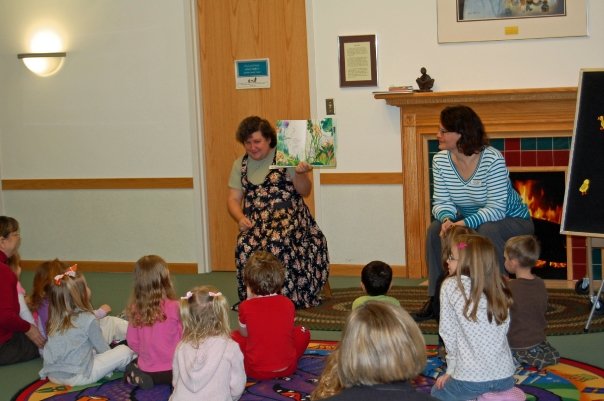
During the years that I was single, I worked full-time in youth-oriented jobs– teaching and serving in the youth department at a library. I learned patience by disciplining teenagers, cleaning up after toddlers, answering the same questions twenty times a day, and dealing with obstinate parents! I suffered with my students when one of their classmates died; and when it happened again the next year. I agonized with my student who chose to keep her baby after those close to her wanted her to have an abortion. And I rejoiced with her when she brought her son to visit me a year later. I suffered the frustration of parents whose children were rebellious, or had learning issues, or had been diagnosed with autism or ADHD. But I also endured the long nights when I had no little ones to tuck in or talk to (and learned to be thankful for the nights I didn’t have to deal with fever and sickness, or arguing–again– about the rules of the house!) But in the course of my work, I connected with hundreds of children and teens. They were never “mine” to hold or scold or say, “I love you”, but they touched my life, and I hope that I touched theirs as well. I didn’t choose my career path knowing that I would never become a “mom.” But I needed (and learned) patience in the process. I learned patience in the years I spent single–and I learned to appreciate my husband in ways I wouldn’t have as a young woman.

Story hour at the library c. 2009.

There IS some truth to the phrase, “Be careful what you pray for.” When we pray, we should pray for things that align with His will– like wisdom, patience, courage, or peace. We should not pray for things that contradict His will– instant popularity, wealth without work, or relationships or circumstances that dishonor Him. We should also be prepared for God to answer in the way He deems best–which may not look or feel like what we desired. It was His best for me not to marry young or have children of my own. He has since blessed me with a wonderful husband and step-children and grandchildren. But He might have chosen not to. And I would still thank Him for the life I have led. It’s been fantastic. I’ve met amazing people, had amazing opportunities, and traveled to wonderful places. I don’t feel like God ever “punished” me for asking for patience– instead, I feel that He has more than answered my prayer. That doesn’t mean that I have learned to be perfectly patient in every situation (just ask my husband!) But God is eternally good and faithful to give us what is in our best interest– if we ask, AND if we trust His answer more than our expectation. (see Hebrews 11:6; John 17; 1 Peter 5:7)

Photo by Tima Miroshnichenko on Pexels.com

Don’t be too afraid or too proud to ask God for any good thing. God will not only give you what you need, He will be with you every step of the way as you learn and grow, and develop into the person He wants you to be!

Why I Keep a Prayer Journal

I keep a journal of my daily prayer life. I have found it useful, and I recommend it as you pursue a lifestyle of prayer. Why?

  • It helps me keep organized and disciplined as I pray. Not everyone needs help in these areas, but I find that I do, and keeping a journal helps. It helps remind me to pray specifically for certain people, issues, locations, etc. That doesn’t mean that I don’t pray “in the moment.” But it means I have a focus when I sit down to start the day or finish the day in prayer.

  • It provides a place to document God’s answers to prayer. I leave space in my journal, and I go back through and note the ways God has answered prayers for various needs. It is a great reminder of God’s faithfulness and even His attention to detail!
  • It reminds me how BIG God is–I am amazed at how many different items end up in my journal. I pray for a lot of people each day, and a lot of different situations– needs, praises, confessions, worship, “unspoken” items, continuing issues…God hears them all. He knows them all before I even pray! Yet He delights in hearing them on my lips or in my mind.
  • It helps me focus on others. Life can be full of “self” distractions–“my” finances, or aches and pains, scattered thoughts, etc.. A prayer journal reminds me that others need prayer, that our lives are intertwined and impact each other, and also that others are praying for me. In that sense, it makes prayer a very unifying and “communal” activity.
  • It also makes my prayer very personal–conversely, using a journal means that my private thoughts and goals and relationships are in a journal for my eyes (and God’s!) only. I may write down a poem or someone else’s written prayers as well, but I’m not praying someone else’s heart-cry or someone else’s thoughts in place of my own.
Photo by Ian Panelo on Pexels.com

Keeping a prayer journal doesn’t make me a “better” prayer than anyone else. It doesn’t impress God or bring me closer to Him because I have a journal of my prayer life. And I don’t recommend it for any of those reasons. But I have found it easier to be more consistent and more confident as I pray. I am not journaling just my words or even my thoughts– I am journaling a relationship.

Photo by MART PRODUCTION on Pexels.com

How can you develop a prayer journal?

  • Do what works best for you–this is YOUR journal, not mine. I keep mine in four simple notebooks– one for each season, one page for each day of the year. But you could use index cards, or a calendar, or your smartphone or computer calendar. Use whatever works– it may take a few tries before you find what works best.
  • Pray! Ask God to give you wisdom about what to include or how to organize your journal. I use birthdays and anniversaries to remind me to pray for certain people, but I leave plenty of space for “spur of the moment” requests and ongoing issues. I also pray for various geographic regions, but you can organize it around cultural issues, family members, etc. There are even websites and books that can help you learn about various topics or people groups to pray for..
  • Start simple. You don’t need to have a year-long journal to begin the process. Try journaling for a month first, if that will help you keep with it.
  • Don’t let the journal become bigger than your prayer life. This is a pitfall I landed in early on. I had the ambition to have a “perfect” prayer journal– and it ended up so convoluted that I wasn’t actually praying! Starting small allows you to build the habit first, and add the discipline of journaling in a more natural way.
  • Ask for help– just remember that you don’t have to do it “just like” anyone else, and you shouldn’t do it just to impress someone else.
  • See the attached pages on keeping a prayer journal on this blog..

Pursuing a lifestyle of prayer is a great way to start a new year. And continuing is a great way to look forward in the new year!

He Who Began a Good Work…

 And I am sure of this, that he who began a good work in you will bring it to completion at the day of Jesus Christ.

Philippians 1:6 (ESV)
Photo by Karolina Grabowska on Pexels.com

I have a lot of unfinished projects–scrapbook pages, crafts, stories I began writing, closets I started cleaning out..some projects were abandoned due to waning interest; others due to distractions or other more urgent tasks. A few of the projects I can pick up and continue (if I choose). Others must be discarded or started over again. I began each task with good intentions, but some proved to be more complicated than I anticipated. Their very presence reminds me that I bit off more than I could chew.

Sometimes, it feels like I am an unfinished project– because I am! While I still live, I continue learning and (hopefully) growing more like Christ. But every day I am reminded (as with my unfinished projects around the house) that I have a long way to go. And I occasionally wonder if God will get tired of me and set me aside– lose interest or just decide His efforts will be more rewarding somewhere else. And yet, Paul assures me that I will never be abandoned or left “undone”–God always– ALWAYS– finishes what He starts. And His finished project are always perfect.

Photo by Pixabay on Pexels.com

And what is true in my life is true in the lives of others, and in the wider world. We may not see the way forward. It may seem as though things or people around us are falling apart. But God sees the end from the beginning. And He works — sometimes in mysterious ways–to bring all things to their appointed end.

There are two “caveats” to the above statements:

“He who began a good work in you…” God created all of us in His glorious image, but He has not begun a good work in those who have not trusted Him to do so. It is God’s desire that all of us should reach perfection, and that none should perish. However, the Bible is very clear that not all of us will seek to be reborn, reshaped, redeemed, and reconciled to God.

Photo by Nikita Krasnov on Pexels.com

“…at the day of Jesus Christ.” We will not be perfected in “our” time, but in God’s. We will be tested, refined, purified, stretched and shaped, but what we will be “has not yet been revealed” (1 John 3:2) We should pray for continued growth; we should humbly submit to the renewing of our minds and hearts through the work of the Holy Spirit, but we should not consider that we have reached perfection or that we have learned all there is to know.

Photo by cottonbro on Pexels.com

I am so glad that I serve a God who will never tire of me, or find me “too much” to handle. And I am so glad I can fall on His grace and mercy when I fail in my tasks (or fail to complete them). God isn’t finished with me yet– but by His Grace, He will not leave me incomplete or lacking in any good thing!

Blog at WordPress.com.

Up ↑