“Fruit-ful” Prayers

Our church has been presenting a series of sermons on being a BLESSing to our neighbors. BLESS is an acronym for Begin with Prayer; Listen with Care; Eat Together; Serve like Jesus; and Share Stories. We were challenged the first week to choose four close neighbors. We were to pray for them, and if we didn’t know them well, to reach out and make contact. This has been a true challenge for David and I, because we live in an apartment above our shop. Most of our neighbors are not residential, but commercial! Nevertheless, we decided on a couple of commercial “neighbors” and a couple of non-traditional “neighbors.” We started praying– praying for opportunities to get to know our neighbors a little better, and praying for their health, well-being, etc. We’re getting to know some of the workers at the two commercial locations, and getting to know our chosen “families” a little better. We’ve been more intentional about stopping to visit or chat, and making sure we listen and respond sincerely– this is not just a short-term “project” but an opportunity to build closer relationships. And we’ve been praying for opportunities to develop closer friendships.

So this week was the sermon I’ve been dreading– “Eat together.” You might wonder why this is so fearsome–doesn’t everyone like to eat? And I love meeting over a nice meal. I love to cook, as well. The problem? Our apartment is tiny and upstairs– NOT conducive to inviting people over for a warm, comfortable meal shared around a large table. We have two mismatched chairs around a small table in our tiny kitchen, and two more mismatched armchairs in the living room. No couches, no designated dining room, no space to “entertain” guests. I want to serve others. I want to grow friendships. But I’m not a hostess. Not in a cracker-box-sized apartment upstairs. I know this seems petty– I’ve known amazing hostesses who live in shacks and invite guests to sit on a dirt floor. I know. But I still struggle with the idea of entertaining others in my current circumstances.

I knew it was coming– we looked at all the examples in the Bible of good and even sacred things happening around the table and/or involving food– Passover Seders, Communion, the Wedding Feast of the Lamb (among others)… “But Lord,” I prayed, “I can’t invite the entire staff next door to my home for a meal. And some of the “residential” neighbors we are praying for are elderly and can’t manage the stairs to our apartment even if we had the room to host a meal. And it’s too expensive to invite some of the families or staff to a restaurant. How are we going to be able to bless others and “Eat” together?”

But God isn’t bound by conventional ideas– even when it comes to hospitality. At the end of the service, we were surprised by an announcement from our pastor– one of the families in our church owns a fruit farm. Last year, they had a bumper crop of apples, and they donated several bags of the apples to the church. There were enough apples for each family to take several bags to “BLESS” our neighbors! No meal to fix. No apologizing for the smallness and shabbiness of our living space. But a chance to share FOOD with my neighbors and bless them with wonderful apples! Thank you, God!

David and I wasted no time– we delivered most of the apples yesterday afternoon! And we had so many apples, we were able to bless more than just the four locations we had decided on earlier in the series. We were able to bless at least 13 different families/ businesses with at least one full bag of apples! We blessed families with small children, a retired couple; a single person on a fixed income; an extended family of four generations; we blessed people who go to another church; we blessed people who don’t attend church at all. We blessed the staffs at a couple of local businesses, and shared laughter (and concerns) with several friends, old and new.

Not everyone wanted the free apples. One family turned down our offer. Some people are suspicious of free gifts; some are too proud to accept food as a gift; some are simply not interested, or too busy. It is the same with the Good News. Some people do not want what we have to offer in Christ. Some are suspicious; some are too proud or even too ashamed to believe that God has Good News for them. Some are too caught up in their problems or their ambitions. We must not be discouraged, though. God has not given us such a precious gift without also giving us the opportunity share it with others. And we will see how God continues to work in mysterious ways. Some people were surprised and confused by the concept of “apples of blessing.” They wondered what we might ask for in return. We smiled and said there were no strings attached– we just wanted to share our blessing with them! Some people took more apples than we had planned to give them– that’s ok, too. Others wanted to bless us in return– we received over two dozen eggs in gratitude for a couple of bags of apples! Today, I’ll be delivering the last few bags to businesses that were closed yesterday (to share with their staff). I’m excited to share this gift–and I’m reminded of how good it is to share the free gift of the Gospel!

God didn’t change the circumstances of our apartment. I worried that I would be asked to host an elaborate meal, or that I would miss out on blessing others because of our circumstances. But in God’s economy, we can show hospitality, love, generosity, and compassion on the street. We can share food in a way that opens up opportunities to make memories, share stories, communicate prayer requests and concerns, serve others’ needs, and make new friends. There are dozens of ways we can open our hearts and our lives to our neighbors, serve them, and pray for them…

We kept one bag of apples– maybe someone in our neighborhood would like a pan of apple crisp! And now, David and I have a few extra eggs! Anyone interested?

Why Being “Nice” Matters

(I am re-posting an article from a few years ago. This first appeared in August of 2018.)

I spent the day with my granddaughter today.  We went to the bakery, the bank, the grocery, and the library.  Some days we visit the post office or a local cafe.  We live downtown, so we walk everywhere, and say hello to people we meet along the way.  At each stop, we thank the people behind the counter or desk.  My granddaughter is learning manners– how to be polite in public.  Her parents do a wonderful job of this, and it’s very easy for me to bask in the proud glow of people remarking on how cute and polite and engaging she is.  (I may be a little biased, but they DO say such things…)

shoes

Years ago, when I worked at a library, there were always families who came in and practiced good manners– “Please” and “Thank You,” “Excuse me,” “I’m sorry,” and “May I?”  Often, the children were prompted, especially when they were young.  Sometimes, they didn’t understand why they were being told to say such things.  A couple of times, I had other parents roll their eyes and comment negatively on such practices.  “They don’t even understand what they’re saying.”  “I’ll bet they don’t say any of those things at home– what hypocrites.  They’re just trying to make people think they’re better than everybody else.”  “You shouldn’t force kids to say such things.  They’ll just resent you for it later.”

woman in black long sleeved shirt

There are actually parenting articles about forcing children to say “I’m sorry.”  They are well-intentioned, and some are helpful about explaining what the issues are (here’s a link to one of the articles) .  Other articles advise parents not to prompt children to say, “Thank You.” (Here’s another link.)  I don’t disagree with these authors.  In fact, I think they make a valid point about teaching our kids “shallow” manners and neglecting the deeper values of gratitude and empathy.  But I think children need both.

bullseye center illustration round

Manners (especially as they reflect deeper values) are important.  We live in a society where manners are becoming relics–laughable reminders of a quaint culture we have long outgrown.  There are pockets of the country (and the larger world) where politeness is almost an obsession.  It is not polite or helpful to be facetiously “nice” or sarcastically “nice”.  But what happens when we no longer dare to show gratitude or empathy without inviting ridicule and contempt?  What happens when saying “Please” and “Thank you” make you a target for mockery? When and how did this happen to our culture?

With all due respect to the recent spate of articles, I think something gets lost in the hyperbolic headlines and fascination with “feelings”–manners should originate, not with feelings, but with the acknowledgement of some basic truths:

  • I am not the center of the universe!
  • Other people– all other people–have value, worth, and dignity.
  • I need other people, and they need me–I am not an island.
  • There is a God who is kind, forgiving, loving, and wise.
adult back view bald crowd

I am polite to others, not because I feel “nice”, but because I recognize that God created all people; He loves us all equally, and I have a duty to treat others with dignity, respect, and kindness– even if I don’t “feel” it; even if they don’t respond in kind.  Do I always remember and acknowledge this, even as an adult?  Sadly, no.  But I practice politeness as a discipline and a reminder that this should be so.  I teach it for the same reason.  And the amazing thing is that it makes a huge difference.  Maybe not in the moment, with all my emotions running wild…but in the quiet aftermath of knowing that I said “Thank you” instead of the hurtful and sarcastic comment.  I said “I’m sorry” instead of holding on to my pride and bitterness.  And I may never know the difference it made to the harried waitress, or lonely shopper, or tired mechanic to hear two or three kind words– “Thank You” (You are noticed– you matter).  “I’m so sorry” (you have dignity–you are worthy of kindness) “Please” (you have value–your time, skill, or service is special)

I’m not a “nice” person– I am often hateful and stubborn and impatient.  But God has been abundantly gracious and merciful to me when I don’t deserve it.  Being polite is such a small thing in light of God’s eternal and boundless love toward us.

backlit clouds dawn dusk

Close to the Broken Hearted

As I write this, I am keenly aware that one year ago, I was at a graveside, saying farewell to my mother. Grieving comes in waves. I rejoice that she is in heaven, and I rejoice that she had a good, long life, and that she didn’t suffer very long at the end. But there is still an ache– wanting to share a memory or a laugh and knowing she isn’t here; questions I didn’t know I had, but now she can’t answer them; just missing her voice and her smile. My father has been gone for 25 years, and the same ache still hits at odd moments.

Sometimes, grieving brings us closer to God. At other times, we can let our grief drive us away from God. But God doesn’t move. He is ever-present. And He reminds us that He is “close to the broken hearted” (Psalm 34:18). When we are grieving, that is a blessed reminder. Grief tends to isolate us. “No one understands…” “Laugh, and the whole world laughs with you; cry, and you cry alone.” We see the “rest of the world” enjoying life, seemingly untouched by sorrow, and we feel abandoned twice over.

As Christians, we are called to follow Jesus’ example, and be close to the broken hearted. We should be the ones ready with a hug, a listening ear, and a shoulder to cry on. We should be the ones who, like the friends of Job (before they offered ill-advised ‘counsel’) are willing to sit with our suffering friends for days at a time, offering the comfort of solidarity and ‘presence.’

My family was blessed with a host of Christian friends and family who comforted us in the days and weeks after Mom’s passing. They still ask. They still share memories. They still pray for us. And in return, we do the same. God does not want any of us to suffer alone.

And this is also true for those who suffer a broken heart for other reasons– divorce, the loss of a home to fire or flood, the loss of a job, a wayward son or daughter– it is important for us to draw strength from others, and offer strength in our turn. But the source of our strength is Jesus, who suffered on our behalf, and rose victorious over death and separation. When “no one” understands, He DOES. When the world leaves us grieving alone, He is THERE. And when we see someone else grieving and suffering, and we don’t know what to do– He gives us the strength and the compassion to reach beyond our own resources and offer comfort.

On our own, we can be like Job’s friends– after awhile, we try to offer solutions, explanations, even judgment about another’s grief. “It’s time to move on.” “Just get over it.” “Well, if only you had…” None of these are helpful. Jesus never said any of those things to the people He came to comfort. Instead, He encouraged them to look to Him as the “resurrection and the life.” (see John 11:25).

Today, let us do the same. There are hurting people all around us. Let’s be an encouragement to others to embrace life– even when we are broken hearted.

Unspoken

What does it mean when someone says they have an “unspoken” prayer request? If you are new to Christianity or to prayer, this can seem confusing. Aren’t we supposed to present our requests to the Father? Aren’t we supposed to pray for one another? How can we ask someone to pray for us, and then hold back on giving a reason? Is that “cheating” somehow?

There are several reasons why someone may ask for “unspoken” prayer, and there is no reason why we should not pray just as fervently for an unspoken request. So why would someone be reluctant or even unable to speak their request?

  • Sometimes, they are passing along a request from another. Someone has shared a burden, and it seems too large for just one or two people. But the original request was not shared publicly, nor did the sharer give permission to share details in a group. It is important to honor the other person’s attempt to avoid gossip and oversharing.
  • Sometimes, the request involves a delicate personal situation– an unsaved spouse, an aging parent facing financial difficulties, etc.– and the details of a request might cause unnecessary pain or shame to another, or strain an already tenuous relationship.
  • Sometimes, the person asking for prayer cannot put their request into words. They know there is a problem, but they may not fully understand what they need or even want. Sometimes, a sudden change throws them into turmoil. Other times, an unrecognized problem has been looming, and they are taken by surprise. Sometimes, there are multiple issues and layers of issues that can’t be explained easily.
  • Sometimes, the person is ashamed of asking. They may feel like a failure for even asking. It may be an issue they thought they had overcome, and they are reluctant to admit that it isn’t resolved. They may not be ready to confess a secret sin, but they know they need help.

Whatever the reason, we should always be willing to pray, especially when asked to do so. But how can I pray for someone who won’t or can’t tell me what they need? 

In many ways it is the same– If I know that “Sue” is battling cancer, I am still praying to the same God as I am for “Janet” who can’t tell me about her recent diagnosis or her ongoing battle with a wayward teenage daughter. Yes, I can be more specific in my prayer for Sue, but I can still lift up Janet as someone who needs God’s care, protection, and encouragement. I can acknowledge that God loves both women, and that God is the only one who can meet their needs. I can praise God that HE knows all; that He is sovereign over all, and that He cares about Sue and Janet (and Me) far more than I can understand. 

What are some practical guidelines when praying for “unspoken” requests?

  • Honor the other person’s privacy. Don’t try to drag a confession or sordid details from someone who is already struggling to share their need for prayer. Your “need to know” all the details is less than another person’s need for earnest encouragement, compassion, and support.
  • Concentrate on the basics— don’t try to “guess” at specifics. Pray for their general health, well-being, growth, encouragement, and strength to persevere. If you know of an ongoing situation, don’t get bogged down on praying for just that issue. Use this opportunity to uphold your friend or neighbor, brother or sister in loving prayer, not intense scrutiny.

  • Do not cast judgment. It is NOT your place to decide whether or not the other person “should” be more open or share more details. It is NOT your place to decide whether or not the other person “really” needs your prayer. We all know people who “overshare,” and we all know people who seem addicted to drama. We all know other people who never open up or seem independent and self-contained. Their “unspoken” requests are still “real” requests– even if they are making the third one this week. Lift up your sister or brother with love, not exasperation or comparison with anyone else. Remember, you would not want someone else dissecting your life trying to decide if your prayer requests are “worth” their time.
  • Thank God for the opportunity to join God in loving others! If someone is asking for your prayer, it generally means that they respect and trust you to respond. God is giving you a unique and wonderful opportunity to join in His work! Prayer of this type is not a burden or an obligation. It should be a joyful experience.
  • Follow up. Let the other person know that you are praying for them. If possible, pray with them, remembering that this is not an opportunity to pry, poke, or condescend, but to uplift, encourage, and invite God to act! If you get the opportunity to do so, check in with the other person in a few days or a week, to let them know you are still praying.
  • Use this opportunity to build your relationship. ”In what other ways can I be praying for you?” ”Is there anything I can do for you?” Don’t make a fuss. They may (even probably will) say no. Don’t pry about details, but offer practical assistance, as well as prayer, whenever possible.

I try to use this model whenever I get an “unspoken” request– whether in person, as part of a prayer chain, or scrolling through social media. EVERY request is an opportunity. EVERY request deserves my eager and faithful response.

Where Does My Help Come From?

I read an on-line article the other day https://www.verywellhealth.com/perils-of-using-the-internet-to-self-diagnose-4117449 about people using the internet to find medical information, rather than seeing a doctor. The article focuses on self-diagnosis, and the dangers of using only on-line sources to diagnose and treat a chronic medical condition. But I was astonished to note that over two-thirds of American adults (according to various studies) are using the internet to get at least some of their medical advice, and many of them prefer to get their medical information in this way. Why is this?

I think there are several factors, many of which are not discussed in the article:

  • Convenience–The internet is easy, quick, and convenient. I can look up medical terms, symptoms, treatment options, find testimonials and comparisons of various medications and procedures all at the touch of a few buttons, all from the privacy of my own home. I can stay in my pajamas!
  • Cost (in both time and money)– I can save hours of sitting in waiting rooms and thousands of dollars by seeking help from the internet. I don’t need to “waste” time or money on multiple appointments in multiple locations with multiple specialists. I don’t need to spend more on medication if the internet offers alternative treatments.
  • “Confirmation Bias”– the article does discuss the idea that using the internet often helps us achieve a sense that we “know” ourselves better than our health care provider– that the information on the internet can be customized to confirm our already-held beliefs about what is wrong and how to treat it. And we can find on-line groups and sites that will confirm and support whatever we already believe about our health or treatment options, or steer us toward a course of treatment that more closely aligns with our established preferences and habits.
  • Community–One of the positive points about using the internet is that we can connect with a community of others who also suffer from similar chronic conditions. We can receive support and advice from people near and far, and connect with resources that would otherwise be unknown to us, given by those who seem to understand and sympathize.
  • Credibility–The article does NOT go into much detail about this, but many Americans (and I suspect others) no longer have a blind trust in the medical profession. Even once respected institutions, such as the National Institutes of Health, the Center for Disease Control, and the World Health Organization have lost much of their status and credibility due to their handling of COVID and other recent medical crises. We no longer trust the “experts” to give us the best medical advice. We are looking for someone (anyone) who seems to have a better answer–one that doesn’t require us to trust where we have felt disappointed or hurt.

Of course, this poses danger and risk to anyone who is trying to “go it alone” in their medical journey. We risk getting it wrong and causing more harm– even risking our lives. We may end up spending more time, energy, and money “fixing” the damage we cause by trusting the wrong people, and end up confused, frustrated, and angry at ourselves and everyone else we trusted to help us. Even “support” groups have been known to give false encouragement and even prey on people or families who are struggling with chronic illness.

But this article also reminded me that we can risk our spiritual health in the same way– going it alone instead of getting connected to a local church, or substituting on-line articles and blogs (even this one!) for daily personal prayer and Bible study. How does this happen, and WHY?

  • Do we find it more convenient to pick and choose our counsel from the abundance of resources available on-line? Do we only want to read or listen to those who tell us what we want to hear? (See 2 Timothy 4:3-5)
  • Are we trying to “cut corners” in the cost of being a Christian? Do we find it too much to spend time in church, wrestle with questions, accept correction from others, or ask for help?
  • Are we worried about “fitting in” or are we trying to create a “holy huddle” of like-minded people, regardless of our call to be part of the “Body of Christ?” (see 1 Corinthians 12:12-30)
  • Have we lost faith in the Church because of past encounters with others, or the attacks of unbelievers? Do we find it easier to “customize” our spiritual life, closing ourselves off from the kind of challenges that cause us to grow, and falling into a comfortable compromise?

The internet can be a wonderful tool, allowing us to share encouragement, testimonies, warnings, and valuable information globally with a few keystrokes! But it is not without risks. Ultimately, we need to trust, not the makers of websites, or the self-proclaimed “experts” of the world, but in the Sovereign God– the Maker of Heaven and Earth, the one who holds the future of our health (both physical and spiritual) in His Almighty Hands!

Trust in the LORD with all your heart and lean not on your own understanding;
In all your ways submit to Him, and He will make your paths straight.

Proverbs 3:5-6 (NIV)

I lift my eyes toward the mountains.
Where will my help from from?
My help comes from the LORD,
The Maker of heaven and earth.

Psalm 121:1-2

My prayer today is that we would look beyond the mountains of information we find on the internet, and fix our sight and our trust in God for our daily bread, our health, and our future. May we rely on His wisdom to help us seek the right counsel, and to learn, even from our sufferings, that His Presence and His Promises are eternal, sufficient, and sure!

An Encouraging Word

It can be a dog-eat-dog kind of world out there.  Every day, I hear of people who are facing difficult and trying circumstances– health issues, loss of a job or home, loss of a family member or close friend, depression, oppression, harassment, rebellious or estranged children, abuse, academic failures, exhaustion from being provider, caregiver, etc.– even just daily stress.  It can really take a toll.  But it becomes even more difficult when we isolate ourselves.

When I get stressed, I tend to withdraw.  I don’t want others to think of me as a failure, or to think less of me in my struggles.  But this is one of the worst things I can do.  First, it means more worry and stress because I’m bearing the burden alone!  Second, it forces me to cover up my level of anxiety or depression be pretending that things are fine when they aren’t.  That would all be bad enough, but it gets worse.  Isolating means my focus turns inward– my problems become bigger, not smaller;  I’m so close to the problem, I’m not able to “look outside the box” for solutions, because my box keeps closing in on me.  I can’t see beyond my circumstances to understand if they are temporary, or if they necessitate some life changes on the other side of whatever crisis I’m dealing with.  And, worst of all, the only voice I listen to is my own, rehearsing and reminding me of the difficulties or failures I’m facing. What opportunities do I miss, not only to hear an encouraging word, but to share one with someone else?!

pexels-photo-936048.jpeg

We all need an encouraging word now and then; a voice telling us that we are not alone; that all is not lost; that there is hope.  I have been blessed with wonderful family, friends, and neighbors who are great about encouraging me, even when I try to shut them out or pretend that everything is grand.  Sometimes that encouragement comes through conversation; sometimes a card or text message or a shared piece of scripture; sometimes it comes through prayer.  I may not even know who prayed, or what words they used until days or weeks later, but their faithfulness in praying has become a lifeline when I feel isolated and overwhelmed.

This does not negate my need to pray and ask God for wisdom, healing, or strength for myself, nor does it suggest that God doesn’t answer my prayers.  Instead, it shows a pattern– God often answers our prayers by incorporating and using those around us.  God’s goodness and his love are shown best in teamwork.  We run the race to win, but we race together as teammates, not competitors.  We share sorrows, struggles, and joys. We come alongside; we lift others up, and they lift us up in return.

Encouragement does so much, we sometimes underestimate its power.  In a world of sniping, criticism, name-calling, and finger-pointing, encouragement does the following:

  • It lets someone know that they are seen and heard– that they are being noticed, thought of, and valued.  This shouldn’t be uncommon, but in a world where we are connected to so many be technology, and to so few face-to-face, it is HUGE!
  • It give us perspective to realize that we are not alone in our problems and not unique in facing difficulties.
  • It reminds us that hope and help are gifts to be shared, not something we must earn.
  • It gives us a purpose and a mission to be part of God’s redemptive work– Jesus gave encouragement and hope to those who needed it most, not to those who “deserved” it.

It can be a dog-eat-dog world out there, but we are not dogs.  We are children of the King.  Let’s send out some encouraging words today!

A word fitly spoken is like apples of gold in a setting of silver. (Proverbs 25:11 (ESV)

pexels-photo-416443.jpeg

Also see James 5:13-16 on praying for one another.

“Hallowed Be Thy Name…”

Christians have a lot of confusing “jargon”.  If you grew up in the church, there are certain words and phrases that are supposed to be intuitively understood.  If you didn’t grew up in the Bible Belt, or in an old-time church, you may feel like you’ve been dropped into a parallel universe where people speak the King’s English– but it’s King James’ English!  Words that would fit neatly into a Shakespearean monologue are flung at you:  “Thou shalt not,” “graven images”, “begat”, “beseecheth”, “whosoever believeth,” “Hallowed be Thy Name.”

As a child, I used to think the phrase was “hollow-ed be thy name”– it was confusing.  Why would God want his name emptied and hollow?  Why would I do that?  Of course, it was explained to me that “hallowed” meant holy, or honored, or revered.  That made more sense, but I think in some ways we have done more “hollow-ing” and less “hallow-ing” of God’s name in our churches lately.

church-bank-wood-benches-161060.jpeg

And it’s not just the argument I hear a lot about actual language usage.  I hear some people complain about those who pray to “Daddy God” or “Papa God” or those who use “OMG” when they text, or “Jeesh!”  To me, these are “splinter” arguments (another Christian jargon term, referring to Jesus’ example of someone trying to pick a splinter out of someone else’s eye when they have a plank in their own!).  That’s not to say that we shouldn’t be careful about the words and names we choose, especially around those who do not know Jesus personally. But the core issue isn’t the vocabulary, but the attitude. The real trend I see is that we are losing our attitude of AWE in God’s presence.  We use words, and carry attitudes that devalue the one who is most worthy of our absolute best.  Or, we try to put ourselves, our own efforts, and our own attitudes in His place. God IS our Father. He is not “the man upstairs,” or “the Big Guy,” or “Daddy-O.” He is not our “pal” in the sense of any other human acquaintance. He is the Lord of the Universe! But we can call Him “Lord, Lord” and still not have a relationship with Him (see Matthew 7:21-23). Using “religious” sounding language doesn’t make us any closer to God in our heart, and it certainly doesn’t fool Him!

arrogant

God wants a relationship with us; he loves us with an extravagant, boundless, and everlasting love.  He doesn’t want us to run from him in fear or hide from him behind big, empty, but important-sounding words.  In fact, in his time on Earth, Jesus walked side by side with his disciples, he ate with people, embraced his friends and family, danced, burped, wiped his nose,  held children on his lap, laughed, and lived among us.  But he is eternally GOD.  Yahweh– the LORD–I AM.  Almighty, all-powerful, omniscient and completely HOLY.  And his Name is to be revered.

When we say that we follow Christ;  when we call ourselves Christians, we bear that name– we take on that Hallowed name–we strive to be ambassadors and representatives of the name which is above all names.  This isn’t just about saying his name, “Jesus”, “Father”, “Savior”, “Heavenly Father” in a less-than-honorable fashion.  It’s about how we represent His Name as his ambassadors.

girl-praying-hands-eyelashes-41942.jpeg

We’re not perfect; we will not always live up to the Name we carry– that’s part of the Gospel message–Jesus came to show us how we ought to live, and to give us victory over the reality that we can’t do it in our own flawed state.  But in praying “Hallowed be thy Name,” we are not asking for God’s name to become more honorable.  We are asking God to give us the wisdom, the power, and the desire to bring him the honor and worship he so rightly deserves.  And that only happens when we live transparently, humbly, and in a manner worthy of His Name.

“Our Father, who art in Heaven, Hallowed be Thy Name…”

Consistent, Fervent Prayer

What does it look like (or feel like) to pursue consistent, fervent prayer? Is it an endless repetition of the same words? Is it mindless pleading, mixed with angst and flowing tears? Is it rehearsing the same requests over and over in an attempt to “get the right words” that will cause God to act?

No. Jesus addressed this very issue in His Sermon on the Mount, and just before He gave us a wonderful example of how we can pray:

And when you pray, do not keep on babbling like pagans, for they think they will be heard because of their many words. Do not be like them, for your Father knows what you need before you ask him.

Matthew 6:7-8 (NIV)
Photo by Tima Miroshnichenko on Pexels.com

If God already knows our needs, why SHOULD we practice consistent, fervent prayer in the first place? Because God desires to hear our heart cry. When something touches our heart– even though God already feels our sadness, pain, and fear–God wants to SHARE it in personal and intimate detail. What He does not want is for us to use prayer to try to manipulate a particular outcome, or to push our own desires and agenda ahead of His wisdom and sovereign will.

Instead, we should meet with God as our Father, knowing that He knows us, cares for us, and cares about the things that concern us. Consistent, fervent prayer is simply sharing our concerns with a loving God honestly over time.

Photo by cottonbro on Pexels.com
  • Whining and “babbling” shows that we don’t trust God’s wisdom. It’s like a toddler, who keeps saying, “Please….pretty please…pretty please with sugar on top…” “But I want it…I REALLY need it… REALLY…”
  • Saying nothing is no better. It is closing our hearts away from the one who loves us unconditionally. Sometimes, we try to over-spiritualize, saying that because God already knows our needs, we need not mention them again.
  • We need to find a middle ground. We need to be humble enough to say that we need God’s help and His wisdom, and huble enough to accept that His ways and timing are not the same as ours.

So what DOES it look like? Probably a little different for each person, but I think there are some guidelines:

Photo by Ian Panelo on Pexels.com
  • Consistent prayer means that we pray every day, throughout the day. About everything! Not just obsessively about our worries or needs, but about our joys and sorrows, as well as our questions, wonders, adoration, praise and confessions. Much like speaking with our best friends–the best ones are willing to listen to the same story about our cat even if we’ve told it twice before. They will cry with us next week as we share our continuing frustration with a rebellious teen or our parent’s journey with dementia. The difference is that God has a purpose and a plan in sharing our grief and our weakness beyond anything we can imagine. He is the “God of all Comfort” (2 Corinthians 1:3-5) as well as a God of healing.
  • Fervent prayer isn’t just anguished prayer or dramatic, emotional prayer. It is intensely humble and full of faith. The Apostle James gives an excellent example in chapter 5 of his epistle: 17 Elijah was a human being, even as we are. He prayed earnestly that it would not rain, and it did not rain on the land for three and a half years. 18 Again he prayed, and the heavens gave rain, and the earth produced its crops. (James 5:17-18 NIV) When Elijah faced the pagan prophets of Baal and Asherah, he prayed fervently, but he left the drama to the others. Elijah chided the prophets of Baal, because they prayed with raving, shouting, dancing, and cutting themselves in an effort to get Baal to hear them. Elijah’s prayer, while simple, was answered immediately and with dramatic effect. This wasn’t just a show of God’s awesome power through His chosen prophet. It was also a clear sign that Elijah was in constant communication with the One True God. He didn’t have to “get God’s attention.” He knew God was right there with Him. (See 1 Kings 18 for the whole story.)
  • Consistent, fervent prayer is part of a journey, not a destination. The same Elijah who was able to call down fire from Heaven, ran and hid in a cave and prayed to die! God wants us to pursue prayer the same way we pursue righteousness– knowing that God is the source of our wisdom and strength. He wants our anguished prayers as well as our prayers prayed in absolute trust– He wants them all!
  • I find it helpful in my personal prayer to have a journal. In it, I keep a list of people and places, concerns and requests. Each day of the week, I have a focus point for my prayers, and a list of specific people to lift up, plus a place for immediate and ongoing concerns. This does the following for me:
    • It allows me to put concerns into perspective. On Mondays, I concentrate on family and friends. That doesn’t mean that I don’t pray for my family on other days, but Mondays are focused on family and friends. On Wednesday, I concentrate on praying for my community. On Thursdays, I pray for global issues. This doesn’t preclude urgent requests or needs, but it keeps me from obsessing about some concerns at the expense of others. And it reminds me that God is the God of my family, AND my community, AND those suffering from a recent earthquake or famine.
    • A Prayer Journal gives me a place to write out my requests. Sometimes, seeing it in writing reminds me that God already knows– my concerns are written on His heart! No need to use the same words over and over again–but God may want to hear how MY heart has changed since I wrote the request. Maybe I have new information that changes my outlook. Maybe I can see how God is already working in the situation…which brings up another advantage of journaling:
    • I have a space in my prayer journal for answered prayer. Sometimes, I’m praying for someone from my church with a health issue. I can come back and write out God’s response– maybe He provided miraculous healing; maybe He took them “home.” Maybe He is causing them to travel a long road — giving them opportunities to bear witness to His faithfulness in every situation. Perhaps He is causing their family or caregivers to see Him in a new way!
    • Finally, a Prayer Journal helps me to be more consistent. I can turn to it every day for prompts and reminders of God’s love and faithfulness. God IS Fervent and Consistent– He is Faithful, and His Love is limitless. And He is the one who can teach me to be the same!
Photo by RODNAE Productions on Pexels.com

Reflections on the “Big Game”

I missed this year’s Super Bowl. For anyone who is unfamiliar with this tradition, the Super Bowl is the name given (and trade-marked– that’s why this post’s title is the “Big Game”) to the national championship game for American Football each year. The tradition is as old as I am– 57 years–and each year, it gets nearly as much hype as the World Cup (Football in most of the rest of the world!)

Photo by Joe Calomeni on Pexels.com

Though I missed watching the game, I have some reflections to share about it:

  • While it is an important sporting event for anyone interested in American Football, it is not (for most of us) a life-changing, “Super” anything. I have not watched a Super Bowl game in many years, and my life is every bit as rich and full as it was in years when I did watch. The teams come and go, the players change, and the even the most exciting plays will be largely forgotten in the coming years (except for what gets re-played on “highlights”). It is a Big game. But it is not real life, and it is not THE Big event of anyone’s life– even the players will have other events (marriage, the birth of a child, the death of a parent, etc.) that will compete with the three hours spent one Sunday in February on a football field.
  • Football is divided into two halves (four quarters, to be exact). In between the two halves is a period known as “Half Time.” This is a curious ritual. The two teams get about a half hour to rest, reflect, strategize, and regroup before the second half of the game. Meanwhile, the fans get treated to an entertainment. In high school and college football, this is usually a chance for the marching band to show off. It has a military flavor, with drums, flags, formations, and cheerleaders all getting the crowd enthused for the “home team.” But there is no “Home” team for a Super Bowl. The teams play in a neutral location. So the “halftime” entertainment is like a condensed rock concert. The entertainment has nothing to do with the game at hand, and has no clear purpose.
  • The Super Bowl is televised, and corporations, public service groups, and other interests spend millions of dollars to buy advertising rites, and millions more dollars creating what they hope will be memorable ads to be shown during this window of high visibility. Tickets for the live event are expensive, but millions of people are watching on TV from their homes, or at sports bars or special “Super Bowl” parties.
  • Super Bowl Parties are a huge “thing.” Fans spend hundreds and even thousands of dollars on special food, decorations, venues, team-related clothing and other “gear.”

I am not a big football fan, so I don’t understand a lot of the hype. I don’t begrudge anyone the fun of watching and enjoying sporting events, but I wonder about some of the emphasis placed on this event. What would happen if:

  • People spent the same kind of energy, time, or money on strengthening their family, or building up their community, or spreading the gospel?..There are “Real life” events that are far more important and urgent than a football game– especially one in which we are mere spectators–that should cause us to clear our schedule, make preparations, and keep us riveted. How many people can recall cheering on a new bride and groom, or a high school graduate or a recovering addict or a new Christian with even a tenth of the excitement they give to a groups of players they’ve never met or spoken to, for a game that has no lasting impact on their own life, their family or community?
  • Only those people who were actual football fans attended the Super Bowl or Super Bowl Parties? How many people are spending money, time, and energy on something they don’t even really care about, because of the “shiny” extras on the periphery– the snacks, the Halftime Show, being the “first” to see the newest ads, being part of “the fun”, going along with the “in” crowd?”
  • Churches, schools, charities, etc., could garner similar commitment and excitement from their members and communities? What if we could generate the same kind of money and enthusiasm to fill food banks or send relief to those impacted by hurricanes or earthquakes? What if prayer meetings and tent revivals broke attendance records? What if graduation parties and anniversary parties were as elaborate as Super Bowl Parties?
Photo by August de Richelieu on Pexels.com

Just some thoughts. As I said above, I missed the Super Bowl this year…I don’t know what I might have enjoyed, or what memories I might have had. I much prefer the memories I have of spending time with grandkids, or celebrating special birthdays with friends and family, or helping plan a graduation party for my niece and nephew, or sharing the joy of a baptism. To me, that is Super way to spend a day.

You’ll Never Pray Alone!

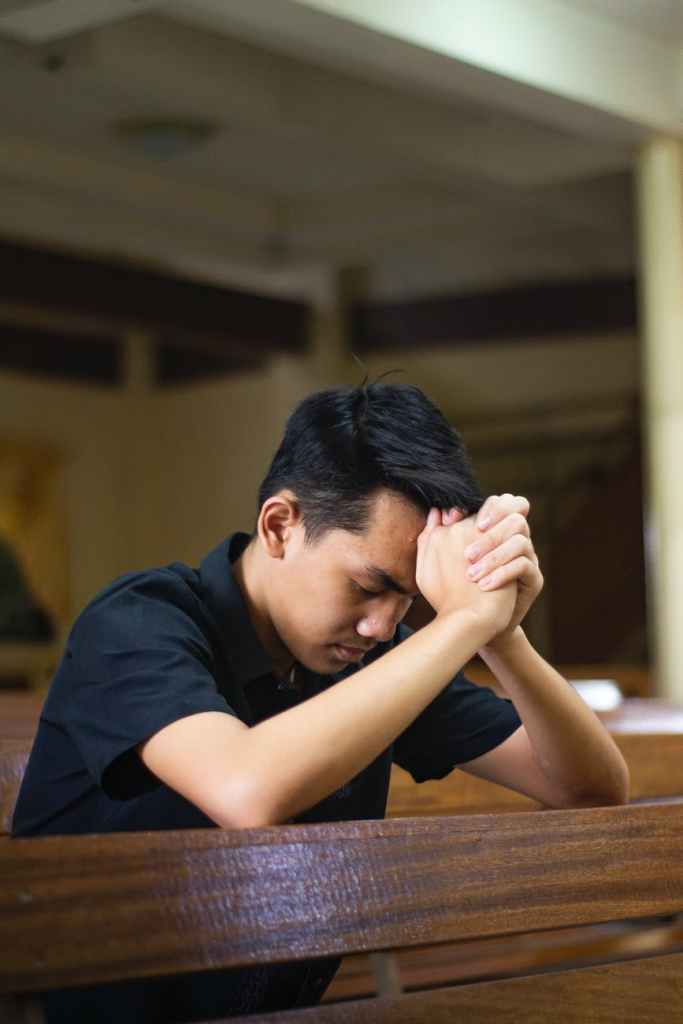
I attend a mid-week prayer meeting. Sometimes we have a dozen or two in attendance. The other day, we had just five. But God shows up every week! There is a mystical, spiritual quality in communal prayer– voices raised in praise, thanksgiving, and intercession; voices raised in agreement, in harmony, and in support. We spend nearly an hour in prayer; some stay after to pray longer, some stay silent for most or all of the hour, just listening and giving spiritual support by their presence. We also spend some time reading scripture, sharing updates on missionaries and community outreach programs, or updates on requests from previous weeks. And, in listening to others pray, we can “hear” their hearts and get to know them a little better. But this is not meant as a social hour. We are there for one purpose– to pray. It is a commitment to pray faithfully, to pray consistently, and to pray humbly and gratefully.

Photo by Tima Miroshnichenko on Pexels.com

We are blessed to have the opportunity to gather publicly and freely to pray. But what about those who cannot? Not everyone has the freedom in their weekly schedule to attend our prayer meeting (or other meetings that might be scheduled throughout the community). Not everyone lives in an area where public prayer is safe and encouraged. Some people are shut in. Some face persecution for their faith– public gatherings increase the risk of violence and arrest.

Photo by SHVETS production on Pexels.com

Most prayers happen in seclusion and isolation. And sometimes, this can lead us to believe that personal prayer is a small thing. One silent prayer in a room somewhere in Michigan may seem tiny and frail. It can seem puny and ineffective. And praying in isolation or under threat can feel even smaller and lonelier. We trust that God hears us, but we can feel so weak, so ineffectual. We long for support and communion. Praying in a group “feels” stronger, and more “important,” surrounded by fellow believers and hearing the voices chiming in with praise and heartfelt requests.

I value and appreciate meeting and praying with other believers, but most of my prayers are personal– said in silence in my own home. I pray by myself, often with my Prayer Journal in front of me; sometimes, just lying in bed, or sitting at my workspace. Yet, I never pray alone! Jesus, in The Lord’s Prayer, taught His disciples to pray to “Our Father.” But He must have known that they would also pray personal prayers. He did not teach them to say “My Father,” or “My God.” Surely, when we are alone, we can use those terms (as Jesus Himself did in the Garden of Gethsemane). But I think Jesus was acknowledging that God “inhabits the praise of His people” (Psalm 22:3)– and that when we pray, we are mystically and spiritually joined with God– Father, Son, and Spirit– and also with the family of other believers. And their prayers join with ours. When I pray, alone in a darkened room or closet, I may be physically separated from believers in Pakistan or Colombia, but I am spiritually linked with them (and they with me) in ways I don’t fully comprehend. I can’t hear their prayers; I can’t understand their language, and I don’t know their needs. Nor do they know mine. But God knows them all, and knits them all together in ways that bring Glory and Honor to Him! Praying with our Wednesday group (or any time I pray with other believers) helps me better feel this connection, but it goes beyond what we experience in corporate prayer. None of my “puny” prayers is lost in the fugue of a hundred thousand other prayers prayed in that moment– instead, they blend in with other silent cries and unspoken expressions of praise from all over the globe. They rise up like the notes of a never-ending symphony!

Photo by cottonbro on Pexels.com

Prayer is so much more powerful and deeper than we imagine! Today, let’s pray–together–knowing that whatever our situation or circumstance, we will never pray alone!

Blog at WordPress.com.

Up ↑