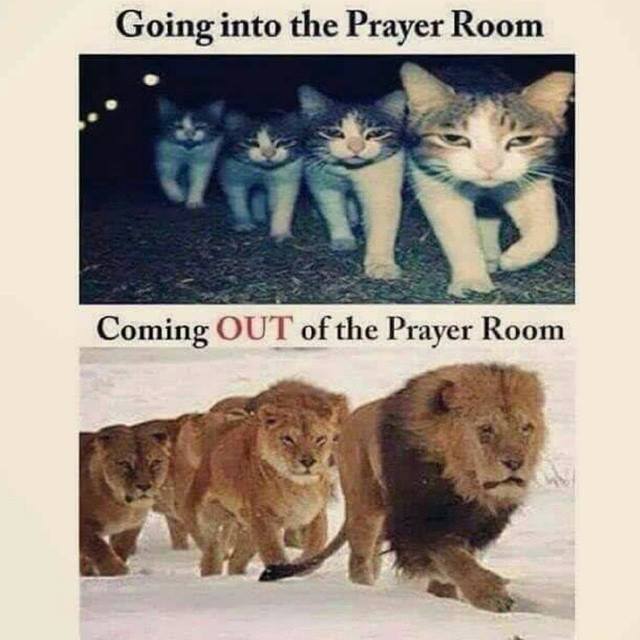
“Praying” Favorites

There is a very dangerous mindset that many Christians fall into– that somehow, God has “favorites” among His children. That He listens to and answers prayer for certain people “better” or more often than others. As someone who has pursued a lifestyle of prayer for more than fifty years, I can categorically state that this is false. Time after time, the Bible teaches us that God does NOT play favorites. He listens to each of us and loves each of us with a boundless and eternal Love!

Yet, I often hear people say, “Please pray for me. You are a prayer warrior. God will listen to you.” Is this wrong? Is it wrong to ask others to pray for us?

Of course not. And it is good to find other Christians who are devoted to praying for others. We ARE “prayer warriors!” But that doesn’t mean that God listens to any of us more than anyone else, or that some prayers are somehow better or more powerful than others.

There are three aspects of this mindset that I think are particularly dangerous:

First– we can feel that our prayers are not important; that they are not “good enough.” Satan loves to have us wallow in our inadequacies and focus on our faults and shortcomings. Maybe I have trouble finding the “right” words when I pray. Maybe I don’t feel comfortable praying aloud in a group. And I hear someone else who sounds eloquent and polished. While that may impress or intimidate me, it cannot make a difference to God! NONE of us is “good enough” to impress God! He loves to hear from each unique and precious child! If we believe that God somehow has “favorites” in prayer, we will believe that He has favorites in other areas, too. That our gifts aren’t as “holy” as someone else’s, or that our faith depends on us working harder or doing “more.” And this is idolatry–saying that God’s grace is not sufficient for Him to accept us and bless us without some extra effort on our part.

Secondly– we can feel that prayer is for “other” people. If there are special people whose prayer lives are strong, then we can let them do the “heavy lifting” of praying, while we concentrate on giving or preaching, etc.. We SHOULD develop the particular gifts that God has given us– that is true– but prayer, just like spending time in worship, studying God’s word, practicing fellowship, and showing grace, is something everyone should be practicing. The Apostle Paul compared the Christian life to being an athlete or a soldier. We are ALL in training and part of a team. Prayer is not specialized training– it is basic and fundamental to the Christian Walk.

Finally–“Prayer Warriors” are fellow workers, not specialized saints. Some people practice prayer because they have more time to do so. Many of those who are considered “prayer warriors” are widows or widowers, retired, or even bedridden. Many of us are prayer warriors for a season. When we believe that God has “favorites” in prayer, we may elevate them beyond what we should. Once again, Satan loves to have us compare ourselves with others, rather than focus on how we can each serve God.

There are some Bible verses that speak to this, and many of them, taken out of context, can reinforce the wrong mindset. For example: James 5:16 says that the “fervent effectual prayer of a righteous man availeth much.” But the context is that of people praying for one another, not a single man doing the praying. It says more about passionate and persistent prayer than any identity as a prayer warrior among other “lesser” pray-ers.

First John 5:14 says, “This is the confidence we have in approaching God: that if we ask anything according to his will, he hears us.” That applies to any of us!

“The Lord is near to all who call on him,
to all who call on him in truth.” Psalm 145:18

“Call to me and I will answer you and tell you great and unsearchable things you do not know.” Jeremiah 33:3

“Let us then approach God’s throne of grace with confidence, so that we may receive mercy and find grace to help us in our time of need.” Hebrews 4:16

“But when you ask, you must believe and not doubt, because the one who doubts is like a wave of the sea, blown and tossed by the wind.” James 1:6

“If you believe, you will receive whatever you ask for in prayer.” Matthew 21:22

There are only two things that the Bible says about “better” or more effective prayers. We must pray in FAITH, and in OBEDIENCE, (or praying within the will of God). NOTHING else is required for God to listen and respond. We are all “prayer warriors.” Prayer is part of our warfare against the enemy. And while it is wonderful to come together and know that others are praying for you, it is also important to remember that God has no favorites. His Grace, Power, Protection, and Love are equally available to anyone who asks in faith! There may be millions of pray-ers, but only one Sovereign, All-Powerful, Majestic and Loving God!

“Better-than” Prayers

I know a lot of “Prayer Warriors”– people who pray often, and fervently, and are known for their prayer habit. But I often hear a very disturbing statement in relation to such people. The thinking goes that if someone is a “Prayer Warrior” they get results. They have a direct line to Heaven– different and “better” than normal pray-ers. There are people who will hunt down a prayer warrior, believing that this action will be more effective than praying about an issue or problem themselves. Others try to emulate or copy the praying style of “prayer warriors,” thinking that the way someone words their prayers will make a difference in whether or not God will hear them. Still others will refuse to pray in public, because they say their prayers are not good enough. And this should not be!

We have a terrible tendency to compare. We compare our appearance, our social or economic status, our skills and abilities, and even our spirituality. “She’s so close to God!” “He knows the Bible so much better than I do!” And we think this determines whether or not God will listen to and act on our prayers. And Christians who could pray more often, more joyfully, and, yes, more effectively, simply give up on pursuing prayer, because they think others are so much “better” at it.

God is not a respecter of persons. His willingness to listen to our prayers does not depend on how many Bible verses we can quote or how many church services we attend each week, or how eloquently we can pray. God does not play favorites– He does not respond more quickly or more powerfully to some people because they call Him “Heavenly Father” instead of “Almighty God” or because they kneel instead of sitting, or because they are somehow “holier” than their neighbor.

God wants to hear from YOU. And yes, it can be a blessing and a comfort to know that others are praying for you or with you, but we should not measure our prayers against those of others around us. Especially if we allow ourselves to get discouraged in our pursuit of “better” prayer.

That said, there are a few things that can make our prayers “better”:

  • Be sincere– God doesn’t play games. He doesn’t respond to flattery, falsehoods, foolishness, or exaggerations. God already knows what you need, what you’re thinking, and who you are– who you REALLY are. Prayer that tries to cover up your real emotions or thoughts; prayer that tries to make you sound pious, needy, devout, etc., are not fooling anyone but you…
  • Be still–take time to get quiet before God– so that you can listen as well as speak! Meditate on WHO it is you are talking with, instead of just what you want to say.
  • Be submitted– Prayer is not about getting God to “deliver” on your wish list. Don’t just pretend to be pious, but determine that you will accept God’s perfect will and timing. And that you will accept God’s correction when you are having trouble accepting His will!
  • Be faithful–don’t give up. Pursuing Prayer means practicing prayer. You may find it gets easier to pray as you stumble through awkward prayers, instead of trying to be perfect out of the gate. Most “Prayer Warriors” started out the same way. Anyone–ANYONE–can be a prayer warrior!

Such “better” prayers will not impress God. God isn’t about being impressed. He IS about being personal, loving, wise, and sovereign. But such prayers will be “better than” those prayed in pride, or prayed inconsistently, or without fully acknowledging God’s character and authority.

My goal is not to be a “better” pray-er than someone else. I may never be acknowledged by others as a “Prayer Warrior.” But my goal is to be disciplined and trained in the pursuit of Prayer. Every day, we face spiritual warfare– in that sense we are all prayer “warriors.” And I may be a foot soldier in this war, but I want to be the best foot soldier I can be! I want to be “better than” I was yesterday, and even better tomorrow!

The Thief of Joy

Therefore Jesus said again, “Very truly I tell you, I am the gate for the sheep. All who have come before me are thieves and robbers, but the sheep have not listened to them. I am the gate; whoever enters through me will be saved. They will come in and go out, and find pasture. 10 The thief comes only to steal and kill and destroy; I have come that they may have life, and have it to the full.

John 10:7-10 NIV (via biblegateway.com)

Theodore Roosevelt, 26th president of the United States, once said, “Comparison is the thief of Joy.” Comparison, envy, judgment– they have a way of sapping our joy, our energy, and our purpose, leaving us angry, deflated, and anxious. He knew a lot about the subject. Coming to the office as the result of the assassination of William McKinley, Roosevelt was the youngest man ever to hold the office of president, and it was not expected that he would be capable of fulfilling his duties. He was a blunt, restless, often hot-tempered man– not a smooth and polished statesman. There were plenty of people comparing him to McKinley and others– and finding him on the short end of the comparison! Yet Roosevelt was a man known for his optimism and joy. Even with his bluster, he was rarely seen without a smile and a positive outlook. And that optimism won people over so that he won his reelection bid in 1904, and became one of our most esteemed presidents.

Comparison can creep into all sorts of areas of our lives– we compare finances, status, “likes” on social media, looks, job status, clothes, houses, cars, even shoes! And sometimes, it impacts our prayers. I know people who won’t pray in public because their prayers “aren’t good enough.” They fear that their prayers lack eloquence; that the people listening will be disappointed or bored or even amused or disdainful. And sometimes, I’m ashamed to say, they have reason for their fears! This should never be.

But it isn’t just public prayers that we compare.

I write about prayer; I’m very open about praying, and I receive a lot of prayer requests. I’m honored and glad to be able to share in praying for others. But every once in awhile, I hear from people that they want certain people to pray for them (as opposed to other people). They seek out “prayer warriors”– people who are viewed as being “better” at prayer than others. On the surface, this seems like a wonderful thing– some people are gifted with more time or more opportunity to pray–why not celebrate their gift or promote their ability?

But what about those who are not seen as “prayer warriors?” What about those whose prayers involve months and even years of crying out in groans and tears and unfulfilled hopes? What of those learning to pray?

We can easily fall into the bad habit of comparing our prayers– our style of praying, the amount of time we spend on our knees, the stories of answered prayer and miraculous outcomes, the number of people who come to us asking for prayer… And this can rob us of the joy of spending time with God! God loves each of us for who we are. And He wants to spend time with US– not our neighbor, or the sweet lady at church who prays so beautifully.

I love communal prayer– even though I know there are people who are terrified of praying in groups. I love to hear the individual voices and styles of those who come together to cry out to God. Some are short and sweet; some are convoluted and conversational; some are anguished and passionate– but all reflect God’s heart to communicate and interact with us, and to have us draw near to Him. He never pulls away from us when we stutter or stumble, or forget someone’s name or mix up a request. He patiently listens to our rambling; He reads the deeper heart of our short outbursts– He even hears our unintelligible moans and mumblings (see Romans 8:26)! And His heart is filled with compassion, love, and inexpressible, boundless joy as He hears the sound of one of His precious sheep.

Jesus described Himself as the “Good Shepherd.” He told the religious leaders of His day that the true sheep would recognize His voice over all others. And He spoke of the “thief” who comes only to kill and steal and destroy. This “thief”– Satan– uses certain tricks to steal our joy and take our focus away from God’s love and wisdom. One of his favorites is to whisper comparisons in our ear. And if we listen to his voice, we will begin to look around instead of up; to ourselves and our words, instead of God and the Word of God. But Satan does not use the voice of our Good Shepherd. His words do not bring safety and peace–they bring doubt and discontent.

God will not urge us to comparison– He will always urge us to Communion!

Prayer and Fasting

I had to fast overnight for some bloodwork I had done this morning. No food for 12 hours; no water for 8 hours before the blood draw. It shouldn’t seem like such a difficult thing, but at 9 or 10 p.m., I imagined I smelled food. My mouth watered– and then it felt dry. I felt woozy and weak. Surely I could have just a cracker or some orange juice, right? But no, I finished the fast and rejoiced to eat breakfast after the blood draw was complete. And simple scrambled eggs tasted sooo good! Oddly, I have often gone several hours without food and without all the imagined side effects I felt last night. The actions were the same, but the focus was on what I was doing, not what I was missing.

Fasting has become popular in recent years. I know several people who practice intermittent fasting for weight loss and other health benefits. Others fast for religious reasons (other than prayer); some people give up certain foods ritually, for Lent or other festivals. Some even fast in dangerous ways (anorexia, etc.) Fasting is usually about our relationship (sometimes an unhealthy relationship) with food.

Prayer, on the other hand, is all about our relationship with God. And when the Bible speaks of Prayer and Fasting, it is also about our relationship with God. The Bible gives many examples of fasting– even “extreme” fasting. Moses, King David, Jesus, and the Apostles all practiced it. Sometimes entire groups (churches), cities (Nineveh–see Jonah, chapter 3), and nations (Israel/Judah) fasted. The Bible also gives us many reasons to do fasting, including repentance of personal or national sin, deep personal struggles, and focusing on a single issue, such as the unsaved, the persecution of fellow Christians, seasons of famine, or ongoing injustices. But the Bible isn’t specific with guidelines and rules about fasting, because, like prayer, it is primarily a pursuit. It’s not about the extremes or the number of days, or the amount of food we “give up.” It is about the pure pursuit of God’s sufficiency. God is not impressed by whether we fast for one day or forty; He does not count the number of calories we might have consumed or the amount of weight we lost. He doesn’t measure the strength of our will power or our “success.” He isn’t impressed by posturing and virtue signaling. What He does ask is that we pray with complete focus and integrity, without the distractions that food, entertainment, and even sleep can sometimes become.

We can fast for hours or days– miss one meal or fifteen–and still “miss” the blessing of prayer, because we are focused on what we are doing (or not doing) instead of focusing on what God is doing. We can also “fast” in ways that have nothing to do with food– turn off the TV or phone, retreat from crowds and busyness, even “fast” from sleep! The point is not that WE are “better” for fasting, but that fasting is “better” for US!

Today, consider a small “fast”– replace a coffee break, snack, meal, hour of social media, or that extra 15 minutes of sleep with some time alone and wholly abandoned to God. Not only will we come away refreshed and not “missing” whatever we traded, but we will more fully enjoy those same activities or foods when they take their rightful priorities. Remember, prayer and fasting is not a contest or a ritual, it is a pursuit and an adventure! Enjoy it!

Some thoughts:

  • 1) Fasting is as individualized as praying. There is no perfect “formula.” But there are several helpful suggestions. You can set a time limit (one day; 12 hours, etc. without food or a certain activity) or a food/activity limit (only one meal a day for seven days, only one television program per night for a week). You can plan days or weeks ahead to fast for a definite period, or you can decide spontaneously to start fasting until you feel led to stop. One caveat– Fasting is not a game. It IS a commitment, and shouldn’t be done without a real desire to get closer to God.
  • 2) Having said that, fasting isn’t about your will power, or success/failure. Sometimes, circumstances will prevent you from completing a planned fast. Certain health issues or family situations may prevent you from fasting for a day or more. Sometimes you will fall short of the goal you set. Don’t let that stop you from trying again, or trying differently. God isn’t about perfection on your part– He IS about helping you grow stronger and more complete as you continue to walk with Him.
  • 3) Fasting is personal. It isn’t about looking virtuous, posting about your struggles, or comparing yourself to others. (See Matthew 6:16-18) That doesn’t mean it can’t be done as a group. But group fasting should be about a single focus or topic, not about making everyone in the group conform to a preconceived expectation. There is great encouragement to be found in praying as a group, and some encouragement in fasting as a group, but remember, fasting is between you and God, not you and the group, or you and all your Facebook friends.

  • NOTE: At least once a month this year, I want to offer some practical suggestions on how we can better pursue a life of Prayer and living the Christian Life. I hope this post gives each reader something to consider.

The Same Music

There is a story of a man who played his violin in the subway. He played a classical piece; and then another. He played for 45 minutes. Trains came and went. People rushed by. A few paused for a moment– some dropped a dollar or two in his open violin case.

Photo by Pixabay on Pexels.com

The same man played his violin later that evening in a grand concert hall. He was the featured soloist in a symphony orchestra. People dressed in gowns and suits paid a couple hundred dollars each for tickets to hear him play. They sat spellbound as his music filled the air. This was the same music, played by the same man, on the same violin as before. The only difference was how people listened.

Photo by Roxanne Minnish on Pexels.com
Photo by Luis Quintero on Pexels.com

When we pray, we’re not praying to an audience of rapt listeners. We’re pouring out our heart to our Heavenly Father. And it is music to His ears! Whether we are praying through our tears in a lonely jail cell or a war-torn shelter, or praying in a grand cathedral, or on a yacht in the Mediterranean; whether we are praying in broken phrases punctuated by heartbreak, or singing praises– it is the same music to Our Father’s ears.

Others may judge our words or our lives to be worthless. Others may not bother to listen to us; they may even try to silence us or drown us out. But God is ready to listen even to our weakest whimper, or our loudest scream.

God sends us music in return– the smile of a neighbor; the sunlight breaking through clouds; that unexpected sense of His presence in the middle of the darkest night.

Are we listening? Or are we rushing to catch the next train?

Photo by Shinobu on Pexels.com

Does Prayer “Work?”

I have a friend who is very keen to study if prayer “works.” His theory is that if someone were to measure the number of prayers said in various regions of the world during the COVID-19 pandemic, and compare those numbers to the rates of infection, numbers of deaths, etc, for the same regions, one could “prove” whether or not prayer is effective.

I don’t think my friend is being sarcastic or overly cynical– I believe he is sincere in wanting to study prayer. I accept his desire to study prayer–to quantify it, even to “prove” it, or legitimate it for those who are skeptical. Unfortunately, he wants to study it as an observer, and not a participant, and he wants to conduct a physical study of a metaphysical practice.

Photo by Ali Arapoğlu on Pexels.com

Scientists are conducting several studies during this time, to see what “works.” Does social distancing “work” better than building up “herd immunity?” Is there a treatment that works better, or faster than others? Can we develop an effective vaccine? What practices– social, hygienic, medical, political– might help mitigate the spread of future viruses? Even these studies will not be definitive. The results will depend a great deal on methodology, and the conclusions will be open to interpretation.

Photo by Lukas on Pexels.com

There are additional problems in studying whether or not prayer “works” or not, because prayer is metaphysical. Here are just a few of the “measurement” problems:

  • How do you measure prayer? By length of time? Number of words used? The number of prayers prayed by each person over a certain period of time?
  • Do you count ritual prayers? Mantras? Meditation? Unspoken “thought” prayers? Recitations? Prayers spoken “in tongues” or in ecstatic states?
  • Do you count corporate prayer as a single prayer or by the number of people in the group?
  • What about social media? Do you count all the people who say they will send “thoughts and prayers?” Do you count those who say they “will pray,” or only those who are “praying,” or “praying now.”
  • If you are testing by geographical region, how do you account for people who are praying for others around the world?
  • How do you measure the efficacy of prayer (as opposed to other factors)? If a region has a higher mortality rate, even though many people prayed, does that mean that prayer “doesn’t work?” Or does it mean that the mortality rate would have been even more devastating (given other factors) without prayer?

More than just measurement problems, there are problems with the very nature of prayer that make such a study impossible:

  • Even if you could come up with a standard definition of “prayer” in order to get a count, prayer is not a physical substance or action. Prayer is not a “cause and effect” exchange. It is communication. If ten people say the same thing at the same time to the same person, it is not necessarily “more effective” than a single person-to-person exchange. If a thousand people pray to the same “god” who is not a god–“Mother Nature” or “The Force,” for example, it cannot be compared to a single person praying to a Loving and All-Powerful God.
  • God’s ways are not our ways. If we are measuring for one thing, God may be working for a different, unseen outcome. If more people contract the virus during the “study period”, we see that as “failure.” But God may be preparing that region to build up a resistance or immunity for a future outbreak. God answered prayer in a mighty way that we won’t see immediately. I have known a great many people, and prayed for a great many people who have not received physical healing in this world. They have suffered. They have died. But that doesn’t mean that prayer “didn’t work.” Their sufferings and eventual deaths have often brought about unbelievable works of God– salvation, families restored, friends discovering renewed purpose, strengthened efforts to fight disease, injustice, poverty, etc., and communities coming together in unity and hope.
  • Prayer is not about measurable results. Prayer is a heart-cry to a caring Creator. It doesn’t just involve asking for healing or miracles or “wish fulfillment.” Prayer involves thanksgiving, worship and adoration, repentance and confession, sharing burdens, asking questions, and building an eternal relationship with God Almighty.
  • In the end, any study results will be interpreted differently by different people. Some people will be convinced by numerical comparisons to re-consider their view of prayer. Others will never be convinced, no matter how much “evidence” someone else presents.

Prayer isn’t like taking an aspirin, or holding a protest rally, or doing research for a cure. Prayer isn’t about “winning the battle.” It isn’t about “what works.” It isn’t about “what” at all. It’s about WHO.

Photo by Luis Quintero on Pexels.com

God “works.” God is sovereign, loving, and wise beyond what we can imagine. His ways endure. And He has vanquished the power of death and disease. Yes, it can still touch us in the here and now, spreading havoc and pain and mourning. But it will never triumph over Hope, and Life, Truth, and Faith. And when we pray, we connect to the source of all that is Eternally victorious! Beyond ANY measure!

WWJD–Coronavirus edition

What Would Jesus Do? This question, shortened to the acronym WWJD, appeared as a fad on bracelets, t-shirts, billboards, etc., a few years ago. The idea was to ask oneself how Jesus Christ would act or react in various situations.

While I don’t disagree with the premise, I have never been a fan of this trend– mostly because it calls for people to speculate or imagine what Jesus would or might have done in their place. There is nothing wrong with wanting to act like Jesus– that’s what we’re supposed to do–to be disciples of Christ, and be His ambassadors. But our minds and hearts are not perfect; in fact they can be deceitful and arrogant, self-righteous and self-justifying. It is more common for us to justify how Jesus would act like us, than for us to adjust our thoughts and actions to those we know Jesus took during His time on earth. Would Jesus be angry about injustice– of course! Would He want us to have empathy for others– undoubtedly! But what would He actually DO? There are some pretty clear examples in the Bible– both examples of what Jesus DID, and what He DID NOT do:

  • Jesus drank wine; He visited and ate with known sinners; healed on the Sabbath (in direct violation of the church leaders of His day); interacted with the Romans (soldiers and leaders, etc.)who were oppressing the Jews– without protesting their rule or joining rebel groups; healed and performed miracles for some, but not for others; forgave sins for some, but not for others; paid His taxes without complaint; challenged religious leaders and spoke harshly against their practices; refused to get drawn into condemning and stoning a guilty adultress….
  • Jesus prayed. He want to temple regularly; read and studied God’s word; He rested, meditated, and spent time alone; He listened to strangers and treated those He met with compassion and respect; He honored His mother, but did not put her above His work; He loved his friends, even those who did not understand Him and the one who betrayed Him; He did not flatter those in power or disdain those in lowly positions; He cared deeply, wept unashamedly, and laughed heartily…
  • Jesus did not own a home. He didn’t have a “regular” job; He had no savings account or retirement fund; He had no donkey or horse for transportation; He wasn’t a member of a particular congregation or church council, like the Pharisees. Jesus didn’t have a university education; He didn’t run for public office; He never got “employee of the month;” He never married or had kids; We have no evidence that He ever gave to a particular charity, or joined any activist group. Jesus never hosted a barbecue, or led an evangelistic gathering, like His cousin, John the Baptist…
  • Jesus never addressed many of the issues we deal with today– civil rights, gay rights, abortion, health care, income inequality, democracy/socialism, smoking, drug use, pornography, violence in the media, global climate change, speed limits on highways, income tax structure, campaign finance reform, gender dysphoria, unisex bathrooms, vegans vs. meat eaters…

But the point of Jesus’ ministry on earth was to preach the coming of the “Kingdom of God,” and to fulfill His promise to go to the cross, die for our sins, and to rise again on the third day. He spent time teaching and discipling twelve very different individuals, who saw and did things very differently from each other, and differently from Jesus himself. Peter was fiery, John was a quiet observer, James was stern and concerned about actions, Matthew was concerned with history and prophecy. And all of them were loved by and commissioned by Jesus to spread the Gospel.

In these days of COVID-19, faced with fear and panic, many Christians (myself included) are struggling with the “right” response–we all want to show the love of God, and honor Him above all. In doing so, however, I find myself spending a lot of time justifying my own actions, and condemning the words and actions of others. And I find myself getting hurt and angry when someone I know and love reacts differently, uses different words or tones, or gets caught up in arguments about what “we must do.”

Photo by Korhan Erdol on Pexels.com

We MUST seek God’s wisdom in these times. And we MUST listen to and obey His word. But beyond that, I believe that God wants us to be very different “parts of the body” (see 1 Corinthians 12) https://www.biblegateway.com/passage/?search=1+Corinthians+12&version=ESV And I believe that God wants us to work together, honoring the various gifts and personalities that we have been given. Some of us are going to be fiery in our defense of health care workers, and advocating for the best and fastest medical care and treatments available. Some of us are going to be spreading small words and acts of encouragement wherever we see the opportunity. Some of us are going to be standing up against threats of corruption and injustice lurking among the actions of those in power. Some of us are going to speak boldly about our Hope in Christ, evangelizing and calling people to repentance. Some are going to be “standing in the gap” in prayer and counseling. Some are going to be providing money, food, PPE (personal protective equipment), and other services. And we must honor the other members of the body– in whatever role they take on– and seek unity, rather than division.

Photo by Pixabay on Pexels.com

Instead of blasting each other on Facebook or angry e-mails, we need to bring our initial reactions– anger, disappointment, hurt, confusion– to God. HE is the one who will judge our actions and motives in the end. Unless we see Christians who are flagrantly violating God’s laws– looting, cheating, spreading malicious lies and causing division, cursing God and/or misrepresenting Him in heretical fashion–we should ask, not just what Jesus would/might do in my situation, but what DID Jesus do in my place.

Photo by Francesco Paggiaro on Pexels.com

Because He died for me when I was still a sinner. He sacrificed His life. Not because I had done anything “right,” or “good enough.” He didn’t keep a list of all the things I got “wrong.” He did not bring condemnation– He brought forgiveness, mercy, and hope! And His mercies are new every morning. If I “get it wrong,” if I do something, or don’t do something–because I am still human and I don’t know everything about COVID-19 or the global economy or what tomorrow will bring–God will still love me. God will forgive me.

My prayer is that I will do the same for others– that I will extend Grace, and true encouragement (rather than flattery or mutual congratulation), and Love, because I know without a shadow of doubt or speculation, that this is What Jesus Would Do.

A Miss is as Good as a Mile

I heard a phrase, an idiom, recently..one I hadn’t heard in many years: “I’m as good as dead.” It is an odd phrase, but English is filled with similarly odd sayings, like, “good as gold”, “good as finished”, or “a miss is as good as a mile.” “As good” in each case signifies being close to, or similar too, without being the same; nearly or akin to being. A child who is “good as gold” is one whose behavior is nearly faultless, whose actions and demeanor shine like gold. Someone who is “as good as dead” is someone who is either in very poor health or in dire trouble, and expects to die soon. “A miss is as good as a mile” refers to the idea that a miss, whether narrow or wide, is still a miss..an inch or a mile makes no difference. A puzzle of 1000 pieces, minus one, is still incomplete; missing one’s train by a minute or an hour still leaves one at the depot.

Photo by Pixabay on Pexels.com

In hearing this phrase, “as good as dead,” I was arrested by the juxtaposition of “good” and “dead.” There is nothing good about death or dying, yet we don’t say, “I’m as bad as dead.” We compare being close to anything as being “good as..”

I think there is an important spiritual and psychological reason. Deep in our soul, we have a desire to be “good.” To be whole, and righteous, and complete. And we also know that we are not whole; not really “good” as we now are. We long to be “as good as” our aspirations; as good as…God. We spend our lives comparing and measuring and striving to be better, and closer to His perfection. And sometimes, we feel comparatively “good.” Other times, our goodness only seems to measure up to failure and death. https://www.theidioms.com/a-miss-is-as-good-as-a-mile/

Photo by sergio souza on Pexels.com

But we cannot be “as good as dead” any more than we can be “as good as gold” or as good as God. Because “a miss is a good as a mile.” Being almost as good as God will never be enough to save us from the wages of sin, which is death. Being “almost dead” cannot separate us from God’s love, or His gift of everlasting life.

In the Gospels (Matthew, Mark and Luke), there is a short story of a young man who struggles with this concept. https://www.biblegateway.com/passage/?search=Mark+10%3A17-27&version=NASB The young man asks Jesus, “Good teacher, what shall I do to inherit eternal life?” In asking the question, the young man already reveals a certain lack of understanding. An inheritance is not something that can be earned; it is a gift that can only be received by an heir after someone’s death. It can be accepted or rejected, or divided between many heirs. There may be stipulations or conditions– and this may be what the young man meant to find out–but inheritance is determined by the giver, not the conditions of the person or persons expecting to receive an inheritance. Secondly, the man assumes that whatever is required, he can accomplish it easily. He expects, in fact, the beginning of the answer Jesus gives him. But Jesus doesn’t begin with the answer. He cuts directly to the heart of the question: “Why do you call me ‘Good?’ No one is good except God alone.” (Mark 10:18) At the heart of this man’s question is the desire to become “Good” like God– to earn eternal life– to be complete and whole through his own actions. This young man doesn’t want to be challenged. He wants to be justified, lauded, and congratulated on his own wisdom and performance. And Jesus starts by giving him the answer he expects. He lists several commandments– five things NOT to do, and one general principle (honor your parents). One can almost hear the sigh of relief from the young man. “I’m as good as guaranteed to get into heaven!”

But that’s when Jesus speaks again. He doesn’t offer a lengthy list of impossible feats; no pilgrimages or vows of silence, no special diets (not even a reminder to follow the Jewish dietary restrictions), no pledge to give more money to the Temple, or lead a rebellion against the Romans. Instead, He gives a single challenge– sell what you own and give it to the poor, and you will have treasure in Heaven– followed by an offer to follow Him.

Jesus did not offer this challenge as a kind of “gotcha” to the man’s initial question. In fact, the Gospel of Mark says that Jesus felt a love for him as He responded, and a great sadness when the man walked away. But “a miss is a good as a mile.” The young man wanted to know what he could do to be (or if what he had already done was) “good enough” to inherit eternal life. He had done all the things he expected would be enough. He had compared his life and actions with others around him. But he had missed the heart of the matter– inheritance. When he walked away, he was depressed and discouraged– “as good as dead.” Not because there was no way for him to have eternal life, but because he could not hit the target; he could not do the one thing Jesus asked of him, and he could not trust Jesus enough to “follow” the “good” teacher.

Photo by Jigar Maru on Pexels.com

The disciples, too, missed the point at first. Jesus had not given the young ruler a simple task in earthly terms. But it wasn’t the action that was difficult; it was the heart attitude. The young man wanted– he wanted the respect of the “good” teacher (not a relationship with Him), the acclaim of all those surrounding him, the honor and prestige his wealth had brought him, AND eternal life– because he was “as good as perfect” in his own eyes. He did not want eternal life more than any of these other things, but in addition to all of them, and by his own efforts.

Photo by Jonas Ferlin on Pexels.com

Lord, forgive me for the times that I have wanted to earn eternal life for myself. Help me to seek you with all my heart, so that I may not miss the blessings you have for me by even the narrowest margin. And thank you, thank you(!) that in those times when I do stray and miss the point, I am not “as good as dead”, but you are always gracious and loving in showing me how to “follow you” and live!

Blog at WordPress.com.

Up ↑